Why Mercedes Level 3 Searches Lead to Charging Questions
Searches for "Mercedes Level 3 self-driving" spike every time DRIVE PILOT expands its operational footprint, and for good reason: the 2026 Mercedes-Benz EQS sedan (starting at $105,550 MSRP) and EQS SUV ($110,750 MSRP) represent the brand's electrified flagship platforms where Level 3 capability is being rolled out incrementally. But here's the practical reality most buyers miss — whether your Mercedes can drive itself on a congested freeway matters far less day-to-day than whether you can charge it reliably at home.
The EQS 450+ sedan packs a 107.8 kWh usable battery (NMC chemistry) and delivers an EPA-estimated 390 miles of range. The EQS 580 4MATIC drops to roughly 345 miles EPA. Real-world highway testing at 70 mph in mild conditions typically yields 310–350 miles for the 450+ and 270–300 miles for the 580. In freezing temperatures (below 32°F), expect a 20–30% range reduction, bringing the 450+ down to approximately 260–290 miles on the highway.
That 107.8 kWh battery is one of the largest in any production EV. Charging it properly at home is the difference between effortless daily ownership and frustrating dependence on public infrastructure. This guide breaks down exactly what you need.
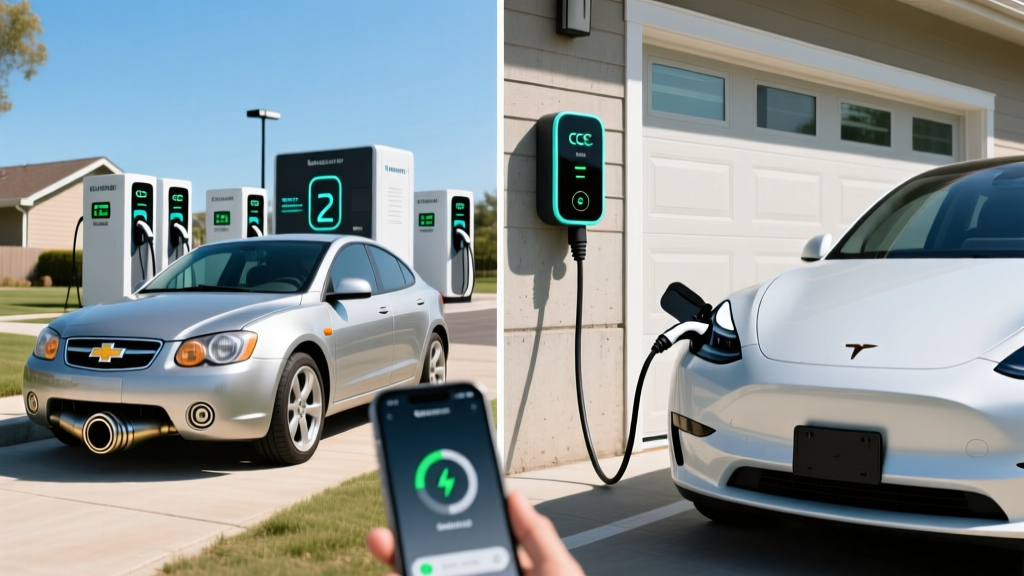
Charging Levels Explained: Speeds, Power, and Range Added
Understanding EV charging starts with one non-negotiable distinction: kW (kilowatts) measures power — how fast energy flows into the battery. kWh (kilowatt-hours) measures energy — how much the battery holds. Think of kW as the diameter of a hose and kWh as the size of the bucket. A 107.8 kWh battery charged at 11.4 kW takes far longer than one charged at 200 kW, even though the bucket is the same size.
| Level | Power Source | Max Power (kW) | Miles of Range Added Per Hour | Best For |
|---|---|---|---|---|
| Level 1 | 120V household outlet | 1.4–1.9 kW | 3–5 mi/hr | Overnight top-up, PHEVs, emergencies |
| Level 2 | 240V dedicated circuit | 7.2–19.2 kW | 20–60 mi/hr | Daily home charging, workplace |
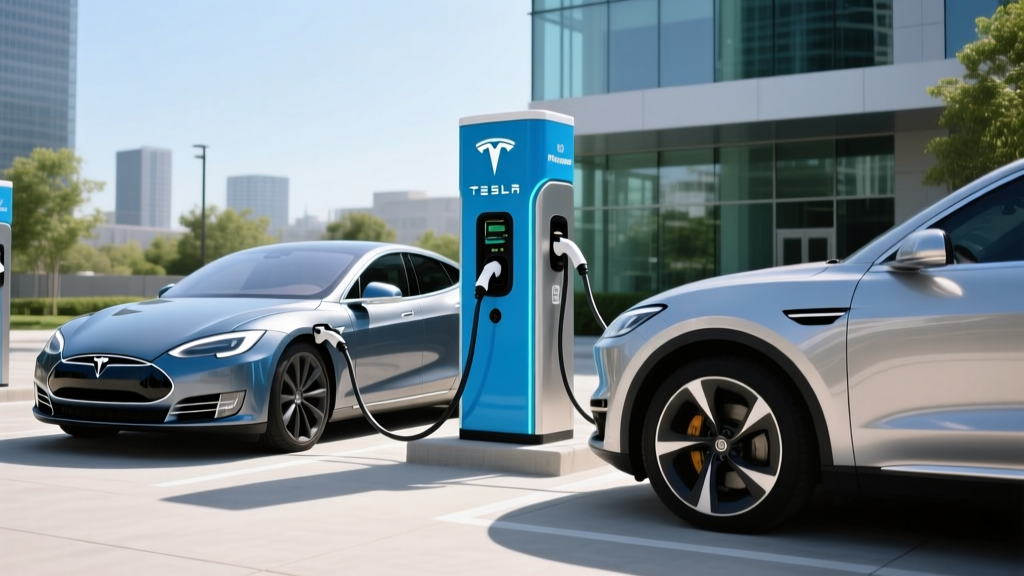
| DC Fast Charge | 480V+ commercial station | 50–350 kW | 150–300+ mi/15 min | Road trips, rapid top-ups |
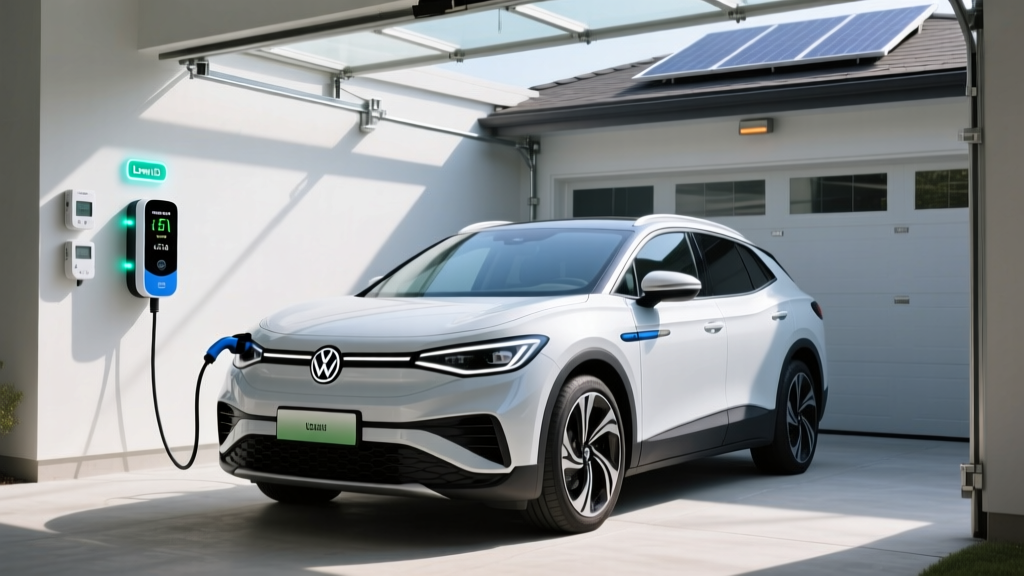
For a Mercedes EQS with its 107.8 kWh battery, Level 1 charging is essentially useless — it would take over 60 hours to fill from empty. Level 2 at 11.5 kW (a common 48A home charger) adds roughly 35–40 miles per hour of charging, fully replenishing the EQS overnight in about 10–11 hours. DC fast charging on the EQS peaks at 200 kW, achieving a 10–80% charge in approximately 31 minutes under ideal thermal conditions, though the charge curve tapers significantly above 80% to protect the NMC cells.
How Much Does It Cost to Install a Home EV Charger?
Home Level 2 installation costs vary dramatically based on your electrical panel's capacity, the distance from panel to charger location, and local permit fees. Here's a realistic breakdown for 2026:
| Component | Low Estimate | High Estimate | Notes |
|---|---|---|---|
| Level 2 charger unit (hardwired, 48A) | $450 | $850 | Brands: ChargePoint, Emporia, Wallbox, Tesla |
| Electrician labor (standard install) | $500 | $1,500 | Depends on run length, wall type, conduit needs |
| Electrical permit | $50 | $300 | Varies by municipality |
| Panel upgrade (if needed) | $1,500 | $4,000 | Required if existing panel is 100A or near capacity |
| Total (no panel upgrade) | $1,000 | $2,650 | Most newer homes with 200A panels |
| Total (with panel upgrade) | $2,500 | $6,650 | Older homes, high-load households |
The panel upgrade gotcha: A 48A Level 2 charger draws roughly 11.5 kW continuously. The National Electrical Code requires the circuit to be rated at 125% of continuous load, meaning you need a 60A breaker on a panel with sufficient spare capacity. Homes with 100A panels — common in houses built before 1990 — often cannot support this without an upgrade to 200A. This is the single biggest surprise cost for new EV owners.
Always get a load calculation from a licensed electrician before purchasing equipment. Some utilities offer rebates of $250–$1,000 for Level 2 installations, and the federal §30C Alternative Fuel Vehicle Refueling Property Credit covers 30% of home charging equipment and installation costs up to $1,000 (subject to income and census-tract eligibility — consult a tax professional for your specific situation).
Which Connector Is Compatible With Mercedes-Benz EVs?
The connector landscape shifted dramatically in 2024–2025 when most major automakers adopted the North American Charging Standard (NACS), originally developed by Tesla. Here's where Mercedes stands in 2026:
| Brand | Built-In Connector | DC Fast Network Access | Adapter Needed? |
|---|---|---|---|
| Mercedes-Benz (2025+ models) | NACS | Tesla Superchargers + CCS networks | No (native NACS) |
| Mercedes-Benz (2022–2024 models) | CCS1 | Electrify America, EVgo, Ionity | CCS-to-NACS adapter for Superchargers (~$200–$250) |
| Tesla (all years) | NACS | Tesla Superchargers | No |
| Ford / GM / Rivian (2025+) | NACS | Tesla Superchargers + CCS networks | No |
| Hyundai / Kia (2025+) | NACS | Tesla Superchargers + CCS networks | No |
| Nissan Leaf (legacy) | CHAdeMO | Limited DC fast network | CHAdeMO adapters rare; plan around CCS/NACS stations |
If you're buying a 2026 EQS or EQE, you'll have a native NACS port, giving you direct access to Tesla's Supercharger network — over 30,000 stalls in North America — plus all CCS-based networks like Electrify America and EVgo. For 2022–2024 EQS owners with CCS1 ports, Mercedes and third-party suppliers offer CCS-to-NACS adapters (typically $200–$250) that unlock Supercharger access. Always verify adapter compatibility with your specific model year before purchasing.
Cost to Charge: Home vs. Public vs. Gas Comparison
Electricity pricing varies enormously by location, time of day, and charging method. Here's what Mercedes EQS owners can expect in 2026, using the 450+ sedan's EPA efficiency of roughly 32 kWh/100 miles (approximately 3.1 miles per kWh) as a baseline:
| Charging Scenario | Avg $/kWh | Cost Per Mile | Cost for 300-Mile Trip |
|---|---|---|---|
| Home (off-peak / time-of-use rate) | $0.08–$0.12 | $0.026–$0.038 | $7.80–$11.40 |
| Home (standard residential rate) | $0.14–$0.18 | $0.045–$0.058 | $13.50–$17.40 |
| Public Level 2 (workplace / retail) | $0.20–$0.35 | $0.064–$0.112 | $19.20–$33.60 |
| DC Fast Charge (Electrify America / EVgo) | $0.35–$0.55 | $0.112–$0.176 | $33.60–$52.80 |
| Tesla Supercharger (250 kW) | $0.28–$0.42 | $0.090–$0.134 | $27.00–$40.20 |
| Gas equivalent (30 MPG at $3.40/gal) | $3.40/gal | $0.113 | $33.90 |
The numbers are clear: home charging at off-peak rates delivers fuel costs at roughly one-third to one-quarter of gasoline. Even DC fast charging on road trips is generally competitive with or cheaper than gas, though you're paying a premium for speed. The EQS's 200 kW peak DC charge rate means a 10–80% session in roughly 31 minutes adds about 240 miles of range — enough to stretch your legs and grab food while the car handles the rest.
One critical detail on DC fast charging: the EQS's charge curve peaks at 200 kW only between roughly 10–40% State of Charge (SoC). From 40–80%, the rate tapers to 100–150 kW, and above 80% it drops below 50 kW to protect battery health. This is why manufacturers quote 10–80% times rather than 0–100% — the final 20% can take as long as the first 70%.
Recommended Home Level 2 Chargers for Mercedes EVs
Based on reliability data, smart features, and compatibility with the Mercedes ecosystem, these are the top Level 2 chargers for EQS, EQE, and EQB owners in 2026:
ChargePoint Home Flex (NACS)
- Power: Up to 12 kW (50A, adjustable down to 16A)
- Connector: NACS native (CCS1 version also available)
- Cable length: 23 feet
- Smart features: Wi-Fi, app scheduling, Alexa, load sharing
- Price: ~$599
- Best for: Flexible amperage adjustment if your panel is tight on capacity
Emporia Vue Smart Home EV Charger
- Power: Up to 11.5 kW (48A)
- Connector: NACS or J1772 (J1772 with NACS adapter)
- Cable length: 24 feet
- Smart features: Energy monitoring, solar integration, time-of-use scheduling
- Price: ~$449
- Best for: Budget-conscious buyers who want detailed energy tracking
Tesla Wall Connector (NACS)
- Power: Up to 11.5 kW (48A on 60A circuit)
- Connector: NACS native
- Cable length: 24 feet
- Smart features: Wi-Fi updates, power sharing with multiple units, load management
- Price: ~$475
- Best for: Multi-EV households (power sharing allows two chargers on one 60A circuit)
Wallbox Pulsar Max
- Power: Up to 11.5 kW (48A)
- Connector: NACS or J1772 (configurable)
- Cable length: 25 feet
- Smart features: App control, Eco-Smart solar mode, Power Sharing
- Price: ~$649
- Best for: Solar panel owners who want automated green-energy scheduling
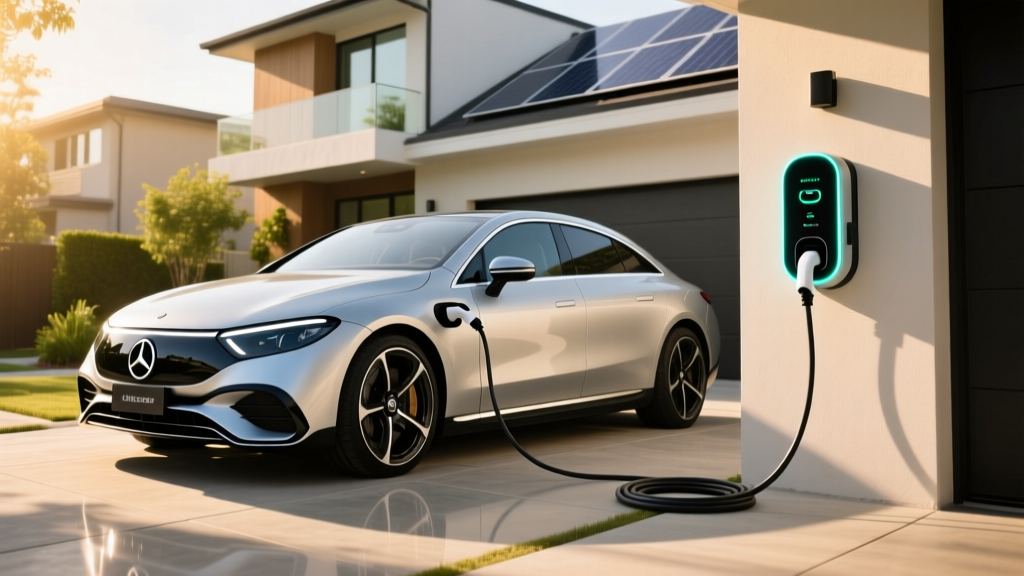
For 2026 Mercedes EQS owners with native NACS ports, the ChargePoint Home Flex or Tesla Wall Connector are the strongest picks — both deliver 11.5 kW on a 60A circuit, which fully charges the EQS's 107.8 kWh battery in about 10 hours. If your panel can only spare a 40A circuit, these chargers adjust down to 9.6 kW, extending full-charge time to roughly 12 hours — still perfectly adequate for overnight replenishment.
Safety, Electrical Code, and Installation Best Practices
EV charging is a high-draw, continuous electrical load — it runs at maximum capacity for hours, unlike a microwave or dryer that cycles on and off. This makes proper installation critical:
- Dedicated circuit: Your Level 2 charger must be on its own dedicated breaker — never shared with other appliances. A 48A charger requires a 60A breaker per NEC Article 210.20(A) continuous-load rules.
- GFCI protection: The 2023 NEC (adopted by most jurisdictions by 2025–2026) requires GFCI protection for EV charging outlets. Hardwired installations often exempt the charger from GFCI at the breaker since the unit has built-in ground-fault protection — confirm with your local inspector.
- Outdoor rating: If your charger is mounted outside or in an unconditioned garage, ensure it carries a NEMA 4 or IP65 rating for weather resistance. All four chargers recommended above are outdoor-rated.
- Wire gauge: A 60A circuit requires 4 AWG copper wire (or 3 AWG aluminum). Do not let an electrician undersize the wire — this is a fire hazard and will fail inspection.
- Permit and inspection: Every jurisdiction requires a permit for new circuit installation. Skip the permit and you risk voiding home insurance coverage for any electrical fire, plus facing fines at point of sale when the unpermitted work is discovered.
Charging Time Examples for Common EV Battery Sizes
How long does charging actually take? Here are real-world 10–80% DC fast charge times and Level 2 overnight times for popular 2026 EVs:
| Vehicle | Battery (kWh usable) | Peak DC kW | 10–80% DC Fast | Level 2 (11.5 kW) Full Charge |
|---|---|---|---|---|
| Mercedes EQS 450+ | 107.8 | 200 kW | ~31 min | ~10 hours |
| Mercedes EQE 350+ | 90.6 | 170 kW | ~32 min | ~8.5 hours |
| Tesla Model Y Long Range | 78.1 | 250 kW | ~25 min | ~7.5 hours |
| Hyundai Ioniq 5 (Long Range) | 84.0 | 350 kW* | ~18 min | ~8 hours |
| Ford F-150 Lightning (Extended) | 131.0 | 150 kW | ~41 min | ~12.5 hours |
*Ioniq 5 requires an 800V-capable DC fast charger (e.g., Electrify America 350 kW stall) to achieve peak rate. Most 2026 stations deliver 150–250 kW in practice.
Mercedes DRIVE PILOT and Charging: The Ownership Connection
If you're researching Mercedes Level 3 self-driving, you're likely evaluating the EQS or EQS SUV as a tech-forward luxury purchase. DRIVE PILOT's Level 3 capability — hands-off, eyes-off driving below 40 mph on suitable highways — is genuinely impressive engineering, but it's available only in specific geofenced corridors and weather conditions. The NHTSA continues to evaluate Level 3 deployment frameworks, and Mercedes limits DRIVE PILOT activation to mapped divided highways with clear lane markings and good weather.
What affects your daily experience far more is charging infrastructure. A well-installed home Level 2 charger means you start every morning with a full battery — approximately 390 miles of range in the EQS 450+ — without ever visiting a gas station or public charger for daily driving. The combination of Level 3 highway assist on your commute and effortless home charging is what makes the modern luxury EV ownership experience fundamentally different from combustion vehicles.
The EQS battery carries an 8-year/100,000-mile warranty with a guaranteed minimum 70% State of Health (SoH) retention threshold, consistent with Mercedes' NMC cell management strategy. Real-world degradation data from early EQS owners suggests approximately 5–8% capacity loss over the first 100,000 miles when DC fast charging is used sparingly and daily charging is limited to 80% SoC — a best practice Mercedes' built-in charge-limit setting makes easy to follow.
Frequently Asked Questions
Is Mercedes Level 3 self-driving available everywhere in the US?
No. As of 2026, Mercedes DRIVE PILOT (Level 3) is approved only in limited operational design domains — specific highway corridors in California and Nevada under strict conditions (below 40 mph, clear weather, mapped roads). It is not a nationwide feature and cannot be activated on surface streets or unmapped highways. Always verify current availability with your local Mercedes dealer, as approval zones expand incrementally. Source: NHTSA Automated Vehicles
How much does it cost to install a home EV charger?
A standard Level 2 home charger installation (48A, hardwired) costs between $1,000 and $2,650 including equipment, electrician labor, and permits — assuming your electrical panel has adequate capacity. If your home has a 100A panel that needs upgrading to 200A, add $1,500–$4,000 for the panel upgrade. The federal §30C credit may cover 30% of equipment and installation up to $1,000 if you meet income and location requirements.
How fast will each charging level add range to a Mercedes EQS?
Level 1 (120V) adds roughly 3–5 miles per hour — impractical for the EQS's large battery. Level 2 (240V at 48A / 11.5 kW) adds approximately 35–40 miles per hour, fully charging overnight. DC fast charging at 200 kW adds roughly 180–200 miles in 15 minutes during the peak charge window (10–40% SoC), tapering significantly above 80%.
Which connector does my 2026 Mercedes use?
2025 and newer Mercedes-Benz EVs use the NACS (North American Charging Standard) connector natively, providing direct access to Tesla Superchargers and all CCS-based public networks. 2022–2024 models use CCS1 and require a CCS-to-NACS adapter ($200–$250) for Supercharger access.
How much does charging cost per mile compared to gas?
At home on off-peak electricity rates ($0.08–$0.12/kWh), the Mercedes EQS costs approximately $0.03–$0.04 per mile to charge — roughly one-third the cost of a 30 MPG gas car at $3.40/gallon ($0.11/mile). Even at public DC fast charger rates ($0.35–$0.55/kWh), EV charging costs $0.11–$0.18 per mile, which is comparable to or slightly above gas.
What electrical upgrades might I need for a home charger?
The most common upgrade is a panel capacity increase from 100A to 200A, required when your existing panel lacks spare capacity for a 60A dedicated EV circuit. Other potential needs include: replacing a Federal Pacific or Zinsco panel (known fire hazards that insurers may require replacing), upgrading aluminum service entrance wiring, or adding a sub-panel if the charger is far from the main panel (e.g., detached garage). A licensed electrician's load calculation is the first step — this typically costs $100–$250 and should be done before purchasing any equipment.