Understanding the Mercedes EQS 450 Battery and Range
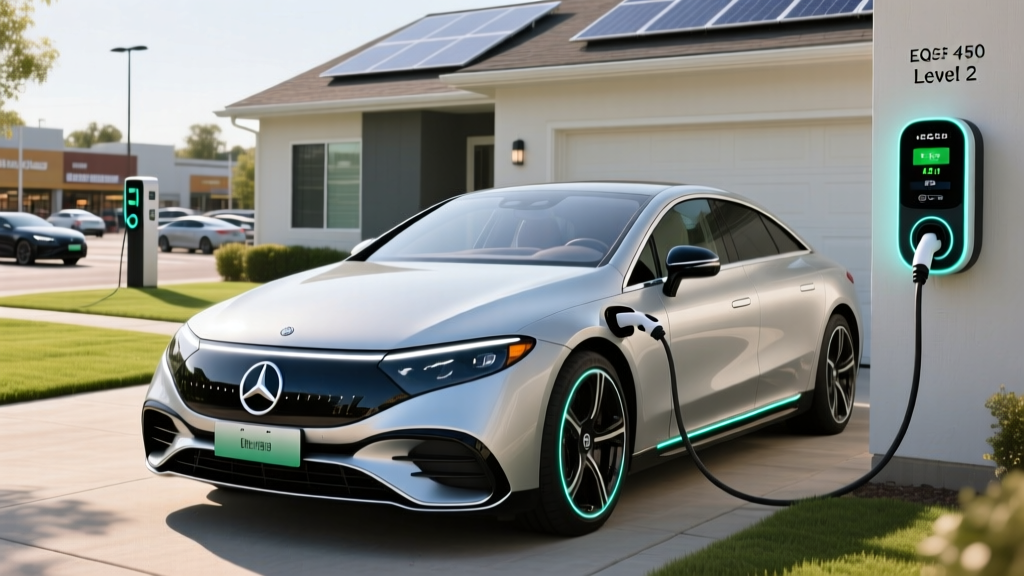
The 2026 Mercedes-Benz EQS 450+ sedan packs a massive 118 kWh usable battery (NMC chemistry), delivering an EPA-estimated 390 miles of range on a single charge. The all-wheel-drive EQS 450 4MATIC, with its dual-motor setup producing 355 horsepower, sees that EPA figure drop slightly to 345 miles due to the added drivetrain weight and friction.
Real-World Range Expectations
EPA Sticker: 390 miles (450+ RWD) / 345 miles (4MATIC)
Highway (70-80 mph): Expect 310-340 miles. Aerodynamic drag rises exponentially at speed, and the EQS's large frontal area compounds this.
Cold Weather (sub-32°F): Plan for 270-310 miles. Lithium-ion chemistry slows in cold, and cabin heating draws significant energy even with the EQS's standard heat pump.
Combined Real-World Average: Most owners report 330-360 miles in mixed driving during moderate temperatures.
Whether you're commuting locally or planning a cross-country road trip, how you charge this 118 kWh pack determines your daily convenience and your wallet. Let's break down every charging scenario.
Charging Levels Explained: Speeds, Power, and Range Added
The single most common confusion among new EV owners is the difference between kW (kilowatts) and kWh (kilowatt-hours). Think of kW as the flow rate of electricity — how fast energy is moving into your battery. Think of kWh as the total volume of energy stored — the size of your tank. The EQS 450's 118 kWh battery is the tank. A charger's kW rating tells you how fast you can fill it.
| Charging Level | Voltage | Power (kW) | Miles of Range Added Per Hour | Typical Use Case |
|---|---|---|---|---|
| Level 1 | 120V AC | 1.0–1.4 kW | 3–5 miles/hr | Emergency top-up, overnight trickle for PHEVs |
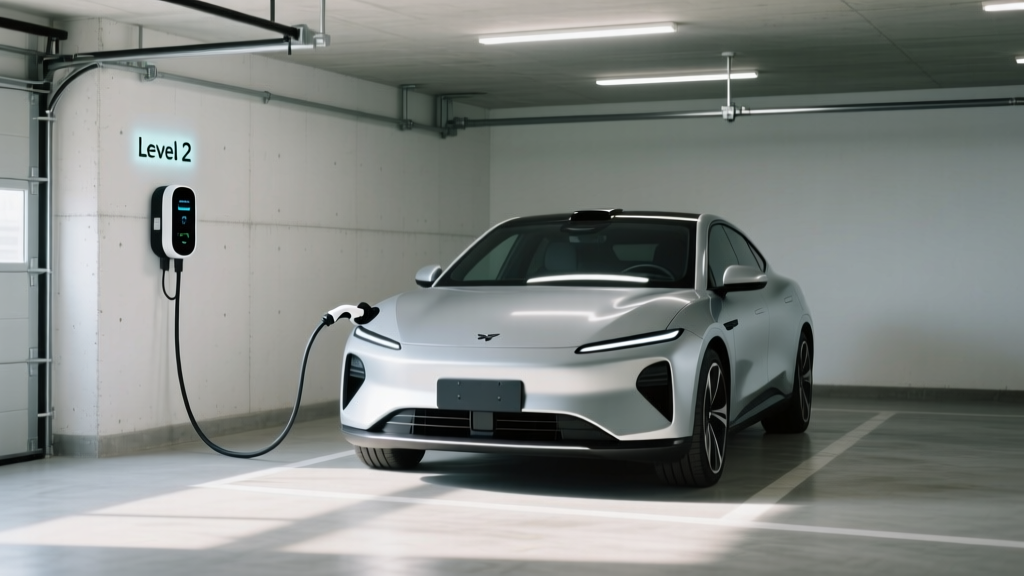
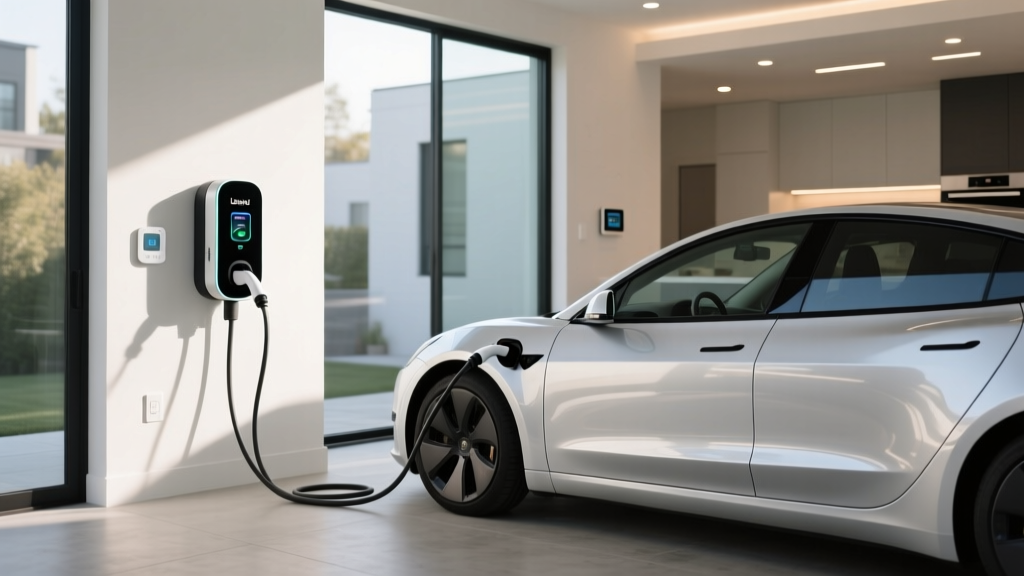
| Level 2 (Home) | 240V AC | 7.2–11.5 kW | 22–40 miles/hr | Daily home charging, workplace charging |
| DC Fast Charging | 400V+ DC | 50–200 kW | 180–600+ miles/hr | Road trips, rapid top-ups on highways |
For the EQS 450 with its 118 kWh battery, Level 1 charging is essentially impractical for a full recharge — it would take roughly 80-100 hours. Level 2 is your daily workhorse. DC fast charging is your road-trip essential.
Charging Time Examples: 10-80% State of Charge
Most EV owners charge between 10% and 80% State of Charge (SoC) rather than 0-100%. Charging above 80% slows dramatically — the battery management system tapers current to protect cell longevity. Here's what 10-80% looks like across charging levels for the EQS 450's 118 kWh pack (roughly 82.6 kWh to replenish):
- Level 1 (1.4 kW): ~59 hours — not viable for regular use
- Level 2 (11.5 kW): ~7.5 hours — ideal for overnight charging
- Level 2 (7.7 kW): ~10.7 hours — workable but tight for heavy daily use
- DC Fast (200 kW peak): ~31 minutes (10-80%). The EQS 450 peaks at 200 kW on a compatible CCS charger, though sustained rate averages closer to 140-150 kW as the curve tapers above 50% SoC
On a road trip, that 31-minute DC fast stop is enough time for a rest break and a meal. The charge curve matters: you'll see 200 kW briefly in the 10-30% SoC window, then it steps down progressively. Don't expect a linear fill.
Home Level 2 Charger Installation: Electrical Requirements and Costs
To unlock the EQS 450's onboard 11.5 kW AC charger, you need a Level 2 home station delivering at least 48 amps on a 240-volt circuit. Here's the electrical reality:
- Circuit requirement: 60-amp dedicated breaker (the National Electrical Code requires continuous loads to use only 80% of circuit capacity — so 48A continuous draw needs a 60A breaker)
- Wire gauge: 6 AWG copper for runs under 50 feet; 4 AWG for longer runs
- Panel capacity: Your home's main electrical panel must have spare capacity. A 200-amp panel with existing heavy loads (electric range, dryer, HVAC) may need a panel upgrade to 300-400 amps or a smart load-management system
How Much Does It Cost to Install a Home EV Charger?
| Cost Component | Typical Range | Notes |
|---|---|---|
| Level 2 Charger (Equipment) | $400–$750 | 48A smart Wi-Fi charger, 25ft cable |
| Electrician Labor | $500–$2,000 | Depends on panel proximity, wall type, conduit run length |
| Permit & Inspection | $100–$400 | Varies by municipality; some jurisdictions waive for EV installs |
| Panel Upgrade (if needed) | $1,500–$4,000 | 200A → 300/400A; common in older homes with all-electric appliances |
| EVSE Mounting & Miscellaneous | $50–$200 | Pedestal, junction box, outdoor weatherproof enclosure |
| Total (No Panel Upgrade) | $1,050–$3,350 | Most homes with 200A+ panels fall in this range |
| Total (With Panel Upgrade) | $2,550–$7,350 | Older homes or those with heavy existing electrical loads |
Always hire a licensed electrician who will pull a permit. Unpermitted work can void your homeowner's insurance and create fire risk. According to Energy.gov's home charging guide, permitted installations also protect your home resale value.
What Electrical Upgrades Might I Need?
Before scheduling an electrician, check your panel's amperage rating (printed on the main breaker). If you have a 100-amp panel — common in homes built before 1980 — a panel upgrade is almost certain. Even 200-amp panels may need upgrading if you run electric heat, an electric oven, an electric dryer, and a hot tub simultaneously. Some utilities offer smart splitter devices (like the NeoCharge Smart Splitter, ~$500) that share a dryer circuit with your EVSE, avoiding a panel upgrade entirely.
Connector Compatibility: NACS, CCS1, and the Mercedes-Benz Shift
For the 2026 model year, Mercedes-Benz has transitioned its US-market EVs, including the EQS 450, to the North American Charging Standard (NACS) — the connector pioneered by Tesla and now adopted industry-wide. This is a significant shift from the CCS1 connector used on 2022-2024 EQS models.
| Connector Type | Used By | DC Fast Charging | AC Level 2 | Adapter Needed for EQS 450 (2026) |
|---|---|---|---|---|
| NACS (Tesla) | Tesla, Ford, GM, Rivian, Mercedes (2025+), Hyundai (2025+) | Yes — up to 350+ kW | Yes | Native — no adapter |
| CCS1 | VW, BMW, older Mercedes, most 2022-2024 EVs | Yes — up to 350 kW | Yes (via J1772) | NACS-to-CCS adapter (~$200-300) for legacy Electrify America stations |
| CHAdeMO | Nissan Leaf (legacy) | Yes — up to 100 kW | No | Rarely needed; network is sunsetting |
The 2026 EQS 450 with NACS gains direct access to the Tesla Supercharger network — over 25,000 stalls in North America — without any adapter. This is a major practical advantage for road-trip charging reliability. For older CCS-only public chargers (many Electrify America and EVgo stations still use CCS1), Mercedes offers an official NACS-to-CCS adapter.
Public Charging Networks and DC Fast Charging the EQS 450
The EQS 450's 200 kW peak DC fast-charge capability means you can add roughly 185 miles of range in about 15 minutes at a compatible station. But real-world public charging depends heavily on network reliability and station availability.
Tesla Supercharger Network (NACS): Now accessible natively on the 2026 EQS 450. V3 Superchargers deliver up to 250 kW; V4 stalls are rated higher. Expect consistent uptime and automatic plug-and-charge billing via the Mercedes me app integration.
Electrify America: Operates 350 kW CCS1 chargers. With the NACS-to-CCS adapter, the EQS 450 can use these, though actual charge speed depends on the vehicle's acceptance curve. Reliability has improved but still lags Superchargers in independent surveys.
EVgo and ChargePoint: Mixed networks with both CCS and NACS stalls being rolled out. Check the PlugShare or Mercedes me app for real-time connector availability before driving to a station.
According to fueleconomy.gov's EV charging technology overview, DC fast charging infrastructure continues to expand, but rural corridors remain underserved. Plan road trips with apps like A Better Routeplanner to avoid charging deserts.
Cost to Charge: Home vs. Public vs. Gas Comparison
The EQS 450+ achieves an EPA-rated 97 MPGe combined (roughly 34 kWh per 100 miles). Let's translate that into real dollars.
| Charging Scenario | Cost per kWh | Cost per 100 Miles | Cost per Mile | Full 118 kWh Charge Cost |
|---|---|---|---|---|
| Home (Off-Peak Utility Rate) | $0.09–$0.13 | $3.06–$4.42 | $0.03–$0.04 | $10.62–$15.34 |
| Home (Average US Residential) | $0.16–$0.17 | $5.44–$5.78 | $0.05–$0.06 | $18.88–$20.06 |
| Public Level 2 (ChargePoint/EVgo) | $0.25–$0.49 | $8.50–$16.66 | $0.09–$0.17 | $29.50–$57.82 |
| DC Fast Charging (EA/Supercharger) | $0.32–$0.55 | $10.88–$18.70 | $0.11–$0.19 | $37.76–$64.90 |
| Gasoline Car (28 MPG, $3.30/gal) | — | $11.79 | $0.12 | — |
At home off-peak rates, the EQS 450 costs roughly one-quarter to one-third per mile what a comparable gasoline S-Class costs to fuel. Even at public DC fast-charging rates, you're often paying less per mile than premium gasoline. The savings compound: a driver covering 15,000 miles annually saves $900-$1,400 per year by charging at home versus buying gas at $3.30/gallon for a 28 MPG vehicle.
How Much Does Charging Cost Per Mile vs. Gas?
The quick answer: home charging costs 3-6 cents per mile in the EQS 450, while a comparable luxury gas sedan costs 11-14 cents per mile. Public DC fast charging narrows the gap to roughly 11-19 cents per mile — comparable to gas but with the convenience of charging while parked. For the best economics, install a home Level 2 charger and enroll in your utility's time-of-use (TOU) plan to access off-peak rates below $0.10/kWh.
Recommended Home Level 2 Chargers for the EQS 450
To fully utilize the EQS 450's 11.5 kW onboard charger, select a 48-amp (or higher) Level 2 station. Here are our top picks for 2026:
ChargePoint Home Flex (NACS)
- Power Output: Up to 11.5 kW (48A) on a 60A circuit
- Connector: Native NACS plug (2025+ models)
- Cable Length: 24 feet
- Smart Features: Wi-Fi, app scheduling, Alexa integration, energy tracking
- Price: ~$550–$650
- Best For: Mercedes owners wanting app integration and flexible amperage settings
Tesla Wall Connector (NACS)
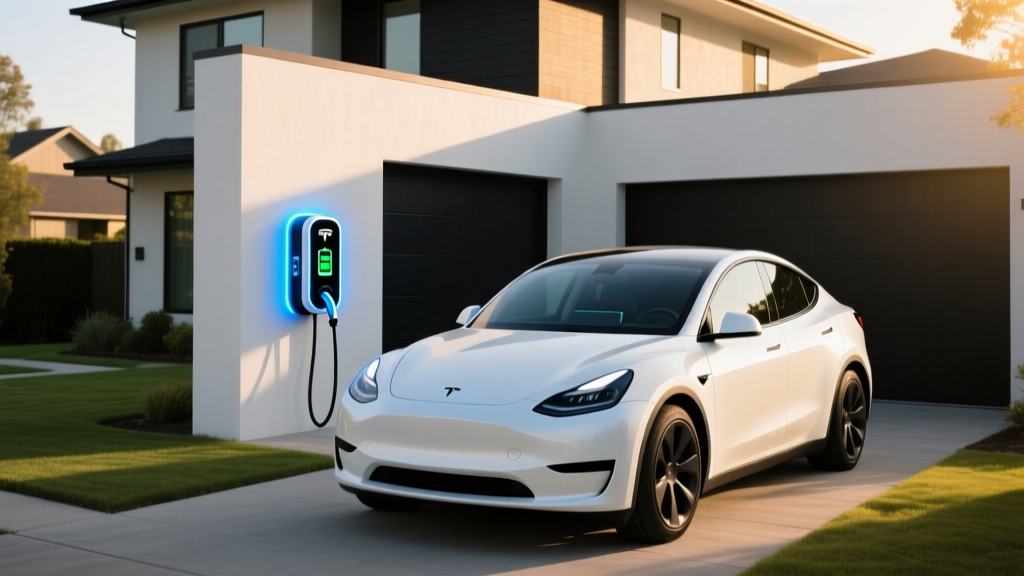
- Power Output: Up to 11.5 kW (48A)
- Connector: Native NACS
- Cable Length: 24 feet
- Smart Features: Wi-Fi, over-the-air updates, load sharing between multiple units, Powerwall integration
- Price: ~$425–$475
- Best For: Best value-to-performance ratio; excellent if you also own a Tesla
Emporia Level 2 EV Charger
- Power Output: Up to 11.5 kW (48A)
- Connector: NACS (2025+ revision)
- Cable Length: 24 feet
- Smart Features: Wi-Fi, whole-home energy monitoring via Emporia Vue, solar integration
- Price: ~$400–$500
- Best For: Solar-panel owners and energy-monitoring enthusiasts
All three chargers support NACS natively and deliver the full 11.5 kW the EQS 450 can accept. The Tesla Wall Connector offers the best price, while the ChargePoint Home Flex provides the most robust third-party app ecosystem. Never buy a charger rated below 40 amps for the EQS — you'll leave charging speed on the table overnight.
Safety, Electrical Code, and Installation Best Practices
EV charging involves sustained high-current draw — often for 6-8 hours straight. This is fundamentally different from intermittent loads like a dryer or oven. Safety considerations are non-negotiable:
- Dedicated circuit: Your EVSE must be on its own dedicated breaker — never shared with other outlets or appliances
- GFCI protection: NEC 2020 and later require GFCI (Ground Fault Circuit Interrupter) protection for outdoor EVSE installations. Many modern chargers have built-in GFCI; confirm with your electrician to avoid nuisance tripping from double-GFCI configurations
- Outdoor rating: If installing outside, ensure the charger carries a NEMA 4 (weatherproof) rating. All three recommended chargers above are outdoor-rated
- Hardwired vs. plug-in: Hardwired installations (no plug, direct wire to the unit) are preferred for 48A+ chargers. A NEMA 14-50 receptacle is limited to 40A continuous and requires a higher-quality receptacle (Hubbell or Bryant brand — not the cheaper Leviton units that have overheated under sustained EV loads)
- Permit and inspection: A licensed electrician should pull an electrical permit. The inspection ensures wire gauge, breaker sizing, and grounding meet code. Skip this step at your own risk — unpermitted work has caused documented EV-related residential fires
For a detailed overview of NEC requirements for EV charging, see the NFPA's EV charging safety resources.
Frequently Asked Questions
How fast will each charging level add range to my EQS 450?
Level 1 (120V) adds roughly 3-5 miles per hour — essentially unusable for the EQS's 118 kWh battery. Level 2 (240V, 48A) adds approximately 35-40 miles per hour, enough for a full overnight recharge. DC fast charging at 200 kW peak adds roughly 185 miles in 15 minutes, tapering as the battery fills past 50% SoC.
Which connector and charger is compatible with my 2026 EQS 450?
The 2026 EQS 450 uses the NACS connector natively. This means direct compatibility with Tesla Superchargers, Tesla Wall Connectors, and all new NACS-equipped public chargers. For legacy CCS1 stations, you'll need a NACS-to-CCS adapter from Mercedes-Benz or a certified third party.
How much does it cost to install a home EV charger for the EQS 450?
Expect $1,050-$3,350 for a standard installation (equipment, electrician, permit) if your electrical panel has sufficient capacity. If a panel upgrade from 200A to 300A+ is needed, total costs range from $2,550-$7,350. Always get multiple electrician quotes and verify they pull a permit.
How much does charging the EQS 450 cost per mile versus gas?
Home charging at average US residential rates ($0.16/kWh) costs roughly 5-6 cents per mile. A comparable luxury gasoline sedan at 28 MPG and $3.30/gallon costs about 12 cents per mile. Over 15,000 miles per year, that's roughly $900-$1,050 in annual fuel savings with home charging.
What electrical upgrades might I need for a 48-amp home charger?
You need a 60-amp dedicated breaker with 6 AWG wire. If your home has a 100-amp panel, or a 200-amp panel already near capacity with electric appliances, you'll likely need a panel upgrade to 300 or 400 amps ($1,500-$4,000). Alternatively, a smart load-management device can share an existing high-amperage circuit (like a dryer outlet) to avoid the upgrade.
Should I charge the EQS 450 to 100% every night?
No. For daily driving, set your charge limit to 80% to prolong battery health. The NMC chemistry in the EQS degrades faster when held at high SoC for extended periods. Reserve 100% charges for road trips where you need the full 390-mile EPA range. Mercedes-Benz's battery warranty covers 10 years or 155,000 miles with a 70% capacity retention threshold, but conservative charging habits help you stay well above that floor.