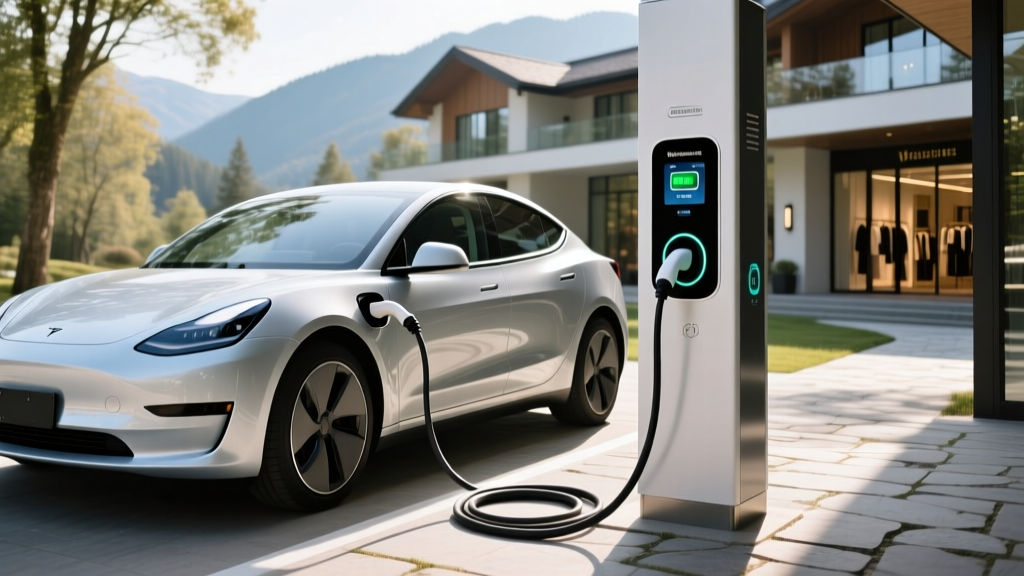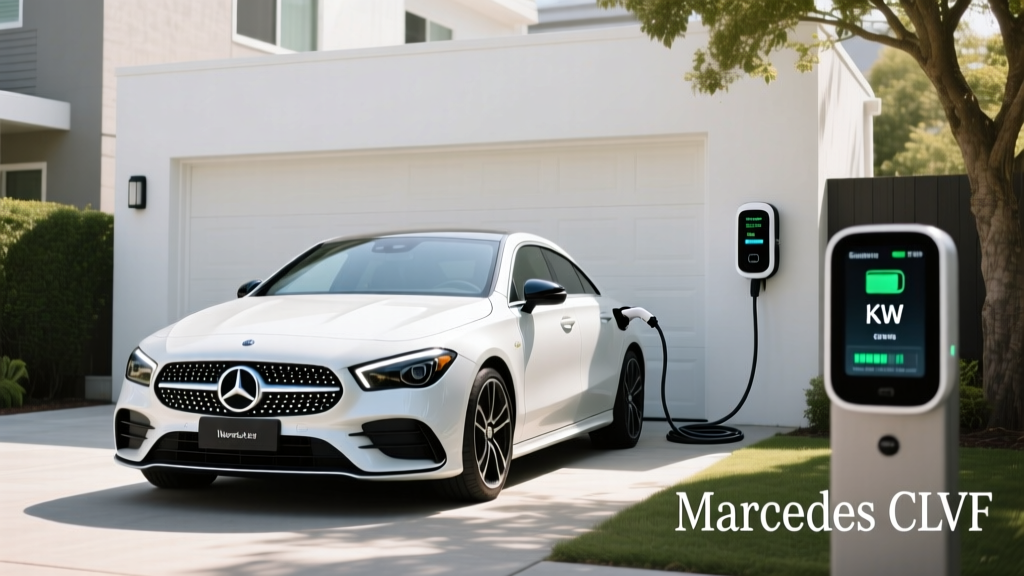
The 2026 Mercedes-Benz CLA EV is the first production model on the brand's all-new Modular Architecture (MMA), and it arrives with a headline number: an EPA-estimated range north of 340 miles on the Long Range trim. But range is only half the ownership equation. How quickly you replenish that 85 kWh (usable) battery — at home, on road trips, and at public chargers — determines whether the CLA EV fits your daily life or becomes a source of friction.
This guide breaks down the CLA EV's charging hardware, the realistic cost and timeline for home Level 2 installation, connector compatibility as Mercedes transitions to NACS, and what you'll actually pay per mile compared to a gas-powered CLA 250. All figures reflect the 2026 model year and current U.S. infrastructure.
Mercedes CLA EV Range and Efficiency: Sticker vs. Reality
The 2026 CLA EV launches in two primary battery configurations for the U.S. market:
- CLA 250e (Standard Range): ~62 kWh usable LFP battery, EPA-est. 275 miles, 268 hp, 0–60 mph in 6.2 seconds.
- CLA 350e (Long Range): ~85 kWh usable NMC battery, EPA-est. 343 miles, 268 hp (single motor) or 402 hp (4MATIC dual motor), 0–60 mph in 5.8s (RWD) or 4.4s (AWD).
Efficiency lands around 3.0–3.3 miles per kWh (roughly 100–112 MPGe combined), competitive with the Hyundai Ioniq 6 and slightly behind the Tesla Model 3 Long Range. The 800-volt architecture is the bigger story for charging, not efficiency — it enables sustained high-power DC charging that most 400V competitors cannot match.
Charging Levels Explained: kW, Miles per Hour, and the CLA EV
Before discussing hardware, the distinction that trips up most new EV owners: kW (kilowatts) measures the rate of energy flow — think of it as how wide the hose is. kWh (kilowatt-hours) measures total energy stored — the size of the tank. A 150 kW charger fills an 85 kWh battery in roughly 34 minutes at peak rate, but real-world charging curves mean it takes longer.
| Level | Voltage / Amperage | Power (kW) | Miles of Range Added per Hour | 0–100% Time (85 kWh Battery) |
|---|---|---|---|---|
| Level 1 (120V outlet) | 120V / 12A | 1.4 kW | 3–5 mi/hr | ~60+ hours |
| Level 2 (240V home/public) | 240V / 40–48A | 9.6–11.5 kW | 28–38 mi/hr | 7.5–9 hours |
| DC Fast Charging | 400–800V DC | Up to 250 kW peak | ~650+ mi/hr (at peak) | 10–80% in ~22 min |
The CLA EV's onboard AC charger maxes out at 11 kW (48A at 240V), meaning a 48A or higher Level 2 circuit will fully utilize the car's capability. Anything beyond 48A on the charger side won't speed things up — the car is the bottleneck, not the wall unit.
On DC fast charging, the 800V architecture allows the CLA Long Range to accept up to 250 kW at compatible stations. Mercedes quotes a 10–80% time of approximately 22 minutes under ideal conditions (preconditioned battery, 350 kW-capable stall). The Standard Range LFP model peaks lower, around 175 kW, yielding a 10–80% time closer to 28 minutes.
Home Charger Installation: Electrical Requirements, Costs, and Panel Upgrades
Charging at home is where 80–90% of CLA EV owners will replenish their battery. The question is whether your home's electrical system can support it — and what it will cost.
Electrical Requirements for the CLA EV
To charge at the CLA's maximum 11 kW AC rate, you need:
- A 240-volt, 60-amp dedicated circuit (to allow continuous 48A draw, per NEC 80% rule)
- A hardwired wall connector or NEMA 14-60 outlet (hardwired is preferred for 48A+ units)
- 6 AWG copper wire for runs up to 50 feet; 4 AWG for longer runs
- Available capacity in your main electrical panel (at minimum 60A of unused capacity)
Installation Cost Breakdown
| Item | Typical Range | Notes |
|---|---|---|
| Level 2 Charger Unit (48A) | $400–$750 | Smart Wi-Fi units cost more; see equipment picks below |
| Electrician Labor (60A circuit, 30–50 ft run) | $600–$1,500 | Varies by region, wall/ceiling routing, conduit needs |
| Permit & Inspection | $75–$300 | Required in most jurisdictions; protects warranty & insurance |
| Panel Upgrade (if needed: 100A → 200A) | $1,500–$3,500 | Homes built before 1990 with 100A service often require this |
| Total (no panel upgrade) | $1,075–$2,550 | Most homes with 200A service fall in this range |
| Total (with panel upgrade) | $2,575–$6,050 | Older homes; includes new panel, permit, utility coordination |
The IRS §30D tax credit does not cover home charging equipment directly for most buyers in 2026 (the separate §30C alternative fuel infrastructure credit expired for residential use). However, some utilities offer rebates of $250–$500 for installing a smart Level 2 charger — check with your local provider. A licensed electrician should perform a load calculation before any work begins.
What Electrical Upgrades Might You Need?
Beyond the circuit itself, common upgrade scenarios include:
- Panel capacity: If your 200A panel is already near capacity (electric range, HVAC, dryer, EV charger), an electrician may recommend a load-management device like the Emporia Smart Load Manager or a panel upgrade.
- Conduit and trenching: If your garage is detached or the run exceeds 50 feet through finished walls, costs escalate quickly. Surface-mount conduit in an unfinished garage is the cheapest path.
- GFCI breaker: The 2023 NEC (adopted in most states by 2026) requires GFCI protection for 240V EV outlets. Hardwired chargers bypass this requirement, which is one reason most electricians prefer hardwiring for 48A+ units.
Connector Compatibility: NACS, CCS, and the Mercedes Transition
The 2026 CLA EV ships from the factory with a CCS1 (Combined Charging System) port for the U.S. market. However, Mercedes-Benz has committed to adopting the NACS (North American Charging Standard, i.e., Tesla's connector) on new vehicles, and the CLA is in a transitional window.
| Connector | Used By | CLA EV Compatibility |
|---|---|---|
| CCS1 | Electrify America, EVgo, most non-Tesla networks | Native — built into the car |
| NACS (Tesla) | Tesla Supercharger network (17,000+ U.S. stalls) | Requires CCS-to-NACS adapter (~$200–$250 from Mercedes or third-party) |
| CHAdeMO | Legacy Nissan Leaf, some older public stations | Not compatible; no adapter available. Network is being phased out. |
| J1772 (Level 2 AC) | All public Level 2 stations, home chargers | Native — CCS port includes J1772 inlet |
The practical advice for 2026 CLA EV buyers: purchase a high-quality CCS-to-NACS adapter rated for at least 250 kW DC. This unlocks the Tesla Supercharger network, which remains the most reliable and geographically comprehensive DC fast-charging infrastructure in the U.S. Mercedes offers an OEM adapter through dealerships; aftermarket options from brands like Lectron and A2Z are also available but verify UL listing before purchasing.
Cost to Charge: Per-Mile Economics vs. Gas CLA 250
One of the strongest ownership arguments for the CLA EV over the gas CLA 250 (EPA-est. 30 MPG combined) is fuel cost. Here's how it breaks down across common charging scenarios:
| Scenario | Cost per kWh | Cost per Mile (CLA EV at 3.1 mi/kWh) | Annual Cost (12,000 mi) |
|---|---|---|---|
| Home, off-peak (utility rate) | $0.11/kWh | $0.035/mi | $420 |
| Home, standard rate | $0.16/kWh | $0.052/mi | $624 |
| Public Level 2 (ChargePoint, etc.) | $0.25/kWh | $0.081/mi | $972 |
| DC Fast Charging (EA, EVgo) | $0.40/kWh | $0.129/mi | $1,548 |
| Gas CLA 250 (30 MPG, $3.40/gal) | — | $0.113/mi | $1,356 |
Even at standard residential rates, the CLA EV costs roughly half per mile to fuel compared to the gas CLA. The break-even point against gas is roughly $0.35/kWh — meaning only exclusive reliance on the most expensive DC fast chargers would erase the EV cost advantage. Most owners who charge at home 80%+ of the time will spend $400–$650 annually on electricity for the CLA EV.
Recommended Home Chargers for the CLA EV
Given the CLA's 11 kW onboard charger and 48A maximum AC draw, here are three Level 2 units that maximize its capability:
Wallbox Pulsar Plus (48A)
- Power: 11.5 kW max (48A @ 240V)
- Connector: J1772 (CCS-compatible)
- Cable: 25 ft
- Smart: Wi-Fi, app scheduling, load balancing
- Price: ~$549
Best value for full 11 kW CLA charging.
ChargePoint Home Flex (50A)
- Power: 12 kW max (50A @ 240V)
- Connector: J1772 (CCS-compatible)
- Cable: 23 ft
- Smart: Wi-Fi, Alexa, detailed energy tracking
- Price: ~$649
Strong app ecosystem, slightly overkill for CLA's 48A limit.
Emporia Level 2 EV Charger (48A)
- Power: 11.5 kW max (48A @ 240V)
- Connector: J1772 (CCS-compatible)
- Cable: 24 ft
- Smart: Wi-Fi, solar integration, real-time cost tracking
- Price: ~$399
Budget pick with excellent smart features.
All three units are UL-listed, outdoor-rated (NEMA 4), and support hardwired installation. For the CLA EV specifically, the Wallbox Pulsar Plus hits the sweet spot — it delivers the car's maximum AC charge rate without paying for amperage the car cannot use.
Safety, Code, and Best Practices
EV charging involves sustained high-current draw — often 8+ hours at a time. This is not the same as running a dryer for 45 minutes. Key safety considerations:
- Dedicated circuit: Never share the EV charger circuit with other appliances. A 60A breaker should serve only the charger.
- Hardwired vs. outlet: For 48A charging, hardwired installation is strongly preferred. NEMA 14-50 outlets are rated for 50A but sustained 40A draw can overheat lower-quality receptacles. If using an outlet, specify a Hubbell or Bryant industrial-grade 14-50R.
- GFCI protection: Required for receptacle-based installs under NEC 2023/2026. Hardwired units avoid this requirement and eliminate nuisance tripping.
- Outdoor rating: If mounting outside, confirm the unit carries a NEMA 4 or NEMA 4X rating. All three picks above qualify.
- Cable management: Use a holster or retractor to keep the cable off the ground. A 25-foot cable dragging on a garage floor will degrade faster and pose a trip hazard.
The Mercedes-Benz new-vehicle warranty covers the battery for 8 years or 100,000 miles (whichever comes first), with a capacity retention threshold of 70%. Proper home charging at Level 2 — avoiding daily DC fast charging and extreme state-of-charge storage — supports long-term battery health.
Charging Time Examples: CLA EV Battery Sizes
For quick planning, here's how long key charge sessions take with the CLA EV's two battery options:
| Scenario | Standard Range (62 kWh) | Long Range (85 kWh) |
|---|---|---|
| Level 1 (120V/12A): 20–80% | ~27 hours | ~37 hours |
| Level 2 (240V/48A): 20–80% | ~4.5 hours | ~6.2 hours |
| DC Fast (250 kW): 10–80% | ~28 minutes (175 kW peak) | ~22 minutes (250 kW peak) |
| DC Fast: add 150 miles | ~18 minutes | ~14 minutes |
A note on charge curves: the 250 kW peak rate applies roughly between 10% and 40% state of charge. Above 60%, the rate tapers significantly — often to 80–100 kW. Above 80%, it drops further to protect battery longevity. This is why 10–80% is the standard metric; charging from 80–100% on DC can take as long as the first 70%.
Frequently Asked Questions
How much does it cost to install a home EV charger for the Mercedes CLA?
Expect $1,075–$2,550 for a standard installation in a home with a 200A panel and a garage-adjacent mounting location. This includes the charger unit ($400–$750), electrician labor ($600–$1,500), and permits ($75–$300). If your home requires a panel upgrade from 100A to 200A service, add $1,500–$3,500, bringing the total to $2,575–$6,050. Always get a load calculation from a licensed electrician before committing.
How fast will each charging level add range to the CLA EV?
Level 1 (120V) adds roughly 3–5 miles per hour — adequate only for overnight trickle charging if you drive less than 30 miles daily. Level 2 (240V/48A) adds 28–38 miles per hour, fully replenishing the Long Range battery in about 7.5–9 hours. DC fast charging at 250 kW can add 150 miles of range in approximately 14 minutes for the Long Range model, though this requires a preconditioned battery and a compatible 350 kW station.
Which connector and charger is compatible with my CLA EV?
The 2026 CLA EV uses a CCS1 port natively, which accepts J1772 (Level 2 AC) and CCS1 (DC fast) connectors. To access Tesla Superchargers, you'll need a CCS-to-NACS adapter ($200–$250). For home charging, any J1772 Level 2 wall unit rated at 48A or higher will work — the car's 11 kW onboard charger limits the maximum AC charge rate regardless of the charger's output.
How much does charging cost per mile compared to the gas CLA 250?
At the U.S. average residential electricity rate of ~$0.16/kWh, the CLA EV costs approximately $0.052 per mile to fuel. The gas CLA 250 at 30 MPG combined and $3.40/gallon costs $0.113 per mile. That's a 54% per-mile savings for the EV when charging at home. Even exclusive DC fast charging at $0.40/kWh ($0.129/mi) is only slightly more expensive than gas — and most owners charge at home the majority of the time.
What electrical upgrades might I need for a home charger?
The most common upgrade is a panel replacement if your home has 100A service (typical in homes built before 1990). Other potential needs include: a new 60A double-pole breaker and available panel slots, conduit routing for long wire runs, a GFCI breaker if using a receptacle, and possibly a load-management device if your panel is near capacity with existing appliances. An electrician's load calculation will identify all requirements before work begins.