Why the Mercedes-Benz High Power Charging Network Matters in 2026
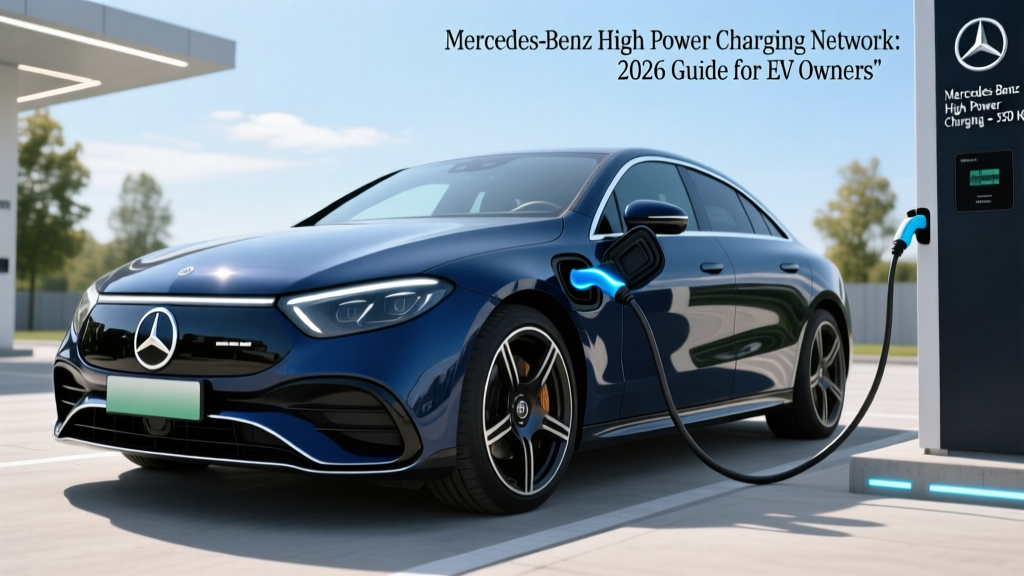
Mercedes-Benz has been aggressively expanding its branded DC fast-charging infrastructure across North America since the first stations opened in 2023. By early 2026, the Mercedes-Benz High Power Charging network operates dozens of premium charging plazas in major metro areas, targeting 2,500 individual charge points by the end of the decade. For EQE, EQS, and EQB owners — as well as drivers of any NACS- or CCS-equipped EV — these stations represent some of the fastest, most reliable public charging available.
But public DC fast charging is only one piece of the ownership puzzle. Most Mercedes-Benz EV owners still do 80% or more of their charging at home on Level 2 equipment. This guide covers the full charging ecosystem: what the Mercedes-Benz High Power Charging network actually delivers, how home Level 2 installation works in 2026, what it costs, and which equipment to buy.
Charging Levels Explained: Speeds, Power, and Real-World Range Added
Before evaluating any charging network or home setup, you need to understand the three charging levels and what they actually deliver. The critical distinction: kW (kilowatts) measures power — the rate at which energy flows into your battery. kWh (kilowatt-hours) measures energy — the total capacity stored in the battery. A 90.6 kWh battery in a 2026 EQS 450+ charged at 200 kW doesn't fill in 27 minutes; the charge curve tapers significantly above 80% state of charge.
| Level | Voltage | Max Power (kW) | Miles of Range per Hour | Best For |
|---|---|---|---|---|
| Level 1 | 120V AC | 1.4–1.9 kW | 3–5 mi/hr | Overnight top-ups, PHEVs, emergency |
| Level 2 | 240V AC | 7.2–19.2 kW | 20–60 mi/hr | Daily home charging, workplace |
| DC Fast Charge | 400–900V DC | 50–400 kW | 150–800+ mi/hr (peak) | Road trips, rapid top-ups |
On the Mercedes-Benz High Power Charging network, individual stalls deliver up to 400 kW of DC fast-charging power. A 2026 EQS 450+ with its 90.6 kWh (usable) battery and 200 kW max charge acceptance can add roughly 180 miles of range in a 15-minute session (10–80% SoC). The 800V architecture in newer Mercedes EV platforms allows sustained high-power charging longer than 400V competitors before thermal tapering kicks in.
Mercedes-Benz High Power Charging Network: Locations, Pricing, and Access
The Mercedes-Benz High Power Charging network is a joint venture between Mercedes-Benz and MN8 Energy (a solar and storage company). Stations are strategically placed near highways, shopping centers, and Mercedes-Benz dealerships in high-EV-adoption markets. As of early 2026, active or announced metro areas include Atlanta, Los Angeles, Orlando, Tampa, Miami, Charlotte, and the broader Southeast and Sunbelt corridors, with continued expansion into the Northeast and Pacific Northwest.
Key network features:
- Power output: Up to 400 kW per stall (CCS1 and NACS connectors available at most locations)
- Stall count: 4–12 chargers per plaza, reducing wait times vs. smaller sites
- Amenities: Covered canopies, lounge areas, Wi-Fi, restrooms at flagship locations
- Access: Open to all EVs — not exclusive to Mercedes-Benz owners
- Payment: Mercedes me Charge app, RFID card, or credit card tap-to-pay
- Pricing: Typically $0.38–$0.52/kWh depending on location and time of day, with Mercedes-Benz owners receiving preferential rates through the me Charge ecosystem
For comparison, Electrify America averages $0.43–$0.56/kWh for guest rates, and Tesla Superchargers average $0.25–$0.40/kWh for non-Tesla vehicles. The Mercedes-Benz network sits in the middle-to-upper tier on price but competes on reliability and stall availability.
Home Level 2 Charging: Installation Costs and Electrical Requirements
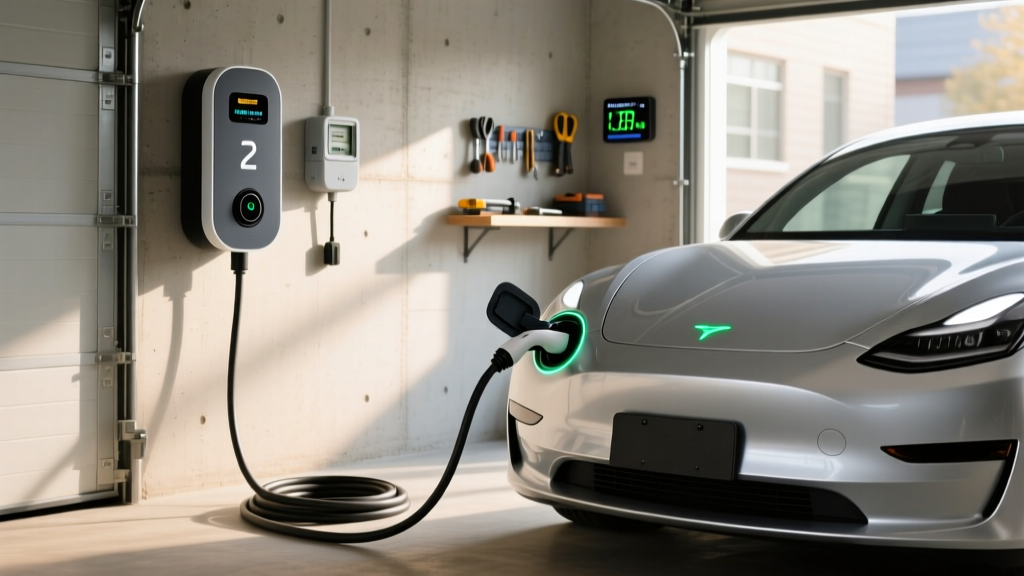
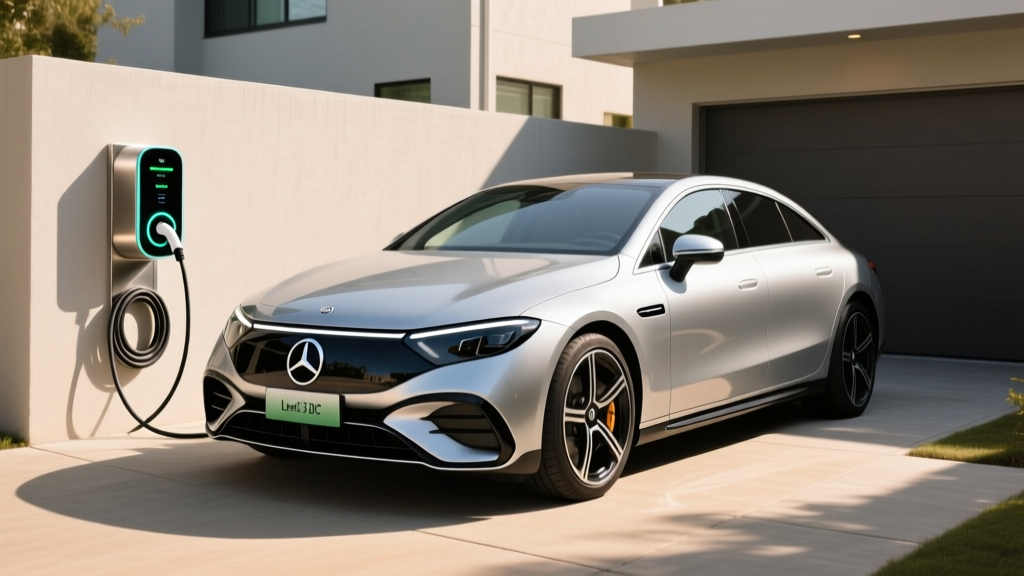
The single most impactful upgrade for any EV owner is a dedicated Level 2 home charger. For a 2026 EQE 350+ with a 90.6 kWh battery, a 48-amp (11.5 kW) Level 2 charger adds roughly 35–40 miles of range per hour — enough to fully replenish overnight from any realistic daily driving distance.
Electrical Requirements for Level 2 Installation
A Level 2 charger requires a 240-volt dedicated circuit. The most common configurations:
- 40-amp circuit / 32-amp continuous: Delivers 7.7 kW — adequate for most daily needs, requires a 50-amp breaker
- 48-amp circuit / 40-amp continuous: Delivers 9.6 kW — optimal for larger batteries like the EQS, requires a 60-amp breaker
- 60-amp circuit / 48-amp continuous: Delivers 11.5 kW — fastest residential Level 2, requires an 80-amp breaker and robust panel capacity
Panel upgrade reality: Many homes built before 2000 have 100-amp or 150-amp electrical panels. Adding a 60-amp EV circuit to a fully loaded 100-amp panel will require a panel upgrade to 200 amps, which costs $1,500–$3,500 on top of the charger installation. Homes with 200-amp panels usually have sufficient capacity, but a licensed electrician must perform a load calculation to confirm.
| Component | Typical Cost Range | Notes |
|---|---|---|
| Level 2 Charger (hardware) | $400–$800 | Smart Wi-Fi charger, 40–48A, 24ft cable |
| Electrician labor (standard install) | $500–$1,500 | Run 240V circuit from panel to garage/carport |
| Electrical permit | $50–$200 | Required in most jurisdictions; varies by city/county |
| Panel upgrade (if needed) | $1,500–$3,500 | 100A → 200A service upgrade |
| Conduit/wiring (long runs) | $200–$800 | If panel is far from charging location |
| Total (no panel upgrade) | $950–$2,500 | Most common scenario for 200A-panel homes |
| Total (with panel upgrade) | $2,450–$6,000 | Older homes with 100A panels |
Connector Compatibility: NACS, CCS1, and What You Need
Connector standards have consolidated significantly since 2024. Here's where things stand in 2026:
| Connector | Brands Using It (Native) | Adapter Needed for Mercedes-Benz High Power Charging? |
|---|---|---|
| NACS (Tesla standard) | Tesla, Ford, GM, Rivian, Volvo, Polestar, Hyundai/Kia (2025+) | No — most Mercedes-Benz High Power stations now include NACS cables |
| CCS1 | Mercedes-Benz (EQ lineup), BMW, VW, Hyundai/Kia (pre-2025) | No — CCS1 cables are standard at Mercedes-Benz High Power stations |
| CHAdeMO | Nissan Leaf (legacy) | Yes — CHAdeMO adapter required; increasingly rare at new stations |
Mercedes-Benz EQ vehicles sold in North America through 2026 use the CCS1 connector natively. The Mercedes-Benz High Power Charging network was designed with CCS1 as its primary connector, though NACS cables have been added to newer and retrofitted stations to serve Ford, GM, and Tesla vehicles. If you drive a NACS-equipped vehicle from another brand, you can use the Mercedes-Benz network without an adapter at updated locations.
Cost to Charge: Home vs. Public vs. Gas per Mile
The economics of EV charging depend heavily on where and when you charge. Here's a realistic comparison for a 2026 Mercedes-Benz EQE 350+ (rated at approximately 3.2 miles per kWh, or ~98 MPGe combined per fueleconomy.gov):
| Scenario | Rate | Cost per kWh | Cost per Mile (EQE 350+) |
|---|---|---|---|
| Home (off-peak utility rate) | Time-of-use plan | $0.09–$0.14/kWh | $0.028–$0.044 |
| Home (standard rate, no TOU) | Flat rate | $0.13–$0.18/kWh | $0.041–$0.056 |
| Mercedes-Benz High Power (DC fast) | Per kWh | $0.38–$0.52/kWh | $0.119–$0.163 |
| Electrify America (DC fast) | Per kWh | $0.43–$0.56/kWh | $0.134–$0.175 |
| Gasoline equivalent (30 MPG, $3.40/gal) | Per gallon | — | $0.113 |
The takeaway: Home off-peak charging is 2.5–4x cheaper per mile than gasoline. Even public DC fast charging at premium rates like the Mercedes-Benz High Power Charging network is cost-competitive with gas on a per-mile basis — and significantly cheaper when you factor in that EVs have no oil changes, fewer brake replacements (thanks to regenerative braking), and lower overall maintenance costs.
For a driver covering 12,000 miles per year, home charging at $0.12/kWh costs roughly $450/year in electricity. The same miles in a 30 MPG gas car at $3.40/gallon costs $1,360/year in fuel. That's over $900 in annual fuel savings — before accounting for maintenance differences.
Recommended Home Level 2 Chargers for 2026
Based on reliability, smart features, cable management, and compatibility with Mercedes-Benz EQ vehicles, here are the top Level 2 chargers for home installation in 2026:
ChargePoint Home Flex
- Power: Up to 50 amps (12 kW) on a 60A circuit; adjustable down to 16A
- Connector: J1772 (NACS adapter included with 2025+ models)
- Cable length: 24 feet
- Smart features: Wi-Fi, app scheduling, energy tracking, Alexa integration
- Price: ~$599
- Best for: Flexible amperage for older panels; excellent app
Wallbox Pulsar Plus (48A)
- Power: 48 amps (11.5 kW) on a 60A circuit
- Connector: J1772 (NACS version available)
- Cable length: 25 feet
- Smart features: Wi-Fi + Bluetooth, load balancing, Power Sharing (daisy-chain two units)
- Price: ~$549
- Best for: Compact size, dual-charger garages, solar integration
Emporia Level 2 EV Charger
- Power: 48 amps (11.5 kW) on a 60A circuit; software-adjustable
- Connector: J1772 (NACS adapter available)
- Cable length: 24 feet
- Smart features: Wi-Fi, energy monitoring, integration with Emporia Vue home energy panel
- Price: ~$399
- Best for: Budget-conscious buyers wanting full smart features; energy monitoring
All three chargers are NEMA 4 rated for indoor/outdoor use, UL-listed, and compatible with the Mercedes-Benz EQ lineup via the standard J1772 connector (or NACS adapter for 2025+ EQ models that switched to the Tesla-style port). For EQS owners with the 90.6 kWh battery, the 48-amp models (Wallbox, Emporia) offer the fastest home charge times — roughly 8.5 hours from 10–80% SoC, which is ideal for overnight charging.
Safety, Code, and Permit Requirements
EV charger installation is electrical work governed by the National Electrical Code (NEC) and local building codes. Key requirements:
- Dedicated circuit: Your EV charger must be on its own dedicated breaker — it cannot share a circuit with other appliances. A 48A charger requires a 60A breaker; a 40A charger requires a 50A breaker.
- GFCI protection: NEC 2020 and later requires Ground Fault Circuit Interrupter (GFCI) protection for all EV charging outlets. Hardwired chargers typically have GFCI built into the unit. If using a NEMA 14-50 receptacle, a GFCI breaker is required (adds $50–$100 to the installation).
- Outdoor rating: If your charger is mounted outside (carport, driveway), it must be NEMA 4 rated for weather resistance. All three recommended chargers above meet this standard.
- Permit and inspection: Most municipalities require an electrical permit for EV charger installation ($50–$200). The work must pass inspection before you can claim any utility rebates or the federal tax credit. Never skip this step — unpermitted work can void home insurance coverage.
- Wire gauge: A 60A circuit requires 6 AWG copper wire (or 4 AWG aluminum). Your electrician will size wire based on the circuit amperage and run length. Longer runs may require thicker wire to prevent voltage drop.
Charging Time Examples: 10–80% for Common Mercedes-Benz EV Batteries
Charging speed depends on three variables: the charger's power output (kW), the vehicle's maximum charge acceptance rate, and the battery's state of charge. Here are realistic 10–80% charging times for popular Mercedes-Benz EV models:
| Model | Battery (usable kWh) | Max DC Charge Rate | Level 2 at 11.5 kW (Home) | DC Fast at 200 kW | DC Fast at 400 kW (HPC Network) |
|---|---|---|---|---|---|
| EQE 350+ Sedan | 90.6 kWh | 170 kW | ~6.5 hours | ~31 min | ~31 min (vehicle-limited) |
| EQS 450+ Sedan | 108.4 kWh | 200 kW | ~7.5 hours | ~31 min | ~31 min (vehicle-limited) |
| EQB 300 4MATIC | 66.5 kWh | 100 kW | ~4.8 hours | ~32 min | ~32 min (vehicle-limited) |
Important nuance: The 400 kW stalls at Mercedes-Benz High Power Charging stations are future-proofed for next-generation 800V vehicles. Current EQ models max out at 170–200 kW, so they won't utilize the full 400 kW capability. However, this means shorter queues — these stalls finish charging compatible vehicles faster and free up sooner.
Frequently Asked Questions
How much does it cost to install a home EV charger?
A standard Level 2 home charger installation costs $950–$2,500 if your home has a 200-amp electrical panel with available capacity. If you need a panel upgrade from 100A to 200A, expect $2,450–$6,000 total. The hardware itself (charger unit) runs $400–$800; the rest is electrician labor, permits, and materials. The federal alternative fuel refueling property credit covers 30% of costs up to $1,000.
How fast will each charging level add range?
Level 1 (120V) adds 3–5 miles per hour — suitable only for plug-in hybrids or emergency trickle charging. Level 2 (240V, 48A) adds 30–40 miles per hour, fully replenishing most EVs overnight. DC fast charging at 150–200 kW adds 150–400+ miles per hour at peak rates, enabling 10–80% charges in 18–35 minutes depending on the vehicle.
Which connector is compatible with my Mercedes-Benz EV?
All Mercedes-Benz EQ vehicles sold in North America through 2026 use the CCS1 connector for DC fast charging and the J1772 connector for Level 1/Level 2 AC charging. The Mercedes-Benz High Power Charging network provides both CCS1 and NACS cables at most stations. For home Level 2 charging, any J1772 charger works natively; NACS-equipped chargers require a CCS-to-NACS adapter.
How much does charging cost per mile compared to gas?
Home charging at off-peak utility rates ($0.09–$0.14/kWh) costs approximately $0.03–$0.04 per mile in a Mercedes-Benz EQE — roughly one-quarter the cost of gasoline at $3.40/gallon in a 30 MPG vehicle ($0.11/mile). Even public DC fast charging at $0.45/kWh costs about $0.14/mile, which is competitive with gas and cheaper when you factor in reduced EV maintenance costs.
What electrical upgrades might I need for a home charger?
The most common upgrade is a panel capacity increase from 100A to 200A service ($1,500–$3,500), required when your existing panel doesn't have enough spare capacity for a dedicated 50–60 amp EV circuit. Other potential upgrades include running new conduit for long wire runs ($200–$800), upgrading the meter base, or adding a sub-panel in the garage. A licensed electrician's load calculation will determine exactly what's needed. Check with your local utility — some offer rebates of $200–$500 for panel upgrades tied to EV adoption.