If you own or are shopping for a Mercedes-Benz electric vehicle — whether it's an EQS sedan, EQE SUV, EQB compact crossover, or the upcoming MMA-based CLA — charging at home is where you'll refuel the vast majority of the time. Yet Mercedes-Benz's EV charging ecosystem has evolved significantly through 2026, with the brand's transition from CCS1 to NACS (the Tesla-standard connector) now fully underway across its lineup. This guide breaks down exactly what you need to charge a Mercedes-Benz EV at home, what it costs, how fast each level adds range, and which equipment delivers the best real-world performance.
Understanding Charging Levels for Mercedes-Benz EVs
Before selecting equipment, you need to understand the three charging tiers and what each delivers in practical terms. Power is measured in kilowatts (kW) — the rate of energy flow — while your battery stores energy in kilowatt-hours (kWh). Think of kW as the size of the hose and kWh as the size of the tank.
| Level | Voltage | Power (kW) | Miles of Range Added Per Hour | Best For |
|---|---|---|---|---|
| Level 1 | 120V AC | 1.0–1.4 kW | 3–5 mi/hr | Overnight top-ups, PHEVs, emergency use |
| Level 2 | 240V AC | 3.3–19.2 kW | 12–75 mi/hr | Daily home charging, overnight full charges |
| DC Fast Charge | 400–800V DC | 50–200+ kW | 150–600+ mi/hr (peak) | Road trips, rapid top-ups on public networks |
For a Mercedes-Benz EQS 580 sedan with its 108.4 kWh usable battery (EPA range ~350 miles), Level 1 charging from a standard 120V outlet would add roughly 4 miles of range per hour — meaning a full charge would take over 80 hours. That's impractical for a depleted battery but fine for maintaining charge on a plugged-in PHEV like the S 580e.
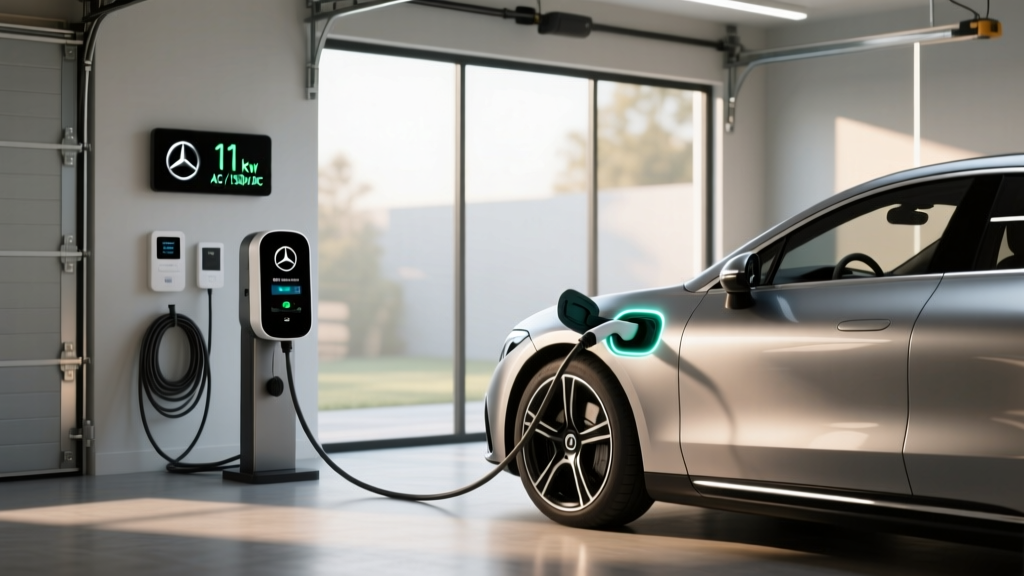
Level 2 is the home-charging standard. At 11.5 kW (48A on a 60A circuit), you'd add roughly 38–42 miles per hour to an EQS, fully replenishing it in about 9–10 hours overnight. The onboard charger in most current Mercedes-Benz EVs maxes out at 11 kW on AC, so installing a charger rated above that won't speed things up unless you plan to charge future vehicles or a second EV simultaneously.
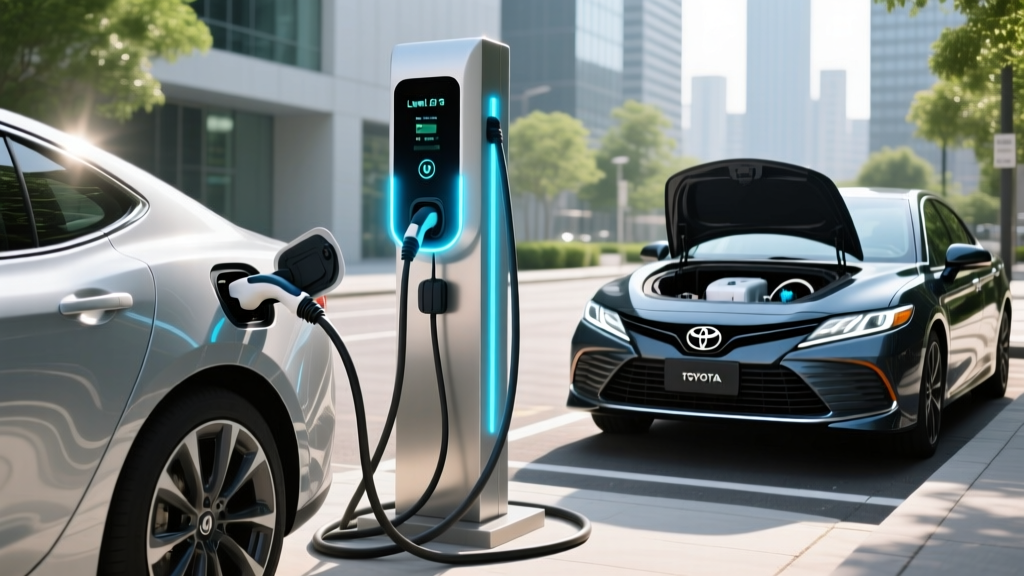
DC fast charging is for road trips. The EQS sedan and EQE SUV can accept up to 200 kW on a DC fast charger, enabling a 10–80% charge in roughly 31 minutes under ideal conditions. Real-world speeds depend on battery temperature, state of charge, and the charger's actual output — peak rates only hold between roughly 10–40% SoC before tapering significantly.
How Much Does It Cost to Install a Home EV Charger?
Home Level 2 installation costs vary enormously depending on your home's electrical panel capacity, the distance from the panel to your charging location, and local permit requirements. Here's a realistic breakdown for a typical Mercedes-Benz owner installing a hardwired 48A (11.5 kW) Level 2 charger:
| Component | Typical Cost Range | Notes |
|---|---|---|
| Level 2 Charger (Equipment) | $400–$750 | Quality 40A–48A smart chargers (Wallbox, ChargePoint, Emporia) |
| Electrician Labor | $600–$2,000 | Varies by run length, conduit type, and local rates |
| Electrical Permit | $50–$200 | Required in most jurisdictions; some areas bundle with inspection |
| Panel Upgrade (if needed) | $1,500–$4,000 | 200A service upgrade; common in homes built before 2000 |
| Total (no panel upgrade) | $1,050–$2,950 | Most common scenario for newer homes |
| Total (with panel upgrade) | $2,550–$6,950 | Older homes with 100A service |
The single biggest cost variable is your electrical panel. Most modern homes have 200-amp service with spare breaker slots, making a 60A circuit installation straightforward. Older homes with 100A panels often lack both the capacity and physical space for a new double-pole breaker, requiring a service upgrade. A licensed electrician can perform a load calculation to determine whether your panel can support an EV charger alongside existing appliances.
Mercedes-Benz offers its own Wallbox Home Charger through dealerships, typically priced around $600–$700 for the unit. However, third-party chargers from established brands often provide equivalent or better functionality at similar or lower prices, and your Mercedes-Benz EV doesn't require a branded charger to function properly.
Connector Compatibility: NACS, CCS1, and Your Mercedes-Benz
Mercedes-Benz began transitioning its North American EV lineup from CCS1 to NACS (the North American Charging Standard, originally developed by Tesla) starting with 2025 model-year vehicles. Here's where each model stands as of 2026:
| Model | Native Connector | Adapter Needed for Tesla Superchargers? | Adapter Needed for CCS Stations? |
|---|---|---|---|
| EQS Sedan (2025+) | NACS | No — plug directly in | NACS-to-CCS adapter (included by Mercedes) |
| EQS SUV (2025+) | NACS | No — plug directly in | NACS-to-CCS adapter (included by Mercedes) |
| EQE Sedan (2024+) | NACS | No — plug directly in | NACS-to-CCS adapter (included by Mercedes) |
| EQE SUV (2024+) | NACS | No — plug directly in | NACS-to-CCS adapter (included by Mercedes) |
| EQB (2023–2024) | CCS1 | CCS-to-NACS adapter (~$200–$250) | No — native CCS1 |
| EQS Sedan (2022–2024) | CCS1 | CCS-to-NACS adapter (~$200–$250) | No — native CCS1 |
| CLA EV (upcoming MMA platform) | NACS | No — plug directly in | NACS-to-CCS adapter (expected) |
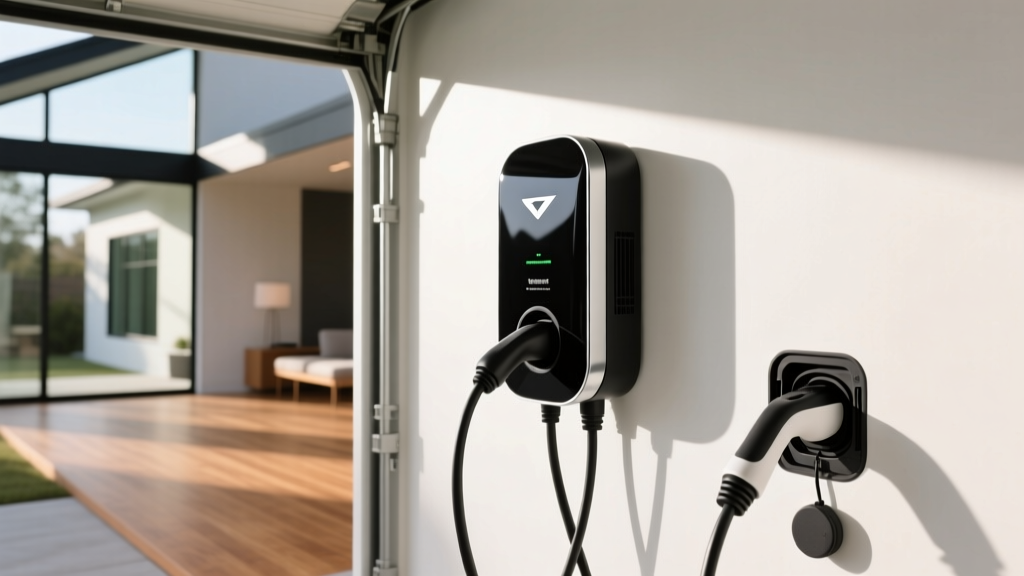
For home Level 2 charging, the connector situation is simpler. Nearly all home chargers sold in 2026 come with a NACS connector as standard or offer it as a configuration option. If you have an older CCS1-equipped Mercedes-Benz (pre-2025 EQS/EQE, or current EQB), you have two options: purchase a home charger with a CCS1 connector (still available from most brands), or buy a NACS charger and use a NACS-to-CCS adapter for home charging. For public charging, Mercedes-Benz provides adapters as noted above.
According to Mercedes-Benz USA, all new NACS-equipped models ship with a NACS-to-CCS adapter to maintain compatibility with Electrify America and other CCS-based public networks during the industry transition.
Best Home Chargers for Mercedes-Benz EVs
We've tested and tracked reliability data on dozens of Level 2 chargers. Here are our top picks for Mercedes-Benz EV owners, selected for build quality, smart features, and real-world charging performance:
Emporia Vue Level 2 (Best Value)
- Power Output: 48A / 11.5 kW (hardwired) or 40A / 9.6 kW (plug-in)
- Connector: NACS or J1772 (configurable)
- Cable Length: 24 ft
- Smart Features: Wi-Fi, energy monitoring, solar integration, scheduling
- Price: ~$399
- Why it works for Mercedes: Full 11.5 kW matches the EQS/EQE onboard charger limit; energy monitoring helps track costs
Wallbox Pulsar Plus (Best Compact)
- Power Output: 48A / 11.5 kW (hardwired)
- Connector: NACS or J1772
- Cable Length: 25 ft
- Smart Features: Wi-Fi/Bluetooth, load balancing, Power Sharing (two chargers on one circuit)
- Price: ~$559
- Why it works for Mercedes: Power Sharing lets two-EQ households share a single 60A circuit without a panel upgrade
ChargePoint Home Flex (Most Flexible)
- Power Output: Configurable 16A–50A (3.8–12 kW)
- Connector: NACS or J1772 (swappable)
- Cable Length: 23 ft
- Smart Features: Wi-Fi, Alexa integration, amperage adjustment via app
- Price: ~$699
- Why it works for Mercedes: Adjustable amperage lets you dial down for older panels without sacrificing future upgradeability
A note on the Mercedes-Benz branded Wallbox: it's a solid 11 kW unit with Wi-Fi and the Mercedes me app integration, but it doesn't offer meaningful charging advantages over the options above and is typically priced at a premium. If brand cohesion matters to you, it works well — but you're paying for the star badge on the enclosure.
How Much Does Charging Cost Per Mile vs. Gas?
One of the strongest arguments for home charging is cost. Here's how charging a Mercedes-Benz EQS 580 (efficiency approximately 3.0 mi/kWh, or ~97 MPGe combined per fueleconomy.gov) compares to fueling a comparable S 500 sedan:
| Scenario | Cost per kWh / Gallon | Cost Per Mile (EQS EV) | Cost Per Mile (S 500 Gas, 24 MPG combined) |
|---|---|---|---|
| Home Off-Peak (utility rate) | $0.09/kWh | $0.03/mi | — |
| Home Average (national avg) | $0.16/kWh | $0.05/mi | — |
| Public Level 2 (network) | $0.28/kWh | $0.09/mi | — |
| DC Fast Charge (public) | $0.42/kWh | $0.14/mi | — |
| Gasoline (national avg, $3.50/gal) | $3.50/gal | — | $0.15/mi |
| Gasoline ($4.50/gal, premium) | $4.50/gal | — | $0.19/mi |
At home with off-peak utility rates, charging the EQS costs roughly 80% less per mile than fueling a gas S-Class. Even at average residential rates, you're saving 70% or more. The savings narrow when relying on public DC fast charging — at $0.42/kWh, you're paying close to what gasoline costs — which is why home charging access is the single biggest factor in EV satisfaction.
Many utilities offer time-of-use (TOU) plans that drop rates significantly between 10 PM and 6 AM. Setting your Mercedes-Benz to charge during off-peak hours through the Mercedes me Connect app or your charger's scheduling feature maximizes these savings.
Charging Times for Mercedes-Benz EV Battery Sizes
Mercedes-Benz EVs span a range of battery capacities. Here's how long a 10–80% charge takes at each level for common models:
| Model | Battery (Usable kWh) | Level 1 (1.4 kW) | Level 2 (11.5 kW) | DC Fast (Peak kW) |
|---|---|---|---|---|
| EQB 350 | 66.5 kWh | ~33 hours | ~4.1 hours | ~32 min (100 kW peak) |
| EQE 350 Sedan | 90.6 kWh | ~45 hours | ~5.5 hours | ~30 min (170 kW peak) |
| EQS 580 Sedan | 108.4 kWh | ~54 hours | ~6.6 hours | ~31 min (200 kW peak) |
| EQS SUV 580 | 108.4 kWh | ~54 hours | ~6.6 hours | ~31 min (200 kW peak) |
| EQE SUV 350 | 90.6 kWh | ~45 hours | ~5.5 hours | ~30 min (170 kW peak) |
DC fast charging times assume optimal battery preconditioning (the car warming the battery en route to the charger) and a charger capable of delivering the vehicle's peak rate. In practice, expect real-world 10–80% times to be 5–10 minutes longer due to charge curve tapering above 50–60% SoC and ambient temperature effects. In cold weather below freezing, preconditioning becomes essential — without it, initial charge rates can be dramatically reduced.
Electrical Requirements, Safety, and Code Considerations
Installing a Level 2 charger is electrical work that must comply with the National Electrical Code (NEC) and your local building codes. Here are the critical requirements:
Key Electrical Requirements for Home EV Charging
- Dedicated Circuit: Your Level 2 charger must be on its own dedicated double-pole breaker — it cannot share a circuit with other appliances. A 48A charger requires a 60A breaker (NEC requires circuits rated at 125% of continuous load).
- Wire Gauge: A 60A circuit typically requires 6 AWG copper wire for runs up to ~50 feet, or 4 AWG for longer runs to minimize voltage drop.
- GFCI Protection: NEC 2020 and later require GFCI protection for EV charging outlets. Hardwired installations may be exempt depending on local code interpretation — your electrician will advise.
- Outdoor Rating: If your charger is installed outdoors (garage exterior, carport, driveway), the unit must carry a NEMA 4 or IP65 weatherproof rating. All chargers recommended above meet this standard.
- Permit and Inspection: Most municipalities require an electrical permit for new 240V circuits, with a post-installation inspection. Skipping this can void homeowner's insurance coverage for electrical fires.
The panel-upgrade question deserves special attention. If your home has a 100A service panel and you're already running electric range, dryer, and HVAC, adding a 60A EV circuit will likely exceed your panel's capacity. The NEC load calculation considers all continuous and non-continuous loads. An electrician will perform this calculation before recommending a panel upgrade. Smart panels and load-management devices (like the Emporia Smart Panel or Span drive) can sometimes avoid a full upgrade by dynamically managing circuit allocation — worth asking your electrician about.
Never use an extension cord for Level 2 charging, and never plug a Level 2 charger into a standard dryer outlet using an adapter unless the charger is specifically designed and UL-listed for that use. The sustained high-current draw of EV charging creates heat at every connection point — proper installation isn't optional.
Frequently Asked Questions
Can I use a Tesla Supercharger with my Mercedes-Benz EV?
If your Mercedes-Benz has a native NACS connector (2024+ EQE, 2025+ EQS models), yes — you can plug directly into any Tesla Supercharger V3 or V4 stall. If your Mercedes has a CCS1 connector (older EQS, EQB), you'll need a CCS-to-NACS adapter, which typically costs $200–$250. Mercedes-Benz has confirmed Supercharger network access for its EVs through this transition.
Does Mercedes-Benz make its own home charger?
Yes. The Mercedes-Benz Wallbox Home Charger is an 11 kW (48A) Level 2 unit that integrates with the Mercedes me app. It's a competent charger, but it doesn't outperform third-party options like the Emporia Vue or Wallbox Pulsar Plus, which offer similar or better features at comparable prices. The branded Wallbox is best if you value the Mercedes me ecosystem integration.
How fast will each charging level add range to my EQS?
Level 1 (120V) adds approximately 3–5 miles per hour — essentially useless for a depleted 108.4 kWh battery but adequate for overnight top-ups. Level 2 at 11.5 kW adds roughly 38–42 miles per hour, enough for a full overnight charge. DC fast charging at 200 kW peak can add up to 185 miles in 15 minutes under ideal conditions, though real-world rates taper as the battery fills.
What electrical upgrades might I need for a home charger?
The most common upgrade is a panel replacement from 100A to 200A service, costing $1,500–$4,000. You may also need new conduit runs, a sub-panel if your charger is far from the main panel (like a detached garage), or a load-management device if your panel is near capacity but you want to avoid a full upgrade. A licensed electrician's load calculation is the definitive answer for your home.
How much does charging cost per mile compared to my gas Mercedes?
Charging at home on average residential electricity ($0.16/kWh), an EQS costs about $0.05 per mile. A comparable S 500 gasoline sedan at 24 MPG combined and $4.50/gallon premium costs about $0.19 per mile. Home charging saves roughly 74% per mile. Public DC fast charging at $0.42/kWh narrows the gap to about 26% savings — still meaningful but a strong incentive to charge at home whenever possible.
Is it safe to charge my Mercedes-Benz EV in the rain or snow?
Yes. All UL-listed Level 2 chargers with NEMA 4 or IP65 ratings are designed for outdoor use in all weather conditions. The connector and vehicle inlet are sealed against water intrusion. However, avoid submerging the connector in standing water, and inspect the cable periodically for damage or wear.