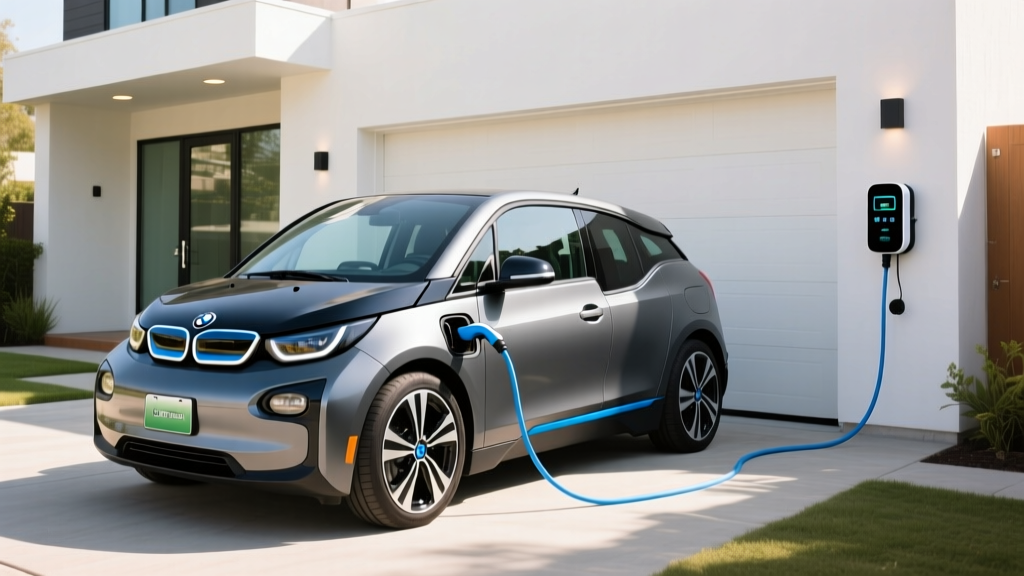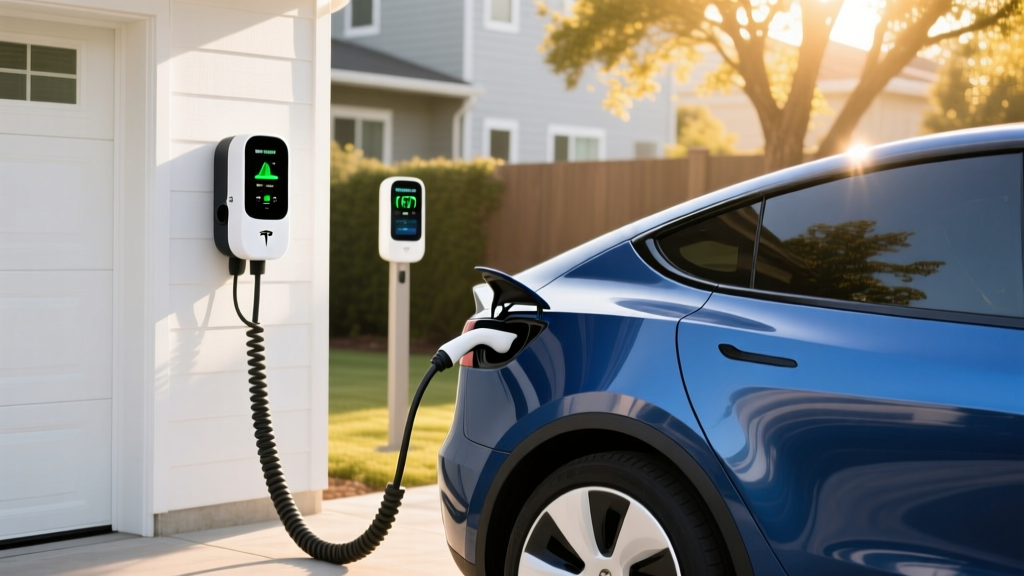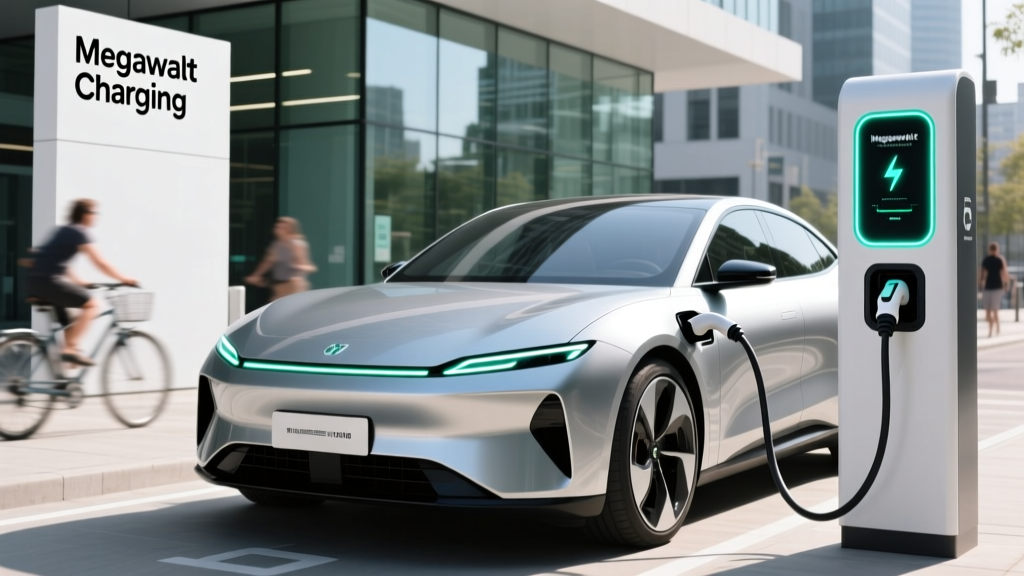
If you've been tracking the evolution of EV charging, you've likely heard the term megawatt charging surface in industry headlines. The Megawatt Charging System (MCS) promises charge rates exceeding 1,000 kW — enough to replenish a semi-truck battery in the time it takes to grab lunch. But what does this technology actually mean for passenger EV owners today, and when will ultra-high-power charging reach your driveway?
This guide breaks down megawatt charging from a practical standpoint: how it compares to the Level 1, Level 2, and DC fast charging you already use, what the infrastructure looks like in 2026, and how the broader charging ecosystem is evolving to support everything from a compact commuter to a Class 8 electric semi.
What Is Megawatt Charging (MCS)?
The Megawatt Charging System is a charging standard developed by CharIN to deliver DC power at rates between 1.2 MW (1,200 kW) and 3.75 MW to heavy-duty electric vehicles — semis, school buses, delivery trucks, mining equipment, and marine vessels. The connector itself is rated for up to 1,250V DC and 3,000 amps.
To put that in perspective: a Tesla Supercharger V4 peaks at roughly 350 kW. A Megawatt Charging System station delivers three to ten times that power. For a battery-electric semi with a 500–900 kWh pack, MCS can add 200+ miles of range in roughly 20–30 minutes, making long-haul electric trucking operationally feasible.
Does Megawatt Charging Apply to Passenger EVs?
Not directly — at least not yet. Passenger EVs have battery packs and onboard charge-management systems designed for peak DC rates of 200–350 kW. Feeding 1,200 kW into a 75 kWh battery would overwhelm the cells, generate extreme heat, and degrade the pack rapidly. MCS connectors are also physically larger than NACS or CCS1 plugs and are designed for vehicles with much larger battery architectures.
However, the MCS rollout is driving grid-level infrastructure investment at truck stops, freight corridors, and logistics hubs. That same grid capacity eventually trickles down to support more 350 kW DC fast chargers for passenger vehicles at the same locations. In 2026, several MCS pilot corridors are operational along I-5 in California, I-10 in Texas, and I-80 in the Midwest, primarily serving fleets from Volvo, Daimler Truck, and Tesla Semi operators.
The Full Charging Spectrum: Level 1 Through Megawatt
Understanding where megawatt charging fits requires a clear picture of every charging level available to EVs today. The table below maps each level by power output, typical use case, and how many miles of range you can expect per hour of charging.
| Level | Voltage / Phase | Power (kW) | Miles of Range / Hour | Typical Use |
|---|---|---|---|---|
| Level 1 | 120V / 1-phase | 1.0–1.9 kW | 2–5 mi/hr | Overnight trickle, PHEVs, emergencies |
| Level 2 | 240V / 1-phase | 3.3–19.2 kW | 12–75 mi/hr | Home daily charging, workplace, destinations |
| DC Fast (50–350 kW) | 200–1000V DC | 50–350 kW | 150–1,000+ mi/hr (peak) | Road trips, highway corridors, public stations |
| Megawatt (MCS) | Up to 1,250V DC | 600–3,750 kW | N/A (heavy-duty only) | Class 6–8 trucks, buses, mining, marine |
For a passenger EV with a 75–100 kWh battery, DC fast charging at 250–350 kW remains the practical ceiling. A Hyundai Ioniq 5 with its 800V architecture can peak at roughly 240 kW and charge from 10–80% in about 18 minutes. A Tesla Model Y on a V4 Supercharger peaks around 250 kW and reaches 10–80% in roughly 25 minutes. These times assume ideal battery temperature and preconditioning — cold-soaked batteries will charge significantly slower until the thermal management system warms the pack.
Home Charging Setup: Electrical Requirements and Installation Costs
Megawatt charging is a commercial and industrial technology, but the backbone of EV ownership for passenger vehicles remains home Level 2 charging. Here's what a 2026 installation actually requires and costs.
Electrical Requirements for Level 2
A standard home Level 2 charger runs on a 240V dedicated circuit, identical in principle to a dryer or oven outlet. The most common configurations:
- 40-amp circuit (32A continuous): Delivers 7.7 kW — sufficient for most EVs adding 25–30 miles of range per hour.
- 50-amp circuit (40A continuous): Delivers 9.6 kW — adds roughly 35–40 miles per hour. This is the sweet spot for most modern EVs with 80+ kWh batteries.
- 60-amp circuit (48A continuous): Delivers 11.5 kW — the practical maximum for most residential panels without upgrades. Adds ~45 miles per hour.
- 80-amp circuit (64A continuous): Delivers 15.3–19.2 kW — requires a 200A+ service panel and compatible vehicle (e.g., Tesla with dual onboard chargers or the Ford F-150 Lightning Extended Range with its 80A Pro Power onboard option).
Installation Cost Breakdown
| Item | Simple Install (Near Panel) | Complex Install (Long Run / Trenching) |
|---|---|---|
| Level 2 charger (hardware) | $400–$700 | $400–$700 |
| Electrician labor (2–8 hrs) | $300–$600 | $800–$2,500 |
| Permit & inspection | $50–$200 | $100–$300 |
| Conduit, wire, mounting hardware | $50–$150 | $200–$800 |
| Panel upgrade (if needed) | $0 (not needed) | $1,500–$3,500 |
| TOTAL RANGE | $800–$1,650 | $3,000–$7,800 |
The IRS §30C tax credit covers 30% of home charging equipment and installation costs, up to $1,000. This applies to both the charger hardware and the electrician's work, though eligibility depends on your census tract meeting certain criteria. Consult a tax professional to confirm your eligibility.
Connector Compatibility: NACS, CCS1, CHAdeMO, and MCS
The connector landscape in 2026 has largely consolidated around NACS (the North American Charging Standard, originally developed by Tesla), but legacy connectors still exist on older vehicles and public chargers.
| Connector | Max Power | Vehicles Using It (2026) | Adapter Needed? |
|---|---|---|---|
| NACS | Up to 350 kW DC | Tesla (all), Ford, GM, Rivian, Volvo, Polestar, Hyundai, Kia, BMW, Mercedes (most 2025+ models) | None for NACS-native vehicles; CCS→NACS adapter for legacy CCS chargers |
| CCS1 | Up to 350 kW DC | Older (pre-2025) GM, VW, BMW, Hyundai/Kia models; still widely available at public stations | NACS→CCS adapter needed at Tesla Superchargers (many OEMs include one) |
| CHAdeMO | Up to 100 kW DC | Nissan Leaf (all years), Mitsubishi Outlander PHEV (older) | CHAdeMO→NACS adapters exist but are rare; CHAdeMO stations declining |
| MCS (Megawatt) | Up to 3,750 kW DC | Class 6–8 trucks (Tesla Semi, Volvo VNR Electric, Freightliner eCascadia), buses | Not compatible with passenger vehicles |
If you're buying a new EV in 2026, the vehicle will almost certainly have a NACS port. The transition has been swift: every major automaker selling in the U.S. has adopted NACS for new models starting with the 2025 model year. Owners of 2023–2024 CCS-equipped EVs can use a NACS-to-CCS adapter (often included by the OEM or available for $100–$200) to access Tesla's Supercharger network.
Charging Cost: Per Mile vs. Gasoline
One of the strongest economic arguments for EV ownership remains fuel cost savings — but the actual number depends heavily on where and when you charge.
| Scenario | Rate ($/kWh) | Cost per Mile (at 3 mi/kWh) | Annual Cost (12,000 mi) |
|---|---|---|---|
| Home off-peak (utility TOU rate) | $0.08–$0.12 | $0.03–$0.04 | $360–$480 |
| Home standard rate (no TOU) | $0.14–$0.20 | $0.05–$0.07 | $600–$840 |
| Public Level 2 (ChargePoint, EVgo L2) | $0.20–$0.35 | $0.07–$0.12 | $840–$1,440 |
| DC fast charging (Electrify America, EA 350kW) | $0.35–$0.55 | $0.12–$0.18 | $1,440–$2,160 |
| Gasoline (28 MPG avg, $3.40/gal) | $3.40/gallon | $0.12 | $1,440 |
The takeaway: home charging on an off-peak rate delivers fuel costs at roughly one-quarter the price of gasoline. Exclusive reliance on DC fast charging, however, can approach or even exceed gas costs on a per-mile basis. The economic case for EVs is strongest when home Level 2 charging is available. For apartment dwellers or those without garage access, the savings narrow considerably.
Recommended Home Level 2 Chargers for 2026
While megawatt charging is a commercial-grade technology, the home charger you choose matters significantly for daily EV ownership. Here are top-performing Level 2 units available in 2026:
ChargePoint Home Flex (NACS)
- Power: Up to 12 kW (50A circuit) or 9.6 kW (40A)
- Connector: NACS (native); CCS adapter included
- Cable length: 23 ft
- Smart features: Wi-Fi, scheduling, Alexa, energy dashboard
- Price: ~$549
Tesla Wall Connector (Gen 4)
- Power: Up to 11.5 kW (48A on 60A circuit)
- Connector: NACS native
- Cable length: 24 ft
- Smart features: Wi-Fi, OTA updates, power sharing for multi-charger installs, Tesla app integration
- Price: ~$450
Emporia Vue Level 2 Charger
- Power: Up to 11.5 kW (48A adjustable)
- Connector: NACS (J1772 version also available)
- Cable length: 24 ft
- Smart features: Energy monitoring, solar integration, load management
- Price: ~$399
For most buyers, the ChargePoint Home Flex offers the best combination of flexibility (adjustable amperage to match your panel capacity), smart scheduling to exploit off-peak rates, and broad vehicle compatibility. Tesla owners may prefer the Wall Connector for its seamless ecosystem integration and slightly lower price. Budget-conscious buyers should consider the Emporia for its energy-monitoring capabilities and solar-charging coordination.
Safety, Code, and Permitting Essentials
EV charging installations are governed by the National Electrical Code (NEC) Article 625 and local building codes. Key requirements to verify with your electrician:
- Dedicated circuit: Your Level 2 charger must have its own breaker — it cannot share a circuit with other appliances.
- GFCI protection: NEC 2020 and later require ground-fault circuit interrupter protection for all EV charging outlets rated 150V to ground or less and 50A or less. Hardwired installations (no plug) may be exempt in some jurisdictions.
- Outdoor rating: If your charger is installed outside, it must carry a NEMA 3R or NEMA 4 rating for weather resistance. All three chargers recommended above meet this standard.
- Permit and inspection: Virtually every jurisdiction requires an electrical permit for a new 240V circuit. The inspection verifies wire gauge, breaker sizing, grounding, and GFCI compliance. Skipping the permit risks insurance denial if an electrical fire occurs.
- Wire gauge: A 50A circuit requires 6 AWG copper wire; a 60A circuit requires 4 AWG. Your electrician will size accordingly.
Real-World Charging Times: What to Expect
Manufacturer claims about charging speed assume ideal conditions: a preconditioned battery at optimal temperature, connected to a charger that can sustain peak power. In practice, charging follows a curve — power ramps up, holds at peak briefly, then tapers significantly above 80% State of Charge to protect battery health.
Here are realistic 10–80% charging times for common passenger EVs in 2026:
- Tesla Model Y Long Range (75 kWh usable, NMC): ~25 minutes on a 250 kW Supercharger; ~35 minutes on a 150 kW charger.
- Hyundai Ioniq 5 (77.4 kWh usable, NMC, 800V architecture): ~18 minutes on a 350 kW charger; ~26 minutes on a 150 kW charger.
- Ford F-150 Lightning Extended Range (131 kWh usable, NMC): ~41 minutes on a 150 kW charger; the pack is simply too large for any current passenger charger to fill rapidly.
- Chevrolet Equinox EV (85 kWh usable, NMC): ~28 minutes on a 150 kW charger; ~20 minutes on a 350 kW unit.
Notice that the 80–100% segment can take as long as the 10–80% segment due to taper. This is why road-trip strategy focuses on charging to 80% and moving on — unless you're at your destination and charging overnight on Level 2.
Frequently Asked Questions
Will megawatt charging ever come to passenger EVs?
Unlikely in its current form. Passenger EV battery packs (60–130 kWh) cannot safely absorb 1,200+ kW without severe degradation and thermal risk. However, as battery chemistries evolve — particularly solid-state batteries with higher C-rate tolerance — we may see 500–700 kW chargers for passenger EVs by the early 2030s. The MCS infrastructure buildout along highways will benefit passenger EVs indirectly by expanding grid capacity at those locations.
How much does it cost to install a home EV charger?
A straightforward Level 2 installation (panel has capacity, short wire run, garage mount) typically costs $800–$1,650 all-in. Complex installations requiring long conduit runs, trenching, or a panel upgrade can reach $3,000–$7,800. The IRS §30C credit can offset up to $1,000 (30% of costs) for eligible taxpayers in qualifying census tracts.
How fast will each charging level add range?
Level 1 (120V) adds 2–5 miles per hour — fine for PHEVs with small batteries, impractical for full EVs. Level 2 (240V, 40–50A) adds 25–40 miles per hour, fully replenishing most EVs overnight. DC fast charging at 150–350 kW can add 150–300 miles in 20–30 minutes, depending on battery size and charge curve.
Which connector does my EV use?
Nearly every new EV sold in the U.S. from 2025 onward uses NACS. If you own a 2023–2024 model with CCS1, you'll need a NACS-to-CCS adapter (often provided by the OEM) to use Tesla Superchargers. CHAdeMO is limited to the Nissan Leaf and a few older models and is being phased out at public stations.
How much does charging cost per mile compared to gas?
Home charging on off-peak utility rates costs roughly $0.03–$0.04 per mile — about one-quarter the cost of gasoline at $3.40/gal and 28 MPG. Public DC fast charging at $0.40–$0.55/kWh costs $0.13–$0.18 per mile, which is comparable to or slightly more than gasoline. The economic advantage of an EV is maximized with reliable home Level 2 access.
What electrical upgrades might I need for a home charger?
The most common upgrade is a panel replacement from 100A to 200A service ($1,500–$3,500) if your existing panel is at capacity. Homes with 200A+ panels rarely need upgrades for a 40–50A EV circuit. Your electrician will perform a NEC Article 220 load calculation to determine whether your panel has headroom. In some cases, a smart load-management device (like the Emporia VUE with smart panel integration) can allow EV charging without a panel upgrade by dynamically reducing charger power when other circuits are drawing heavily.