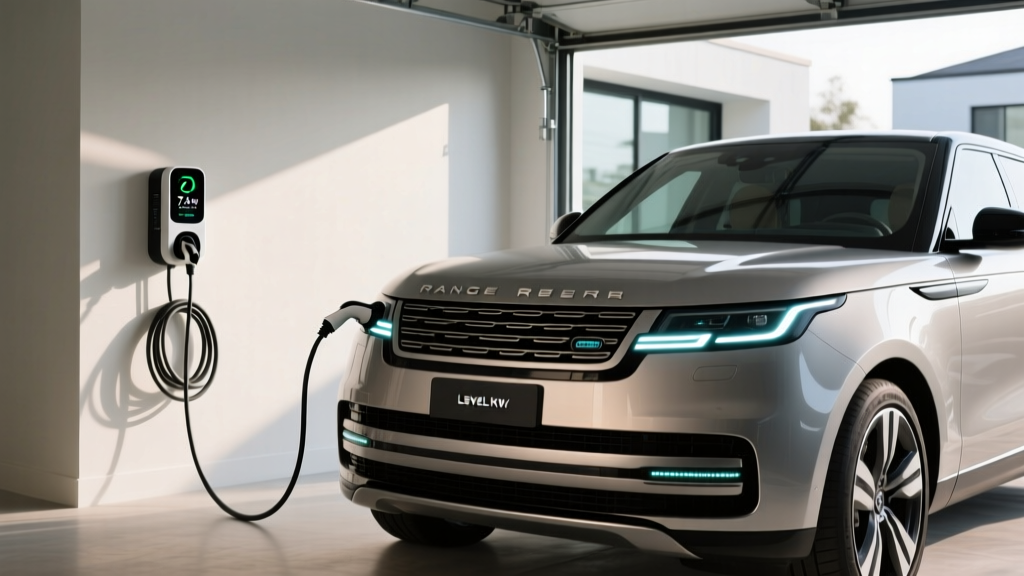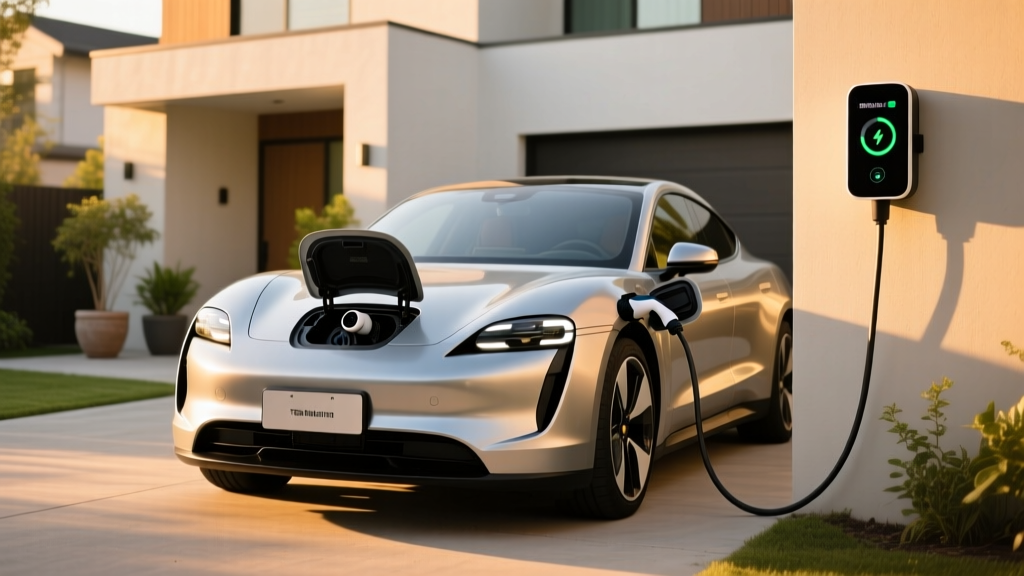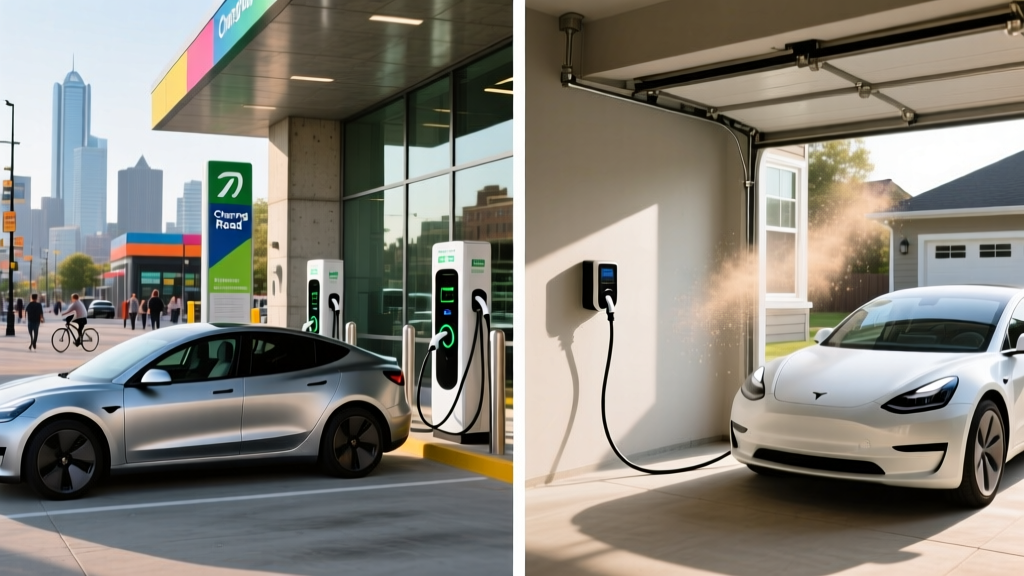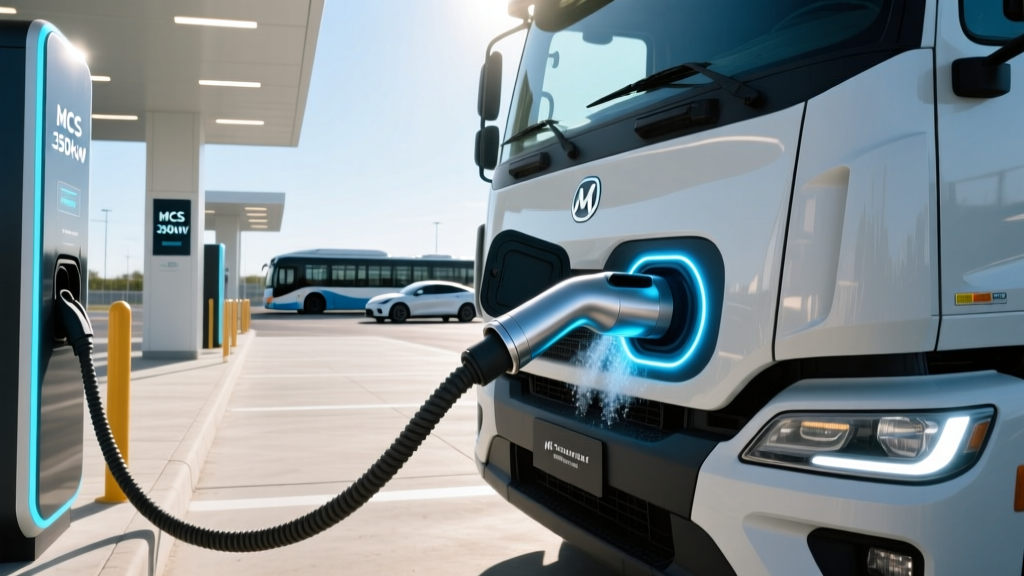
If you've followed the EV charging conversation in 2025 and 2026, you've likely seen the term Megawatt Charging System surface in press releases from Tesla, Daimler Truck, Volvo, and charging-network operators. It sounds futuristic — and for passenger EV owners, it mostly still is. But for anyone shopping an electric pickup, commercial delivery van, or next-generation sedan with an 800V+ architecture, MCS is the charging standard that will define the next decade of high-power DC fast charging.
This guide explains exactly what MCS is, how it compares to the CCS and NACS connectors you use today, what speeds it enables, and — critically — what it means for your home charging setup and your wallet. We'll also cover the home-installation fundamentals every EV owner needs, because even if you never plug into a megawatt charger, understanding the full charging spectrum from Level 1 to MCS is essential to making smart ownership decisions.
What Is the Megawatt Charging System (MCS)?
The Megawatt Charging System (MCS) is a high-power DC fast-charging connector and protocol standard developed by the Charging Interface Initiative (CharIN). Originally conceived for heavy-duty electric trucks and commercial vehicles, MCS supports charge rates up to 3,000 kW (3 megawatts) at voltages up to 1,250V DC and currents up to 3,000A.
To put that in perspective: a current Tesla Supercharger V4 stall peaks at around 350 kW for passenger vehicles. An MCS connector can theoretically deliver nearly 10 times that power. For an electric semi-truck with a 500+ kWh battery pack, MCS can add meaningful range in 20–30 minutes — something no existing CCS or NACS connector can accomplish.
But MCS isn't only for semis. As passenger EVs adopt higher-voltage architectures (800V is becoming standard on premium models, and 1,000V prototypes exist), the MCS connector's design is being evaluated as a future pathway for ultra-fast passenger-car charging. Several automakers have signaled interest in MCS-derived connectors for next-generation vehicles.
The Full Charging Spectrum: Level 1 Through MCS
Understanding where MCS fits requires seeing the full range of EV charging levels. Here's the breakdown by power output, typical use case, and real-world miles of range added per hour of charging:
| Charging Level | Power (kW) | Voltage | Miles of Range/Hour | Typical Use |
|---|---|---|---|---|
| Level 1 (120V outlet) | 1.0–1.9 kW | 120V AC | 3–5 mi/hr | Overnight top-up, emergency |
| Level 2 (240V home/public) | 3.3–19.2 kW | 208–240V AC | 12–75 mi/hr | Daily home & workplace charging |
| DC Fast (CCS/NACS) | 50–350 kW | 200–1,000V DC | 150–1,000+ mi/hr (peak) | Road trips, highway corridors |
| Megawatt Charging System | 600–3,000 kW | 200–1,250V DC | 2,000–6,000+ mi/hr (peak) | Heavy-duty trucks, future passenger EVs |
The "miles per hour" figures for DC fast charging and MCS are peak rates. In practice, EV charging follows a charge curve: power ramps up to a peak, then tapers significantly above 80% state of charge to protect battery health. A 350 kW CCS charger rarely sustains 350 kW for the entire session — it may peak there for a few minutes, then drop to 150–200 kW as the battery fills. The same taper principle applies at MCS power levels, though the sheer headroom means even a tapered MCS session is dramatically faster than today's DC fast charging.
Connector Compatibility: MCS, NACS, CCS, and CHAdeMO
The EV charging connector landscape has consolidated significantly since Tesla opened its Supercharger network and NACS (North American Charging Standard) was adopted by Ford, GM, Rivian, and most major automakers starting in 2024–2025. But MCS introduces a new physical connector that is distinct from all existing passenger-car plugs.
| Connector | Max Power | Vehicle Compatibility (2026) | Adapter Needed? |
|---|---|---|---|
| NACS (Tesla) | ~350 kW (DC) | Tesla, Ford, GM, Rivian, Hyundai, most 2025+ EVs | CCS-to-NACS adapter for older CCS vehicles |
| CCS1 | ~350 kW (DC) | Legacy 2020–2024 EVs (VW ID.4, older Bolt, etc.) | NACS-to-CCS adapter for Tesla Superchargers |
| CHAdeMO | ~100 kW (DC) | Nissan Leaf (legacy); phasing out | Limited adapters available |
| MCS (Megawatt) | Up to 3,000 kW | Class 8 trucks (Freightliner eCascadia, Tesla Semi); future passenger EVs TBD | No passenger-car adapter currently available |
The MCS connector is physically larger than NACS or CCS, designed to handle the thermal load of megawatt-level power transfer. It features a sealed, robust design rated for outdoor commercial environments. As of early 2026, no production passenger vehicle ships with an MCS port, and no MCS-to-NACS adapter exists for consumer use. If MCS eventually reaches passenger vehicles, it will likely debut on high-performance models with large battery packs (100+ kWh) that can absorb multi-hundred-kilowatt charge rates without damaging cells.
Where MCS Stations Are Being Deployed
MCS infrastructure is concentrated along freight corridors and at fleet depots, not at the typical highway rest stop. Key deployment efforts include:
- WattEV — Building a 40-stall MCS-capable truck charging plaza in Bakersfield, California, with solar and battery storage, targeting 2026–2027 operation.
- TeraWatt Infrastructure — Developing MCS-ready fleet charging hubs near major logistics centers in California and Texas.
- Portland General Electric (PGE) — Operating one of the first public MCS-compatible truck charging sites in Portland, Oregon, supporting Freightliner eCascadia and eM2 models.
- Tesla Semi corridors — Tesla has confirmed Megacharger stations along key routes between Fremont, NV, and Southern California, capable of delivering up to ~1,200 kW to the Semi (Tesla uses a proprietary connector similar in capability to MCS).
For passenger EV owners, these deployments don't directly affect your charging routine today. But they signal where the industry is heading: higher power, faster charge times, and infrastructure that may eventually trickle down to consumer vehicles.
What MCS Means for Passenger EV Owners
Here's the practical reality for anyone driving or shopping a passenger EV in 2026:
Will you use an MCS charger?
Choose to care about MCS now if: You're evaluating electric pickups (Ford F-150 Lightning, Rivian R1T, Tesla Cybertruck, Chevrolet Silverado EV) and want to understand future charging headroom, or you operate a commercial electric fleet.
Stick with NACS/CCS knowledge if: You drive a sedan, crossover, or SUV and your primary charging happens at home (Level 2) and on road trips via 150–350 kW DC fast chargers. MCS won't affect your daily experience for at least 3–5 years.
That said, MCS-related technology is trickling down. The 800V battery architectures pioneered by Hyundai/Kia (E-GMP platform), Porsche (Taycan), and Lucid (Air) are the same electrical philosophy that makes MCS viable: higher voltage means faster charging at lower current, reducing heat and cable weight. If your next EV has an 800V pack, it's already benefiting from the engineering that MCS pushes forward.
Charging Time Examples: How Long Does a Full Charge Take?
Whether you're charging at home or on the road, here's how long it takes to go from 10% to 80% state of charge for common battery sizes across different charging levels:
| Battery Size | Example Vehicle | Level 2 (11.5 kW) | 150 kW DC Fast | 350 kW DC Fast | MCS (~1,000 kW)* |
|---|---|---|---|---|---|
| 60 kWh | Chevrolet Equinox EV | ~4 hrs | ~28 min | ~20 min | N/A (no MCS port) |
| 82 kWh | Tesla Model Y / Hyundai Ioniq 5 | ~5.5 hrs | ~33 min | ~18 min | N/A (no MCS port) |
| 100 kWh | Ford F-150 Lightning Ext. Range | ~7 hrs | ~41 min | ~25 min | N/A (no MCS port) |
| 123 kWh | Chevrolet Silverado EV 4WT | ~9 hrs | ~50 min | ~30 min | ~8–10 min* |
| 500 kWh (Class 8) | Freightliner eCascadia | ~36+ hrs | ~3+ hrs | ~2 hrs | ~25–35 min |
*MCS passenger-vehicle projections are theoretical based on 1,000 kW sustained average; actual times depend on battery chemistry, thermal management, and charge-curve taper. No production passenger EV currently accepts MCS.
Home Charging Installation: What You Actually Need
Regardless of what happens with MCS in the future, Level 2 home charging remains the backbone of EV ownership. Over 80% of all EV charging happens at home, according to the U.S. Department of Energy. Here's what's required to install a Level 2 charger and what it costs.
Electrical Requirements
A typical Level 2 home charger requires:
- Voltage: 240V AC (same as your electric dryer or oven)
- Amperage: 40A–60A dedicated circuit (a 48A charger requires a 60A breaker per NEC 80% continuous-load rule)
- Wire gauge: 6 AWG copper for 60A circuits (4 AWG for longer runs)
- Outlet type: NEMA 14-50 (most common) or hardwired connection (preferred for 48A+ chargers)
Installation Cost Breakdown
| Cost Component | Simple Install (Near Panel) | Complex Install (Far Run / Upgrade) |
|---|---|---|
| Level 2 Charger (Equipment) | $350–$700 | $500–$750 |
| Electrician Labor | $300–$600 | $800–$2,000 |
| Electrical Permit | $50–$150 | $100–$300 |
| Panel Upgrade (100A → 200A) | $0 (not needed) | $1,500–$3,500 |
| Total | $700–$1,450 | $2,900–$6,550 |
The biggest cost variable is whether your existing electrical panel has enough spare capacity. Homes built before 2000 often have 100A panels that are already near capacity. Adding a 60A EV circuit may require a panel upgrade to 200A — a significant but one-time investment. Always get a load calculation from a licensed electrician before assuming you need an upgrade.
Safety and Code Considerations
- Dedicated circuit: Your EV charger must be on its own dedicated breaker — never shared with other appliances.
- GFCI protection: NEC 2020 and later require GFCI protection for outdoor receptacles used for EV charging. Hardwired installations may not require a GFCI breaker (check local code).
- Outdoor rating: If your charger is installed outside, the unit must carry a NEMA 4 (weatherproof) rating. All major chargers listed below meet this standard.
- Permit required: Virtually all jurisdictions require a permit for new 240V circuit installation. Unpermitted work can void home insurance and cause issues at sale time.
Level 2 Charger Recommendations for 2026
These are proven, widely available Level 2 chargers that serve the vast majority of passenger EVs. All support the NACS connector (or offer J1772 with a NACS adapter for older vehicles).
Tesla Wall Connector
- Power output: 11.5 kW (48A)
- Connector: NACS native
- Cable length: 24 ft
- Smart features: Wi-Fi, OTA updates, load sharing, power-sharing between units
- Price: ~$475
- Best for: Tesla owners and NACS-equipped vehicles
ChargePoint Home Flex
- Power output: Up to 12 kW (50A), configurable down to 16A
- Connector: NACS or J1772 options
- Cable length: 23 ft
- Smart features: Wi-Fi, app scheduling, Alexa integration, flexible amperage
- Price: ~$550–$700
- Best for: Multi-EV households, adjustable amperage for older panels
Emporia Vue with EV Charger
- Power output: 11.5 kW (48A)
- Connector: NACS or J1772
- Cable length: 24 ft
- Smart features: Energy monitoring, solar integration, whole-home panel monitoring
- Price: ~$400–$600 (bundle with energy monitor)
- Best for: Solar owners, budget-conscious buyers
Grizzl-E Smart
- Power output: 10 kW (40A)
- Connector: NACS or J1772
- Cable length: 24 ft
- Smart features: OCPP-compatible, basic app, extreme cold rated (-40°F)
- Price: ~$400–$450
- Best for: Cold-climate owners, durability-first buyers
Cost to Charge: Home vs. Public vs. Gas
One of the strongest arguments for EV ownership is fuel cost savings — but the actual savings depend heavily on where and when you charge. Here's a realistic breakdown using national averages as of early 2026:
| Charging Scenario | Rate ($/kWh) | Cost for 60 kWh Fill | Cost Per Mile* |
|---|---|---|---|
| Home (off-peak utility rate) | $0.08–$0.14 | $4.80–$8.40 | $0.02–$0.04 |
| Home (standard residential rate) | $0.14–$0.18 | $8.40–$10.80 | $0.04–$0.05 |
| Public Level 2 (ChargePoint, etc.) | $0.20–$0.35 | $12.00–$21.00 | $0.06–$0.09 |
| DC Fast (Electrify America, EVgo) | $0.35–$0.55 | $21.00–$33.00 | $0.09–$0.14 |
| Gasoline (30 MPG, $3.40/gal) | — | $6.80 (equivalent energy) | $0.11 |
*Cost per mile assumes a vehicle efficiency of 3.0–3.5 miles per kWh (typical for midsize EVs like the Model Y or Ioniq 5). EPA fueleconomy.gov lists kWh/100mi ratings for every EV sold in the U.S.
The takeaway: home off-peak charging is roughly one-quarter to one-third the cost of gasoline per mile. Even public DC fast charging is competitive with gas on a per-mile basis — though it's not cheaper. If you rely exclusively on public DC fast charging, your "fuel" costs may approach or slightly exceed a 30 MPG gas car. The economics strongly favor home charging.
MCS and the Future: What's Next for Ultra-Fast Charging
The MCS standard continues to evolve. In late 2025, CharIN released updated MCS technical specifications that refined the connector's thermal management requirements and communication protocols. Several pilot corridors are now operational or under construction, primarily in California, Texas, and the I-5/I-10 freight corridors.
For passenger EVs, the more immediate development is the proliferation of 350–500 kW DC fast chargers using existing NACS connectors. Tesla's V4 Supercharger cabinets support higher power delivery, and networks like Electrify America and IONNA are deploying next-generation stalls capable of 400+ kW for compatible vehicles. These chargers bridge the gap between today's 150–250 kW infrastructure and the MCS megawatt tier.
If you're buying an EV today, prioritize a vehicle with an 800V architecture and NACS compatibility. That combination gives you the best access to current high-speed charging and the strongest path to future upgrades — whether or not MCS eventually reaches passenger vehicles.
Frequently Asked Questions
How much does it cost to install a home EV charger?
A straightforward Level 2 home charger installation (charger near the electrical panel, no panel upgrade needed) typically costs $700–$1,450 all-in, including the charger unit ($350–$700), electrician labor ($300–$600), and permit ($50–$150). Complex installations requiring long wire runs, conduit, or a 200A panel upgrade can reach $2,900–$6,550. Always get at least two quotes from licensed electricians and verify they include permit costs.
How fast will each charging level add range?
Level 1 (120V) adds roughly 3–5 miles per hour. Level 2 (240V, 48A) adds roughly 30–45 miles per hour for a typical midsize EV. DC fast charging (150–350 kW) can add 100–250+ miles in 15–20 minutes at peak rate, though the charge curve tapers above 80% SoC. MCS (600–3,000 kW) can theoretically add thousands of miles per hour at peak, but is currently limited to heavy-duty trucks.
Which connector/charger is compatible with my EV?
For 2025–2026 model-year EVs: nearly all new vehicles (Tesla, Ford, GM, Hyundai, Kia, Rivian, BMW, and others) use NACS. Older 2020–2024 models from VW, older GM, and others may have CCS1. The Nissan Leaf uses CHAdeMO. For home charging, buy a NACS-equipped Level 2 charger; if your EV has CCS, use a CCS-to-NACS adapter (available from Ford, GM, and third parties for ~$200–$250). MCS is not available on any production passenger vehicle.
How much does charging cost per mile vs. gas?
At home on off-peak rates ($0.10/kWh), a typical EV costs $0.03–$0.04 per mile to "fuel." A 30 MPG gas car at $3.40/gallon costs $0.11 per mile. That's roughly a 65–70% savings when charging at home. Public DC fast charging at $0.45/kWh costs about $0.12–$0.14 per mile — slightly more than gas. Home charging is where the economics shine.
What electrical upgrades might I need?
The most common upgrade is a panel capacity increase from 100A to 200A, needed if your existing panel is near capacity. This costs $1,500–$3,500. You may also need: a new conduit run if the charger is far from the panel ($200–$800), a sub-panel installation for detached garages ($500–$1,500), or a smart load-management device that shares capacity between your EV charger and other high-draw appliances ($200–$400). A licensed electrician should perform a load calculation before recommending any upgrade.
Will MCS chargers ever be available for passenger cars?
No automaker has confirmed a production passenger vehicle with an MCS port as of early 2026. However, the engineering principles behind MCS — higher voltage, ultra-fast charging — are already present in 800V passenger EVs. If battery technology advances to safely accept 500+ kW charge rates (likely requiring solid-state cells), MCS or an MCS-derived connector could reach passenger vehicles in the 2028–2032 timeframe. For now, it remains a commercial-vehicle standard.
Sources: CharIN MCS Technical Specification, U.S. EPA fueleconomy.gov, IRS §30D Clean Vehicle Credit Guidelines. Tax credit eligibility depends on MSRP caps, income limits, and battery-sourcing requirements — consult a tax professional for your specific situation. All installation cost estimates are national averages; local costs vary. Always consult a licensed electrician for your specific electrical requirements.