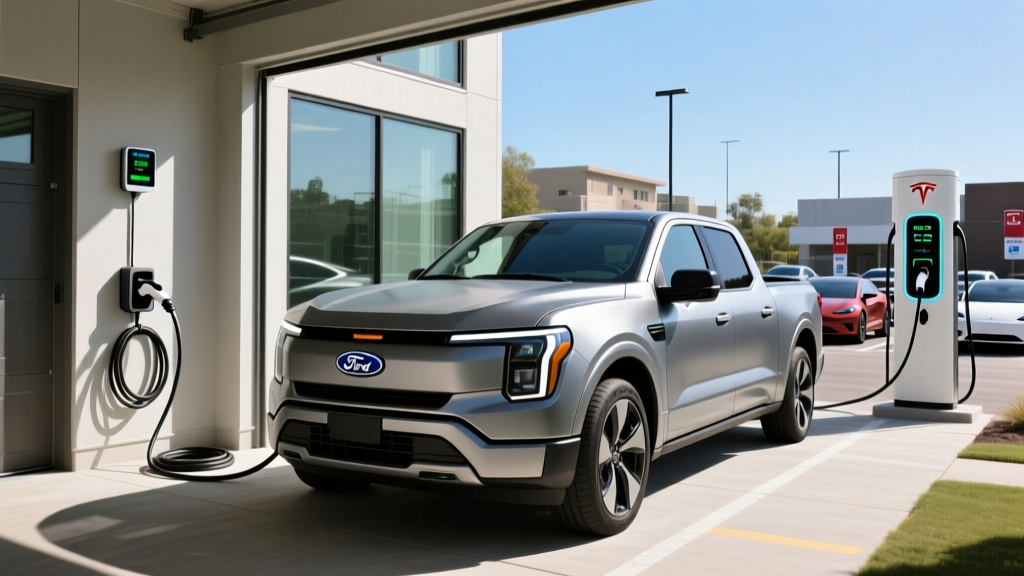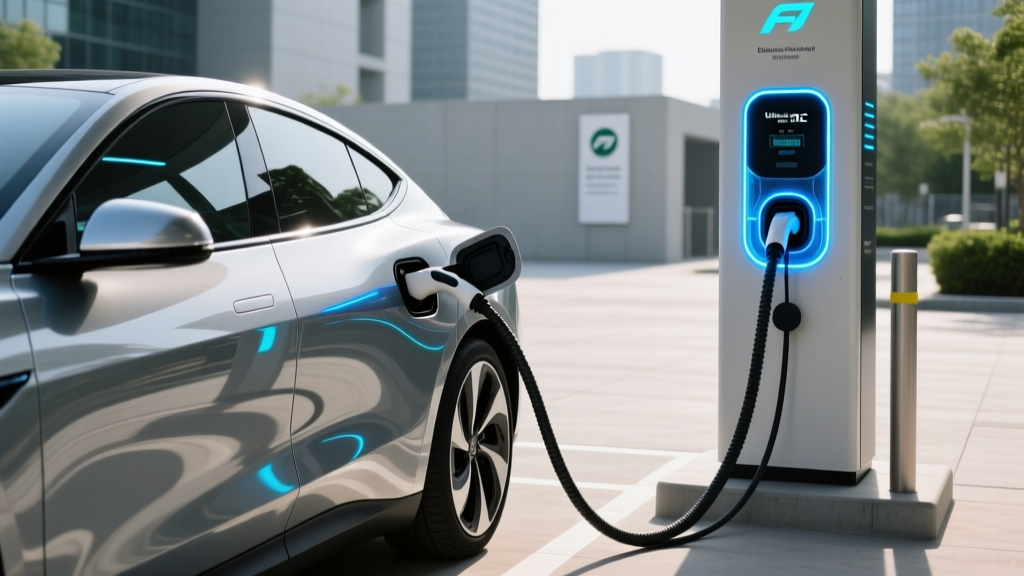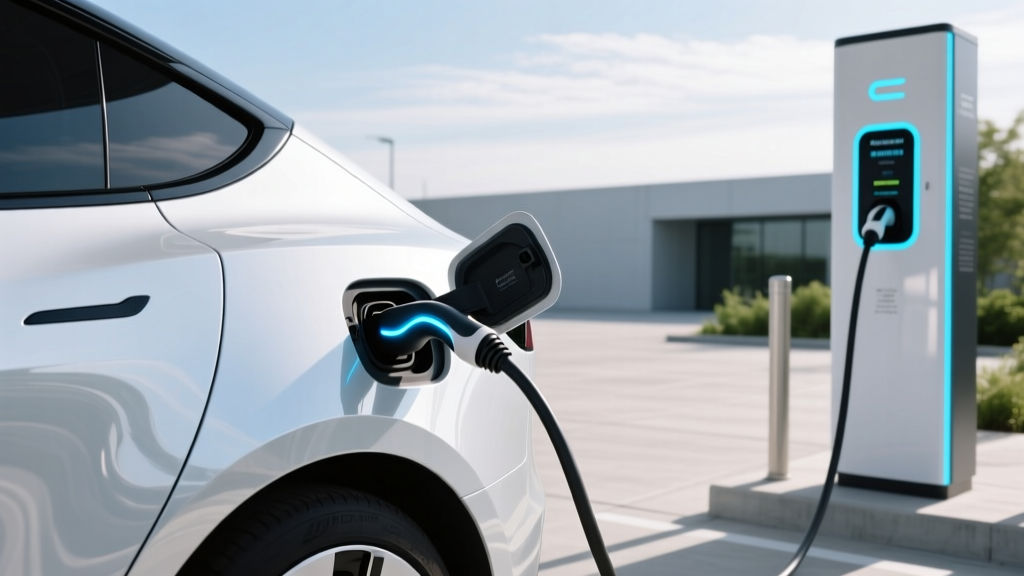
If you've seen the term mega charger tossed around in EV forums or marketing materials, you're not alone in wondering what it actually means. The phrase isn't a formal industry standard — it's an informal label that's emerged to describe the highest-power DC fast chargers now deployed across public networks: stations capable of delivering 350 kW, 400 kW, or even 500+ kW of peak power to a compatible vehicle. Think of it as the EV equivalent of calling a truck a "mega cab" — it signals maximum capability.
But here's the reality most buyers need to hear: not every EV can accept that much power, and the difference between a 350 kW charger and a 150 kW charger matters far less than the vehicle's onboard charge curve. This guide cuts through the marketing to explain what mega chargers are, how they fit into the broader charging ecosystem, what you'll actually pay, and whether your next EV can take advantage of them.
The Charging Spectrum: Level 1 Through Mega Charger DC Fast
Before we focus on the top end, let's ground the terminology. EV charging operates across three tiers, defined by power delivery (measured in kW — kilowatts, the rate of energy flow) into the battery (measured in kWh — kilowatt-hours, the total energy stored). Confusing kW with kWh is the single most common EV literacy mistake. Think of kW as the width of the hose and kWh as the size of the bucket.
| Level | Voltage / Power | Peak kW | Miles of Range Added Per Hour | Typical Use Case |
|---|---|---|---|---|
| Level 1 | 120V AC / 12A-16A | 1.4 – 1.9 kW | 3 – 5 mi/hr | Overnight trickle; PHEV topping |
| Level 2 | 240V AC / 16A-80A | 3.8 – 19.2 kW | 14 – 60 mi/hr | Home daily charging; workplace |
| DC Fast (Standard) | 400V-800V DC / 50-150 kW | 50 – 150 kW | 150 – 400 mi/hr | Road-trip stops; retail corridors |
| DC Fast (Mega Charger Class) | 800V+ DC / 250-500+ kW | 250 – 500+ kW | 600 – 1,200+ mi/hr (peak) | Highway corridor rapid stops |
The "mega charger" category encompasses stations like Electrify America's 350 kW CCS dispensers, Tesla's V4 Superchargers (capable of up to 500+ kW to compatible vehicles), IONNA's 400 kW eFill units rolling out across highway corridors in 2025-2026, and Hyundai/Kia's E-pit chargers rated at 350 kW. These require 800V-class battery architectures to accept anywhere close to their peak output.
Real-World Charging Times: What 350+ kW Actually Delivers
A charger rated at 350 kW does not deliver 350 kW continuously. DC fast charging follows a charge curve: power ramps up, holds near peak through a narrow State of Charge (SoC) window (typically 10-40%), then progressively tapers as the battery fills to protect cell health. Above 80% SoC, speeds often drop below 50 kW regardless of the station's capability.
Here's what 10-80% charging sessions actually look like for common battery sizes on high-power infrastructure:
| Vehicle Example | Usable Battery (kWh) | Max Charge Rate (kW) | Architecture | 10-80% on 350 kW Station | 10-80% on 150 kW Station |
|---|---|---|---|---|---|
| Hyundai Ioniq 5 (2026) | 77.4 kWh | ~240 kW peak | 800V | ~18 minutes | ~28 minutes |
| Porsche Taycan (800V) | 83.7 kWh | ~320 kW peak | 800V | ~16 minutes | ~32 minutes |
| Tesla Model Y (2026) | ~75 kWh | ~250 kW peak | 400V | ~22 minutes (at V4) | ~30 minutes |
| Ford F-150 Lightning (Ext. Range) | 131 kWh | ~150 kW peak | 400V | ~41 minutes (capped by vehicle) | ~45 minutes |
| Chevrolet Equinox EV | 85 kWh | ~150 kW peak | 400V | ~34 minutes (capped by vehicle) | ~36 minutes |
The key takeaway: a Ford F-150 Lightning on a 350 kW mega charger gains almost nothing over a 150 kW station because the truck's charge acceptance tops out around 150 kW. The mega charger's advantage is realized primarily by 800V vehicles like the Ioniq 5, Taycan, Kia EV6, and Genesis GV60.
Connector Compatibility: Will Your EV Plug Into a Mega Charger?
High-power DC fast chargers use one of three connector standards, and the landscape is shifting rapidly toward NACS (North American Charging Standard) as of 2025-2026. Here's where things stand:
| Connector | Max Power Supported | Native Vehicles (2026) | Adapter Needed For |
|---|---|---|---|
| NACS (Tesla standard, now SAE J3400) | 500+ kW (V4 Supercharger) | Tesla (all), Ford, GM, Rivian, Volvo, Polestar, others via native port | Legacy CCS1 vehicles (adapter ~$150-250) |
| CCS1 (Combined Charging System) | 350 kW (most networks) | Hyundai, Kia, BMW, VW, Mercedes, Stellantis (select), Honda | Tesla Supercharger access (adapter included with many new models) |
| CHAdeMO | ~100 kW (legacy) | Nissan Leaf (discontinued), Mitsubishi Outlander PHEV (legacy) | No viable adapter to NACS/CCS for DC fast |
By mid-2026, the majority of new EVs sold in the US ship with a native NACS port or include a CCS-to-NACS adapter in the box. Electrify America, EVgo, and other networks have been retrofitting stations with NACS cables alongside CCS. If you're buying a new EV in 2026, connector compatibility is increasingly a non-issue — but if you're buying used (pre-2024 CCS vehicles especially), confirm adapter availability and network access before purchase.
For the most current connector and network compatibility data, check the EPA's fueleconomy.gov vehicle comparison tool, which lists charge port type and max charge rate by model year.
Public Mega Charger Costs: What You'll Pay Per kWh and Per Mile
High-power DC fast charging is the most expensive way to fuel an EV — often approaching or exceeding the per-mile cost of gasoline. Pricing varies wildly by network, location, and time of day.
| Scenario | $/kWh | Cost for 60 kWh Fill | Cost Per Mile (at 3 mi/kWh) | Gas Equivalent (at 25 MPG, $3.40/gal) |
|---|---|---|---|---|
| Home Level 2 (off-peak utility rate) | $0.08 – $0.14 | $4.80 – $8.40 | $0.027 – $0.047 | $0.136 |
| Home Level 2 (standard residential rate) | $0.13 – $0.18 | $7.80 – $10.80 | $0.043 – $0.060 | $0.136 |
| Public Level 2 (workplace/retail) | $0.20 – $0.35 | $12.00 – $21.00 | $0.067 – $0.117 | $0.136 |
| DC Fast (150 kW, Electrify America/EVgo) | $0.35 – $0.55 | $21.00 – $33.00 | $0.117 – $0.183 | $0.136 |
| Mega Charger (350+ kW, premium pricing) | $0.40 – $0.65 | $24.00 – $39.00 | $0.133 – $0.217 | $0.136 |
| Tesla Supercharger (V3/V4, varies by location) | $0.25 – $0.45 | $15.00 – $27.00 | $0.083 – $0.150 | $0.136 |
The economics are clear: home charging delivers massive savings ($0.03-0.06/mile vs. $0.14/mile for gas), while frequent reliance on mega chargers at $0.50+/kWh can actually exceed gasoline costs per mile. The mega charger is a road-trip tool, not a daily fueling strategy. Network subscription plans (Electrify America's Pass+, EVgo's Autocharge+) can reduce per-kWh costs by 15-25% for frequent travelers.
Home Charging Setup: Electrical Requirements and Installation Costs
While you can't install a 350 kW mega charger at home (those require utility-grade infrastructure and three-phase power), a properly spec'd Level 2 home charger covers 90%+ of most owners' charging needs. Here's what a home installation actually requires and costs.
Electrical Requirements for Level 2 Home Charging
A Level 2 charger requires a dedicated 240V circuit — the same voltage as your electric dryer or oven. The amperage determines your charging speed:
- 240V / 20A circuit (16A continuous): 3.8 kW — adds ~14 miles/hour. Adequate for PHEVs and light daily use.
- 240V / 40A circuit (32A continuous): 7.7 kW — adds ~28 miles/hour. The most common home setup; fully recharges a 75 kWh battery overnight (~10 hours).
- 240V / 48A circuit (40A continuous): 9.6 kW — adds ~35 miles/hour. Good for larger batteries (100+ kWh).
- 240V / 60A circuit (48A continuous): 11.5 kW — adds ~42 miles/hour. Requires a robust panel; ideal for trucks/SUVs with large packs.
- 240V / 80A circuit (64A continuous): 15.3 kW — adds ~55 miles/hour. Maximum for most residential setups; requires 100A sub-panel or 200A+ main service.
EV charging is considered a continuous load under the National Electrical Code (NEC Article 210.20), meaning the circuit must be rated 125% above the charger's maximum draw. A 48A charger needs a 60A breaker. Always hire a licensed electrician — this is not a DIY project.
Panel Upgrade Considerations
Homes built before 2000 often have 100A or 150A main electrical service. Adding a 40-60A dedicated EV circuit may push total load beyond the panel's capacity, requiring a panel upgrade to 200A — a significant additional cost. Signs you may need an upgrade:
- Your panel is already near capacity (multiple high-draw appliances: electric range, dryer, HVAC, water heater)
- You have a 100A main breaker
- Your electrician's load calculation exceeds 80% of panel capacity with the EV circuit added
Some utilities and states offer rebates for panel upgrades tied to EV adoption. The IRS §30C Alternative Fuel Vehicle Refueling Property Credit covers up to 30% of home charging equipment and installation costs (capped at $1,000), which can partially offset a panel upgrade when bundled with the charger install. Consult a tax professional for eligibility, as income limits and census-tract requirements apply.
Home Charger Installation Cost Breakdown
| Component | Simple Install (panel nearby, no upgrade) | Complex Install (long wire run, sub-panel) | Full Upgrade (200A panel upgrade + charger) |
|---|---|---|---|
| Level 2 Charger Equipment | $350 – $700 | $350 – $700 | $350 – $700 |
| Electrician Labor | $400 – $800 | $800 – $1,500 | $1,500 – $3,000 |
| Electrical Materials (wire, conduit, breaker) | $100 – $250 | $250 – $600 | $400 – $800 |
| Permit & Inspection | $50 – $200 | $100 – $300 | $150 – $400 |
| Panel Upgrade (if needed) | $0 | $0 | $2,000 – $5,000 |
| Total Estimated Cost | $900 – $1,950 | $1,500 – $3,100 | $4,400 – $9,900 |
Get at least three quotes from licensed electricians. Ask specifically about the load calculation, whether a permit is required in your jurisdiction (it almost always is), and whether the quote includes post-install inspection sign-off.
Equipment Picks: Recommended Home Level 2 Chargers
These are the chargers we recommend based on real-world use, build quality, smart features, and value. Every recommendation below includes the connector type, power output, and cable length — because those are the specs that actually matter.
ChargePoint Home Flex
- Power: Up to 11.5 kW (48A) on a 60A circuit; configurable down to 16A
- Connector: NACS (J3400) or J1772 (with CCS adapter for DC — note: home is AC only)
- Cable: 23 feet
- Smart Features: Wi-Fi, app scheduling, Alexa integration, energy tracking
- Price: ~$550 – $650
- Best For: Flexible amperage for older panels; strong app ecosystem
Tesla Wall Connector (Gen 4)
- Power: Up to 11.5 kW (48A) on a 60A circuit
- Connector: Native NACS (J3400)
- Cable: 24 feet
- Smart Features: Wi-Fi, OTA updates, Power-Share (two units share one circuit), vehicle integration
- Price: ~$475 – $550
- Best For: Tesla and NACS-native vehicle owners; cleanest integration
Emporia Level 2 EV Charger
- Power: Up to 11.5 kW (48A) on a 60A circuit
- Connector: J1772 (CCS vehicles) or NACS version available
- Cable: 24 feet
- Smart Features: Wi-Fi, energy monitoring, solar integration, time-of-use scheduling
- Price: ~$350 – $400
- Best For: Budget-conscious buyers; solar-panel households wanting energy tracking
Grizzl-E Smart
- Power: Up to 9.6 kW (40A) on a 50A circuit
- Connector: J1772 (NACS adapter available separately)
- Cable: 24 feet
- Smart Features: Wi-Fi, OCPP protocol support, adjustable amperage
- Price: ~$450 – $550
- Best For: Cold-climate durability (rated to -40°F); rugged outdoor installs
Safety, Code, and Installation Best Practices
EV charging draws sustained high current for hours — it's one of the most demanding continuous loads in a residential electrical system. Cutting corners here creates fire risk. Non-negotiable safety requirements:
- Dedicated circuit: Your EV charger must have its own breaker — never share a circuit with other appliances.
- GFCI protection: NEC 2020 and later require GFCI (Ground Fault Circuit Interrupter) protection for all EV charging outlets. Many modern hardwired chargers have built-in GFCI; if you're using a NEMA 14-50 receptacle, your breaker must be GFCI-rated.
- Outdoor rating: If your charger is installed outside (garage exterior, driveway post), it must carry a NEMA 4 or NEMA 4X rating for weather resistance. All chargers recommended above meet this standard.
- Permit and inspection: Nearly all jurisdictions require an electrical permit for EV charger installation. Your electrician should pull the permit and schedule the inspection. Unpermitted work can void homeowner's insurance claims related to electrical fires.
- Wire gauge: Your electrician will size wire to the circuit amperage (typically 6 AWG copper for 60A, 4 AWG for 80A). Undersized wire is a fire hazard — this is why professional installation is mandatory.
- Cable management: Use a holster or cable management system to keep the charging cable off the ground and protected from vehicle traffic, lawn equipment, and standing water.
For authoritative safety guidance, refer to the National Highway Traffic Safety Administration (NHTSA) EV safety resources and your local building department's electrical code amendments.
Frequently Asked Questions
How much does it cost to install a home EV charger?
A straightforward Level 2 home charger installation (40-48A, panel nearby, no upgrade needed) typically costs $900-$1,950 including equipment, electrician labor, materials, and permit. Complex installs with long wire runs or sub-panel additions run $1,500-$3,100. If your home needs a 200A panel upgrade, total costs can reach $4,400-$9,900. The federal §30C credit may offset up to $1,000 (30% of costs) — consult a tax professional for eligibility.
How fast will each charging level add range?
Level 1 (120V) adds 3-5 miles per hour. Level 2 (240V, 40A) adds roughly 28 miles per hour. Standard DC fast charging (150 kW) adds 150-400 miles per hour at peak. Mega charger-class DC fast (350+ kW) can add 600-1,200+ miles per hour at peak — but only if your vehicle's battery architecture supports it. Actual speeds taper significantly above 80% SoC.
Which connector/charger is compatible with my EV?
Check your vehicle's charge port type. As of 2026, most new EVs use NACS (J3400) or CCS1. Tesla vehicles use NACS natively. Ford, GM, Rivian, and Volvo now ship with NACS. Hyundai, Kia, BMW, and VW largely use CCS1. CHAdeMO is legacy (Nissan Leaf). Adapters are available for cross-compatibility at public stations. For home Level 2 charging, NACS and J1772 are the relevant connectors — DC fast connector type doesn't affect home charging.
How much does charging cost per mile vs gas?
Home Level 2 charging at average residential rates ($0.13-$0.18/kWh) costs roughly $0.04-$0.06 per mile for a typical EV getting 3 miles per kWh — about one-third the cost of gasoline at $3.40/gal and 25 MPG ($0.14/mile). Public DC fast charging at $0.40-$0.55/kWh costs $0.13-$0.18 per mile, approaching or exceeding gas costs. Mega chargers at premium pricing ($0.50-$0.65/kWh) can exceed gas per-mile costs. Home charging is where the savings live.
What electrical upgrades might I need?
If your home has a 100A or 150A main panel with existing high-draw appliances (electric range, dryer, heat pump, water heater), adding a 40-60A EV circuit may require a panel upgrade to 200A service — costing $2,000-$5,000. An electrician's load calculation will determine this. Some homes can avoid the upgrade by choosing a lower-amperage charger (20-32A) that still provides adequate overnight charging for their daily mileage needs. A 32A charger adds ~22 miles/hour, which fully replenishes a 60-mile daily commute in under 3 hours.
Is a "mega charger" something I can install at home?
No. Mega chargers (350+ kW DC fast) require utility-scale electrical infrastructure — typically 480V three-phase power, dedicated transformers, and commercial-grade switchgear. They're deployed by charging networks (Electrify America, EVgo, Tesla, IONNA) at highway corridors and retail locations. For home use, a Level 2 charger at 7.7-11.5 kW handles overnight charging for virtually any EV on the market and costs a fraction of the infrastructure.
Does battery preconditioning really matter for fast charging?
Yes, significantly. Lithium-ion cells accept charge fastest at warm temperatures (roughly 75-95°F / 24-35°C). If you arrive at a mega charger with a cold battery, the vehicle's battery management system (BMS) will limit charge acceptance to protect the cells — you might see 50-80 kW instead of 200+ kW. Most modern EVs (Tesla, Hyundai/Kia 800V vehicles, Porsche, GM Ultium) automatically precondition the battery when you navigate to a charger. Always use the vehicle's built-in navigation to route to a fast charger — this triggers preconditioning and can shave 10-20 minutes off your charge session in cold weather.