Understanding How Charging Shapes the Range of Electric Cars
The EPA range sticker on a new EV tells only part of the story. A 2026 Hyundai Ioniq 5 might display 318 miles of EPA-estimated range, but real-world highway driving at 75 mph typically yields 250–270 miles, and cold weather can shave another 20–30% off that figure. How you charge — and what equipment you use — directly determines how much of your EV's rated range you can actually access on any given day.
This guide breaks down every charging level, the real cost of home installation, connector compatibility across brands, and the exact dollars-per-mile you'll spend keeping an EV on the road. Whether you're evaluating your first EV purchase or optimizing a home charging setup, the numbers below are drawn from current 2026 model-year specs, EPA data, and real-world ownership patterns.
First, a critical distinction: kW (kilowatts) measures charging power — how fast energy flows into the battery. kWh (kilowatt-hours) measures energy capacity — the total fuel in the tank. A 77 kWh battery charged at 11 kW gains energy much slower than one charged at 150 kW. Confusing the two is the single most common mistake in EV ownership research.
Charging Levels Explained: Speeds, Range Added, and Real Times
Every EV owner uses a mix of three charging levels. Here's what each delivers in practice:
| Level | Voltage | Max Power (kW) | Miles of Range Added per Hour | Best Use Case |
|---|---|---|---|---|
| Level 1 (120V) | 120V AC | 1.4 kW | 3–5 mi/hr | Overnight top-ups, PHEVs, emergencies |
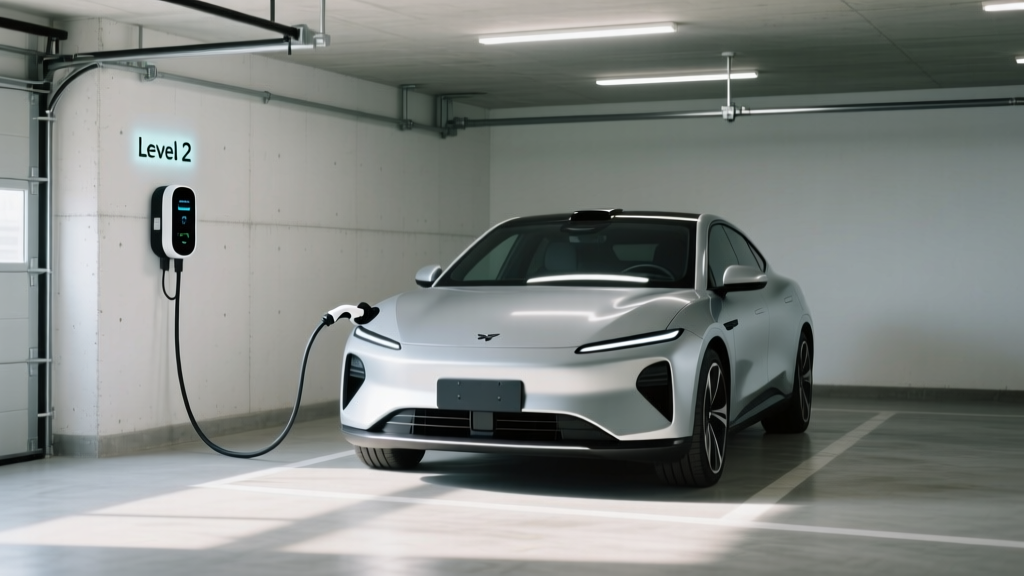
| Level 2 (240V) | 240V AC | 7.2–19.2 kW | 20–65 mi/hr | Daily home charging, workplace |
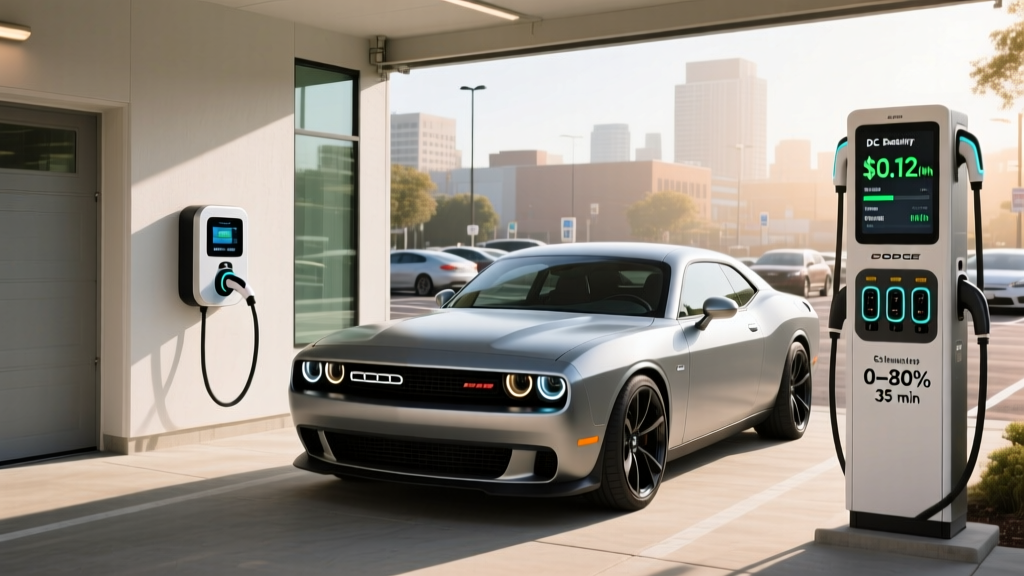
| DC Fast Charge | 400–800V DC | 50–350 kW | 150–1,200+ mi/hr | Road trips, quick top-ups |
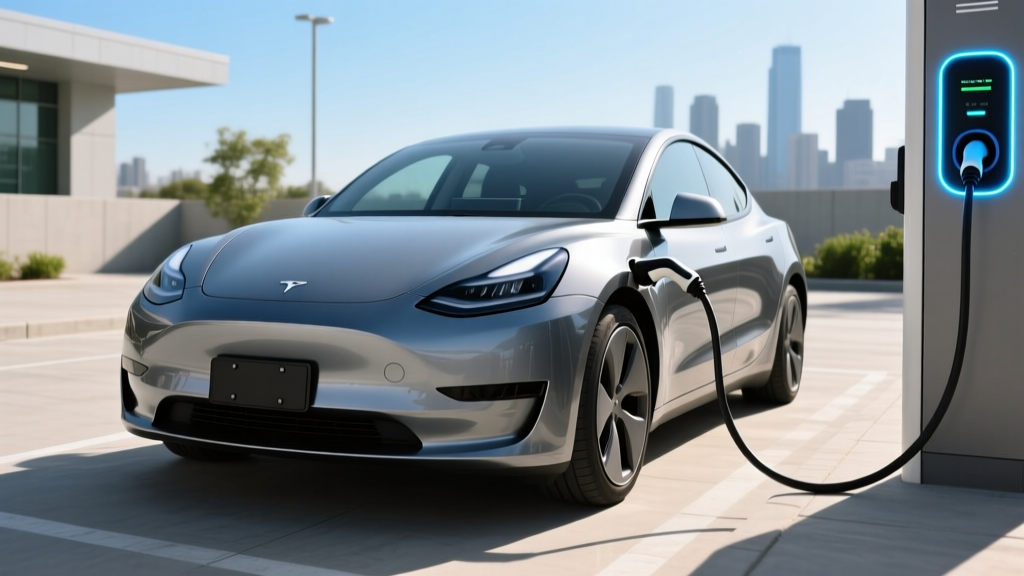
For context, a 2026 Tesla Model 3 Long Range with an 82 kWh (usable ~79 kWh) battery charged on a 48-amp Level 2 circuit (11.5 kW) goes from 20% to 80% in roughly 4.5 hours. That same 10–80% session on a 250 kW DC fast charger takes approximately 25–30 minutes, though the charge curve tapers sharply above 80% — meaning the last 20% can take as long as the first 60%.
Real-World Range Callout: EPA estimates assume a mix of city and highway driving at moderate temperatures. Expect 85–95% of EPA range in city driving (regen braking helps), 75–85% at sustained highway speeds, and 60–75% in sub-freezing conditions without preconditioning. Always plan trips around 70–80% of the sticker number for a safety margin.
Home Charger Installation: Electrical Requirements and Real Costs
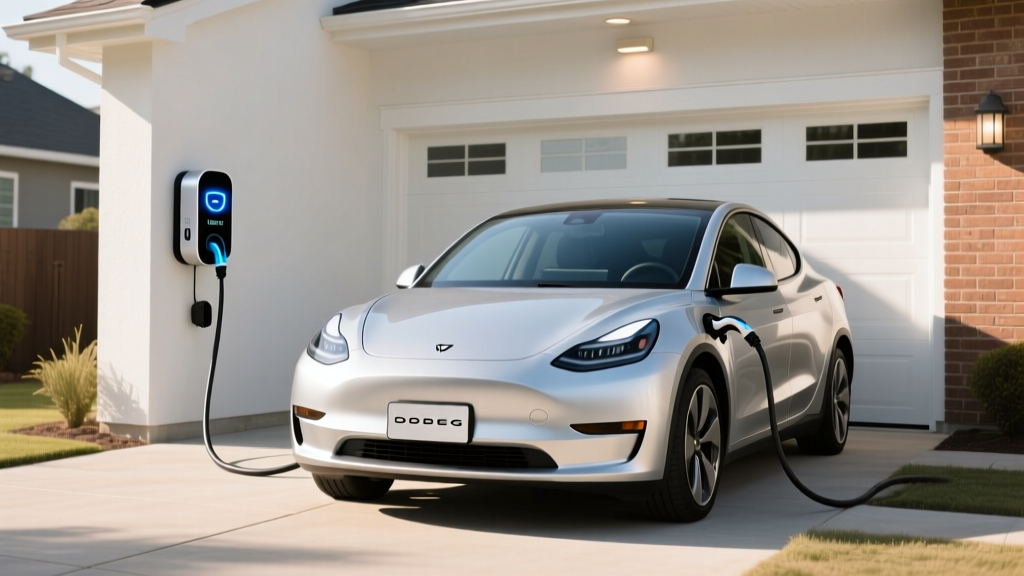
A Level 2 home charger is the backbone of practical EV ownership. Most EV drivers do 80–90% of their charging at home, waking up every morning with a full battery — something no gas car can match. But installation costs vary dramatically based on your home's electrical panel, the distance from panel to charger location, and local permit requirements.
Electrical Requirements
Most Level 2 chargers require a 240V dedicated circuit, similar to what powers an electric dryer or oven. Common amperage configurations:
- 32-amp circuit (40A breaker): Delivers 7.7 kW — sufficient for most overnight charging
- 48-amp circuit (60A breaker): Delivers 11.5 kW — ideal for larger batteries (100+ kWh) or faster turnaround
- 80-amp circuit (100A breaker): Delivers 19.2 kW — available on some premium chargers; requires substantial panel capacity
If your home has a 100-amp main panel that's already near capacity, you'll likely need a panel upgrade to 200 amps — a significant added cost. Homes built before 1990 are the most common candidates. A licensed electrician can perform a load calculation to determine whether your current panel can handle the additional draw.
| Component | Simple Install (panel nearby) | Complex Install (long run / panel upgrade) |
|---|---|---|
| Level 2 Charger (hardware) | $400–$700 | $400–$700 |
| Electrician labor | $500–$1,200 | $1,500–$3,500 |
| Electrical permit | $50–$200 | $50–$200 |
| Panel upgrade (if needed) | N/A | $1,500–$3,500 |
| Conduit/wiring materials | $100–$300 | $300–$800 |
| Total estimated cost | $1,050–$2,400 | $3,750–$8,700 |
The federal Residential Clean Energy Credit does not cover EV chargers as of 2026 (the prior §30C alternative fuel vehicle refueling property credit expired for most residential installations). Some utility companies and state programs offer rebates of $200–$500 for smart charger installations — check with your local utility and the Alternative Fuels Data Center for current incentives in your area.
Connector Compatibility: NACS, CCS, and CHAdeMO in 2026
The North American Charging Standard (NACS), originally Tesla's proprietary connector, has become the dominant EV charging connector in North America. As of 2026, virtually all new EVs from major automakers — Ford, GM, Hyundai, Kia, Rivian, Volvo, BMW, and others — ship with native NACS ports. The legacy CCS1 connector is still found on older models and at many existing public charging stations, while CHAdeMO (used primarily by the Nissan Leaf) is effectively discontinued on new vehicles.
| Connector | Brands Using It (2026) | Adapter Needed? |
|---|---|---|
| NACS (Tesla standard) | Tesla, Ford, GM, Hyundai, Kia, Rivian, Volvo, BMW, Mercedes, Lucid, Subaru, Toyota (bZ series) | CCS-to-NACS adapter (~$150–$250) for legacy CCS stations |
| CCS1 | Older models (pre-2025 VW ID.4, some Stellantis); legacy public infrastructure | NACS-to-CCS adapter for newer vehicles at NACS-only Superchargers |
| CHAdeMO | Nissan Leaf (discontinued after 2025 model year); legacy infrastructure only | No practical adapter; use CHAdeMO stations while available |
For home Level 2 charging, all vehicles use the J1772 connector (or NACS for Tesla). Most non-Tesla home chargers come with a J1772 plug, and Tesla includes a J1772-to-NACS adapter with every vehicle. If you buy a third-party NACS wall connector, it will charge Teslas natively and other EVs via their included adapter.
Charging Cost Per Mile: Home vs. Public vs. Gas
One of the strongest arguments for EV ownership is fuel-cost savings — but the gap narrows significantly when you rely on public DC fast charging instead of home charging. Here's how the math works across common scenarios:
| Scenario | Price | Cost per Mile (250 Wh/mi avg EV) | Equivalent Gas Vehicle Cost |
|---|---|---|---|
| Home charging (national avg residential) | $0.16/kWh | $0.040/mi | — |
| Home charging (off-peak utility rate) | $0.09/kWh | $0.023/mi | — |
| Public Level 2 (ChargePoint, etc.) | $0.30–$0.50/kWh | $0.075–$0.125/mi | — |
| DC fast charging (Electrify America, Tesla) | $0.35–$0.55/kWh | $0.088–$0.138/mi | — |
| Gas vehicle (28 MPG combined, $3.40/gal) | $3.40/gal | $0.121/mi | $0.121/mi |
| Gas vehicle (22 MPG combined, $3.40/gal) | $3.40/gal | $0.155/mi | $0.155/mi |
At home on off-peak rates, an EV costs roughly one-fifth to one-sixth what a comparable gas vehicle costs per mile. Even at public DC fast charger rates, most EVs still undercut a 22 MPG gas car — though the savings shrink considerably. This is why home charging access is the single biggest factor in EV satisfaction and total cost of ownership.
For a driver covering 12,000 miles per year with home off-peak charging at $0.09/kWh, annual fuel cost is approximately $270. The same miles in a 25 MPG gas car at $3.40/gallon costs $1,632 — a difference of $1,362 per year.
Equipment Recommendations: Home Chargers That Deliver
Not all Level 2 chargers are equal. The key specs that matter: power output (amps/kW), cable length, connector type, smart features (scheduling, load management), and UL certification for safety. Here are four top-performing units for 2026:
ChargePoint Home Flex (NACS or J1772)
- Power: Up to 50 amps (12 kW) on a 60A circuit; adjustable down to 16A
- Cable: 23 feet
- Smart features: Wi-Fi, app scheduling, Alexa integration, energy tracking
- Price: ~$550–$650
- Best for: Flexibility across amperage levels; solid app experience
Tesla Wall Connector (NACS)
- Power: Up to 48 amps (11.5 kW) on a 60A circuit
- Cable: 24 feet
- Smart features: Wi-Fi, over-the-air updates, power sharing (link multiple units on one circuit), vehicle-specific access control
- Price: ~$475
- Best for: Tesla owners and NACS-equipped EVs; excellent value; multi-charger power sharing for homes with two EVs
Emporia Level 2 EV Charger (J1772)
- Power: Up to 48 amps (11.5 kW) on a 60A circuit
- Cable: 24 feet
- Smart features: Wi-Fi, solar integration (pairs with Emporia Vue energy monitor), time-of-use scheduling
- Price: ~$400–$450
- Best for: Budget-conscious buyers; solar-panel owners wanting to charge on excess production
Grizzl-E Smart (J1772 or NACS)
- Power: Up to 40 amps (9.6 kW) on a 50A circuit
- Cable: 24 feet
- Smart features: Wi-Fi, OCPP-compatible (works with utility demand-response programs), adjustable amperage
- Price: ~$450–$550
- Best for: Cold-climate durability (rated to -40°F); rugged outdoor installs; utility program participants
Safety, Code, and Electrical Considerations
EV charging draws sustained high current for hours — unlike most household appliances that cycle on and off. This makes proper installation non-negotiable for safety and code compliance.
- Dedicated circuit: Your Level 2 charger must be on its own dedicated breaker — never shared with other appliances. The National Electrical Code (NEC) requires that continuous loads (defined as 3+ hours) not exceed 80% of the circuit rating. A 48-amp charger needs a 60-amp breaker.
- GFCI protection: The 2023 NEC (adopted in most jurisdictions by 2026) requires GFCI protection for EV charging outlets. Hardwired chargers often include built-in GFCI; outlet-plugged units require a GFCI breaker or receptacle.
- Outdoor rating: If your charger is mounted outside or in an unsealed garage, ensure it carries a NEMA 4 or IP65 rating for weather resistance.
- Hardwired vs. plug: Hardwired installations (no plug, direct wire connection) are preferred for 48-amp and higher chargers. A NEMA 14-50 outlet is common for 40-amp units and allows portability — but must be installed with proper torque specs and, ideally, an industrial-grade receptacle (not a big-box-store grade) to avoid overheating.
- Permit and inspection: Nearly all jurisdictions require an electrical permit for EV charger installation. The inspection ensures wire gauge, breaker sizing, and grounding meet code. Skipping the permit risks insurance claim denial in the event of an electrical fire.
Charging Time Examples: How Long Does 10–80% Actually Take?
Charging time depends on battery size, the charger's peak kW, and the vehicle's onboard charge acceptance. Here are real-world estimates for popular 2026 models:
| Vehicle | Battery (usable kWh) | Level 2 at 11.5 kW | DC Fast (peak kW) | DC Fast 10–80% Time |
|---|---|---|---|---|
| Tesla Model 3 Long Range | 79 kWh (NMC) | ~4.8 hrs | 250 kW | ~25 min |
| Hyundai Ioniq 5 (Long Range) | 84 kWh (NMC) | ~5.1 hrs | 350 kW (800V) | ~18 min |
| Ford F-150 Lightning (Extended) | 131 kWh (NMC) | ~8.0 hrs | 150 kW | ~41 min |
| Chevrolet Equinox EV (3RS) | 85 kWh (NMC) | ~5.2 hrs | 150 kW | ~30 min |
| BMW i4 eDrive40 | 81 kWh (NMC) | ~4.9 hrs | 200 kW | ~31 min |
Note that DC fast charging speeds are peak rates, not sustained rates. The Ioniq 5's 800V architecture allows it to sustain higher power deeper into the charge curve, which is why its 10–80% time is faster than vehicles with higher peak kW but 400V systems. Always look at 10–80% time, not peak kW, when comparing charging speed.
Frequently Asked Questions
How much does it cost to install a home EV charger?
A straightforward Level 2 installation with the electrical panel nearby typically costs $1,050–$2,400 including equipment, labor, and permit. If your home needs a panel upgrade from 100A to 200A or the charger location is far from the panel, total costs can reach $3,750–$8,700. Always get a load calculation from a licensed electrician before committing.
How fast will each charging level add range?
Level 1 (120V) adds 3–5 miles per hour — enough for plug-in hybrids but slow for battery EVs. Level 2 (240V) adds 20–65 miles per hour depending on amperage, easily replenishing a full night's drive. DC fast charging adds 150–1,200+ miles per hour at peak, though real sessions taper after 80% state of charge.
Which connector or charger is compatible with my EV?
For 2026 models, most new EVs use the NACS connector. Older EVs (pre-2025) may have CCS1 or CHAdeMO. At home, Level 2 charging uses J1772 (most brands) or NACS (Tesla and newer NACS-equipped vehicles). Adapters costing $150–$250 bridge the gap between connector families at public stations.
How much does charging cost per mile versus gas?
Home charging on off-peak rates costs roughly $0.02–$0.04 per mile — about one-quarter to one-sixth the cost of gasoline at $3.40/gallon in a 25 MPG vehicle ($0.14/mile). Public DC fast charging at $0.45/kWh costs roughly $0.09–$0.14 per mile, which is comparable to or slightly cheaper than gas. The biggest savings come from home charging access.
What electrical upgrades might I need?
Homes with 100-amp electrical panels, older wiring, or panels already near capacity may require a panel upgrade to 200 amps ($1,500–$3,500). You may also need new conduit runs if the charger is far from the panel, or a sub-panel installation in an attached garage. A licensed electrician's load calculation is the definitive answer — don't guess on this.