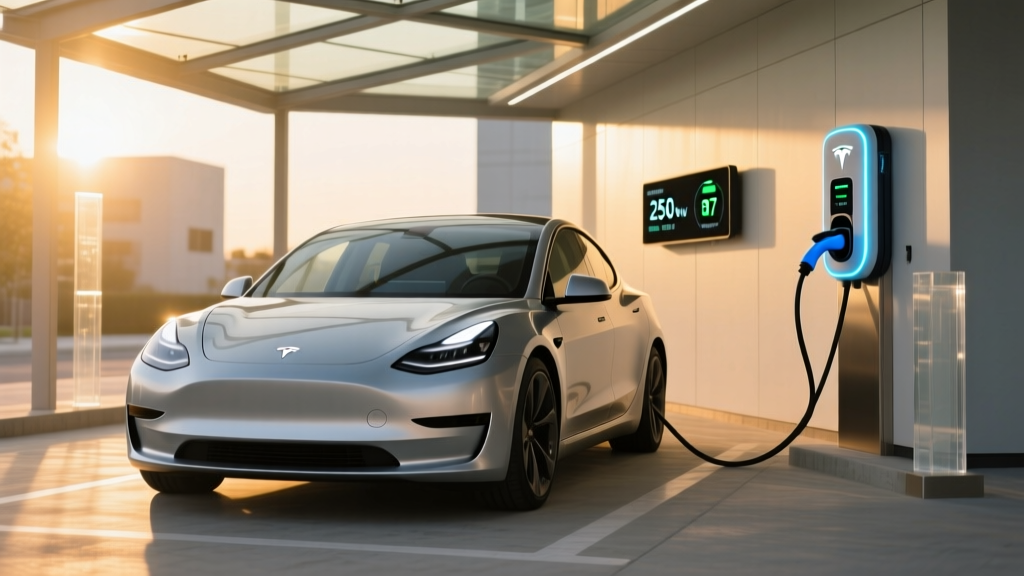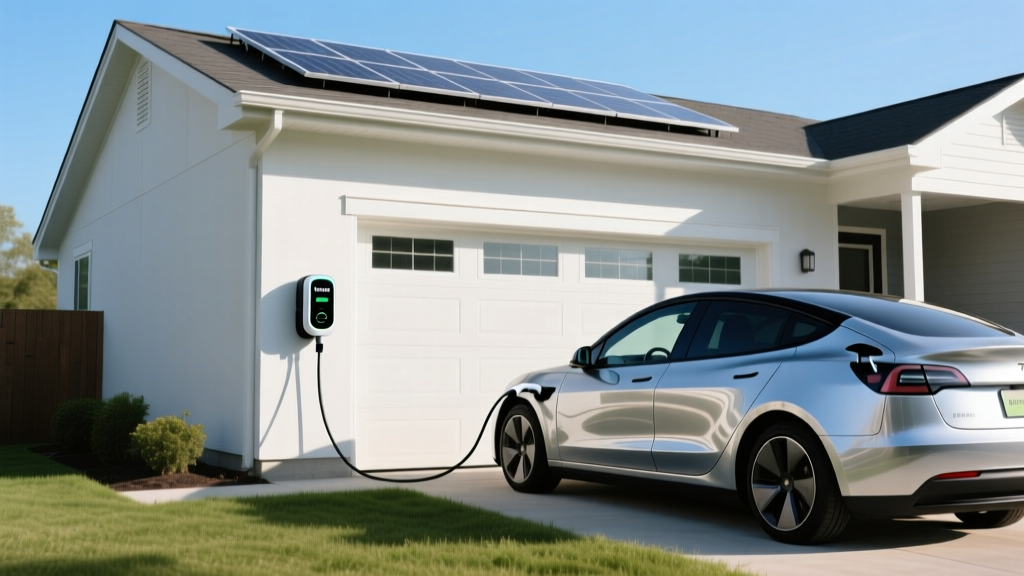
Maryland has quietly become one of the most affordable states to set up home EV charging, thanks to the Maryland Electric Vehicle Supply Equipment (EVSE) Tax Credit. If you buy and install a qualified Level 2 home charger, the state will refund 40% of the equipment and installation cost — up to $700 for individuals and $3,500 for businesses or HOAs. Combined with falling hardware prices and utility off-peak rates, a full Level 2 home charging setup can pay for itself faster than most buyers expect.
But the rebate is only useful if your home's electrical system can actually support a charger. Older Maryland homes — particularly those built before 1990 in the Baltimore-Washington corridor — often need panel upgrades, new conduit runs, or dedicated circuits that can push total costs well above the rebate cap. This guide walks through exactly what the Maryland EV charger rebate covers, what your home needs, what to spend on equipment, and how fast you'll actually charge.
How the Maryland EV Charger Rebate Works
Administered by the Maryland Energy Administration (MEA), the EVSE tax credit applies to new, qualified Level 2 charging equipment purchased and installed at a Maryland residence or place of business. Key rules for 2026:
- Credit amount: 40% of total equipment + installation cost
- Individual cap: $700 per taxpayer
- Business/HOA cap: $3,500 per entity
- Eligible equipment: New Level 2 EVSE (240V) listed by a nationally recognized testing laboratory (UL, ETL)
- Filing: Claimed on your Maryland state income tax return using Form 500CR
- Stacking: Can be combined with the federal §30C Alternative Fuel Vehicle Refueling Property Credit (up to $1,000, subject to census-tract eligibility)
Note: This is a tax credit, not a point-of-sale rebate — it reduces your Maryland state tax liability. If your MD tax bill is less than $700, you cannot carry the credit forward. Always verify current program status with the MEA or a tax professional before purchasing.
Charging Levels Explained: kW, Miles Per Hour, and What You Need
The single most important distinction in EV charging: kW is power (how fast energy flows), while kWh is energy (how much the battery holds). A 60 kWh battery charged at 10 kW takes roughly 6 hours from empty. Here's how the three levels break down in real-world terms:
| Level | Voltage / Amps | Power (kW) | Miles of Range Added per Hour | Typical Use |
|---|---|---|---|---|
| Level 1 | 120V / 12A | ~1.4 kW | 3–5 mi/hr | Overnight trickle, PHEVs, emergency |
| Level 2 (home) | 240V / 32–48A | 7.7–11.5 kW | 25–44 mi/hr | Daily home charging, most EVs |
| DC Fast Charging | 400–800V DC | 50–350 kW | 150–1,000+ mi/hr (peak) | Road trips, highway corridors |
Real-world charging times (10–80% SoC):
- 60 kWh battery (e.g., base Hyundai Kona Electric): Level 2 at 11.5 kW ≈ 4.5 hours; 150 kW DCFC ≈ 25 minutes
- 77 kWh battery (e.g., Ford Mustang Mach-E Extended Range): Level 2 at 11.5 kW ≈ 5.5 hours; 150 kW DCFC ≈ 30 minutes
- 100 kWh battery (e.g., Rivian R1T Large Pack): Level 2 at 11.5 kW ≈ 7 hours; 200 kW DCFC ≈ 35 minutes
DC fast charging times assume a preconditioned battery at moderate ambient temperature. In winter, expect 10–80% times to stretch 30–50% longer without active battery preconditioning, and charging curves taper sharply above 80% SoC to protect cell longevity.
Home Installation: Electrical Requirements and Real Costs
The Maryland EV charger rebate is most valuable when your electrical panel can handle the load without an upgrade. Here's what a licensed electrician will evaluate:
Circuit and Panel Requirements
- Dedicated circuit: A Level 2 charger requires its own 240V circuit — no sharing with dryers or ranges
- Amperage: A 48A charger needs a 60A breaker (NEC requires circuits to be rated 125% of continuous load)
- Panel capacity: Most modern 200A panels can add a 60A breaker. Older 100A panels often cannot without an upgrade
- Wire gauge: Typically 6 AWG copper for 60A circuits; 4 AWG for longer runs to minimize voltage drop
- GFCI protection: NEC 2020+ requires GFCI breakers for receptacle-based (NEMA 14-50) installs in garages; hardwired units often exempt
Installation Cost Breakdown
| Component | Simple Install (panel nearby) | Complex Install (long run or upgrade) |
|---|---|---|
| Level 2 charger (equipment) | $350–$650 | $350–$650 |
| Electrician labor (2–6 hrs @ $100–$150/hr) | $200–$450 | $600–$1,500 |
| Materials (wire, conduit, breaker) | $100–$200 | $300–$800 |
| Permit (county/municipal) | $50–$100 | $50–$150 |
| Panel upgrade (100A → 200A, if needed) | N/A | $1,500–$3,500 |
| Total | $700–$1,400 | $2,800–$6,600 |
| After MD rebate (40%, cap $700) | $0–$700 | $2,100–$5,900 |
For a straightforward install — panel within 20 feet of the garage, 200A service, hardwired charger — your out-of-pocket after the Maryland EV charger rebate can be as low as $0–$700. For older homes in neighborhoods like Bethesda, Takoma Park, or Annapolis with 100A panels and finished walls, the panel upgrade dominates the budget and the $700 rebate becomes a smaller percentage of the total.
Utility Considerations
BGE, Pepco, and Potomac Edison all offer EV-specific time-of-use (TOU) rates in Maryland. Charging between 11 PM and 7 AM can cut your per-kWh cost roughly in half compared to peak rates. Some utilities also offer rebates or make-ready programs that cover conduit or meter upgrades — check with your provider before scheduling the electrician.
Connector Compatibility: NACS, CCS1, and CHAdeMO
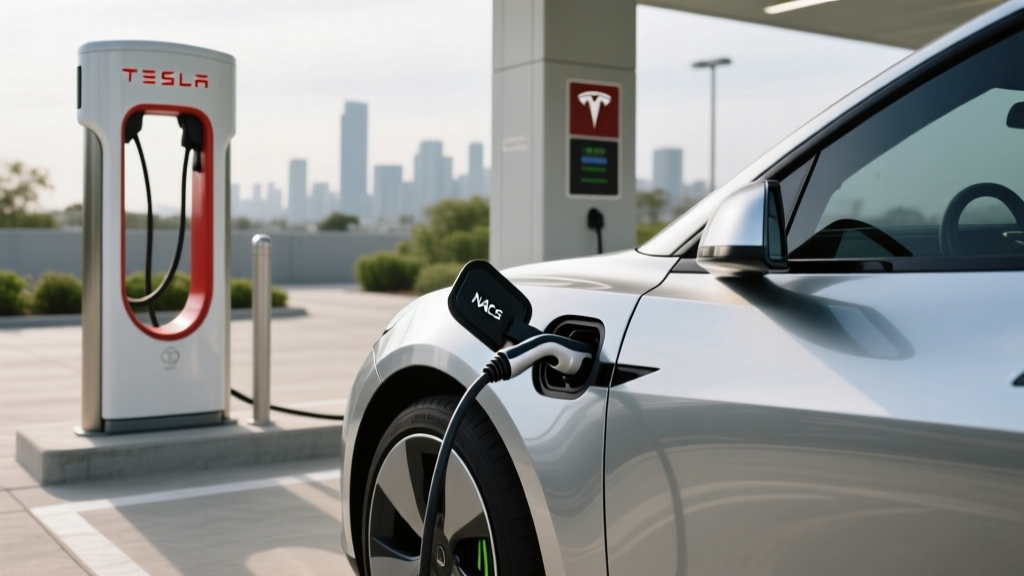
The connector landscape has consolidated significantly. As of 2026, nearly every new EV sold in the U.S. uses either the native NACS (Tesla-style) port or ships with a NACS adapter for CCS1 vehicles. CHAdeMO is effectively legacy — only the Nissan Leaf remains in production using it.
| Brand | Native Port | DC Fast Charging Network | Adapter Needed? |
|---|---|---|---|
| Tesla (all models) | NACS | Supercharger (native) | None |
| Ford (Mach-E, F-150 Lightning) | CCS1 → NACS (2025+) | Tesla Supercharger w/ adapter | CCS-to-NACS (included) |
| Hyundai / Kia (Ioniq 5, EV6, EV9) | NACS (2025+ models) | Tesla Supercharger / Electrify America | None (native NACS on new models) |
| GM (Equinox EV, Blazer EV, Silverado EV) | NACS | Tesla Supercharger (native) | None |
| Rivian (R1T, R1S) | NACS | Tesla Supercharger / Rivian Adventure Network | None |
| Volkswagen (ID.4) | CCS1 | Electrify America | CCS-to-NACS for Tesla access |
| Nissan (Leaf) | CHAdeMO | Limited CHAdeMO stations | No reliable adapter exists |
For home Level 2 charging: Most 2026 chargers now ship with a NACS connector. If you own a CCS1 vehicle, buy a charger with a CCS1 plug or use the vehicle's included adapter. For CHAdeMO vehicles (Leaf), dedicated CHAdeMO Level 2 chargers still exist but options are shrinking — plan for the long term.
Equipment Picks: Best Level 2 Chargers for Maryland Homes
Here are three chargers that meet the Maryland EVSE tax credit eligibility (UL/ETL listed, new, Level 2) and represent strong value across different installation scenarios:
Emporia Vue Level 2 Smart Charger
- Power output: 48A (11.5 kW on 240V/60A circuit)
- Connector: NACS (CCS adapter included)
- Cable length: 24 ft
- Smart features: Wi-Fi, app scheduling, solar integration, energy monitoring
- Indoor/Outdoor: NEMA 4 outdoor-rated
- Price: ~$399
- Best for: Budget-conscious buyers who want full smart features and solar pairing
ChargePoint Home Flex
- Power output: Up to 50A (12 kW, adjustable down to 16A for panel-limited homes)
- Connector: NACS or J1772 (select at purchase)
- Cable length: 23 ft
- Smart features: Wi-Fi, app with detailed session data, Alexa integration, utility TOU scheduling
- Indoor/Outdoor: NEMA 4 outdoor-rated
- Price: ~$549
- Best for: Flexible amperage adjustment — ideal if your electrician recommends limiting the circuit to 40A
Tesla Wall Connector
- Power output: 48A (11.5 kW on 240V/60A circuit)
- Connector: NACS native (J1772 adapter included for non-Tesla EVs)
- Cable length: 24 ft
- Smart features: Wi-Fi, OTA updates, power-sharing with second unit, load management
- Indoor/Outdoor: NEMA 3R outdoor-rated
- Price: ~$450
- Best for: Tesla owners or multi-EV households (two units can share a single 60A circuit)
All three qualify for the Maryland EV charger rebate. The Emporia offers the best post-rebate value at roughly $239 net cost (before installation). The ChargePoint's adjustable amperage is genuinely useful for older Maryland homes where an electrician may want to limit the draw to 32A or 40A without replacing the unit.
Cost to Charge: Per-Mile Comparison vs. Gas
Maryland's average residential electricity rate hovers around $0.16/kWh (statewide average, varies by utility). With a BGE or Pepco off-peak TOU plan, overnight rates can drop to $0.08–$0.10/kWh. Here's what that means per mile for a typical EV averaging 3.0 miles per kWh (roughly 112 MPGe):
| Scenario | Rate / Price | Cost Per Mile |
|---|---|---|
| Home off-peak (overnight TOU) | $0.09/kWh | $0.030/mi |
| Home standard rate | $0.16/kWh | $0.053/mi |
| Public Level 2 (e.g., ChargePoint network) | $0.25–$0.35/kWh | $0.083–$0.117/mi |
| DC Fast Charging (Electrify America, EVgo) | $0.35–$0.55/kWh | $0.117–$0.183/mi |
| Gas vehicle (30 MPG combined, $3.40/gal MD avg) | $3.40/gal | $0.113/mi |
Home charging on an off-peak plan delivers roughly 75% lower fuel cost per mile than a 30 MPG gas car. Even at standard residential rates, you're paying less than half. The savings disappear only if you rely exclusively on DC fast charging at peak public rates — which is why the Maryland EV charger rebate exists: to make home charging the default.
Safety, Permits, and Code Compliance
Maryland enforces the National Electrical Code (NEC) with local amendments. Key requirements your installation must meet:
- Dedicated circuit: The charger must be on its own breaker — no shared circuits with appliances or outlets
- GFCI protection: Required for NEMA 14-50 receptacle installs in garages (NEC 625.40). Hardwired installations are generally exempt, which is why many electricians recommend hardwiring — it eliminates GFCI nuisance trips and removes a failure point
- Outdoor rating: If mounted outside, the unit must be rated NEMA 3R or NEMA 4 (rain and dust protection)
- Permit: Required in all Maryland counties. Your electrician should pull the permit and schedule the inspection — do not skip this step, as unpermitted work can void home insurance claims and the MEA rebate
- Cable management: NEC requires the charging cable not create a trip hazard; wall hooks or retractors are recommended for garage installs
Always hire a licensed Maryland electrician. The MEA requires documentation of professional installation to claim the tax credit, and DIY electrical work on 240V circuits carries serious shock and fire risk.
Frequently Asked Questions
How much does it cost to install a home EV charger in Maryland?
A straightforward Level 2 installation (200A panel, short wire run, hardwired) typically costs $700–$1,400 total including equipment, labor, materials, and permit. After the Maryland EV charger rebate (40%, capped at $700), your net cost can be as low as $0–$700. Complex installations requiring a panel upgrade can run $2,800–$6,600 before the rebate.
How fast will each charging level add range?
Level 1 (120V) adds roughly 3–5 miles per hour — adequate for PHEVs with small batteries but impractical for most BEVs. Level 2 at 48A (11.5 kW) adds 30–44 miles per hour, enough to fully replenish any EV overnight. DC fast charging adds 150–1,000+ miles per hour at peak power, though sustained rates taper significantly above 80% state of charge.
Which connector do I need for my EV?
If your EV is a 2025+ Tesla, GM, Ford, Rivian, Hyundai, or Kia, it likely has a native NACS port. Older CCS1 vehicles (2021–2024 Ford, VW, BMW, etc.) can use NACS chargers with a CCS-to-NACS adapter, often included by the automaker. CHAdeMO vehicles (Nissan Leaf) require a dedicated CHAdeMO connector with no reliable adapter option. For home Level 2, match the charger plug to your vehicle's port.
How much does charging cost per mile compared to gas?
At Maryland's average off-peak home rate of ~$0.09/kWh and a typical EV efficiency of 3 mi/kWh, home charging costs about $0.03 per mile — roughly 75% less than a 30 MPG gas car at $3.40/gallon ($0.113/mi). Standard home rates ($0.16/kWh) still come in at $0.053/mi. Public DC fast charging at $0.45/kWh costs about $0.15/mi, making it more expensive than gas.
What electrical upgrades might I need?
If your home has a 100A electrical panel (common in pre-1990 construction), you'll likely need an upgrade to 200A to safely add a 60A EV charger circuit — this costs $1,500–$3,500. Even with a 200A panel, if it's already near capacity (multiple electric appliances, HVAC, hot tub), an electrician may recommend a lower-amperage charger (32A or 40A) or a smart load-management system that throttles the charger when other loads spike. Always get a panel-load calculation before committing to equipment.