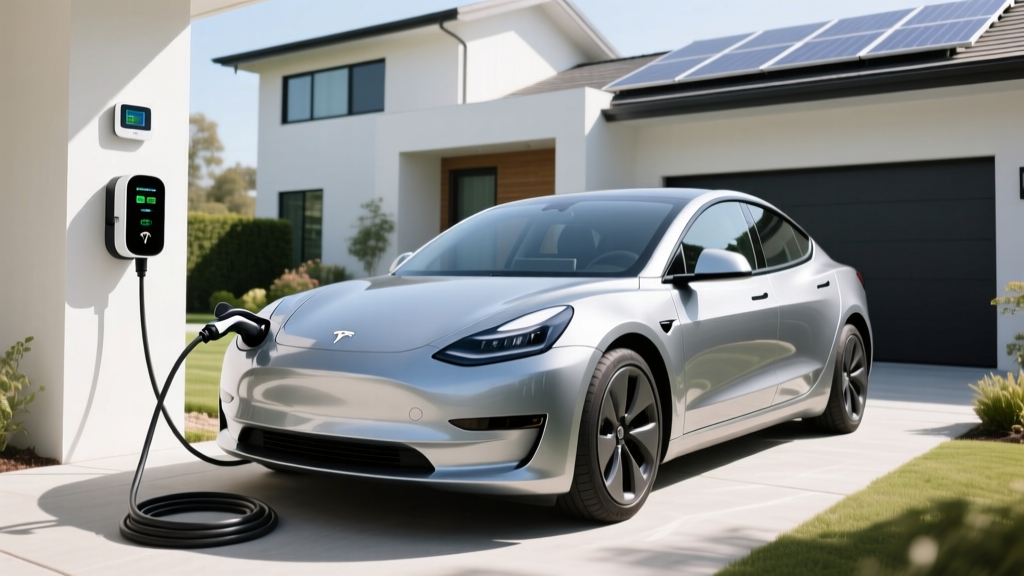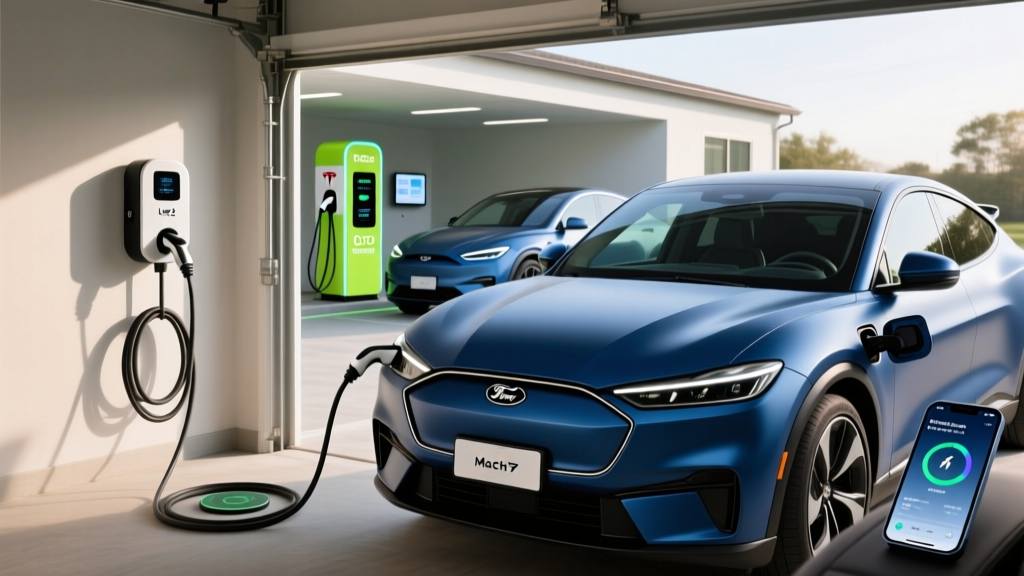
The Ford Mustang Mach-E remains one of the most compelling electric SUVs on the market, but extracting its full EPA-estimated range—and keeping charging convenient and affordable—requires understanding the charging ecosystem. Whether you're picking up a 2026 Mach-E Select with the Standard Range battery or stepping into a Premium or GT with the Extended Range pack, your charging strategy directly impacts daily drivability, road-trip viability, and long-term battery health.
This guide breaks down exactly how to charge a Mach-E at home and on the road, what electrical work your house might need, which connectors to use, and what you'll actually spend per mile compared to gasoline.
Ford Mustang Mach-E Battery and Range Overview
Before discussing charging hardware, you need to know what you're filling. The 2026 Mach-E lineup uses two lithium-ion NMC (nickel manganese cobalt) battery packs:
- Standard Range (SR): ~75.7 kWh usable capacity. EPA-estimated range between 250 and 266 miles depending on drivetrain (RWD vs. AWD) and trim.
- Extended Range (ER): ~91 kWh usable capacity. EPA-estimated range between 290 and 320 miles, with the Premium RWD achieving the highest figure.
For detailed EPA figures by trim, consult fueleconomy.gov.
Charging Levels Explained: How Fast Will Each Add Range?
EV charging is categorized into three levels. The distinction between kW (power—the rate of energy delivery) and kWh (energy—the battery's total capacity) is critical here. A 10 kW charger delivering power for one hour adds 10 kWh of energy to your battery.
| Level | Voltage / Phase | Max Power (kW) | Miles of Range Added Per Hour | Typical Use Case |
|---|---|---|---|---|
| Level 1 | 120V AC / 1-phase | ~1.4 kW | 3–5 miles | Overnight trickle; emergency top-ups |
| Level 2 | 240V AC / 1-phase | 7.2–19.2 kW | 20–60 miles | Daily home and workplace charging |
| DC Fast Charging | 400V+ DC | 50–350+ kW | 150–800+ miles (equivalent rate) | Road trips; rapid top-ups |
Mach-E Charging Times by Level
The Mach-E's onboard AC charger accepts up to 10.5 kW on Level 2 (a 48-amp circuit). On DC fast charging, the Extended Range pack peaks at approximately 150 kW, while the Standard Range peaks around 115 kW.
- Level 1 (120V, 1.4 kW): A full 10%–100% charge on the Extended Range pack takes roughly 60+ hours. This is viable only for plug-in hybrids or very low-mileage drivers.
- Level 2 (240V, 10.5 kW): A 10%–100% charge on the 91 kWh Extended Range pack takes approximately 8.5 hours. A Standard Range pack fills in about 7 hours. This is the sweet spot for overnight home charging.
- DC Fast Charging (150 kW peak): The Extended Range pack charges from 10% to 80% in approximately 45 minutes. Note that charging speed tapers significantly above 80% to protect battery health—going from 80% to 100% at a DC fast charger can take nearly as long as the 10%–80% session.
Home Level 2 Charger Installation: Electrical Requirements and Costs
A Level 2 home charger is the single best upgrade a Mach-E owner can make. It enables full overnight charging, eliminates gas station stops, and takes advantage of off-peak electricity rates. However, installation costs vary dramatically based on your home's electrical panel.
Electrical Requirements
To deliver the Mach-E's maximum 10.5 kW AC charge rate, you need a 240V circuit rated for at least 50 amps (the charger draws 48 amps continuously, and the National Electrical Code requires circuits to be rated at 125% of continuous load). This requires a NEMA 14-50 outlet or a hardwired connection.
Your electrical panel must have sufficient spare capacity—typically 200 amps total for a modern home with an EV. Older homes with 100-amp panels will almost certainly require a panel upgrade to 200 amps, which is the single largest cost variable in EV charger installation.
| Component | Typical Cost Range | Notes |
|---|---|---|
| Level 2 Charging Equipment | $300–$700 | Smart Wi-Fi chargers; higher-end units include cable management and load balancing |
| Electrician Labor (standard install) | $500–$1,500 | Runs 240V line from panel to garage/carport; shorter runs cost less |
| Permit and Inspection | $100–$300 | Required by most jurisdictions; ensures NEC code compliance |
| Panel Upgrade (if needed) | $1,500–$3,500 | 100A to 200A service upgrade; common in pre-2000 homes |
| Total (no panel upgrade) | $900–$2,500 | Most newer homes with 200A panels fall in this range |
| Total (with panel upgrade) | $2,400–$6,000 | Older homes; get 2–3 quotes from licensed electricians |
Always hire a licensed electrician familiar with NEC Article 625 (EV charging equipment). Some utilities offer rebates of $250–$500 for home charger installation—check with your local provider.
Which Connector Does the Mach-E Use?
The connector landscape has shifted significantly. Here's where the Mach-E stands in 2026:
| Connector Standard | Mach-E Compatibility | Details |
|---|---|---|
| NACS (Tesla / North American Charging Standard) | Native (2025+ models) | 2025 and newer Mach-Es ship with a NACS charge port. Access to Tesla Supercharger network directly—no adapter required. |
| CCS1 (Combined Charging System) | 2021–2024 models native; 2025+ via adapter | Older Mach-Es have CCS1 ports. Ford provides or sells a NACS-to-CCS adapter for Supercharger access on older models. |
| CHAdeMO | Not compatible | CHAdeMO is effectively legacy in North America. No adapter needed or recommended. |
| J1772 (Level 2 AC) | All models via adapter | Level 2 public chargers use J1772; a J1772-to-NACS adapter is included with newer Mach-Es or available separately. |
For the latest compatibility details and adapter availability, refer to Ford's official EV charging page.
Cost to Charge: Per-Mile Comparison vs. Gasoline
One of the strongest arguments for the Mach-E is fuel cost savings, but the actual numbers depend on where and when you charge.
| Charging Scenario | Cost per kWh | Cost to Fill 91 kWh (ER Pack) | Cost per Mile (320 mi range) |
|---|---|---|---|
| Home (off-peak utility rate) | $0.08–$0.12 | $7.28–$10.92 | $0.023–$0.034 |
| Home (standard residential rate) | $0.13–$0.18 | $11.83–$16.38 | $0.037–$0.051 |
| Public Level 2 (network pricing) | $0.25–$0.40 | $22.75–$36.40 | $0.071–$0.114 |
| DC Fast Charging (Electrify America, EVgo) | $0.35–$0.55 | $31.85–$50.05 | $0.100–$0.156 |
| Gasoline Equivalent (25 MPG, $3.50/gal) | — | $44.80 (equivalent) | $0.140 |
Home charging during off-peak hours delivers the most dramatic savings—roughly $0.03 per mile, or about one-fifth the cost of gasoline. Even public DC fast charging is competitive with or cheaper than gas in most markets. The Mach-E's efficiency (approximately 3.0–3.5 miles per kWh depending on trim) is competitive within its class.
Recommended Home Charging Equipment for the Mach-E
To maximize the Mach-E's 10.5 kW onboard charger, select a Level 2 unit that delivers at least 48 amps. Here are three proven options:
Ford Charge Station Pro
- Power Output: 48 amps / 11.5 kW (at 240V)
- Connector: NACS (2025+ compatible); J1772 version also available
- Cable Length: 25 feet
- Smart Features: Wi-Fi enabled, FordPass app integration, scheduled charging, energy usage tracking
- Price: ~$599
- Best For: Mach-E owners who want seamless Ford ecosystem integration
Emporia Vue Level 2 Charger
- Power Output: 48 amps / 11.5 kW
- Connector: J1772 (NACS adapter available)
- Cable Length: 24 feet
- Smart Features: Wi-Fi, app scheduling, solar integration, load management, energy monitoring
- Price: ~$399
- Best For: Budget-conscious buyers with solar panels or who want granular energy data
ChargePoint Home Flex
- Power Output: Configurable up to 50 amps / 12 kW
- Connector: J1772 (NACS adapter available)
- Cable Length: 23 feet
- Smart Features: Wi-Fi, ChargePoint app, Alexa integration, flexible amperage settings to match circuit
- Price: ~$699
- Best For: Homes with varied circuit capacities; amperage can be dialed down if panel is limited
Safety, Code, and Installation Best Practices
EV charging draws sustained high current for hours—unlike most household appliances. Safety and code compliance are non-negotiable:
- Dedicated Circuit: Your Level 2 charger must be on a dedicated breaker—no shared circuits with dryers, ovens, or HVAC equipment.
- GFCI Protection: NEC 2020 and later require GFCI (Ground Fault Circuit Interrupter) protection for all EV charging outlets. Many modern chargers include built-in GFCI; hardwired installations may handle this at the breaker.
- Outdoor Rating: If your charger is installed outside (carport, driveway), ensure the unit carries a NEMA 4 or IP65 weather rating. All three chargers recommended above are outdoor-rated.
- Wire Gauge: A 50-amp circuit typically requires 6 AWG copper wire. Your electrician will size this based on run length and local code.
- Utility Notification: Some utilities require you to notify them before adding an EV charger, as it may affect your rate plan or transformer capacity.
Frequently Asked Questions
How much does it cost to install a home EV charger for my Mach-E?
For most homes with an existing 200-amp electrical panel, expect to pay between $900 and $2,500 total (charger, electrician, and permit). Homes needing a panel upgrade from 100A to 200A should budget $2,400 to $6,000. Always obtain at least two quotes from licensed electricians.
How fast will each charging level add range to the Mach-E?
Level 1 (120V) adds about 3–5 miles per hour—essentially overnight trickle charging. Level 2 (240V, 48A) adds approximately 32–37 miles per hour, fully recharging an Extended Range pack overnight. DC fast charging at 150 kW can add roughly 150+ miles in 15 minutes under ideal conditions, though the charge rate tapers above 80% State of Charge.
Which connector does my Mach-E use, and do I need an adapter?
2025 and newer Mach-Es use the NACS connector natively and can plug directly into Tesla Superchargers. 2021–2024 models use CCS1 and require a Ford-provided NACS adapter for Supercharger access. For public Level 2 (J1772) chargers, a J1772-to-NACS adapter is needed on newer models.
How much does charging a Mach-E cost per mile compared to gas?
Home off-peak charging costs roughly $0.03 per mile, while gasoline at $3.50/gallon in a 25 MPG vehicle costs about $0.14 per mile. Even public DC fast charging ($0.10–$0.16 per mile) is competitive with gasoline. Over 15,000 annual miles, home charging saves approximately $1,500–$1,700 per year versus gas.
What electrical upgrades might my home need for a Level 2 charger?
The most common upgrade is a panel capacity increase from 100 amps to 200 amps, needed in older homes with limited spare breaker slots or total load capacity. You'll also need a dedicated 50-amp, 240V breaker and appropriately sized wiring (typically 6 AWG copper). A licensed electrician can perform a load calculation to determine if your current panel supports a charger.
Does DC fast charging degrade the Mach-E battery faster?
Occasional DC fast charging has minimal impact on long-term battery health. Ford's battery management system actively manages cell temperature and limits charge rates to prevent damage. However, exclusive reliance on DC fast charging (daily use over years) can accelerate degradation slightly compared to Level 2 charging. For daily needs, Level 2 at home is the best balance of speed and battery longevity.