Charging the Mach-E Extended Range: What You Actually Need to Know
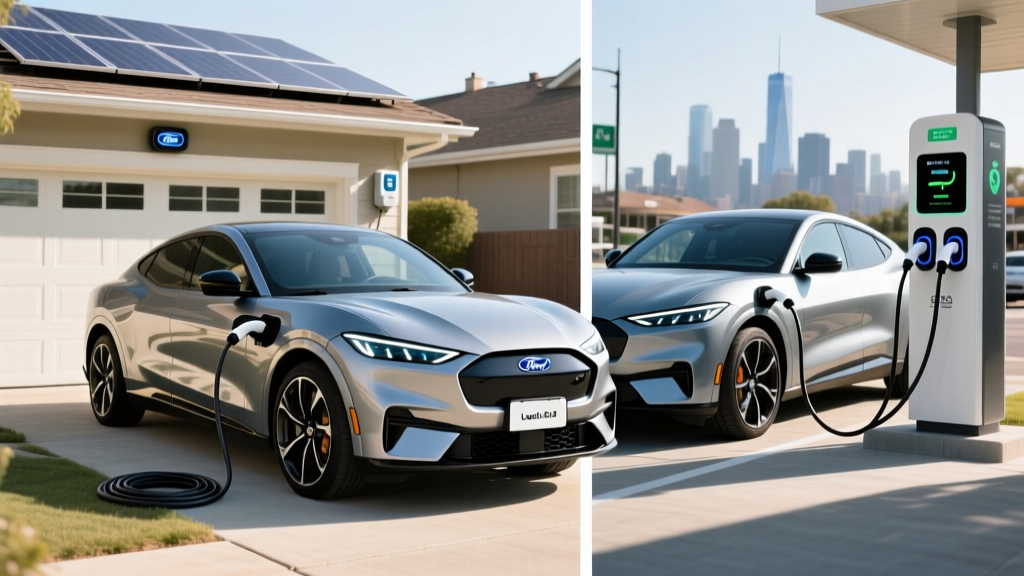
The Ford Mustang Mach-E Extended Range packs a 91 kWh usable lithium-ion battery (NMC chemistry) and an EPA-estimated 305–320 miles of range depending on drivetrain and model year. That's a big battery, which means charging strategy matters more than it does for smaller-pack EVs. Plug into a standard 120V outlet and you'll be adding roughly 3–4 miles of range per hour — meaning a full replenishment from near-empty would take well over 24 hours. Set up proper Level 2 home charging, and you'll wake up to a full battery every morning. Use a DC fast charger on a road trip, and you can go from 10% to 80% in roughly 35–45 minutes depending on charger output.
This guide breaks down every charging scenario for the Mach-E Extended Range — home installation costs, public charging networks, connector compatibility, and the real cost per mile versus gasoline.
Charging Levels Explained: kW, kWh, and Miles Per Hour
Before we get into costs, let's nail down the single most important EV literacy concept: kW (kilowatts) measures power — the rate of energy delivery, like water pressure from a hose. kWh (kilowatt-hours) measures energy — the total amount delivered, like gallons filling a bucket. The Mach-E Extended Range has a 91 kWh battery. Charging it at 11 kW (Level 2) takes roughly 9 hours from empty; charging at 150 kW (DC fast) fills it far faster but only up to ~80% before the rate tapers.
| Charging Level | Power (kW) | Miles of Range Added/Hour | Best For |
|---|---|---|---|
| Level 1 (120V household) | 1.0–1.4 kW | 3–4 mi/hr | Overnight top-up, emergencies |
| Level 2 (240V home/public) | 7.2–11.5 kW | 22–37 mi/hr | Daily home charging, workplace |
| DC Fast Charging | 50–150+ kW | 120–250+ mi in 20 min | Road trips, quick replenishment |
The Mach-E Extended Range's onboard charger accepts up to 10.5 kW on Level 2 AC, meaning you'll want a 48-amp (or higher) Level 2 station to maximize home charging speed. On DC fast charging, the Extended Range can accept a peak rate of approximately 150 kW, though real-world sessions average 90–120 kW as the battery management system tapers the rate above 80% state of charge to protect cell longevity.
Home Level 2 Installation: Electrical Requirements, Costs & Panel Gotchas
Installing a Level 2 charger at home is the single biggest quality-of-life upgrade for any EV owner. For the Mach-E Extended Range's 91 kWh pack, a 48-amp Level 2 station on a 240V circuit will deliver roughly 10.5 kW — enough to fully recharge overnight in about 9 hours.
Electrical Requirements
- Circuit: Dedicated 60-amp breaker (for a 48-amp continuous-load charger — NEC requires 125% headroom, so 48A × 1.25 = 60A breaker)
- Wire: 6 AWG copper (or 4 AWG aluminum) in conduit, run from panel to charger location
- Voltage: 240V split-phase (standard US residential)
- Connector: NACS (Tesla-standard, now adopted by Ford for 2025+ models) or J1772 with NACS adapter for older model years
Panel Upgrade Reality Check
Here's where many homeowners get surprised. If your electrical panel is already near capacity — common in homes with 100-amp service or older 200-amp panels loaded with electric appliances, HVAC, and dryers — adding a 60-amp EV circuit may require a panel upgrade to 200 or even 400 amps. A load calculation performed by a licensed electrician will determine if your panel can handle it. Budget an extra $1,500–$4,000 if an upgrade is needed.
| Component | Typical Cost Range | Notes |
|---|---|---|
| Level 2 Charger (hardware) | $350–$750 | 48A smart charger, Wi-Fi enabled |
| Electrician labor + materials | $600–$2,000 | Depends on run length, conduit, drywall work |
| Permit & inspection | $100–$400 | Required in most jurisdictions |
| Panel upgrade (if needed) | $1,500–$4,000 | 100A→200A or 200A→400A; not always required |
| Total (no panel upgrade) | $1,050–$3,150 | Most common scenario |
| Total (with panel upgrade) | $2,550–$7,150 | Older homes with limited capacity |
The IRS Residential Clean Energy Credit (§25D) covers 30% of home EV charger equipment and installation costs, up to $1,000, for equipment placed in service through 2032. Check current-year eligibility with a tax professional.
Connector Compatibility: NACS, CCS1, and the Ford Transition
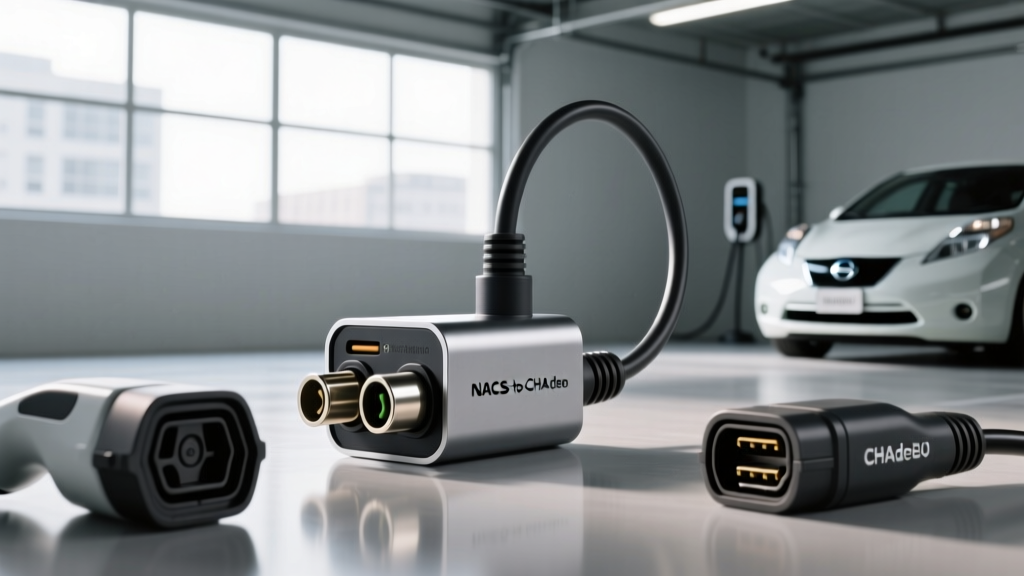
Ford began transitioning the Mustang Mach-E to the NACS (North American Charging Standard) connector — the Tesla-designed plug — starting with the 2025 model year. This is a significant shift that affects which chargers you can use natively and which require adapters.
| Model Year | Native Connector | Tesla Supercharger Access | CCS1 Network Access |
|---|---|---|---|
| 2021–2024 Mach-E | CCS1 (J1772 + DC pins) | Via Ford-provided NACS adapter | Native — no adapter needed |
| 2025–2026 Mach-E | NACS | Native — no adapter needed | Via CCS1 adapter (included or ~$200 aftermarket) |
Key takeaway: If you own a 2021–2024 Mach-E Extended Range, you'll need the Ford-provided NACS adapter to access Tesla Superchargers (over 25,000 stalls nationwide). If you own a 2025+ model with native NACS, you'll need a CCS1 adapter for Electrify America, EVgo, and other non-Tesla DC fast networks. Keep the appropriate adapter in your frunk or cargo area at all times.
For home Level 2 charging, most residential chargers ship with either a J1772 or NACS plug. Ford provides adapters for cross-compatibility, so either charger type will work with any Mach-E model year.
DC Fast Charging: Real-World Speeds and the Charge Curve
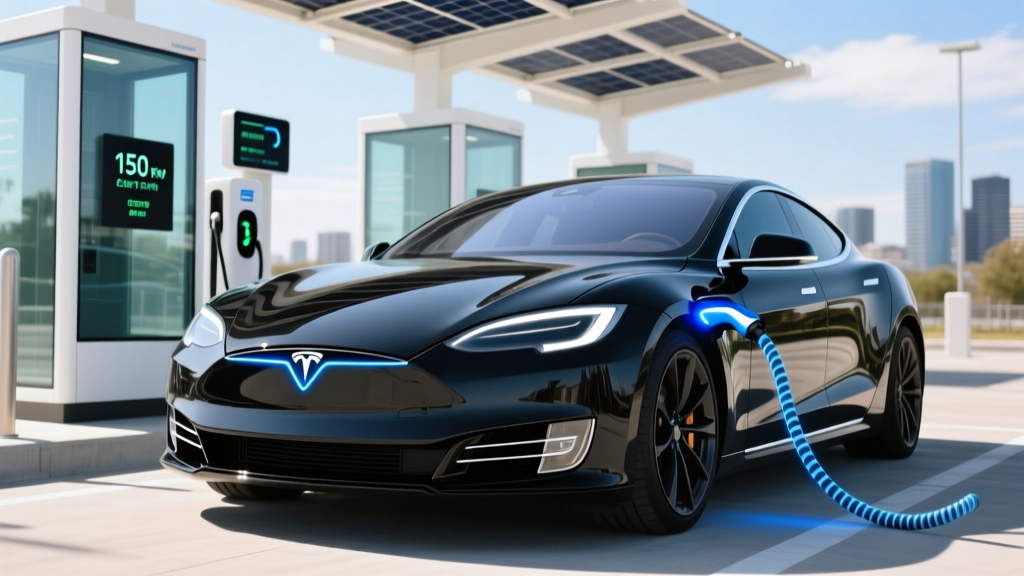
The Mach-E Extended Range's peak DC fast-charge rate of approximately 150 kW sounds impressive, but understanding the charge curve is essential for realistic trip planning. Like all lithium-ion batteries, the Mach-E charges fastest between roughly 10% and 50% state of charge (SoC). Above 80%, the battery management system significantly reduces the charge rate to protect cell health — this is called tapering.
• 10–50%: ~15 minutes (sustained 120–150 kW)
• 50–80%: ~20 minutes (tapering from ~100 kW down to ~50 kW)
• 80–100%: ~25+ minutes (trickle charge, 15–25 kW)
Total 10–80%: ~35–45 minutes depending on charger output and pack temperature.
Practical road-trip tip: Plan to charge from 10% to 80% and then drive on. Charging above 80% at a DC fast station is so slow that you're better off driving to the next stop. Also, use the Mach-E's built-in navigation to route to a charger — the car will precondition the battery en route, warming it to optimal temperature for faster charging upon arrival. Skipping preconditioning in cold weather can add 10–15 minutes to your session.
As of 2026, the Mach-E with NACS can access Tesla Supercharger V3 stalls (250 kW peak, though the Mach-E will cap at ~150 kW) and V4 stalls. On Electrify America and EVgo, expect 150–350 kW stall ratings, with the Mach-E drawing its maximum ~150 kW.
Cost to Charge: Per-Mile Economics vs. Gasoline
One of the strongest arguments for the Mach-E Extended Range is fuel cost savings. Let's break down the real numbers using the vehicle's efficiency of approximately 3.0–3.3 miles per kWh (roughly 100–110 MPGe combined, per fueleconomy.gov).
| Charging Scenario | Price per kWh | Cost per Mile | Full 91 kWh Charge Cost |
|---|---|---|---|
| Home (off-peak utility rate) | $0.08–$0.14 | $0.025–$0.045 | $7.30–$12.75 |
| Home (average US rate) | $0.16–$0.18 | $0.050–$0.060 | $14.55–$16.40 |
| Public Level 2 (ChargePoint, etc.) | $0.20–$0.35 | $0.065–$0.115 | $18.20–$31.85 |
| DC Fast (Electrify America, EVgo) | $0.35–$0.55 | $0.115–$0.180 | $31.85–$50.05 |
| Gasoline comparison (25 MPG avg, $3.50/gal) | — | $0.140 | — |
The bottom line: Home charging at off-peak rates saves roughly 70–80% per mile compared to gasoline. Even at average residential rates, you're paying about $0.05/mile versus $0.14/mile for a comparable 25 MPG gas crossover. Over 15,000 annual miles, that's roughly $1,350/year in fuel savings with home charging. Public DC fast charging, however, can approach or even exceed gas costs — which is exactly why home Level 2 installation pays for itself quickly.
Recommended Home Chargers for the Mach-E Extended Range
To get the most from the Mach-E's 10.5 kW onboard charger, you need a 48-amp (or higher) Level 2 station on a 60-amp dedicated circuit. Here are three strong options as of 2026:
Tesla Wall Connector (NACS) — Best for 2025+ Mach-E
- Power output: Up to 11.5 kW (48A at 240V)
- Connector: NACS native
- Cable length: 24 feet
- Smart features: Wi-Fi, OTA updates, power-sharing between units, access control
- Price: ~$475
- Why it works: Maxes out the Mach-E's 10.5 kW onboard charger. Clean design, reliable firmware. For 2021–2024 Mach-E owners, use the Ford-supplied NACS-to-CCS1 adapter.
ChargePoint Home Flex — Best Universal Pick
- Power output: Up to 12 kW (50A at 240V, configurable down to 16A)
- Connector: Ships with J1772; NACS version available
- Cable length: 23 feet
- Smart features: Wi-Fi, app scheduling, Alexa integration, energy tracking, flexible amperage
- Price: ~$650–$700
- Why it works: The adjustable amperage (16A–50A) is ideal if your panel can't support a full 60A circuit — you can set it to 32A (40A breaker) and still get 7.7 kW. Works with every Mach-E model year natively or via adapter.
Emporia Vue Level 2 Charger — Best Budget Smart Charger
- Power output: Up to 11.5 kW (48A at 240V)
- Connector: J1772 (NACS adapter available)
- Cable length: 24 feet
- Smart features: Wi-Fi, app control, solar integration, energy monitoring, scheduling
- Price: ~$399
- Why it works: Delivers full 48A power at a budget price. The solar integration feature is a bonus for homes with rooftop PV. Solid build quality for the price point.
Safety, Code, and Installation Best Practices
EV charger installation isn't a DIY project — improper wiring on a high-amperage 240V circuit is a serious fire risk. Here's what to require from your licensed electrician:
- Dedicated circuit: The charger must have its own breaker — no sharing with dryers, ovens, or HVAC.
- GFCI protection: NEC 2020 and later requires GFCI (Ground Fault Circuit Interrupter) protection for outdoor receptacles and is increasingly required for indoor EV circuits in many jurisdictions. Hardwired chargers (no plug) often exempt from GFCI requirements — ask your electrician which applies locally.
- Outdoor rating: If your charger is mounted outside or in an unconditioned garage, ensure the unit is rated NEMA 4 (weatherproof). All three chargers recommended above carry outdoor ratings.
- Permit and inspection: Most municipalities require an electrical permit for a new 240V circuit. The inspection verifies proper wire gauge, breaker sizing, grounding, and GFCI compliance. Don't skip this — unpermitted work can void homeowner's insurance claims.
- Hardwired vs. plug-in: Hardwired installations (no NEMA 14-50 outlet) are generally more reliable and avoid the GFCI nuisance-tripping issues that have plagued some 14-50 receptacle installations. If you want portability, use a high-quality industrial-grade 14-50 receptacle (Hubbell or Bryant — not the cheaper Leviton models known for thermal issues).
Frequently Asked Questions
How much does it cost to install a home EV charger for the Mach-E?
Expect $1,050–$3,150 for a standard installation (charger + electrician + permit) if your panel has sufficient capacity. If a panel upgrade from 100A to 200A is required, add $1,500–$4,000. The 30% federal Residential Clean Energy Credit (§25D) can offset up to $1,000 of the total cost. Get at least three quotes from licensed electricians — prices vary significantly by region and run complexity.
How fast will each charging level add range to my Mach-E Extended Range?
Level 1 (120V): roughly 3–4 miles per hour. Level 2 (240V, 48A): roughly 33–37 miles per hour — enough for a full overnight charge of the 91 kWh pack in about 9 hours. DC fast charging: adds roughly 120–180 miles of range in a 20-minute session at 10–50% SoC, tapering significantly above 80%.
Which connector does my Mach-E use, and do I need an adapter?
2021–2024 models use CCS1 natively and need a Ford-provided NACS adapter for Tesla Superchargers. 2025–2026 models use NACS natively and need a CCS1 adapter for Electrify America, EVgo, and similar networks. For home Level 2, either connector type works with the appropriate adapter. Always carry the relevant adapter on road trips.
How much does charging the Mach-E cost per mile compared to gas?
At home off-peak rates ($0.10/kWh), the Mach-E Extended Range costs roughly $0.03/mile — about 75–80% cheaper than a 25 MPG gas crossover at $3.50/gallon ($0.14/mile). At public DC fast chargers ($0.45/kWh), costs rise to ~$0.15/mile, roughly matching gasoline. Home charging is where the economics overwhelmingly favor electric.
What electrical upgrades might I need for a Level 2 charger?
If your home has a 200-amp panel with available capacity, you likely need only a new 60-amp breaker and wiring run. If your panel is 100-amp, already near capacity, or uses outdated fuse-based protection, expect a panel upgrade ($1,500–$4,000). A licensed electrician will perform a load calculation to determine your exact needs. Some utilities offer rebates for panel upgrades tied to EV adoption — check with your local provider.
Can I use a NEMA 14-50 outlet instead of hardwiring?
Yes, but with caveats. A NEMA 14-50 outlet on a 50-amp breaker delivers up to 40A continuous (9.6 kW) — slightly less than a hardwired 48A setup. More importantly, use only an industrial-grade 14-50 receptacle (Hubbell 9450A or Bryant 9450FR) rated for frequent high-load plugging. Cheap residential-grade outlets have been linked to overheating and melting under sustained EV charging loads. If you don't need portability, hardwiring is the more reliable and code-friendly option.