If you own or are considering a Lucid Air, one of the most practical questions you'll face is network access: can Lucid use Tesla Superchargers? The short answer is yes — with an adapter — but the full picture involves understanding connector compatibility, charge-rate trade-offs, and how to build a complete charging strategy at home and on the road.
This guide breaks down exactly how Lucid Air models connect to Tesla's Supercharger network, what hardware you need, and how to set up cost-effective home charging. We'll cover every charging level with real numbers, installation costs, and equipment picks so you can plan with confidence.
Lucid Air and the Tesla Supercharger Network: What You Need to Know
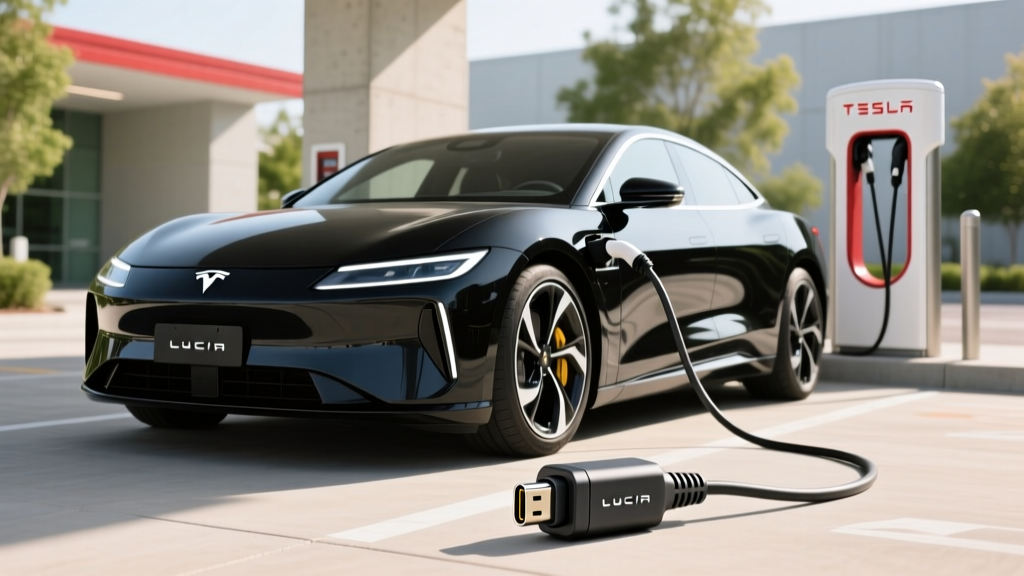
Lucid Air vehicles are equipped with a CCS1 (Combined Charging System) port. Tesla Superchargers historically used a proprietary Tesla connector, but Tesla has opened its network to non-Tesla EVs through a combination of NACS (North American Charging Standard) adoption and built-in "Magic Dock" CCS adapters at select stations.
As of the 2025–2026 transition period, Lucid owners have two primary paths to access Tesla Superchargers:
- NACS adapter cable: Lucid has offered an official CCS-to-NACS adapter (priced around $225) that lets you plug into a V3 or V4 Supercharger stall with a native NACS cable. This is the most reliable method.
- Magic Dock stations: Some Tesla Supercharger locations have a built-in CCS1 adapter integrated into the stall's holster. You can use these without your own adapter, but availability is limited and station-specific.
When connected via adapter, the Lucid Air can charge at Supercharger V3 stalls at up to approximately 150 kW (the adapter and V3 protocol limit the connection below the Air's peak 250+ kW capability on native CCS chargers like Electrify America). At V4 stalls with native CCS cables, you'll see closer to the Air's full DC fast-charge potential.
| Network / Connector | Native Port | Adapter Required? | Max Charge Rate |
|---|---|---|---|
| CCS1 (Electrify America, EVgo, etc.) | Yes — direct plug | No | ~250 kW (V3 stalls), up to 300+ kW on 350 kW chargers |
| Tesla Supercharger V3 (NACS cable) | No — CCS1 port | Yes — CCS-to-NACS adapter (~$225) | ~150 kW (V3 cap via adapter) |
| Tesla Supercharger w/ Magic Dock | No — CCS1 port | No (built-in at stall) | ~150 kW |
| CHAdeMO | No | Not available | N/A |
| Level 2 (J1772 public / home) | Yes — with included J1772-to-Lucid cable | No | Up to 19.2 kW (Air onboard charger) |
Charging Levels Explained: Speeds, Power, and Range Added
EV charging is categorized into three levels. The critical distinction: kW (kilowatts) measures power — the rate at which energy flows into the battery. kWh (kilowatt-hours) measures energy — the total capacity stored. A 100 kWh battery charged at 10 kW takes roughly 10 hours; at 100 kW, about one hour (in simplified terms, before charge-curve taper).
| Level | Voltage / Typical Power | Miles of Range Added per Hour | Best Use Case |
|---|---|---|---|
| Level 1 (120V household outlet) | 120V / 1.4–1.9 kW | ~4–6 miles/hr | Emergency top-off, overnight trickle |
| Level 2 (240V home / public) | 240V / 7.2–19.2 kW | ~25–70 miles/hr | Daily home charging, workplace, destination |
| DC Fast Charging (Level 3) | 400V–900V / 50–350 kW | ~200–800+ miles/hr (at peak) | Road trips, rapid replenishment |
The Lucid Air's onboard AC charger handles up to 19.2 kW on Level 2 — among the fastest in the industry. That means a properly wired 80-amp home circuit can replenish roughly 70 miles of range per hour, or fill the Air Pure's 88 kWh usable battery from empty to full in under 5 hours.
For DC fast charging, the Lucid Air Grand Touring (with its ~112 kWh usable battery, 900V+ architecture) peaks at approximately 250–300 kW on compatible 350 kW CCS chargers. Expect a 10–80% charge in roughly 20–25 minutes on a capable Electrify America or similar station. On a Tesla Supercharger V3 via adapter, that same 10–80% session stretches to approximately 35–45 minutes due to the ~150 kW cap.
Home Charger Installation: Costs, Electrical Requirements, and Panel Upgrades
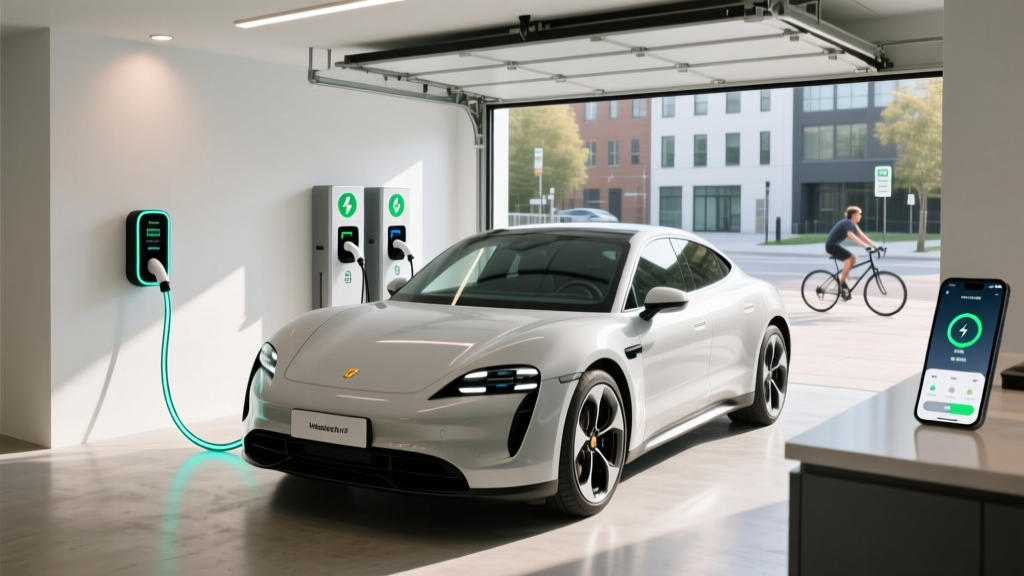
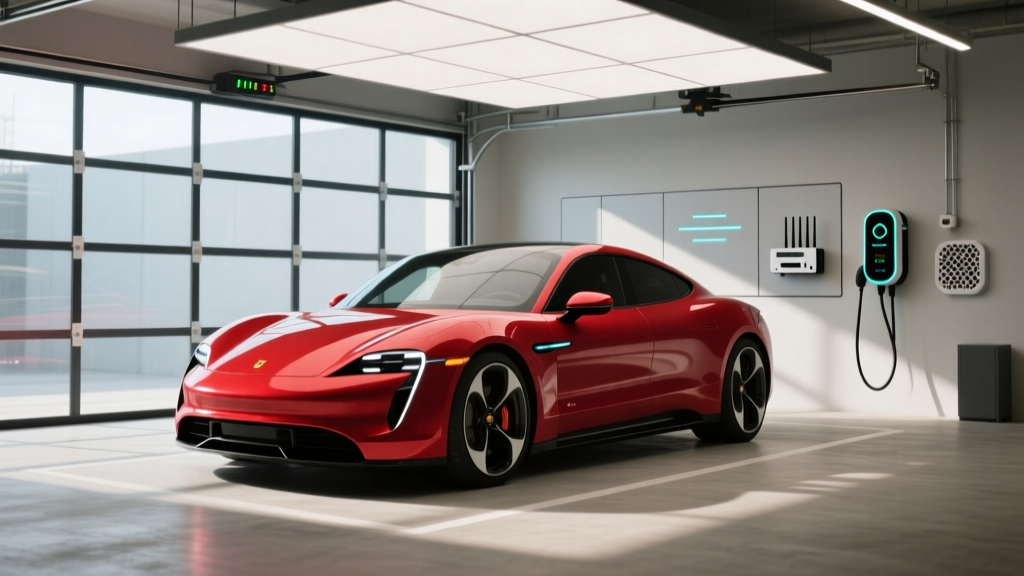
Installing a Level 2 home charger is the single highest-impact upgrade for EV ownership. For a Lucid Air with its 19.2 kW onboard charger, you'll want a hardwired station on a dedicated 240V circuit — ideally 60A to 100A to maximize charging speed.
Electrical Requirements for a Lucid Air Home Charger
- Voltage: 240V (standard residential split-phase, same as an electric dryer or oven)
- Amperage: 60A breaker minimum for a 48A charger; 80A–100A breaker to unlock the Air's full 19.2 kW (80A continuous draw)
- Circuit type: Dedicated — no shared loads on the same breaker
- Wire gauge: 6 AWG copper for 60A; 4 AWG or 3 AWG for 80A–100A circuits (your electrician will size per NEC Table 310.16)
- Connection: Hardwired recommended for 60A+ circuits (NEC requires hardwire or specific high-amperage receptacle configurations)
Panel Upgrade: The Hidden Cost Many Owners Overlook
Most homes built before 2010 have a 100A or 150A main electrical panel. Adding a 60A–100A EV charger circuit may push total calculated load beyond your panel's capacity, triggering a required panel upgrade to 200A. This is the single biggest variable in installation cost.
| Component | Cost Range | Notes |
|---|---|---|
| Level 2 charger unit (48A–80A) | $400 – $1,200 | Varies by brand, power output, smart features |
| Electrician labor (standard install) | $500 – $1,500 | Assumes panel has capacity, run under 50 ft |
| Permit and inspection | $50 – $300 | Varies by municipality; some jurisdictions waive for EV |
| Electrical panel upgrade (if needed) | $1,500 – $4,000 | 200A service upgrade; older homes more likely to need this |
| Conduit, wire, and materials | $200 – $600 | Longer runs (garage far from panel) increase cost |
| Total — no panel upgrade | $1,150 – $3,600 | Most common scenario for newer homes |
| Total — with panel upgrade | $2,650 – $7,600 | Older homes, high-load panels |
Always get a licensed electrician to perform a load calculation (NEC Article 220) before committing to a charger amperage. In some cases, a smart panel device like the SPAN smart panel or a load-management relay can avoid a full upgrade by dynamically limiting charger draw when other circuits are active.
Safety and Code Requirements
- GFCI protection: NEC 2020 and later require GFCI protection for EV charging outlets (not always for hardwired units — confirm with your AHJ)
- Outdoor rating: If your charger is mounted outside (driveway, carport), it must carry a NEMA 4 or NEMA 4X rating for weather resistance
- Dedicated circuit: The EV charger must be on its own breaker — no sharing with HVAC, dryer, or other major appliances
- Grounding: Proper equipment grounding conductor required; your electrician will verify ground-fault path integrity
- Permit required: Nearly all jurisdictions require an electrical permit for new 240V circuits; unpermitted work can void insurance and cause sale-disclosure issues
Charging Cost: Per-Mile Economics vs. Gasoline
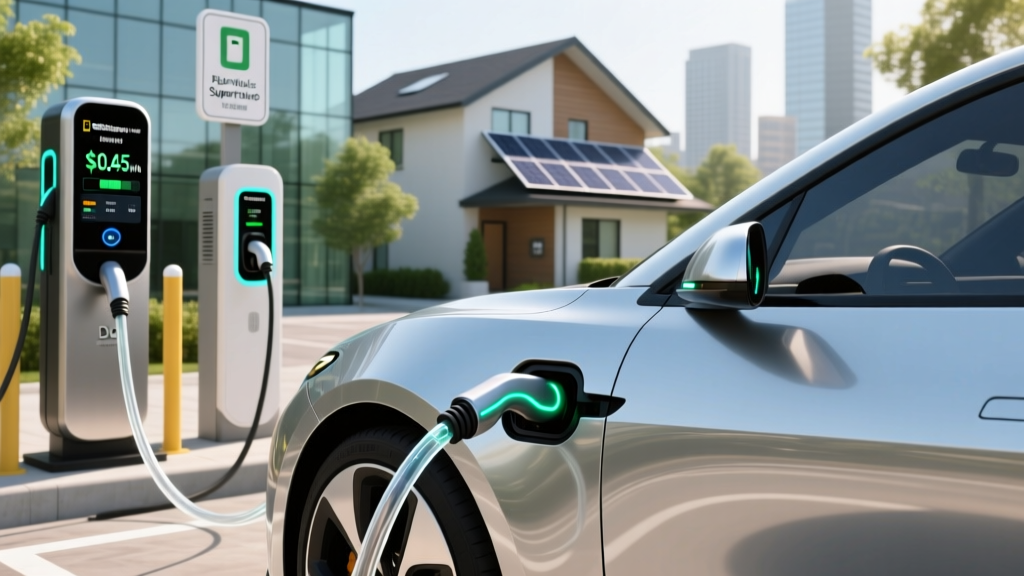
One of the strongest ownership arguments for the Lucid Air is its exceptional efficiency. The Air Grand Touring achieves an EPA-rated 146 MPGe combined, translating to roughly 23 kWh per 100 miles. The Air Pure is rated at approximately 136 MPGe, or about 25 kWh/100 mi. These figures make the Air one of the most efficient luxury EVs on the market.
| Charging Scenario | Cost per kWh | Cost per 100 Miles (Air GT) | Cost per Mile | Gas Equivalent (25 MPG @ $3.50/gal) |
|---|---|---|---|---|
| Home — off-peak utility rate | $0.08 – $0.12 | $1.84 – $2.76 | $0.018 – $0.028 | $14.00 ($0.14/mi) |
| Home — standard residential rate | $0.13 – $0.18 | $2.99 – $4.14 | $0.030 – $0.041 | $14.00 ($0.14/mi) |
| Public Level 2 (workplace, destination) | $0.20 – $0.35 | $4.60 – $8.05 | $0.046 – $0.081 | $14.00 ($0.14/mi) |
| DC Fast Charging (Electrify America, EA Pass) | $0.35 – $0.55 | $8.05 – $12.65 | $0.081 – $0.127 | $14.00 ($0.14/mi) |
| Tesla Supercharger (via adapter, non-Tesla pricing) | $0.35 – $0.50 | $8.05 – $11.50 | $0.081 – $0.115 | $14.00 ($0.14/mi) |
Even at the most expensive public DC fast-charging rates, the Lucid Air costs less per mile than a comparable 25 MPG gasoline sedan. With consistent home charging at off-peak rates, the per-mile cost drops to roughly one-fifth to one-seventh of gasoline — a savings of $1,000–$1,800 per year at 12,000 miles driven.
Check your utility for time-of-use (TOU) plans. Many offer super off-peak rates between midnight and 6 AM as low as $0.05–$0.08/kWh, which can reduce annual fueling costs to under $200.
Recommended Home Charging Equipment for Lucid Air
Given the Lucid Air's 19.2 kW onboard charger, investing in a high-amperage Level 2 station pays dividends in charge speed. Here are our top picks based on real-world reliability, smart features, and value.
ChargePoint Home Flex (up to 50A / 12 kW)
Power output: Up to 12 kW (50A on a 60A circuit)
Connector: J1772 (compatible with Lucid's included J1772 cable)
Cable length: 23 ft
Smart features: Wi-Fi, app scheduling, utility TOU integration, Alexa
Price: ~$550–$650
Best for: Owners who charge overnight and don't need the Air's full 19.2 kW rate. Reliable, widely supported, easy app.
Wallbox Pulsar Plus (up to 48A / 11.5 kW)
Power output: Up to 11.5 kW (48A on a 60A circuit)
Connector: J1772
Cable length: 25 ft
Smart features: Wi-Fi + Bluetooth, app control, Power Sharing for dual-stall installs
Price: ~$500–$600
Best for: Budget-conscious buyers who want a compact, well-reviewed unit with solid smart features.
Grizzl-E Smart (up to 80A / 19.2 kW)
Power output: Up to 19.2 kW (80A on a 100A circuit) — unlocks Lucid Air's maximum AC charge rate
Connector: J1772
Cable length: 24 ft
Smart features: Wi-Fi, OCPP support, adjustable amperage via DIP switches, NEMA 4 outdoor rating
Price: ~$700–$850
Best for: Lucid Air owners who want maximum Level 2 speed. Requires a 100A dedicated circuit — confirm panel capacity first.
Tesla Wall Connector (up to 48A / 11.5 kW with J1772 adapter)
Power output: Up to 11.5 kW (48A on a 60A circuit)
Connector: NACS native; J1772 adapter available (~$50–$100 add-on)
Cable length: 24 ft
Smart features: Wi-Fi, OTA updates, Power Sharing, load management with multiple units
Price: ~$425 (unit) + adapter cost
Best for: Mixed-garage households with a Tesla and a Lucid. Excellent build quality, but you'll need the J1772 adapter tip for the Air.
Road Trip Charging Strategy: Building Your Lucid Network Map
While the Lucid Air's EPA range of 419–516 miles (depending on trim) means fewer charging stops than most EVs, road-trip planning still matters. Here's how to maximize your options:
- Primary DC fast network: Electrify America and EVgo offer the most 150–350 kW CCS chargers, which is where the Air's 900V architecture shines. At a 350 kW stall, you can add ~200 miles in approximately 12–15 minutes.
- Supplemental Tesla Supercharger access: Use your CCS-to-NACS adapter at V3 and V4 Superchargers. Expect ~150 kW peak via adapter — adequate for adding ~150 miles in 20–25 minutes. Ideal when EA or EVgo stations are sparse on your route.
- Preconditioning: The Lucid Air will automatically precondition its battery when you navigate to a charging station in the infotainment system. This warms the battery to optimal temperature for faster DC charging — critical in cold weather, where unpreconditioned charging can be 30–50% slower.
- Charge-curve awareness: Like all EVs, the Air charges fastest between 10–50% SoC and tapers significantly above 80%. On road trips, plan to charge to 80% and move on rather than waiting for a slow 80–100% fill.
Use apps like A Better Routeplanner (ABRP) or PlugShare to map routes with charger availability, real-time status, and user reviews. Filter for CCS-compatible stations with 150+ kW output to match the Air's capabilities.
Federal Tax Credit and Incentives for Home Charger Installation
The federal Alternative Fuel Vehicle Refueling Property Credit (IRS §30C, not to be confused with the §30D vehicle credit) can cover up to 30% of home EV charger equipment and installation costs, capped at $1,000. To qualify:
- The charger must be installed at your primary residence
- The property must be located in an eligible census tract (generally non-urban or low-income communities — check the IRS eligibility tool)
- The credit applies to both the hardware and installation labor
- You must file IRS Form 8911 with your tax return
This credit is non-refundable, meaning it can reduce your tax liability to zero but won't generate a refund beyond that. Consult a tax professional for your specific situation, as rules and eligible census tracts are subject to change.
Additionally, many utilities offer rebates of $200–$500 for Level 2 charger installations, especially when paired with enrollment in a time-of-use rate plan. Check with your local utility before purchasing equipment.
Frequently Asked Questions
Can Lucid use Tesla Superchargers without an adapter?
Only at Tesla Supercharger stations equipped with the "Magic Dock" — a built-in CCS adapter integrated into the charger holster. These stations are relatively limited in number. For reliable, universal Supercharger access, you'll want Lucid's official CCS-to-NACS adapter (~$225).
How much does it cost to install a home EV charger for a Lucid Air?
Expect $1,150–$3,600 for a standard installation (charger + electrician + permit) if your electrical panel has sufficient capacity. If a panel upgrade to 200A is required, total costs can reach $2,650–$7,600. The charger unit itself costs $400–$1,200 depending on amperage and features.
How fast will each charging level add range to my Lucid Air?
Level 1 (120V): approximately 4–6 miles per hour. Level 2 (240V at 48A): approximately 35–40 miles per hour. Level 2 at the Air's maximum 80A/19.2 kW: approximately 70 miles per hour. DC fast charging at 250+ kW: approximately 200+ miles in 15 minutes at peak rate.
Which connector is compatible with the Lucid Air?
The Lucid Air uses a CCS1 port natively. For Level 2 AC charging, it accepts J1772 (the standard North American connector, cable included with the car). For Tesla Supercharger access, you need a CCS-to-NACS adapter or a Magic Dock-equipped station.
How much does charging a Lucid Air cost per mile vs. gas?
At home on off-peak electricity ($0.10/kWh), the Air Grand Touring costs approximately $0.02–$0.03 per mile. On public DC fast chargers ($0.40–$0.50/kWh), it costs $0.08–$0.13 per mile. A comparable 25 MPG gasoline car at $3.50/gallon costs $0.14 per mile. Home charging saves 80–85% per mile.
What electrical upgrades might I need for a home charger?
If your home has a 100A or 150A main panel and significant existing loads (electric heat, AC, dryer, oven), you may need a panel upgrade to 200A — a $1,500–$4,000 job. A licensed electrician will perform a NEC Article 220 load calculation to determine this. In some cases, a smart load-management device can avoid the upgrade entirely.
Does using a Tesla Supercharger adapter void my Lucid warranty?
Lucid's official CCS-to-NACS adapter is a Lucid-approved accessory and does not void the vehicle's battery or powertrain warranty (8 years/100,000 miles, with a minimum 70% capacity retention threshold). Third-party adapters carry more risk — stick with OEM or certified units.