Why the Lucid Gravity's Range Demands a Serious Charging Strategy
The Lucid Gravity enters the 2026 three-row electric SUV market with an EPA-estimated 440 miles of range on the Grand Touring trim — a figure that reshapes expectations for a vehicle of its size and 800-horsepower output. But range is only half the equation. A 92 kWh usable battery pack (NMC chemistry) means charging logistics matter enormously, whether you're topping off at home or planning a cross-country road trip.
This guide breaks down everything you need to know to charge the Lucid Gravity efficiently — from home Level 2 installation requirements and costs to DC fast-charging realities and connector compatibility. Whether you've just taken delivery or are evaluating whether your home electrical system can support this SUV, the numbers below will help you plan.
EPA estimate: 440 miles (Grand Touring, 19-inch wheels). Expect approximately 370–400 miles in mixed highway driving at 70–75 mph, and 310–350 miles in cold weather (below 32°F) due to increased cabin heating demand and battery resistance. The Pure trim with smaller battery is EPA-rated at approximately 370 miles.
Charging Levels Explained: How Fast Can the Gravity Replenish?
Understanding the three charging tiers is essential before investing in equipment. Power is measured in kilowatts (kW), which represents the rate of energy delivery — think of it as the size of the pipe. Energy is measured in kilowatt-hours (kWh), which is the total amount stored in the battery — think of it as the size of the tank. Never confuse the two.
| Level | Voltage | Power (kW) | Miles Added/Hour | Best Use Case |
|---|---|---|---|---|
| Level 1 | 120V | 1.0–1.4 kW | 3–5 mi/hr | Emergency/overnight trickle |
| Level 2 | 240V | 7.2–19.2 kW | 22–60 mi/hr | Daily home charging |
| DC Fast | 400–900V DC | 50–300+ kW | 180–600+ mi/hr | Road trips, rapid top-ups |
The Lucid Gravity supports up to 19.2 kW AC Level 2 charging (with its onboard charger), meaning a full-rate Level 2 station can add roughly 60 miles of range per hour. On DC fast charging, the Gravity leverages its 900V+ architecture to accept peak rates exceeding 300 kW at compatible stations, enabling a 10–80% charge in approximately 15–18 minutes under ideal thermal conditions.
| Battery Capacity (usable) | 92 kWh (NMC) |
| EPA Range | 440 miles (Grand Touring) / 370 miles (Pure) |
| Max Level 2 AC Charge Rate | 19.2 kW |
| Max DC Fast Charge Rate | 300+ kW (peak) |
| 10–80% DC Fast Charge Time | ~15–18 minutes (ideal conditions) |
| Charge Port / Connector | NACS (native Tesla Supercharger compatible) |
| Architecture | 900V+ |
Home Charger Installation: Electrical Requirements and Costs
To unlock the Gravity's full 19.2 kW AC charging capability, you'll need a hardwired Level 2 station on a dedicated 100-amp circuit (240V/80A continuous). Most homes do not have this capacity readily available, and even a 48-amp circuit (supporting ~11.5 kW) requires a 60-amp breaker. Here's what to expect:
Electrical Panel Considerations
Homes built before 2000 often have 100-amp or 150-amp main service panels. Adding a 60-amp or 100-amp EV circuit may require a panel upgrade to 200-amp service — a significant but sometimes unavoidable investment. A licensed electrician will perform a load calculation per NEC Article 220 to determine if your existing panel can accommodate the new circuit.
Permitting and Code Requirements
Most jurisdictions require an electrical permit for Level 2 charger installation. Expect inspections to verify proper wire gauge (e.g., 6 AWG copper for 60A circuits, 3 AWG for 80A), correct breaker sizing, and GFCI protection where required by the 2023 NEC (Article 625.54 for outdoor receptacles). Hardwired installations generally avoid the GFCI requirement but still must meet all grounding and bonding standards.
| Component | Cost Range | Notes |
|---|---|---|
| Level 2 Charger (48A, hardwired) | $400–$750 | Grizzl-E, ChargePoint, Wallbox |
| Level 2 Charger (80A, hardwired) | $700–$1,200 | Required for full 19.2 kW rate |
| Electrician Labor (standard install) | $500–$1,500 | Run from panel to garage/carport, 20–50 ft |
| Electrical Permit | $50–$250 | Varies by municipality |
| Panel Upgrade (if needed) | $1,500–$4,000 | 100A → 200A service upgrade |
| Total (no panel upgrade) | $950–$2,500 | Typical for modern 200A homes |
| Total (with panel upgrade) | $2,450–$6,500 | Older homes with 100–150A service |
Always get at least two quotes from licensed electricians familiar with EV charger installations. Ask specifically about their experience with 80-amp circuits, as the wire gauge and conduit requirements differ significantly from standard 48-amp setups.
Connector Compatibility: NACS, CCS1, and the Gravity's Charge Port
Lucid adopted the North American Charging Standard (NACS) for the Gravity, making it natively compatible with Tesla Superchargers — a significant advantage given the Supercharger network's size and reliability. However, the broader public charging landscape still includes CCS1 and legacy CHAdeMO connectors. Here's how compatibility breaks down:
| Connector | Gravity Native? | Network Coverage | Adapter Needed? |
|---|---|---|---|
| NACS (Tesla) | Yes — native port | Tesla Supercharger (17,000+ stalls US) | None |
| CCS1 | No | Electrify America, EVgo, ChargePoint | NACS-to-CCS adapter required |
| CHAdeMO | No | Limited/legacy (Nissan, Mitsubishi) | Not practical — no widely available adapter |
Lucid includes or offers a NACS-to-CCS adapter for accessing non-Tesla DC fast chargers. When using an adapter, verify the adapter's maximum power rating — some cap at 150 kW or 250 kW, which may bottleneck the Gravity's peak charging capability. For the fastest possible public charging, Tesla Superchargers (V4 stalls delivering up to 350 kW) are the optimal choice.
Charging Cost Per Mile: Home vs. Public vs. Gas
One of the Gravity's strongest ownership arguments is fuel cost savings — but only if you charge strategically. Electricity pricing varies dramatically by location and time of use.
| Charging Scenario | Rate ($/kWh) | Cost to Add 100 Miles | Cost Per Mile |
|---|---|---|---|
| Home (off-peak, utility rate) | $0.10–$0.14 | $3.00–$4.20 | $0.03–$0.04 |
| Home (standard rate, no TOU) | $0.15–$0.20 | $4.50–$6.00 | $0.05–$0.06 |
| Public Level 2 (workplace/retail) | $0.20–$0.35 | $6.00–$10.50 | $0.06–$0.11 |
| DC Fast (Electrify America, EVgo) | $0.35–$0.55 | $10.50–$16.50 | $0.11–$0.17 |
| Tesla Supercharger (varies by location) | $0.25–$0.45 | $7.50–$13.50 | $0.08–$0.14 |
| Gas SUV equivalent (22 MPG, $3.50/gal) | — | $15.91 | $0.16 |
The Lucid Gravity's efficiency is approximately 3.0–3.2 kWh per 100 miles in mixed driving (roughly 105–110 MPGe combined per fueleconomy.gov). At home off-peak rates, you'll spend roughly $0.03–$0.04 per mile — about 75% less than a comparable gas-powered three-row SUV. Even at DC fast-charging rates, the Gravity is cost-competitive with gasoline, and substantially cheaper when you charge at home.
Recommended Home Charging Equipment for the Lucid Gravity
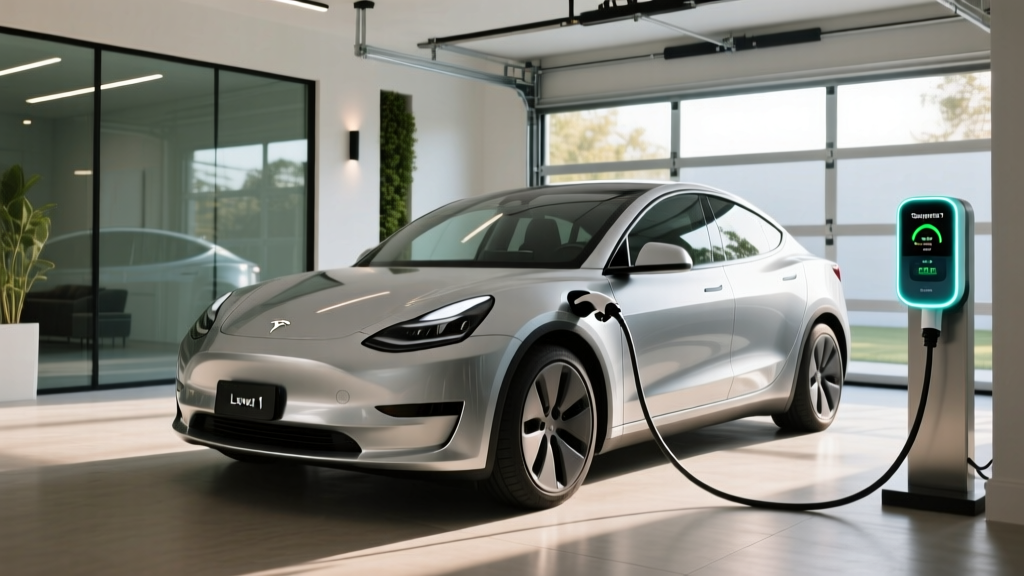
To maximize the Gravity's 19.2 kW onboard charger, you'll want an 80-amp hardwired Level 2 station. However, a 48-amp unit on a 60-amp circuit is a practical and more affordable alternative that still delivers adequate overnight charging for most owners. Below are specific recommendations at both tiers:
- Power Output: 19.2 kW (80A, 240V, hardwired)
- Connector: NACS native
- Cable Length: 24 ft
- Smart Features: Wi-Fi, app scheduling, energy monitoring
- Outdoor Rating: NEMA 4 (indoor/outdoor)
- Price: ~$999
- Requires: 100-amp dedicated breaker
- Power Output: 11.5 kW (48A, 240V, hardwired or NEMA 14-50)
- Connector: NACS (2025+ models) or J1772 with adapter
- Cable Length: 23 ft
- Smart Features: Wi-Fi, Alexa, app-based scheduling, load sharing
- Outdoor Rating: NEMA 4
- Price: ~$549
- Requires: 60-amp dedicated breaker
- Power Output: 11.5 kW (48A, hardwired)
- Connector: J1772 (NACS adapter included)
- Cable Length: 24 ft
- Smart Features: Wi-Fi, real-time energy tracking, solar integration
- Outdoor Rating: NEMA 4
- Price: ~$399
- Requires: 60-amp dedicated breaker
At 11.5 kW (48A), a Gravity with a 92 kWh battery will charge from 10% to 80% in approximately 5.5 hours — more than sufficient for overnight replenishment. If you frequently arrive home with a near-empty battery and need faster turnaround, the 80A station cuts that to roughly 3.5 hours, but the electrical infrastructure cost is substantially higher.
Safety, Code Compliance, and Installation Best Practices
EV charging equipment draws sustained high current for hours — unlike any other household appliance. This makes proper installation non-negotiable for fire safety and equipment longevity.
- Dedicated Circuit: Your Level 2 charger must be on its own dedicated breaker — never shared with other appliances or outlets.
- Wire Gauge: 6 AWG copper for 48A circuits (60A breaker); 3 AWG copper for 80A circuits (100A breaker). Aluminum wire requires larger gauge.
- Continuous Load Derating: NEC requires breakers to be rated at 125% of continuous load. A 48A charger needs a 60A breaker; an 80A charger needs a 100A breaker.
- GFCI Protection: The 2023 NEC requires GFCI protection for outdoor receptacles used for EV charging (Article 625.54). Hardwired installations are generally exempt but check local amendments.
- Outdoor Rating: If your charger is mounted outdoors or in an exposed carport, verify NEMA 4 (weatherproof) rating on both the unit and any junction boxes.
- Cable Management: Use a retractable reel or hook system to prevent cable damage from being driven over or left in standing water.
According to the National Highway Traffic Safety Administration, properly installed Level 2 home chargers carry negligible fire risk. The overwhelming majority of EV charging incidents involve damaged cables, undersized wiring, or unpermitted installations — all avoidable with a licensed electrician.
DC Fast Charging on the Road: What Gravity Owners Should Know
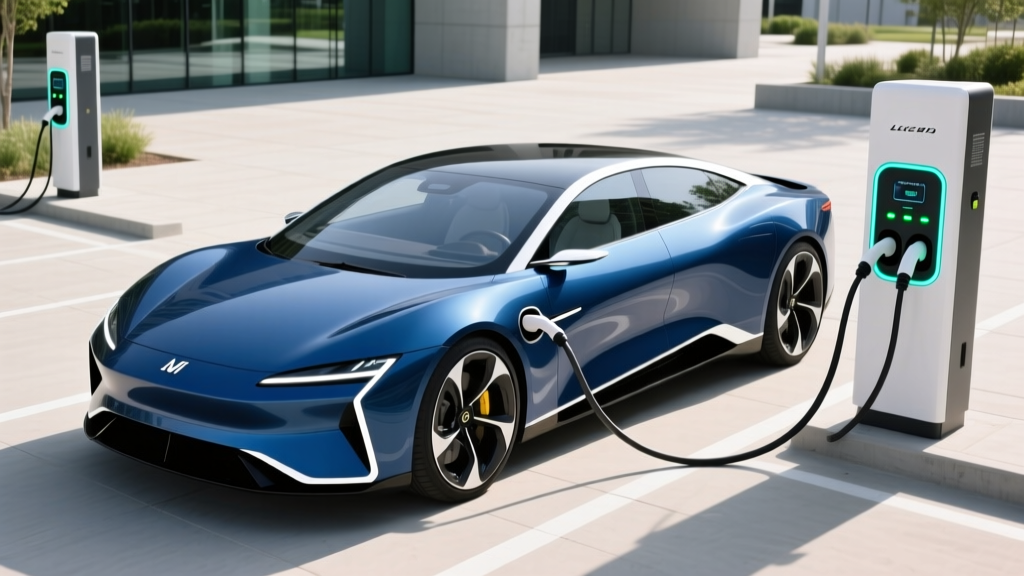
The Gravity's 900V+ architecture and 300+ kW peak DC charge rate are engineering highlights, but real-world charging involves a charge curve — peak power is only sustained through a portion of the session. Here's what to expect:
- 10–40% SoC: Peak rate of 280–300+ kW (at compatible V4 Supercharger or Electrify America 350 kW stall)
- 40–65% SoC: Sustained rate of 200–250 kW as battery management moderates current
- 65–80% SoC: Taper to 120–150 kW
- 80–100% SoC: Sharp taper to 30–50 kW — avoid charging past 80% on road trips unless necessary
Under ideal conditions (warm battery, low SoC start, high-power station), a 10–80% session takes approximately 15–18 minutes, adding roughly 300 miles of range. Cold weather (below 40°F) can add 3–5 minutes to this time unless you use the Gravity's navigation-based battery preconditioning, which warms the pack en route to a planned charging stop.
The IRS §30D tax credit does not apply to charging equipment purchased in 2026 — the Alternative Fuel Vehicle Refueling Property Credit (§30C) expired for most residential installations after 2025, though some state-level incentives remain. Check your state energy office for local rebates that may offset $200–$500 of equipment costs.
Frequently Asked Questions
How much does it cost to install a home EV charger for the Lucid Gravity?
A standard 48-amp Level 2 installation runs $950–$2,500 including equipment, electrician labor, and permit — assuming your home has a 200-amp electrical panel with spare capacity. If a panel upgrade is required (common in homes with 100–150A service), add $1,500–$4,000, bringing the total to $2,450–$6,500. An 80-amp circuit for full 19.2 kW charging adds approximately $300–$600 in additional wire and labor costs.
How fast will each charging level add range to the Gravity?
Level 1 (120V) adds roughly 3–5 miles per hour — impractical for daily use on a 92 kWh battery. Level 2 at 48A (11.5 kW) adds approximately 35 miles per hour. Level 2 at 80A (19.2 kW) adds roughly 60 miles per hour. DC fast charging at peak rate can add 150+ miles in 10 minutes. For a 440-mile EPA range vehicle, overnight Level 2 at 48A is sufficient to fully replenish a typical day's driving of 40–80 miles.
Which connector and charger is compatible with my Lucid Gravity?
The Gravity uses a native NACS (Tesla-style) charge port. It connects directly to Tesla Superchargers without an adapter. For CCS1 stations (Electrify America, EVgo, many ChargePoint DC stalls), you'll need a NACS-to-CCS adapter — typically included or available from Lucid. CHAdeMO is not practical for this vehicle. At home, any NACS-equipped Level 2 station (or J1772 station with a J1772-to-NACS adapter) will work.
How much does charging the Gravity cost per mile compared to gas?
At home off-peak rates ($0.10–$0.14/kWh), the Gravity costs approximately $0.03–$0.04 per mile — roughly 75–80% less than a gas SUV averaging 22 MPG at $3.50/gallon ($0.16/mile). Even at public DC fast-charging rates ($0.35–$0.55/kWh), the cost of $0.11–$0.17 per mile is competitive with gasoline. The key to maximum savings is consistent home charging on a time-of-use utility plan.
What electrical upgrades might I need for a Lucid Gravity home charger?
If your home has a 200-amp main panel with at least 60–100 amps of unused capacity, you likely need only a new dedicated breaker and wiring run. Homes with 100-amp or 150-amp service, or panels already near capacity (common with electric ranges, dryers, and HVAC), will likely require a panel upgrade to 200-amp service. In some cases, a utility service upgrade from the street is necessary — this can add $2,000–$5,000+ and requires coordination with your electric utility. A licensed electrician's load calculation will determine your exact requirements.