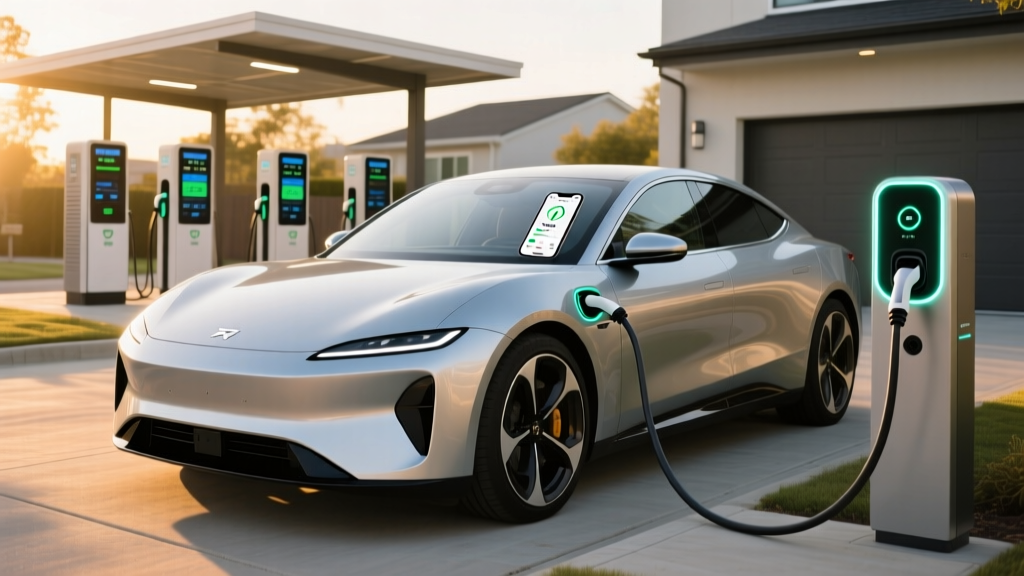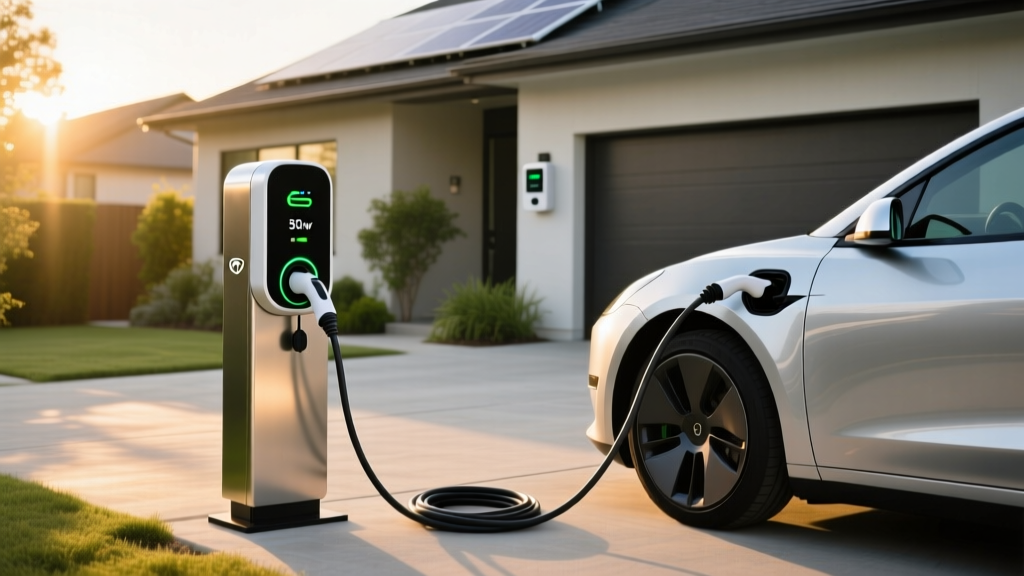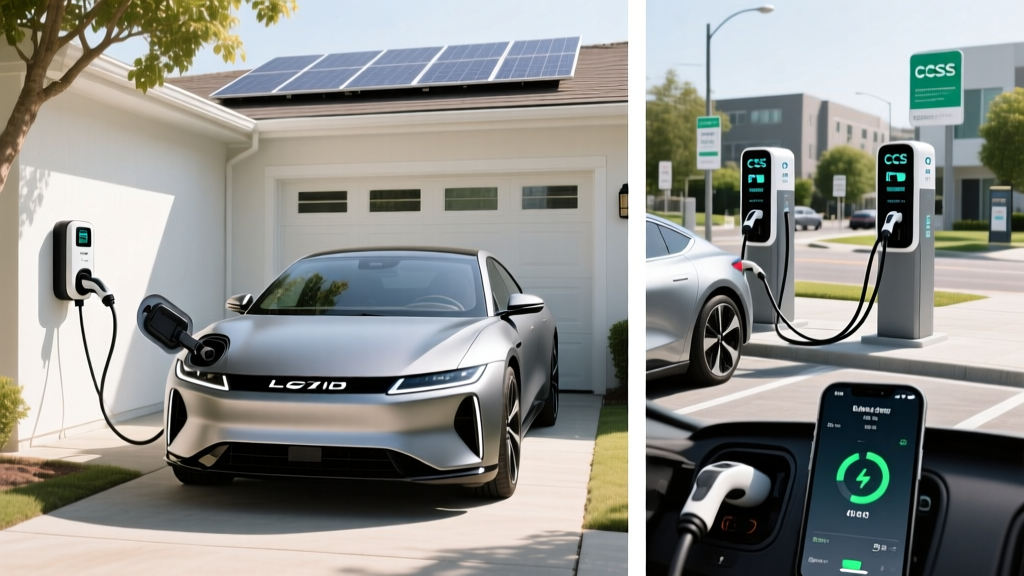
The Lucid Gravity is a full-size electric SUV built around a massive battery and an exceptionally efficient drivetrain. But owning one means understanding how to keep that battery fed—whether you're plugging in at home overnight or pulling up to a highway DC fast charger. This guide breaks down Lucid Gravity charging from every angle: the hardware, the speeds, the costs, and the home installation realities buyers need to plan for before delivery day.
Lucid Gravity Battery and Charging Specs at a Glance
Before we talk about chargers, here are the numbers that matter. The Lucid Gravity (2025–2026 model years) ships with a 120 kWh usable battery pack and an EPA-estimated range of up to 440 miles on the Grand Touring trim. That is the largest battery in any production SUV sold in the U.S., and it changes the charging calculus significantly compared to smaller-pack EVs.
| Spec | Lucid Gravity Grand Touring | Lucid Gravity Touring |
|---|---|---|
| Battery (usable) | ~120 kWh | ~120 kWh |
| EPA Range | 440 mi | ~400 mi (est.) |
| Peak DC Fast Charge Rate | ~300 kW | ~300 kW |
| 10–80% DC Fast Charge Time | ~20 min (claimed) | ~20 min (claimed) |
| Level 2 Onboard Charger | 19.2 kW | 19.2 kW |
| Connector (2025+) | NACS (Tesla standard) | NACS (Tesla standard) |
| Base MSRP | $94,900 | $79,900 |
Real-world caveat: The 440-mile EPA figure is measured on a mixed cycle. Expect roughly 360–390 miles on sustained highway driving at 70+ mph, and 15–25% range loss in sub-freezing temperatures. The Gravity's heat pump helps, but physics still applies. Source: fueleconomy.gov.
Charging Levels Explained: How Fast Will Each Add Range?
EV charging comes in three tiers. The distinction that trips up new owners: kW (kilowatts) measures power—the rate of energy flow—while kWh (kilowatt-hours) measures energy—the total amount stored in the battery. Think of kW as how wide the hose is, and kWh as how full the bucket gets.
| Level | Power (kW) | Voltage / Amps | Miles Added per Hour | Best Use Case |
|---|---|---|---|---|
| Level 1 (120V) | ~1.0–1.4 kW | 120V / 12A | ~3–4 mi/hr | Emergency trickle only |
| Level 2 (240V) | 7.2–19.2 kW | 240V / 30–80A | ~22–58 mi/hr | Daily home charging |
| DC Fast Charge | 50–350 kW | 200–900V DC | ~150–500+ mi/hr (peak) | Road trips, rapid top-ups |
With the Gravity's 120 kWh battery, Level 1 is essentially useless for a full recharge—it would take over 100 hours. Level 2 at 19.2 kW (the Gravity's onboard charger maximum) can fully replenish the pack in roughly 6.5 hours, making it ideal for overnight charging. DC fast charging at 300 kW peak can recover 10–80% in about 20 minutes on a capable station, though the charge curve tapers significantly above 80% SoC.
Home Charging Setup: Electrical Requirements and Installation Costs
The Lucid Gravity's 19.2 kW onboard charger is among the most powerful in any consumer EV. To actually deliver 19.2 kW, you need a 240V circuit rated for at least 80 amps. That's a serious electrical commitment—most homes are wired with 100A or 200A main panels, and an 80A continuous-load circuit may push a 200A panel to its limit.
What You Need for a 19.2 kW Home Charger
- Circuit: Dedicated 100A breaker (NEC requires circuits rated at 125% of continuous load, so 80A charging needs a 100A circuit)
- Wire: 2 AWG copper or 1/0 AWG aluminum, run from panel to charger location
- Panel capacity: Minimum 200A main service; many electricians recommend 325A or 400A service if you're also running electric HVAC, a dryer, and an oven
- Permit: Required in virtually all U.S. jurisdictions for new 240V circuits
- Connector: NACS (native on the Gravity—no adapter needed for NACS-equipped chargers)
Home Charger Installation Cost Breakdown
| Item | Low Estimate | High Estimate | Notes |
|---|---|---|---|
| Level 2 Charger (hardware) | $500 | $1,200 | 48A–80A NACS units |
| Electrician labor | $800 | $2,500 | Depends on wire run length |
| Permit fees | $50 | $300 | Varies by municipality |
| Panel upgrade (if needed) | $2,000 | $5,000+ | 200A→400A or sub-panel install |
| Total (no panel upgrade) | $1,350 | $4,000 | Most homes with 200A+ service |
| Total (with panel upgrade) | $3,350 | $9,000+ | Older homes with 100A service |
Panel upgrade reality: Homes built before the 1990s often have 100A or 150A main panels. Adding an 80A EV circuit to a 100A panel is a code violation and a fire risk. Budget for a panel upgrade or a dedicated sub-panel if your electrician flags insufficient capacity. Always use a licensed electrician and pull permits—unpermitted work can void homeowners insurance.
Safety and Code Considerations
- Dedicated circuit only—never share an EV charger circuit with other appliances
- GFCI protection is required by NEC 2023/2026 for outdoor receptacles; hardwired chargers may be exempt in some jurisdictions
- Outdoor-rated (NEMA 4) enclosure if the charger is mounted outside
- Cable management: retractable or holstered to prevent trip hazards and cord damage
Connector Compatibility: NACS, CCS, and Adapters
Lucid has adopted the NACS (North American Charging Standard) connector for the Gravity, aligning with Tesla's open standard that is now the industry norm for 2025+ model-year EVs. This means native access to the Tesla Supercharger network (over 25,000 stalls in North America) without an adapter.
| Connector Type | Native on Gravity? | Adapter Needed? | Network Access |
|---|---|---|---|
| NACS (Tesla) | Yes | No | Tesla Superchargers, Electrify America (NACS stalls), EVgo NACS |
| CCS1 | No | Yes (NACS-to-CCS adapter) | Legacy Electrify America, ChargePoint, some independents |
| CHAdeMO | No | Rare/expensive adapter | Declining network (mostly Nissan Leaf legacy) |
For most Gravity owners, NACS is all you need. The Tesla Supercharger network remains the most reliable public DC fast-charging option in the U.S. by a wide margin. If you frequently travel in areas where CCS-only chargers dominate (some ChargePoint or Electrify America legacy stalls), a NACS-to-CCS adapter (~$200–$300) is worth keeping in the frunk. Source: Lucid Motors official site.
Level 2 Equipment Recommendations for the Lucid Gravity
Because the Gravity accepts up to 19.2 kW on Level 2, you have a choice: buy a charger that matches its full capability, or accept slower (but still adequate) overnight speeds with a less expensive unit.
ChargePoint Home Flex (NACS) — 48A
- Power output: 11.5 kW (48A on 60A circuit)
- Connector: NACS native
- Cable length: 23 ft
- Smart features: Wi-Fi, scheduling, energy tracking via app, Alexa integration
- Price: ~$599
- Verdict: Adds ~35 miles/hour. Full overnight recharge of the 120 kWh pack takes ~10.5 hours. Adequate for most daily use.
Wallbox Pulsar Max — 48A
- Power output: 11.5 kW (48A on 60A circuit)
- Connector: NACS (2025+ models) or J1772 with adapter
- Cable length: 25 ft
- Smart features: Wi-Fi, Bluetooth, load balancing, Power Sharing for dual chargers
- Price: ~$549
- Verdict: Similar to ChargePoint at a slightly lower price. Good load-management for homes with limited panel capacity.
Tesla Wall Connector (NACS) — 48A
- Power output: 11.5 kW (48A on 60A circuit)
- Connector: NACS native
- Cable length: 24 ft
- Smart features: Wi-Fi, OTA updates, Power Sharing, load management
- Price: ~$475
- Verdict: Best value for NACS-native vehicles. Simple, reliable, and the cheapest quality option.
Emporia Vue EV Charger — 80A
- Power output: 19.2 kW (80A on 100A circuit)
- Connector: NACS (2025+ version)
- Cable length: 24 ft
- Smart features: Whole-home energy monitoring integration, solar-aware scheduling, app control
- Price: ~$899
- Verdict: The only way to unlock the Gravity's full 19.2 kW Level 2 speed. Adds ~58 miles/hour, full charge in ~6.5 hours. Requires a 100A dedicated circuit—panel upgrade likely.
Practical advice: Most Gravity owners will be fine with a 48A/11.5 kW charger. If you drive 60 miles a day, that's roughly 2 hours of charging—easily handled overnight. The 80A option makes sense only if you regularly deplete the large battery and need fast turnarounds, or if you want to leverage off-peak utility rates in a narrow time window.
Cost to Charge: Home vs. Public vs. Gas
The Lucid Gravity's efficiency is a standout feature. Lucid claims approximately 3.5–4.0 miles per kWh in mixed driving, which translates to roughly 25–29 kWh per 100 miles. Let's run the numbers against common electricity and gas prices.
| Scenario | Rate | Cost per Full Charge (120 kWh) | Cost per Mile | Cost per 300 mi |
|---|---|---|---|---|
| Home (off-peak utility rate) | $0.10/kWh | $12.00 | $0.03 | $9.00 |
| Home (national avg residential) | $0.16/kWh | $19.20 | $0.044 | $13.20 |
| Public Level 2 (network) | $0.30/kWh | $36.00 | $0.083 | $24.90 |
| DC Fast (Tesla Supercharger avg) | $0.35/kWh | $42.00 | $0.097 | $29.10 |
| DC Fast (peak pricing, EA/others) | $0.55/kWh | $66.00 | $0.152 | $45.60 |
| Gas SUV equivalent (22 MPG, $3.50/gal) | $3.50/gal | — | $0.159 | $47.70 |
Key takeaway: Home charging is where the economics overwhelmingly favor the Gravity. At off-peak rates, a full 440-mile "tank" costs about $12. Even at residential averages, you're spending less than half what a comparable gas SUV costs per mile. DC fast charging on the road is more expensive—sometimes approaching gas prices on premium networks—but it's a road-trip expense, not a daily one.
For federal tax credit eligibility on home charger hardware, note that the §30D alternative fuel vehicle refueling property credit offers up to 30% (max $1,000) for qualified home charging equipment installed in eligible census tracts. Check current-year rules at IRS.gov, as census-tract eligibility and income caps apply.
Public DC Fast Charging: What to Expect on the Road
The Gravity's ~300 kW peak DC fast-charge rate is impressive on paper, but real-world charging follows a curve, not a flat line. Here's what actually happens when you plug into a 350 kW charger:
- 10–40% SoC: Peak rate near 300 kW; fastest portion of the charge
- 40–60% SoC: Sustained ~250 kW; still very fast
- 60–80% SoC: Tapers to ~150–180 kW as battery management protects cells
- 80–100% SoC: Drops sharply below 50 kW; avoid unless you truly need a full pack
The claimed 10–80% time of ~20 minutes assumes a 350 kW-capable station, a preconditioned battery (the Gravity will precondition automatically when you navigate to a charger), and moderate ambient temperatures. In cold weather (below 32°F), expect 10–80% to stretch to 25–30 minutes even with preconditioning, as the battery must warm before accepting peak power.
Network recommendations for Gravity owners:
- Tesla Superchargers: Most reliable, widest coverage, NACS-native. V4 stalls offer up to 350 kW.
- Electrify America: Expanding NACS connectors; 350 kW stalls available at newer sites. Reliability improving but inconsistent.
- EVgo: Adding NACS; mostly 350 kW capable at new stations.
- ChargePoint: Limited DC fast-charging footprint; better for destination Level 2.
Lucid Gravity Charging FAQ
How much does it cost to install a home EV charger for the Lucid Gravity?
Between $1,350 and $4,000 if your electrical panel has sufficient capacity (200A+ service). If you need a panel upgrade from 100A to 200A or 400A, total costs can reach $3,350–$9,000+. Equipment itself runs $475–$900 for quality NACS chargers.
How fast will each charging level add range to the Gravity?
Level 1 (120V): about 3–4 miles per hour—impractical for a 120 kWh battery. Level 2 at 48A (11.5 kW): roughly 35 miles per hour. Level 2 at 80A (19.2 kW): roughly 58 miles per hour. DC fast charging at peak: up to 500+ miles per hour, though sustained rates taper with state of charge.
Which connector does the Lucid Gravity use?
The Gravity uses the NACS connector natively. This provides direct access to the Tesla Supercharger network. For CCS1-equipped public chargers, you'll need a NACS-to-CCS adapter.
How much does charging cost per mile compared to gas?
Home charging at the national average electricity rate (~$0.16/kWh) costs roughly $0.044 per mile in the Gravity. A comparable gas SUV at 22 MPG and $3.50/gallon costs about $0.159 per mile—roughly 3.6x more. DC fast charging narrows the gap but still typically costs less than gasoline.
What electrical upgrades might I need for a Gravity home charger?
The Gravity's 19.2 kW onboard charger requires a 100A dedicated circuit on a 200A+ main panel. Homes with 100A or 150A service will need a panel upgrade or a sub-panel installation. Even homes with 200A service may need an upgrade if multiple high-draw appliances (electric oven, dryer, HVAC) are already consuming significant capacity. Have a licensed electrician perform a load calculation before committing to a charger.
Should I charge to 100% every night?
No. For long-term battery health, set your daily charge limit to 80–85% unless you need the full range for a road trip. The Gravity's battery management system includes a top-end buffer, but consistently charging to 100% and leaving the car at full SoC accelerates degradation in NMC chemistry cells. Reserve 100% charges for departure days.
Does the Lucid Gravity support vehicle-to-home (V2H) or bidirectional charging?
As of the 2025–2026 model years, Lucid has announced bidirectional charging capability for the Gravity, but full V2H/V2L functionality depends on software releases and compatible home energy hardware. Check Lucid's official updates for current availability.
The Lucid Gravity's charging story is defined by its enormous battery and its adoption of NACS. Home charging with a quality 48A Level 2 unit handles daily needs effortlessly, and the Supercharger network makes road trips straightforward. Plan your electrical infrastructure before the car arrives—the Gravity's 19.2 kW onboard charger is an asset, but only if your home's wiring can support it.