Understanding the Lucid Charging Ecosystem
Lucid Motors has built one of the most efficient powertrains in the EV market — the Air Grand Touring achieves up to 516 miles of EPA range on a 112 kWh usable battery pack. But range is only half the equation. How quickly and affordably you can replenish that battery determines real-world ownership satisfaction. This guide breaks down every facet of the Lucid charging service experience: home installation, public DC fast charging networks, connector compatibility, and the true cost per mile compared to gasoline.
Lucid vehicles use a Wunderbox onboard charger capable of accepting up to 19.2 kW on Level 2 AC power — among the highest in the industry. On DC fast chargers, the Air can peak at approximately 300 kW under optimal conditions. But peak numbers don't tell the whole story. Sustained charge rates, thermal management, and the taper above 80% State of Charge (SoC) matter just as much for trip planning.
Charging Levels Explained: Speeds in kW and Miles Per Hour
Before evaluating equipment or installation costs, you need clarity on the three charging tiers. Power is measured in kilowatts (kW) — the rate of energy delivery. Energy is measured in kilowatt-hours (kWh) — the total amount stored in your battery. A 112 kWh battery charged at 19.2 kW would theoretically fill in about 5.8 hours (112 ÷ 19.2), minus taper losses.
| Level | Power Source | Max Power (kW) | Miles of Range Added Per Hour | Typical Use Case |
|---|---|---|---|---|
| Level 1 | 120V / 12A household outlet | ~1.4 kW | ~3–4 mi/hr | Emergency / overnight trickle |
| Level 2 (Home) | 240V / 48A–80A circuit | Up to 19.2 kW (Lucid onboard limit) | ~40–62 mi/hr | Daily home charging |
| DC Fast Charging | 400V–900V public stations | Up to ~300 kW peak | ~200+ mi in first 15 min | Road trips, quick top-ups |
Lucid's Wunderbox is a standout feature: while most EVs max out at 11.5 kW on Level 2 (48A on a 60A circuit), the Air can accept up to 19.2 kW if your home charger and electrical panel support an 80A circuit (requiring a 100A breaker). This means a full overnight charge even for the 112 kWh Grand Touring battery.
Home Charger Installation: Electrical Requirements and Costs
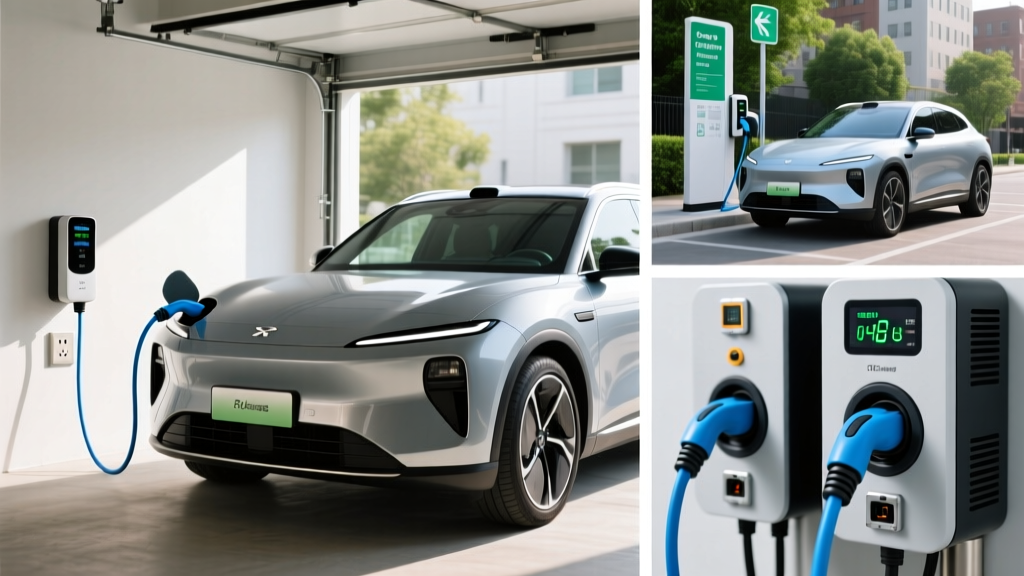
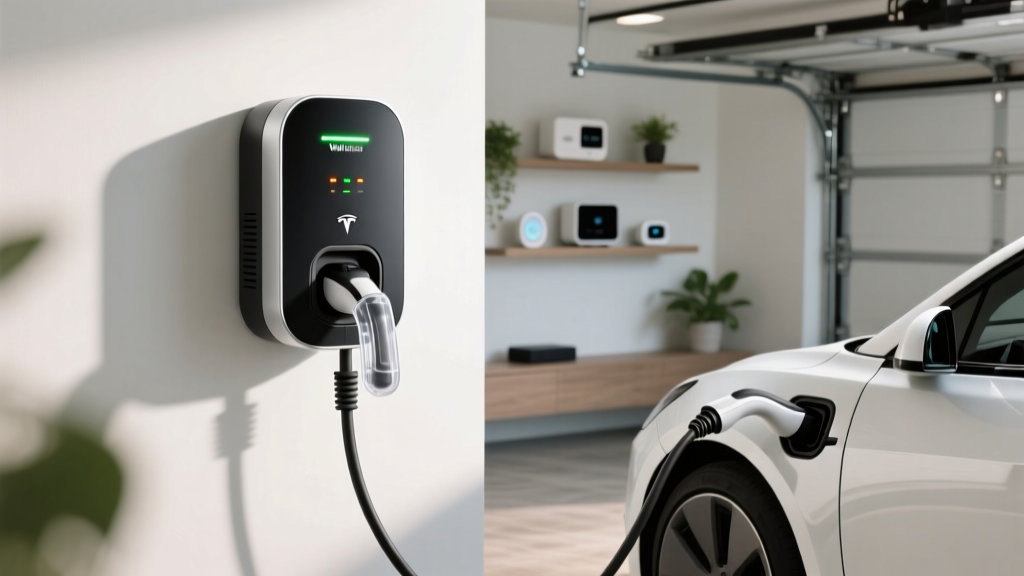
Installing a Level 2 home charger for a Lucid Air requires careful electrical planning. The Wunderbox's 19.2 kW capability is only useful if your home's electrical service and the dedicated circuit can deliver it.
Electrical Requirements by Charger Amperage
- 48A charger (11.5 kW): Requires a 60A dedicated breaker, 6 AWG copper wire, and 240V service. This is the most common residential setup.
- 64A charger (15.4 kW): Requires an 80A dedicated breaker, 4 AWG copper wire. Many 200A home panels can support this.
- 80A charger (19.2 kW): Requires a 100A dedicated breaker, 3 AWG copper wire. Homes with 200A service may need a panel upgrade or load-management device to accommodate this alongside other heavy appliances.
Panel Upgrade Considerations
Older homes with 100A or 150A main service panels often cannot spare the capacity for a 60A+ dedicated EV circuit without exceeding 80% of the panel's rated load (the National Electrical Code continuous-load rule). A panel upgrade to 200A or 400A service typically costs $1,500–$4,000 depending on your utility, local permitting, and whether trenching is required. Some utilities offer rebates for panel upgrades when paired with EV adoption.
| Component | Cost Range (Low) | Cost Range (High) | Notes |
|---|---|---|---|
| Level 2 Charger Equipment | $400 | $1,200 | Varies by brand, amperage, smart features |
| Electrician Labor (standard install) | $600 | $1,500 | Short run from panel to garage/carport |
| Electrical Permit | $50 | $300 | Varies by municipality |
| Wire & Conduit Materials | $150 | $600 | Depends on run distance and gauge needed |
| Panel Upgrade (if needed) | $1,500 | $4,000 | 200A to 400A service; not always required |
| Total (no panel upgrade) | $1,200 | $3,600 | Most common scenario |
| Total (with panel upgrade) | $2,700 | $7,600 | Older homes with limited service |
Always hire a licensed electrician familiar with NEC Article 625 (EV charging system requirements). Permits are not optional — they protect your home insurance coverage and ensure the installation meets code. A GFCI breaker is required for outdoor installations in most jurisdictions, and the circuit must be dedicated (no shared loads with dryers or HVAC).
Connector Compatibility: NACS, CCS, and Adapter Requirements
Lucid Air models built for the 2025 model year and later ship with the North American Charging Standard (NACS) port natively, aligning with Tesla's connector design that has become the industry standard. Earlier Lucid Air models (2022–2024) were delivered with a CCS1 port. Lucid offers a NACS adapter for legacy CCS-equipped vehicles, and third-party adapters are also available.
| Model Year | Native Port | Tesla Supercharger Access | CCS Public Network Access | Adapter Needed? |
|---|---|---|---|---|
| 2022–2024 | CCS1 | Yes, with NACS-to-CCS adapter | Native | NACS adapter for Superchargers |
| 2025+ | NACS | Native | Yes, with CCS-to-NACS adapter | CCS adapter for older Electrify America stations |
As of 2026, the vast majority of new DC fast charging stations in the U.S. offer NACS connectors. Electrify America, EVgo, and ChargePoint have been transitioning their networks. However, some legacy CCS-only stations remain, so carrying a CCS-to-NACS adapter (~$150–$250) is advisable for road trips through rural areas. Lucid's in-car navigation and the Lucid app route you to compatible chargers and can precondition the battery for optimal charge speed upon arrival.
DC Fast Charging: Real-World Speeds and the Charge Curve
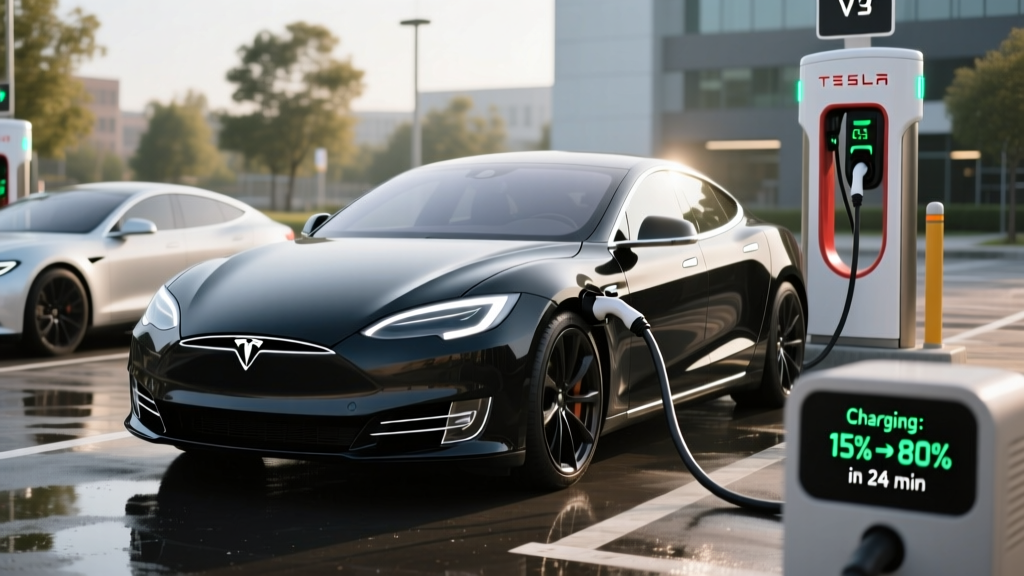
Lucid advertises up to 300 kW peak DC fast charging on the Air Grand Touring. In practice, peak power is sustained only within a narrow SoC window — typically between 10% and 35%. Above 50% SoC, the charge rate tapers significantly as the battery management system protects cell longevity. This charge curve is universal across lithium-ion EVs and is the reason manufacturers quote 10–80% times rather than full charges.
| Model / Battery | Battery Capacity (kWh) | Peak DC Rate | 10–80% Time | Miles Added in 15 Min |
|---|---|---|---|---|
| Air Pure (88 kWh usable) | 88 | ~220 kW | ~25–28 min | ~175 mi |
| Air Touring (92 kWh usable) | 92 | ~250 kW | ~22–25 min | ~190 mi |
| Air Grand Touring (112 kWh usable) | 112 | ~300 kW | ~20–22 min | ~200+ mi |
Preconditioning is essential. If you navigate to a DC fast charger using the Lucid's built-in navigation, the vehicle will warm or cool the battery to the optimal temperature window before arrival. Skipping preconditioning — especially in cold weather — can reduce peak charge rates by 30–50% and extend your 10–80% time considerably.
Cost to Charge: Home vs. Public vs. Gasoline
One of the strongest economic arguments for EV ownership is the per-mile fuel cost advantage. But the savings depend heavily on where and when you charge. Here's a breakdown using the Lucid Air Pure's efficiency of approximately 3.6 miles per kWh (one of the best in its class, per fueleconomy.gov).
| Scenario | Rate | Cost Per Mile | Annual Cost (12,000 mi) |
|---|---|---|---|
| Home charging (off-peak utility rate) | $0.13/kWh | $0.036 | $432 |
| Home charging (peak/utility avg) | $0.22/kWh | $0.061 | $732 |
| Public Level 2 (ChargePoint, etc.) | $0.35/kWh | $0.097 | $1,164 |
| DC Fast Charging (EA, EVgo avg) | $0.48/kWh | $0.133 | $1,596 |
| Gasoline sedan (28 MPG avg, $3.50/gal) | $3.50/gal | $0.125 | $1,500 |
| Gasoline sedan (28 MPG avg, $4.20/gal) | $4.20/gal | $0.150 | $1,800 |
Even at public DC fast charging rates, the Lucid Air's exceptional efficiency keeps per-mile costs competitive with or below gasoline. At home off-peak rates, you'll spend roughly $400–$500 annually on electricity — a fraction of the $1,500+ a comparable gas sedan requires. Time-of-use (TOU) utility plans are essential to maximizing savings; charging between 10 PM and 6 AM on a TOU plan can cut your electricity rate by 40–60%.
Recommended Home Charging Equipment for Lucid Air
To take advantage of the Lucid Air's 19.2 kW onboard charger, you need a Level 2 station that can deliver at least 48A (ideally 80A). Below are proven options as of 2026, selected for reliability, smart features, and compatibility.
ChargePoint Home Flex (up to 50A)
- Power Output: Up to 12 kW (50A on 240V)
- Connector: NACS or J1772 (select at purchase)
- Cable Length: 23 feet
- Smart Features: Wi-Fi, app scheduling, Alexa integration, load sharing
- Price: ~$650–$750
- Best For: Homes with 60A circuits; reliable daily charging
Grizzl-E Smart (up to 48A)
- Power Output: Up to 11.5 kW (48A on 240V)
- Connector: NACS or J1772
- Cable Length: 24 feet
- Smart Features: Wi-Fi, OCPP-compatible, adjustable amperage via app
- Price: ~$550–$650
- Best For: Budget-conscious buyers; outdoor-rated (NEMA 4)
Emporia Vue Level 2 (up to 48A)
- Power Output: Up to 11.5 kW (48A on 240V)
- Connector: NACS or J1772
- Cable Length: 24 feet
- Smart Features: Energy monitoring, solar integration, load management
- Price: ~$500–$600
- Best For: Solar-panel homes; detailed energy tracking
Lucid Connected Home Charger (up to 80A)
- Power Output: Up to 19.2 kW (80A on 240V)
- Connector: NACS (native for 2025+ models)
- Cable Length: 25 feet
- Smart Features: Lucid app integration, scheduled charging, OTA updates
- Price: ~$1,100–$1,200
- Best For: Maximum-speed home charging; Grand Touring owners with 100A circuit capacity
If your electrical panel can support a 100A breaker, Lucid's own Connected Home Charger is the only way to fully exploit the 19.2 kW onboard capability. For most homes with a standard 60A circuit, the ChargePoint Home Flex or Grizzl-E at 48A provides 11.5 kW — enough to fully recharge even the 112 kWh Grand Touring battery overnight in roughly 10 hours.
Safety, Code, and Best Practices
EV charging involves sustained high-current draw — often for 8+ hours at a time. This places it in the NEC's "continuous load" category, which mandates that circuits be rated at 125% of the charger's maximum draw. A 48A charger requires a 60A breaker; an 80A charger requires a 100A breaker. Never undersize the breaker or wire gauge.
- Dedicated circuit: Your EV charger must have its own breaker — no sharing with dryers, ovens, or HVAC.
- GFCI protection: Required for outdoor installations in most jurisdictions per NEC 2023/2026 revisions. Indoor garage installations may not require GFCI in all areas, but many electricians recommend it regardless.
- Outdoor rating: If your charger is mounted outside, ensure it carries a NEMA 4 or IP65 rating for weather resistance.
- Cable management: Use a holster or retractable reel to prevent cable damage and tripping hazards.
- Surge protection: A whole-home surge protector or dedicated EV circuit surge device protects your charger and vehicle from voltage spikes, especially in areas with frequent lightning or grid instability.
Public Charging Networks: Where Lucid Owners Charge on the Road
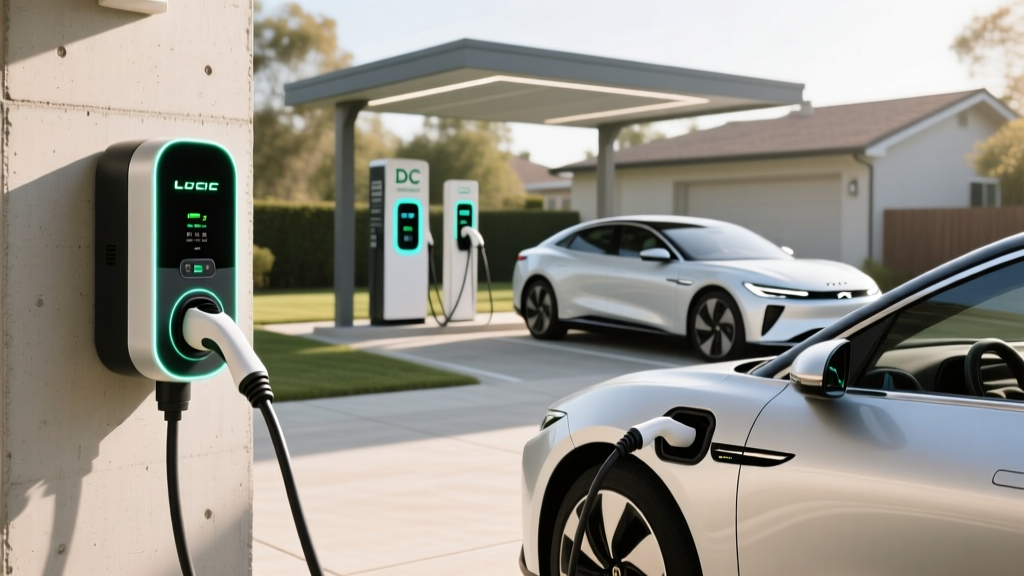
Lucid's in-car navigation integrates with multiple public charging networks. As of 2026, NACS-equipped Lucid Air models have native access to Tesla's Supercharger network — over 25,000 stalls in North America — which remains the most reliable DC fast charging infrastructure available. Electrify America, EVgo, and ChargePoint also operate extensive networks with NACS connectors now widely deployed.
For cross-country road trips, plan your route using the Lucid app or in-car navigation, which factors in battery temperature, elevation changes, and real-time charger availability. The Air's range wizard provides remarkably accurate arrival-SoC predictions when preconditioning is active. On a typical 500-mile trip with the Grand Touring, expect one 20-minute DC fast charging stop at a 250+ kW station.
Frequently Asked Questions
How much does it cost to install a home EV charger for a Lucid Air?
For a standard Level 2 installation without a panel upgrade, expect $1,200–$3,600 total (equipment, electrician labor, permit, and materials). If your home requires a panel upgrade from 100A or 150A to 200A+ service, add $1,500–$4,000. The Lucid Connected Home Charger at 80A requires a 100A dedicated circuit, which pushes the higher end of both equipment and installation costs.
How fast will each charging level add range to my Lucid Air?
Level 1 (120V) adds roughly 3–4 miles per hour — suitable only for emergencies or very low daily mileage. Level 2 at 48A adds approximately 40 miles per hour; at the Lucid's maximum 80A (19.2 kW), you gain about 60+ miles per hour. DC fast charging at 250+ kW can add 200+ miles in 15 minutes during the optimal SoC window.
Which connector is compatible with my Lucid Air?
2025 and newer Lucid Air models ship with a native NACS port, granting direct access to Tesla Superchargers and most new public stations. 2022–2024 models have CCS1 ports and require a NACS adapter for Supercharger access. Lucid provides adapter guidance through the Lucid Motors website and owner resources.
How much does charging a Lucid Air cost per mile vs. a gas car?
At home off-peak rates ($0.13/kWh), the Air Pure costs roughly $0.036 per mile — about $432 annually for 12,000 miles. A comparable gasoline sedan at 28 MPG and $3.50/gal costs $0.125/mile or $1,500/year. Even at public DC fast charging rates ($0.48/kWh), the Lucid's efficiency keeps costs near or below gasoline parity. Check the IRS clean vehicle credit rules for potential point-of-sale incentives that further reduce your effective cost.
What electrical upgrades might I need for a Lucid home charger?
Homes with 200A main service panels can typically support a 60A dedicated EV circuit (for 48A charging) without upgrades. If you want the full 80A circuit for 19.2 kW charging, or if your panel is already near capacity with existing loads, you may need a panel upgrade to 300A–400A service, a load-management device (such as a Span smart panel or Emporia load shedder), or a utility service upgrade. Your licensed electrician will perform a load calculation per NEC Article 220 to determine your exact needs.
Does the Lucid Air support vehicle-to-home (V2H) or bidirectional charging?
As of 2026, Lucid has not enabled bidirectional charging (V2H/V2L/V2G) on production Air models. While the hardware architecture may support it in future OTA updates, this feature is not currently available. If bidirectional capability is a priority, consider the Ford F-150 Lightning or Hyundai Ioniq 5, which offer V2L today.