Lucid Charging at a Glance: What Owners Need to Know
Lucid Motors builds some of the most energy-efficient electric vehicles on the road. The Lucid Air Grand Touring achieves up to 512 miles of EPA range from a 112 kWh battery pack, translating to roughly 4.5 miles per kWh — a figure that makes every charging session stretch further than in less efficient EVs. But understanding Lucid charging — how fast it happens, what it costs, and what equipment you need at home — is essential before you take delivery or plan your first road trip.
This guide covers every charging scenario Lucid owners face: Level 1 trickle charging, Level 2 home installations, and DC fast charging on the road. We'll break down exact speeds in kilowatts (kW — the rate of power delivery), battery capacity in kilowatt-hours (kWh — the total energy stored), installation costs, connector compatibility, and the real cost per mile versus gasoline.
Charging Levels Explained: Speeds and Range Added Per Hour
EV charging happens at three distinct levels. Each delivers power at a different rate, measured in kilowatts (kW). The higher the kW, the faster electrons flow into the battery — but higher speeds require more robust electrical infrastructure.
| Level | Voltage / Amperage | Max Power (kW) | Miles of Range Added Per Hour (Lucid Air) | Best For |
|---|---|---|---|---|
| Level 1 | 120V / 12A | ~1.4 kW | ~5–6 miles | Emergency top-ups, overnight trickle |
| Level 2 | 240V / 48A (hardwired) | ~11.5 kW | ~48–52 miles | Daily home charging |
| DC Fast | 400–900V DC | Up to 300 kW (Air) | ~200+ miles in 15 min (10–80%) | Road trips, rapid top-ups |
Lucid's onboard charger accepts up to 19.2 kW on Level 2 AC (when equipped with the optional dual-charge module; standard is 11.5 kW). That's among the fastest AC charging capabilities in the industry. On DC fast charging, the Air can accept up to 300 kW at compatible stations, while the newer Lucid Gravity SUV peaks around 300 kW as well.
Home Charging Setup: Electrical Requirements and Installation Costs
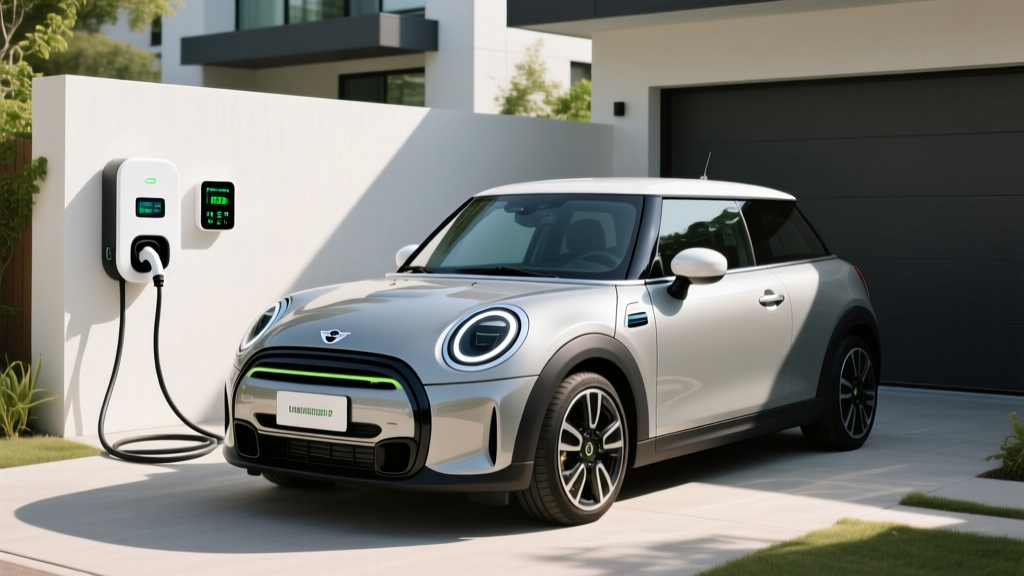
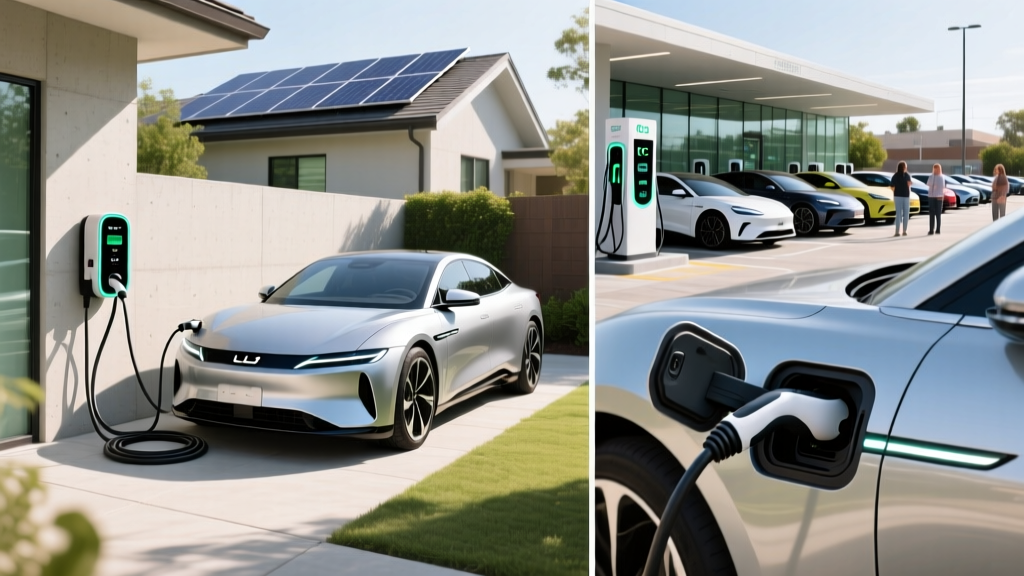
Most Lucid owners will do 85–95% of their charging at home on Level 2. To take full advantage of Lucid's 19.2 kW onboard charger, you need a 240V circuit rated for at least 80 amps (hardwired). However, most homes install a 60-amp circuit supporting a 48-amp continuous charger delivering 11.5 kW — which still fully replenishes a Lucid Air's 112 kWh battery overnight in roughly 10–11 hours.
What Your Electrical Panel Needs
A typical Level 2 installation requires:
- 240V dedicated circuit: Either a NEMA 14-50 outlet (50A circuit, 40A continuous) or a hardwired connection (60A or 80A circuit).
- Panel capacity: Most modern 200-amp panels can accommodate a 60A EV breaker. Older 100-amp panels often require a service upgrade ($2,000–$5,000).
- Permit: Nearly all jurisdictions require an electrical permit for a new 240V circuit. Your electrician pulls this; expect $50–$250 depending on locality.
- GFCI protection: The 2020 NEC requires GFCI breakers for EV outlets in garages. Hardwired chargers bypass this requirement in many jurisdictions.
| Component | Typical Cost Range | Notes |
|---|---|---|
| Level 2 charger (hardware) | $400–$1,200 | Varies by brand, power output, cable length |
| Electrician labor (standard install) | $500–$1,500 | Short run from panel to garage; longer runs cost more |
| Electrical permit | $50–$250 | Varies by city/county |
| Panel upgrade (if needed) | $2,000–$5,000 | 100A → 200A service; older homes only |
| Total (no panel upgrade) | $950–$2,950 | Most common scenario for homes built after 2000 |
| Total (with panel upgrade) | $2,950–$7,950 | Older homes or those with maxed-out panels |
Always get a load calculation from a licensed electrician before committing to a circuit size. If your panel is near capacity, a smart load-management system (like the Emporia VUE with smart breaker) can avoid a costly panel upgrade by throttling charger draw when other large appliances are running.
Connector Compatibility: NACS, CCS, and Adapter Needs
Lucid originally equipped the Air with a CCS1 (Combined Charging System) port for both AC and DC fast charging. Starting with 2025 model-year vehicles, Lucid began transitioning to the NACS (North American Charging Standard) connector — the same port used by Tesla, Ford, Rivian, and most other manufacturers.
| Lucid Model Year | Native Connector | Tesla Supercharger Access | CCS Network Access |
|---|---|---|---|
| 2022–2024 Air | CCS1 | Via NACS-to-CCS adapter (included by Lucid) | Native — plug directly in |
| 2025+ Air / Gravity | NACS | Native — plug directly in | Via CCS-to-NACS adapter |
If you own an earlier CCS-equipped Lucid Air, the Lucid-provided NACS adapter allows access to the Tesla Supercharger network — over 25,000 stalls in North America as of 2026. For newer NACS-equipped vehicles, adapters are available for Electrify America, EVgo, and other CCS-only stations, though the industry is rapidly converting to NACS.
For home Level 2 charging, both NACS and CCS vehicles use the same J1772-based AC protocol (NACS physically integrates the AC pins into its smaller connector). Any quality Level 2 charger with the matching connector will work.
DC Fast Charging: Real-World Speeds and the Charge Curve
Lucid's DC fast charging headline — up to 300 kW peak — applies only under ideal conditions: a 350 kW-capable station, a battery preconditioned to optimal temperature, and a low state of charge (SoC). Here's what the actual charge curve looks like in practice:
- 10–30% SoC: Peak rate of 250–300 kW. The Air can add roughly 200 miles in about 12 minutes.
- 30–60% SoC: Sustains 150–200 kW. Still adding 3–4 miles per minute.
- 60–80% SoC: Tapers to 80–120 kW. Charging slows to protect battery longevity.
- 80–100% SoC: Drops below 50 kW. Only charge past 80% when necessary — the final 20% can take as long as the first 60%.
A typical 10–80% session on a 350 kW charger takes approximately 20–25 minutes for the Lucid Air (112 kWh battery). On a 150 kW Electrify America station, expect 35–40 minutes for the same 10–80% fill. Always use the Lucid app or in-car navigation to precondition the battery before arriving at a DC fast charger — this warms the pack and can cut charging time by 20–30% in cold weather.
Cost to Charge: Home vs. Public vs. Gasoline
One of the strongest ownership arguments for a Lucid is the fuel-cost advantage. The Air's extraordinary efficiency (roughly 4.0–4.5 mi/kWh) means fewer kWh consumed per mile than competitors, which amplifies savings whether you're charging at home or paying premium public rates.
| Charging Scenario | Avg. Cost per kWh | Cost per Mile (Lucid Air at 4.2 mi/kWh) | Annual Fuel Cost (12,000 mi) |
|---|---|---|---|
| Home (off-peak utility rate) | $0.08–$0.14 | $0.019–$0.033 | $228–$396 |
| Home (national avg. residential) | $0.17 | $0.040 | $480 |
| Public Level 2 (network pricing) | $0.25–$0.40 | $0.060–$0.095 | $720–$1,140 |
| DC Fast Charging (road trip) | $0.35–$0.55 | $0.083–$0.131 | $996–$1,572 |
| Gasoline (25 MPG avg. sedan, $3.40/gal) | — | $0.136 | $1,632 |
Even charging exclusively on expensive DC fast chargers, a Lucid Air costs less per mile than a comparable gas sedan getting 25 MPG. Charge primarily at home on off-peak rates, and you'll spend $300–$400 annually on electricity — roughly 75–80% less than gasoline. Source: fueleconomy.gov efficiency data and EIA electricity pricing.
Recommended Home Chargers for Lucid Vehicles
Lucid sells its own branded home charger (the Lucid Connected Home Charger), but third-party options often deliver better value or higher power output. Below are three chargers well-suited to Lucid's AC charging capabilities.
ChargePoint Home Flex (NACS or J1772)
- Power output: Up to 12 kW (50A, NEMA 14-50) or up to 19.2 kW (80A, hardwired)
- Cable length: 23 feet
- Smart features: Wi-Fi, app scheduling, Alexa integration, utility demand-response programs
- Price: ~$550 (50A) / ~$700 (hardwired 80A version)
- Best for: Owners who want to maximize Lucid's 19.2 kW onboard charger with a hardwired install
Wallbox Pulsar Plus (J1772)
- Power output: Up to 11.5 kW (48A, NEMA 14-50 or hardwired)
- Cable length: 25 feet
- Smart features: Wi-Fi + Bluetooth, app control, Power Sharing (daisy-chain two units on one circuit)
- Price: ~$450–$550
- Best for: Budget-conscious owners with standard 60A circuit installs
Lucid Connected Home Charger
- Power output: Up to 11.5 kW (48A)
- Cable length: 24 feet
- Smart features: Integrated with Lucid app, scheduled charging, OTA updates
- Price: ~$750–$900 (often bundled or discounted at vehicle purchase)
- Best for: Owners who want seamless Lucid app integration and OEM aesthetics
For NACS-equipped 2025+ Lucid vehicles, ensure your chosen charger has a NACS connector or use a J1772-to-NACS adapter. Several manufacturers (ChargePoint, Emporia, Grizzl-E) now offer native NACS versions.
Safety, Electrical Code, and Best Practices
A Level 2 charger draws sustained high current for hours — making proper installation critical. Key safety and code requirements:
- Dedicated circuit: Your EV charger must have its own breaker — never share a circuit with other large appliances.
- Hardwired vs. outlet: Hardwired installations (no plug) eliminate the GFCI nuisance-tripping issues common with NEMA 14-50 outlets and are required for circuits above 50A in most jurisdictions.
- Outdoor rating: If your charger is mounted outside, ensure it carries a NEMA 4 or IP65 weather rating. All recommended chargers above meet this standard.
- Cable management: Use a holster or retractor to keep the cable off the ground and prevent trip hazards and insulation damage.
- Annual inspection: Check your outlet or hardwired connection for discoloration, warmth, or burning smell — signs of loose connections that need immediate electrician attention.
Lucid Charging FAQ
How much does it cost to install a home EV charger for a Lucid?
Expect $950–$2,950 for a standard installation (charger hardware + electrician + permit) if your electrical panel has adequate capacity. If your home needs a panel upgrade from 100A to 200A service, total costs can reach $3,000–$8,000. Get a load calculation from a licensed electrician before purchasing equipment.
How fast will each charging level add range to my Lucid Air?
Level 1 (120V) adds roughly 5–6 miles per hour. Level 2 (240V, 48A) adds approximately 48–52 miles per hour. DC fast charging at 300 kW can add over 200 miles in about 15 minutes under optimal conditions. Lucid's class-leading efficiency means more miles per kWh at every charging level.
Which connector is compatible with my Lucid?
2022–2024 Lucid Air models use CCS1 natively and access Tesla Superchargers via a Lucid-provided NACS adapter. 2025+ Air and Gravity models use NACS natively and access CCS stations via an adapter. For home Level 2 charging, both connector types work with standard J1772-protocol chargers (with the appropriate plug or adapter).
How much does Lucid charging cost per mile compared to gas?
Charging at home on the national average residential rate ($0.17/kWh), a Lucid Air costs about $0.04 per mile. A comparable 25 MPG gasoline sedan at $3.40/gallon costs $0.136 per mile. Home charging on off-peak rates drops the Lucid's cost to roughly $0.02–$0.03 per mile — a 75–85% savings.
What electrical upgrades might I need for a Lucid home charger?
Homes with a 200-amp panel and available breaker spaces typically need no upgrade beyond the new 240V circuit. Homes with 100-amp service, full panels, or knob-and-tube wiring may need a panel upgrade ($2,000–$5,000), a sub-panel installation, or a service lateral replacement. A licensed electrician's load calculation will determine your specific requirements.
Does charging to 100% damage my Lucid's battery?
Occasional 100% charges before road trips are fine. For daily use, Lucid recommends setting a charge limit of 80–90% to maximize long-term battery health. The Air's battery management system includes a substantial buffer, but minimizing time at extreme SoC (below 10% or above 90%) reduces degradation over the pack's lifespan. Lucid's battery warranty covers 8 years/100,000 miles with a capacity retention threshold of approximately 70%.