The Lucid Air Pure delivers an EPA-estimated 419 miles of range from its 88 kWh usable battery pack — one of the most efficient luxury sedans on the market at roughly 4.5 miles per kWh. But extracting maximum daily utility from that efficiency depends entirely on how you charge. Whether you're installing a Level 2 home charger or planning road trips across DC fast-charging networks, the numbers behind kW, kWh, and connector compatibility determine whether your Air Pure spends its time on the road or parked at a plug.
This guide walks through the exact charging infrastructure the Lucid Air Pure needs, from electrical panel requirements to real-world cost-per-mile calculations, so you can match your charging setup to your driving patterns.
Lucid Air Pure Range and Efficiency: The Baseline Numbers
Before sizing a charger, you need to know what you're filling. The 2025-2026 Lucid Air Pure (RWD) pairs a single rear motor with an 88 kWh usable lithium-ion battery (NMC chemistry). Here's the efficiency baseline:
| Metric | Value |
|---|---|
| EPA Range | 419 miles |
| Real-World Highway (70 mph, mild weather) | ~340–370 miles |
| Cold-Weather Range (32°F, highway) | ~280–320 miles |
| Battery Capacity (usable) | 88 kWh |
| Efficiency | ~4.5 mi/kWh (130 MPGe combined) |
| Max DC Fast Charge Rate | ~200 kW peak |
| Level 2 Onboard Charger | 19.2 kW (80A capable) |
| 10–80% DC Fast Charge | ~25–30 minutes (ideal conditions) |
Charging Levels Explained: kW Speeds and Miles Per Hour
EV charging operates at three distinct levels, measured in kilowatts (kW) — the rate of power delivery. This is different from kilowatt-hours (kWh), which measures total energy stored in the battery. Think of kW as the flow rate of a hose and kWh as the size of the tank you're filling.
| Level | Voltage/Amperage | Power (kW) | Miles Added Per Hour | Best Use Case |
|---|---|---|---|---|
| Level 1 | 120V / 12A | ~1.4 kW | ~6 miles/hr | Emergency/overnight trickle |
| Level 2 (standard) | 240V / 40A | 9.6 kW | ~43 miles/hr | Daily home charging |
| Level 2 (high-power) | 240V / 80A | 19.2 kW | ~86 miles/hr | Max home speed (Air Pure capable) |
| DC Fast | 400V+ / variable | 50–200 kW | ~225–900 miles/hr | Road trips, rapid top-ups |
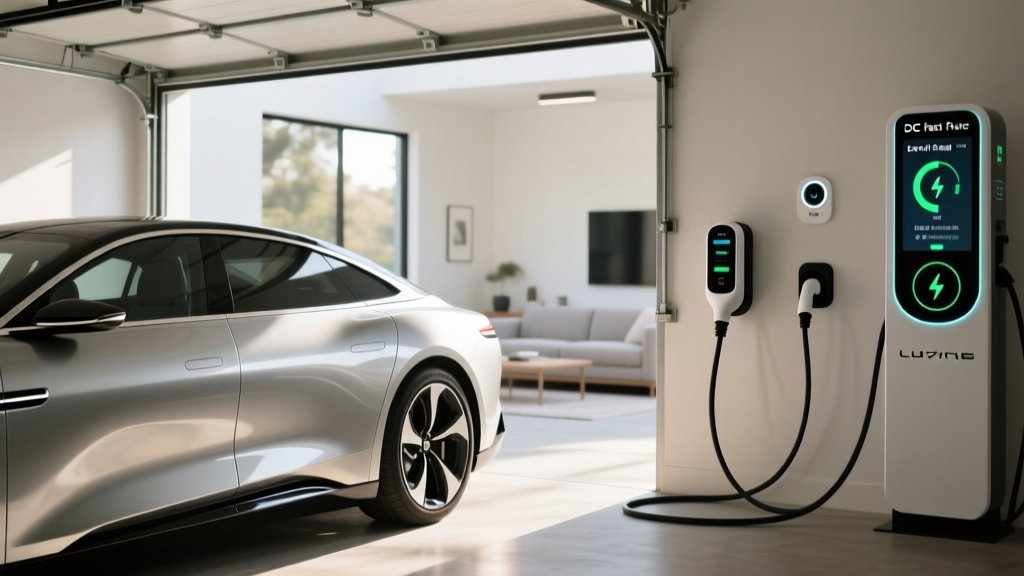
The Lucid Air Pure's 19.2 kW onboard charger is one of the most powerful in any production EV. Most home chargers deliver 9.6–11.5 kW, meaning the Air Pure can accept roughly double what typical residential equipment provides — if your electrical panel supports it.
Home Charger Installation: Electrical Requirements and Costs
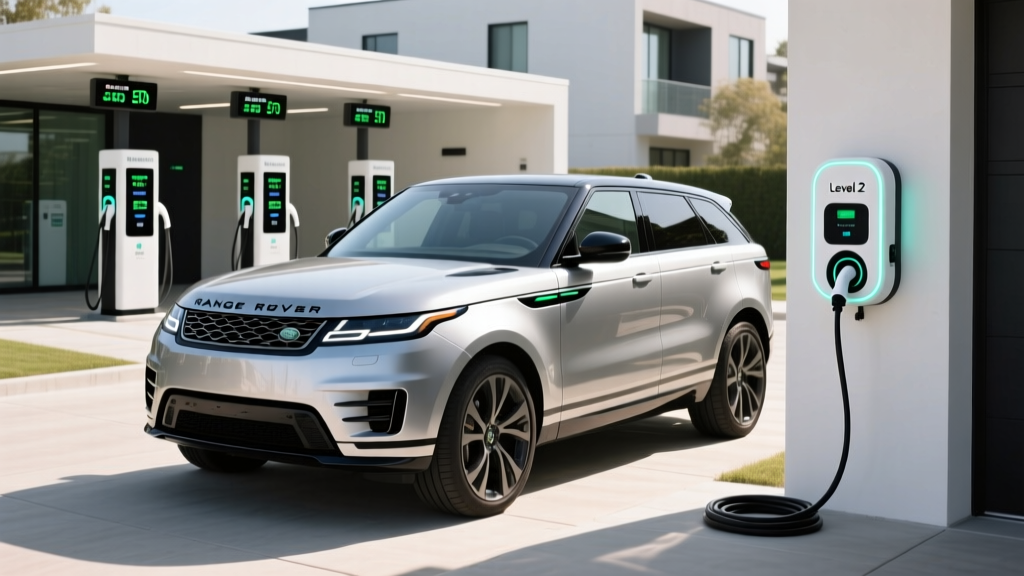
Installing a Level 2 home charger for the Air Pure requires a dedicated 240V circuit. The circuit amperage determines your charging speed and installation complexity.
Electrical Requirements by Charger Size
- 40A circuit (9.6 kW charger): Requires a 50A breaker (NEC rule: continuous loads capped at 80% of breaker rating). Sufficient for most daily driving — adds ~43 miles per hour, refilling the 88 kWh battery in roughly 9–10 hours from empty.
- 48A circuit (11.5 kW charger): Requires a 60A breaker. Adds ~52 miles per hour. Common "sweet spot" for modern homes with 200A panels.
- 80A circuit (19.2 kW charger): Requires a 100A breaker. Adds ~86 miles per hour. Unlocks the Air Pure's full onboard charging capability but demands a robust electrical panel — typically 200A service minimum, often requiring 300–400A for homes with other high-draw appliances.
Panel Upgrade Reality
Homes built before 2000 often have 100A or 150A main panels. Adding an 80A EV circuit to a 100A panel is usually impossible without a panel upgrade to 200A or higher. Even 200A panels may need a load calculation to confirm headroom. A licensed electrician will perform this assessment before recommending circuit size.
Installation Cost Breakdown
| Component | Cost Range | Notes |
|---|---|---|
| Level 2 Charger Equipment | $400–$1,200 | Varies by kW output, cable length, smart features |
| Electrician Labor (40–60A install) | $600–$1,800 | Depends on run distance, conduit, drywall work |
| Electrical Permit | $50–$250 | Varies by municipality |
| Panel Upgrade (if needed) | $1,500–$4,000+ | 200A upgrade; 400A service significantly more |
| Total (no panel upgrade) | $1,050–$3,250 | Most common scenario |
| Total (with panel upgrade) | $2,550–$7,250+ | Older homes or high-power 80A installs |
Connector Compatibility: NACS, CCS1, and Adapter Needs
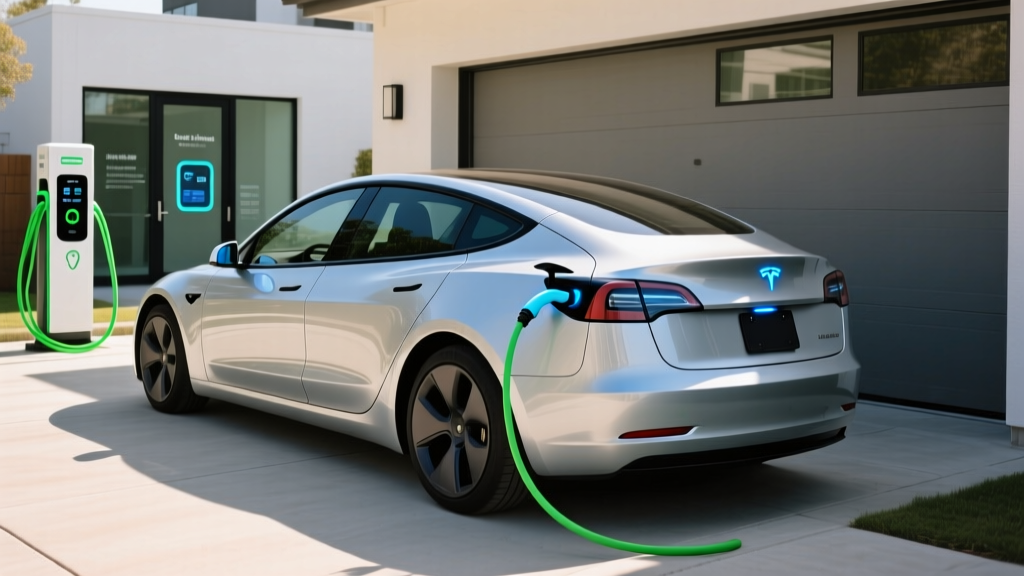
The Lucid Air Pure currently ships with a CCS1 (Combined Charging System) port for DC fast charging and a J1772 inlet for Level 2 AC charging. However, the North American Charging Standard (NACS), developed by Tesla, has become the dominant connector for new EVs starting in 2025-2026.
| Connector | Use Case | Lucid Air Pure Status |
|---|---|---|
| J1772 | Level 1 & Level 2 AC charging | Native (standard inlet) |
| CCS1 | DC fast charging | Native (standard inlet) |
| NACS (Tesla) | DC fast charging (Superchargers) | Adapter required (Lucid offers NACS adapter); future model years may adopt natively |
| CHAdeMO | Legacy DC fast charging | Not supported; adapter not available |
Adapter strategy: Lucid offers a NACS-to-CCS adapter (~$200–$250) that unlocks access to Tesla Supercharger stations — the most reliable and widespread DC fast-charging network in North America with over 25,000 stalls. For road trips, this adapter is strongly recommended. At home, your Level 2 charger's J1772 connector plugs directly into the Air Pure without any adapter.
Equipment Recommendations: Level 2 Chargers for the Air Pure
The Air Pure's 19.2 kW onboard charger means you can benefit from higher-amperage home chargers that would bottleneck other EVs. Here are three tiers matched to different electrical setups:
Budget Pick: ChargePoint Home Flex (50A config)
- Power Output: Up to 12 kW (50A, configurable down to 16A)
- Connector: J1772 (25-foot cable)
- Smart Features: Wi-Fi, app scheduling, energy tracking, Alexa integration
- Price: ~$550 (unit only)
- Best For: Homes with 200A panels where a 60A breaker is feasible. Delivers ~54 miles/hour to the Air Pure.
Best Value: Emporia Vue Level 2 Charger (48A)
- Power Output: 11.5 kW (48A hardwired)
- Connector: J1772 (24-foot cable)
- Smart Features: Wi-Fi, load management (pairs with Emporia energy monitor to avoid panel overload), scheduling
- Price: ~$400 (unit only)
- Best For: Cost-conscious buyers who want smart load management without a panel upgrade. ~52 miles/hour.
Max Performance: Wallbox Pulsar Max (80A capable)
- Power Output: Up to 19.2 kW (80A, requires 100A breaker)
- Connector: J1772 (25-foot cable)
- Smart Features: Wi-Fi, Bluetooth, app control, Power Sharing (distributes load across two chargers on one circuit)
- Price: ~$750 (unit only)
- Best For: Homes with 300–400A service that want to fully exploit the Air Pure's 19.2 kW onboard charger. Delivers ~86 miles/hour — a full charge in under 5 hours.
Charging Cost Per Mile: Home vs. Public vs. Gas
The Air Pure's 4.5 mi/kWh efficiency makes it one of the cheapest luxury sedans to fuel. Here's how costs break down across charging scenarios compared to a gas equivalent (BMW 5 Series at 27 MPG combined, $3.50/gallon):
| Scenario | Cost per kWh | Cost Per Mile (Air Pure) | Cost Per Mile (Gas, 27 MPG) |
|---|---|---|---|
| Home (off-peak utility rate) | $0.10–$0.14 | $0.022–$0.031 | $0.130 |
| Home (standard utility rate) | $0.16–$0.22 | $0.036–$0.049 | $0.130 |
| Public Level 2 (ChargePoint, EVgo) | $0.25–$0.45 | $0.056–$0.100 | $0.130 |
| DC Fast Charging (Electrify America, Tesla) | $0.35–$0.55 | $0.078–$0.122 | $0.130 |
The math: At a national average home electricity rate of ~$0.17/kWh (U.S. EIA), charging the Air Pure costs roughly $0.038 per mile — about 70% less than a comparable gas sedan. Even at DC fast-charging prices, the Air Pure undercuts gasoline on a per-mile basis in most markets.
For a 15,000-mile annual commute, home charging costs approximately $570–$735 per year versus $1,944 for the gas equivalent — a savings of $1,200–$1,370 annually.
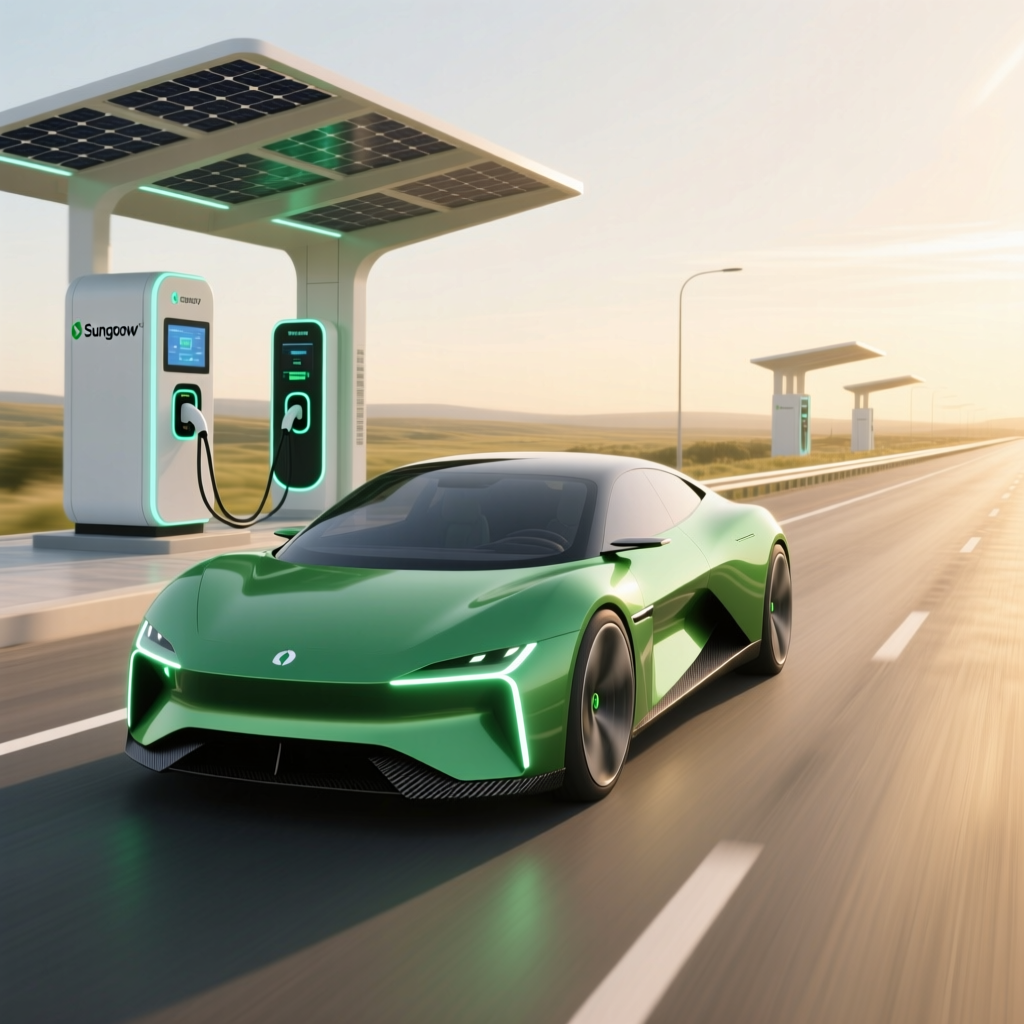
DC Fast Charging: Real-World 10–80% Times and Charge Curve
The Lucid Air Pure peaks at approximately 200 kW on DC fast chargers, but like all EVs, it doesn't sustain peak power across the entire session. The charge curve tapers significantly above 80% state of charge (SoC) to protect battery longevity.
Typical DC Fast Charging Session (200 kW capable station)
- 10–50% SoC: Sustains near-peak ~180–200 kW. Adds roughly 180 miles in ~12 minutes.
- 50–80% SoC: Tapers to ~100–140 kW. Adds another ~130 miles in ~13 minutes.
- 10–80% total: ~25–30 minutes under ideal conditions (battery preconditioned, station not power-shared).
- 80–100% SoC: Drops to <50 kW. Adds final ~90 miles in ~25+ minutes. Avoid unless necessary.
Federal Tax Credit and Home Charging Incentives
The IRS §30D Clean Vehicle Credit offers up to $7,500 for qualifying new EVs, though the Lucid Air Pure's MSRP (starting ~$70,000+) exceeds the $55,000 sedan cap for the new-vehicle credit. However, buyers may still benefit from:
- Used EV Credit (§25E): Up to $4,000 for qualifying pre-owned Air Pure models (MSRP cap $25,000 — unlikely to apply given current resale values).
- Home Charging Infrastructure Credit (§30C): Up to $1,000 (30% of cost) for home charger equipment and installation, valid through 2032. Requires installation in a qualifying census tract.
- State/Utility Rebates: Many utilities offer $250–$1,000 rebates for Level 2 charger installation. Check with your local provider.
Eligibility for any federal credit depends on buyer income limits, battery component sourcing, and MSRP caps. Consult a tax professional and verify current-year rules at fueleconomy.gov before purchasing.
Frequently Asked Questions
How much does it cost to install a home EV charger for the Lucid Air Pure?
A typical 40–60A Level 2 installation costs $1,050–$3,250 including the charger unit, electrician labor, and permit — assuming no panel upgrade is needed. If your home requires a 200A panel upgrade (common in pre-2000 homes), add $1,500–$4,000+. For a full-power 80A install exploiting the Air Pure's 19.2 kW onboard charger, expect $2,000–$4,500 without a panel upgrade.
How fast will each charging level add range to the Air Pure?
Level 1 (120V) adds ~6 miles per hour — impractical for daily use on an 88 kWh battery. Level 2 at 9.6 kW (40A) adds ~43 miles/hour; at 19.2 kW (80A) it adds ~86 miles/hour. DC fast charging at 200 kW can add up to 900 miles per hour at peak, though the charge curve tapers after 50% SoC.
Which connector does the Lucid Air Pure use, and do I need an adapter?
The Air Pure uses a CCS1 port for DC fast charging and J1772 for Level 2 AC charging — both native. For Tesla Supercharger access (the largest fast-charging network), you'll need Lucid's NACS-to-CCS adapter (~$200–$250). No adapter is needed for home Level 2 charging.
How much does charging the Air Pure cost per mile versus a gas car?
At average home electricity rates (~$0.17/kWh), the Air Pure costs about $0.038/mile to fuel — roughly 70% less than a 27 MPG gas sedan at $3.50/gallon ($0.13/mile). Even DC fast charging at $0.45/kWh costs ~$0.10/mile, still undercutting gasoline. Annual savings for a 15,000-mile driver: $1,200–$1,370.
What electrical upgrades might I need for a Level 2 charger?
You'll need a dedicated 240V circuit (50A breaker for a 40A charger, 60A for 48A, 100A for 80A). Homes with 100A or 150A main panels often require a panel upgrade to 200A+ — especially for high-power 80A installs. A licensed electrician will perform a load calculation to determine if your existing panel has sufficient headroom or needs replacement. This is the single largest variable in installation cost.
Is the Lucid Air Pure's 419-mile EPA range realistic?
For mixed city/highway driving in moderate temperatures, 380–410 miles is achievable. Sustained highway driving at 70+ mph typically yields 340–370 miles. In freezing weather, expect 280–320 miles due to increased battery resistance and cabin heating demand. The Air Pure's heat pump and industry-leading efficiency (4.5 mi/kWh) help it retain more range in adverse conditions than most competitors.