If you own a Lucid Air — or are considering one — access to Tesla's Supercharger network is likely high on your priority list. Lucid began shipping its official NACS (North American Charging Standard) adapter to Air owners, unlocking over 20,000 Tesla Supercharger stalls across North America. But how does the adapter actually perform, what does it cost, and what do you need to know before plugging in? This guide covers the Lucid Air NACS adapter in detail, along with the full charging picture for Air owners at home and on the road.
Why the Lucid Air NACS Adapter Matters
The Lucid Air uses a CCS1 (Combined Charging System) port as its native DC fast-charging connector. When the Air launched, CCS was the dominant non-Tesla standard, and networks like Electrify America and EVgo supported it natively. However, Tesla's Supercharger network remains the largest, most reliable DC fast-charging infrastructure in the US, with consistently higher uptime and easier plug-and-charge authentication than most CCS networks.
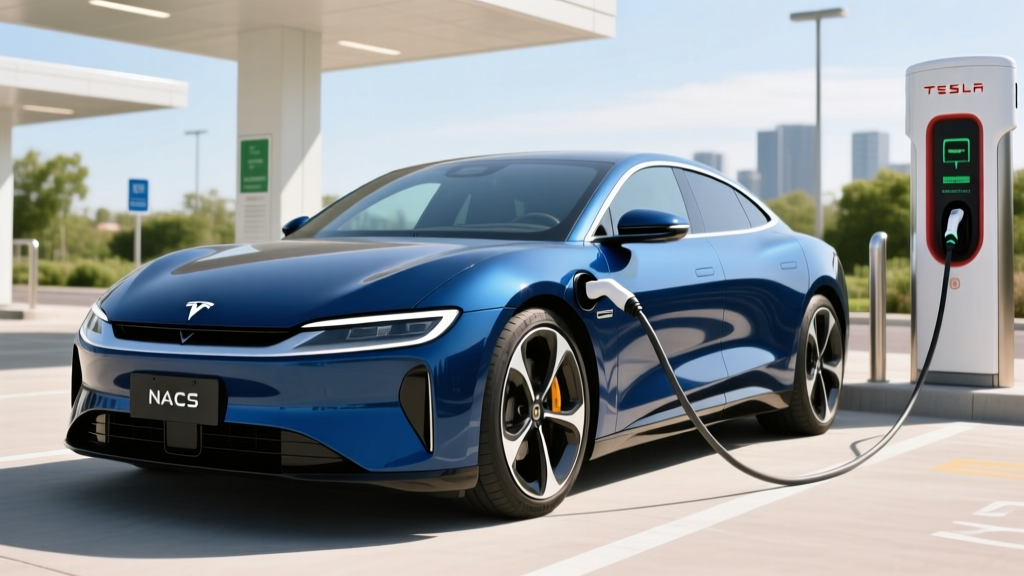
With the industry's 2024–2025 shift toward NACS as the de facto North American standard, nearly every major automaker — Ford, GM, Rivian, Hyundai, Kia, BMW, and others — committed to NACS adoption. Lucid followed suit, developing a proprietary CCS1-to-NACS adapter that allows Air owners to charge at V3 and V4 Tesla Superchargers.
The adapter is a passive, plug-in dongle: you attach it to your Lucid Air's CCS1 charge port, then plug a NACS-terminated Tesla Supercharger cable into the adapter's NACS receptacle. No software update or vehicle configuration is required beyond ensuring your Air's firmware is current.
Charging Speeds: What to Expect With the Adapter
The Lucid Air's DC fast-charging capability varies by trim and battery pack. The Air Grand Touring (112 kWh usable battery, NMC chemistry) can accept up to approximately 250 kW at peak, while the Air Pure and Touring (88 kWh usable) peak around 200–220 kW. Critically, the CCS1-to-NACS adapter does not bottleneck these speeds — the adapter is rated for the full current the Supercharger can deliver.
Here's a realistic breakdown of charging speeds at each level for Lucid Air owners:
| Charging Level | Power (kW) | Voltage / Amperage | Approx. Miles Added per Hour | Typical Use Case |
|---|---|---|---|---|
| Level 1 (120V AC) | ~1.4 kW | 120V / 12A | ~4–5 mi/hr | Emergency trickle; not practical for daily use |
| Level 2 (240V AC) | 7.7–19.2 kW | 240V / 32–80A | ~25–65 mi/hr | Home daily charging; workplace; public L2 |
| DC Fast (CCS1 native) | Up to 250 kW peak | 400V+ DC | ~200+ mi in 15 min (10–80%) | Road trips via Electrify America, EVgo |
| DC Fast (NACS adapter at Tesla V3) | Up to 250 kW peak | 400V+ DC | ~200+ mi in 15 min (10–80%) | Road trips via Tesla Supercharger network |
| DC Fast (Tesla V4 Supercharger) | Up to 250+ kW | Higher-voltage DC | Similar to V3 for Air | Newer Tesla stalls with integrated CCS/NACS |
Connector Compatibility: NACS, CCS1, and the Adapter Landscape
Understanding connectors is essential for Lucid Air owners navigating today's mixed charging ecosystem. Here's how the landscape breaks down:
| Connector | Description | Lucid Air Compatibility |
|---|---|---|
| CCS1 (native) | Standard DC fast connector for non-Tesla EVs in North America | Native port — plug directly into Electrify America, EVgo, ChargePoint DC stalls |
| NACS (Tesla) | Tesla's proprietary connector, now the North American Charging Standard | Requires Lucid's official CCS1-to-NACS adapter for Tesla Supercharger access |
| J1772 | Standard Level 1/Level 2 AC connector in North America | Native for AC charging; all Lucid Airs ship with a J1772 inlet |
| CHAdeMO | Legacy DC fast connector (Nissan Leaf, older vehicles) | Not compatible — no adapter available; irrelevant for Air owners |
Lucid's official adapter is the recommended path. Third-party CCS-to-NACS adapters from brands like Lectron and A2Z exist, but Lucid has validated its own adapter for thermal management, communication protocol handshakes, and safety interlocks specific to the Air's charge controller. Using an unvalidated adapter risks communication errors, reduced charge speeds, or — in rare cases — port damage that may not be covered under Lucid's vehicle warranty.
How Much Does the Lucid Air NACS Adapter Cost?
Lucid has offered the NACS adapter to Air owners at varying price points depending on the purchase window. Early adopters who pre-ordered received the adapter at no cost or at a subsidized rate. As of 2025–2026, the adapter is available through Lucid's accessories store, typically priced in the range of $200–$250. Check Lucid's official accessories page or your Lucid app for current availability and pricing.
Compare this to third-party adapters, which generally sell for $150–$200. The premium for the OEM adapter buys you validated firmware communication, warranty coverage, and the assurance that high-current DC sessions won't trigger fault codes on your Air's battery management system.
Home Charging Setup: Electrical Requirements and Installation Costs
While the NACS adapter unlocks public DC fast charging, the vast majority of your Lucid Air charging will happen at home on Level 2. The Air's onboard charger accepts up to 19.2 kW (240V / 80A) on higher trims, making it one of the fastest AC-charging EVs on the market. To take full advantage, you'll need a properly sized home charging circuit.
Electrical Requirements
For maximum Level 2 speed, the Lucid Air requires a dedicated 100-amp circuit (which delivers 80 amps continuous to the vehicle, per the National Electrical Code's 80% rule for continuous loads). However, most homes don't have spare 100A capacity. Here are realistic configurations:
- 48A charger on a 60A circuit: Delivers ~11.5 kW — adds roughly 38–40 miles of range per hour. The most common high-power home setup.
- 40A charger on a 50A circuit: Delivers ~9.6 kW — adds roughly 32 miles per hour. Works in most homes with a 200A service panel.
- 32A charger on a 40A circuit: Delivers ~7.7 kW — adds roughly 25 miles per hour. Adequate for overnight charging of the Air Pure/Touring.
Panel Upgrade Considerations
If your home has a 100-amp main service panel (common in older construction), adding a 60A EV circuit may require a panel upgrade to 200A. This is one of the most significant — and often overlooked — costs in home EV charger installation. A panel upgrade typically runs $1,500–$3,000 depending on your utility, local code, and whether a new meter base is needed.
Homes with existing 200A panels usually have sufficient headroom for a 40–60A EV circuit, but a licensed electrician must perform a load calculation per NEC Article 220 to confirm.
Installation Cost Breakdown
| Component | Cost Range | Notes |
|---|---|---|
| Level 2 Charger (hardware) | $400–$800 | Varies by brand, power output, cable length, smart features |
| Electrician labor (standard install) | $500–$1,500 | Assumes panel is nearby, conduit run under 30 ft |
| Electrical panel upgrade (if needed) | $1,500–$3,000 | 100A to 200A service upgrade; varies by utility requirements |
| Permit and inspection | $100–$400 | Required in most jurisdictions; fee varies by municipality |
| Total (no panel upgrade) | $1,000–$2,700 | Typical scenario for newer homes with 200A service |
| Total (with panel upgrade) | $2,500–$5,700 | Older homes needing service upgrade |
Always hire a licensed electrician familiar with EV charger installations. The circuit must be dedicated (no shared loads), properly grounded, and protected by a GFCI breaker if installed outdoors per NEC 2023 requirements. For outdoor installations, ensure the charger carries a NEMA 4 or IP65 weather-resistance rating.
Recommended Level 2 Chargers for the Lucid Air
Because the Lucid Air supports up to 19.2 kW AC charging, pairing it with an undersized charger leaves performance on the table. Here are three chargers matched to the Air's capabilities:
ChargePoint Home Flex
- Power Output: Up to 12 kW (50A, configurable down to 16A)
- Connector: J1772 (native for Lucid Air AC charging)
- Cable Length: 23 feet
- Smart Features: Wi-Fi connected, app scheduling, Alexa integration, energy tracking
- Price: ~$550–$650
- Best For: Most Air owners who don't need max 19.2 kW; reliable, well-supported platform
Grizzl-E Smart
- Power Output: Up to 11.5 kW (48A on a 60A circuit)
- Connector: J1772
- Cable Length: 24 feet
- Smart Features: Wi-Fi, OCPP-compatible, adjustable amperage, built-in overload protection
- Price: ~$450–$550
- Best For: Budget-conscious buyers wanting robust build quality; Canadian-made, extreme-weather rated
Emporia Vue Level 2 Charger
- Power Output: Up to 11.5 kW (48A) or up to 19.2 kW (80A model available)
- Connector: J1772
- Cable Length: 24 feet
- Smart Features: Wi-Fi, app-based scheduling, solar integration with Emporia energy monitor, load management
- Price: ~$400 (48A) / ~$700 (80A)
- Best For: Air Grand Touring owners who want to maximize the 19.2 kW onboard charger; solar-aware homes
Charging Cost Per Mile: Lucid Air vs. Gasoline
The Lucid Air is among the most efficient luxury EVs ever built. The Air Pure achieves an EPA-rated 146 MPGe combined (approximately 23 kWh/100 miles), while the Air Grand Touring rates at 131 MPGe combined (~26 kWh/100 miles), per fueleconomy.gov. That efficiency translates directly into low per-mile fuel costs.
| Charging Scenario | Rate ($/kWh) | Cost per 100 Miles (Air Pure, 23 kWh) | Cost per 100 Miles (Grand Touring, 26 kWh) |
|---|---|---|---|
| Home off-peak (utility TOU rate) | $0.08–$0.12 | $1.84–$2.76 | $2.08–$3.12 |
| Home standard rate (national avg) | $0.16 | $3.68 | $4.16 |
| Public Level 2 (ChargePoint, EVgo L2) | $0.25–$0.39 | $5.75–$8.97 | $6.50–$10.14 |
| DC Fast Charging (Electrify America, EVgo DC) | $0.35–$0.56 | $8.05–$12.88 | $9.10–$14.56 |
| Tesla Supercharger (via NACS adapter) | $0.25–$0.40 | $5.75–$9.20 | $6.50–$10.40 |
Gasoline comparison: A comparable luxury sedan achieving 25 MPG combined at $3.50/gallon costs $14.00 per 100 miles. Even DC fast charging the Lucid Air is typically cheaper per mile than gasoline, and home charging is dramatically less expensive — often 75–85% cheaper per mile.
Tesla Supercharger pricing varies by location and time of day. In most US markets, V3 Superchargers charge between $0.25–$0.40 per kWh. Lucid Air owners using the NACS adapter pay the same rates as Tesla vehicle owners — there is no surcharge for non-Tesla vehicles at Superchargers that support NACS adapter access. (Note: Tesla's "Magic Dock" CCS-equipped Superchargers, which were part of an earlier NNEV program, charged a premium; the NACS adapter path avoids this.)
Safety and Electrical Code Considerations
EV charger installations carry specific safety requirements that differ from standard household circuits:
- Dedicated circuit: Your Level 2 charger must be on its own dedicated breaker — no shared outlets or daisy-chained loads.
- GFCI protection: NEC 2023 requires GFCI protection for all outdoor receptacles and EV charging equipment. Hardwired chargers (which most high-power installations use) may be exempt in some jurisdictions — confirm with your local AHJ (Authority Having Jurisdiction).
- Outdoor rating: If your charger is mounted outdoors or in an unconditioned garage, it must carry at minimum a NEMA 3R or IP54 rating. NEMA 4 / IP65 is preferred for full weather protection.
- Wire gauge: A 60A circuit requires 6 AWG copper wire; a 100A circuit (for 80A continuous) requires 2 AWG copper. Your electrician will size this per NEC Table 310.15.
- Permit and inspection: Virtually all jurisdictions require an electrical permit for EV charger installation. Unpermitted work can void homeowner's insurance claims and create safety hazards.
For the NACS adapter itself, treat it as you would any high-current electrical connector: keep the contacts clean and dry, store it in a protective case when not in use, and inspect it periodically for signs of heat discoloration or pin damage. Lucid's adapter includes thermal sensors that will throttle or halt charging if the connection overheats.
Lucid Air Charging FAQ
How much does it cost to install a home EV charger for a Lucid Air?
A typical Level 2 home installation with a 60A circuit and no panel upgrade costs $1,000–$2,700 including equipment, electrician labor, and permit. If your home requires a 200A panel upgrade, total costs can reach $2,500–$5,700. Always get at least two quotes from licensed electricians.
How fast will each charging level add range to my Lucid Air?
Level 1 (120V) adds roughly 4–5 miles per hour — impractical for daily use. Level 2 (240V, 48A) adds about 38–40 miles per hour, easily replenishing a full overnight charge. DC fast charging at 250 kW can add approximately 200 miles in 15 minutes under ideal conditions, tapering as the battery approaches full.
Which connector and charger are compatible with my Lucid Air?
The Lucid Air uses a J1772 inlet for AC Level 1/2 charging and a CCS1 port for DC fast charging. For Tesla Supercharger access, you need Lucid's official CCS1-to-NACS adapter. Any J1772 Level 2 charger will work for home and public AC charging.
How much does charging a Lucid Air cost per mile versus gas?
At home on average electricity rates ($0.16/kWh), the Air Pure costs about $0.037 per mile — roughly 75% less than a 25 MPG gas car at $3.50/gallon ($0.14/mile). Even public DC fast charging at $0.48/kWh averages about $0.11 per mile, still below gasoline.
What electrical upgrades might I need for a home charger?
Homes with 200A electrical service usually accommodate a 40–60A EV circuit without upgrades. Older homes with 100A service panels often require a panel upgrade to 200A ($1,500–$3,000). Your electrician will perform an NEC Article 220 load calculation to determine your home's available capacity.
Does using the NACS adapter void my Lucid Air warranty?
No. Lucid's official NACS adapter is a supported accessory. However, damage caused by third-party, non-OEM adapters may not be covered under the vehicle's battery and drivetrain warranty (8 years / 100,000 miles for the battery pack, 8 years / unlimited miles for the drivetrain).
Can I use Tesla destination chargers with the NACS adapter?
Tesla Destination Chargers (Level 2, NACS-terminated wall connectors at hotels and restaurants) can be used with the Lucid Air NACS adapter. However, some older Destination Chargers are configured for Tesla-only communication and may not initiate a session with non-Tesla vehicles. Always check the charger's status in the Tesla app or PlugShare before relying on one.