The Lucid Air Grand Touring posts an EPA range of 516 miles — the highest of any production sedan on sale today. But range is only half the ownership equation. A 112 kWh usable battery pack (NMC chemistry) demands a home charging setup that can actually replenish it overnight, and a DC fast-charging strategy that respects the car's peak 300+ kW architecture. This guide breaks down exactly what it takes to charge a Lucid Air Grand Touring at home, in public, and on the road, with real costs and equipment picks for 2026.
Lucid Air Grand Touring Range: EPA vs. Real World
Real-World Highway (70 mph, moderate climate): ~410–440 miles
Real-World Cold Weather (30°F, highway): ~340–380 miles
Efficiency: 131 MPGe combined / 26 kWh per 100 miles
Lucid's Wunderbox electrical architecture operates at 900V nominal, which is what enables both the class-leading efficiency and the rapid DC charge acceptance. On the highway at 75 mph in mild weather, expect to consume roughly 27–29 kWh/100mi. In cold weather, resistive cabin heating and battery thermal management can push consumption above 33 kWh/100mi and reduce regenerative braking effectiveness.
For context on the Air lineup, the EPA's fueleconomy.gov database confirms the Grand Touring's 516-mile figure on the 19-inch wheel configuration. The 21-inch wheel option drops EPA range to approximately 485 miles — a meaningful trade-off for aesthetics.
Charging Levels Explained: How Fast Can You Add Range?
Before selecting equipment, you need to understand the three charging tiers and how they interact with the Air Grand Touring's 112 kWh battery. Note: kW (kilowatts) measures power — the rate of energy delivery. kWh (kilowatt-hours) measures energy — the battery's total capacity. Think of kW as the flow rate of a hose and kWh as the size of the bucket.
| Level | Power (kW) | Voltage / Amperage | Miles of Range Added per Hour | Full 10–80% Time |
|---|---|---|---|---|
| Level 1 (120V outlet) | ~1.4 kW | 120V / 12A | ~4–5 mi/hr | ~65+ hours (impractical) |
| Level 2 (240V home) | 11.5 kW (Air's onboard limit) | 240V / 48A | ~37–40 mi/hr | ~13–14 hours (10–80%) |
| DC Fast Charge | Up to 300+ kW peak | 400–900V DC | ~200+ mi in 15 min | ~15–20 min (10–80% on 350 kW) |
The Air Grand Touring's onboard AC charger accepts up to 19.2 kW on 2025+ models (up from earlier 11.5 kW units), but most residential Level 2 circuits deliver 11.5 kW (48A) or 9.6 kW (40A). At 19.2 kW AC, you'd need a dedicated 100A circuit — feasible but expensive.
Home Charging Installation: Requirements, Costs & Gotchas
Electrical Requirements for Level 2 Home Charging
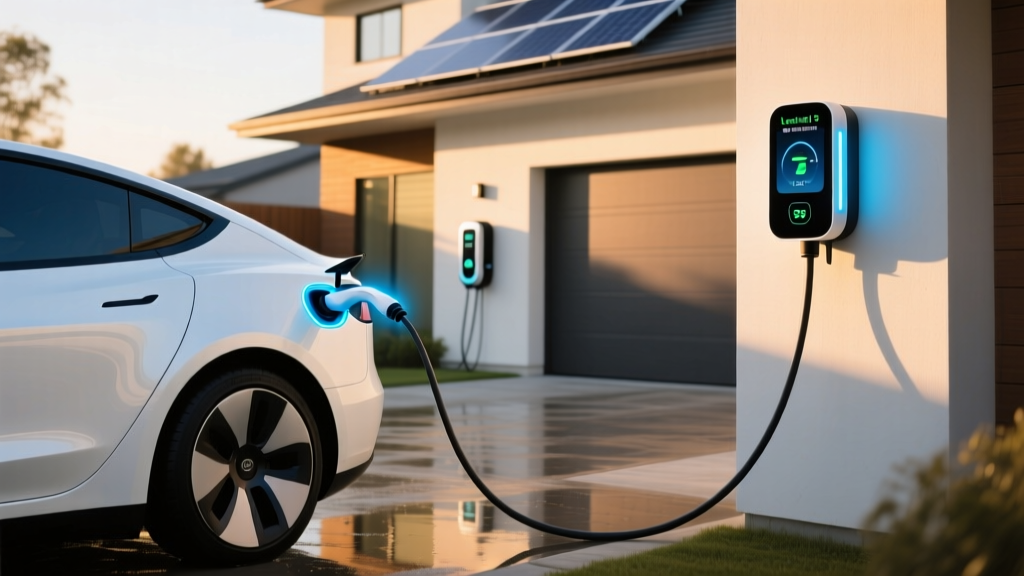
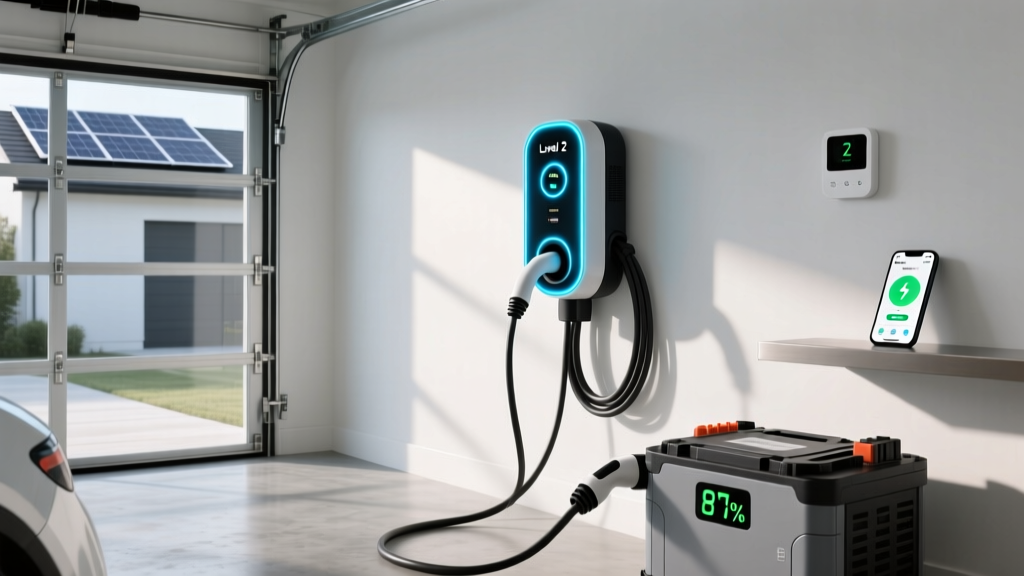
To extract the most from your Air Grand Touring at home, target a 240V / 60A circuit (which delivers ~48A continuous to the car, or 11.5 kW). The National Electrical Code requires circuits to be rated 125% above continuous load, so a 48A charge requires a 60A breaker.
- Minimum practical: 240V / 40A circuit → 9.6 kW → ~31 mi/hr
- Recommended: 240V / 60A circuit → 11.5 kW → ~37 mi/hr
- Maximum (requires panel headroom): 240V / 100A circuit → 19.2 kW → ~62 mi/hr
Panel Upgrade Reality Check
Many homes built before 2000 have 100A or 150A main panels. Adding a 60A EV circuit to an already-loaded 100A panel will almost certainly require a panel upgrade to 200A, which costs $1,500–$3,500 on its own. Homes with 200A panels typically have enough headroom, but a licensed electrician must perform a load calculation per NEC Article 220 before pulling a permit.
Installation Cost Breakdown
| Component | Simple Install (panel nearby) | Complex Install (long run / upgrade) |
|---|---|---|
| Level 2 charger hardware | $500–$700 | $500–$700 |
| Electrician labor (2–4 hrs typical) | $300–$800 | $1,200–$2,500 |
| Electrical permit | $50–$150 | $50–$200 |
| Panel upgrade (if needed) | N/A | $1,500–$3,500 |
| Conduit, wiring, misc. materials | $50–$150 | $200–$600 |
| TOTAL | $900–$1,800 | $3,450–$7,500 |
Tip: The federal Alternative Fuel Vehicle Refueling Property Credit (IRS §30C) covers up to 30% of home charger hardware and installation costs (capped at $1,000) for eligible taxpayers in qualifying census tracts. Check your eligibility with a tax professional before filing.
Connector Compatibility: NACS, CCS & Adapters for Lucid
Lucid ships the Air Grand Touring with a CCS1 (Combo) charge port as standard. However, Lucid has announced NACS adoption for future models, and current owners can access Tesla Superchargers via a CCS-to-NACS adapter.
| Connector Type | Native Support? | Networks Available | Adapter Needed? |
|---|---|---|---|
| CCS1 (Combo) | Yes — native port | Electrify America, EVgo, ChargePoint, Ionity | None |
| NACS (Tesla) | No (2026 MY) | Tesla Supercharger (17,000+ stalls US) | Yes — CCS-to-NACS adapter (~$200–$250) |
| CHAdeMO | No | Legacy (declining) | Not recommended |
| J1772 (Level 2 AC) | Yes — via CCS inlet | All home & public Level 2 | None (CCS includes J1772 upper coupler) |
For Lucid Air Grand Touring owners in 2026, the practical approach is to charge at home with any J1772/CCS Level 2 unit, use CCS-native DC fast chargers for road trips, and carry a CCS-to-NACS adapter for Supercharger access where CCS infrastructure is sparse. Lucid's in-dash navigation routes through both CCS and Supercharger networks when an adapter is registered in the vehicle's software.
DC Fast Charging: Real-World Speeds & the Charge Curve
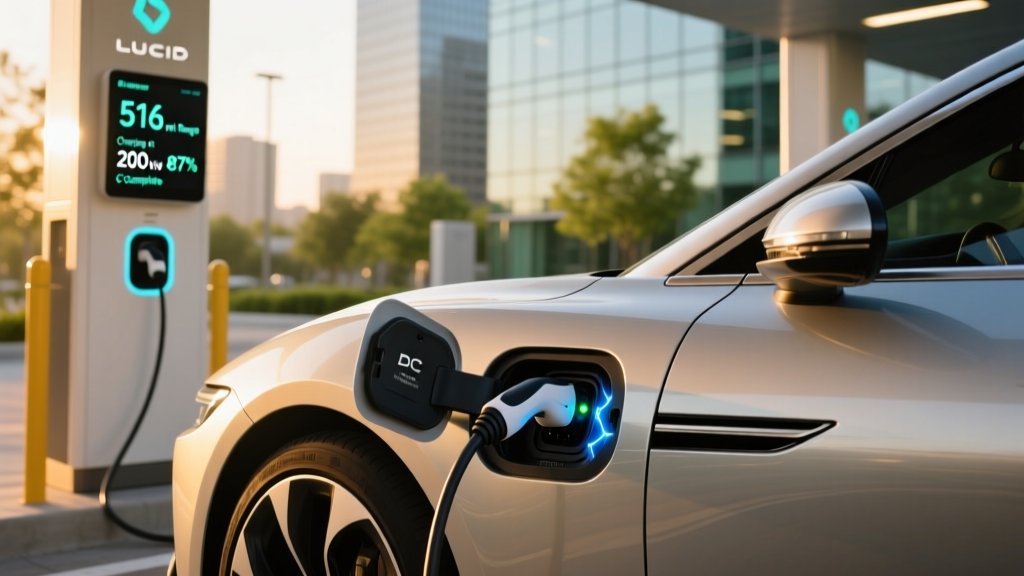
The Lucid Air Grand Touring's 900V architecture enables peak DC fast-charge rates above 300 kW at compatible 350 kW stations. However, peak rate is not sustained rate. Here's the real-world charge curve:
- 10% → 30% SoC: Sustains ~280–300 kW (fastest segment)
- 30% → 55% SoC: Tapers to ~220–250 kW
- 55% → 80% SoC: Drops to ~150–180 kW
- 80% → 100% SoC: Drops sharply to ~50 kW and below (avoid unless necessary)
Practical 10–80% charge time on a 350 kW EA or Tesla V4 stall: approximately 15–20 minutes, adding roughly 300–350 real-world miles. On a 150 kW station, expect 10–80% in roughly 40–50 minutes.
Charging Cost Per Mile: EV vs. Gas at 2026 Rates
| Scenario | Rate | Cost per Mile | Cost for 516-mi Tank/Fill |
|---|---|---|---|
| Home (off-peak, $0.12/kWh) | $0.12/kWh | $0.031 | $16.05 |
| Home (standard, $0.18/kWh) | $0.18/kWh | $0.047 | $24.26 |
| Public Level 2 ($0.30/kWh) | $0.30/kWh | $0.078 | $40.25 |
| DC Fast Charge ($0.48/kWh avg) | $0.48/kWh | $0.125 | $64.50 |
| Gas sedan (28 MPG, $3.40/gal) | $3.40/gal | $0.121 | ~$62.42 (18.4 gal) |
At the Air Grand Touring's consumption rate of ~26 kWh/100mi, home charging on an off-peak utility plan costs roughly $0.03/mile — less than one-quarter the cost of a comparable gas sedan. Even DC fast charging at premium rates roughly matches gasoline on a per-mile basis. Over 15,000 annual miles, home-charging exclusively saves approximately $1,300–$1,800 versus gas.
Recommended Home Chargers for the Lucid Air Grand Touring
Because the Air Grand Touring's onboard AC charger can accept up to 19.2 kW (2025+ models), pairing it with a high-output Level 2 unit maximizes overnight replenishment. Below are tested picks across budgets.
ChargePoint Home Flex
- Power: Up to 12 kW (240V/50A)
- Connector: J1772 (CCS-compatible)
- Cable: 23 ft
- Smart features: Wi-Fi, app scheduling, utility integration
- Price: ~$550–$650
- Best for: Most homes; flexible amperage via DIP switch
Tesla Wall Connector (Universal)
- Power: Up to 11.5 kW (240V/48A)
- Connector: NACS + J1772 adapter included
- Cable: 24 ft
- Smart features: Wi-Fi, OTA updates, Power-Share
- Price: ~$550–$600
- Best for: Mixed Tesla + non-Tesla households
Grizzl-E Smart
- Power: Up to 11.5 kW (240V/48A)
- Connector: J1772 (NACS version available)
- Cable: 24 ft
- Smart features: OCPP, app control, load balancing
- Price: ~$450–$550
- Best for: Outdoor installs (IP67 rated, -40°F to 122°F)
Emporia Vue Level 2
- Power: Up to 11.5 kW (240V/48A)
- Connector: J1772
- Cable: 24 ft
- Smart features: Energy monitoring, solar integration, scheduling
- Price: ~$400–$500
- Best for: Budget-conscious smart charging with energy tracking
All four units above are hardwired (recommended for 48A+ circuits) or NEMA 14-50 plug compatible. For 60A circuits, hardwired installation is required by NEC — a plug receptacle is limited to 80% of the circuit rating, meaning a 50A plug on a 60A breaker.
Safety & Code: What Your Electrician Needs to Get Right
- Dedicated circuit: Your EV charger must be on its own dedicated breaker — no shared loads with dryers, ranges, or HVAC.
- GFCI protection: NEC 2023+ requires GFCI protection for all 125V/250V receptacles used for EV charging in garages and outdoors. Hardwired units may be exempt depending on local code amendments.
- Outdoor rating: If mounting outside, ensure the unit carries an IP65 or higher ingress protection rating and a NEMA 4 enclosure.
- Wire gauge: A 60A circuit requires 6 AWG copper (THHN in conduit) or 4 AWG aluminum. Your electrician will size according to run length and voltage-drop calculations.
- Permit and inspection: Nearly all jurisdictions require an electrical permit for new 240V circuits. The inspection ensures proper grounding, breaker sizing, and code compliance — don't skip it. Unpermitted work can void homeowner's insurance coverage.
Frequently Asked Questions
How much does it cost to install a home EV charger for a Lucid Air?
A straightforward Level 2 install (short wire run, no panel upgrade) typically costs $900–$1,800 including hardware, labor, and permit. If your panel needs upgrading to 200A or the charger is far from the panel, costs can reach $3,500–$7,500. The federal §30C credit may offset up to $1,000 of that total.
How fast will each charging level add range to the Air Grand Touring?
Level 1 (120V) adds roughly 4–5 miles per hour — essentially useless for a 112 kWh pack. Level 2 at 11.5 kW (240V/48A) adds approximately 37–40 miles per hour, replenishing 10–80% overnight in about 13–14 hours. DC fast charging at a 350 kW station adds 200+ miles in 15 minutes, with 10–80% taking roughly 15–20 minutes.
Which connector does the Lucid Air Grand Touring use?
The Air uses a CCS1 (Combo) charge port natively. For Tesla Supercharger access, you'll need a CCS-to-NACS adapter ($200–$250). All Level 2 public and home chargers with J1772 connectors work with the CCS inlet.
How much does charging cost per mile vs. gas?
At home on off-peak rates ($0.12/kWh), the Air Grand Touring costs roughly $0.031 per mile. A comparable 28 MPG gas sedan at $3.40/gallon costs $0.12 per mile. Even at DC fast-charge rates ($0.48/kWh), the EV costs about $0.125/mile — roughly equal to gas but with zero tailpipe emissions.
What electrical upgrades might I need?
If your home has a 100A main panel, you'll likely need a 200A upgrade ($1,500–$3,500). Homes with 200A panels usually have enough headroom for a 60A EV circuit. A licensed electrician must perform a NEC Article 220 load calculation to determine your specific requirements. Older homes with knob-and-tube or aluminum branch wiring may need additional remediation.