The Lucid Air Dream Edition remains a benchmark for electric vehicle efficiency, pairing a massive 118 kWh usable battery pack with class-leading aerodynamics to deliver an EPA-estimated 520 miles of range. But owning a vehicle with this much battery capacity demands a charging strategy that matches its capability. Whether you're planning a home Level 2 installation or mapping public DC fast-charging stops, understanding the interplay between kW (charge rate) and kWh (energy stored) is essential to protecting your investment and maximizing real-world range.
This guide breaks down exactly how to charge a large-battery EV like the Lucid Air, covering home electrical requirements, connector compatibility, real-world costs, and the specific equipment we recommend for batteries over 100 kWh.
Understanding Charging Levels and Range Recovery Speeds
Before purchasing equipment, you need to understand the three charging tiers available to EV owners. The critical distinction: kW (kilowatts) measures the rate of energy flow — think of it as the width of a pipe — while kWh (kilowatt-hours) measures total energy stored, like gallons in a tank. A higher kW charger fills your kWh battery faster.
| Level | Voltage / Power | Typical kW Output | Miles of Range Per Hour | Best For |
|---|---|---|---|---|
| Level 1 | 120V / 12A | 1.4 kW | 3–5 mi/hr | Overnight trickle, PHEVs, emergency backup |
| Level 2 | 240V / 32–80A | 7.7–19.2 kW | 25–65 mi/hr | Daily home charging, workplace, destination |
| DC Fast | 400V–900V DC | 50–350 kW | 150–1,000+ mi/hr | Road trips, rapid top-ups, commercial fleets |
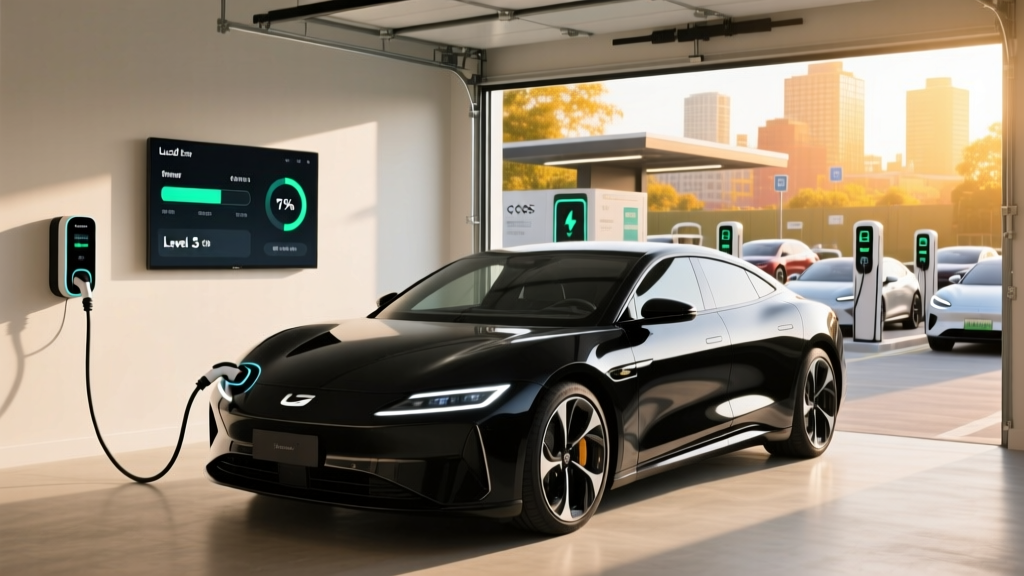
For a 118 kWh battery pack like the Lucid Air Dream Edition's, Level 1 charging is impractical as a primary source — recovering from 10% to 80% would take well over 70 hours. Level 2 at 11.5 kW (a common 48A home setup) accomplishes that same 10–80% fill in roughly 7.5 hours, ideal for overnight charging. DC fast charging at the Air's peak rate of approximately 300 kW (on a 900V-capable station) can push from 10–80% in about 20–25 minutes, though sustained rates taper significantly above 60% state of charge to protect battery health.
Home Charger Installation: Electrical Requirements and Costs
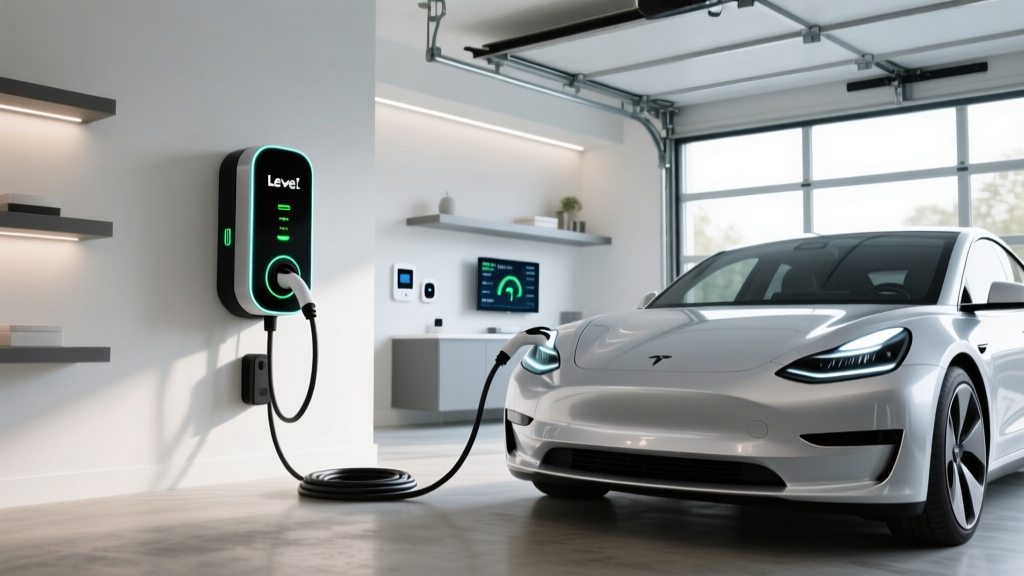
Installing a Level 2 home charger is the single most impactful upgrade for daily EV ownership. For large-battery vehicles like the Lucid Air, we recommend a minimum 48-amp (11.5 kW) hardwired station, though a 64-amp or 80-amp circuit unlocks faster overnight recovery if your electrical panel supports it.
Electrical Panel and Circuit Requirements
A 48A charger requires a dedicated 60-amp breaker (NEC code mandates circuits be rated at 125% of continuous load). An 80A charger requires a 100-amp breaker. Most modern homes with 200-amp service panels can accommodate a 60A circuit without a panel upgrade. However, older homes with 100-amp service or panels already near capacity may need a service upgrade — a significant added cost.
| Component | Low-End Estimate | High-End Estimate | Notes |
|---|---|---|---|
| Level 2 Charger Equipment (48A–80A) | $400 | $1,200 | Smart Wi-Fi chargers cost more; dumb units are cheaper |
| Electrician Labor (standard install) | $600 | $1,500 | Depends on run length from panel to garage/carport |
| Permit and Inspection | $100 | $400 | Required by most jurisdictions; varies by municipality |
| Panel Upgrade (if needed) | $1,500 | $4,000 | Upgrading from 100A to 200A service |
| Total (no panel upgrade) | $1,100 | $3,100 | Most common scenario for homes built after 2000 |
| Total (with panel upgrade) | $2,600 | $7,100 | Older homes or high-load panels |
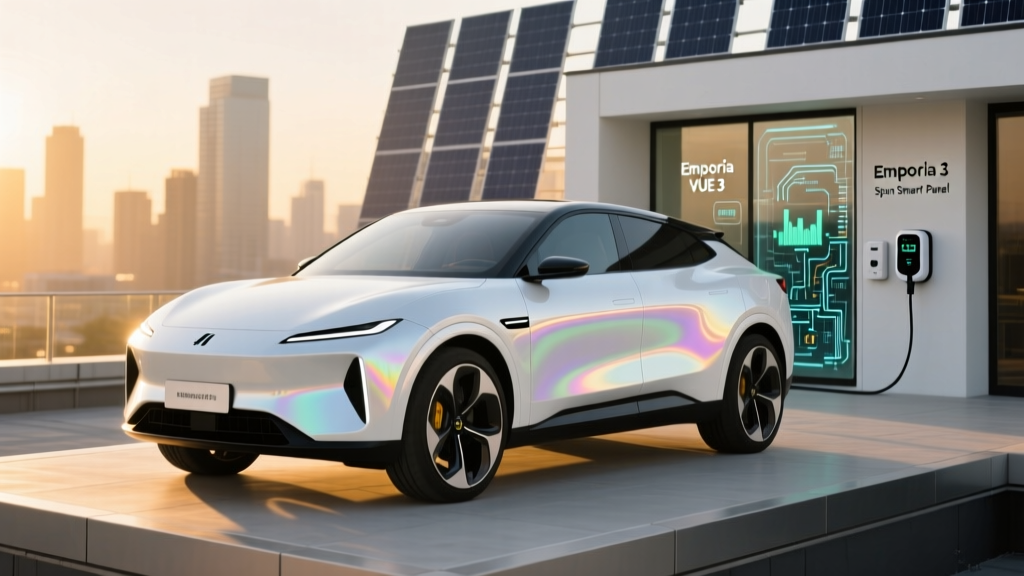
Key gotcha: Before hiring an electrician, have them perform a load calculation on your existing panel. If you already run electric HVAC, a dryer, an oven, and an EV charger simultaneously, a 200A panel may still be insufficient. Some homeowners opt for a smart panel or load-management device (like the Emporia Vue with automated load shedding) to avoid a full service upgrade.
Connector Compatibility: NACS, CCS, and the Lucid Air
The Lucid Air originally shipped with a CCS1 (Combined Charging System) port for DC fast charging and a J1772 inlet for Level 2 AC charging. However, as the industry shifts toward Tesla's North American Charging Standard (NACS), Lucid has confirmed that newer model years will transition to NACS. If you own an earlier Dream Edition with CCS, you'll need an adapter for Tesla Supercharger access.
| Connector | AC Level 2 | DC Fast | Vehicles Using It (2026) | Adapter Needed? |
|---|---|---|---|---|
| NACS (Tesla) | Yes (single port) | Yes | Tesla (all), Ford, GM, Rivian, Lucid (newer), Hyundai/Kia (newer) | CCS-to-NACS adapters available (~$200–$300) |
| CCS1 | J1772 + DC pins | Yes | VW, BMW, older Lucid, older Ford/GM, Stellantis | NACS-to-CCS adapter for Tesla Superchargers |
| CHAdeMO | J1772 + DC | Yes | Nissan Leaf, Mitsubishi (legacy, being phased out) | Limited future infrastructure support |
For Lucid Air Dream Edition owners with CCS ports, the critical adapter is a NACS-to-CCS1 adapter (such as those from Lectron or A2Z EV) to unlock Tesla Supercharger V3/V4 stations. Tesla has opened its network to non-Tesla EVs via adapter, and for a 118 kWh battery, Supercharger reliability is a major road-trip advantage. Confirm adapter compatibility with your specific model year before purchasing.
Charging Cost Per Mile: Home vs. Public vs. Gas
One of the strongest ownership arguments for a large-battery EV is the fuel cost savings — but only if you charge strategically. Public DC fast charging can approach or exceed the cost of gasoline per mile if used exclusively.
| Charging Scenario | Cost per kWh | Cost per Mile | Annual Cost (12,000 mi) |
|---|---|---|---|
| Home Off-Peak (utility time-of-use) | $0.09–$0.13 | $0.023–$0.033 | $276–$396 |
| Home Standard Rate | $0.14–$0.18 | $0.035–$0.045 | $420–$540 |
| Public Level 2 (ChargePoint, etc.) | $0.25–$0.40 | $0.063–$0.10 | $756–$1,200 |
| DC Fast Charging (Electrify America, EA Pass) | $0.35–$0.55 | $0.088–$0.138 | $1,056–$1,656 |
| Gasoline Equivalent (25 MPG avg, $3.40/gal) | — | $0.136 | $1,632 |
The Lucid Air's exceptional efficiency — approximately 4.0 miles per kWh (or ~135 MPGe combined per fueleconomy.gov) — means your cost per mile stays low even on public chargers. But the savings multiply dramatically with home off-peak charging. A full 10–80% home charge (roughly 83 kWh) at $0.12/kWh costs about $10 and yields over 330 real-world miles. That same distance on gasoline at 25 MPG would cost roughly $45.
Recommended Level 2 Home Chargers for Large-Battery EVs
Not all Level 2 chargers are created equal. For a 118 kWh battery, you want a unit that delivers at least 11.5 kW (48A), includes smart scheduling for off-peak rates, and offers a cable long enough to reach your charge port regardless of parking orientation. Here are our top picks as of 2026:
ChargePoint Home Flex (up to 50A / 12 kW)
- Power: Adjustable 16A–50A (3.8–12 kW)
- Connector: J1772 (NACS version available)
- Cable: 23 feet
- Smart Features: Wi-Fi, app scheduling, Alexa, load sharing
- Price: ~$550–$650
- Best For: Flexibility across amperages; strong app ecosystem
Wallbox Pulsar Plus (48A / 11.5 kW)
- Power: 48A fixed (11.5 kW on 240V)
- Connector: J1772 or NACS
- Cable: 25 feet
- Smart Features: Wi-Fi + Bluetooth, Power Sharing, Eco-Smart mode
- Price: ~$450–$550
- Best For: Compact size, outdoor-rated (NEMA 4), budget-conscious
Tesla Wall Connector (48A / 11.5 kW)
- Power: 48A (11.5 kW on 240V/60A circuit)
- Connector: NACS native (J1772 adapter included)
- Cable: 24 feet
- Smart Features: Wi-Fi, OTA updates, Power Sharing, access control
- Price: ~$450–$500
- Best For: NACS-native EVs, cleanest install, Tesla ecosystem
FLO Home X80 (80A / 19.2 kW)
- Power: 80A (19.2 kW — requires 100A circuit)
- Connector: J1772 (NACS adapter available)
- Cable: 25 feet
- Smart Features: Wi-Fi, scheduled charging, load management
- Price: ~$1,000–$1,200
- Best For: Maximum AC speed on large packs; future-proofing
For Lucid Air Dream Edition owners who charge primarily overnight, a 48A/11.5 kW unit is sufficient — an 8-hour session adds roughly 280–320 miles of range, covering nearly any daily need. The 80A FLO unit makes sense if you regularly deplete the battery and need faster turnaround, but it demands a 100-amp dedicated circuit that most residential panels cannot support without an upgrade.
Safety, Code, and Installation Best Practices
EV charging equipment draws sustained high current for hours — this is not the same as plugging in a dryer for 45 minutes. The National Electrical Code (NEC Article 625) governs EV charging installations, and cutting corners here risks fire, insurance claim denial, or failed home inspections.
- Dedicated Circuit: Your Level 2 charger must have its own dedicated breaker — never share a circuit with other major appliances.
- GFCI Protection: NEC 2020 and later require GFCI (Ground Fault Circuit Interrupter) protection for all EV charging outlets. Hardwired units may have built-in GFCI; plug-in units need a GFCI breaker.
- Outdoor Rating: If your charger is mounted outside or in an open carport, it must carry a NEMA 4 or NEMA 4X weather rating. All four units recommended above meet this standard.
- Wire Gauge: A 60A circuit requires 6 AWG copper wire minimum; a 100A circuit requires 3 AWG. Your electrician will size this during the load calculation.
- Permit and Inspection: Most jurisdictions require an electrical permit for EV charger installations. Skipping this can void homeowner's insurance coverage for electrical fires.
Always hire a licensed electrician — not a handyman — for EV charger installation. Ask specifically about their experience with NEC Article 625 and EV load calculations.
Lucid Air Dream Edition: Key Specifications at a Glance
| Specification | Value |
|---|---|
| EPA Range | 520 miles (real-world highway: ~400–440 mi; cold weather: ~340–380 mi) |
| Battery Capacity | 118 kWh usable (NMC chemistry) |
| Efficiency | ~4.0 mi/kWh (135 MPGe combined) |
| Peak DC Fast Charge Rate | ~300 kW (900V architecture) |
| 10–80% DC Fast Charge Time | ~20–25 minutes (on 350 kW station) |
| Max AC Level 2 Rate | 19.2 kW (onboard charger) |
| 0–60 mph | 3.0 seconds (Dream Performance) / 3.4 sec (Dream Range) |
| Horsepower | 1,111 hp (Dream Performance) / 933 hp (Dream Range) |
| Charge Port | CCS1 (original); NACS (newer model years) |
| Battery/Powertrain Warranty | 8 years / 100,000 miles |
| Original MSRP (2022–2023) | $169,000 (Dream Range) / $169,000 (Dream Performance) |
The Lucid Air Dream Edition was produced in limited numbers (520 units total across Range and Performance trims). As a limited-production flagship, it is no longer available new from Lucid. Current buyers should explore the pre-owned market or consider the Lucid Air Grand Touring (516 miles EPA) or Pure (419 miles EPA) as current-production alternatives. For the latest Lucid lineup and pricing, check Lucid's official site.
Frequently Asked Questions
How much does it cost to install a home EV charger?
A typical Level 2 home charger installation runs $1,100–$3,100 when no panel upgrade is needed, covering the charger unit ($400–$1,200), electrician labor ($600–$1,500), and permits ($100–$400). If your home requires a panel upgrade from 100A to 200A service, add $1,500–$4,000. Always get a load calculation before committing to a specific amperage.
How fast will each charging level add range to my Lucid Air?
Level 1 (120V) adds roughly 3–5 miles per hour — impractical for a 118 kWh pack. Level 2 at 48A (11.5 kW) adds approximately 35–46 miles per hour, filling from 10–80% overnight in about 7–8 hours. DC fast charging at 300 kW can add over 200 miles in 15 minutes, though the charge curve tapers above 60% state of charge.
Which connector and charger are compatible with my Lucid Air?
Original Dream Edition models use a CCS1 DC port and J1772 AC inlet. Newer Lucid Air models have transitioned to NACS. Check your specific vehicle's charge port. For CCS-equipped cars, a NACS-to-CCS adapter (~$200–$300) unlocks Tesla Supercharger access. For home Level 2, any J1772 or NACS charger will work with the appropriate cable or adapter.
How much does charging cost per mile compared to gas?
At home on off-peak electricity ($0.12/kWh), the Lucid Air costs roughly $0.03 per mile — about 4.5× cheaper than a 25 MPG gas car at $3.40/gallon ($0.136/mile). Even on public DC fast chargers at $0.45/kWh, you're paying about $0.11/mile, still below gasoline. The key is maximizing home charging to capture the lowest rates.
What electrical upgrades might I need for a Level 2 charger?
The most common upgrade is a panel service increase from 100A to 200A, needed in older homes or those with many electric appliances. You may also need a new sub-panel if your main panel is full. Some utilities offer smart load-management programs that let you avoid a panel upgrade by automatically reducing charger draw when other appliances are running. Ask your electrician about NEC Article 220 load calculations and whether a load-management device makes sense for your home.
Does the Lucid Air Dream Edition qualify for a federal EV tax credit?
The Lucid Air Dream Edition originally retailed above $169,000, far exceeding the IRS §30D MSRP cap of $55,000 for sedans. It does not qualify for the new-vehicle federal tax credit. However, if purchasing used, you may be eligible for the used clean vehicle credit (up to $4,000 or 30% of sale price, whichever is less) if the vehicle sells for $25,000 or less — unlikely for a Dream Edition given current resale values. Always verify current IRS §30D eligibility rules with a tax professional, as sourcing, income caps, and MSRP limits apply.