Why PHEV Charging Is Different (and Simpler) Than Full EV Charging
If you've been searching for the longest range plug-in hybrid, you're likely looking at vehicles like the 2026 Toyota RAV4 Prime (42 miles electric-only), the Chrysler Pacifica Hybrid (32 miles), or the BMW X5 xDrive50e (38 miles). These vehicles pair a modest traction battery—typically 14 to 25 kWh usable—with a gasoline engine for extended range. That smaller battery fundamentally changes the charging equation compared to a full battery-electric vehicle (BEV) with an 80–100 kWh pack.
Here's the practical upside: most PHEVs charge fully overnight on a standard 120V household outlet, and a Level 2 home charger will top them off in 2–3 hours. You rarely need DC fast charging, and many PHEVs don't even support it. This guide breaks down exactly what you need to charge a long-range PHEV efficiently at home and in public, with real numbers for costs, speeds, and equipment.
kW (kilowatts) measures power—the rate at which electricity flows into your vehicle, like water pressure from a hose.
kWh (kilowatt-hours) measures energy—the total amount stored in your battery, like gallons in a tank.
A 7.2 kW charger filling a 18 kWh battery takes roughly 2.5 hours (18 ÷ 7.2). Never use these terms interchangeably.
Charging Levels Explained: Speeds, Range Added, and What PHEVs Actually Need
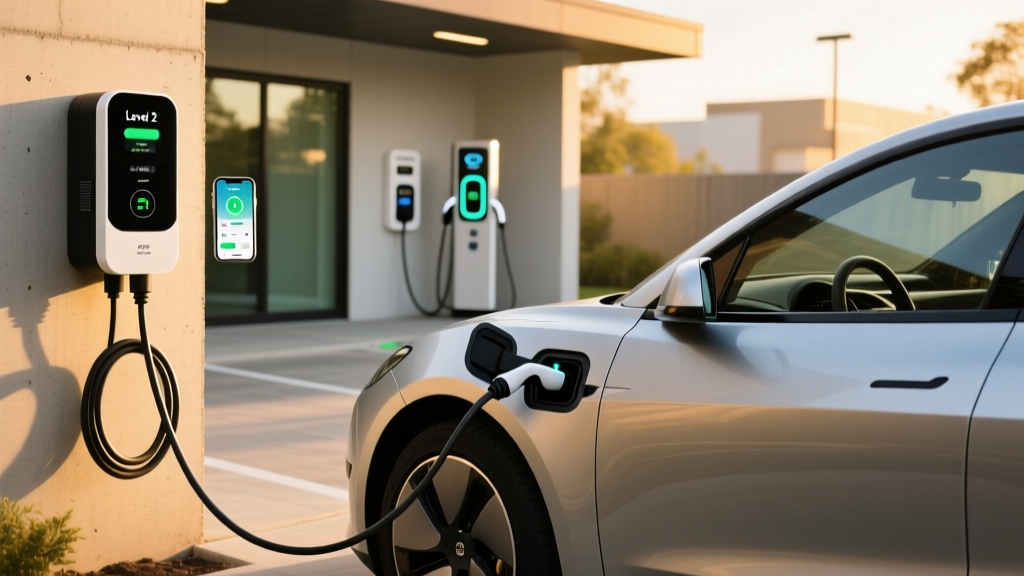
Every PHEV owner encounters three charging tiers. Here's how they stack up with real-world numbers relevant to plug-in hybrids:
| Level | Voltage / Amps | Power (kW) | Miles of EV Range Added per Hour | Typical Full Charge Time (18 kWh Battery) |
|---|---|---|---|---|
| Level 1 (120V household) | 120V / 12A | ~1.4 kW | 3–5 mi/hr | 12–14 hours |
| Level 2 (240V home/public) | 240V / 32–48A | 7.2–11.5 kW | 20–35 mi/hr | 2–3 hours |
| DC Fast Charging | 400–800V DC | 50–350 kW | N/A for most PHEVs | Not supported on most PHEVs |
The PHEV reality check: Most plug-in hybrids, including the RAV4 Prime and Pacifica Hybrid, have an onboard charger limited to 6.6 kW or 7.2 kW. Even if you plug into a 48-amp Level 2 station capable of 11.5 kW, the vehicle will only draw its maximum—say, 7.2 kW. Buying a higher-amperage charger than your PHEV can accept won't speed things up, though it future-proofs you for a potential BEV upgrade.
DC fast charging is largely irrelevant for PHEVs. The 2026 Mitsubishi Outlander PHEV is one of the few that supports DC fast charging (up to ~38 kW via CHAdeMO), reaching 80% in roughly 38 minutes. Most competitors—including Toyota, BMW, and Stellantis PHEVs—omit DC fast capability entirely because the small battery makes it unnecessary.
Home Charger Installation: Electrical Requirements, Costs, and Panel Gotchas
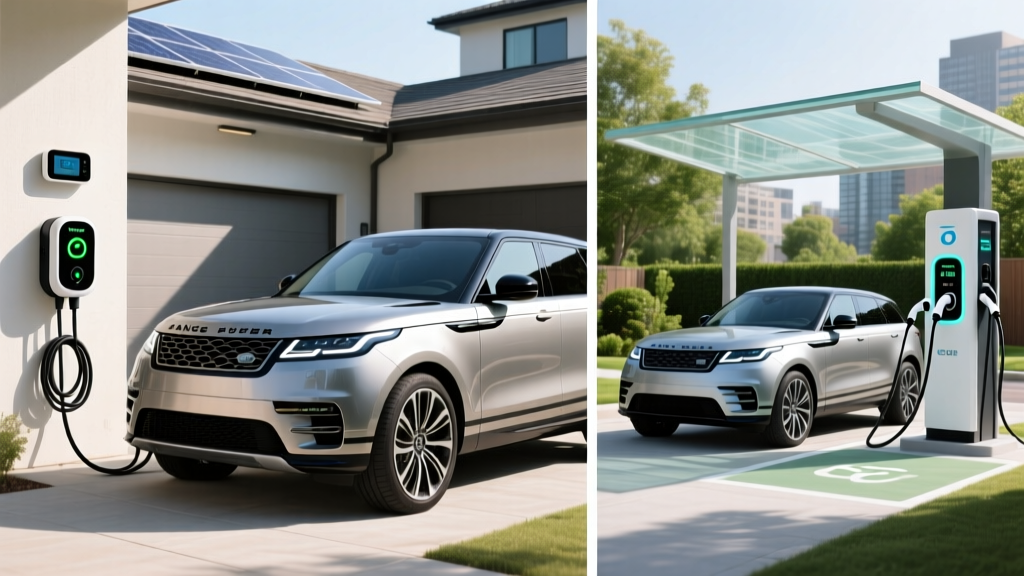
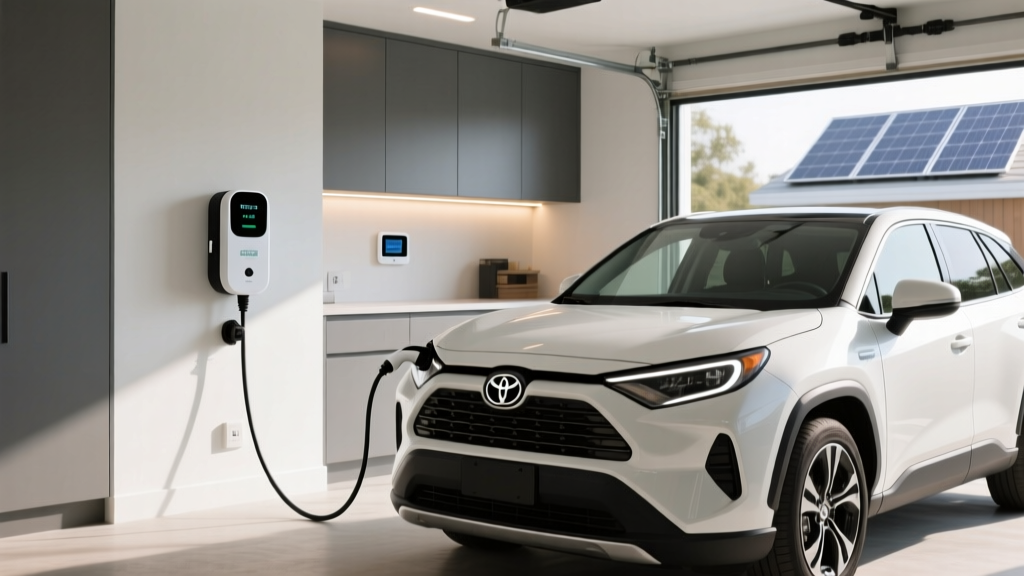
Installing a Level 2 home charger is the single best upgrade a PHEV owner can make. Here's what the project actually involves and what it costs in 2026.
Electrical Requirements
A Level 2 charger requires a dedicated 240V circuit—the same voltage your electric dryer or oven uses. The most common configurations:
- 40-amp circuit (delivers 32A continuous / 7.7 kW) — sufficient for every PHEV on the market
- 50-amp circuit (delivers 40A continuous / 9.6 kW) — ideal if you might upgrade to a BEV later
- 60-amp circuit (delivers 48A continuous / 11.5 kW) — overkill for PHEVs, but standard for BEV-ready installs
The National Electrical Code (NEC) requires that continuous loads (like EV charging) not exceed 80% of a circuit's rated capacity. A 40A breaker therefore delivers 32A continuous. Your electrician will size the wire accordingly—typically 8 AWG copper for 40A, 6 AWG for 50A.
Panel Upgrade: The Cost Nobody Talks About
If your home has a 100-amp electrical panel (common in homes built before 1990), adding a 40–50A EV circuit may max out your panel's capacity. A panel upgrade to 200A typically costs $1,500–$3,000 and is the single largest variable in EV charger installation. Signs you might need one:
- Your panel is 100A or less
- You already have multiple high-draw appliances (electric range, dryer, heat pump, hot tub)
- Your electrician's load calculation shows less than 40A of headroom
Some utilities and state programs offer rebates for panel upgrades tied to EV adoption—check with your local provider.
Installation Cost Breakdown
| Component | Low Estimate | High Estimate | Notes |
|---|---|---|---|
| Level 2 charger (hardware) | $300 | $700 | 32A–48A smart charger, 18–25 ft cable |
| Electrician labor (install + wiring) | $500 | $1,500 | Depends on run length from panel to garage |
| Electrical permit | $50 | $200 | Required in most jurisdictions |
| Panel upgrade (if needed) | $1,500 | $3,000 | 100A → 200A service upgrade |
| Total (no panel upgrade) | $850 | $2,400 | Typical for modern 200A homes |
| Total (with panel upgrade) | $2,350 | $5,400 | Older homes with 100A service |
Always hire a licensed electrician and pull a permit. Unpermitted EV charger installs can void home insurance claims and cause issues at resale. The National Electrical Code (NEC) Article 625 governs EV charging equipment installation.
Connector Compatibility: Which Plug Does Your PHEV Use?
The connector landscape in North America has consolidated significantly by 2026, but PHEVs still primarily use the J1772 standard for Level 1 and Level 2 charging. Here's what fits what:
| Connector | Use Case | PHEV/EV Brands | Adapter Needed? |
|---|---|---|---|
| J1772 | Level 1 & Level 2 (AC) | Toyota, BMW, Chrysler, Hyundai, Kia, Ford, VW, most non-Tesla PHEVs | None — native on most PHEVs |
| NACS (Tesla) | Level 2 AC & DC Fast | Tesla (all models); Ford, GM, Rivian, Volvo (2025+ models adopting) | Tesla-to-J1772 adapter (~$50–150) for non-Tesla Level 2 stations |
| CCS1 | DC Fast Charging | Most non-Tesla BEVs; rarely on PHEVs | Not relevant for most PHEV owners |
| CHAdeMO | DC Fast Charging (legacy) | Mitsubishi Outlander PHEV, older Nissan Leaf | None if vehicle is equipped; network availability declining |
For PHEV owners: Your vehicle almost certainly has a J1772 inlet. This is the universal AC charging standard in North America, and every public Level 2 station you'll encounter will have a J1772 connector. If you buy a Tesla Wall Connector for home use (which has a NACS plug), you'll need a Tesla-to-J1772 adapter (such as the Lectron or Taptes brand, ~$60–$130) to charge your non-Tesla PHEV.
The good news: the industry-wide shift toward NACS for DC fast charging primarily affects BEV owners on road trips. For PHEV Level 2 charging at home and around town, J1772 remains universal and fully supported.
Cost to Charge a PHEV: Home vs. Public vs. Gasoline
The economic case for a long-range PHEV hinges on maximizing electric-only miles. Let's run the numbers for a representative PHEV with an 18 kWh usable battery and 3 miles per kWh efficiency (about 42 miles of electric range, similar to a RAV4 Prime).
| Scenario | Rate | Cost to Fill 18 kWh Battery | Cost Per Mile (EV mode) |
|---|---|---|---|
| Home — off-peak utility rate | $0.12/kWh | $2.16 | $0.05/mi |
| Home — average US rate | $0.17/kWh | $3.06 | $0.07/mi |
| Public Level 2 (ChargePoint, etc.) | $0.30/kWh | $5.40 | $0.13/mi |
| Gasoline (30 MPG combined, $3.50/gal) | $3.50/gal | — | $0.12/mi |
| Gasoline (30 MPG combined, $4.50/gal) | $4.50/gal | — | $0.15/mi |
The takeaway: Charging at home on an off-peak rate cuts your per-mile cost to roughly one-third of gasoline. Even at the US average electricity rate, home charging is cheaper than gas at $3.50/gallon. Public Level 2 charging, however, often costs more per mile than gasoline—which is why home charging is essential for PHEV economics.
According to the U.S. Energy Information Administration, the national average residential electricity rate hovers around $0.17/kWh, but rates vary enormously—from $0.10/kWh in parts of the Southeast to $0.30+/kWh in California and Hawaii. Check your utility's time-of-use (TOU) rates; charging overnight on an off-peak plan can save 40–60% versus daytime rates.
Best Level 2 Chargers for PHEV Owners: Equipment Picks for 2026
Since most PHEVs cap at 6.6–7.2 kW onboard charging, a 32-amp (7.7 kW) charger is the sweet spot. Going to 48 amps adds cost without speeding up your PHEV—unless you're planning a future BEV purchase.
Best Overall: ChargePoint Home Flex
- Power: Up to 12 kW (50A), configurable down to 16A
- Connector: J1772 (NACS version also available)
- Cable length: 23 ft
- Smart features: Wi-Fi, scheduling, Alexa, energy tracking via app
- Price: ~$550–$650
- Why for PHEVs: Configurable amperage means you can set it to 32A on a 40A circuit—perfect match for PHEV onboard chargers
Best Value: Emporia Level 2 EV Charger
- Power: Up to 11.5 kW (48A)
- Connector: J1772
- Cable length: 24 ft
- Smart features: Wi-Fi, real-time energy monitoring, solar integration, TOU scheduling
- Price: ~$350–$400
- Why for PHEVs: Lowest-cost smart charger with excellent energy tracking; pairs well with solar panels
Best for Tesla Households: Tesla Wall Connector
- Power: Up to 11.5 kW (48A)
- Connector: NACS (Tesla native)
- Cable length: 24 ft
- Smart features: Wi-Fi, power sharing (link multiple units), OTA updates
- Price: ~$425–$475
- Why for PHEVs: If your household has a Tesla + a non-Tesla PHEV, buy one with the J1772 adapter or use a third-party Tesla-to-J1772 adapter
Best Portable: Lectron V-BOX Pro
- Power: Up to 9.6 kW (40A) on 240V; 1.4 kW on 120V
- Connector: J1772 (NACS adapter included)
- Cable length: 21 ft
- Smart features: LCD screen, basic scheduling, no Wi-Fi
- Price: ~$280–$330
- Why for PHEVs: Dual-voltage (NEMA 14-50 plug) lets you take it to rentals or use it without hardwiring
Safety, Code, and Installation Best Practices
EV charging draws sustained high current for hours—unlike most household appliances. Proper installation isn't optional. Key requirements per NEC Article 625 and best practices:
- Dedicated circuit: Your EV charger must have its own breaker—no sharing with other outlets or appliances.
- GFCI protection: 2023 NEC revisions require GFCI protection for indoor and outdoor EV receptacles. Hardwired chargers (no plug) may be exempt in some jurisdictions—ask your electrician.
- Outdoor rating: If your charger is mounted outside or in an unenclosed carport, it must carry a NEMA 4 (or IP65+) weather-resistance rating. All major chargers listed above meet this standard.
- Cable management: A 20–25 ft cable is standard and prevents tripping hazards. Avoid running cables across walkways; use a cable holster or retractable reel.
- Hardwired vs. plug-in: Hardwired installations (no NEMA 14-50 receptacle) avoid the GFCI nuisance-tripping issue common with some breakers and are generally more reliable. Plug-in offers portability.
- Permit and inspection: Required in virtually all jurisdictions. Your inspector will verify wire gauge, breaker sizing, grounding, and GFCI compliance. Keep the inspection card posted near the charger.
Before installing, your electrician should perform a NEC Article 220 load calculation. If your home's existing loads (HVAC, dryer, range, water heater) plus the EV circuit exceed your panel's rated capacity, you must upgrade the panel or use a smart load-management device like the Emporia Smart Load Center or Sense Energy Monitor to dynamically throttle charging when other appliances are running.
Public Charging for PHEVs: When and Where It Makes Sense
Most PHEV owners do 85–95% of their charging at home. Public Level 2 stations (at workplaces, grocery stores, or shopping centers) are useful top-ups but rarely worth seeking out purely for charging given the higher per-kWh cost.
Charging time examples for common PHEV batteries on public Level 2 (7.2 kW):
- Toyota RAV4 Prime (18.1 kWh): 0–100% in ~2.5 hours
- BMW X5 xDrive50e (25.7 kWh): 0–100% in ~3.5 hours (limited to 7.4 kW onboard)
- Chrysler Pacifica Hybrid (16 kWh): 0–100% in ~2.2 hours
- Jeep Wrangler 4xe (17.3 kWh): 0–100% in ~2.4 hours
For PHEVs, "10–80%" fast-charging metrics are largely irrelevant because (a) most PHEVs lack DC fast charging and (b) the batteries are small enough that a full Level 2 charge takes only 2–3 hours anyway. Simply plug in when you arrive home and wake up to a full battery every morning.
Apps like PlugShare and ChargePoint let you filter for free Level 2 stations—a worthwhile stop if you're already at the location for other reasons.
Frequently Asked Questions
How much does it cost to install a home EV charger for my PHEV?
For a typical Level 2 installation in a home with an existing 200-amp panel, expect $850–$2,400 total (charger hardware + electrician labor + permit). If your home needs a panel upgrade from 100A to 200A, add $1,500–$3,000, bringing the total to $2,350–$5,400. Get at least two quotes from licensed electricians.
How fast will each charging level add range to my PHEV?
Level 1 (120V) adds roughly 3–5 miles of EV range per hour. Level 2 (240V, 32A) adds roughly 20–25 miles per hour—enough to fully replenish a 40-mile PHEV battery in about 2 hours. DC fast charging is not available on most PHEVs.
Which connector is compatible with my plug-in hybrid?
Nearly every PHEV sold in North America uses a J1772 connector for AC charging. This is the universal standard at public Level 2 stations. If you install a Tesla Wall Connector at home, you'll need a Tesla-to-J1772 adapter (~$60–$130) for a non-Tesla PHEV.
How much does charging a PHEV cost per mile compared to gas?
At the US average residential rate of ~$0.17/kWh, a PHEV with 3 mi/kWh efficiency costs about $0.057 per mile on electricity. The same vehicle on gasoline at 30 MPG and $3.50/gallon costs $0.117 per mile. Home charging is roughly half the cost of gas per mile. Public Level 2 stations at $0.30/kWh roughly equal gasoline costs.
What electrical upgrades might I need before installing a charger?
The most common upgrade is a panel capacity increase from 100A to 200A ($1,500–$3,000). You may also need a new dedicated circuit with appropriate wire gauge (8 AWG or 6 AWG copper), a new breaker, and potentially a GFCI breaker if using a NEMA 14-50 receptacle. Homes with 200A+ panels typically need no upgrades beyond the new circuit run.
Do I need a smart charger, or will a basic unit work for my PHEV?
A basic non-connected charger will charge your PHEV just fine. Smart features (Wi-Fi, scheduling, energy monitoring) are valuable if your utility offers time-of-use rates—scheduling charging for off-peak hours (typically 10 PM–6 AM) can cut your electricity cost by 40–60%. Smart chargers also provide usage data useful for tax or reimbursement purposes.
Can I use my existing dryer outlet (NEMA 14-50) to charge my PHEV?
Technically yes, with a plug-in charger that has a NEMA 14-50 plug. However, NEC code requires a dedicated circuit for EV charging—you cannot share the dryer's circuit. If your dryer outlet is in the garage or nearby, an electrician can install a second dedicated 14-50 receptacle on its own breaker. Never use extension cords or outlet splitters.