Longest-Range EVs in 2026: The Numbers That Matter
If you've been searching for what electric cars have the longest range, the 2026 model year delivers several EVs pushing past the 400-mile EPA mark. But range is only half the equation — you also need a charging strategy that keeps those miles accessible every morning. Below, we rank the longest-range EVs currently on sale, then break down exactly how to charge them at home and on the road.
| Vehicle | EPA Range | Battery (kWh usable) | Peak DC Charge (kW) | 10–80% Time | Base MSRP |
|---|---|---|---|---|---|
| Lucid Air Grand Touring | 512 mi | 112 kWh (NMC) | 300 kW | ~15 min | $125,600 |
| Chevrolet Silverado EV 4WT | 460 mi | 200 kWh (NMC) | 350 kW | ~25 min | $74,900 |
| Rivian R1T Dual Max | 420 mi | 141 kWh (NMC) | 220 kW | ~28 min | |
| Tesla Model S Long Range | 402 mi | 100 kWh (NMC) | 250 kW | ~18 min | $79,990 |
| Mercedes-Benz EQS 450+ | 390 mi | 108 kWh (NMC) | 200 kW | ~22 min | $104,400 |
| Hyundai Ioniq 6 SEL (Long Range) | 361 mi | 77.4 kWh (NMC) | 240 kW | ~18 min | $46,500 |
Source: fueleconomy.gov — the EPA's official EV efficiency database.
Charging Levels Explained: Speeds in kW and Miles Per Hour
Before buying a charger, understand the three charging tiers and what each delivers in practical terms. kW (kilowatts) measures power — the rate of energy flow. kWh (kilowatt-hours) measures energy — the total capacity of the battery. A 100-kWh battery charged at 10 kW takes roughly 10 hours from empty.
| Level | Voltage | Power (kW) | Miles Added/Hour | Best For |
|---|---|---|---|---|
| Level 1 (120V) | 120V AC | 1.2–1.9 kW | 3–5 mi/hr | Overnight top-up, PHEVs, emergencies |
| Level 2 (240V) | 240V AC | 3.3–19.2 kW | 12–75 mi/hr | Daily home charging, workplace |
| DC Fast Charge | 400–800V DC | 50–350 kW | 150–1,200+ mi/hr | Road trips, rapid top-ups |
For the longest-range EVs above — which carry battery packs from 77 to 200 kWh — Level 1 charging is impractical as a daily solution. A 200-kWh Silverado EV would take over 100 hours on a standard 120V outlet. Level 2 at home is the minimum viable setup for high-capacity EVs.
Home Charger Installation: Electrical Requirements and Costs
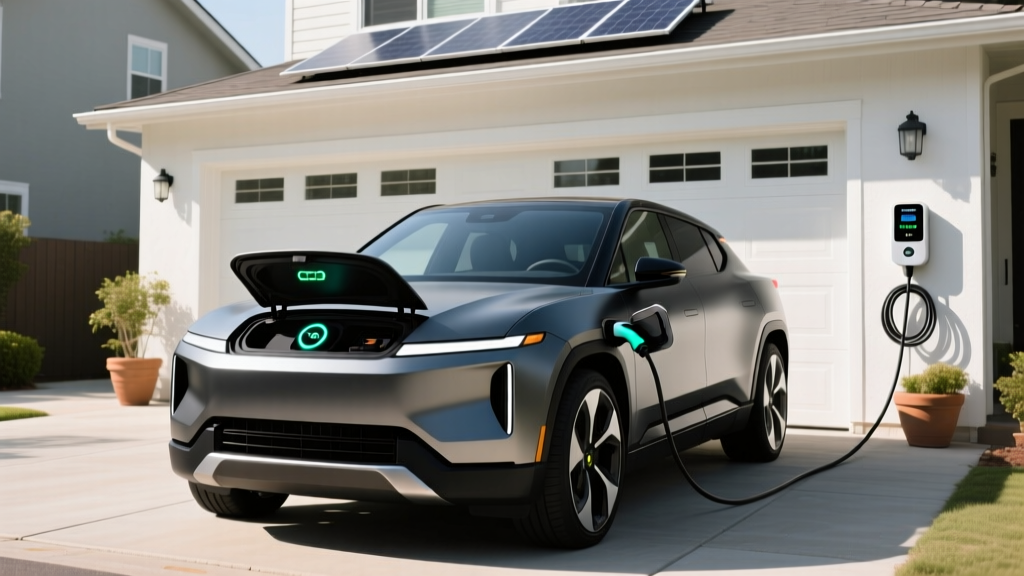
Installing a Level 2 home charger involves more than plugging into a dryer outlet. Here's what the electrical side actually requires.
Core Electrical Requirements
- Circuit: A dedicated 240V circuit, typically 40A to 60A (supports 32A to 48A continuous charging, per NEC 80% rule)
- Wire gauge: 6 AWG copper for 50A circuits; 4 AWG for 60A circuits (varies by run length)
- Breaker: Matching amperage — 50A breaker for a 40A charger, 60A breaker for a 48A charger
- Panel capacity: Your main electrical panel must have physical space for a double-pole breaker AND sufficient amperage headroom (typically 200A service minimum for a 48A charger alongside existing loads)
Do You Need a Panel Upgrade?
Homes built before 2000 often have 100A or 150A main service. Adding a 48A (11.5 kW) EV charger to a 100A panel that's already running electric heat, a dryer, and an oven will likely require a service upgrade to 200A — this is the single biggest cost variable in home charging installation.
| Component | Simple Install (Near Panel) | Complex Install (Panel Upgrade + Long Run) |
|---|---|---|
| Level 2 Charger (Equipment) | $400–$700 | $400–$700 |
| Electrician Labor | $300–$800 | $1,500–$3,000 |
| Permit & Inspection | $50–$200 | $50–$300 |
| Panel Upgrade (if needed) | $0 | $1,500–$4,000 |
| Conduit, Wire, Misc. | $50–$150 | $200–$600 |
| Total Estimated Cost | $800–$1,850 | $3,650–$8,600 |
Always get a licensed electrician's load calculation before assuming your panel can handle an EV circuit. Many utilities offer rebates of $250–$1,000 for charger installation — check with your local provider. Final specifications should come from your electrician, as local codes vary.
Connector Compatibility: NACS, CCS, and CHAdeMO in 2026
The connector landscape has consolidated significantly. As of the 2026 model year, nearly every new EV sold in North America uses the NACS (North American Charging Standard) port, originally developed by Tesla. CCS1 remains on some carryover models, and CHAdeMO is limited to the aging Nissan Leaf.
| Connector | Brands Using It (2026 MY) | DC Fast Network Access |
|---|---|---|
| NACS (Tesla) | Tesla, Ford, GM, Rivian, Hyundai/Kia, BMW, Volvo, Mercedes, Lucid, Toyota, Subaru | Tesla Supercharger, Electrify America (NACS stalls), EVgo, ChargePoint |
| CCS1 | Remaining Stellantis models, some VW ID.4 carryover, Porsche Taycan (2025 MY) | Electrify America, EVgo, ChargePoint, Ionity (Europe) |
| CHAdeMO | Nissan Leaf only | Limited — shrinking network |
If you own a CCS1-equipped EV and want Supercharger access, a CCS-to-NACS adapter (approximately $200–$300 from Tesla or third-party makers) enables it. For home Level 2 charging, all EVs use the same J3400 (NACS) or J1772 connector — most new Level 2 chargers ship with NACS, and J1772-to-NACS adapters are widely available for under $50.
Charging Time Examples: How Long to Charge Long-Range EVs
Charge times depend on battery size, charger power, and the vehicle's onboard acceptance rate. Here are realistic 10–80% estimates for several popular long-range EVs. Note that charging slows significantly above 80% SoC to protect battery health — the charge curve tapers from peak kW to a fraction of that rate.
| Vehicle (Battery kWh) | Level 2 at 11.5 kW (48A) | Level 2 at 7.7 kW (32A) | DC Fast (Peak kW) |
|---|---|---|---|
| Lucid Air (112 kWh) | ~6.8 hours | ~10.2 hours | ~15 min at 300 kW |
| Silverado EV (200 kWh) | ~12.2 hours | ~18.2 hours | ~25 min at 350 kW |
| Tesla Model S (100 kWh) | ~6.1 hours | ~9.1 hours | ~18 min at 250 kW |
| Hyundai Ioniq 6 (77.4 kWh) | ~4.7 hours | ~7.0 hours | ~18 min at 240 kW |
Cost to Charge: Home vs. Public vs. Gas Comparison
Electricity pricing varies by location, time of day, and charger type. Here's a realistic cost-per-mile breakdown using the Hyundai Ioniq 6 (3.6 mi/kWh efficiency) and the Chevrolet Silverado EV (2.2 mi/kWh) as examples — one efficiency leader, one heavy truck.
| Scenario | Rate | Ioniq 6 (3.6 mi/kWh) | Silverado EV (2.2 mi/kWh) | Gas Equivalent (25 MPG @ $3.40/gal) |
|---|---|---|---|---|
| Home Off-Peak | $0.09/kWh | $0.025/mi | $0.041/mi | $0.136/mi |
| Home Standard | $0.14/kWh | $0.039/mi | $0.064/mi | $0.136/mi |
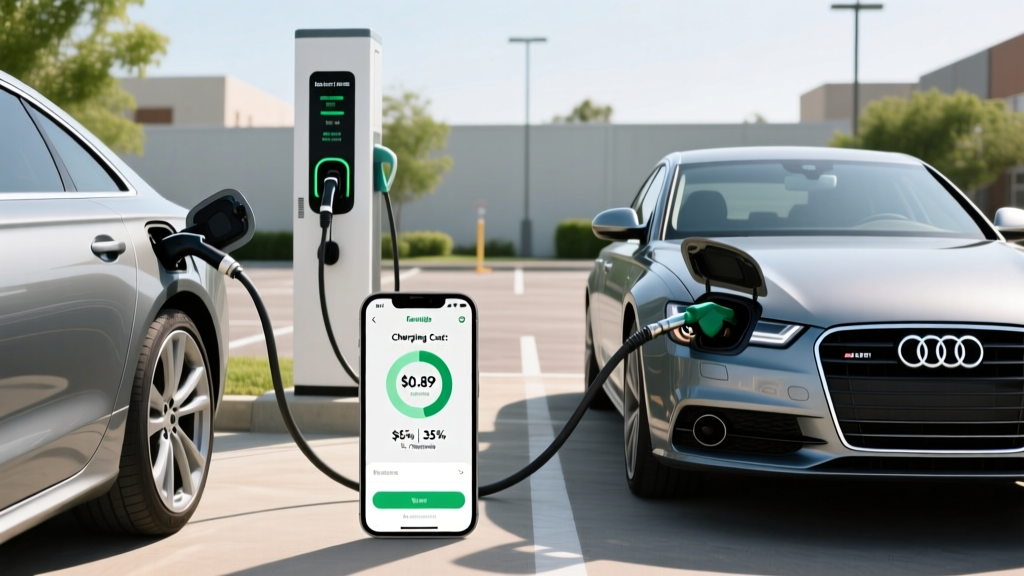
| Public Level 2 | $0.25/kWh | $0.069/mi | $0.114/mi | $0.136/mi |
| DC Fast Charge | $0.40/kWh | $0.111/mi | $0.182/mi | $0.136/mi |
Key takeaway: Home charging is dramatically cheaper than gas — typically 3 to 5 times less per mile. Public DC fast charging can exceed gasoline cost for less-efficient vehicles like the Silverado EV. This is why home Level 2 installation is the most impactful financial decision an EV owner can make.
For current federal incentives, the IRS §30D clean vehicle credit may offset vehicle cost (up to $7,500 with income, MSRP, and battery-sourcing requirements), and the §25E energy credit covers up to $1,000 (30% of cost) for home charger equipment and installation through 2032, subject to census-tract eligibility.
Recommended Home Level 2 Chargers for Long-Range EVs
For vehicles with batteries over 100 kWh, you want a charger that delivers at least 48A (11.5 kW) to complete an overnight charge. Here are top picks as of 2026:
ChargePoint Home Flex
- Power: Up to 12 kW (50A) — configurable 16A–50A
- Connector: NACS (J3400) native, J1772 also available
- Cable: 23 feet
- Smart Features: Wi-Fi, scheduling, Alexa, energy dashboard
- Price: ~$550
- Best For: Flexible amperage — ideal if your panel has limited headroom
Tesla Wall Connector
- Power: Up to 11.5 kW (48A)
- Connector: NACS native
- Cable: 24 feet
- Smart Features: Wi-Fi, OTA updates, power sharing (dual units on one circuit), Tesla app integration
- Price: ~$475
- Best For: Tesla owners and NACS-adopting brands; best value at 48A
Emporia Vue Level 2
- Power: Up to 11.5 kW (48A)
- Connector: J1772 (NACS adapter included)
- Cable: 24 feet
- Smart Features: Whole-home energy monitoring integration, solar-aware charging, scheduling
- Price: ~$400
- Best For: Solar homeowners wanting integrated energy management
Safety, Code, and Installation Best Practices
A Level 2 charger draws sustained high current for hours — this is not the same as plugging in a dryer. Follow these non-negotiable safety principles:
- Dedicated circuit: The EV charger must have its own breaker — never share a circuit with other appliances.
- GFCI protection: NEC 2023 and later require GFCI protection for EV outlets in garages and all outdoor installations. Hardwired units may bypass this requirement in some jurisdictions — your electrician will advise.
- Outdoor rating: If installing outside, the charger must carry a NEMA 4 or IP65 rating for weather resistance.
- Permit and inspection: Most municipalities require an electrical permit and post-installation inspection. Skipping this risks insurance claim denials and code violations.
- Cable management: Use a wall-mounted holster or retractor to prevent tripping hazards and cable damage.
Reference the NHTSA vehicle safety database for EV crash-test ratings, and always consult your local building department for jurisdiction-specific electrical codes.
Frequently Asked Questions
How much does it cost to install a home EV charger?
A straightforward installation near a 200A panel costs $800–$1,850 including equipment, labor, and permits. If your home needs a panel upgrade from 100A to 200A service, total costs can reach $3,650–$8,600. The federal §25E credit may cover up to $1,000 (30%) of equipment and installation in eligible census tracts.
How fast will each charging level add range?
Level 1 (120V) adds 3–5 miles per hour. Level 2 (240V, 48A) adds 30–50 miles per hour for most EVs, or up to 75 mi/hr for highly efficient models like the Lucid Air. DC fast charging adds 150–1,200+ miles per hour at peak power, though sessions are typically measured in minutes (10–80% in 15–30 minutes for modern EVs).
Which connector is compatible with my EV?
For 2026 model-year vehicles: nearly all new EVs use NACS (the Tesla connector). CCS1 remains on a few carryover models. CHAdeMO is limited to the Nissan Leaf. For home Level 2, NACS chargers work with all NACS vehicles directly; J1772 chargers work with all EVs using an adapter (often included with the car).
How much does charging cost per mile vs. gas?
At home on off-peak rates ($0.09/kWh), an efficient EV like the Ioniq 6 costs roughly $0.025/mile — about 5x cheaper than a 25 MPG gas car at $3.40/gallon ($0.136/mile). Public DC fast charging at $0.40/kWh costs $0.11–$0.18/mile, which can exceed gas for less-efficient EVs. Home charging is where the savings live.
What electrical upgrades might I need?
If your home has a 100A main panel, you'll likely need a service upgrade to 200A ($1,500–$4,000). If your panel is 200A but has no spare breaker slots, a subpanel may be required ($300–$800). Long wire runs (over 50 feet from panel to garage) increase wire gauge requirements and cost. A licensed electrician's load calculation is the definitive answer — never guess on panel capacity.