Which Electric Vehicles Have the Longest Range in 2026?
Range remains the single biggest question for EV shoppers. In 2026, the longest-range EVs push past 400 miles on the EPA cycle — but those stickers rarely match what you'll see on a cold highway morning. Below, we rank the top long-range EVs currently on sale, then break down exactly what you need to charge them at home and on the road, including real costs, electrical requirements, and equipment picks.
Top Longest-Range EVs for 2026
| Vehicle | EPA Range | Real-World Est. | Battery (kWh usable) | Chemistry | Peak DC Charge | 10–80% Time | Base MSRP |
|---|---|---|---|---|---|---|---|
| Lucid Air Grand Touring | 516 mi | ~390–430 mi | 112 kWh | NMC | 300 kW | ~20 min | $125,650 |
| Chevrolet Silverado EV 4WT (Max Range) | 450 mi | ~340–380 mi | ~200 kWh (est.) | NMC | 350 kW | ~30 min | $74,800 |
| Tesla Model S Long Range | 402 mi | ~310–350 mi | 100 kWh | NMC | 250 kW | ~25 min | $79,990 |
| Hyundai Ioniq 6 SE Long Range | 361 mi | ~285–320 mi | 77.4 kWh | NMC | 240 kW | ~18 min | $42,450 |
| Rivian R1S Dual Max Pack | 410 mi | ~320–360 mi | 141 kWh | NMC | 220 kW | ~35 min | $99,900 |
| Mercedes-Benz EQS 450+ | 385 mi | ~300–340 mi | 108.4 kWh | NMC | 200 kW | ~31 min | $105,550 |
Data sourced from fueleconomy.gov and manufacturer specifications. Real-world estimates reflect highway-speed and moderate-cold testing conditions. The Lucid Air Grand Touring's efficiency advantage (4.2–4.5 mi/kWh) comes from its 900V architecture and low drag coefficient (Cd 0.197). Larger batteries like the Silverado EV's ~200 kWh pack deliver range through brute capacity — but that size dramatically affects charging times and electricity costs.
Charging Levels Explained: Speeds, kW, and Miles Per Hour
The most common EV literacy gap is confusing kW (kilowatts) — the rate of power delivery — with kWh (kilowatt-hours) — the energy stored in your battery. Think of kW as the width of a hose and kWh as the size of the tank. A 100 kWh battery charged at 10 kW takes roughly 10 hours; at 150 kW, under 45 minutes (accounting for taper).
| Level | Power (kW) | Voltage / Amperage | Miles of Range Added Per Hour | Best Use Case |
|---|---|---|---|---|
| Level 1 (Standard Outlet) | 1.2–1.9 kW | 120V / 12–16A | 3–5 mi/hr | Overnight top-up, PHEVs, emergencies |
| Level 2 (Home / Workplace) | 3.3–19.2 kW | 240V / 16–80A | 12–60 mi/hr | Daily home charging, destination charging |
| DC Fast Charging (Level 3) | 50–350 kW | 200–900V DC | 150–1,000+ mi/hr (peak) | Road trips, rapid top-ups |
For a long-range EV like the Lucid Air (112 kWh battery), Level 1 charging from empty would take over 60 hours — impractical. Level 2 at 11.5 kW (48A) replenishes the full pack in roughly 10 hours. DC fast charging from 10–80% takes about 20 minutes at peak rate, but the charge curve tapers sharply above 80% — that last 20% can take as long as the first 70%. Always plan road-trip stops around 10–80% charges for efficiency.
Home Charger Installation: Costs, Electrical Requirements, and Upgrades
A Level 2 home charger is where 80%+ of EV charging happens. Installation cost varies wildly depending on your electrical panel's age, available amperage, and the distance from panel to charger location.
Electrical Requirements
Most Level 2 chargers require a 240V dedicated circuit. Common configurations:
- 40A circuit / 32A continuous — delivers 7.7 kW; adequate for most daily driving (adds ~25–30 miles per hour of charging)
- 50A circuit / 40A continuous — delivers 9.6 kW; recommended for larger batteries (100+ kWh)
- 60A circuit / 48A continuous — delivers 11.5 kW; optimal for long-range EVs like the Lucid Air or Silverado EV
- 80A circuit / 64A continuous — delivers 15.3–19.2 kW; requires robust 200A+ panel and short wire runs
The National Electrical Code (NEC) requires EV circuits to be rated at 125% of the charger's continuous draw. A 48A charger needs a 60A breaker. Your panel must have enough spare capacity — typically at least 20% headroom above the new circuit's load.
Panel Upgrade Considerations
Homes built before 2000 often have 100A or 150A main panels. Adding a 60A EV circuit to a fully loaded 100A panel may require a panel upgrade to 200A — this is the single biggest cost variable in home charging installation. Some utilities offer rebates for panel upgrades tied to EV adoption.
| Component | Low Estimate | High Estimate | Notes |
|---|---|---|---|
| Level 2 Charger (Equipment) | $350 | $750 | Varies by brand, power output, cable length |
| Electrician Labor | $500 | $2,000 | Depends on wire run distance, conduit, drywall work |
| Permit & Inspection | $50 | $300 | Required by most jurisdictions; varies by municipality |
| Panel Upgrade (if needed) | $1,500 | $4,500 | 100A → 200A upgrade; not needed for all homes |
| Total (No Panel Upgrade) | $900 | $3,050 | |
| Total (With Panel Upgrade) | $2,400 | $7,550 |
Always hire a licensed electrician who will pull permits. Unpermitted work can void homeowner's insurance and create fire risk. Ask for a load calculation before committing to a circuit size — per NEC Article 220, your electrician must verify the panel can handle the additional continuous load.
Connector Compatibility: NACS, CCS, and CHAdeMO in 2026
The connector landscape has consolidated significantly. As of 2026, the North American Charging Standard (NACS) — originally developed by Tesla — is the dominant connector for new EVs. Most legacy CCS1 vehicles can access Tesla Superchargers via adapter.
| Connector | Brands Using It (2026 Models) | Network Access | Adapter Needed? |
|---|---|---|---|
| NACS (Tesla / SAE J3400) | Tesla, Ford, GM, Rivian, Volvo, Polestar, Hyundai, Kia (new models) | Tesla Supercharger, Electrify America (select), EVgo | No for native NACS vehicles |
| CCS1 (Combined Charging System) | VW ID.4 (prior MY), BMW iX (prior MY), older Hyundai/Kia | Electrify America, EVgo, ChargePoint DC | NACS-to-CCS adapter for Supercharger access (~$200–$250) |
| CHAdeMO | Nissan Leaf (discontinued), Mitsubishi Outlander PHEV (legacy) | Limited and shrinking network | No widely available adapter to NACS/CCS |
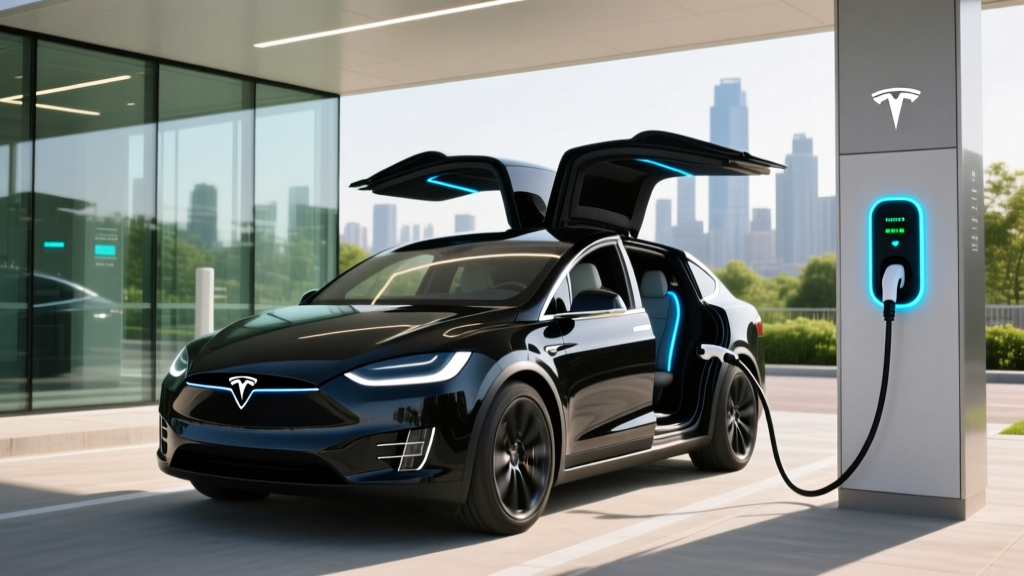
If you're buying a long-range EV in 2026, NACS-native is the future-proof choice. The Lucid Air, Tesla Model S, and new Rivian R1S all ship with NACS ports. CCS1 owners can purchase OEM-approved NACS adapters — Ford and GM provide them to existing owners — to unlock access to 25,000+ Tesla Superchargers.
Charging Cost Per Mile vs. Gas: The Real Numbers
Electricity costs vary enormously by location, time of day, and whether you're charging at home or on a public DC fast charger. Here's a realistic breakdown compared to a gas vehicle getting 28 MPG combined on $3.40/gallon fuel.
| Scenario | Rate ($/kWh) | Cost to Charge 100 kWh | Cost Per Mile (at 3.5 mi/kWh) | Gas Equivalent (28 MPG, $3.40/gal) |
|---|---|---|---|---|
| Home Off-Peak (utility TOU rate) | $0.09 | $9.00 | $0.026 | $0.121 |
| Home Standard Rate | $0.16 | $16.00 | $0.046 | $0.121 |
| Public Level 2 (workplace/mall) | $0.25–$0.39 | $25–$39 | $0.071–$0.111 | $0.121 |
| DC Fast Charger (Electrify America, EVgo) | $0.35–$0.55 | $35–$55 | $0.100–$0.157 | $0.121 |
Home off-peak charging delivers a 4–5x cost advantage over gasoline. Even DC fast charging at $0.48/kWh averages roughly the same per-mile cost as gas — and most EV owners do 80–90% of charging at home. For a long-range EV driven 12,000 miles per year, home charging at $0.12/kWh costs roughly $410 annually vs. $1,457 for gas. The savings compound over ownership, especially as gas prices fluctuate upward.
Equipment Recommendations: Best Level 2 Home Chargers for Long-Range EVs
Long-range EVs with 100+ kWh batteries benefit from higher-power Level 2 chargers to keep overnight replenishment practical. Here are top picks for 2026:
ChargePoint Home Flex
- Power Output: Up to 12 kW (50A / 240V), configurable down to 16A
- Connector: NACS or J1772 (NACS version ships standard for 2026 models)
- Cable Length: 23 feet
- Smart Features: Wi-Fi scheduling, energy tracking, Alexa integration, utility TOU optimization
- Price: ~$549 (NACS) / ~$499 (J1772)
- Best For: Most EVs; flexible amperage lets you match your circuit
Tesla Wall Connector
- Power Output: Up to 11.5 kW (48A / 240V)
- Connector: NACS native; includes J1772 adapter in box
- Cable Length: 24 feet
- Smart Features: Wi-Fi, OTA updates, load sharing (pair two units on one circuit), Powerwall integration
- Price: ~$475
- Best For: Tesla and NACS-native EVs; excellent value and reliability
Emporia Vue EV Charger
- Power Output: Up to 11.5 kW (48A / 240V)
- Connector: J1772 (NACS adapter included)
- Cable Length: 24 feet
- Smart Features: Whole-home energy monitoring integration, solar-aware charging, TOU scheduling
- Price: ~$399
- Best For: Budget-conscious buyers with solar panels or energy monitoring needs
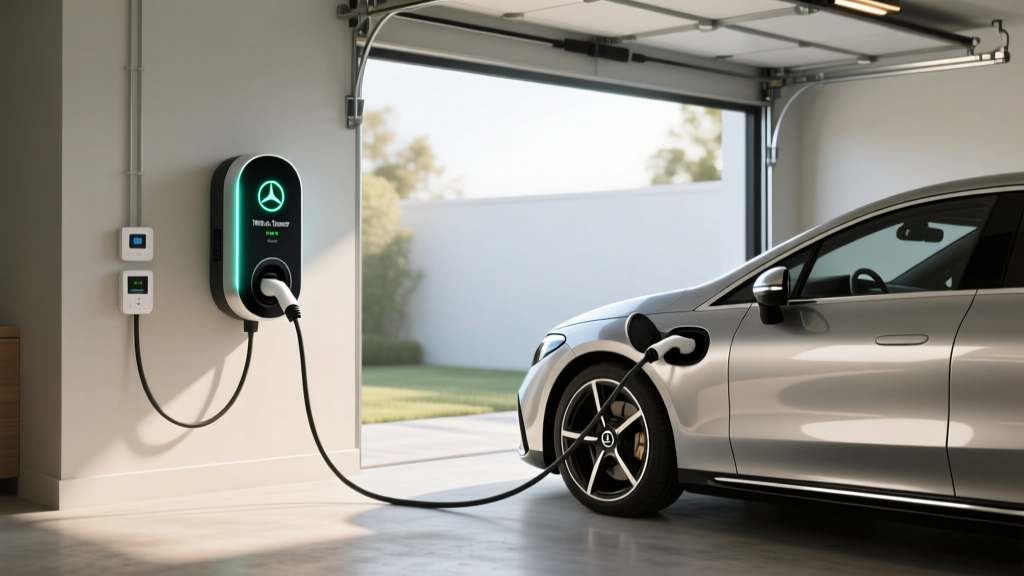
For owners of 100+ kWh battery EVs (Lucid Air, Silverado EV, Rivian R1S Max), a 48A+ charger on a 60A circuit is strongly recommended. A 32A charger would need 14+ hours to fully replenish a depleted 112 kWh pack — longer than most overnight windows allow.
Safety, Code, and Installation Best Practices
EV charging draws sustained high current for hours — far longer than an oven or dryer cycle. Proper installation isn't optional:
- Dedicated circuit: Your EV charger must have its own breaker — never share a circuit with other loads.
- GFCI protection: NEC 2020+ requires GFCI breakers for outdoor receptacles. Hardwired chargers (no plug) often avoid nuisance GFCI trips and are preferred for outdoor installs.
- Outdoor rating: If mounting outside, ensure the charger is NEMA 4 rated (weatherproof). Most major chargers meet this standard.
- Wire gauge: 6 AWG copper for 50A circuits; 4 AWG for 60A. Aluminum wire requires upsizing. Your electrician will spec this based on run length and local code.
- Permit and inspection: Required in virtually all US jurisdictions. An inspector will verify wire gauge, breaker sizing, grounding, and bonding. Skip this step and your insurance company may deny a related claim.
For detailed local incentive information on charger installation — some states and utilities offer $500–$1,500 rebates — check your utility's EV program page or afdc.energy.gov for a searchable database.
Frequently Asked Questions
How much does it cost to install a home EV charger?
Expect $900–$3,050 for a standard Level 2 install (equipment + electrician + permit) if your panel has capacity. If a panel upgrade from 100A to 200A is needed, add $1,500–$4,500. Get three quotes from licensed electricians and always require a permit.
How fast will each charging level add range?
Level 1 (120V): 3–5 miles per hour. Level 2 (240V, 48A): 25–40 miles per hour depending on vehicle efficiency. DC Fast Charging (150–350 kW): 150–1,000+ miles per hour at peak rate, but tapers significantly above 80% State of Charge. See the charging levels table above for specifics.
Which connector/charger is compatible with my EV?
Most 2026 EVs use NACS (Tesla's connector, now SAE J3400). Older or carryover models may still use CCS1 — check your vehicle's charge port. CHAdeMO is essentially discontinued for new vehicles. If your EV has CCS1, a NACS adapter (~$200–$250) unlocks Tesla Supercharger access.
How much does charging cost per mile vs gas?
Home off-peak charging averages $0.026 per mile — roughly one-fifth the cost of gasoline at $3.40/gallon and 28 MPG ($0.121/mile). Even public DC fast charging at $0.48/kWh costs about $0.137/mile, comparable to gas. Most EV owners save $800–$1,200 annually on fuel by charging at home.
What electrical upgrades might I need?
If your home has a 100A main panel that's near capacity, you'll likely need a 200A panel upgrade ($1,500–$4,500). Homes with 200A+ panels usually have enough headroom for a 48–60A EV circuit. A licensed electrician will perform a NEC Article 220 load calculation to determine this. Some utilities offer managed-charging programs that allow higher-power circuits with smart load management — ask about these before upgrading your panel.
Bottom Line
Long-range EVs like the Lucid Air Grand Touring (516 mi EPA) and Chevrolet Silverado EV (450 mi EPA) are practical road-trip machines — but their large 100–200 kWh batteries demand robust home charging infrastructure. Budget $1,500–$3,000 for a proper 48A+ Level 2 install, choose a NACS-native charger if your vehicle supports it, and prioritize off-peak home charging for the lowest per-mile cost. The combination of 350+ real-world miles and $0.03/mile home charging makes the long-range EV the most economically compelling vehicle category of 2026 — if you can charge at home.