Why Big-Battery SUVs Demand a Smart Charging Strategy
The 2026 crop of long-range electric SUVs packs serious energy. The Lucid Gravity Grand Touring carries a 123 kWh battery and an EPA-estimated 440+ miles of range. The Rivian R1S Dual-Motor Max Pack stores 141 kWh and delivers around 390 miles EPA. Even the Tesla Model X Long Range pushes past 335 miles from its ~100 kWh pack. These are the vehicles shoppers search for when they type longest range EV SUV into a browser — and they're spectacular road-trip machines.
But a 120-140 kWh battery also means one thing: filling it from a standard 120V wall outlet would take days. To actually live with a big-battery electric SUV, you need a charging plan built around three pillars — home Level 2 hardware, public DC fast-charging networks, and the right connector ecosystem. This guide breaks down every number you need.
kW (kilowatts) = power, the rate at which energy flows into your vehicle. Think of it as the width of the hose.
kWh (kilowatt-hours) = energy, the total capacity of your battery. Think of it as the size of the tank.
A 120 kWh battery charged at 11.5 kW (Level 2) takes ~10.4 hours from 0-100%. That same battery at a 250 kW DC fast charger can go 10-80% in roughly 25-30 minutes.
Charging Levels Explained: Speed, Range Added, and Real-World Times
Every EV owner cycles through three charging tiers. Here's how each one performs with a large-battery SUV in the 100-140 kWh range.
| Level | Voltage / Amps | Power (kW) | Miles of Range Added per Hour | Best Use Case |
|---|---|---|---|---|
| Level 1 | 120V / 12A | ~1.4 kW | 3-5 mi/hr | Overnight trickle, PHEVs, emergencies |
| Level 2 | 240V / 32-48A | 7.7 - 11.5 kW | 25-44 mi/hr | Daily home charging, overnight fills |
| DC Fast Charge | 400V-900V DC | 50 - 350 kW | 150-1,000+ mi/hr (peak) | Road trips, quick top-ups |
Real Charging-Time Examples for Long-Range SUVs
Charging times depend on battery size, charger output, and the vehicle's charge curve. Most EVs taper charging speed significantly above 80% state of charge (SoC) to protect battery health. Here's what 10-80% looks like for popular long-range SUVs:
- Lucid Gravity Grand Touring (123 kWh, NACS): 10-80% in ~22 minutes at a 350 kW CCS/NACS station (peak ~300 kW sustained). Level 2 at 19.2 kW: ~4.5 hours for a full charge.
- Rivian R1S Max Pack (141 kWh, NACS): 10-80% in ~28 minutes at a 350 kW station (peak ~220 kW). Level 2 at 11.5 kW (48A): ~12 hours 0-100%.
- Tesla Model X Long Range (~100 kWh, NACS): 10-80% in ~25 minutes at a V4 Supercharger (peak 250 kW). Level 2 at 11.5 kW: ~8.5 hours 0-100%.
Home Level 2 Installation: Electrical Requirements, Costs, and Panel Upgrades
For a long-range SUV with a 100+ kWh battery, a Level 2 home charger is non-negotiable. Level 1 (120V) adds only 3-5 miles per hour — meaning a full charge for a Rivian R1S Max Pack would take over 28 hours. A properly installed Level 2 station refills overnight.
Electrical Requirements
A Level 2 charger requires a 240V dedicated circuit, similar to what powers an electric dryer or oven. The most common configurations:
- 40A circuit / 32A continuous: Delivers 7.7 kW. Adequate for daily driving (adds ~30 miles/hour).
- 50A circuit / 40A continuous: Delivers 9.6 kW. The sweet spot for most homes.
- 60A circuit / 48A continuous: Delivers 11.5 kW. Ideal for large-battery SUVs.
- 100A circuit / 80A continuous: Delivers 19.2 kW. Requires significant panel capacity — used with premium chargers like the ChargePoint Home Flex (hardwired, 80A config) or Tesla Wall Connector.
The National Electrical Code (NEC) requires that continuous loads (like EV charging) use only 80% of a circuit's rated capacity. A 50A breaker supports 40A continuous charging. Always have a licensed electrician confirm your panel's available capacity before choosing a charger amperage.
Installation Cost Breakdown
Home charger installation costs vary enormously based on your electrical panel's age, the distance from panel to charging location, and whether an upgrade is needed.
| Component | Simple Install (Panel Nearby, No Upgrade) | Moderate Install (50-80 ft Run) | Complex Install (Panel Upgrade Required) |
|---|---|---|---|
| Level 2 Charger Equipment | $400 - $750 | $400 - $750 | $400 - $750 |
| Electrician Labor (2-4 hrs typical) | $300 - $600 | $600 - $1,500 | $1,000 - $2,500 |
| Electrical Permit | $50 - $150 | $50 - $150 | $50 - $200 |
| Panel Upgrade (100A → 200A) | N/A | N/A | $1,500 - $3,500 |
| Conduit, Wiring, Misc. Materials | $50 - $150 | $200 - $500 | $300 - $800 |
| Total Estimated Cost | $800 - $1,650 | $1,250 - $3,400 | $3,250 - $7,750 |
Safety and Code Requirements
Every Level 2 installation must meet local electrical code, which generally follows the NEC. Key requirements:
- Dedicated circuit: The EV charger must have its own breaker — it cannot share a circuit with other appliances.
- GFCI protection: NEC 2020 and later require GFCI (ground-fault circuit interrupter) protection for outdoor receptacles used for EV charging. Hardwired chargers may have built-in ground-fault protection.
- Outdoor rating: If your charger is installed outside, both the unit and the receptacle (if plug-in) must carry a NEMA 3R or NEMA 4 weather-resistance rating.
- Permit and inspection: Virtually all jurisdictions require an electrical permit for a new 240V circuit. The inspection ensures safe wiring, proper grounding, and code compliance. Skipping this step can void homeowner's insurance claims related to electrical fires.
Connector Compatibility: NACS, CCS1, and CHAdeMO in 2026
The connector landscape has consolidated significantly. As of 2026, the North American Charging Standard (NACS) — originally developed by Tesla — is the dominant connector for new EVs sold in the U.S. Ford, Rivian, GM, Hyundai/Kia, BMW, and Lucid have all adopted NACS for their 2025-2026 models.
| Connector | Brands Using It (Native) | DC Fast Charge Networks | Adapter Needed? |
|---|---|---|---|
| NACS (Tesla/J3400) | Tesla, Ford, GM, Rivian, Hyundai, Kia, BMW, Lucid, Volvo, Polestar | Tesla Supercharger, Electrify America (new stalls), EVgo, many independents | CCS→NACS adapter for older CCS stations (~$150-$200) |
| CCS1 | Legacy models (2023 and earlier VW ID.4, older Bolt, early Ioniq 5) | Electrify America, EVgo, ChargePoint, most non-Tesla networks | NACS→CCS adapter for Tesla Superchargers (Tesla sells one for ~$250) |
| CHAdeMO | Nissan Leaf (discontinued), Mitsubishi Outlander PHEV (legacy) | Limited and declining — some EA and EVgo stations | No adapter widely available; network access shrinking |
If you're buying a 2026 long-range SUV, it almost certainly ships with a NACS port. The key advantage: native access to Tesla's Supercharger network, which now exceeds 30,000 stalls in North America and is widely regarded as the most reliable DC fast-charging infrastructure. According to Tesla's Supercharger page, V4 Supercharger cabinets support up to 350 kW for non-Tesla vehicles with NACS connectors.
Cost to Charge: Home vs. Public vs. Gas Comparison
One of the strongest arguments for an electric SUV is lower fueling cost — but the savings depend heavily on where you charge. Here's a realistic breakdown using a 110 kWh usable battery (representative of a long-range SUV) and 3.0 mi/kWh efficiency (~333 Wh/mile).
| Scenario | Price per kWh or Gallon | Cost to "Fill" (110 kWh / 15 gal) | Cost Per Mile |
|---|---|---|---|
| Home charging (off-peak utility rate) | $0.08 - $0.14/kWh | $8.80 - $15.40 | $0.027 - $0.046 |
| Home charging (standard residential rate) | $0.15 - $0.20/kWh | $16.50 - $22.00 | $0.050 - $0.067 |
| Public Level 2 (workplace, shopping) | $0.20 - $0.35/kWh | $22.00 - $38.50 | $0.067 - $0.117 |
| DC Fast Charging (public network) | $0.35 - $0.55/kWh | $38.50 - $60.50 | $0.117 - $0.183 |
| Gasoline SUV (25 MPG combined) | $3.40/gallon | $51.00 (15 gal) | $0.136 |
| Gasoline SUV (18 MPG — large 3-row) | $3.40/gallon | $51.00 (15 gal) | $0.189 |
The math is clear: home charging at off-peak rates delivers fuel costs 65-80% lower than a comparable gas SUV. Even DC fast charging on the road is competitive with or cheaper than gasoline on a per-mile basis. The catch? Exclusive reliance on public DC fast charging at $0.45-$0.55/kWh erases most of the savings. This is why home Level 2 access is the single biggest factor in EV ownership economics.
For a driver covering 12,000 miles/year with 80% home charging and 20% DC fast charging, annual fuel cost runs roughly $500-$750. A comparable gas SUV at 20 MPG and $3.40/gallon spends about $2,040/year on fuel.
Best Home Level 2 Chargers for Long-Range EV SUVs (2026 Picks)
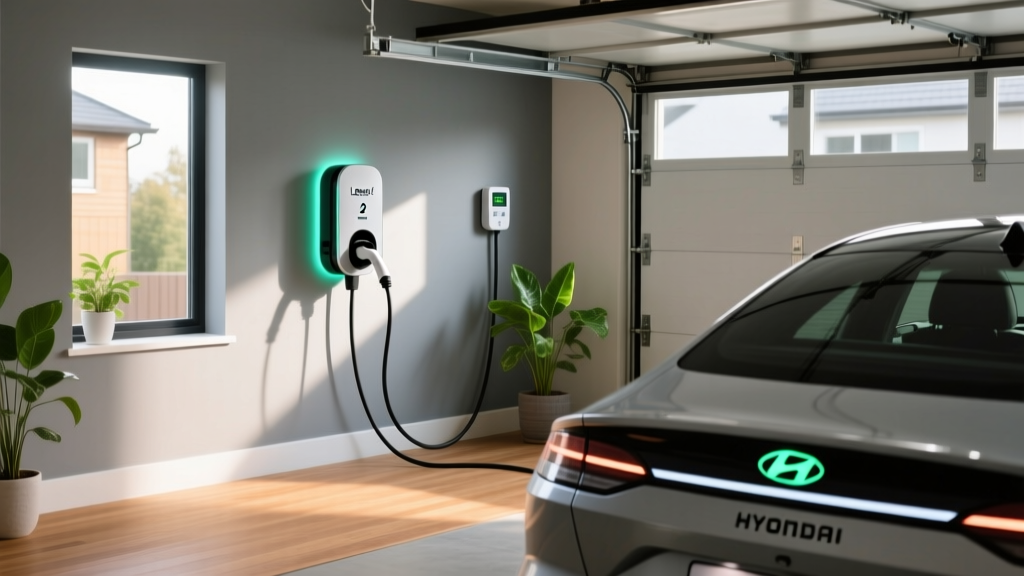
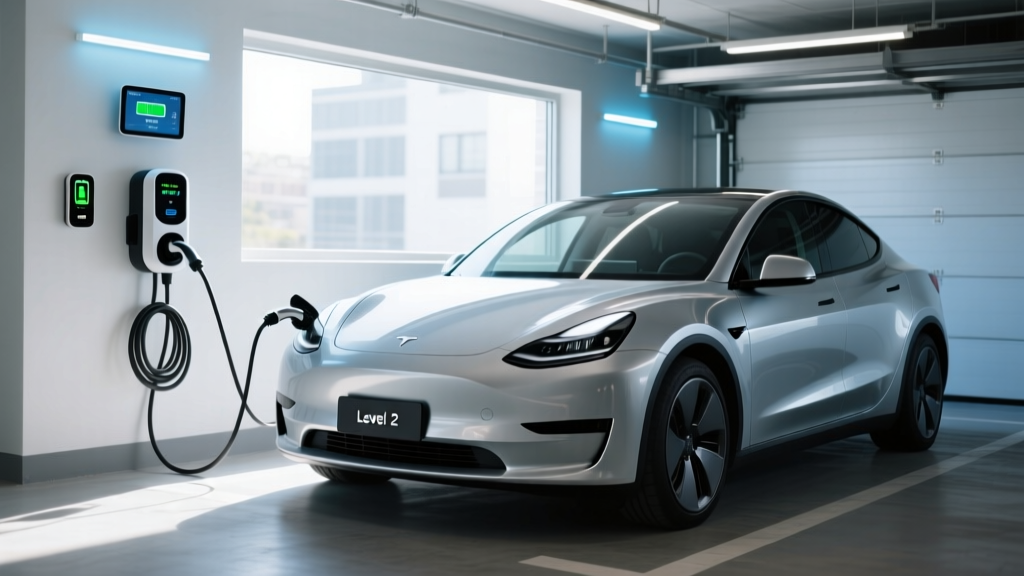
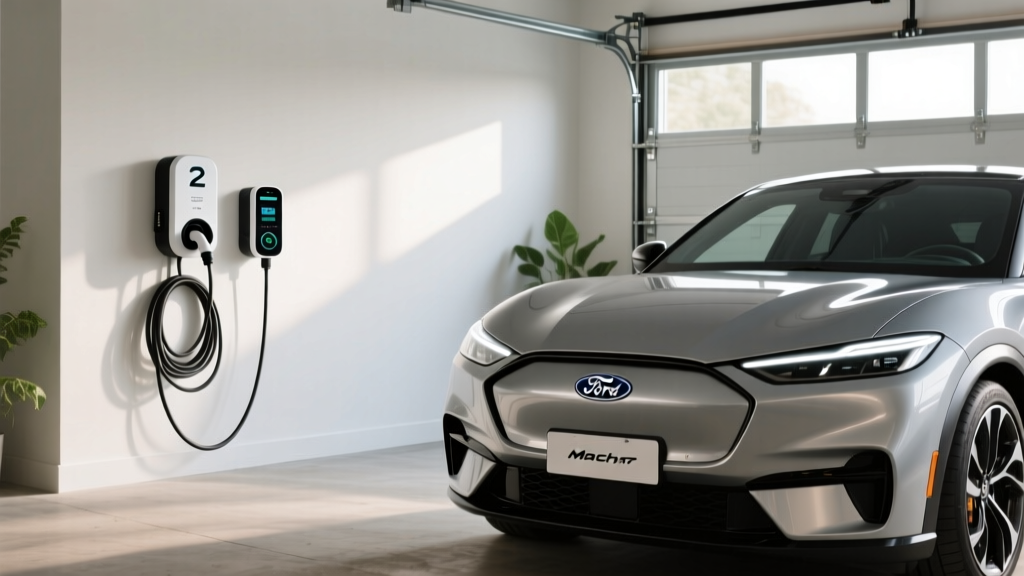
With a 100+ kWh battery, you want a charger that delivers at least 11.5 kW (48A) to ensure a full overnight refill. Here are top picks based on power output, connector compatibility, smart features, and reliability.
Tesla Wall Connector
- Power: Up to 11.5 kW (48A) on a 60A circuit
- Connector: NACS native
- Cable length: 24 feet
- Smart features: Wi-Fi, OTA updates, power sharing (link multiple units on one circuit), load management
- Price: ~$475
- Best for: Tesla and NACS-equipped SUVs; best value in high-power charging
ChargePoint Home Flex
- Power: Up to 19.2 kW (80A) on a 100A circuit (hardwired); 12 kW (50A) on NEMA 14-50 plug
- Connector: NACS or J1772 (configurable)
- Cable length: 23 feet
- Smart features: Wi-Fi, Alexa integration, ChargePoint app scheduling, energy tracking
- Price: ~$699
- Best for: Maximum power flexibility; future-proof if panel supports 100A
Emporia Level 2 Smart Charger
- Power: Up to 11.5 kW (48A) on a 60A circuit
- Connector: J1772 (NACS adapter available)
- Cable length: 24 feet
- Smart features: Wi-Fi, real-time energy monitoring, solar integration, time-of-use scheduling
- Price: ~$399
- Best for: Budget-conscious buyers who want granular energy data
For a 120-140 kWh SUV battery, I recommend a minimum 48A charger on a 60A circuit. The Tesla Wall Connector at $475 offers the best combination of price, power, and native NACS compatibility. If your electrical panel can support it, the ChargePoint Home Flex at 80A/19.2 kW can cut overnight charging times nearly in half — a meaningful advantage for the largest batteries.
Frequently Asked Questions
How much does it cost to install a home EV charger?
A straightforward Level 2 installation with an existing 200A panel and a short wiring run typically costs $800-$1,650 including equipment, electrician labor, and permit. If your panel needs upgrading from 100A to 200A, total costs can reach $3,250-$7,750. Always get 2-3 quotes from licensed electricians and confirm the quote includes permit and inspection fees.
How fast will each charging level add range?
Level 1 (120V) adds 3-5 miles per hour — impractical for a 300+ mile SUV. Level 2 (240V, 48A) adds roughly 35-44 miles per hour, enough to fully recharge most long-range SUVs overnight. DC fast charging at 250-350 kW can add 150-300 miles in a 20-30 minute session, depending on the vehicle's charge curve and battery size.
Which connector and charger is compatible with my EV?
For 2026 model-year EVs from Tesla, Ford, GM, Rivian, Hyundai, Kia, BMW, and Lucid, the answer is NACS. Older EVs (2023 and prior) may still use CCS1. CHAdeMO is effectively obsolete for new vehicles. Check your vehicle's charge port or owner's manual. For home Level 2 charging, a NACS-equipped vehicle needs a NACS charger (like the Tesla Wall Connector) or a J1772 charger with a J1772-to-NACS adapter.
How much does charging cost per mile vs. gas?
Home charging at typical residential rates ($0.12-$0.16/kWh) costs roughly $0.04-$0.05 per mile in a long-range electric SUV — about 70% less than a gas SUV at $3.40/gallon and 20 MPG ($0.17/mi). Even public DC fast charging at $0.45/kWh ($0.15/mi) is competitive with gasoline. The savings compound: over 12,000 miles/year, home charging saves $1,200-$1,500 annually versus gasoline.
What electrical upgrades might I need?
The most common upgrade is a panel replacement from 100A to 200A service, which costs $1,500-$3,500. You may also need a new conduit run from the panel to the garage or driveway, which adds $200-$800 depending on distance and whether walls need to be opened. Homes with older knob-and-tube or aluminum wiring may require partial rewiring. Some utilities offer make-ready programs that cover the cost of wiring from the utility's transformer to your meter — check with your provider before starting work.
Does the federal tax credit cover home charger installation?
The IRS Residential Clean Energy Credit (IRC §25D) covers up to 30% of the cost of qualified EV charging equipment installed at your primary residence, with a maximum credit of $1,000 per year. This is separate from the §30D vehicle purchase credit. The equipment must be installed and placed in service during the tax year. Consult a tax professional for eligibility specifics, as rules around income limits and qualifying property can change.
Putting It All Together: Your Charging Plan for a Long-Range SUV
If you're buying the longest range EV SUV available in 2026 — whether that's the Lucid Gravity, Rivian R1S Max, or Tesla Model X — here's the practical playbook:
- Before delivery: Get an electrical assessment. Have a licensed electrician evaluate your panel capacity and provide a quote for a 60A circuit (48A continuous). If you need a panel upgrade, start that process early — it can take 4-8 weeks including utility coordination.
- Choose a NACS-native Level 2 charger rated for at least 48A. The Tesla Wall Connector is the default value pick; the ChargePoint Home Flex is the power pick if your panel supports 80A.
- Set up time-of-use (TOU) charging. Most utilities offer off-peak rates between 10 PM and 6 AM. Configure your charger's app to start charging at 11 PM and you'll pay $0.08-$0.12/kWh instead of $0.16-$0.22/kWh during peak hours.
- Download the right apps before your first road trip. For NACS vehicles, the Tesla app gives Supercharger access. For CCS vehicles, Electrify America and EVgo apps are essential. PlugShare remains the best aggregator for finding chargers across all networks.
- Plan road trips around 10-80% charging. Charging from 80-100% on a DC fast charger can take as long as 10-80% due to the charge curve taper. For road trips, charge to 80%, drive, and repeat — it's faster overall than waiting for a full charge at any single stop.
A long-range electric SUV is only as practical as your charging setup. With a proper Level 2 home installation and a clear understanding of public charging networks, connectors, and costs, vehicles like the Lucid Gravity and Rivian R1S Max Pack deliver on their promise: genuine 300-400+ mile road-trip capability with daily driving that costs a fraction of gasoline.