If you've invested in an electric vehicle with the longest range available — a Lucid Air Grand Touring (EPA 516 miles), a Tesla Model S Long Range (EPA 402 miles), or a Chevrolet Silverado EV (EPA 380+ miles) — you've already solved the range equation. But a massive battery pack (100+ kWh usable) introduces a new challenge: replenishing that energy efficiently at home and on the road. A 118 kWh Lucid Air battery on a standard 120V outlet adds roughly 3 miles per hour. That's 39 hours for a full charge. The right charging setup transforms that into a non-issue.
This guide covers the exact electrical requirements, equipment, costs, and charging times you need to keep a long-range EV charged and ready — whether you drive a 400-mile flagship sedan or a 300-mile crossover with an extended battery pack.
Charging Levels Explained: Speeds for Large EV Batteries
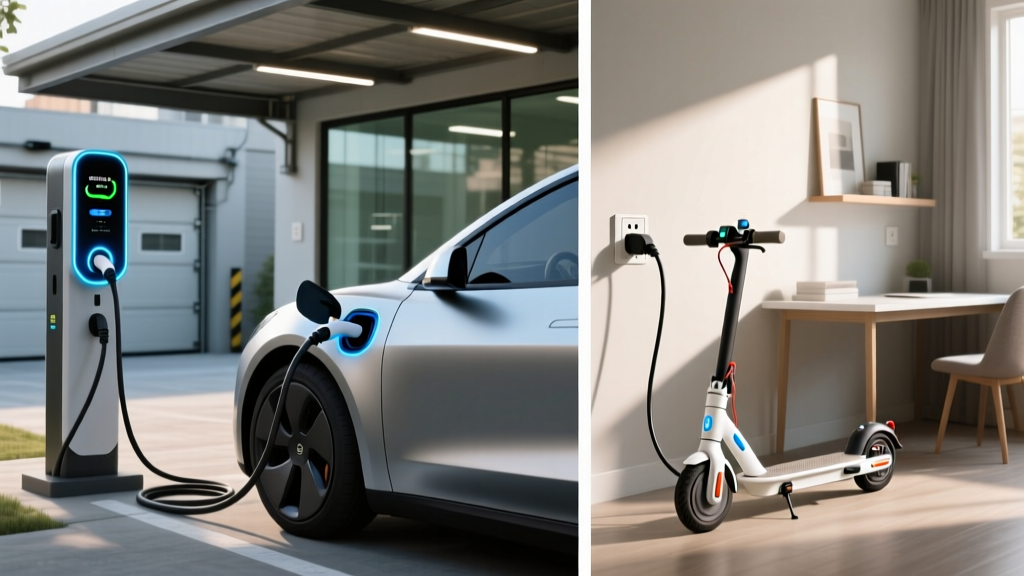
EV charging happens at three levels, each defined by voltage and power output measured in kilowatts (kW). Power (kW) is the rate of energy flow; energy (kWh) is what fills your battery. Think of kW as the width of a hose and kWh as the bucket you're filling. Long-range EVs have very large buckets — typically 85 to 118 kWh usable — so hose width matters enormously.
| Level | Voltage | Power (kW) | Miles of Range Added/Hour | Best For |
|---|---|---|---|---|
| Level 1 | 120V AC | 1.0–1.4 kW | 3–5 mi/hr | Overnight top-ups, PHEVs, emergencies |
| Level 2 | 240V AC | 7.2–19.2 kW | 25–70 mi/hr | Daily home charging, workplace |
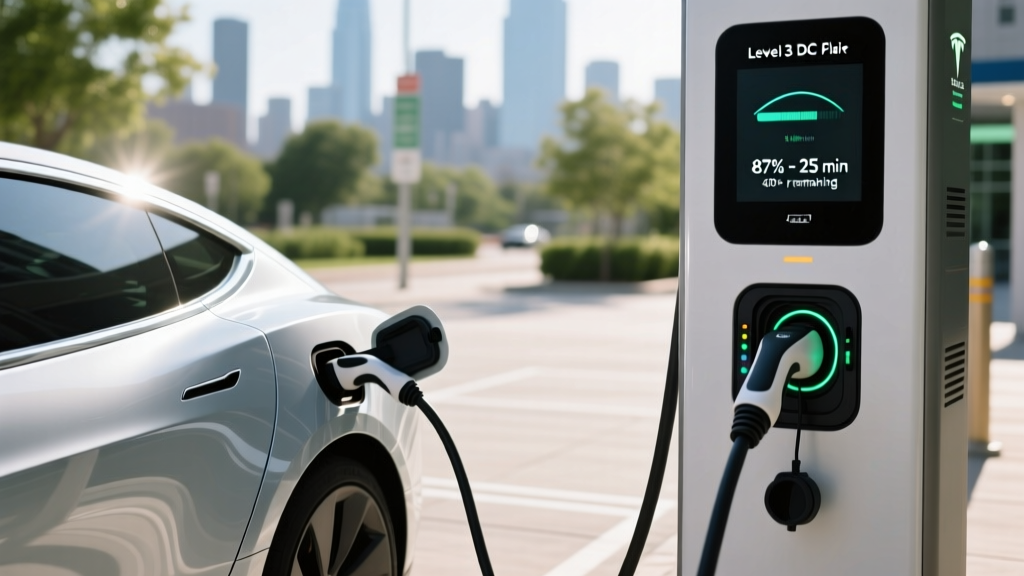
| DC Fast Charge | 400–900V DC | 50–350 kW | 150–300+ mi in 20 min | Road trips, rapid replenishment |
For a 100+ kWh battery, Level 1 is essentially useless as a primary strategy. Level 2 at 11.5 kW (48A) is the practical home standard, adding roughly 40 miles of range per hour — enough to fully replenish a 118 kWh pack overnight in about 10-11 hours. DC fast charging handles road trips, where 10-80% charge times become the critical metric.
DC Fast Charging Times for Long-Range EVs (10-80%)
Long-range EVs vary dramatically in how quickly they accept DC fast charge, determined by battery architecture (400V vs 800V/900V), peak charge rate, and the charge curve — the taper in power as the battery fills above 50-60% state of charge (SoC). Peak kW numbers on spec sheets don't tell the full story; sustained average power matters more.
| Vehicle | Battery (kWh Usable) | Architecture | Peak DC kW | 10-80% Time |
|---|---|---|---|---|
| Lucid Air Grand Touring | 118 kWh | 900V | 300 kW | ~20 min |
| Hyundai Ioniq 6 SE Long Range | 77.4 kWh | 800V | 235 kW | ~18 min |
| Tesla Model S Long Range | ~95 kWh | 400V | 250 kW | ~27 min |
| Rivian R1T Dual Max Pack | ~141 kWh | 400V | 220 kW | ~42 min |
| Chevrolet Silverado EV 4WT | ~200 kWh | 400V | 350 kW | ~45 min (est.) |
The Hyundai Ioniq 6 and Lucid Air achieve faster 10-80% times despite lower or similar peak kW to the Silverado EV because their 800V/900V architectures sustain higher power deeper into the charge curve. A 400V system like the Rivian R1T or Tesla Model S tapers earlier, extending total charge time. For road trips, an 800V+ vehicle paired with a 350 kW Electrify America or Tesla Supercharger V4 station is the fastest combination available.
Home Level 2 Charger Installation: Requirements and Costs
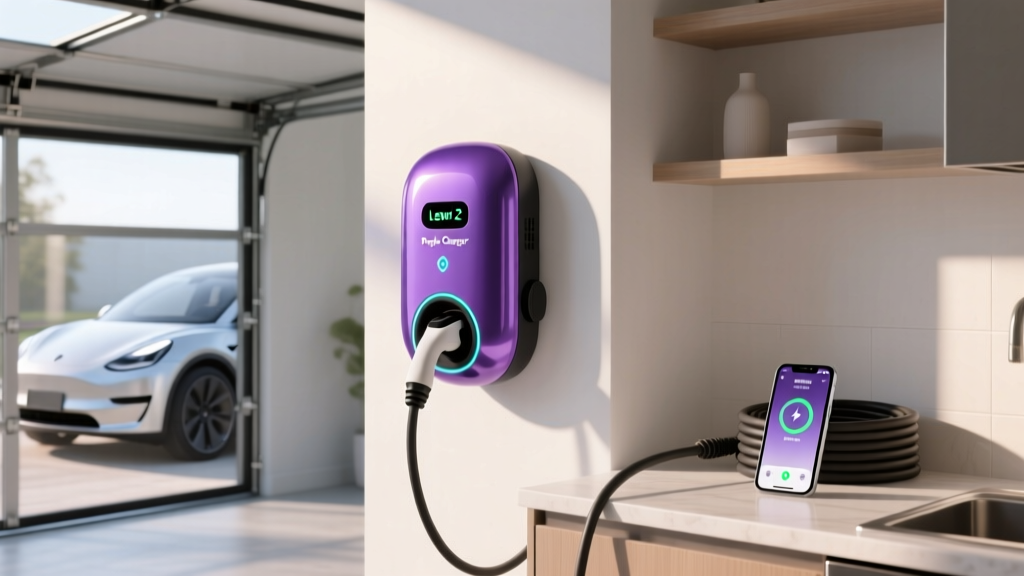
Level 2 home charging is where long-range EV ownership becomes effortless. Wake up every morning with a full battery, regardless of its size. But installing a dedicated 240V circuit involves real electrical work and costs that vary significantly based on your home's panel capacity and the distance from panel to charger location.
Electrical Requirements
A typical Level 2 home charger requires:
- Circuit: Dedicated 40A to 60A breaker (240V), depending on charger amperage
- Continuous load rule: NEC requires the circuit be rated 125% of continuous draw — a 48A charger needs a 60A breaker
- Wire gauge: 6 AWG copper for 48A/60A circuits; 8 AWG for 32A/40A circuits
- Outlet vs hardwired: NEMA 14-50 outlet (50A) offers portability; hardwired allows up to 60A/48A continuous
Panel Upgrade Reality
Homes with 100A or 125A main panels may not have capacity for a 60A EV circuit alongside existing loads (HVAC, electric dryer, oven). A licensed electrician will perform a load calculation per NEC Article 220. If your panel is at capacity, you face either:
- Panel upgrade to 200A: $2,000–$4,500 depending on utility requirements and conduit runs
- Lower-amperage charger: A 32A (7.7 kW) charger on a 40A circuit draws less panel capacity
- Smart load management: Devices like the Emporia Smart Load Center or charger-integrated load balancing can dynamically share panel capacity without an upgrade
| Component | Low Estimate | High Estimate |
|---|---|---|
| Level 2 Charger Equipment (40A–48A) | $350 | $750 |
| Electrician Labor (standard install, <30 ft run) | $500 | $1,500 |
| Permit and Inspection | $50 | $300 |
| Panel Upgrade to 200A (if needed) | $2,000 | $4,500 |
| Total (no panel upgrade) | $900 | $2,550 |
| Total (with panel upgrade) | $2,900 | $7,050 |
Source: National average estimates; get 2-3 local quotes. Some utilities offer rebates of $250–$500 for Level 2 installation. The IRS §30D credit covers new EVs, not home charger equipment — but the separate Residential Clean Energy Credit (§25D) may not apply to EV chargers after 2022; check with a tax professional. The Alternative Fuel Vehicle Refueling Property Credit (§30C) was modified and has specific census-tract eligibility requirements.
Connector Compatibility: NACS, CCS, and CHAdeMO
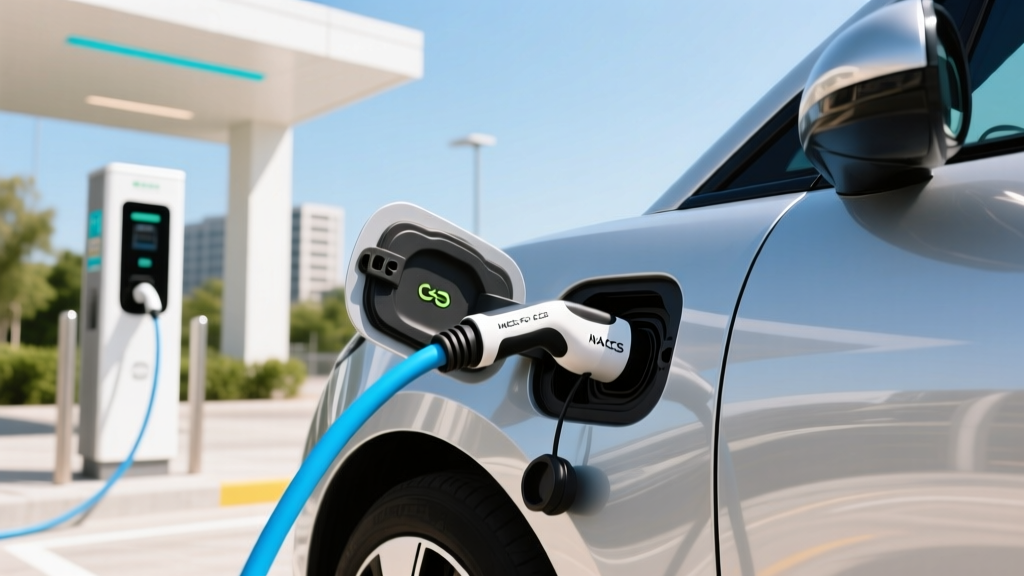
As of 2026, the North American charging connector landscape has consolidated significantly around the North American Charging Standard (NACS), originally developed by Tesla. Most major automakers — Ford, GM, Rivian, Hyundai/Kia, BMW, and others — have transitioned to NACS ports on new vehicles. CCS1 (Combined Charging System) remains on many 2023-2025 models, and CHAdeMO is effectively legacy (Nissan Leaf only).
| Connector | Brands Using (Native Port) | Adapter Needed For |
|---|---|---|
| NACS (Tesla standard) | Tesla (all), Ford (2025+), GM (2025+), Rivian (2025+), Hyundai/Kia (2026+), BMW (2025+) | CCS stations require NACS-to-CCS adapter (often included by automaker) |
| CCS1 | Hyundai/Kia (2023-2025), VW/ID.4 (2023-2025), BMW iX (2023-2024), older Ford/GM EVs | Tesla Superchargers require CCS-to-NACS adapter (Tesla sells for ~$250) |
| CHAdeMO | Nissan Leaf (all years) | No adapter to CCS/NACS exists for DC fast charging; limited network |
For long-range EV buyers in 2026, NACS is the default. If you own a 2024 model with CCS1, most automakers have provided or sell a NACS adapter enabling Tesla Supercharger access — critical for road trip charging reliability. Verify adapter compatibility with your specific model year before purchasing.
Charging Cost Per Mile: Home vs. Public vs. Gas
One of the strongest ownership arguments for any electric vehicle — longest-range models included — is lower per-mile energy cost. But the savings depend heavily on where and when you charge. Here's a realistic breakdown using 2026 average electricity and fuel prices.
| Scenario | Rate | Efficiency | Cost Per Mile |
|---|---|---|---|
| Home Level 2 (off-peak TOU rate) | $0.09/kWh | 3.0 mi/kWh (e.g., Lucid Air) | $0.030 |
| Home Level 2 (national avg residential) | $0.17/kWh | 3.0 mi/kWh | $0.057 |
| Public Level 2 (ChargePoint, EVgo L2) | $0.25–$0.39/kWh | 3.0 mi/kWh | $0.083–$0.130 |
| DC Fast Charge (Tesla Supercharger avg) | $0.28–$0.36/kWh | 3.0 mi/kWh | $0.093–$0.120 |
| DC Fast Charge (Electrify America peak) | $0.43–$0.56/kWh | 3.0 mi/kWh | $0.143–$0.187 |
| Gasoline (25 MPG combined, $3.40/gal) | $3.40/gal | 25 mi/gal | $0.136 |
| Gasoline (20 MPG combined, $3.40/gal) | $3.40/gal | 20 mi/gal | $0.170 |
Home charging on an off-peak time-of-use (TOU) plan delivers fuel costs at roughly $0.03/mile — a fraction of gasoline. Even at national average residential rates, a highly efficient long-range EV like the Lucid Air (146 MPGe combined per fueleconomy.gov) undercuts a 25 MPG gas car by over 60%. The savings narrow at public DC fast chargers, where peak pricing can approach or exceed gasoline costs per mile. The financial case for an EV is overwhelmingly dependent on reliable home charging access.
Recommended Level 2 Home Chargers for Long-Range EVs
Large batteries reward higher-amperage Level 2 chargers. A 48A unit delivers 11.5 kW, fully replenishing a 100 kWh battery in roughly 9-10 hours. A 32A unit at 7.7 kW stretches that to 13+ hours — still workable for overnight, but tighter if you arrive home nearly empty.
Tesla Wall Connector (Gen 4)
- Power: 48A / 11.5 kW (hardwired, 60A circuit)
- Connector: NACS native; J1772 adapter available
- Cable: 24 ft
- Smart features: Wi-Fi, OTA updates, power sharing between two units, Tesla app integration
- Price: ~$475
- Best for: Tesla owners and NACS-equipped Ford/GM/Rivian vehicles
ChargePoint Home Flex
- Power: Configurable 16A–50A (up to 12 kW at 50A, hardwired)
- Connector: J1772 (works with all non-Tesla EVs; Tesla adapter included)
- Cable: 23 ft
- Smart features: Wi-Fi, ChargePoint app scheduling, Alexa, load management
- Price: ~$550–$700
- Best for: CCS1/J1772 EVs, flexible amperage for panel-limited homes
Emporia Level 2 EV Charger
- Power: 48A / 11.5 kW (hardwired, 60A circuit)
- Connector: J1772 (NACS version available 2025+)
- Cable: 24 ft
- Smart features: Integration with Emporia Vue energy monitor, solar-aware charging, TOU scheduling
- Price: ~$400
- Best for: Budget-conscious buyers, solar homes, energy monitoring
Grizzl-E Smart
- Power: 40A / 9.6 kW (NEMA 14-50 plug or hardwired)
- Connector: J1772
- Cable: 24 ft
- Smart features: OCPP compatible, app control, extreme cold rated (-40°F)
- Price: ~$450
- Best for: Cold climates, outdoor installs, portable plug-in option
Safety, Code, and Installation Best Practices
EV charging is a continuous high-amperage load running for 8-12 hours — far longer than most household appliances. Proper installation is non-negotiable for safety and longevity.
- Dedicated circuit: Your EV charger must be on its own breaker, never shared with other appliances
- GFCI protection: NEC 2023/2026 requires GFCI protection for outdoor receptacles; hardwired units with built-in ground fault protection may satisfy this — confirm with your local inspector
- Outdoor rating: If mounting outside, ensure the charger carries a NEMA 4 (weatherproof) rating; most quality units (Tesla Wall Connector, ChargePoint Home Flex, Grizzl-E) do
- Permit and inspection: Nearly all jurisdictions require an electrical permit for a new 240V circuit. The inspection verifies wire gauge, breaker sizing, grounding, and conduit — protecting you from fire risk and ensuring insurance coverage
- Cable management: A 24-foot cable is heavy when wet or frozen; wall-mounted cable organizers prevent tripping hazards and connector strain
Always hire a licensed electrician experienced with EV charger installs. Ask specifically about their load calculation process and whether they pull permits — a refusal to permit the work is a red flag.
Frequently Asked Questions
How much does it cost to install a home EV charger?
A standard Level 2 installation with a 40A-48A charger, short conduit run (<30 ft from panel), and no panel upgrade costs $900–$2,550 including equipment, electrician labor, and permit. If your home needs a panel upgrade from 100A/125A to 200A, add $2,000–$4,500. Get 2-3 quotes; prices vary widely by region and electrician availability.
How fast will each charging level add range?
Level 1 (120V) adds 3-5 miles per hour — impractical for a 100+ kWh battery. Level 2 at 48A/11.5 kW adds approximately 35-45 miles per hour for a typical long-range EV, fully charging overnight. DC fast charging at 250-350 kW can add 150-200+ miles in 15-20 minutes, depending on the vehicle's architecture and charge curve.
Which connector/charger is compatible with my EV?
2025-2026 models from Tesla, Ford, GM, Rivian, BMW, and Hyundai/Kia use NACS natively. 2023-2024 models from Hyundai, Kia, VW, and BMW typically use CCS1. Nissan Leaf uses CHAdeMO. Check your vehicle's charge port or owner's manual. Most automakers provide or sell adapters for cross-compatibility, particularly for Tesla Supercharger access from CCS1 vehicles.
How much does charging cost per mile vs gas?
Home charging on off-peak rates costs roughly $0.03/mile for an efficient long-range EV (3.0 mi/kWh). National average residential rates yield about $0.06/mile. Compare this to gasoline at $0.14-$0.17/mile for a 20-25 MPG vehicle. Public DC fast charging at $0.28-$0.56/kWh narrows the gap to $0.09-$0.19/mile. Home access is the primary driver of EV fuel savings.
What electrical upgrades might I need?
If your home has a 100A or 125A main panel, you may need an upgrade to 200A to accommodate a 48A-60A EV circuit alongside existing loads like HVAC, electric range, and dryer. An electrician will perform a NEC Article 220 load calculation. Alternatives include installing a lower-amperage charger (32A on a 40A circuit) or using a smart load management system that dynamically limits charger draw when other appliances are running.
Does preconditioning matter for DC fast charging?
Yes — critically. Battery preconditioning warms the pack to the optimal temperature window (roughly 85-95°F) for fast charging. Vehicles like Tesla, Hyundai/Kia (E-GMP platform), and Lucid precondition automatically when you navigate to a DC fast charger. Without preconditioning, a cold battery may accept only 50-80 kW instead of its rated 250-350 kW, doubling your charge stop time. Always navigate to the charger rather than just pulling in cold.