The Longest-Range EVs of 2026: Why Your Charging Setup Matters More Than Ever
If you're asking what electric car has the longest range, you're likely eyeing the upper echelon of 2026 battery-electric vehicles — models pushing past 400 miles on the EPA cycle. But packing a 100+ kWh battery into a vehicle fundamentally changes the home charging equation. A bigger battery means longer charge times on undersized equipment, higher electrical service demands, and a greater need for optimized Level 2 infrastructure at home.
Below, we rank the longest-range EVs currently on sale, then break down exactly what it takes to charge them at home — from electrical panel requirements to equipment picks and per-mile cost comparisons versus gasoline.
- Lucid Air Grand Touring — 512 miles EPA, 118 kWh battery
- Chevrolet Silverado EV 4WT — 460 miles EPA, ~200 kWh battery
- Tesla Model S Long Range — 402 miles EPA, ~100 kWh battery
- Mercedes-Benz EQS 450+ Sedan — 390 miles EPA, 108.4 kWh battery
- Rivian R1S Dual Max — 386 miles EPA, 149 kWh battery
Real-world caveat: Expect 10-20% range reduction at sustained highway speeds above 70 mph, and 20-35% loss in sub-freezing temperatures. A 512-mile EPA sticker may yield 380-420 real-world highway miles in winter.
Charging Levels Explained: Speeds, kW Ratings, and Miles Per Hour
Before selecting equipment, understand the three charging tiers. The critical distinction: kW (kilowatts) measures power — the rate at which energy flows. kWh (kilowatt-hours) measures energy — the total capacity of your battery. Think of kW as the width of a hose and kWh as the size of the bucket you're filling.
| Level | Voltage | Power (kW) | Miles Added/Hour | Best For |
|---|---|---|---|---|
| Level 1 | 120V AC | 1.0–1.4 kW | 3–5 mi/hr | Overnight trickle; PHEVs; emergencies |
| Level 2 | 240V AC | 3.3–19.2 kW | 12–75 mi/hr | Daily home charging; workplace |
| DC Fast Charge | 400–800V DC | 50–350 kW | 150–1,200+ mi/hr | Road trips; rapid top-ups |
For a 118 kWh Lucid Air Grand Touring, Level 1 charging at 1.4 kW would take roughly 84 hours from empty to full — essentially useless. A 48-amp Level 2 station (11.5 kW) fills the same pack in approximately 10-11 hours, making overnight charging viable. DC fast charging at the Lucid's peak rate of ~250 kW can push from 10-80% in roughly 20 minutes under ideal conditions.
Charge curve reality check: No EV sustains its peak kW rate across the full session. Most vehicles hit peak speed between 10-40% state of charge, then taper progressively. A "250 kW peak" charger may average only 150-170 kW across a 10-80% session. Always look at 10-80% time, not peak kW, for practical planning.
Home EV Charger Installation: Electrical Requirements and Cost Breakdown
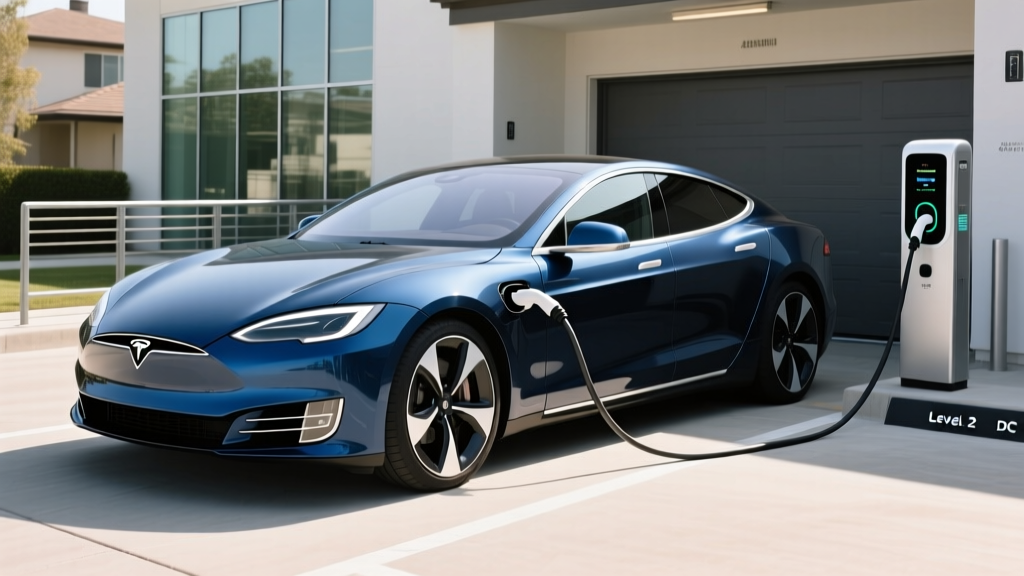
Installing a Level 2 home charger is the single most impactful upgrade for long-range EV ownership. Here's what the process actually involves and what it costs.
Electrical Requirements
Most high-power Level 2 chargers require a 240V dedicated circuit with amperage rated at 125% of the charger's continuous draw (National Electrical Code requirement). Common configurations:
- 32-amp charger (7.7 kW): requires a 40-amp breaker, 8 AWG wire
- 40-amp charger (9.6 kW): requires a 50-amp breaker, 6 AWG wire
- 48-amp charger (11.5 kW): requires a 60-amp breaker, 4 AWG wire
- 64-amp charger (15.4 kW): requires an 80-amp breaker, 3 AWG wire — may need a subpanel
Does Your Electrical Panel Need an Upgrade?
Homes built before 2000 often have 100-amp or 150-amp main service panels. Adding a 60-amp EV circuit to an already-loaded panel may exceed capacity, requiring a panel upgrade to 200 amps — a significant added cost. Signs you may need an upgrade:
- Main breaker rated below 200 amps
- Few or no open breaker slots
- Existing high-draw appliances (electric range, dryer, HVAC) already consuming most capacity
- Frequent breaker trips under normal load
A licensed electrician can perform a load calculation (NEC Article 220) to determine if your panel can handle the added circuit. Some newer solutions, like the SPAN smart panel or load-management devices, can avoid a full upgrade by dynamically shedding load.
| Component | Simple Install (panel nearby) | Complex Install (panel upgrade + long run) |
|---|---|---|
| Level 2 Charger (hardware) | $400–$750 | $400–$750 |
| Electrical permit | $50–$150 | $50–$200 |
| Electrician labor (2-4 hrs simple; 8-16 hrs complex) | $300–$800 | $1,200–$3,000 |
| Wire, conduit, breaker | $100–$300 | $300–$800 |
| Panel upgrade (if needed) | $0 | $1,500–$3,500 |
| Utility service upgrade (rare, 100→200A) | $0 | $2,000–$5,000 |
| Total Estimated Cost | $850–$2,000 | $5,450–$13,250 |
Federal incentive: The Residential Clean Energy Credit (IRC §25D) was modified under recent legislation. Check current-year IRS guidance for whether EV charger hardware qualifies in your tax year, as rules have shifted. Some utilities also offer rebates of $250-$500 for Level 2 equipment — contact your local provider.
Connector Compatibility: NACS, CCS1, CHAdeMO, and Adapter Needs
As of 2026, the North American Charging Standard (NACS), originally developed by Tesla, has become the dominant connector for new EVs. Most legacy CCS1 vehicles can access Tesla Superchargers via adapter, and NACS-native vehicles can use CCS networks the same way.
| Connector | Native Brands | Adapter Access |
|---|---|---|
| NACS (Tesla) | Tesla (all), Ford, GM, Rivian, Volvo, Polestar, Mercedes, BMW (new models), Lucid (2025+) | CCS1 stations via adapter (included with many vehicles) |
| CCS1 | Hyundai, Kia, Volkswagen, some Stellantis models | Tesla Superchargers via Magic Dock or third-party adapter |
| CHAdeMO | Nissan Leaf (legacy only — discontinued new sales) | Limited network; no viable adapter path to NACS |
For home Level 2 charging, all vehicles use the J1772 connector (or NACS, which supports Level 2 AC via the same pins). If you own a NACS-vehicle and buy a J1772 charger, you'll need a J1772-to-NACS adapter (~$100-$150). Most NACS-native home chargers now ship with the Tesla-style connector directly.
Cost to Charge: Home vs. Public vs. Gas — Per-Mile Comparison
Long-range EVs shine economically when charged at home on off-peak electricity rates. The per-mile cost gap between home charging and gasoline is substantial — but public DC fast charging narrows it considerably.
| Scenario | Rate | Cost per Mile (3.0 mi/kWh EV) | Annual Cost (12,000 mi) |
|---|---|---|---|
| Home off-peak (national avg) | $0.13/kWh | $0.043 | $520 |
| Home peak / high-cost state (CA, MA) | $0.28/kWh | $0.093 | $1,120 |
| Public Level 2 (ChargePoint, EVgo) | $0.35–$0.55/kWh | $0.12–$0.18 | $1,440–$2,160 |
| DC Fast Charge (Electrify America, Tesla) | $0.35–$0.58/kWh | $0.12–$0.19 | $1,440–$2,280 |
| Gasoline vehicle (27 MPG, $3.40/gal) | $3.40/gal | $0.126 | $1,510 |
At national average electricity rates, home charging costs roughly one-third what gasoline costs per mile. Even in high-cost states, home-charged EVs undercut gas vehicles. However, exclusive reliance on DC fast charging can equal or exceed gasoline costs — reinforcing the importance of home Level 2 access.
Recommended Home Level 2 Chargers for Long-Range EVs
Owners of 100+ kWh vehicles need chargers that can deliver meaningful overnight replenishment. Here are our top picks based on power output, reliability, and smart features:
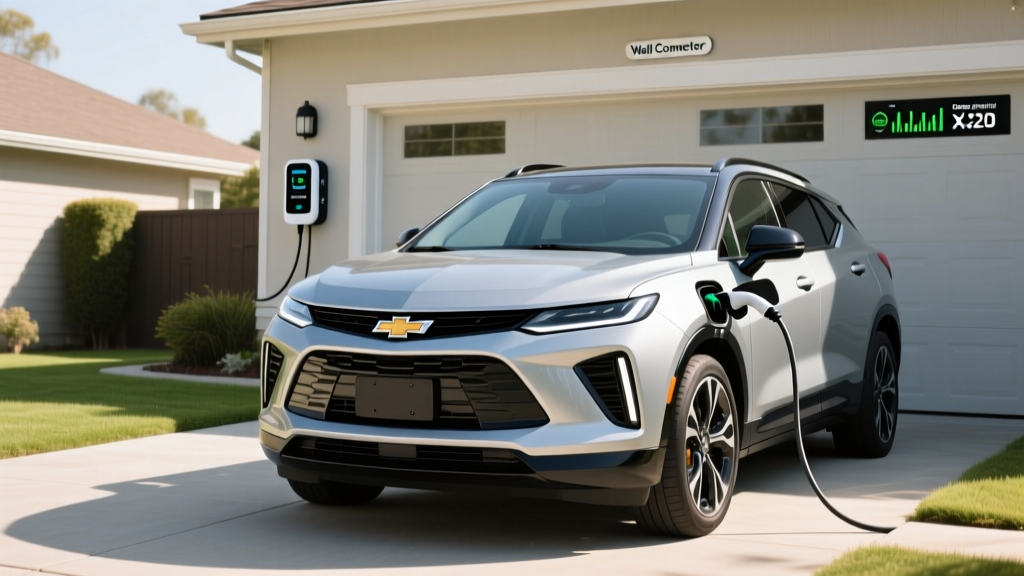
Tesla Wall Connector (Gen 3)
- Power: Up to 11.5 kW (48A)
- Connector: NACS native
- Cable: 24 ft
- Smart features: Wi-Fi, OTA updates, load sharing (pair up to 6 units on one circuit), power-sharing
- Price: ~$475
- Best for: Tesla, Ford, GM, Rivian, and other NACS-native vehicles
ChargePoint Home Flex
- Power: Up to 12 kW (50A, configurable down to 16A)
- Connector: J1772 (NACS adapter available)
- Cable: 23 ft
- Smart features: Wi-Fi, app scheduling, utility demand-response integration, Alexa
- Price: ~$550–$700
- Best for: CCS1 vehicles; flexible amperage for older panels
Emporia Level 2 Smart Charger
- Power: Up to 11.5 kW (48A)
- Connector: J1772 or NACS (select at purchase)
- Cable: 24 ft
- Smart features: Wi-Fi, solar integration, energy monitoring, scheduling, load management with Emporia Vue panel monitor
- Price: ~$400–$500
- Best for: Budget-conscious buyers; solar-panel homes; panel-load management
Grizzl-E Smart
- Power: Up to 10 kW (40A)
- Connector: J1772 (NACS adapter sold separately)
- Cable: 24 ft
- Smart features: Wi-Fi, OCPP protocol, adjustable amperage, extreme-cold rated (-40°F)
- Price: ~$450–$550
- Best for: Cold climates; outdoor installs; durability focus
Key selection tip: Match your charger's amperage to your EV's onboard charger capacity. The Lucid Air accepts up to 19.2 kW AC (80A onboard charger — rare), while most EVs max out at 11.5 kW (48A). Buying a 64-amp charger for a vehicle limited to 48A AC charging wastes money.
Charging Times for the Longest-Range EVs: 10-80% Estimates
Here's how long it takes to replenish the largest batteries from 10% to 80% state of charge — the practical charging window most EV owners use (charging above 80% slows dramatically to protect battery health):
| Vehicle | Battery (kWh usable) | Level 2 at 11.5 kW (48A) | DC Fast (peak kW) | DC Fast 10-80% |
|---|---|---|---|---|
| Lucid Air Grand Touring | 118 kWh | ~7.5 hrs | ~250 kW peak | ~20 min |
| Chevy Silverado EV 4WT | ~200 kWh | ~12.5 hrs | ~350 kW peak | ~30 min |
| Tesla Model S LR | ~100 kWh | ~6.5 hrs | ~250 kW peak | ~18 min |
| Mercedes EQS 450+ | 108.4 kWh | ~7 hrs | ~200 kW peak | ~31 min |
| Rivian R1S Dual Max | 149 kWh | ~9.5 hrs | ~220 kW peak | ~35 min |
Preconditioning matters: All of these vehicles support battery preconditioning — warming the pack to optimal temperature before a DC fast charge session. If you navigate to a fast charger without preconditioning (common in cold weather), your peak charge rate may drop by 30-50%, adding 10-15 minutes to your stop. Always use the vehicle's native navigation to route to chargers.
Safety, Code Compliance, and Installation Best Practices
A Level 2 charger draws substantial continuous current for hours at a time. Proper installation isn't optional — it's a fire-safety imperative. Key requirements per the National Electrical Code (NEC Article 625):
- Dedicated circuit: Your EV charger must have its own breaker — no sharing with other appliances.
- GFCI protection: Required for outdoor receptacles (NEC 2020+). Hardwired units may have this built in.
- Outdoor rating: If installing outside, both the charger (NEMA 4 or IP65 rated) and any receptacle must be rated for wet locations.
- Wire gauge: Must match breaker amperage and run length. Longer runs (>50 ft) may require thicker wire to prevent voltage drop.
- Hardwired vs. plug: Hardwired installations (no plug) are generally preferred for 48A+ chargers. NEMA 14-50 receptacles are common for 40A units but must be installed with proper torque and a steel backplate — cheap receptacles have caused fires.
- Permit required: Virtually all jurisdictions require an electrical permit for EV charger installation. Unpermitted work can void insurance claims.
Frequently Asked Questions
What electric car has the longest range in 2026?
The Lucid Air Grand Touring leads at 512 miles EPA. However, the Chevrolet Silverado EV 4WT offers 460 miles in a truck form factor. For real-world highway driving in moderate conditions, expect roughly 85-90% of EPA figures — so around 435-460 miles for the Lucid and 390-415 for the Silverado. In winter, subtract another 15-20%.
How much does it cost to install a home EV charger?
A straightforward installation (panel has capacity, short wire run, no upgrade needed) typically costs $850–$2,000 including equipment, labor, and permit. Complex installations requiring a panel upgrade can reach $5,000–$13,000+. Always get a load calculation from a licensed electrician first.
How fast will each charging level add range?
Level 1 (120V) adds roughly 3-5 miles per hour — impractical for 100+ kWh batteries. Level 2 (240V, 48A) adds approximately 35-45 miles per hour depending on vehicle efficiency. DC fast charging at 250 kW can add 150-200+ miles in 10-15 minutes for efficient vehicles like the Lucid Air.
Which connector/charger is compatible with my EV?
Check your vehicle's charge port. For 2026 models: Tesla, Ford, GM, Rivian, Volvo, and most new BMWs/Mercedes use NACS. Hyundai, Kia, and VW still primarily use CCS1. For home charging, all Level 2 equipment uses either J1772 or NACS — adapters are widely available for ~$100-$150 if needed.
How much does charging cost per mile vs. gas?
At the national average residential electricity rate (~$0.13/kWh), an efficient long-range EV costs roughly $0.04–$0.05 per mile to charge at home. A comparable gas vehicle at 27 MPG and $3.40/gallon costs about $0.126 per mile. Home charging saves roughly $1,000/year over gasoline for a typical 12,000-mile driver. Public DC fast charging is more expensive — roughly $0.12–$0.19/mile, comparable to gasoline.
What electrical upgrades might I need for a long-range EV?
If your panel is 200 amps with available breaker slots, you likely need nothing beyond the dedicated circuit. Homes with 100-amp or 150-amp panels, especially those with multiple electric appliances, often need a panel upgrade (150→200A or 200→400A). Some homeowners opt for smart load-management systems that avoid panel upgrades by dynamically reducing charger power when other appliances draw heavily.