Buyers searching for the electric vehicle with the longest range are really asking two questions: how far can it go on a charge, and how quickly can I replenish that massive battery when it runs low? A 400-mile EPA sticker means little if your home electrical panel can't support Level 2 charging or if the vehicle's DC fast-charge curve tapers painfully above 80%. This guide ranks the longest-range EVs available for the 2026 model year, then walks through the exact charging infrastructure you need to own one — from panel upgrades and connector compatibility to real cost-per-mile math.
Longest-Range EVs for 2026: The Spec Sheet
Below are the top battery-electric vehicles by EPA-estimated range currently on sale or taking orders in the U.S. market. All figures reflect the highest-range trim/configuration. Battery chemistry is noted because it directly affects charging behavior, degradation, and longevity.
| Vehicle (2026 MY) | EPA Range | Battery (kWh Usable) | Chemistry | Peak DC Charge (kW) | 10–80% Time | 0–60 mph | Base MSRP |
|---|---|---|---|---|---|---|---|
| Lucid Air Grand Touring | 516 mi | 112 kWh | NMC | 300 kW | ~20 min | 3.0 sec | $125,600 |
| Chevrolet Silverado EV 4WT (Max Range) | 492 mi | ~200 kWh (est.) | NMC | 350 kW | ~30 min | 4.5 sec | $74,800 |
| Tesla Model S Long Range | 402 mi | 100 kWh | NMC/NCA | 250 kW | ~25 min | 3.1 sec | $74,990 |
| Rivian R1T Dual-Motor Max Pack | 410 mi | 149 kWh | NMC | 220 kW | ~35 min | 3.5 sec | $99,900 |
| Hyundai Ioniq 6 SE Long Range | 361 mi | 77.4 kWh | NMC | 240 kW | ~18 min | 5.1 sec | $42,600 |
| Mercedes-Benz EQS 450+ Sedan | 390 mi | 108.4 kWh | NMC | 200 kW | ~31 min | 5.9 sec | $105,550 |
Range leaders tend to carry large NMC (nickel manganese cobalt) batteries, which offer high energy density but come with trade-offs: they're more expensive per kWh, more sensitive to sustained 100% state-of-charge storage, and generally warrantied to 70–80% capacity retention over 8 years/100,000 miles. If you plan to charge daily to 100% at home, an LFP (lithium iron phosphate) battery — found in base Tesla Model 3 and some Rivian Standard configurations — tolerates full charges better but sacrifices energy density, meaning shorter range for the same pack weight.
Charging Levels Explained: kW, Miles Per Hour, and Real Charge Times
The single most important distinction in EV charging is between kW (kilowatts), which measures the rate of power delivery, and kWh (kilowatt-hours), which measures total energy stored. A 240 kW DC fast charger delivers energy 240 times faster than a 1 kW Level 1 outlet — but only if the vehicle's battery management system can accept that rate. Here's how each level translates into practical range recovery:
| Charging Level | Voltage / Amperage | Power Output (kW) | Miles of Range Added Per Hour | Best Use Case |
|---|---|---|---|---|
| Level 1 (Standard Outlet) | 120V / 12A | 1.4 kW | 3–5 mi/hr | Overnight top-up, PHEVs, emergencies |
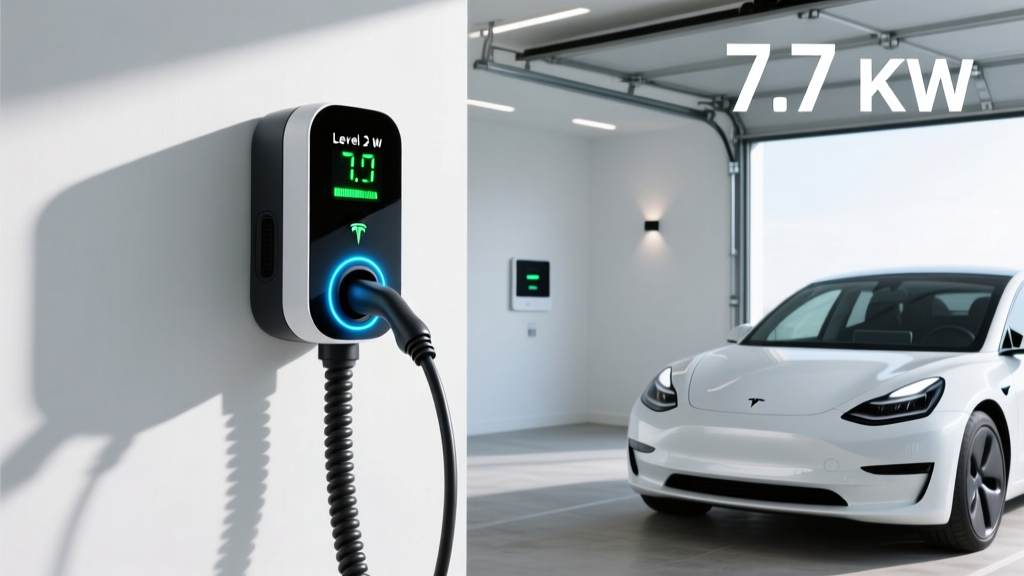
| Level 2 (Home / Workplace) | 240V / 32–48A | 7.7–11.5 kW | 25–44 mi/hr | Daily home charging, destination charging |
| DC Fast Charging (Level 3) | 400–800V DC | 50–350 kW | 150–1,200 mi/hr (peak) | Road trips, commercial fleet depots |
What this means for long-range EVs: A Lucid Air Grand Touring with a 112 kWh battery charging on Level 1 would take over 80 hours from empty to full — completely impractical. On a 48-amp Level 2 home charger (11.5 kW), that same battery reaches full in roughly 10 hours, making overnight charging viable. On a 300 kW DC fast charger, the 10–80% session takes about 20 minutes, but the charge curve tapers sharply above 80% — the final 20% can take as long as the first 80%. This is why road-trip strategy focuses on 10–80% sprints rather than full charges.
Home Charger Installation: Electrical Requirements and Costs
Installing a Level 2 home charger is the single biggest ownership advantage of a long-range EV — it turns every morning into a full "tank" at the cheapest electricity rates. But the installation isn't always plug-and-play. Here's what's involved:
Electrical Requirements
- Dedicated 240V circuit: A 48-amp charger requires a 60-amp breaker (NEC code requires the circuit be rated 125% above continuous load). A 32-amp charger needs a 40-amp breaker.
- Wire gauge: 6 AWG copper for 48A circuits; 8 AWG for 32A circuits, depending on run length.
- Panel capacity: Your main electrical panel must have enough spare amperage. A typical 200-amp residential panel can usually support a 60-amp EV circuit. Older 100-amp panels almost certainly require an upgrade.
- GFCI protection: The 2020 NEC requires GFCI protection for 240V EV outlets (NEMA 14-50). Many hardwired chargers have built-in ground-fault protection, which may allow you to skip the GFCI breaker (saving $100–150 and avoiding nuisance trips).
- Permit: Most jurisdictions require an electrical permit ($50–200) and a final inspection. Skipping this can void home insurance coverage and cause issues at resale.
Installation Cost Breakdown
| Cost Component | Simple Install (panel nearby, no upgrade) | Complex Install (long wire run, sub-panel) | Panel Upgrade Required |
|---|---|---|---|
| Level 2 Charger Equipment | $400–$700 | $400–$700 | $400–$700 |
| Electrician Labor (2–4 hrs) | $300–$600 | $600–$1,200 | $600–$1,200 |
| Materials (wire, conduit, breaker) | $100–$250 | $250–$500 | $250–$500 |
| Permit & Inspection | $50–$200 | $50–$200 | $50–$200 |
| Electrical Panel Upgrade (if needed) | — | — | $1,500–$3,500 |
| Total Estimated Cost | $850–$1,750 | $1,300–$2,600 | $2,800–$6,100 |
The wide cost range reflects real-world variability. A condo owner with a garage panel 10 feet from the parking spot may pay under $1,000 total. A homeowner with a detached garage 80 feet from a 100-amp panel that needs upgrading to 200 amps could spend $5,000+. Always get a load calculation from a licensed electrician before committing to a charger — they'll tell you whether your panel can handle the additional draw or if an upgrade is mandatory.
Connector Compatibility: NACS, CCS, and CHAdeMO in 2026
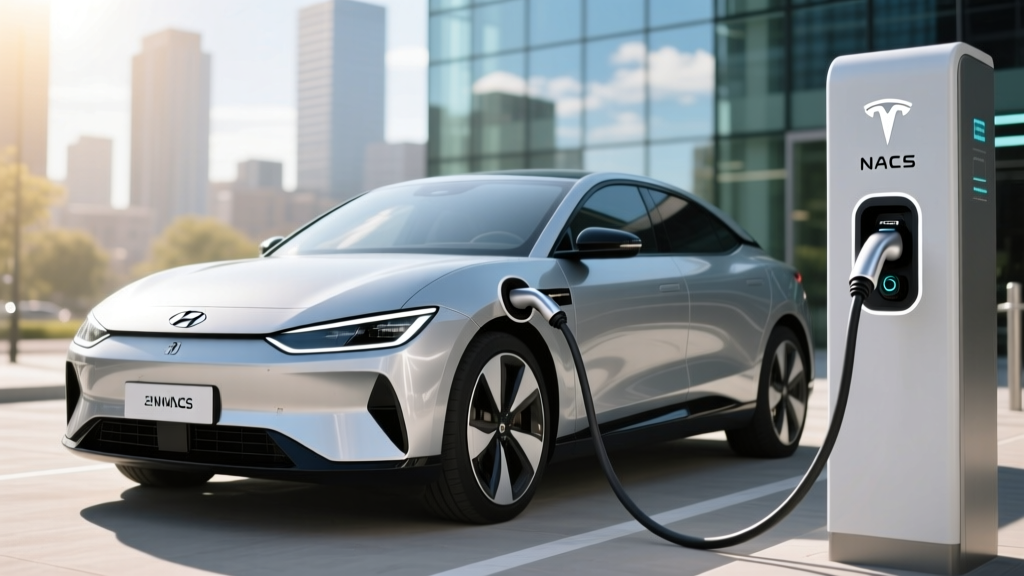
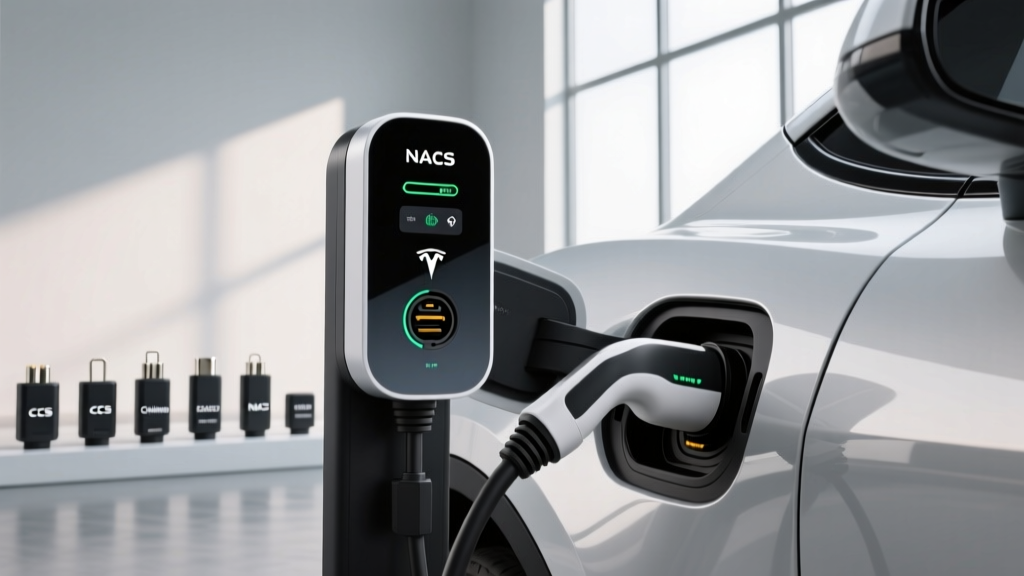
The connector landscape has consolidated significantly. As of 2026, nearly every major automaker has adopted or committed to NACS (North American Charging Standard, originally Tesla's proprietary connector). Here's where each brand stands:
| Connector Type | Brands Using It (2026) | Max DC Charge Rate | Adapter Needed? |
|---|---|---|---|
| NACS (Tesla / SAE J3400) | Tesla, Ford, GM, Rivian, Volvo, Polestar, Mercedes, BMW, Hyundai/Kia (2025+ models), Lucid (2025+) | Up to 350 kW | None for new NACS vehicles; CCS-to-NACS adapters available (~$200–$250) |
| CCS1 (Combined Charging System) | VW ID.4 (remaining stock), older Hyundai/Kia (2024 and prior), Stellantis models | Up to 350 kW | NACS-to-CCS adapter needed for Tesla Superchargers |
| CHAdeMO | Nissan Leaf (legacy only, discontinued for new sales) | Up to 100 kW | No adapter to NACS/CCS; limited public infrastructure remaining |
What this means for long-range EV buyers: If you're purchasing a 2026 model-year vehicle, it almost certainly ships with NACS. This gives you native access to the Tesla Supercharger network (over 25,000 stalls in North America) without an adapter. CCS1 vehicles can use Superchargers with a Tesla-approved adapter, but not all CCS vehicles are approved — check the Tesla NACS adapter compatibility page before purchasing. CHAdeMO is effectively a dead standard for new vehicles; the Nissan Leaf ended U.S. sales, and public CHAdeMO chargers are increasingly rare.
For home Level 2 charging, the connector is less critical — all Level 2 chargers use the J1772 connector (or a NACS plug that includes J1772 signaling). Any Level 2 charger you buy today will work with any EV sold in the U.S., either natively or with the small adapter that ships with most vehicles.
Level 2 Home Charger Recommendations
Not all Level 2 chargers are equal. The right pick depends on your electrical panel capacity, garage layout, and whether you want smart scheduling for off-peak electricity rates. Here are three proven options for long-range EV owners:
Emporia Level 2 EV Charger
Power: 48A (11.5 kW) | Cable: 24 ft | Connector: J1772 (NACS adapter included) | Price: ~$400
Smart features: Wi-Fi scheduling, energy monitoring via Emporia app, integrates with Emporia home energy monitors for solar optimization. Hardwire required at 48A. Excellent value for the amperage — charges even a 149 kWh Rivian Max Pack in roughly 13 hours.
Best for: Budget-conscious buyers wanting maximum amperage on a hardwired circuit.
ChargePoint Home Flex
Power: Up to 50A (12 kW) adjustable | Cable: 23 ft | Connector: J1772 | Price: ~$550–$700
Smart features: Adjustable amperage (16A–50A via DIP switches) lets you match your circuit without buying a different unit. Wi-Fi scheduling, Alexa integration, detailed session history. NEMA 14-50 plug option available for portability.
Best for: Homeowners who may move or want flexibility to adjust amperage if they add other 240V loads.
Tesla Wall Connector
Power: 48A (11.5 kW) | Cable: 24 ft | Connector: NACS native | Price: ~$475
Smart features: Wi-Fi updates, load sharing (up to 6 Wall Connectors on one circuit for multi-EV garages), power-sharing with Tesla Powerwall. No J1772 adapter included — non-Tesla EVs need their own J1772-to-NACS adapter.
Best for: Tesla owners or households with multiple NACS-equipped vehicles.
Cost to Charge: Home vs. Public vs. Gas — Per-Mile Math
The economic case for a long-range EV hinges on charging cost. A 112 kWh battery (Lucid Air Grand Touring) sounds expensive to fill, but electricity pricing varies dramatically by where and when you charge:
| Charging Scenario | Cost per kWh | Cost to Add 300 Miles (Lucid Air GT, ~80 kWh used) | Cost Per Mile |
|---|---|---|---|
| Home, off-peak utility rate | $0.08–$0.14 | $6.40–$11.20 | $0.02–$0.04 |
| Home, standard residential rate | $0.14–$0.20 | $11.20–$16.00 | $0.04–$0.05 |
| Public Level 2 (ChargePoint, EVgo L2) | $0.25–$0.49 | $20.00–$39.20 | $0.07–$0.13 |
| DC Fast Charging (Electrify America, Tesla Supercharger) | $0.30–$0.55 | $24.00–$44.00 | $0.08–$0.15 |
| Gasoline equivalent (30 MPG vehicle, $3.40/gal) | — | $34.00 | $0.11 |
The takeaway: Home off-peak charging delivers fuel costs at roughly one-quarter to one-third the price of gasoline. Even DC fast charging on a road trip is competitive with gas on a per-mile basis for efficient long-range EVs like the Lucid Air (which achieves roughly 4.5–5.0 miles per kWh, or 130+ MPGe). The Silverado EV, being heavier and less aerodynamic, achieves closer to 2.0–2.5 mi/kWh, making its per-mile charging cost closer to the gas equivalent — the range advantage comes from the enormous battery, not efficiency.
For the most accurate local electricity rates and time-of-use plans, check your utility's EV-specific rate schedule. Many utilities offer overnight rates as low as $0.06–$0.08/kWh for EV owners who schedule charging between 11 PM and 6 AM.
Safety, Code, and the Panel-Upgrade Gotcha
Long-range EVs with 100+ kWh batteries draw sustained high amperage for hours during Level 2 charging. This puts continuous load on your home's electrical system that few other appliances match (an electric oven cycles on and off; an EV charger pulls maximum current for 8–12 hours straight). Key safety considerations:
- Dedicated circuit: Your EV charger must be on its own dedicated breaker — never share a circuit with a dryer, oven, or HVAC unit.
- Continuous load derating: NEC Article 625 requires EV circuits to be rated at 125% of the charger's maximum amperage. A 48A charger needs a 60A breaker and wire rated for 60A continuous.
- Outdoor-rated equipment: If your charger is installed outside, it must carry a NEMA 4 or NEMA 4X rating for weather resistance. All chargers recommended above meet this standard.
- Load calculation: Before installation, your electrician should perform a NEC Article 220 load calculation to confirm your panel can handle the EV charger alongside existing loads. If the calculation shows insufficient headroom, a panel upgrade from 100A to 200A (or 200A to 400A for homes with multiple EVs, heat pumps, and electric appliances) becomes mandatory — not optional.
Panel upgrades are the hidden cost that catches many homeowners off guard. A 200A-to-400A upgrade can cost $2,500–$5,000 depending on your utility's meter requirements and local labor rates. However, this upgrade future-proofs your home for additional electrification (heat pumps, induction cooking, solar + battery storage) and typically adds resale value.
Frequently Asked Questions
How much does it cost to install a home EV charger?
A straightforward Level 2 installation with an adequate electrical panel typically costs $850–$1,750 (equipment, electrician labor, materials, and permit). If your panel needs upgrading from 100A to 200A, total costs can reach $2,800–$6,100. Always get a professional load calculation before budgeting.
How fast will each charging level add range?
Level 1 (120V) adds 3–5 miles per hour — only practical for plug-in hybrids or overnight trickle-charging. Level 2 (240V, 48A) adds 30–44 miles per hour, fully replenishing most long-range EVs overnight. DC fast charging adds 150–1,200 miles per hour at peak rates, but sessions are typically limited to 10–80% (20–35 minutes) because charging slows dramatically above 80%.
Which connector/charger is compatible with my EV?
If you're buying a 2026 model-year EV, it almost certainly uses NACS (the Tesla-standard connector now formalized as SAE J3400). This gives native access to Tesla Superchargers and a growing network of NACS-equipped public chargers. Older CCS1 vehicles can use Superchargers with a Tesla-approved adapter (~$200–$250). For home Level 2 charging, any J1772 or NACS charger works with any U.S.-market EV using the appropriate adapter.
How much does charging cost per mile vs. gas?
At home off-peak rates ($0.08–$0.14/kWh), a long-range EV like the Lucid Air costs $0.02–$0.04 per mile to fuel — roughly one-quarter the cost of a 30 MPG gas car at $3.40/gallon ($0.11/mile). Even DC fast charging on road trips ($0.30–$0.55/kWh) costs $0.08–$0.15 per mile, competitive with or cheaper than gasoline for efficient EVs.
What electrical upgrades might I need?
The most common upgrade is a panel increase from 100A to 200A service ($1,500–$3,500). You may also need a new 240V circuit run from the panel to your garage or parking spot (cost varies by distance and whether walls need to be opened). Homes with existing 200A panels and nearby garage spaces often need nothing beyond a new breaker and wire run. A licensed electrician's load calculation is the definitive answer — source requirements from the National Electrical Code apply regardless of your home's age.