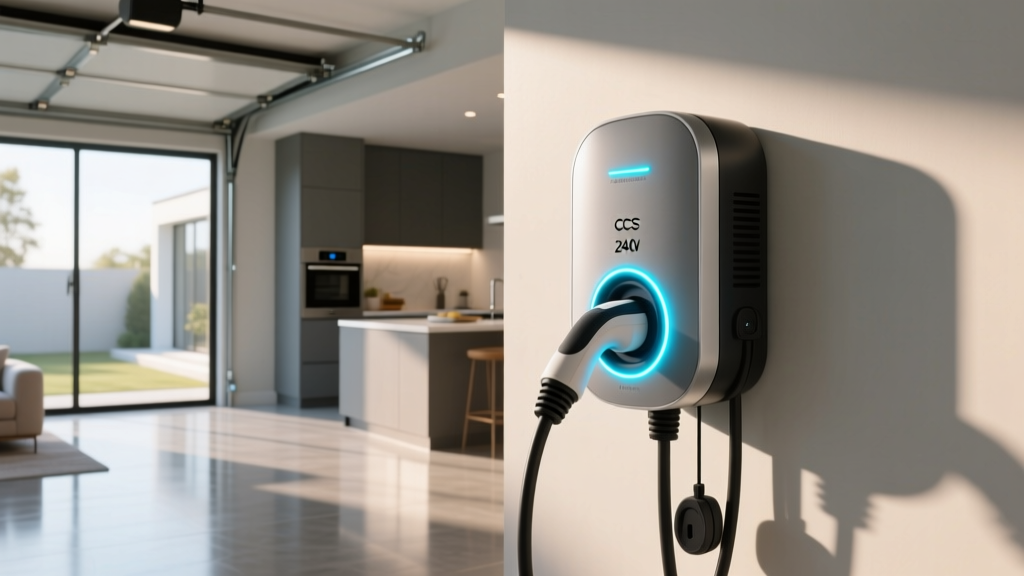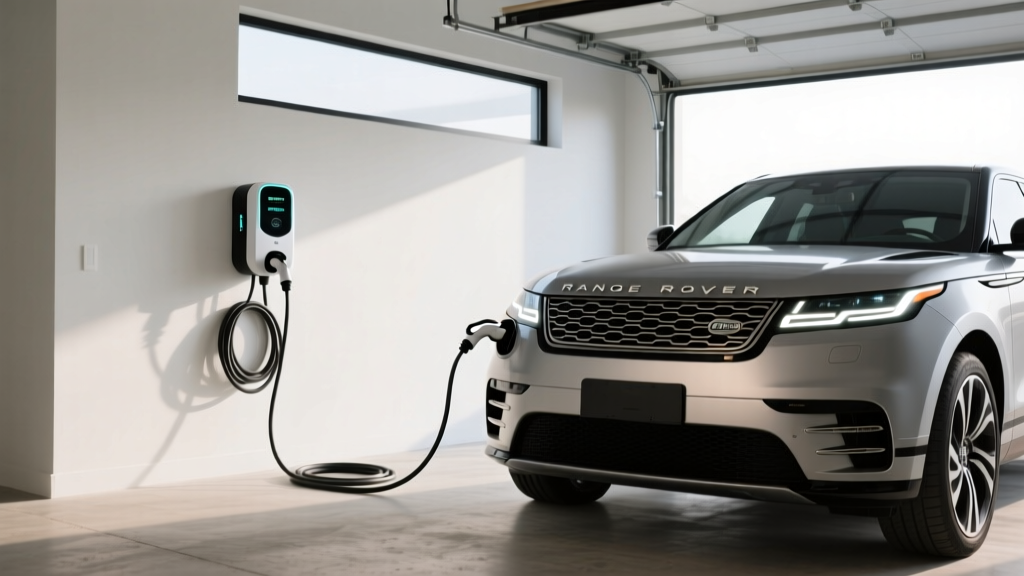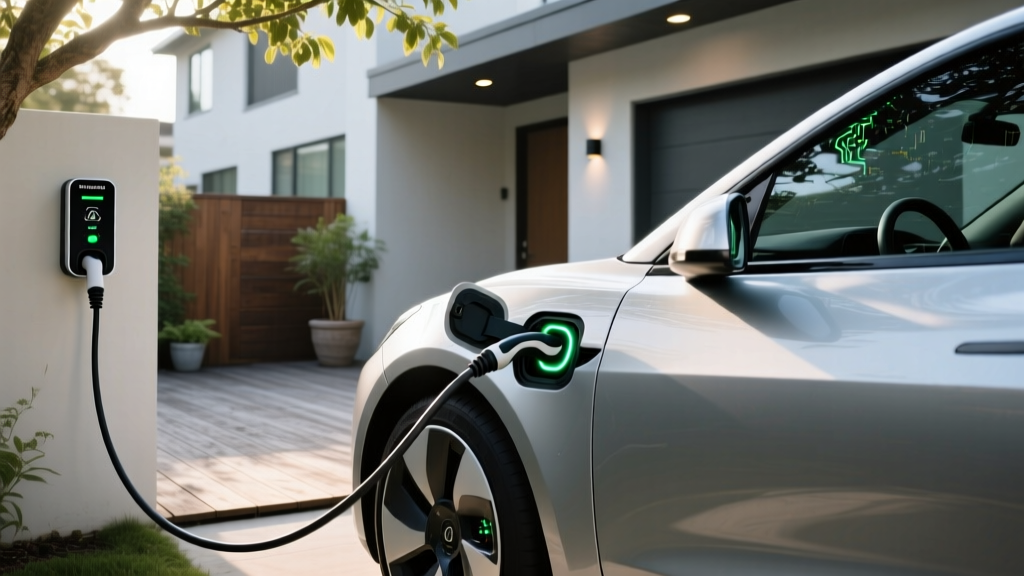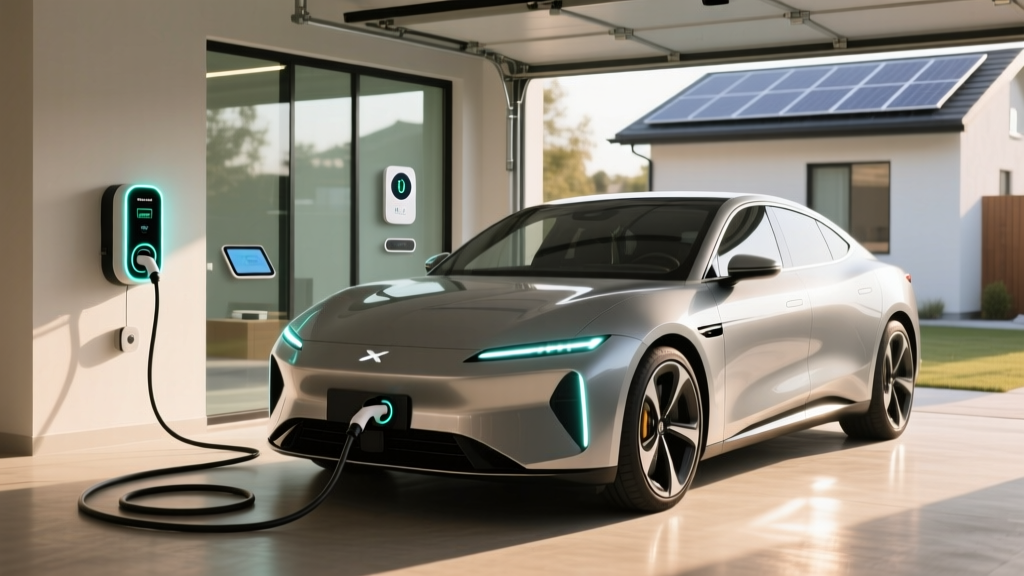
If you're shopping for the longest EV range available today, the numbers have never been more impressive: several 2026 models push past 350 miles on the EPA cycle, and one sedan cracks 500 miles. But a big battery only solves half the problem. A 100+ kWh pack is only as practical as your ability to refill it — and that means understanding home charging infrastructure, connector standards, and the real cost of keeping a long-range EV powered up.
This guide covers the current longest-range EVs on the US market, then walks through everything you need to charge them at home: electrical requirements, installation costs, equipment picks, and what you'll actually pay per mile compared to gas.
The Longest EV Range Vehicles You Can Buy in 2026
Here are the top contenders for longest EPA-estimated range among EVs currently on sale. Remember: EPA range is a laboratory estimate. Real-world highway driving at 70+ mph, cold weather, and aggressive acceleration will reduce these numbers by 10–30%.
| Vehicle | EPA Range | Battery (usable) | Chemistry | Peak DC Charge | 10–80% Time | Base MSRP |
|---|---|---|---|---|---|---|
| Lucid Air Grand Touring | 516 mi | 112 kWh | NMC | 300 kW | ~15 min | $125,650 |
| Chevrolet Silverado EV 4WT (Max Range) | 460 mi | ~200 kWh (est.) | NMC | 350 kW | ~20 min | $74,800 (est.) |
| Rivian R1T Dual-Motor Max Pack | 410 mi | 141 kWh | NMC | 220 kW | ~21 min | |
| Tesla Model S Long Range | 402 mi | 100 kWh | NMC | 250 kW | ~18 min | $79,990 |
| Mercedes-Benz EQS 450+ | 390 mi | 108.4 kWh | NMC | 200 kW | ~31 min | $105,550 |
| Hyundai Ioniq 6 SE Long Range | 361 mi | 77.4 kWh | NMC | 240 kW | ~18 min | $42,715 |
Charging Levels Explained: Speeds and Range Added Per Hour
Before choosing equipment, you need to understand the three charging tiers. The distinction between kW (kilowatts — a measure of power, or charge speed) and kWh (kilowatt-hours — a measure of energy, or battery capacity) is critical. Think of kW as how fast water flows from a hose, and kWh as how big the bucket is.
| Level | Voltage | Max Power (kW) | Miles of Range Added Per Hour | Typical Use |
|---|---|---|---|---|
| Level 1 | 120V AC | 1.2–1.9 kW | 3–5 mi/hr | Overnight trickle; PHEVs or emergency top-ups |
| Level 2 | 240V AC | 7.2–19.2 kW | 20–60 mi/hr | Home daily charging; workplace; public destinations |
| DC Fast Charge | 400–800V DC | 50–350 kW | 150–1,000+ mi/hr (at peak) | Road trips; 10–80% in 15–40 min |
For a long-range EV with a 100+ kWh battery, Level 1 charging is impractical — it would take 60+ hours for a full charge. Level 2 at 11.5 kW (48A) adds roughly 35–40 miles per hour, meaning a full overnight session (10 hours) restores 350–400 miles — enough for nearly any daily driving pattern. DC fast charging is your road-trip solution, but sustained speeds depend heavily on the battery's state of charge and thermal management.
Home Level 2 Charger Installation: Costs and Electrical Requirements
Installing a Level 2 home charger is the single most impactful upgrade for long-range EV ownership. Here's what's involved.
Electrical Requirements
A typical Level 2 home charger requires a 240V dedicated circuit — the same voltage your electric dryer or oven uses. The most common configurations:
- 40A circuit / 32A continuous charge (7.7 kW): Minimum recommended for most EVs; uses 6 AWG copper wire
- 50A circuit / 40A continuous charge (9.6 kW): Ideal for larger batteries; uses 6 AWG copper wire
- 60A circuit / 48A continuous charge (11.5 kW): Best for 100+ kWh packs like the Lucid Air or Silverado EV Max Range; uses 4 AWG copper wire
The National Electrical Code (NEC) requires that continuous loads (like EV charging) not exceed 80% of a circuit's rated amperage. So a 50A breaker supports 40A of continuous charging.
Do You Need a Panel Upgrade?
This is the make-or-break cost variable. Most modern homes have a 200A electrical panel. If your panel is already near capacity (common in homes with electric heating, water heaters, and dryers), adding a 50–60A EV circuit may require a panel upgrade to 300–400A, or the installation of a secondary sub-panel. Homes built before 1990 with 100A or 150A service almost certainly need an upgrade for high-power Level 2 charging.
A smart alternative: some chargers (like the Emporia Level 2 Smart Charger) offer load management — they monitor your home's total electrical draw and dynamically reduce charging power to stay within your panel's capacity. This can avoid a costly panel upgrade entirely.
| Component | Cost Range | Notes |
|---|---|---|
| Level 2 Charger (Equipment) | $250–$750 | Varies by power output, cable length, smart features |
| Electrician Labor | $500–$2,500 | Depends on run length from panel to garage/carport; longer runs = more wire + conduit |
| Electrical Permit | $50–$300 | Required in most jurisdictions; varies by municipality |
| Panel Upgrade (if needed) | $1,500–$4,500 | 200A → 300/400A service; not always required |
| Total (no panel upgrade) | $800–$3,550 | Typical suburban home with panel near garage |
| Total (with panel upgrade) | $2,300–$8,050 | Older homes or those with maxed-out 100–150A panels |
Always get at least three quotes from licensed electricians. Ask specifically whether your panel has capacity for the new circuit — a reputable electrician will perform a load calculation per NEC Article 220 before recommending a panel upgrade. The federal Residential Clean Energy Credit (IRC §25D) covers 30% of charger equipment and installation costs up to $1,000 for installations placed in service through 2032, though income and location restrictions may apply.
Connector Compatibility: NACS, CCS1, and CHAdeMO in 2026
The connector landscape has consolidated dramatically. As of 2026, the North American Charging Standard (NACS) — originally developed by Tesla — is the dominant connector for new EVs. Nearly every major automaker (Ford, GM, Rivian, Hyundai, Kia, BMW, and others) has adopted NACS for their 2025–2026 models.
| Connector | Brands Using It | Notes |
|---|---|---|
| NACS (Tesla) | Tesla, Ford, GM, Rivian, Hyundai, Kia, BMW, Volvo, Polestar, Mercedes, Nissan (2026+) | Compact, lightweight; access to Tesla Supercharger network |
| CCS1 | VW (ID.4 some trims), legacy 2021–2024 models from most brands | Being phased out on new models; adapters available for NACS stations |
| CHAdeMO | Nissan Leaf (pre-2026); Mitsubishi Outlander PHEV | Declining infrastructure; avoid for new purchases |
Adapter needs: If you own a CCS1-equipped EV (common in 2022–2024 models), you'll likely need a CCS-to-NACS adapter ($150–$250) to access Tesla Superchargers, which now open their network to non-Tesla vehicles via the NACS connector. Ford and Rivian include these adapters with eligible vehicles. For home Level 2 charging, most chargers ship with a J1772 connector (the AC standard), and Tesla/NACS vehicles include a J1772-to-NACS adapter in the glovebox.
How Much Does EV Charging Cost Per Mile vs. Gas?
This is where long-range EVs deliver their most compelling ownership advantage — especially when charged at home. Let's compare real scenarios using a 350-mile-range EV driven 12,000 miles annually.
| Charging Scenario | Rate | Cost Per kWh | Cost Per Mile (at 3.0 mi/kWh) | Annual Cost (12K mi) |
|---|---|---|---|---|
| Home (off-peak utility rate) | $0.08–$0.14/kWh | $0.11 avg | $0.037 | $444 |
| Home (standard rate) | $0.14–$0.22/kWh | $0.18 avg | $0.060 | $720 |
| Public Level 2 (ChargePoint, etc.) | $0.25–$0.49/kWh | $0.37 avg | $0.123 | $1,476 |
| DC Fast Charge (Electrify America) | $0.35–$0.55/kWh | $0.45 avg | $0.150 | $1,800 |
| Gasoline vehicle (28 MPG combined) | — | $3.40/gal avg | $0.121 | $1,452 |
The math is clear: home-charged EVs cost 50–70% less per mile than gasoline equivalents. Even exclusive DC fast charging costs roughly the same as gas per mile. For long-range EV owners who charge primarily at home, annual fuel savings of $800–$1,200 over a gas vehicle are typical.
For a Lucid Air Grand Touring with its 112 kWh battery, a full home charge at $0.11/kWh costs about $12.32 for 516 miles of EPA range. That same distance in a 28 MPG sedan at $3.40/gallon costs $62.63.
Recommended Home Level 2 Chargers for Long-Range EVs
When you own a 100+ kWh battery, you want a charger that can deliver high power reliably every night. Here are three proven options for 2026:
Emporia Level 2 Smart Charger
Power: 11.5 kW (48A) max
Connector: J1772 (NACS adapter included)
Cable Length: 24 ft
Smart Features: Wi-Fi, load management, energy monitoring, scheduling via app
Price: ~$399
Best For: Homes needing load management to avoid panel upgrades; best value at 48A
ChargePoint Home Flex
Power: Up to 12 kW (50A) configurable
Connector: J1772 (NACS adapter available)
Cable Length: 23 ft
Smart Features: Wi-Fi, Alexa integration, flexible amperage setting (16A–50A), UL-listed
Price: ~$699
Best For: Flexibility across circuit sizes; established brand with strong app
Tesla Wall Connector
Power: 11.5 kW (48A) max
Connector: NACS native (J1772 adapter for non-Tesla)
Cable Length: 24 ft
Smart Features: Wi-Fi, OTA updates, power sharing between two units, integrated cable management
Price: ~$475
Best For: Tesla and NACS-native EV owners; cleanest installation with native NACS plug
For the longest-range EVs with 100+ kWh batteries, we recommend a 48A charger on a 60A circuit. At 11.5 kW, a fully depleted 112 kWh Lucid Air battery charges from 10–80% in roughly 7 hours — ideal for overnight replenishment. A 32A (7.7 kW) charger would take over 10 hours for the same session.
Safety, Electrical Code, and Permit Considerations
EV charging is a high-draw, long-duration electrical load — your installation must meet code for safety and insurance purposes:
- Dedicated circuit: Your EV charger must be on its own dedicated breaker — it cannot share a circuit with other appliances
- GFCI protection: NEC 2020 and later require GFCI (Ground Fault Circuit Interrupter) protection for all EV charging outlets. Most hardwired chargers have built-in GFCI; outlet-based installations need a GFCI breaker
- Outdoor rating: If your charger is installed outdoors (carport, driveway), it must carry a NEMA 4 or IP65 weather resistance rating. All three chargers above meet this standard
- Permit requirement: Nearly all US jurisdictions require an electrical permit for EV charger installation. Your electrician typically pulls this. Inspections ensure the installation meets NEC and local code
- Hardwired vs. outlet: Hardwired installations (no plug) are more common for 48A+ chargers and avoid the need for a costly 60A-rated receptacle. A NEMA 14-50 outlet (50A) is the standard plug option, supporting up to 40A continuous charging
Skipping permits may save $100–$300 upfront, but it voids insurance coverage for electrical fires and can cause issues during a home sale inspection. Always permit.
Charging a Long-Range EV: What to Expect in Practice
Here's a realistic weekly charging scenario for a long-range EV owner with a home Level 2 charger:
Monday morning: You unplug with a full charge — 361 EPA miles in the Ioniq 6, or 516 in the Lucid Air. Your daily commute is 35 miles round-trip. You don't plug in again until Friday evening.
Friday evening: After a week of commuting plus errands, you've used about 200 miles of range. You plug in at 9 PM. At 11.5 kW, your charger adds roughly 115 miles of range over 10 hours. By Saturday morning, you're back to 300+ miles — ready for a weekend road trip.
Saturday road trip: You drive 280 miles on the highway. With real-world efficiency, you arrive with roughly 50 miles remaining. A DC fast charge session at a 350 kW station adds 200+ miles in about 15–20 minutes. You're back on the road.
This is the ownership rhythm that long-range EVs enable: home charging handles 95% of your needs, and DC fast charging covers road trips. The key is having reliable, high-power Level 2 infrastructure at home.
Frequently Asked Questions
How much does it cost to install a home EV charger?
Expect $800–$3,550 for a standard Level 2 installation without a panel upgrade, and $2,300–$8,050 if your electrical panel needs upgrading from 100–150A to 200A+. The equipment itself costs $250–$750; most of the expense is electrician labor and wire runs. The federal Residential Clean Energy Credit (IRC §25D) covers 30% of installation costs up to $1,000 through 2032 — check IRS guidelines for eligibility.
How fast will each charging level add range?
Level 1 (120V) adds 3–5 miles per hour — impractical for large batteries. Level 2 (240V) at 48A/11.5 kW adds roughly 35–40 miles per hour, restoring a full long-range EV overnight. DC fast charging at peak rates of 250–350 kW can add 200+ miles in 15–20 minutes, though charge speed tapers significantly above 80% state of charge.
Which connector and charger is compatible with my EV?
For 2025–2026 models, most new EVs use NACS (Tesla's connector). Older 2021–2024 models may have CCS1. Check your vehicle's charge port — if it's the compact Tesla-style plug, you need NACS. For home charging, most Level 2 chargers use J1772 (the AC standard), and your EV includes a J1772-to-NACS adapter. The Tesla Wall Connector ships with a native NACS plug.
How much does EV charging cost per mile vs. gas?
Home-charged EVs cost $0.04–$0.06 per mile on average, compared to $0.12 per mile for a 28 MPG gasoline vehicle at $3.40/gallon. That's a 50–70% fuel cost reduction. Even exclusive DC fast charging ($0.15/mile) is comparable to gasoline. Over 12,000 annual miles, home charging saves $800–$1,200 per year.
What electrical upgrades might I need?
The most common upgrade is a panel capacity increase from 100–150A to 200A+ service, costing $1,500–$4,500. You may also need a sub-panel if your main panel is full or located far from the garage. Load-managing chargers (like the Emporia) can sometimes avoid a panel upgrade entirely by dynamically limiting charge rate to your available capacity. Always have a licensed electrician perform a NEC Article 220 load calculation before committing to a circuit size.
Do long-range EVs charge slower because of bigger batteries?
Not necessarily — it depends on peak charge rate. The Lucid Air Grand Touring charges at up to 300 kW despite its 112 kWh battery, achieving 10–80% in roughly 15 minutes. However, a 200 kWh battery at 350 kW (like the Silverado EV Max Range) still needs about 20 minutes for the same session because there's simply more energy to move. Battery chemistry also matters: NMC cells (used in all the longest-range EVs above) generally accept higher charge rates than LFP cells at low states of charge, but taper more aggressively above 80%.
Sources: EPA range and efficiency data from fueleconomy.gov; manufacturer specifications from Lucid Motors, Tesla, Hyundai, Rivian, and Chevrolet press sites; electrical code references from the National Fire Protection Association (NFPA) NEC 2023 edition; tax credit information from IRS.gov.