Why Long Range EV Cars Demand a Serious Home Charging Setup
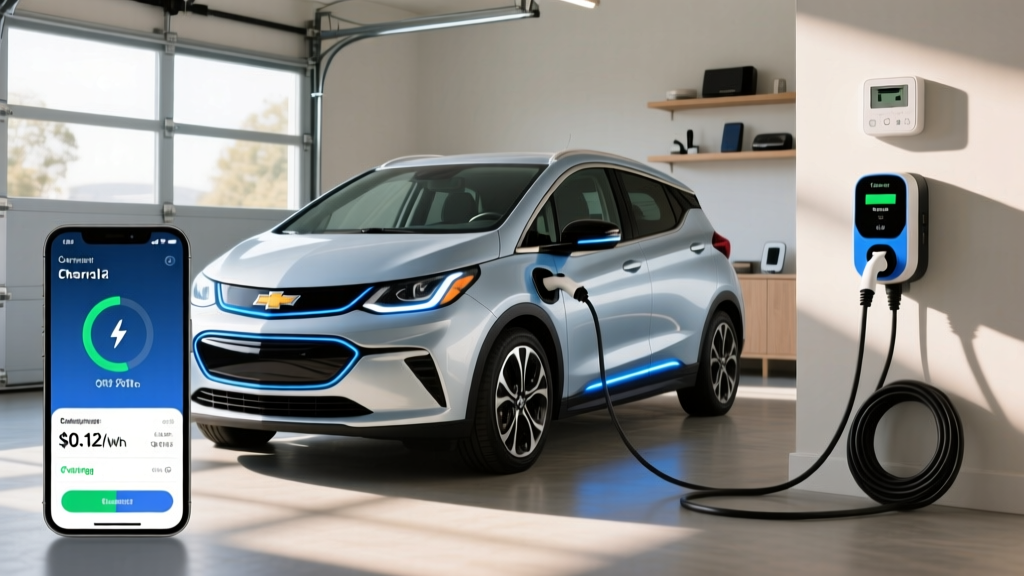
Buying a long range EV like the 2026 Lucid Air Grand Touring (516 miles EPA, 112 kWh usable battery) or the Chevrolet Silverado EV 4WT (400+ miles EPA, ~200 kWh pack) changes the home-charging calculus. A bigger battery means more miles between charges, but it also means that a standard 120V wall outlet — adding roughly 3 to 5 miles of range per hour — would take well over 24 hours to refill a depleted pack. For owners of 80–200 kWh battery packs, a properly sized Level 2 home charger isn't optional; it's the single most important ownership accessory you'll buy.
This guide walks through the exact electrical requirements, realistic install costs, connector compatibility, equipment picks, and per-mile economics for charging today's longest-range EVs at home — with real numbers, not marketing fluff.
Charging Levels Explained: Speeds in kW and Miles Per Hour
Before buying equipment, understand the three charging tiers. The critical distinction: kW (kilowatts) measures power — how fast energy flows into the car. kWh (kilowatt-hours) measures energy — the total capacity of the battery. A 100 kWh battery charged at 10 kW takes roughly 10 hours from empty. Here's how each level performs on a typical long range EV with ~3.0 miles per kWh efficiency (like the Hyundai Ioniq 6 or Tesla Model 3 Long Range):
| Level | Voltage / Amps | Power (kW) | Miles Added per Hour* | 10–80% Time (100 kWh pack) |
|---|---|---|---|---|
| Level 1 | 120V / 12A | ~1.4 kW | 3–5 mi/hr | Not practical (70+ hrs) |
| Level 2 (basic) | 240V / 32A | 7.7 kW | ~23 mi/hr | ~9 hours |
| Level 2 (robust) | 240V / 48A | 11.5 kW | ~34 mi/hr | ~6 hours |
| Level 2 (max) | 240V / 80A | 19.2 kW | ~57 mi/hr | ~3.6 hours |
| DC Fast (public) | 400–800V DC | 150–350 kW peak | N/A (session-based) | 18–35 min (tapers above 80%) |
*Miles per hour assumes 3.0 mi/kWh efficiency. Heavier long range EVs like the Rivian R1S or Ford F-150 Lightning may see 2.0–2.5 mi/kWh, reducing hourly gains by 20–35%.
For a 100+ kWh battery, Level 1 is only viable as emergency trickle charging. Most long range EV owners need a 48A Level 2 circuit minimum to wake up to a full battery after a heavy driving day.
Home Installation Costs: Equipment, Electrician, Permits, and Panel Upgrades
The sticker price of a wall connector is the smallest piece of the install puzzle. Labor, conduit runs, permitting, and — in older homes — a service panel upgrade dominate the budget. Here's a realistic 2026 breakdown based on national averages for a 240V/48A NEMA 14-60 or hardwired installation:
| Cost Component | Typical Range | Notes |
|---|---|---|
| Level 2 Charger Hardware | $400–$750 | 48A smart Wi-Fi chargers; premium units up to $1,000 |
| Electrician Labor (2–6 hrs) | $600–$2,000 | Depends on distance from panel to garage |
| Electrical Materials (conduit, wire, breaker) | $200–$600 | 6 AWG copper for 48A; longer runs cost more |
| Permit & Inspection | $75–$300 | Varies by municipality; some utilities bundle |
| Panel Upgrade (if needed) | $1,500–$4,000 | 100A → 200A service upgrade for older homes |
| Total (no panel upgrade) | $1,275–$3,650 | Most newer homes with 200A service |
| Total (with panel upgrade) | $2,775–$7,650 | Common in pre-1990 homes |
The IRS §30D credit does not cover home charger equipment directly, but the separate §30C Alternative Fuel Vehicle Refueling Property Credit offers up to $1,000 (30% of cost, capped) for qualified home charging installations — subject to income limits and census-tract eligibility. Always confirm current-year rules with a tax professional.
Do You Need a Panel Upgrade? Sizing Your Electrical Service
A 48A continuous-load EV charger requires a 60A dedicated breaker (NEC Article 210.20 requires 125% headroom for continuous loads). Most modern homes with 200A service and available breaker slots can accommodate this without issue. But you'll likely need a panel upgrade if:
- Your home has 100A service (common in homes built before 1990)
- Your panel is already near capacity — run a load calculation with your electrician
- You plan to charge two EVs simultaneously (dual 48A = 120A of breaker capacity)
- You have a Federal Pacific or Zinsco panel, which are obsolete and uninsurable
Smart alternative: load-management chargers like the Emporia Vue + Emporia Level 2 EV Charger or Wallbox Pulsar Plus with Power Sharing can dynamically throttle charge rate to stay within panel limits, avoiding a costly upgrade.
Connector Compatibility: NACS, CCS1, and CHAdeMO in 2026
The connector landscape has consolidated dramatically. As of the 2026 model year, nearly every automaker selling in North America has adopted the NACS (North American Charging Standard / SAE J3400) connector — originally Tesla's proprietary plug, now an open standard. Here's where each brand stands:
| Connector | Brands Using It (2026 MY) | Adapter Needed? |
|---|---|---|
| NACS (J3400) | Tesla (all), Ford, GM, Rivian, Volvo, Polestar, Hyundai, Kia, BMW, Mercedes, Nissan, Toyota, Subaru, Lucid | No — native port |
| CCS1 | Remaining Stellantis models, some VW ID.4 (2025 carryover), older EVs (2021–2024 MY) | NACS-to-CCS1 adapter (~$150–$250) for Tesla Supercharger access |
| CHAdeMO | Discontinued (Nissan Leaf ended production 2025) | Limited public availability; not recommended for new buyers |
For home Level 2 charging, NACS and CCS1 both use the same J1772 signaling protocol, and most Level 2 chargers now ship with NACS connectors or offer CCS1 variants. If you own a CCS1-equipped EV, confirm the charger's connector before purchase — or buy a quality adapter from a reputable supplier like Lectron or A2Z.
Cost Per Mile: Charging Long Range EVs vs. Filling Up a Gas Car
The economics of long range EV cars shine when you charge at home. Here's a direct comparison using 2026 national averages — electricity at $0.16/kWh (residential), gasoline at $3.45/gallon, and representative vehicles:
| Scenario | Energy Cost | Vehicle Efficiency | Cost Per Mile |
|---|---|---|---|
| Home Level 2 (off-peak TOU) | $0.11/kWh | 3.0 mi/kWh (Ioniq 6) | $0.037 |
| Home Level 2 (standard rate) | $0.16/kWh | 3.0 mi/kWh (Ioniq 6) | $0.053 |
| Home Level 2 (standard rate) | $0.16/kWh | 2.2 mi/kWh (F-150 Lightning) | $0.073 |
| Public Level 2 (ChargePoint, EVgo) | $0.30/kWh | 3.0 mi/kWh | $0.10 |
| DC Fast Charging (EA, Tesla) | $0.42/kWh | 3.0 mi/kWh | $0.14 |
| Gas car (28 MPG combined) | $3.45/gal | 28 MPG | $0.123 |
| Gas truck (19 MPG combined) | $3.45/gal | 19 MPG | $0.182 |
Home-charged long range EVs cost 3 to 5 cents per mile — roughly one-quarter to one-third the cost of an efficient gas car. Even at public DC fast charger rates, EVs remain competitive with gasoline. The key: maximize home charging. According to fueleconomy.gov, EVs convert over 77% of grid energy to wheel motion, compared to 12–30% for gasoline vehicles.
Recommended Level 2 Home Chargers for Long Range EV Batteries
For 100+ kWh batteries, prioritize chargers with 48A+ output, 25-foot cables (to reach any garage orientation), and smart scheduling for off-peak rates. Here are top picks for 2026:
Emporia Level 2 EV Charger (48A)
- Power: 11.5 kW (240V / 48A)
- Connector: NACS (J3400 native)
- Cable: 24 ft
- Smart Features: Wi-Fi, app scheduling, energy monitoring, load management with Emporia Vue panel monitor
- Price: ~$400
- Best for: Budget-conscious buyers wanting load management without panel upgrade
ChargePoint Home Flex (up to 50A)
- Power: Up to 12 kW (240V / 50A, adjustable via dip switch)
- Connector: NACS or J1772 (select at purchase)
- Cable: 23 ft
- Smart Features: Wi-Fi, Alexa/Google integration, scheduled charging, utility demand-response programs
- Price: ~$550–$650
- Best for: Utility-program participants wanting demand-response rebates
Wallbox Pulsar Plus (48A)
- Power: 11.5 kW (240V / 48A)
- Connector: NACS or J1772
- Cable: 25 ft
- Smart Features: Wi-Fi + Bluetooth, Power Sharing for dual-charger setups, Eco-Smart solar integration
- Price: ~$550
- Best for: Two-EV households needing power sharing on a single circuit
Tesla Wall Connector (48A)
- Power: 11.5 kW (240V / 48A)
- Connector: NACS native
- Cable: 24 ft
- Smart Features: Wi-Fi, OTA updates, power sharing with second unit, integrated cable management
- Price: ~$420
- Best for: Tesla owners and NACS-native EVs; cleanest aesthetic
Grizzl-E Smart (40A)
- Power: 9.6 kW (240V / 40A)
- Connector: NACS or J1772
- Cable: 24 ft
- Smart Features: OCPP-compatible, works with multiple network apps, extreme cold rated (-40°F)
- Price: ~$550
- Best for: Cold-climate outdoor installations; built in Canada
Safety, Electrical Code, and Permit Requirements
EV chargers draw sustained high current — often 40–48 amps continuously for 6+ hours. This is a fundamentally different load profile than any other household appliance, and the National Electrical Code (NEC) treats it accordingly. Non-negotiable safety requirements:
- Dedicated circuit: Your EV charger must have its own breaker — never share with other outlets or appliances.
- 125% rule (NEC 210.20): A 48A continuous load requires a 60A breaker and wire rated for 60A (typically 6 AWG copper THHN).
- GFCI protection: NEC 2020 and later require GFCI protection for 14-50 receptacles used for EV charging in garages. Hardwired installations may be exempt depending on jurisdiction — hardwiring eliminates a common nuisance-trip failure point.
- Outdoor rating: If installed outside, the charger must carry a NEMA 4 (weatherproof) rating. All chargers listed above meet this standard.
- Permit and inspection: Nearly all jurisdictions require an electrical permit for EV charger installation. Skipping this can void homeowner's insurance coverage for electrical fires and create problems at resale.
- UL listing: Only buy chargers with UL or ETL certification. Uncertified imports from marketplace sellers lack safety testing and may not pass inspection.
Charging Time Examples: How Long to Refill Today's Long Range EVs
Real-world 10–80% charging times on a 48A (11.5 kW) Level 2 home charger for popular 2026 long range models:
| Vehicle | Battery (usable kWh) | Onboard Charger | 10–80% at 11.5 kW |
|---|---|---|---|
| Tesla Model 3 Long Range | 79 kWh (NMC) | 11.5 kW | ~4.8 hours |
| Hyundai Ioniq 6 SE Long Range | 77.4 kWh (NMC) | 10.9 kW | ~5.0 hours |
| Lucid Air Grand Touring | 112 kWh (NMC) | 19.2 kW | ~6.8 hours (at 11.5 kW) |
| Chevrolet Silverado EV 4WT | ~200 kWh (NMC) | 19.2 kW | ~12.2 hours (at 11.5 kW) |
| Rivian R1T Dual-Motor Max | 141 kWh (NMC) | 11.5 kW | ~8.6 hours |
| BMW iX xDrive50 | 105.2 kWh (NMC) | 11 kW | ~6.4 hours |
Even the largest packs refill overnight on a 48A circuit. The Lucid Air's 19.2 kW onboard charger is an outlier — pairing it with an 80A circuit (19.2 kW) cuts home charge time to ~4 hours for a 10–80% session, a meaningful advantage for high-mileage drivers.
Frequently Asked Questions
How much does it cost to install a home EV charger?
Expect $1,275–$3,650 for a typical 48A Level 2 installation in a home with adequate 200A electrical service. If your home needs a panel upgrade (common in pre-1990 homes with 100A service), add $1,500–$4,000. The charger hardware itself is $400–$750; the majority of cost is electrician labor and materials.
How fast will each charging level add range?
Level 1 (120V) adds 3–5 miles per hour. Level 2 at 48A (240V) adds approximately 34 miles per hour in an efficient sedan or 23–25 mi/hr in a larger SUV/truck. DC fast charging at 150–350 kW can add 150–300+ miles in a 20–30 minute session, but peak rates aren't sustained — charging slows significantly above 80% SoC due to battery protection protocols.
Which connector and charger is compatible with my EV?
For 2026 model-year vehicles, nearly all new EVs use the NACS (J3400) connector. Older CCS1-equipped EVs (2021–2025 model years from VW, Stellantis, and some Hyundai/Kia models) can use NACS chargers with a CCS1-to-NACS adapter (~$150–$250). Check your vehicle's charge port or the manufacturer's spec page to confirm. CHAdeMO is effectively discontinued.
How much does charging cost per mile vs. gas?
Home-charged EVs cost approximately $0.04–$0.07 per mile depending on your electricity rate and vehicle efficiency. A comparable gas car at 28 MPG with $3.45/gallon fuel costs $0.12 per mile. That's a 60–70% fuel cost reduction for home charging. Public DC fast charging at $0.40+/kWh narrows the gap to near parity with gasoline.
What electrical upgrades might I need?
The most common upgrade is a panel service increase from 100A to 200A ($1,500–$4,000), required when your existing panel lacks capacity for a 60A EV circuit. You may also need a new breaker slot, a sub-panel in the garage (if the main panel is far away), or upgraded wiring from the utility meter. A licensed electrician should perform a load calculation per NEC Article 220 before specifying equipment.
Does cold weather affect home charging speed?
Cold temperatures don't reduce Level 2 charging power (kW), but they do trigger battery preconditioning — the car uses some incoming power to warm the battery pack before accepting a full charge. In sub-freezing conditions, expect 10–20% longer charge sessions and reduced regenerative braking for the first 10–15 miles of driving. Garage parking mitigates this significantly.
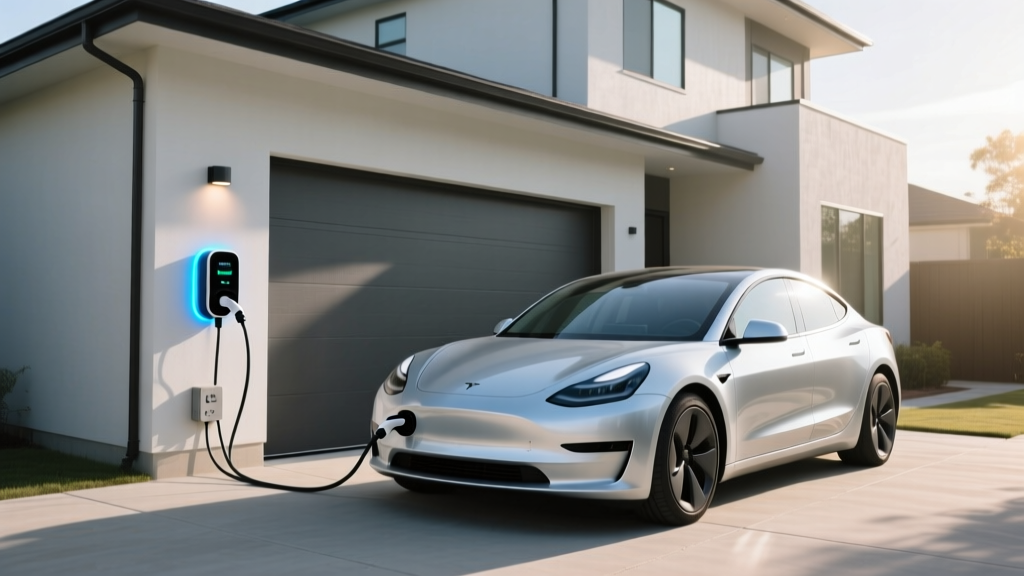
Long range EV cars deliver their best ownership experience when paired with a properly installed Level 2 home charger. The upfront investment of $1,500–$3,500 pays back through fuel savings within 2–4 years for most drivers, eliminates range anxiety, and transforms daily driving into a wake-up-to-a-full-battery routine that gas cars can never match.