If you're shopping for electric cars with longest range — vehicles like the 2026 Lucid Air Grand Touring (516 miles EPA), Tesla Model S (402 miles), or Chevrolet Silverado EV 4WT (450 miles) — the conversation quickly shifts from "how far can it go?" to "how do I actually charge a 100+ kWh battery without losing my mind?" Bigger batteries unlock road-trip freedom, but they also demand a serious charging strategy. A 118 kWh Lucid Air battery, for example, takes over 40 hours on a standard 120V outlet. That's not an oversight; it's physics.
This guide breaks down exactly what it takes to charge today's longest-range EVs at home and in public: charging speeds in hard numbers, real installation costs (including panel upgrades you might not expect), connector compatibility across brands, and the per-mile economics that make the case for electrification — or expose its weak spots.
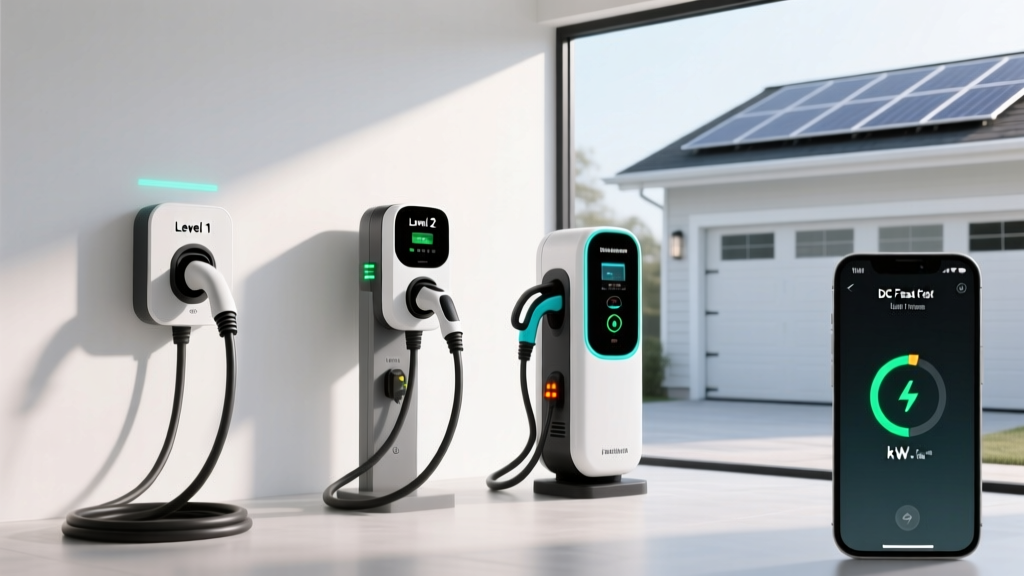
Charging Levels Explained: Speeds That Matter for 100+ kWh Batteries
EV charging is measured in kW (kilowatts), which is the rate of power delivery — think of it as the width of the pipe. Your battery's capacity is measured in kWh (kilowatt-hours), the total volume of energy it holds. A 118 kWh battery charged at 11.5 kW (a typical Level 2 home charger) takes roughly 10 hours from empty to full. That same battery on a 250 kW DC fast charger can go from 10% to 80% in about 20–25 minutes, though charging speed tapers significantly above 80% to protect battery health.
| Level | Voltage | Power (kW) | Miles of Range Added per Hour | Best For |
|---|---|---|---|---|
| Level 1 (120V) | 120V AC | 1.0–1.4 kW | 3–5 mi/hr | Overnight top-offs, PHEVs, emergency backup |
| Level 2 (240V) | 240V AC | 3.3–19.2 kW | 12–75 mi/hr | Daily home charging, workplace charging |
| DC Fast Charging | 200–800V DC | 50–350 kW | 150–1,000+ mi/hr (peak) | Road trips, rapid top-ups, fleet use |
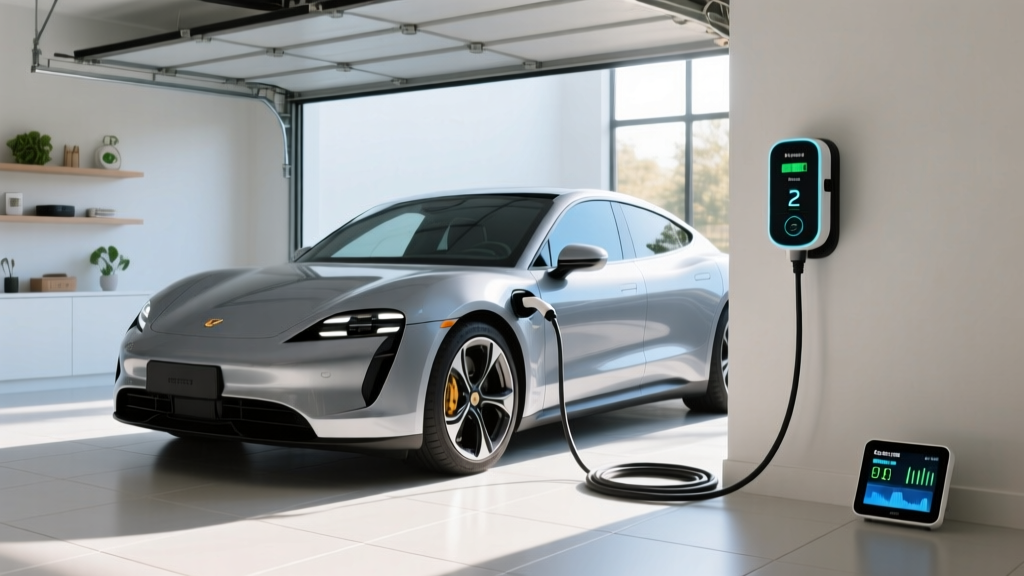
For long-range EVs with 100–135 kWh batteries, Level 2 at 11.5 kW or higher is effectively mandatory for home use. Level 1 is fine for a plug-in hybrid with a 15 kWh battery, but it's a non-starter for a Lucid Air or Rivian R1T Max Pack (149 kWh). Plan on 8–12 hours for a full Level 2 charge on these vehicles — perfectly practical if you charge overnight, but a real constraint if you need fast turnaround.
Home Charger Installation: What It Actually Costs in 2026
Installing a Level 2 home charger isn't just buying a $500 wall box and plugging it in. The total cost depends on your electrical panel's capacity, the distance from the panel to your garage or driveway, and local permitting requirements. Here's what a realistic breakdown looks like for a 48-amp (11.5 kW) hardwired charger — the sweet spot for long-range EVs.
| Component | Low Estimate | High Estimate | Notes |
|---|---|---|---|
| Level 2 Charger (48A, hardwired) | $450 | $750 | Brands: ChargePoint Home Flex, Wallbox Pulsar Plus, Tesla Wall Connector |
| Electrician Labor (2–6 hrs) | $600 | $2,000 | Varies by region, run length, and conduit needs |
| Electrical Materials (wire, conduit, breaker) | $150 | $500 | 6 AWG copper for 48A; longer runs cost more |
| Permit & Inspection | $50 | $300 | Required in most jurisdictions; varies by municipality |
| Panel Upgrade (if needed) | $1,500 | $4,500 | Upgrading from 100A to 200A service; common in pre-1990 homes |
| Total (no panel upgrade) | $1,250 | $3,550 | Most homes with 200A service fall in this range |
| Total (with panel upgrade) | $2,750 | $8,050 | Older homes or those with high existing electrical loads |
The panel upgrade is the line item that catches buyers off guard. A 48-amp EV charger requires a dedicated 60-amp circuit (the National Electrical Code requires circuits to be rated at 125% of continuous load). If your home has a 100-amp service panel — common in houses built before the 1990s — you may not have the headroom for an EV charger plus existing appliances. A licensed electrician will perform a load calculation to determine if an upgrade is necessary.
Connector Compatibility: NACS, CCS, and the Adapter Reality
The connector landscape in 2026 is simpler than it was three years ago, but it still requires attention when buying a charger or planning road trips. Tesla's North American Charging Standard (NACS) has become the dominant connector, with Ford, GM, Rivian, Volvo, and others adopting it for new vehicles. Most legacy CCS1 vehicles can access Tesla Superchargers via adapter, and CHAdeMO (used primarily by the Nissan Leaf) is effectively a legacy standard with shrinking infrastructure.
| Connector | Native Vehicles | Adapter Available? | Public Network Access |
|---|---|---|---|
| NACS (Tesla) | Tesla (all), Ford (2025+), GM (2025+), Rivian (2025+), Volvo, Polestar | CCS-to-NACS adapters widely available ($150–$250) | Tesla Supercharger (17,000+ stalls US), Electrify America (select), EVgo |
| CCS1 | Hyundai, Kia, BMW, VW, Mercedes, Stellantis (most 2024 and earlier) | NACS-to-CCS adapters available | Electrify America, EVgo, ChargePoint, Tesla Supercharger (via adapter) |
| CHAdeMO | Nissan Leaf (discontinued), Mitsubishi Outlander PHEV | Limited adapters | Declining; Electrify America still supports some locations |
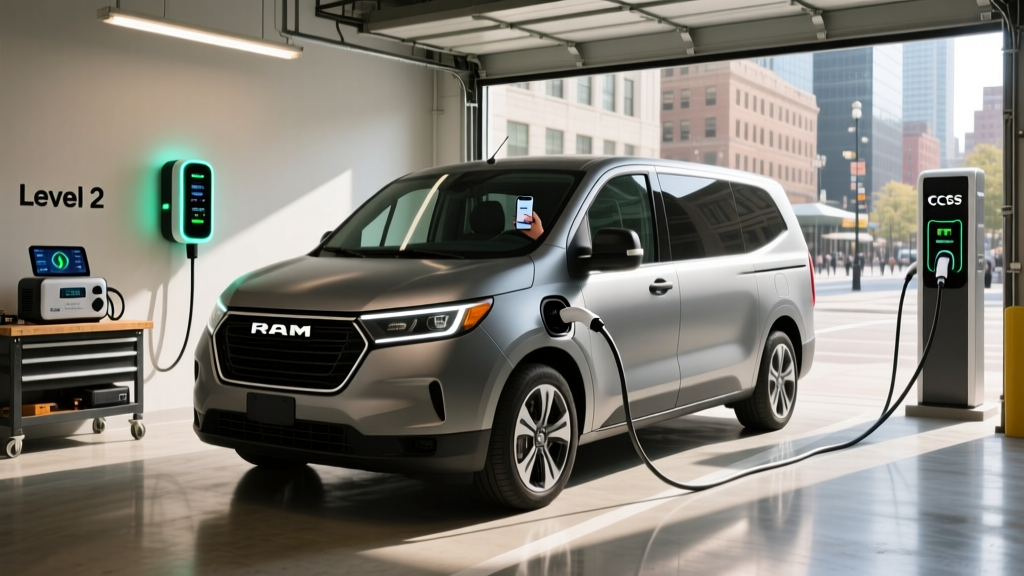
When buying a home Level 2 charger, match the connector to your vehicle. If you drive a 2026 Ford F-150 Lightning or Chevrolet Silverado EV, you need a NACS-terminated charger. If you're still driving a 2024 Hyundai Ioniq 5 (CCS1), ensure your charger has a CCS/J1772 plug — or plan for an adapter. Most Level 2 chargers sold in 2026 ship with NACS as the default, reflecting the market shift.
Charging Time Reality Check: 10–80% for Long-Range EVs
Manufacturer claims about "charging in 18 minutes" almost always refer to the 10–80% window on an ideal DC fast charger with preconditioned battery. Real-world charging involves a charge curve: the battery accepts peak power (say, 250 kW) only at lower states of charge, then progressively tapers as it fills. Above 80%, charging slows dramatically — sometimes to under 50 kW — to prevent lithium plating and thermal stress. This is why most road-trip strategies target 10–80% stops rather than full charges.
| Vehicle | Battery (kWh) | Peak DC Charge Rate (kW) | 10–80% on 350 kW Charger | 10–80% on 150 kW Charger | Full Charge at 11.5 kW (Level 2) |
|---|---|---|---|---|---|
| Lucid Air Grand Touring | 118 kWh (NMC) | ~300 kW (peak) | ~22 min | ~40 min | ~10 hrs |
| Tesla Model S Long Range | 100 kWh (NMC) | ~250 kW | ~28 min | ~42 min | ~8.5 hrs |
| Chevy Silverado EV 4WT | ~200 kWh (NMC) | ~350 kW | ~35 min | ~65 min | ~17 hrs |
| Rivian R1T Max Pack | 149 kWh (NMC) | ~220 kW | ~42 min | ~55 min | ~13 hrs |
| Hyundai Ioniq 9 Long Range | 110.3 kWh (NMC) | ~240 kW | ~26 min | ~40 min | ~9.5 hrs |
A few things to notice: the Silverado EV's massive 200 kWh battery delivers 450 miles of range, but it takes 17 hours on Level 2 — meaning a full home charge requires significant planning. The Lucid Air's 900V architecture allows it to sustain higher charge rates longer than 400V competitors, which is why it charges faster despite a similar battery size. And all of these vehicles benefit enormously from battery preconditioning — warming the battery to optimal temperature before a DC fast charge, typically activated when you navigate to a charger in the vehicle's route planner.
Cost to Charge: Home vs. Public vs. Gas
The economic case for EVs hinges on where and when you charge. Home charging on off-peak electricity rates is dramatically cheaper than gas. Public DC fast charging, however, has crept up in price and can approach or exceed the cost of gasoline on a per-mile basis, especially in high-cost states like California or New York.
| Scenario | Rate / Price | Cost per Mile (3.0 mi/kWh EV) | Annual Cost (12,000 mi) |
|---|---|---|---|
| Home, off-peak electricity | $0.10/kWh | $0.033 | $400 |
| Home, standard rate | $0.16/kWh | $0.053 | $640 |
| Public Level 2 (workplace, shopping) | $0.25/kWh | $0.083 | $1,000 |
| DC Fast Charging (Electrify America, EVgo) | $0.48/kWh (avg) | $0.160 | $1,920 |
| Gasoline vehicle (27 MPG combined) | $3.30/gallon | $0.122 | $1,464 |
The numbers make the case clear: home charging is the economic engine of EV ownership. At $0.10/kWh off-peak, a long-range EV costs roughly $400/year to "fuel" — a fraction of the $1,464 a comparable gas vehicle requires. But if you rely primarily on DC fast charging (as apartment dwellers or frequent road-trippers might), costs can exceed gasoline. This is why a home Level 2 installation isn't just a convenience — it's a financial necessity for most EV owners.
According to fueleconomy.gov, most long-range EVs achieve between 2.5 and 3.5 miles per kWh, which is the conversion factor you need to calculate your personal cost per mile based on local electricity rates.
Best Level 2 Home Chargers for Long-Range EVs (2026 Picks)
For vehicles with 100+ kWh batteries, you want a charger that delivers at least 11.5 kW (48 amps) to ensure a full overnight charge. Here are three proven options that balance power, reliability, and smart features.
Tesla Wall Connector (Gen 4)
Power: 11.5 kW (48A) | Connector: NACS native | Cable: 24 ft | Price: ~$475
Smart features: Wi-Fi connected, over-the-air updates, power sharing (link multiple units on one circuit), integrated cable management. Works natively with all NACS vehicles (Tesla, Ford, GM, Rivian 2025+). For CCS vehicles, you'll need a NACS-to-J1772 adapter.
Best for: Tesla owners and NACS-native vehicle buyers who want the simplest, most integrated experience.
ChargePoint Home Flex (2nd Gen)
Power: Up to 12 kW (50A) | Connector: J1772 (CCS-compatible) with NACS adapter included | Cable: 23 ft | Price: ~$599
Smart features: Wi-Fi, Alexa integration, detailed energy tracking app, flexible amperage settings (16A–50A configurable to match your circuit). UL-listed and NEMA 4 rated for outdoor installation.
Best for: Multi-EV households or buyers who want adjustable amperage to avoid a panel upgrade.
Wallbox Pulsar Plus (48A)
Power: 11.5 kW (48A) | Connector: J1772 / NACS options | Cable: 25 ft | Price: ~$549
Smart features: Bluetooth + Wi-Fi, Eco-Smart mode (integrates with solar panels or home energy monitors), compact form factor, Power Sharing for dual-charger setups.
Best for: Solar-equipped homes and tight garage spaces where a compact charger matters.
Safety, Electrical Code, and Installation Essentials
EV charging is a continuous high-draw electrical load — running for 8+ hours at 48 amps is unlike anything else in a typical home. Proper installation isn't optional; it's a safety requirement. Here's what the National Electrical Code (NEC) and best practices demand:
- Dedicated circuit: Your EV charger must have its own breaker — no sharing with other appliances. A 48A charger requires a 60A breaker (125% rule for continuous loads).
- Hardwired vs. plug-in: Hardwired installations (no plug) are preferred for 48A+ chargers. Plug-in units using a NEMA 14-50 outlet are limited to 40A (NEC requires the outlet to be rated at 125% of the continuous load, and 50A outlets are the practical maximum for plug-in configurations). Hardwired also eliminates the risk of an unplugged or loose connection.
- Wire gauge: 6 AWG copper wire is standard for 48A circuits. Longer runs (over 50 feet from the panel) may require 4 AWG to prevent voltage drop.
- GFCI protection: The 2023 NEC update requires GFCI protection for all EV charging outlets. Hardwired chargers with built-in ground-fault protection satisfy this requirement without a separate GFCI breaker (which can cost $80–$150 more).
- Outdoor rating: If your charger is installed outside (driveway or carport), it must be rated NEMA 4 or NEMA 4X for weather resistance. All three chargers recommended above meet this standard.
- Permit and inspection: Most municipalities require an electrical permit for EV charger installations. The inspection ensures the work meets code — don't skip this step. An unpermitted installation can void your homeowner's insurance coverage in the event of an electrical fire.
Planning for the Long-Term: Panel Capacity and Future-Proofing
If you're installing a charger today but anticipate adding a second EV, a heat pump, or solar battery storage in the next few years, consider upgrading to a 200A or even 400A panel now. The incremental cost during an active installation is far lower than calling an electrician back for a second upgrade. Some utilities offer rebates of $500–$1,500 for panel upgrades done in conjunction with EV charger installation — check with your local provider.
For homes where a panel upgrade isn't feasible or affordable, smart load management systems offer a workaround. Devices like the Wallbox Power Meter or ChargePoint Flex IQ monitor your home's total electrical load in real time and dynamically reduce the charger's amperage when other appliances (dryer, oven, HVAC) are drawing heavily. This lets you install a 48A-capable charger on a smaller panel without tripping the main breaker — though charging will be slower during peak household usage.
Frequently Asked Questions
How much does it cost to install a home EV charger?
For a 48-amp (11.5 kW) hardwired Level 2 charger, expect $1,250–$3,550 if your electrical panel has sufficient capacity. If you need a panel upgrade (common in homes with 100A service), add $1,500–$4,500, bringing the total to $2,750–$8,050. The IRS Residential Clean Energy Credit does not cover EV charger equipment for most taxpayers after 2022, though some state and utility rebates remain available.
How fast will each charging level add range?
Level 1 (120V): 3–5 miles per hour. Level 2 (240V, 48A): 30–45 miles per hour for most EVs. DC Fast Charging (150–350 kW): 150–1,000+ miles per hour at peak, though sustained rates taper above 80% state of charge. For a long-range EV with a 118 kWh battery, Level 2 adds roughly 35 miles of range per hour of charging.
Which connector/charger is compatible with my EV?
Check your vehicle's charge port. 2025+ Ford, GM, Rivian, Volvo, and all Tesla vehicles use NACS. Most 2024 and earlier non-Tesla EVs use CCS1 (J1772 for Level 2, CCS for DC fast). The Nissan Leaf uses CHAdeMO. When buying a home charger, match the connector to your vehicle — or buy a charger with the opposite connector and use an adapter ($150–$250).
How much does charging cost per mile vs gas?
At home on off-peak electricity ($0.10/kWh), an EV achieving 3.0 mi/kWh costs about $0.033 per mile — roughly $400/year for 12,000 miles. A gas car at 27 MPG and $3.30/gallon costs $0.122 per mile, or $1,464/year. However, public DC fast charging at $0.48/kWh pushes EV cost to $0.16/mile, which is more expensive than gas. Home charging access is the key variable.
What electrical upgrades might I need?
The most common upgrade is a panel replacement from 100A to 200A service ($1,500–$4,500). You may also need a new dedicated 60A breaker, 6 AWG wiring run, and conduit. In some cases, your utility may need to upgrade the service drop to your home. A licensed electrician will perform a load calculation per NEC Article 220 to determine your panel's available capacity before installation.