Buying a long range electric vehicle is only half the equation. A 300-plus-mile battery is useless if you cannot refill it efficiently at home or on the road. This guide breaks down exactly what it takes to charge high-capacity EV batteries — from the electrical panel in your garage to the DC fast charger on your next road trip — with the numbers you need to plan and budget.
Long range EVs like the Tesla Model 3 Long Range (363 miles EPA), Lucid Air Grand Touring (516 miles EPA), Hyundai Ioniq 6 SE Long Range (361 miles EPA), and Chevrolet Silverado EV 4WT (450 miles EPA) carry battery packs from 75 kWh to over 110 kWh usable. That capacity is a road-trip advantage but also a charging-time variable that many first-time EV owners underestimate. Understanding the relationship between kW (power — how fast energy flows) and kWh (energy — how much your battery holds) is the single most important concept in this guide.
Charging Levels Explained: Speeds, Power, and Real-World Range Added
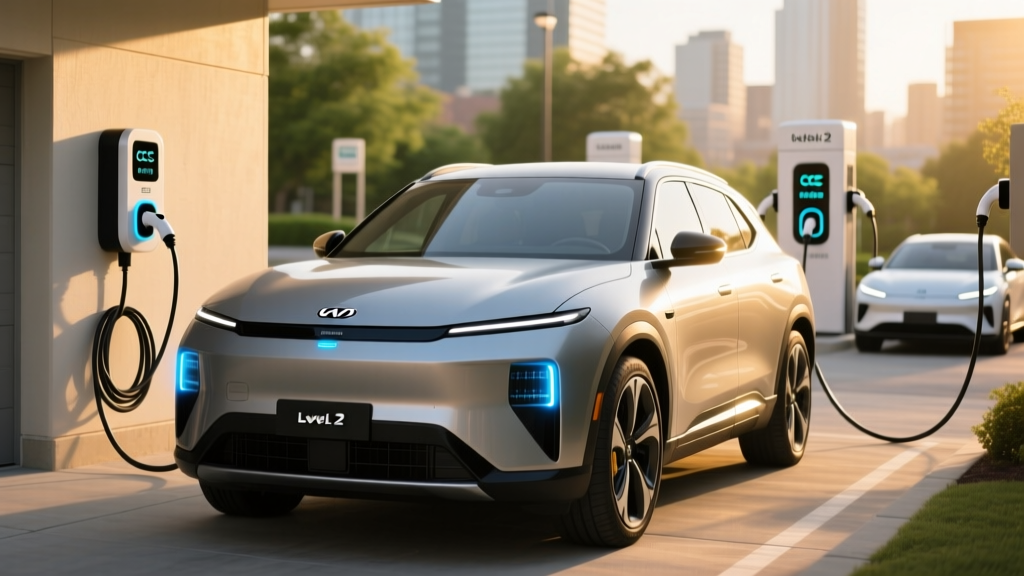
Every EV owner uses a mix of three charging levels. Here is what each delivers, measured in kilowatts of power and approximate miles of range added per hour of charging.
| Level | Voltage | Power (kW) | Miles of Range / Hour | Best Use Case |
|---|---|---|---|---|
| Level 1 | 120V AC | 1.0–1.4 kW | 3–5 mi/hr | Overnight trickle, PHEVs, emergencies |
| Level 2 (Home/Public) | 240V AC | 3.3–19.2 kW | 12–70 mi/hr | Daily home charging, workplace, destinations |
| DC Fast Charging | 400–800V DC | 50–350 kW | 150–400+ mi in 20–30 min | Road trips, highway corridors |
Why this matters for long range EVs: A 100 kWh battery charged on Level 1 (1.4 kW) would take over 70 hours from empty — effectively unusable. That same battery on a 48-amp Level 2 home charger (11.5 kW) refills in roughly 9 hours, perfect for overnight. On a 250 kW DC fast charger, you can go from 10% to 80% in 18–25 minutes, depending on the vehicle's charge curve.
How Fast Will Each Charging Level Add Range?
Charging speed is not linear. DC fast chargers deliver peak power only within a specific state-of-charge (SoC) window — typically 10% to 50%. Above 80%, the battery management system (BMS) tapers the charge rate to protect cell health. Here is what 10–80% charging looks like for common long range EV battery sizes:
| Battery Size (usable kWh) | Example Vehicles | Level 2 @ 11.5 kW (48A) | DC Fast @ Peak Rate | 10–80% Time (DC Fast) |
|---|---|---|---|---|
| 75 kWh | Tesla Model 3 LR, BMW i4 eDrive40 | ~6.5 hours | 250 kW peak | ~25–28 min |
| 84 kWh | Hyundai Ioniq 5 / Ioniq 6, Kia EV6 | ~7.3 hours | 350 kW peak (800V) | ~18 min |
| 100 kWh | Ford F-150 Lightning Ext., Rivian R1T | ~8.7 hours | 150–215 kW peak | ~35–42 min |
| 112 kWh | Lucid Air Grand Touring, Chevy Silverado EV | ~9.7 hours | 300 kW peak | ~22–30 min |
Real-world caveat: Peak kW rates are not sustained rates. A vehicle rated for 350 kW may only hold that speed for 5–8 minutes before tapering. The Hyundai Ioniq 5's 800V architecture sustains higher rates longer than most 400V competitors, which is why its 10–80% time is among the fastest in production. Always check average charging speed, not just peak.
Preconditioning your battery — warming it to optimal temperature before arriving at a DC fast charger — can shave 5–10 minutes off a charging session, especially in cold weather. Most EVs with built-in navigation (Tesla, Hyundai, Ford) do this automatically when you route to a charger.
Home Charger Installation: Electrical Requirements, Costs, and Panel Upgrades
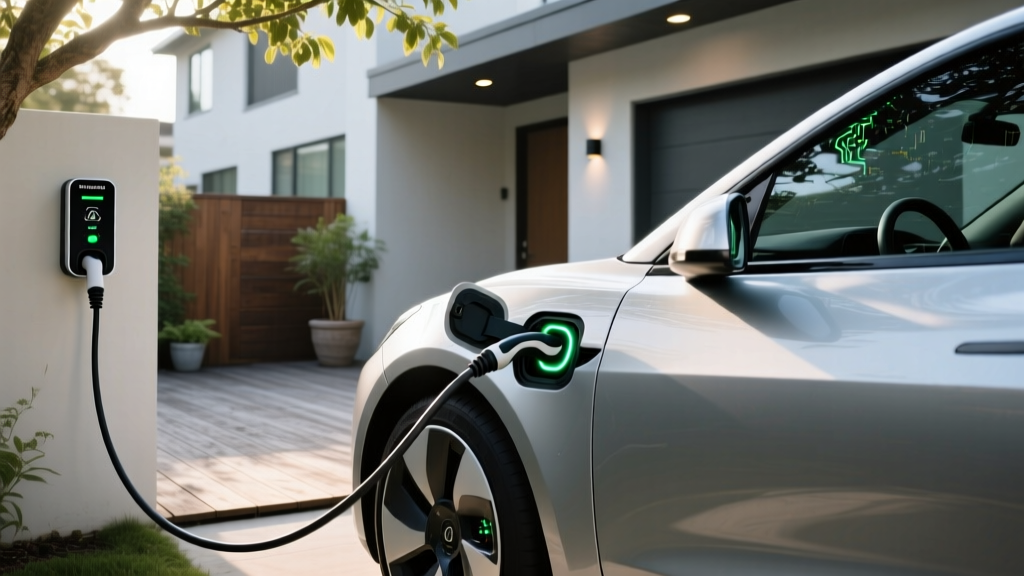
For owners of long range electric vehicles, a Level 2 home charger is the single most impactful upgrade you can make. Here is what the installation involves and what it costs.
Electrical Requirements
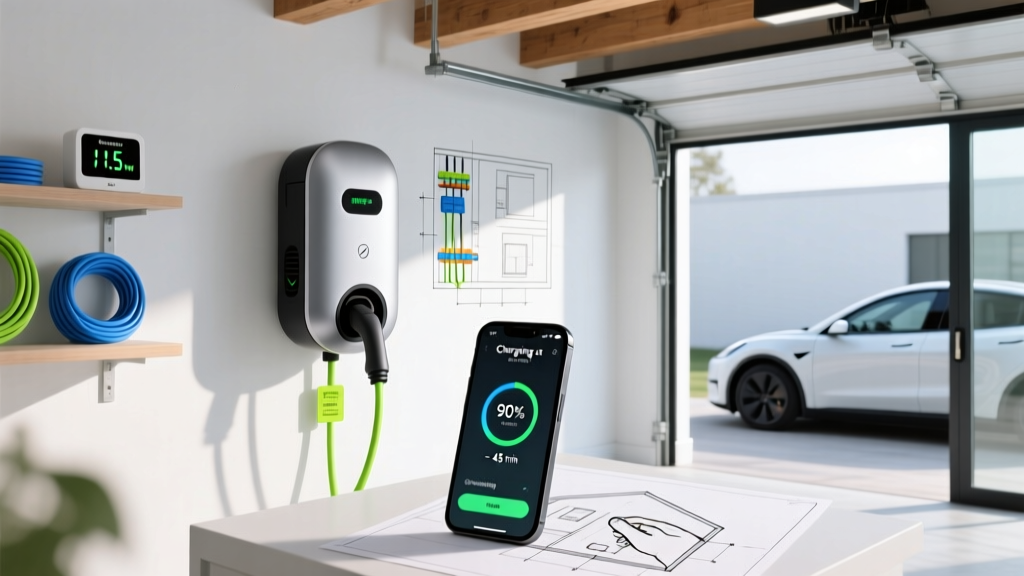
A Level 2 charger requires a dedicated 240-volt circuit, similar to what powers an electric dryer or oven. Common configurations:
- 40-amp circuit → 32-amp continuous charging → 7.7 kW (most common, sufficient for overnight charging of 75–100 kWh batteries)
- 50-amp circuit → 40-amp continuous → 9.6 kW (faster refill, good for larger packs)
- 60-amp circuit → 48-amp continuous → 11.5 kW (fastest residential single-phase, ideal for 100+ kWh batteries)
- 80-amp circuit → 64-amp continuous → 15.3–19.2 kW (requires hardwired charger and robust panel capacity)
The National Electrical Code (NEC) requires that continuous loads (like EV charging) use no more than 80% of a circuit's rated capacity. A 48-amp charger therefore needs a 60-amp breaker.
Panel Upgrade Considerations
Many homes built before 2000 have 100-amp or 150-amp main service panels. Adding a 60-amp EV circuit to a panel already serving electric heating, a dryer, and an oven may require a panel upgrade to 200 amps. This is one of the most common surprise costs in EV ownership.
A load calculation performed by a licensed electrician will determine whether your existing panel has headroom. If an upgrade is needed, expect to add $1,500–$3,500 to your project cost.
Installation Cost Breakdown
| Component | Low End | High End | Notes |
|---|---|---|---|
| Level 2 Charger (Equipment) | $350 | $800 | Smart Wi-Fi chargers, 32–48A |
| Electrical Labor (Electrician) | $500 | $2,000 | Depends on run length, conduit, wall type |
| Permit & Inspection | $50 | $300 | Required in most jurisdictions |
| Panel Upgrade (if needed) | $1,500 | $3,500 | 100A → 200A service upgrade |
| Total (no panel upgrade) | $900 | $3,100 | Typical for modern 200A homes |
| Total (with panel upgrade) | $2,400 | $6,600 | Older homes with 100–150A service |
Federal incentive: The IRS Residential Clean Energy Credit (§25C) covers up to 30% of home EV charger equipment and installation costs, capped at $1,000 per year. This credit is available for qualifying equipment installed through 2032, subject to income and eligibility rules. Consult a tax professional for your specific situation.
Which Connector Is Compatible With Your EV?
The connector landscape in North America shifted dramatically between 2023 and 2026. Here is where things stand for long range electric vehicles on sale today.
| Connector | Brands Using It | Notes |
|---|---|---|
| NACS (J3400) | Tesla (all), Ford, GM, Rivian, Volvo, Polestar, Hyundai/Kia (2025+ models), Mercedes-Benz (2025+), Nissan (2025+) | Now the dominant North American standard. Smaller, lighter plug. Access to Tesla Supercharger network. |
| CCS1 | Legacy models (pre-2025 VW ID.4, BMW iX, some Stellantis EVs) | Still supported at Electrify America, EVgo, ChargePoint. NACS adapters available for CCS vehicles. |
| CHAdeMO | Nissan Leaf (legacy), Mitsubishi Outlander PHEV (legacy) | Effectively discontinued for new vehicles. Infrastructure declining. |
Adapter needs: If you own a CCS-equipped EV and want to use Tesla Superchargers, Ford, GM, Rivian, and Volvo provide or sell NACS adapters (typically $200–$300, sometimes included). Conversely, if you drive a NACS-equipped vehicle and need to use a CCS-only Electrify America station, CCS-to-NACS adapters are available from third-party manufacturers for $150–$250. For home Level 2 charging, most chargers now ship with a NACS connector; CCS vehicles can use a J1772-to-NACS adapter or a charger with a J1772 plug (which most CCS vehicles accept natively for AC charging).
Cost to Charge: Per-Mile Economics vs. Gasoline
The cost advantage of electricity over gasoline is a primary ownership benefit of long range electric vehicles, but the savings depend heavily on where and when you charge.
| Scenario | Rate ($/kWh) | Cost for Full Charge (0–100%) | Cost Per Mile |
|---|---|---|---|
| Home off-peak (utility time-of-use) | $0.08–$0.12 | $6.80–$10.20 | $0.023–$0.034 |
| Home standard rate (national avg.) | $0.16–$0.18 | $13.60–$15.30 | $0.045–$0.051 |
| Public Level 2 (workplace, shopping) | $0.20–$0.35 | $17.00–$29.75 | $0.057–$0.099 |
| DC Fast Charging (Electrify America, EVgo) | $0.35–$0.55 | $29.75–$46.75 | $0.099–$0.156 |
| Tesla Supercharger (varies by location) | $0.25–$0.40 | $21.25–$34.00 | $0.071–$0.113 |
Gas comparison: A comparable gas vehicle averaging 28 MPG combined at $3.40/gallon costs approximately $0.121 per mile. Home-charged EV owners save 60–80% per mile. Even exclusive DC fast charging is roughly cost-competitive with gasoline — and most EV owners do 80%+ of their charging at home.
According to fueleconomy.gov, the average EV efficiency is 3–4 miles per kWh, which translates to 250–330 Wh/mile. Long range vehicles with larger, heavier battery packs tend toward 280–340 Wh/mile. Check your specific vehicle's MPGe rating to calculate precise costs.
Best Home Chargers for Long Range Electric Vehicles (2026 Picks)
For EVs with 80–112 kWh batteries, you want a charger that delivers at least 11.5 kW (48 amps) to fully replenish overnight. Here are top-performing Level 2 chargers with the specs that matter.
ChargePoint Home Flex
- Power: Up to 12 kW (50 amps) on a 60A circuit
- Connector: NACS (J3400) or J1772 (configurable)
- Cable length: 23 feet
- Smart features: Wi-Fi, app scheduling, energy tracking, Alexa integration
- Price: ~$649
- Best for: Versatile amperage settings via DIP switch; works with 40A–60A circuits
Grizzl-E Smart
- Power: Up to 9.6 kW (40 amps) on a 50A circuit
- Connector: NACS or J1772
- Cable length: 24 feet
- Smart features: Wi-Fi, OCPP support, load sharing, firmware updates
- Price: ~$449
- Best for: Budget-conscious buyers; built in Canada, rugged outdoor rating (NEMA 4)
Tesla Wall Connector
- Power: Up to 11.5 kW (48 amps) on a 60A circuit
- Connector: NACS native
- Cable length: 24 feet
- Smart features: Wi-Fi, OTA updates, Power Sharing (link multiple units), vehicle integration
- Price: ~$475
- Best for: Tesla and NACS-equipped Ford/GM/Rivian owners; cleanest ecosystem integration
Key selection criteria: For a 100+ kWh battery, prioritize 48-amp chargers (11.5 kW) over cheaper 32-amp models (7.7 kW). The difference is 3–4 hours off your overnight charge time. Also verify the cable length reaches your charge port from the planned mount location — some vehicles have rear-quarter charge ports that need 24+ feet of cable in a standard garage.
Safety, Code, and Installation Best Practices
EV charging is a high-draw, long-duration electrical load. Proper installation is not optional — it protects your home and your warranty.
- Dedicated circuit: Your Level 2 charger must be on its own dedicated breaker. Sharing a circuit with other appliances risks tripping and fire.
- GFCI protection: The 2023 NEC update (and subsequent 2026 adoptions) requires GFCI protection for EV charging outlets in garages and all outdoor locations. Hardwired chargers may not require a GFCI breaker, which saves $50–$150 on the breaker itself.
- Outdoor rating: If your charger is mounted outside, it must carry at minimum a NEMA 4 (weather-resistant) rating. Most quality chargers meet NEMA 4 or IP65.
- Permit and inspection: Most municipalities require an electrical permit for EV charger installation. Skipping this can void homeowner's insurance claims related to electrical fires and may cause issues at resale.
- Wire gauge: A 60-amp circuit typically requires 6 AWG copper wire for runs up to 50 feet; longer runs may need 4 AWG to prevent voltage drop. Your electrician will calculate this based on your specific run.
Never use extension cords or outlet splitters with an EV charger. The sustained high current will overheat inadequate wiring. If your garage outlet is a NEMA 14-50, verify that it was installed with the correct torque specifications — loose connections on 14-50 receptacles have been a documented fire risk in EV communities. A hardwired installation eliminates this failure point entirely.
Public Charging Strategy for Long Range EVs
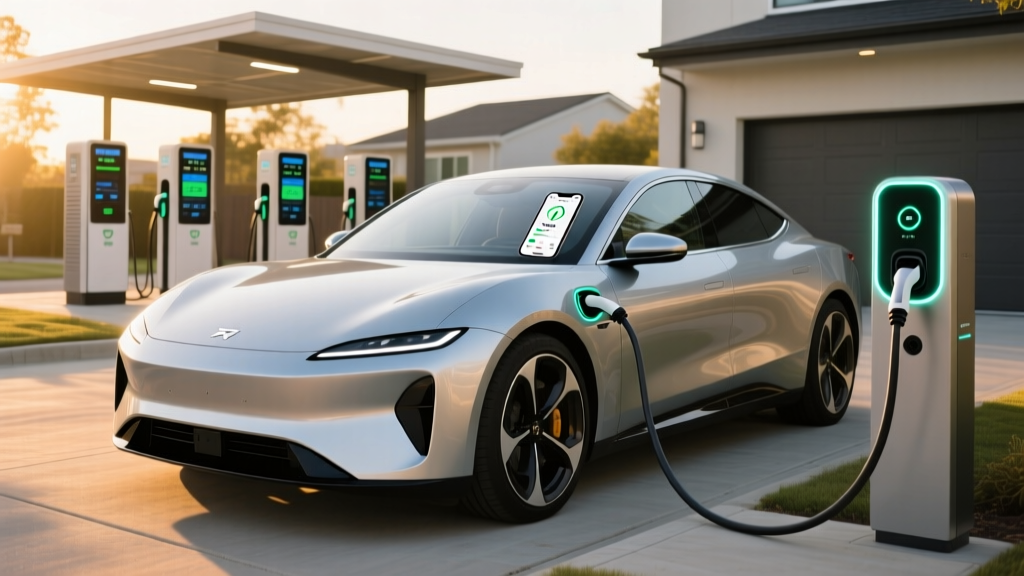
Long range electric vehicles with 300+ miles of EPA range fundamentally change public charging behavior: you need fewer stops, and each stop can be shorter because you arrive at a lower state of charge (which is where DC fast charging is fastest).
Road-trip optimization: On a 600-mile trip in a 360-mile-range EV, you will likely make one charging stop. Arriving at the charger at 10–15% SoC and charging to 80% takes 18–25 minutes on a 250+ kW charger. Charging from 80% to 100% can take nearly as long due to taper — so plan your stops around 10–80% windows.
Network reliability: As of 2026, the Tesla Supercharger network (now open to NACS-equipped Ford, GM, Rivian, and other vehicles) maintains the highest uptime and reliability scores. Electrify America and EVgo have improved significantly but still experience occasional connector or payment failures in some regions. Apps like PlugShare and A Better Routeplanner (ABRP) let you check real-time station status before you arrive.
Cold-weather impact: Battery efficiency drops 20–35% in sub-freezing temperatures, and DC fast charging speeds are reduced until the battery warms. A 360-mile EPA range vehicle may deliver 250–280 real-world miles in winter highway driving. Always precondition your battery before DC fast charging in cold weather, and budget an extra 10–15% range margin in your trip planning.
Frequently Asked Questions
How much does it cost to install a home EV charger?
A typical Level 2 home charger installation costs $900–$3,100 if your electrical panel has sufficient capacity. If you need a panel upgrade from 100A to 200A service, total costs range from $2,400–$6,600. The equipment itself (a quality smart charger) costs $350–$800. The IRS §25C credit can offset up to $1,000 of the total.
How fast will each charging level add range?
Level 1 (120V) adds 3–5 miles per hour. Level 2 (240V, 48A) adds 35–45 miles per hour. DC fast charging (250+ kW) can add 150–300 miles in 20–30 minutes, depending on your vehicle's peak charge rate and battery size. For long range EVs with 80+ kWh batteries, Level 2 at home is the practical daily solution.
Which connector/charger is compatible with my EV?
In 2026, most new EVs sold in North America use the NACS (J3400) connector. Older CCS1 vehicles can use adapters to access NACS/Supercharger stations. CHAdeMO is effectively legacy-only. For home Level 2 charging, most chargers now offer NACS connectors; CCS vehicles can charge on Level 2 via J1772 (which most CCS vehicles accept for AC). Check your vehicle's charge port before purchasing a charger.
How much does charging cost per mile vs gas?
Home charging at the national average electricity rate ($0.16–$0.18/kWh) costs roughly $0.045–$0.051 per mile for a typical long range EV. A comparable gas car at 28 MPG and $3.40/gallon costs about $0.121 per mile. That is a 55–63% savings per mile when charging at home. DC fast charging narrows the gap to roughly $0.10–$0.16 per mile.
What electrical upgrades might I need?
The most common upgrade is a panel capacity increase from 100A or 150A to 200A, costing $1,500–$3,500. You may also need a new conduit run if your garage is far from the panel, upgraded wire gauge for long runs, or a GFCI breaker if your jurisdiction requires it for EV outlets. A licensed electrician will perform a load calculation to determine exactly what your home needs before quoting the job.