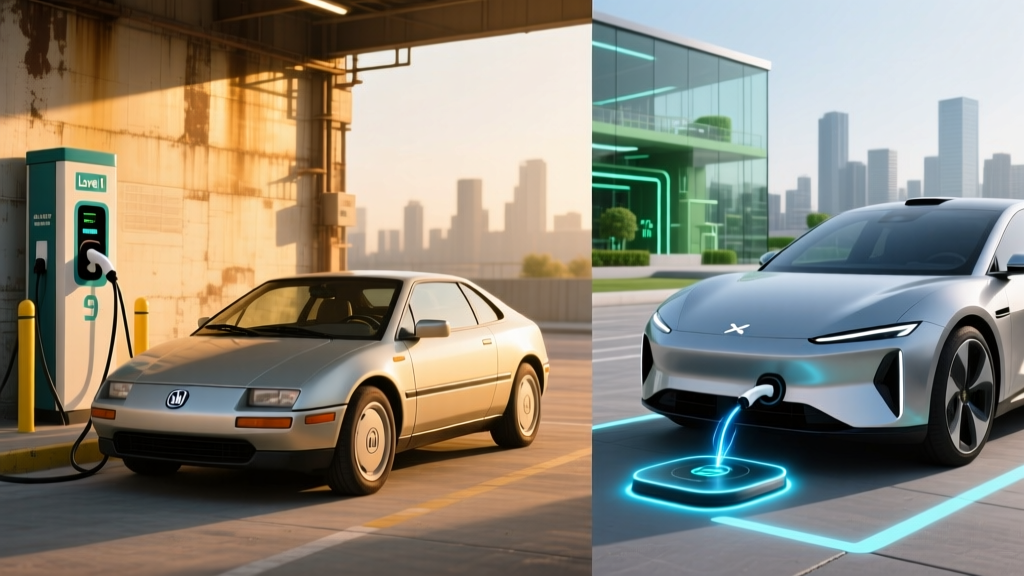
Lincoln's electric lineup — anchored by the Corsair Grand Touring plug-in hybrid and the fully electric Aviator-based concepts heading toward production — demands a clear-eyed look at what charging actually costs, how fast it happens, and what your home electrical panel can handle. Whether you're plugging in a PHEV nightly or preparing for a full battery-electric Lincoln, the physics and economics of EV charging don't change by badge. This guide breaks down every level, every cost, and every connector so you can spec your setup correctly the first time.
Charging Levels Explained: kW, Miles Per Hour, and What Each Level Actually Delivers
The single most important distinction in EV charging is between kW (kilowatts), which measures power — the rate at which energy flows — and kWh (kilowatt-hours), which measures energy capacity, the size of your battery. A 75 kWh battery charged at 7 kW takes roughly 10.7 hours from empty. Confusing these two is the most common mistake new EV owners make.
| Level | Voltage | Power (kW) | Miles of Range Added Per Hour | Best Use Case |
|---|---|---|---|---|
| Level 1 | 120V AC | 1.2–1.8 kW | 3–5 miles | Overnight PHEV top-ups, emergency trickle |
| Level 2 | 240V AC | 3.3–19.2 kW | 12–75 miles | Daily home charging, workplace, hotels |
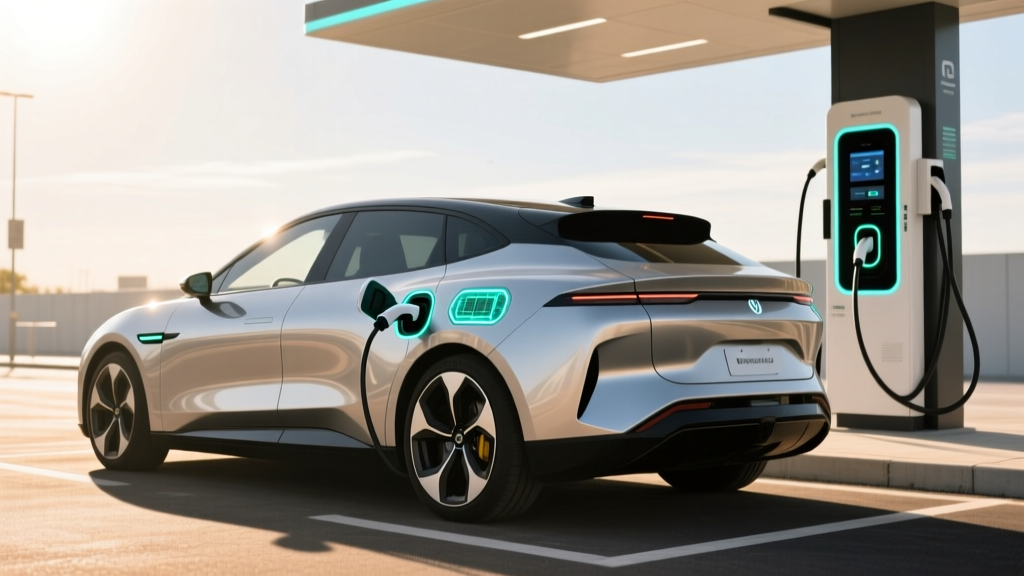
| DC Fast Charge | 400–800V DC | 50–350 kW | 150–1,000+ miles (equivalent rate) | Road trips, highway corridors, rapid top-ups |
For a Lincoln PHEV with a ~15–20 kWh battery, Level 1 can fully replenish overnight in 8–12 hours. For a future Lincoln BEV with an 80–100 kWh pack, Level 1 is impractical for daily use — you need Level 2 minimum at home. DC fast charging is what you'll use on road trips, and the charge curve matters: peak kW is only sustained from roughly 10% to 50% state of charge (SoC), after which the rate tapers to protect battery health. A charger rated at 150 kW peak may average only 80–90 kW across a 10–80% session.
Home Level 2 Installation: Electrical Requirements, Panel Upgrades, and Real Costs
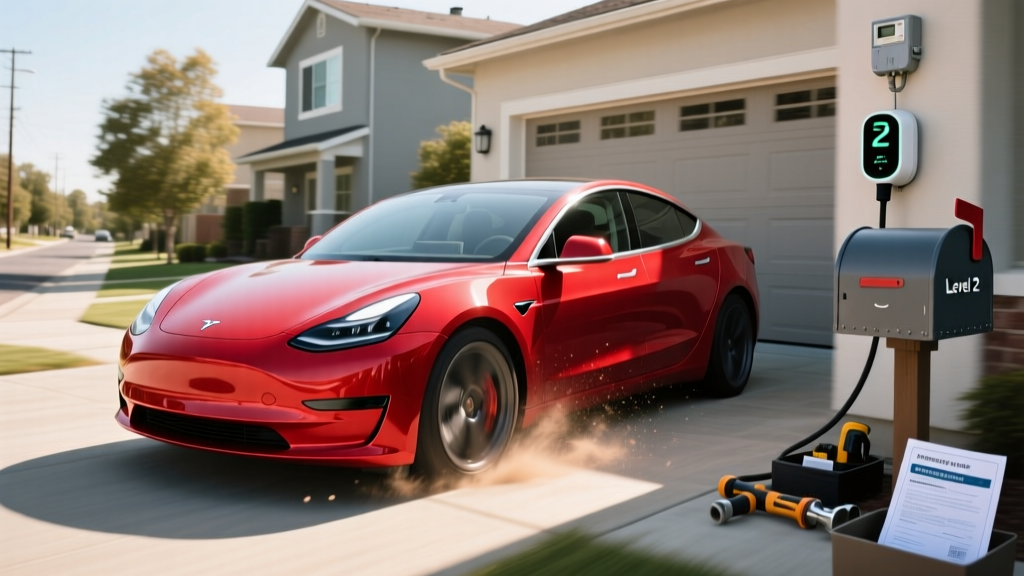
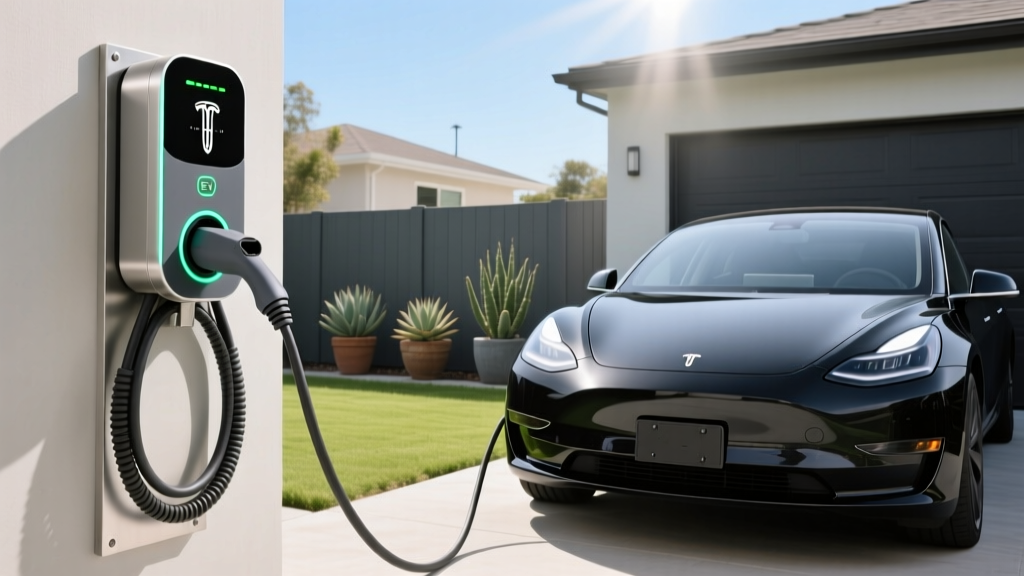
Installing a Level 2 home charger is an electrical project, not just a plug-and-play purchase. Most Lincoln EV owners will want a 240V dedicated circuit delivering 40A to 48A (9.6–11.5 kW), which provides 30–40 miles of range per hour of charging — enough to replenish any daily drive overnight.
Electrical Requirements
- Circuit: Dedicated 50A or 60A breaker (for 40A or 48A continuous charging load — NEC requires 125% headroom for continuous loads)
- Wire: 6 AWG copper (50A) or 4 AWG copper (60A), run in conduit if exposed
- Outlet vs. hardwired: NEMA 14-50 outlet offers portability; hardwired units allow up to 48A (some outlets are limited to 40A) and eliminate GFCI nuisance trips common with 14-50 receptacles
- GFCI protection: Required by NEC 2020+ for receptacle-based installs; hardwired chargers have internal ground-fault protection
- Outdoor rating: If your parking spot is outside, ensure the charger carries a NEMA 4 or NEMA 4X weather rating
Panel Upgrade Reality
Homes built before 2000 often have 100A or 150A main service panels. Adding a 50A EV circuit may push total calculated load beyond panel capacity, triggering a panel upgrade to 200A — a $1,500–$3,500 job on its own. Newer homes with 200A service usually have enough headroom, but a licensed electrician must perform a load calculation per NEC Article 220 before confirming. Some homeowners opt for a smart panel load manager (like the Emporia VUE or Span drive) to avoid a full upgrade.
Home Level 2 Installation Cost Breakdown
| Component | Low End | High End | Notes |
|---|---|---|---|
| Level 2 Charger Equipment | $350 | $750 | 32A–48A smart charger, 18–25 ft cable |
| Electrician Labor | $500 | $2,000 | Depends on run length, wall/conduit complexity |
| Permit & Inspection | $50 | $300 | Required in most jurisdictions; varies by municipality |
| Panel Upgrade (if needed) | $1,500 | $3,500 | 100A → 200A service upgrade; not always required |
| Total (no panel upgrade) | $900 | $3,050 | Typical suburban garage install |
| Total (with panel upgrade) | $2,400 | $6,550 | Older home with insufficient service |
The federal Alternative Fuel Vehicle Refueling Property Credit (IRS Form 8911) can cover up to 30% of home charger equipment and installation costs, capped at $1,000 — but only if you live in an eligible census tract. Check IRS guidance for current-year qualifying areas.
Connector Compatibility: NACS, CCS, and What Lincoln EVs Use
The connector landscape consolidated significantly through 2024–2025, with Ford's adoption of the North American Charging Standard (NACS) pulling much of the industry — including Lincoln's parent company Ford — toward the Tesla-style plug. Here's where things stand:
| Connector | Brands Using It | DC Fast Charge Support | Adapter Needed? |
|---|---|---|---|
| NACS (Tesla-style) | Tesla, Ford, Lincoln (newer), GM, Rivian, Volvo, Polestar, others | Yes — native Supercharger + NACS networks | No for NACS vehicles; CCS-to-NACS adapters available |
| CCS1 | Hyundai, Kia, VW, BMW, older Ford/Lincoln | Yes — Electrify America, EVgo, ChargePoint | NACS-to-CCS adapter for Tesla Superchargers |
| CHAdeMO | Nissan Leaf (legacy), Mitsubishi Outlander PHEV | Yes — declining network | Limited adapter availability; network shrinking |
For Lincoln PHEV owners (Corsair Grand Touring), the J1772 connector handles Level 1 and Level 2 AC charging — this is universal across all plug-in vehicles sold in North America. If your Lincoln transitions to NACS for a future BEV model, you'll gain native access to the Tesla Supercharger network (now open to NACS vehicles), which remains the most reliable DC fast-charging network in the U.S. with over 25,000 stalls.
Charging Time Examples: How Long Does 10–80% Actually Take?
Charge times depend on battery size (kWh), the vehicle's maximum acceptance rate (kW), and the charger's output. Here are real-world benchmarks for typical Lincoln-relevant battery sizes:
| Battery Size | Vehicle Type | Level 2 (11.5 kW / 48A) | DC Fast (150 kW peak) | DC Fast (350 kW peak) |
|---|---|---|---|---|
| 15 kWh | PHEV (Corsair Grand Touring class) | ~1.5 hours (0–100%) | N/A — PHEVs rarely support DCFC | N/A |
| 75 kWh | Mid-size BEV | ~7 hours (0–100%) | ~32 min (10–80%) | ~22 min (10–80%) |
| 100 kWh | Large luxury BEV (Aviator-class) | ~9.5 hours (0–100%) | ~42 min (10–80%) | ~28 min (10–80%) |
Key caveat: the 10–80% window is where DC fast charging is fastest. Pushing from 80% to 100% on DC can take as long as the 10–80% portion due to the charge curve taper. For daily driving, charging to 80% preserves long-term battery health — especially for NMC chemistry packs, which degrade faster at sustained high SoC. LFP batteries tolerate 100% daily charging better, and many manufacturers recommend periodic full charges for LFP to maintain cell balancing.
Cost to Charge: Home vs. Public vs. Gas — The Per-Mile Breakdown
Electricity pricing varies enormously by region and time of day. Here are representative scenarios for a large Lincoln-class EV averaging 2.5 miles per kWh (roughly 95 MPGe combined, per fueleconomy.gov methodology):
| Scenario | Price per kWh | Cost per Gallon-Equivalent | Cost per Mile |
|---|---|---|---|
| Home, off-peak utility rate | $0.09–$0.13 | $2.25–$3.25 | $0.036–$0.052 |
| Home, standard residential rate | $0.14–$0.18 | $3.50–$4.50 | $0.056–$0.072 |
| Public Level 2 (ChargePoint, EVgo) | $0.25–$0.39 | $6.25–$9.75 | $0.10–$0.156 |
| DC Fast Charge (Electrify America, Tesla) | $0.35–$0.55 | $8.75–$13.75 | $0.14–$0.22 |
| Gasoline (premium, 2026 avg.) | — | $4.20–$5.00/gal | $0.17–$0.22 (at 22 MPG combined) |
The takeaway: home charging at off-peak rates delivers fuel costs roughly one-quarter to one-third of premium gasoline. Public DC fast charging, however, narrows the gap significantly — and in some regions with peak demand pricing, can actually exceed the per-mile cost of gas. This is why home Level 2 access is the single biggest economic factor in EV ownership satisfaction. Plan your driving and charging so that 85–90% of your energy comes from your home circuit.
Equipment Recommendations: Level 2 Chargers Worth Installing in 2026
ChargePoint Home Flex
- Power: Up to 12 kW (50A) on a 60A circuit; configurable down to 16A
- Connector: J1772 (NACS adapter included or available separately)
- Cable length: 23 feet
- Smart features: Wi-Fi, app scheduling, energy tracking, Alexa integration
- Price: ~$599 (equipment only)
- Best for: Flexible amperage adjustment if your panel has limited headroom
Emporia Level 2 EV Charger
- Power: Up to 11.5 kW (48A) on a 60A circuit
- Connector: J1772 (NACS version available)
- Cable length: 24 feet
- Smart features: Wi-Fi, solar integration, time-of-use scheduling, load management with Emporia VUE panel monitor
- Price: ~$399
- Best for: Budget-conscious buyers; excellent app; pairs with solar and panel monitoring
Ford Connected Charge Station
- Power: Up to 11.5 kW (48A) on a 60A circuit
- Connector: J1772 (NACS on newer production runs)
- Cable length: 25 feet
- Smart features: FordPass integration, scheduled charging, departure preconditioning sync
- Price: ~$595–$799 (often included or discounted with new Lincoln/Ford EV purchase)
- Best for: Lincoln/Ford owners wanting native vehicle-app integration and potential dealer installation bundles
Wallbox Pulsar Plus
- Power: Up to 11.5 kW (48A)
- Connector: J1772 or NACS (select at purchase)
- Cable length: 25 feet
- Smart features: Wi-Fi + Bluetooth, Power Sharing (two chargers on one circuit), Eco-Smart solar mode
- Price: ~$449–$549
- Best for: Multi-EV households needing dual-charger load balancing without a panel upgrade
Whichever unit you choose, confirm it carries UL or ETL certification (not just CE, which is a European marking with no U.S. safety testing backing). Uncertified chargers may void homeowner's insurance claims in the event of an electrical fire.
Safety, Code, and Permitting: What You Cannot Skip
NFPA's National Electrical Code (NEC) and your local jurisdiction's amendments govern every aspect of EV charger installation:
- Dedicated circuit: Your EV charger must have its own breaker — no sharing with laundry, HVAC, or other appliances
- Permit required: Nearly all municipalities require an electrical permit for a new 240V circuit. Skipping the permit risks failed home inspections at sale time and insurance claim denials
- Inspection: After installation, a city/county inspector verifies wire gauge, breaker sizing, grounding, and GFCI compliance before closing the permit
- HOA considerations: Many states (CA, CO, FL, TX, and others) have "right to charge" laws that override HOA restrictions on EV charger installation — but you still must follow building codes
- Cable management: If your charger cable crosses a walkway or driveway, use a cable ramp or wall-mounted retractor to prevent trip hazards and cord damage
Frequently Asked Questions
How much does it cost to install a home EV charger?
A typical Level 2 home installation runs $900–$3,050 when no panel upgrade is needed (equipment + electrician + permit). If your home requires a 200A service panel upgrade, add $1,500–$3,500, bringing the total to $2,400–$6,550. The federal refueling property credit may offset up to $1,000 (30% of costs) in eligible census tracts.
How fast will each charging level add range?
Level 1 (120V) adds 3–5 miles per hour. Level 2 (240V, 48A) adds 30–40 miles per hour for a large SUV-class EV. DC fast charging at 150 kW can add roughly 200 miles in 20–25 minutes during the 10–80% window, though the charge curve tapers significantly above 80% SoC.
Which connector/charger is compatible with my Lincoln EV?
Lincoln PHEVs (Corsair Grand Touring) use the J1772 connector for Level 1 and Level 2 AC charging. For future Lincoln BEVs adopting NACS, you'll use the Tesla-style connector and gain native Supercharger access. CCS-equipped Lincolns can use a NACS-to-CCS adapter for Supercharger compatibility. CHAdeMO is not used by any Lincoln product.
How much does charging cost per mile vs. gas?
Home off-peak charging costs $0.04–$0.05 per mile for a Lincoln-class EV. Standard residential rates push this to $0.06–$0.07/mile. Public DC fast charging ranges from $0.14–$0.22/mile. A comparable luxury gasoline SUV at 22 MPG on premium fuel costs $0.17–$0.22 per mile. Home charging saves 60–75% on fuel costs.
What electrical upgrades might I need?
If your home has a 100A or 150A main panel, you may need a service upgrade to 200A ($1,500–$3,500). Alternatively, a smart load management device can dynamically reduce charger amperage when other high-draw appliances are running, potentially avoiding a full panel upgrade. A licensed electrician must perform an NEC Article 220 load calculation to determine your specific requirement.
Can I use a Tesla Supercharger with my Lincoln?
If your Lincoln is equipped with NACS (newer models), yes — native Supercharger access is available. If your Lincoln has CCS, Ford/Lincoln provides a NACS adapter that enables Supercharger use. The Supercharger network offers the highest reliability rate among DC fast-charging networks, with uptime consistently above 95%.