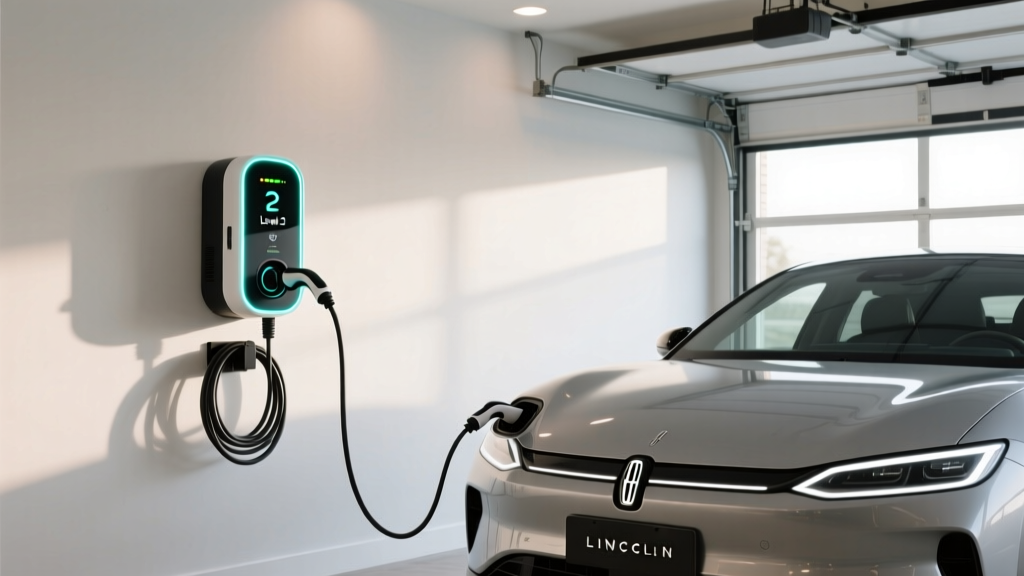
Lincoln Electric is best known for welding equipment, but the company's foray into EV charging hardware has caught the attention of cost-conscious EV owners looking for a no-frills, industrial-grade Level 2 home charger. The Lincoln Electric EV charger lineup — primarily the 48-amp Level 2 wall-mount unit — targets buyers who want durable hardware without paying a premium for smart features they may never use. But does an industrial brand translate to reliable home EV charging?
We've spent time evaluating the Lincoln Electric EV charger against the realities of daily EV ownership: actual charge rates on 240V circuits, installation requirements for older and newer homes, connector compatibility with the shifting NACS/CCS landscape in 2026, and how the total install cost compares to rivals like ChargePoint, Emporia, and Tesla's Universal Wall Connector. Here's the data-driven breakdown.
| Specification | Detail |
|---|---|
| Max Power Output | 11.5 kW (48A @ 240V) |
| Connector | J1772 (NACS adapter available separately) |
| Cable Length | 25 ft |
| Indoor/Outdoor Rating | NEMA 4 (indoor/outdoor) |
| Wi-Fi / Smart Features | No (dumb charger) |
| Circuit Breaker Required | 60A dedicated |
| Energy-Star Certified | Yes |
| Warranty | 3 years |
| Approx. Equipment Price | $399–$499 |
Understanding Charging Levels: What Speed Are You Actually Getting?
Before evaluating any charger, you need to understand the three charging levels and how they differ in power delivery. Power is measured in kW (kilowatts) — the rate at which energy flows. Energy stored in your battery is measured in kWh (kilowatt-hours) — the total capacity. Confusing these two is the most common EV literacy mistake. Think of kW as the width of a hose and kWh as the size of the bucket.
| Level | Voltage | Power (kW) | Miles of Range Added Per Hour | Typical Use Case |
|---|---|---|---|---|
| Level 1 | 120V AC | 1.0–1.4 kW | 3–5 mi/hr | Emergency / overnight trickle |
| Level 2 | 240V AC | 3.3–19.2 kW | 12–75 mi/hr | Home / workplace daily charging |
| DC Fast Charge | 400–800V DC | 50–350 kW | 150–1,200+ mi/hr (peak) | Road trips, highway corridors |
The Lincoln Electric unit is a Level 2 charger delivering up to 11.5 kW on a 240V/48A circuit. For context, that translates to roughly 35–44 miles of range per hour of charging for a typical EV like the Tesla Model Y or Ford Mustang Mach-E (which average around 3.0–3.5 mi/kWh efficiency). An overnight 10-hour session at that rate adds 350–440 miles — more than enough to fully replenish virtually any EV battery on the market.
Home Installation Requirements: What Your Electrical Panel Needs
The Lincoln Electric 48A charger requires a dedicated 60-amp, 240V circuit. National Electrical Code (NEC) requires that continuous loads (anything running 3+ hours, which includes EV charging) not exceed 80% of the breaker rating. A 60A breaker supports a continuous 48A draw — which is exactly what this charger pulls at maximum.
Electrical Requirements at a Glance
- Voltage: 240V split-phase (standard US residential)
- Amperage: 48A continuous draw, 60A breaker
- Wire gauge: 6 AWG copper (THHN in conduit) or 4 AWG if using NM-B Romex, per NEC 310.16
- Circuit: Dedicated — cannot share with other appliances
- GFCI protection: NEC 2023/2026 requires GFCI for EV receptacles; hardwired units may not require a separate GFCI breaker depending on local AHJ (Authority Having Jurisdiction)
- Permit: Required in most jurisdictions; typical fee $50–$150
Panel Upgrade Reality Check
Most modern homes with 200A electrical service can accommodate a 60A EV circuit without a panel upgrade. However, homes with 100A service — common in houses built before the 1990s — or panels already near capacity (running electric range, dryer, HVAC, water heater) may need a service upgrade to 200A, which is the single largest variable in installation cost. A panel upgrade from 100A to 200A typically runs $1,500–$3,500 before the charger install even begins.
Some homeowners use a smart load management device (like the Emporia Smart Panel or Span smart breaker panel) to avoid a full upgrade by dynamically limiting charger draw when other large loads are active. This can save thousands but requires compatible hardware and electrician familiarity.
| Component | Simple Install (panel nearby, no upgrade) | Complex Install (long wire run or panel upgrade) |
|---|---|---|
| Charger unit (Lincoln Electric 48A) | $399–$499 | $399–$499 |
| Electrician labor (2–6 hours) | $300–$600 | $800–$1,800 |
| Materials (wire, conduit, breaker) | $100–$250 | $300–$600 |
| Permit & inspection | $50–$150 | $50–$200 |
| Panel upgrade (if needed) | $0 | $1,500–$3,500 |
| Total range | $849–$1,499 | $3,049–$6,599 |
For a straightforward install where your panel has capacity and the charger mounts within 20–30 feet, expect to pay $850–$1,500 total. If you need a panel upgrade or a long conduit run to a detached garage, costs can climb to $3,000–$6,500+. Always get at least two quotes from licensed electricians and confirm they pull permits — unpermitted work can void homeowner's insurance claims.
Connector Compatibility: NACS, CCS, and the 2026 Landscape
The Lincoln Electric charger ships with a J1772 connector — the legacy North American standard for Level 2 AC charging. As of 2026, the EV connector landscape has shifted significantly toward the North American Charging Standard (NACS), which Tesla opened to other manufacturers and which Ford, GM, Rivian, Volvo, and others have adopted for new vehicles.
| Connector | Brands Using It (Level 2) | Adapter Needed with Lincoln Electric (J1772)? |
|---|---|---|
| J1772 | Older EVs (pre-2025), some PHEVs, Chevy Bolt (through 2025) | No — native plug |
| NACS (Tesla-style) | Tesla (all years), Ford (2025+), GM (2025+), Rivian (2025+), Hyundai/Kia (2026+), Volvo/Polestar | Yes — J1772-to-NACS adapter (~$150–$250) |
| CCS1 | Legacy DC fast-charge standard; most pre-2025 non-Tesla EVs for DC charging | CCS1 uses J1772 for AC Level 2 — no adapter needed |
| CHAdeMO | Nissan Leaf (legacy), Mitsubishi Outlander PHEV | No — uses J1772 for AC Level 2 |
Bottom line: If you drive a 2025+ Ford, GM, Rivian, or any NACS-equipped vehicle, you'll need a J1772-to-NACS adapter to use the Lincoln Electric charger at home. These adapters are widely available from Tesla, Lectron, and others for $150–$250. For DC fast charging on the road, connector type is determined by the vehicle's inlet — the Lincoln Electric unit is Level 2 AC only and doesn't interact with DC fast-charge networks.
If you're buying a new EV in 2026 with a native NACS port and want to avoid adapters entirely, consider the Tesla Universal Wall Connector ($599) which includes a built-in J1772 adapter, or wait for Lincoln Electric to release a NACS-native variant (not yet announced as of this writing).
Real-World Charging Times: 10–80% on the Lincoln Electric 48A
Charging time depends on your battery's usable capacity (kWh) and the vehicle's onboard charger limit. Most EVs can accept the full 11.5 kW the Lincoln Electric provides, but some — like the base Nissan Leaf or older Chevy Bolt — cap AC charging at 6.6 kW or 7.2 kW, meaning you won't benefit from the full 48A output.
Here are estimated 10–80% charge times for popular 2026 EVs on the Lincoln Electric 48A unit at 11.5 kW:
| Vehicle | Usable Battery (kWh) | Onboard Charger Limit | 10–80% Time (est.) |
|---|---|---|---|
| Tesla Model Y Long Range | 75 kWh | 11.5 kW | ~4 hr 30 min |
| Ford Mustang Mach-E Extended Range | 91 kWh | 10.5 kW | ~6 hr 10 min |
| Hyundai Ioniq 5 (84 kWh pack) | 77.4 kWh | 10.9 kW | ~4 hr 55 min |
| Chevy Equinox EV | 85 kWh | 11.5 kW | ~5 hr 10 min |
| BMW i4 eDrive40 | 81.5 kWh | 11 kW | ~5 hr 15 min |
| Toyota bZ4X | 64 kWh | 7.2 kW | ~6 hr 15 min (limited by car) |
For most overnight charging scenarios (plugging in at 10 PM, leaving at 7 AM = 9 hours), the Lincoln Electric 48A unit will fully recharge even the largest consumer EV batteries from near-empty. The real advantage of 48A over a cheaper 32A (7.7 kW) charger is that you can top up in shorter windows — useful if you arrive home at 6 PM and need a full battery by 8 AM.
Cost to Charge: Home vs. Public vs. Gas Per Mile
One of the strongest economic arguments for home Level 2 charging is cost per mile. Electricity rates vary enormously by region, but even at higher rates, home charging undercuts gasoline in most of the US.
| Scenario | Rate | Cost Per kWh | Cost Per Mile (at 3.2 mi/kWh) |
|---|---|---|---|
| Home off-peak (utility time-of-use) | $0.08–$0.12/kWh | $0.10 avg | $0.031 |
| Home standard rate | $0.14–$0.20/kWh | $0.17 avg | $0.053 |
| Public Level 2 (ChargePoint, etc.) | $0.25–$0.49/kWh | $0.35 avg | $0.109 |
| DC Fast Charge (Electrify America, Tesla Supercharger) | $0.30–$0.55/kWh | $0.42 avg | $0.131 |
| Gasoline (28 MPG combined, $3.40/gal) | — | — | $0.121 |
At off-peak home rates, you're paying roughly 3 cents per mile — about one-quarter the cost of gasoline. Even at standard residential rates (~5.3¢/mi), home charging remains significantly cheaper. Public DC fast charging, however, can match or exceed gasoline cost per mile, which is why home charging is where the economics work best. According to fueleconomy.gov, the average EV achieves 3.0–3.5 miles per kWh, making the math straightforward once you know your local utility rate.
Equipment Comparison: Lincoln Electric vs. Competing Level 2 Chargers
The Lincoln Electric charger occupies a specific niche: rugged, no-smarts, high-output hardware at a mid-range price. Here's how it stacks up against the most popular 2026 alternatives.
| Charger | Max Power | Connector | Smart Features | Cable Length | Price |
|---|---|---|---|---|---|
| Lincoln Electric 48A | 11.5 kW (48A) | J1772 | None (dumb charger) | 25 ft | $399–$499 |
| Tesla Universal Wall Connector | 11.5 kW (48A) | NACS + J1772 adapter | Wi-Fi, scheduling, load sharing | 24 ft | $599 |
| ChargePoint Home Flex | 12 kW (50A) | J1772 (NACS adapter avail.) | Wi-Fi, app, Alexa, scheduling | 23 ft | $549–$649 |
| Emporia Vue Level 2 | 11.5 kW (48A) | J1772 | Wi-Fi, energy monitoring, solar integration | 24 ft | $399 |
| Grizzl-E Smart | 10 kW (40A) | J1772 | Wi-Fi, OCPP, load management | 24 ft | $499–$599 |
Where the Lincoln Electric wins: Price-to-power ratio. At ~$400–$499 for 48A/11.5 kW output, it delivers the highest amperage per dollar. The NEMA 4 outdoor rating and industrial-grade build quality (consistent with Lincoln Electric's welding heritage) are strong points for garage or driveway installs where durability matters more than app connectivity.
Where it falls short: No Wi-Fi, no app, no energy monitoring, no scheduling. If your utility offers time-of-use rates and you want to automatically charge during off-peak hours without manually plugging in at midnight, you'll need to rely on your vehicle's built-in charge scheduling (most EVs support this) or choose a smart charger like the ChargePoint Home Flex or Emporia Vue.
Safety, Code, and Installation Best Practices
EV charging is a high-draw, continuous electrical load — treat it with the same seriousness as installing an electric range or hot tub. Key safety and code considerations:
- Dedicated circuit only: The 60A breaker must serve only the EV charger. Sharing with other outlets or appliances is a code violation and fire risk.
- Hardwired vs. plug-in: The Lincoln Electric is available in hardwired configuration. A NEMA 14-60 receptacle version exists but NEC 2023+ requires GFCI protection on EV receptacles, which adds $50–$100 for a GFCI breaker. Hardwired installations avoid the GFCI breaker requirement in many jurisdictions and eliminate the risk of someone unplugging the charger to use the outlet for something else.
- Outdoor rating: The NEMA 4 rating means the unit withstands rain, sleet, and hose-directed water. If mounting outdoors, ensure the conduit entry is sealed and the unit is mounted at least 18 inches above grade per most local codes.
- Cable management: The 25-foot cable is generous but heavy at 48A gauge. Consider a holster or cable reel to prevent tripping hazards and UV/abrasion damage.
- Permit and inspection: Skipping the permit saves $50–$150 upfront but can create liability issues. Most insurers will deny claims related to unpermitted electrical work. Your local building department's NEC adoption timeline determines which code year applies.
Federal Tax Credit for Home Charger Installation
The IRS Residential Clean Energy Credit (IRC §25C, as extended) covers 30% of home EV charger equipment and installation costs, up to $1,000. This is separate from the §30D vehicle purchase credit. To qualify:
- The charger must be installed at your primary residence in the United States
- The property must be placed in service during the current tax year
- Both equipment and labor costs count toward the 30% calculation
- The credit is non-refundable (you must have tax liability to offset)
- Income caps and census-tract eligibility requirements may apply for certain incentive programs — check irs.gov for current-year rules or consult a tax professional
On a $1,200 total install (charger + electrician + permit), the 30% credit returns $360. On a more complex $3,000 install, the credit maxes out at $1,000. Many utilities also offer separate rebates for Level 2 charger installation — check with your local provider.
Lincoln Electric EV Charger: Verdict
Pros
- 48A / 11.5 kW output at a sub-$500 price point — best power-per-dollar in the segment
- NEMA 4 outdoor rating, industrial build quality
- Energy Star certified — qualifies for utility rebates and federal tax credit
- 25-foot cable covers most garage and driveway layouts
- Simple installation — no network setup or app pairing required
Cons
- No Wi-Fi, app, or smart scheduling — fully reliant on vehicle-side scheduling for off-peak charging
- Ships with J1772 — NACS-equipped 2025+ EVs require a $150–$250 adapter
- No energy monitoring or load-sharing capability
- Brand is newer to the EV charging market; long-term reliability data is limited vs. ChargePoint or Tesla
The Lincoln Electric EV charger is a strong pick for owners who want maximum charging speed at minimum equipment cost and don't need smart features. If you drive a J1772-equipped EV (or don't mind using an adapter) and your home has sufficient panel capacity, this unit delivers 48A reliability at a price that's hard to beat. Pair it with your vehicle's built-in charge scheduling for off-peak utility rates, and you'll have a cost-effective, fast home charging setup for under $1,500 all-in on a simple install.
Frequently Asked Questions
How much does it cost to install the Lincoln Electric EV charger at home?
Expect $850–$1,500 for a straightforward install where your electrical panel has capacity and the charger is within 30 feet. If you need a panel upgrade from 100A to 200A service, total costs can reach $3,000–$6,500. Always get itemized quotes that separate equipment, labor, materials, and permit fees.
How fast will the Lincoln Electric charger add range compared to Level 1?
At 11.5 kW (48A), the Lincoln Electric adds approximately 35–44 miles of range per hour depending on your EV's efficiency. Level 1 (120V) adds only 3–5 miles per hour. For a 75 kWh battery, Level 1 takes 50+ hours for a full charge; the Lincoln Electric does it in roughly 7 hours.
Is the Lincoln Electric charger compatible with Tesla and NACS vehicles?
The unit ships with a J1772 connector. Tesla vehicles and 2025+ NACS-equipped EVs from Ford, GM, Rivian, and others will need a J1772-to-NACS adapter ($150–$250). The adapter adds a small amount of bulk at the connection point but works reliably for daily home charging.
How much does home charging cost per mile vs. gasoline?
At the US average residential rate of ~$0.16/kWh and an EV efficiency of 3.2 mi/kWh, home charging costs about $0.05/mile. A comparable gas vehicle at 28 MPG and $3.40/gallon costs $0.12/mile. Home EV charging is roughly 60% cheaper per mile, and off-peak utility rates can push it below $0.03/mile.
What electrical upgrades might my home need for a 48A Level 2 charger?
The most common upgrade is a panel capacity increase from 100A to 200A service ($1,500–$3,500). You may also need a new 60A double-pole breaker, 6 AWG wire run, and possibly a sub-panel if the charger is in a detached garage. A licensed electrician can perform a load calculation to determine if your existing panel has headroom — per the National Electrical Code, this calculation is mandatory.
Does the Lincoln Electric charger qualify for any incentives?
Yes. The federal Residential Clean Energy Credit covers 30% of equipment and installation costs up to $1,000. Many utilities offer additional rebates of $100–$500 for Energy Star-certified Level 2 chargers. State and local incentives vary — check the AFDC state incentive database for programs in your area.