The New Lexus EV Range Reality: RZ 450e EPA vs. Real World
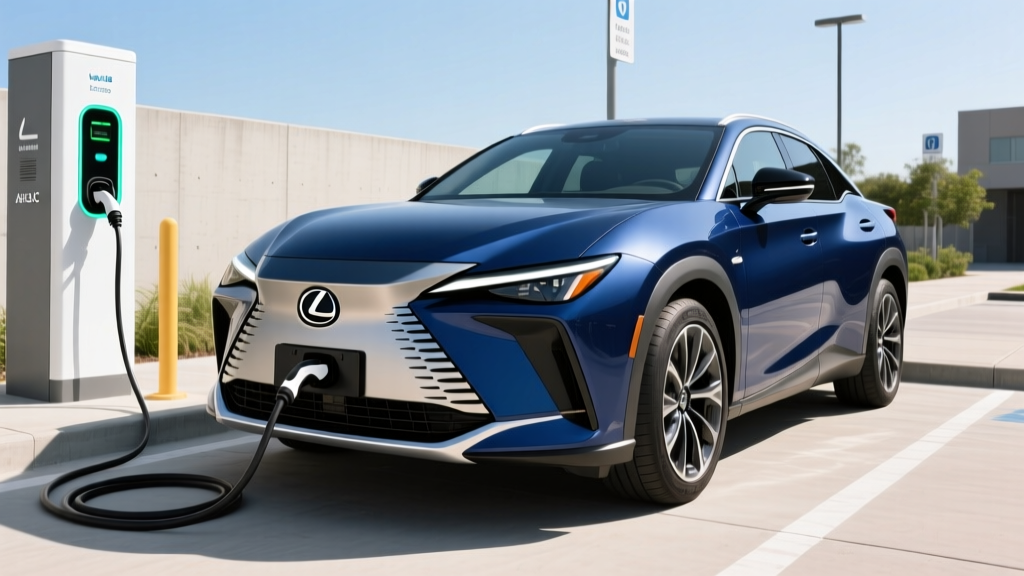
If you're researching the new Lexus EV range, the flagship model to know is the 2026 Lexus RZ 450e. Built on Toyota's e-TNGA platform (shared with the bZ4X and Subaru Solterra), the RZ 450e offers a refined luxury compact SUV experience—but its range and charging characteristics demand careful understanding before you buy.
Real-World Expectation: ~170–195 miles highway; ~145–165 miles in cold weather (below 32°F)
Battery: 72.8 kWh usable, NMC lithium-ion chemistry
Efficiency: 102 MPGe combined (FWD) / 95 MPGe (AWD)
The RZ 450e's range is competitive within its luxury segment but trails rivals like the Genesis GV60 (248 mi) and BMW iX (324 mi with larger battery). The NMC chemistry provides good energy density but is more sensitive to extreme temperatures than LFP cells. In sustained 75 mph highway driving, expect roughly 185 miles from a full charge in moderate weather. Below freezing, that drops 15–25% due to battery heating demands and reduced regenerative braking efficiency.
Charging Speeds Explained: Level 1, Level 2, and DC Fast Charging
Understanding the three charging tiers is essential for planning your new Lexus EV range replenishment strategy. Power is measured in kilowatts (kW)—the rate of energy delivery—while battery capacity is measured in kilowatt-hours (kWh), the total energy stored. Confusing these is the most common EV mistake.
| Level | Power (kW) | Voltage/Amps | Miles Added/Hour | 10-80% Time (72.8 kWh) |
|---|---|---|---|---|
| Level 1 (120V) | 1.4 kW | 120V / 12A | 3–5 mi | ~35 hours |
| Level 2 (240V) | 7.2–11.5 kW | 240V / 30–48A | 20–35 mi | 5–8 hours |
| DC Fast Charge | 50–150 kW | 400V DC | 150–250 mi | ~30 minutes |
The RZ 450e's onboard AC charger is rated at 7.2 kW (single-phase), meaning even a 48-amp Level 2 station will deliver only 7.2 kW to the battery. For DC fast charging, the RZ peaks at 150 kW on a compatible CCS1 station, though sustained rates average 80–100 kW as the battery management system tapers charge above 60% state of charge to protect cell longevity. Expect a 10–80% session in roughly 30 minutes at a 150 kW charger, slowing significantly above 80%—plan to charge to 80% and go rather than wait for a full fill.
Home Charger Installation: Electrical Requirements, Costs, and Panel Upgrades
Most RZ 450e owners will install a Level 2 home charger for overnight convenience. Here's what that involves and what it costs.
Electrical Requirements
A Level 2 charger requires a dedicated 240-volt circuit, similar to an electric dryer or oven. For the RZ's 7.2 kW onboard charger, a 40-amp circuit (delivering 32 amps continuous, per NEC 80% rule) is optimal. A 30-amp circuit (24A continuous, 5.8 kW) will work but charges slightly slower.
Panel Upgrade Reality: Many homes built before 2000 have 100-amp or 150-amp electrical panels. Adding a 40-amp EV circuit may exceed your panel's capacity, especially if you already run electric heat, an electric oven, and a dryer. A licensed electrician will perform a load calculation. If an upgrade to 200 amps is needed, expect $1,500–$3,500 for the panel swap alone—a significant but one-time cost that also increases your home's resale value.
| Component | Cost Range | Notes |
|---|---|---|
| Level 2 Charger (Equipment) | $350–$700 | Smart Wi-Fi models cost more |
| Electrician Labor (240V circuit) | $400–$1,500 | Depends on run length from panel |
| Electrical Permit | $50–$200 | Required by most jurisdictions |
| Panel Upgrade (if needed) | $1,500–$3,500 | 100A to 200A service upgrade |
| Total (No Panel Upgrade) | $800–$2,400 | Typical scenario |
| Total (With Panel Upgrade) | $2,300–$5,900 | Older homes |
Always hire a licensed electrician and pull a permit. Unpermitted work can void your home insurance and create fire hazards. The National Electrical Code (NEC) requires a GFCI-protected circuit for outdoor installations and a dedicated breaker—never share a circuit with other appliances.
Connector Compatibility: NACS, CCS1, and Adapters for the RZ 450e
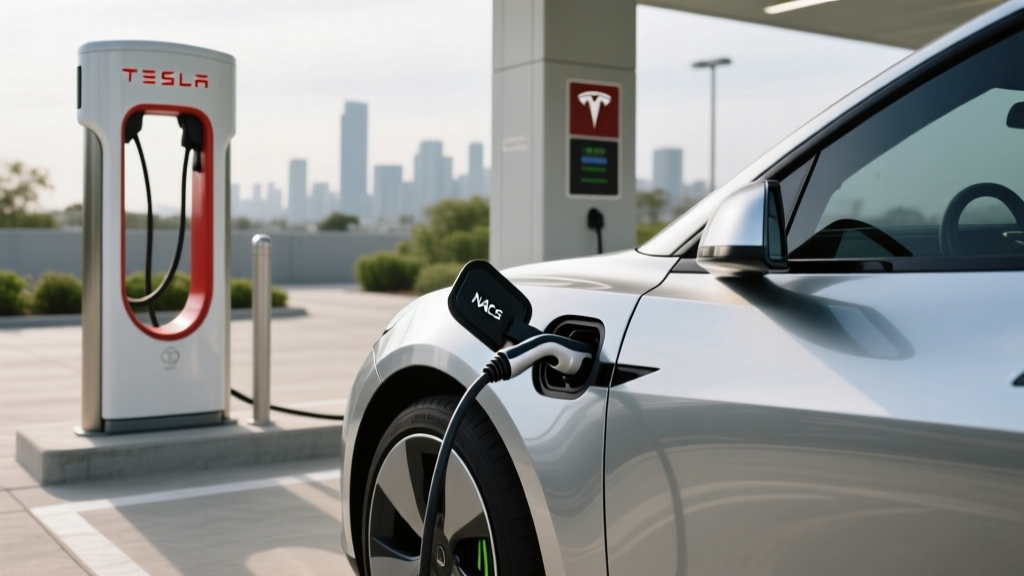
The 2026 Lexus RZ 450e comes equipped with a CCS1 (Combined Charging System) port, the standard for most non-Tesla EVs in North America. However, the charging landscape is shifting rapidly toward NACS (North American Charging Standard), the Tesla-designed connector now adopted by Ford, GM, Rivian, and others.
| Connector | Used By | RZ 450e Compatible? | Adapter Needed? |
|---|---|---|---|
| CCS1 | Lexus, Toyota, Hyundai, Kia, VW, BMW, most non-Tesla | Yes (native) | No |
| NACS (Tesla) | Tesla, Ford, GM, Rivian, Volvo, Polestar (2025+) | With adapter | Yes (~$200–$250) |
| CHAdeMO | Nissan Leaf (legacy) | No | N/A (obsolete) |
Practical Advice: As of 2026, Tesla Superchargers are opening to non-Tesla EVs with CCS1 via built-in adapters at select stations, but coverage is inconsistent. Purchasing a CCS1-to-NACS adapter (such as the Lectron or A2Z adapter, ~$200–$250) unlocks the full Supercharger network—over 25,000 stalls nationwide—for road trips. Verify your adapter is UL-listed and rated for 150 kW DC to match the RZ's peak charge rate.
Charging Cost per Mile: Home vs. Public vs. Gas Comparison
One of the strongest ownership arguments for the RZ 450e is fuel cost savings, but the math depends heavily on where you charge.
| Scenario | $/kWh or $/gallon | Cost Per Mile | Annual Cost (12,000 mi) |
|---|---|---|---|
| Home Off-Peak (Level 2) | $0.13/kWh | $0.038 | $456 |
| Home Peak Rate | $0.25/kWh | $0.073 | $876 |
| Public Level 2 (ChargePoint, EVgo) | $0.35/kWh | $0.102 | $1,224 |
| DC Fast Charge (Electrify America) | $0.48/kWh | $0.140 | $1,680 |
| Gas SUV (25 MPG combined, $3.50/gal) | $3.50/gallon | $0.140 | $1,680 |
Charging at home on off-peak utility rates (overnight, typically 10 PM–6 AM) delivers the lowest cost—roughly $0.04 per mile, a 70% savings over gasoline. However, relying exclusively on DC fast charging erases that advantage; public DC rates now average $0.40–$0.55/kWh, making it as expensive as or more than gas. The RZ 450e's efficiency of roughly 3.4 kWh/mile (29 kWh/100 miles) is average for its class. For maximum savings, install a Level 2 home charger and enroll in your utility's EV time-of-use rate plan. Check fueleconomy.gov for official efficiency data.
Recommended Level 2 Home Chargers for the Lexus RZ 450e
Given the RZ's 7.2 kW onboard charger, a 32-amp or 40-amp Level 2 station is ideal. Higher-amp units (48A) won't charge the RZ faster but offer future-proofing for your next EV.
ChargePoint Home Flex
Power: Up to 12 kW (50A, adjustable)
Connector: CCS1 (NACS adapter available)
Cable Length: 23 ft
Smart Features: Wi-Fi, app scheduling, Alexa, load sharing
Price: ~$550
Verdict: Best overall for most homes; adjustable amperage matches your circuit.
Emporia Vue Smart Charger
Power: Up to 11.5 kW (48A)
Connector: CCS1
Cable Length: 24 ft
Smart Features: Wi-Fi, solar integration, energy monitoring, load management
Price: ~$400
Verdict: Best value; pairs well with solar panels and home energy management.
Grizzl-E Smart
Power: Up to 10 kW (40A)
Connector: CCS1 (NACS version available)
Cable Length: 24 ft
Smart Features: Wi-Fi, OCPP protocol, outdoor-rated (NEMA 4)
Price: ~$500
Verdict: Best for outdoor installs; Canadian-built, extremely durable.
All three are UL-listed, hardwired (no plug, required for 40A+ circuits by NEC), and support the RZ's 7.2 kW max. The ChargePoint Home Flex is the most popular choice due to its flexible amperage settings (you can dial it to 32A if your panel is tight) and robust app.
Safety, Permits, and Code Requirements
EV charging involves high-current electrical work that must comply with the National Electrical Code (NEC Article 625) and local building codes. Key requirements:
- Dedicated Circuit: Your Level 2 charger must have its own breaker—no shared circuits with dryers, ovens, or HVAC.
- GFCI Protection: Required for all outdoor receptacles and increasingly for indoor garage installations (NEC 2023 update).
- Outdoor Rating: If mounting outside, the charger must be NEMA 4 (weatherproof) rated. All three recommendations above qualify.
- Permit and Inspection: Most municipalities require an electrical permit ($50–$200) and a post-installation inspection. Skipping this risks insurance denial in the event of a fire.
- Wire Gauge: A 40-amp circuit requires 8 AWG copper wire; a 50-amp circuit requires 6 AWG. Your electrician will size this correctly.
Never use an extension cord with a Level 2 charger. If your parking spot is far from the panel, factor in the cost of a longer wire run—typically $8–$15 per linear foot for conduit and wire.
Frequently Asked Questions
How much does it cost to install a home EV charger for the Lexus RZ 450e?
Expect $800–$2,400 for a standard Level 2 installation (equipment + electrician + permit) if your electrical panel has sufficient capacity. If a panel upgrade from 100A to 200A is needed, total costs rise to $2,300–$5,900. Get three quotes from licensed electricians and verify they pull a permit.
How fast will each charging level add range to the RZ 450e?
Level 1 (120V): 3–5 miles per hour. Level 2 (240V, 32A): ~22 miles per hour. DC Fast Charge (150 kW): ~150–250 miles in 30 minutes (10–80% SoC). The RZ's 7.2 kW onboard charger limits Level 2 speed regardless of station output.
Which connector is compatible with the 2026 Lexus RZ 450e?
The RZ 450e uses a CCS1 connector natively. To access Tesla Superchargers, you'll need a CCS1-to-NACS adapter (~$200–$250). CHAdeMO is not compatible and is largely obsolete in North America.
How much does charging the RZ 450e cost per mile vs. a gas SUV?
Home off-peak charging costs ~$0.04/mile; public DC fast charging costs ~$0.14/mile. A comparable gas SUV at 25 MPG and $3.50/gallon costs $0.14/mile. Home charging saves 70%+ on fuel; exclusive public DC charging offers no savings.
What electrical upgrades might I need for a Level 2 charger?
If your home has a 100-amp or 150-amp panel and you already use electric heat, dryer, and oven, you'll likely need a panel upgrade to 200 amps ($1,500–$3,500). Homes with 200-amp panels typically have sufficient headroom. An electrician will perform a NEC Article 220 load calculation to confirm.
Does the RZ 450e qualify for the federal EV tax credit?
As of 2026, the RZ 450e's eligibility for the §30D federal tax credit depends on battery sourcing, your income (AGI caps: $150K single, $300K joint), and MSRP limits ($80K for SUVs). The RZ starts at ~$55,000 but battery sourcing rules may reduce or eliminate the credit. Verify current eligibility on the IRS website or consult a tax professional before purchasing.