As automakers push toward higher SAE automation levels, the conversation around electric vehicles increasingly intersects with autonomous driving capability. While true Level 3 self-driving systems — where the car handles all dynamic driving tasks under specific conditions — remain limited to a handful of approved models and geofenced areas, the EVs that will eventually carry these systems share a universal need: efficient, reliable charging infrastructure. Whether you're plugging in a Mercedes EQS with Drive Pilot or a conventional EV awaiting future autonomy upgrades, understanding charging levels, home installation requirements, and real-world costs is essential for ownership in 2026.
This guide covers everything from Level 1 trickle charging to 350 kW DC fast charging, including what you need to install at home, which connector your EV uses, and how charging costs compare to gasoline on a per-mile basis.
Charging Levels Explained: kW, Speeds, and Real-World Range Added
EV charging is categorized into three levels. The critical distinction every EV owner must understand: kW (kilowatts) measures power — the rate of energy delivery — while kWh (kilowatt-hours) measures energy — the total capacity of your battery. Think of kW as the width of a hose and kWh as the size of the bucket.
| Level | Voltage | Power (kW) | Miles of Range Added per Hour | Typical Use Case |
|---|---|---|---|---|
| Level 1 | 120V AC | 1.0–1.4 kW | 3–5 mi/hr | Overnight top-up, PHEVs, emergencies |
| Level 2 | 240V AC | 3.3–19.2 kW | 12–75 mi/hr | Home daily charging, workplaces, public destinations |
| DC Fast Charge | 400–800V DC | 50–350 kW | 150–1,200+ mi/hr (peak) | Road trips, highway corridors, rapid top-ups |
A few practical realities behind these numbers:
- Level 1 adds roughly 30–40 miles overnight (10 hours). Sufficient for plug-in hybrids with 25–40 miles of electric range, but inadequate as a primary strategy for most BEVs.
- Level 2 at 11.5 kW (48A on a 60A circuit) fully recharges a 77 kWh battery (Ford Mustang Mach-E Extended Range) in about 7–8 hours — ideal for overnight home charging.
- DC fast charging peaks early in the session and tapers significantly above 80% State of Charge (SoC). A vehicle rated for 250 kW peak may only sustain that rate between 10–40% SoC before the battery management system (BMS) reduces current to protect the cells.
- Tesla Model Y (75 kWh, NMC, 250 kW peak): ~25 minutes at a V3 Supercharger
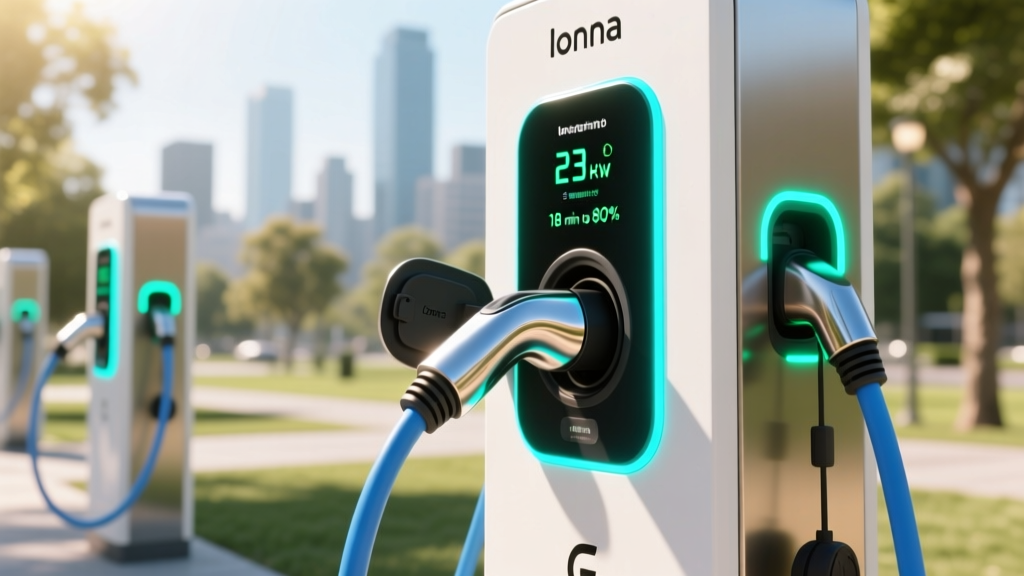
- Hyundai Ioniq 5 (77.4 kWh, NMC, 240 kW peak, 800V architecture): ~18 minutes at a 350 kW station
- Chevrolet Equinox EV (85 kWh, NMC, 150 kW peak): ~40 minutes at a 150 kW DC station
- Ford F-150 Lightning Extended Range (131 kWh, NMC, 155 kW peak): ~45–55 minutes at a 150 kW station
Home Charger Installation: Electrical Requirements, Costs, and Panel Upgrades
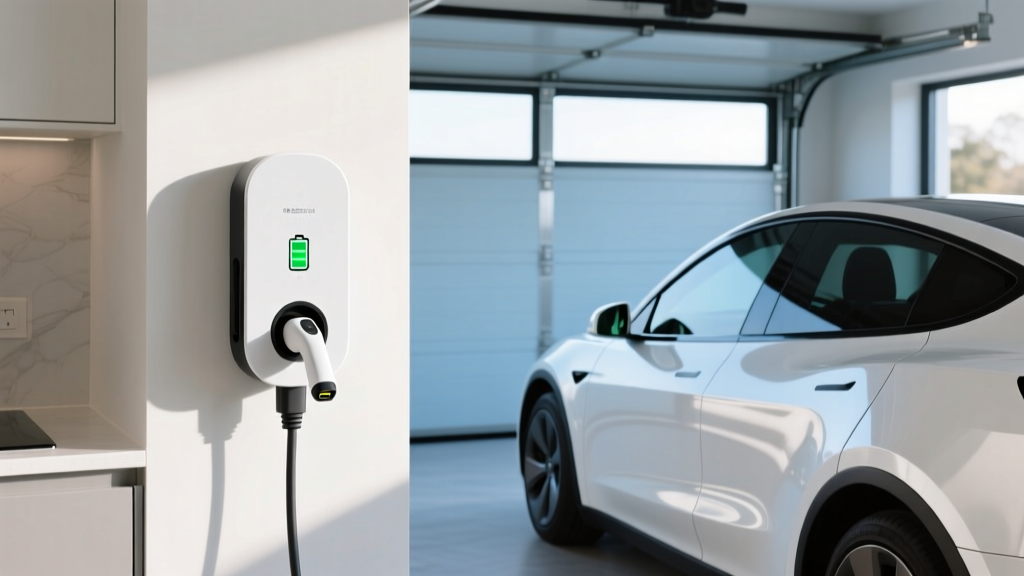
Installing a Level 2 home charger is the single biggest quality-of-life upgrade an EV owner can make. But the total cost depends heavily on your home's electrical panel capacity, the distance from panel to charger location, and local permitting requirements.
Electrical Requirements for a Typical Level 2 Installation
Most home Level 2 chargers run on a 240V dedicated circuit. The amperage determines your charging speed:
- 32A circuit (40A breaker): delivers up to 7.7 kW — sufficient for most daily needs
- 48A circuit (60A breaker): delivers up to 11.5 kW — recommended for larger batteries (100+ kWh) or faster turnaround
- 80A circuit (100A breaker): delivers up to 19.2 kW — requires significant panel capacity; used with premium chargers like the Tesla Wall Connector at max output
The National Electrical Code (NEC) requires EV charging circuits to be rated at 125% of the continuous load. A 48A charger therefore requires a 60A breaker and appropriately gauged wire (typically 6 AWG copper for runs under 50 feet, 4 AWG for longer runs).
Installation Cost Breakdown
| Component | Cost Range | Notes |
|---|---|---|
| Level 2 Charger Equipment | $350–$750 | Hardwired or NEMA 14-50 plug; smart vs. non-smart |
| Electrician Labor | $500–$2,000 | Depends on run length, wall type, conduit needs |
| Electrical Permit | $50–$250 | Varies by municipality; required in most jurisdictions |
| Panel Upgrade (if needed) | $1,500–$4,000 | Upgrading from 100A to 200A service; common in homes built before 2000 |
| Total (no panel upgrade) | $900–$3,000 | Typical for modern 200A panel homes |
| Total (with panel upgrade) | $2,400–$7,000 | Older homes or those with high existing electrical loads |
Connector Compatibility: NACS, CCS1, and CHAdeMO in 2026
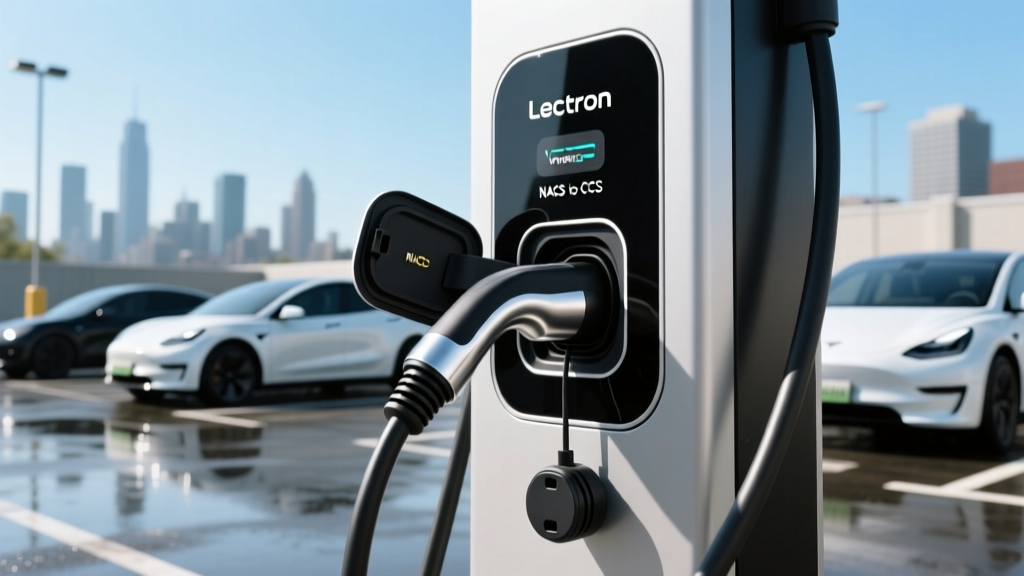
The connector landscape has shifted dramatically. Following Ford, GM, Rivian, Volvo, and others adopting the North American Charging Standard (NACS), most new EVs sold in 2025–2026 ship with a native NACS charge port. CCS1 remains on many 2022–2024 models, and CHAdeMO is effectively legacy (Nissan Leaf being the primary holdout).
| Connector | Brands Using It (Native) | Adapter Needed For |
|---|---|---|
| NACS (Tesla standard) | Tesla, Ford, GM, Rivian, Volvo, Polestar, Mercedes (2025+), Hyundai/Kia (2025+) | Accessing legacy CCS stations (NACS-to-CCS adapter, ~$200–$250) |
| CCS1 | VW/ID.4 (2024 and earlier), BMW iX/i4 (pre-2025), Hyundai/Kia (pre-2025), Stellantis | Accessing Tesla Superchargers (CCS-to-NACS adapter, often included by OEM) |
| CHAdeMO | Nissan Leaf (all years), Mitsubishi Outlander PHEV (older) | Limited network; adapters to CCS exist but are expensive (~$400+) |
For home Level 2 charging, all EVs use the same J1772 connector (or NACS, which supports Level 2 AC via the same pins). Every NACS-equipped vehicle can accept a J1772 plug with a small adapter, and most Level 2 chargers now ship with a NACS plug or include a J1772-to-NACS adapter in the box.
Charging Cost Per Mile vs. Gasoline: The Real Math
The economic case for EV charging depends heavily on where and when you charge. Here's a realistic comparison using a 2026 mid-size EV averaging 3.0 miles per kWh (roughly 112 MPGe combined) and a comparable gas vehicle at 28 MPG combined.
| Charging Scenario | $/kWh | Cost per Mile (3.0 mi/kWh) | Annual Cost (12,000 mi) |
|---|---|---|---|
| Home, off-peak utility rate | $0.09–$0.13 | $0.03–$0.043 | $360–$516 |
| Home, standard residential rate | $0.14–$0.18 | $0.047–$0.06 | $564–$720 |
| Public Level 2 (ChargePoint, EVgo L2) | $0.25–$0.39 | $0.083–$0.13 | $996–$1,560 |
| DC Fast Charging (Electrify America, Tesla Supercharger) | $0.32–$0.56 | $0.107–$0.187 | $1,284–$2,244 |
| Gasoline (28 MPG, $3.40/gal) | — | $0.121 | $1,452 |
Key takeaway: Home charging at off-peak rates saves $900–$1,100 per year compared to gasoline. Exclusive DC fast charging, however, can exceed the cost of gas in some markets. The financial benefit of EV ownership is maximized with consistent home or workplace Level 2 access.
Check fueleconomy.gov for EPA-rated kWh/100mi figures specific to your vehicle — efficiency varies from 25 kWh/100mi (Hyundai Ioniq 6 SE) to 48 kWh/100mi (GMC Hummer EV), which directly affects your per-mile cost.
Recommended Home Level 2 Chargers: Equipment Picks for 2026
We evaluate chargers on power output, cable length, connector options, smart features (Wi-Fi, scheduling, load management), build quality, and price. All recommendations below are UL-listed (or equivalent) and suitable for indoor or outdoor installation.
Tesla Wall Connector (Gen 4)
- Power: Up to 11.5 kW (48A)
- Connector: Native NACS; J1772 adapter included
- Cable: 24 ft
- Smart Features: Wi-Fi, OTA updates, power-sharing between units, access control
- Price: ~$475
- Best For: NACS-equipped EVs; multi-EV households (power-sharing)
ChargePoint Home Flex
- Power: Up to 12 kW (50A) — configurable from 16A to 50A
- Connector: J1772 (NACS adapter available) or NACS version
- Cable: 23 ft
- Smart Features: Wi-Fi, Alexa integration, scheduling, energy tracking, load management
- Price: ~$550–$650
- Best For: Flexible amperage adjustment; works with any panel capacity
Emporia Vue Smart Charger
- Power: Up to 11.5 kW (48A)
- Connector: J1772 or NACS
- Cable: 24 ft
- Smart Features: Wi-Fi, integrates with Emporia energy monitor, solar-aware scheduling, time-of-use optimization
- Price: ~$400–$500
- Best For: Solar panel owners; budget-conscious buyers wanting smart features
Grizzl-E Smart
- Power: Up to 10 kW (40A)
- Connector: J1772 (NACS adapter available)
- Cable: 24 ft
- Smart Features: Wi-Fi, OCPP support, adjustable amperage
- Price: ~$400
- Best For: Cold-climate durability (rated to -40°F); rugged outdoor installs
Safety, Electrical Code, and Permit Requirements
EV charging installations must comply with NEC Article 625 and local building codes. Key requirements include:
- Dedicated circuit: Your EV charger must be on its own breaker — never shared with other appliances.
- GFCI protection: NEC 2023 and later require ground-fault circuit interrupter protection for all EV supply equipment. Hardwired units integrate GFCI internally; plug-in units on NEMA 14-50 receptacles require a GFCI breaker (add ~$50–$80).
- Outdoor rating: If mounting outside, ensure the charger is rated NEMA 4 (weather-resistant). All chargers listed above carry appropriate outdoor ratings.
- Permit and inspection: Most jurisdictions require an electrical permit for new 240V circuits. The inspection verifies wire gauge, breaker sizing, grounding, and GFCI compliance. Typical permit cost: $50–$250. Skipping the permit risks insurance claim denial in the event of an electrical fire.
- Load management: If your panel is near capacity, consider a smart charger with load management (e.g., ChargePoint Home Flex, Emporia). These devices monitor household draw and dynamically reduce charging current to avoid tripping the main breaker — potentially avoiding a costly panel upgrade.
For detailed code requirements, consult a licensed electrician and reference your local Authority Having Jurisdiction (AHJ). The National Fire Protection Association (NFPA) publishes the full NEC text.
Level 3 Self-Driving and Charging: What Autonomous EVs Need
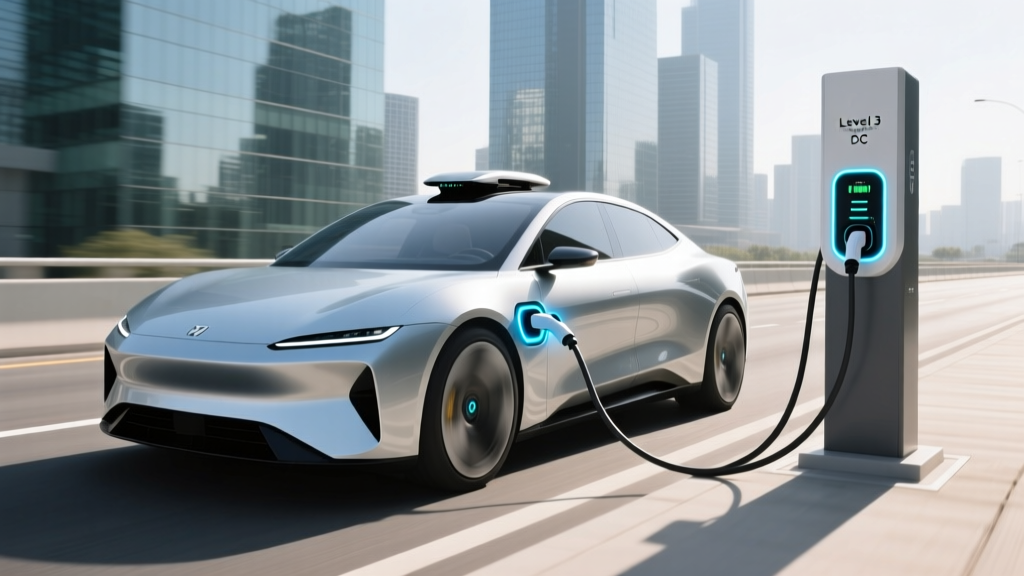
The term "Level 3 self-driving" refers to SAE Level 3 conditional automation, where the vehicle performs all driving tasks under defined conditions (typically highway traffic below 40 mph in approved corridors), but the driver must be ready to resume control when the system requests. Currently, only the Mercedes-Benz Drive Pilot system (available on the EQS and S-Class in Nevada and California) holds a certified Level 3 designation in the United States.
From a charging perspective, Level 3 and future Level 4 vehicles have the same requirements as any other EV. However, autonomous-capable EVs tend to be large, heavy sedans and SUVs with substantial battery packs (100–120+ kWh), which makes DC fast-charging speed and home Level 2 throughput especially important. A 108 kWh battery charging at 7.7 kW (32A Level 2) requires 11+ hours from 10–80% — manageable overnight, but a 48A/11.5 kW setup cuts that to roughly 7 hours.
Fleet-operated Level 4 robotaxis (Waymo, Zoox) typically use depot-based DC fast charging or inductive pads and are not relevant to consumer home-charging scenarios. For private owners of autonomous-capable EVs, the recommendations in this guide apply directly.
Frequently Asked Questions
How much does it cost to install a home EV charger?
A typical Level 2 home charger installation costs $900–$3,000 when no panel upgrade is needed (equipment: $350–$750, electrician labor: $500–$2,000, permit: $50–$250). Homes requiring a 200A panel upgrade should budget $2,400–$7,000 total. Always get a load calculation from a licensed electrician before committing.
How fast will each charging level add range?
Level 1 (120V) adds 3–5 miles per hour. Level 2 (240V, 48A) adds roughly 30–40 miles per hour for most EVs. DC fast charging at 150–350 kW can add 150–250+ miles in 15–20 minutes, though speeds taper significantly above 80% SoC due to battery protection protocols.
Which connector/charger is compatible with my EV?
For 2025–2026 model-year EVs, most brands now use NACS natively. Older (2022–2024) models from VW, BMW, and Hyundai/Kia likely have CCS1. The Nissan Leaf uses CHAdeMO. For home Level 2 charging, all vehicles accept a J1772 plug (or NACS, which is J1772-compatible for AC). Check your vehicle's charge port or owner's manual to confirm.
How much does charging cost per mile vs gas?
Home charging at off-peak rates ($0.09–$0.13/kWh) costs $0.03–$0.043 per mile — roughly one-third the cost of gasoline at $3.40/gal in a 28 MPG vehicle ($0.121/mile). Exclusive DC fast charging at $0.40–$0.56/kWh costs $0.13–$0.19/mile, which can exceed gas in some scenarios. Maximize savings by charging at home on a time-of-use utility plan.
What electrical upgrades might I need?
The most common upgrade is a panel replacement from 100A to 200A service ($1,500–$4,000), required when existing electrical loads leave insufficient capacity for a 40–60A EV circuit. Alternatives include installing a lower-amperage charger (24A/32A), using a smart load-management charger, or adding a dedicated sub-panel. An electrician's load calculation determines which path is necessary and code-compliant.