What "Level 3" Actually Means in EV Charging
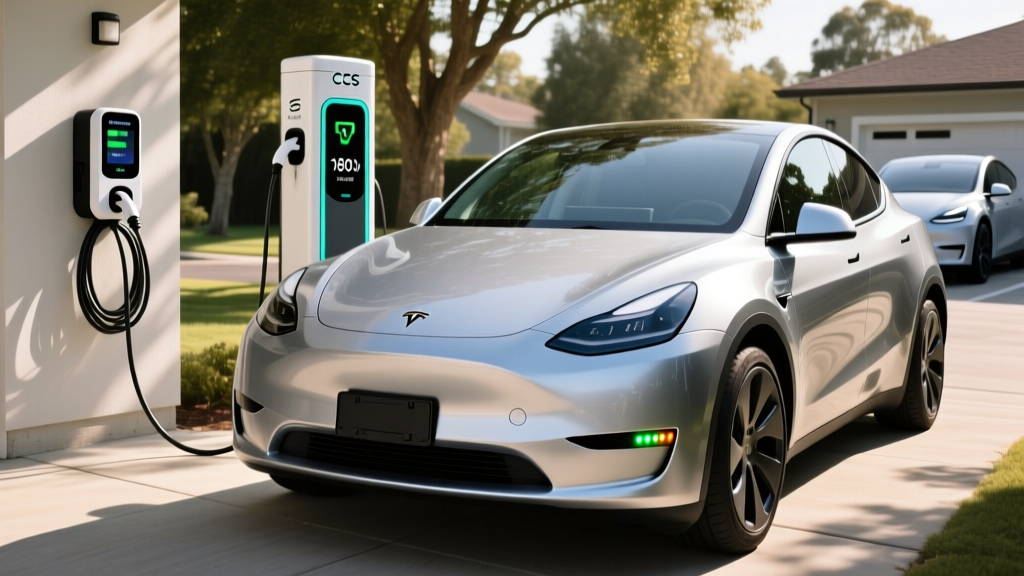
Search for level 3 EV charger power requirements and you'll find a confusing mix of marketing terms and electrical specs. Let's clear that up immediately: in industry parlance, "Level 3" refers to DC Fast Charging (DCFC) — the high-power stations you find along highways at Electrify America, Tesla Supercharger, and EVgo locations. These units bypass the vehicle's onboard charger and deliver direct current straight to the battery pack.
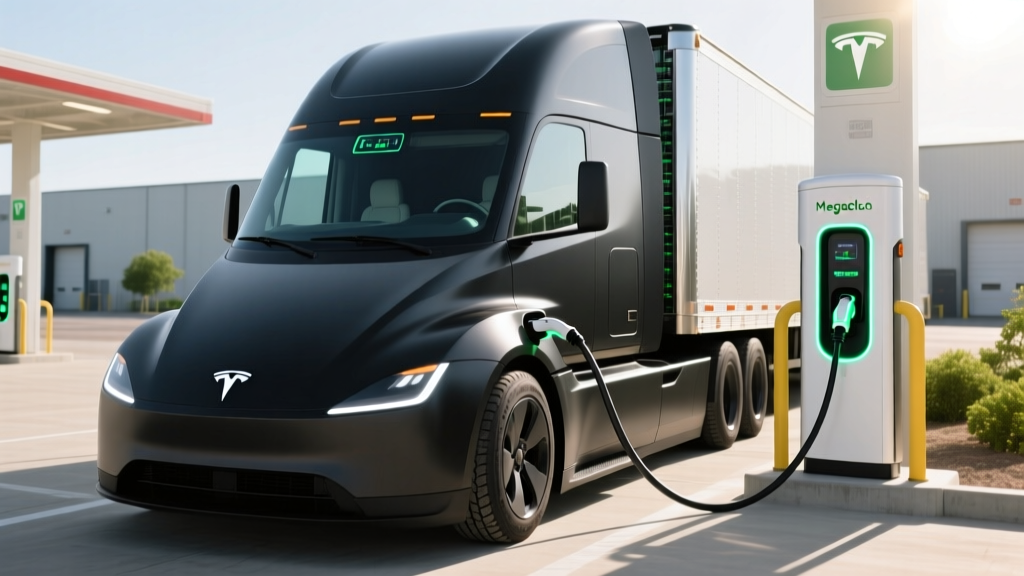
The power requirements for Level 3 / DC fast chargers range from 25 kW at the low end (older or destination-style DC units) up to 350 kW at modern ultra-fast stations. For context, that 350 kW figure represents enough instantaneous power to run roughly 29 average US homes simultaneously. This is precisely why you will almost never install a true Level 3 charger at a private residence.
Charging Levels Compared: Speeds, Power, and Real-World Range Added
Before we dig into why Level 3 power requirements clash with residential electrical infrastructure, here's the full landscape of EV charging levels — including what each one actually delivers to your battery in practical terms.
| Level | Voltage | Max Power (kW) | Miles of Range Added per Hour | Typical Use Case |
|---|---|---|---|---|
| Level 1 | 120V AC | 1.4–1.9 kW | 3–5 mi/hr | Overnight trickle, PHEVs, low-mileage drivers |
| Level 2 | 240V AC | 3.3–19.2 kW | 12–75 mi/hr | Home daily charging, workplace, public destination |
| DC Fast ("Level 3") | 400–900V DC | 25–350 kW | 100–1,200+ mi/hr (peak) | Highway road trips, fleet depots, commercial |
A few notes on interpreting this table. "Miles per hour" varies enormously based on vehicle efficiency — a Lucid Air (over 4 mi/kWh) gains more miles per kW than a Ford F-150 Lightning (around 2 mi/kWh). And the DC fast charging figure represents peak rate, which is never sustained across the full session. More on charge-curve taper below.
The Raw Numbers: Level 3 EV Charger Power Requirements
Here is what a DC fast charger actually draws from the electrical grid, broken down by station class. These figures matter if you're evaluating commercial property, a fleet depot, or simply trying to understand why your house can't support one.
| Station Class | Power Output | Electrical Service Required | Typical Amperage Draw | Common Deployment |
|---|---|---|---|---|
| Low-power DC | 25–50 kW | 480V 3-phase | 60–100A per phase | Workplace, retail parking, older stations |
| Mid-power DC | 100–150 kW | 480V 3-phase | 150–250A per phase | Highway rest stops, modern public stations |
| Ultra-fast DC | 250–350 kW | 480V 3-phase (heavy) | 300–500A per phase | Electrify America, Tesla V4 Supercharger |
Every DC fast charger class requires 480-volt, three-phase commercial electrical service. Most US homes have 240V single-phase service with a 100A or 200A main panel. The gap between residential capacity and Level 3 power requirements isn't a small one — it's an entirely different category of electrical infrastructure. Utility companies typically need to run dedicated transformer and feed lines to support even a single 150 kW DCFC unit.
Charge Curve Reality: Peak kW Is Not Sustained kW
A 350 kW charger does not deliver 350 kW for the entire session. Lithium-ion batteries accept maximum power only within a specific state-of-charge (SoC) window — typically between 10% and 40% SoC, depending on chemistry and temperature. Above 80% SoC, charging power tapers dramatically to protect cell longevity.
Real-world 10–80% charging times for common battery sizes:
| Battery Size (kWh) | Vehicle Example | At 150 kW Peak | At 250 kW Peak | At 350 kW Peak |
|---|---|---|---|---|
| ~60 kWh | Chevrolet Equinox EV | ~28 min | ~22 min | ~22 min (vehicle-limited) |
| ~77 kWh | Ford Mustang Mach-E ER | ~32 min | ~24 min | ~24 min (vehicle-limited) |
| ~84 kWh | Hyundai Ioniq 5 (800V) | ~30 min | ~18 min | ~18 min |
| ~100 kWh | Tesla Model S | ~38 min | ~25 min | ~25 min (vehicle-limited) |
| ~131 kWh | GMC Hummer EV | ~55 min | ~40 min | ~40 min (vehicle-limited) |
Vehicles with 800V architectures (Hyundai Ioniq 5/6, Kia EV6/EV9, Porsche Taycan, Genesis GV60) can sustain higher power deeper into the charge curve, making them meaningfully faster at 350 kW stations than 400V vehicles with similar battery sizes. According to EPA data at fueleconomy.gov, vehicle efficiency also varies from 2.4 to over 5.0 mi/kWh, which changes how many miles you actually gain from each charging session.
Can You Install a Level 3 Charger at Home? The Honest Answer
Technically, it's possible. Practically, for 99% of homeowners, it's not feasible or cost-effective. Here's why:
Electrical service: You'd need 480V three-phase power brought to your property. Most residential neighborhoods don't have three-phase distribution lines on their streets. Running new utility infrastructure costs $10,000–$70,000+ depending on distance from the nearest three-phase transformer.
Equipment cost: A residential-rated DC fast charger (yes, a handful exist, like the Wallbox Quasar at up to 22 kW DC) costs $7,000–$15,000+ for the unit alone. True commercial 50–150 kW units run $20,000–$100,000+.
Utility demand charges: Commercial electricity billing includes "demand charges" based on your peak kW draw. A single 150 kW charging session can trigger thousands of dollars per month in demand fees on a commercial rate schedule.
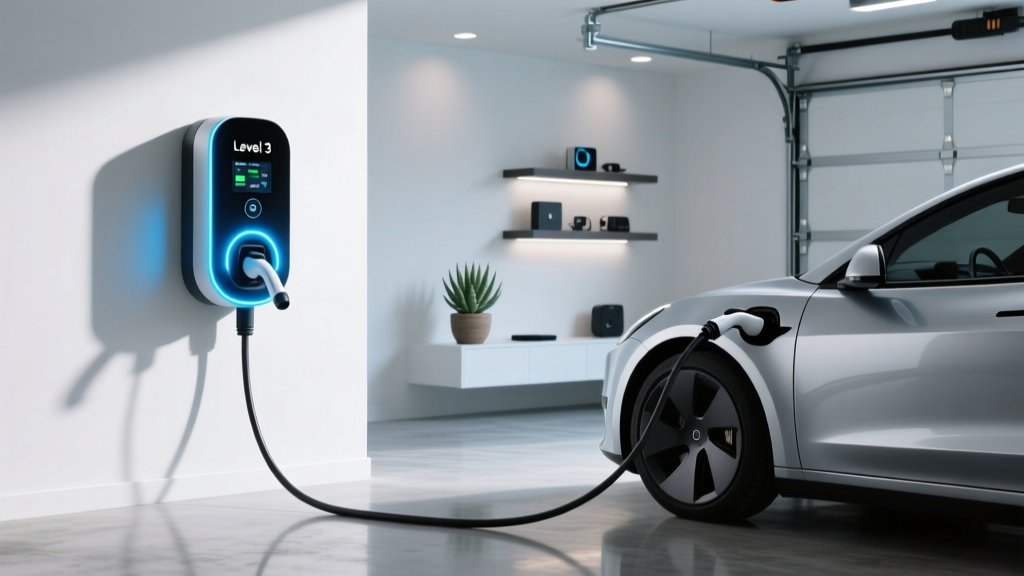
The smart alternative: A 48A or 80A Level 2 home charger on a 240V circuit delivers 11.5–19.2 kW. That's enough to fully recharge even a 131 kWh Hummer EV battery overnight (7–11 hours). For daily driving of 30–50 miles, a Level 2 charger replenishes your battery in 2–4 hours. Reserve DC fast charging for road trips.
Home Level 2 Installation: Electrical Requirements and Real Costs
Since Level 2 is the practical home-charging solution, here's exactly what's involved in getting one installed — including the costs and electrical upgrades you may encounter.
Electrical Requirements for Level 2 Home Charging
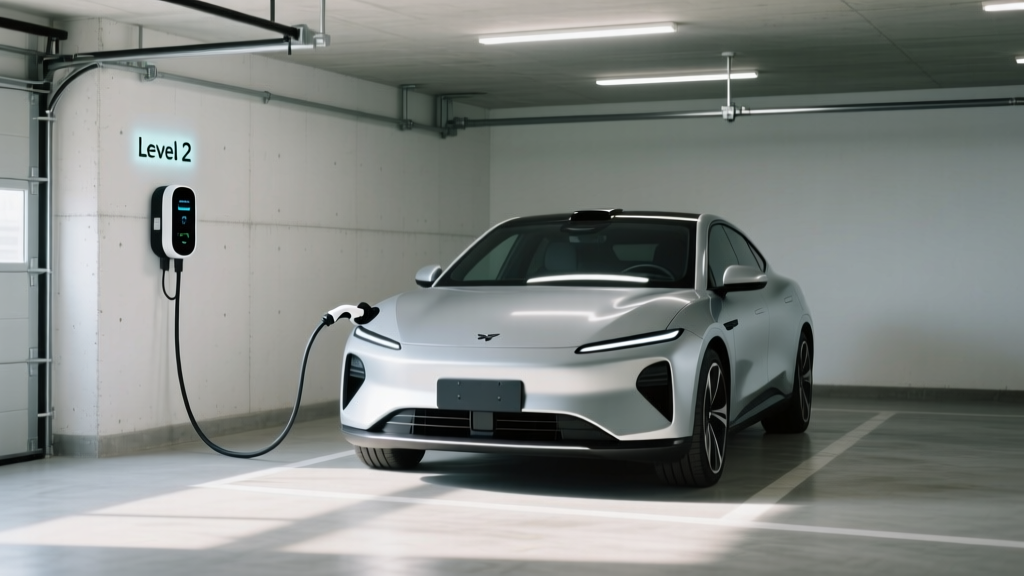
A Level 2 charger requires a 240V dedicated circuit, identical in concept to what powers your electric dryer or oven. The specific amperage depends on your charger's power output:
- 32A charger (7.7 kW): Requires a 40A breaker (NEC code mandates 125% oversizing for continuous loads)
- 40A charger (9.6 kW): Requires a 50A breaker
- 48A charger (11.5 kW): Requires a 60A breaker
- 80A charger (19.2 kW): Requires a 100A breaker — may need panel upgrade
Wire gauge, run length, conduit type, and whether the circuit passes through attic or crawlspace all affect material cost and labor time.
Installation Cost Breakdown
| Cost Component | Simple Install (Panel Nearby) | Complex Install (Long Run / Upgrade) |
|---|---|---|
| Level 2 charger unit (hardware) | $400–$700 | $500–$1,300 |
| Electrician labor (2–8 hours) | $300–$600 | $800–$2,500 |
| Electrical materials (wire, conduit, breaker) | $100–$300 | $300–$1,000 |
| Permit and inspection | $50–$150 | $100–$300 |
| Panel upgrade (if needed, 200A service) | N/A | $1,500–$4,000 |
| Total | $850–$1,750 | $3,200–$9,100 |
The single biggest cost variable is whether your existing electrical panel has spare capacity. A 200A panel with open breaker slots and sufficient load calculation headroom makes for a straightforward install. A 100A panel in an older home, or one already near capacity with electric HVAC, water heater, and dryer loads, may require a service upgrade that a licensed electrician should evaluate.
Connector Compatibility: Which Plug Fits Your EV?
The connector landscape has shifted dramatically since 2023, when Ford, GM, Rivian, and most major automakers committed to adopting the North American Charging Standard (NACS), originally developed by Tesla. As of the 2025–2026 model years, NACS is the dominant connector for new EVs sold in North America.
| Connector | AC Level 2 Charging | DC Fast Charging | Current Vehicle Compatibility (2025–2026) |
|---|---|---|---|
| NACS (Tesla / J3400) | Yes | Yes (up to 350+ kW) | Tesla (all), Ford, GM, Rivian, Hyundai/Kia (2025+), Volvo, BMW, Mercedes, most new models |
| CCS1 (Combo) | Yes (via J1772 upper) | Yes (up to 350 kW) | Older VW/Audi, BMW (pre-2025), Stellantis, some Honda — declining on new models |
| CHAdeMO | No (separate J1772 port) | Yes (up to 100 kW) | Nissan Leaf (legacy only), Mitsubishi Outlander PHEV — effectively discontinued |
| J1772 | Yes (AC only) | No | All non-Tesla EVs for Level 2; NACS vehicles use adapter |
Adapter needs in 2026: If you own a CCS-equipped vehicle (common on 2018–2024 models), you'll likely need a CCS-to-NACS adapter ($150–$300) to access Tesla Superchargers, which now serve non-Tesla vehicles at many locations. NACS-equipped vehicles can access CCS stations using a NACS-to-CCS adapter. CHAdeMO infrastructure is shrinking; plan accordingly if you own a Nissan Leaf.
Charging Cost Per Mile: Home vs. Public vs. Gas
One of the strongest arguments for home charging is cost. Electricity prices vary by state and utility, but the spread between home and public charging is significant everywhere.
| Scenario | Rate ($/kWh) | Vehicle Efficiency | Cost Per Mile |
|---|---|---|---|
| Home Level 2 (national avg electricity) | $0.16 | 3.0 mi/kWh | $0.053 |
| Home Level 2 (off-peak TOU rate) | $0.08 | 3.0 mi/kWh | $0.027 |
| Public Level 2 (ChargePoint, EVgo) | $0.25–$0.49 | 3.0 mi/kWh | $0.083–$0.163 |
| DC Fast (Electrify America, EVgo) | $0.35–$0.58 | 3.0 mi/kWh | $0.117–$0.193 |
| Tesla Supercharger (avg 2026) | $0.30–$0.40 | 3.5 mi/kWh | $0.086–$0.114 |
| Gas car (28 MPG combined, $3.40/gal) | — | 28 MPG | $0.121 |
| Gas truck (20 MPG combined, $3.40/gal) | — | 20 MPG | $0.170 |
Home off-peak charging is 4–6× cheaper per mile than gasoline. Even DC fast charging at the highest public rates is often comparable to or slightly cheaper than fueling an average gas car. The key insight: if you can charge at home regularly, your fuel cost drops to roughly $0.03–$0.05 per mile — a dramatic reduction that typically saves $800–$1,500 annually for a driver covering 12,000 miles per year.
Equipment Picks: Recommended Home Level 2 Chargers for 2026
Since true Level 3 home installation isn't practical, here are the Level 2 units that deliver the best combination of power, reliability, smart features, and value for home use.
ChargePoint Home Flex
- Power output: Up to 11.5 kW (48A) on a 60A circuit; configurable down to 16A
- Connector: NACS (J3400) native; CCS adapter included
- Cable length: 23 feet
- Smart features: Wi-Fi, app scheduling, Alexa integration, energy tracking
- Price: ~$549
- Best for: Versatility — adjustable amperage fits any panel capacity
Tesla Wall Connector
- Power output: Up to 11.5 kW (48A) on a 60A circuit
- Connector: NACS native; J1772 adapter available for non-Tesla EVs
- Cable length: 24 feet
- Smart features: Wi-Fi, OTA updates, power sharing (link multiple units on one circuit)
- Price: ~$475
- Best for: Tesla owners and NACS-adopting households; best value at 48A
Emporia Vue Level 2 Charger
- Power output: Up to 11.5 kW (48A)
- Connector: J1772 (CCS for DC); NACS adapter available separately
- Cable length: 24 feet
- Smart features: Integrated energy monitoring, solar integration, app control, TOU scheduling
- Price: ~$399
- Best for: Budget-conscious buyers and solar-panel households
Grizzl-E Smart
- Power output: Up to 10 kW (40A) on a 50A circuit
- Connector: J1772 (NACS version available)
- Cable length: 24 feet
- Smart features: Wi-Fi, OCPP protocol, adjustable amperage, extreme cold rated (-40°F)
- Price: ~$449
- Best for: Cold-climate durability and commercial/fleet use
Safety and Electrical Code Requirements
EV charging installations must comply with the National Electrical Code (NEC), specifically Article 625, which governs Electric Vehicle Charging System Equipment. Key requirements include:
- Dedicated circuit: Your EV charger must be on its own dedicated breaker — no sharing with other appliances or outlets.
- Continuous load derating: Because EV charging runs for 3+ hours continuously, the NEC requires the circuit to be rated at 125% of the charger's maximum draw. A 48A charger requires a 60A breaker.
- GFCI protection: The 2023 NEC revision requires GFCI protection for receptacle-based (plug-in) EV chargers. Hardwired installations may be exempt in some jurisdictions — check with your local AHJ (Authority Having Jurisdiction).
- Outdoor rating: If your charger is installed outside (garage exterior, driveway post, carport), it must carry a NEMA 4 or NEMA 4X rating for weather resistance. All chargers listed above meet this standard.
- Permit and inspection: Virtually all jurisdictions require an electrical permit for a new 240V circuit. The inspection verifies wire gauge, breaker sizing, grounding, and bonding meet code. Do not skip this — unpermitted work can void homeowner's insurance.
Frequently Asked Questions
How much does it cost to install a home EV charger?
A Level 2 home charger installation typically costs $850–$1,750 for a straightforward install where the electrical panel is near the charging location and has spare capacity. Complex installations involving long wire runs, conduit through finished walls, or a panel upgrade to 200A service can cost $3,200–$9,100. A true Level 3 / DC fast charger is not practical for residential use due to 480V three-phase power requirements and equipment costs exceeding $20,000.
How fast will each charging level add range?
Level 1 (120V) adds 3–5 miles per hour — adequate for PHEVs with small batteries or drivers covering under 20 miles daily. Level 2 (240V, 48A) adds roughly 30–40 miles per hour for an average EV, fully recharging most batteries in 6–10 hours overnight. DC fast charging at 150 kW adds roughly 150–250 miles in a 25-minute session (10–80% SoC), depending on battery size and vehicle architecture.
Which connector/charger is compatible with my EV?
For 2025–2026 model-year EVs, NACS (J3400) is the dominant standard. Tesla vehicles have always used NACS. Ford, GM, Rivian, Hyundai, Kia, and most others now ship with NACS ports. If you own a 2018–2024 EV with a CCS1 port, you'll need a CCS-to-NACS adapter ($150–$300) to access Tesla Superchargers. CHAdeMO is effectively legacy-only (Nissan Leaf). For home Level 2 charging, a NACS-native charger or a J1772 charger with appropriate adapter covers virtually all current vehicles.
How much does charging cost per mile vs gas?
Home Level 2 charging at average US electricity rates ($0.16/kWh) costs roughly $0.05 per mile for an EV averaging 3.0 mi/kWh. Off-peak time-of-use rates can drop that to under $0.03/mile. A gasoline car at 28 MPG with $3.40/gallon fuel costs $0.12 per mile — more than double. Even public DC fast charging at $0.40–$0.58/kWh ($0.13–$0.19/mile) is competitive with gas for most vehicles.
What electrical upgrades might I need?
The most common upgrade is a panel capacity increase from 100A to 200A ($1,500–$4,000), needed when your existing panel lacks headroom for a new 40–60A circuit. Older homes with knob-and-tube or aluminum wiring may need partial rewiring. Some utilities offer "make-ready" programs that cover the cost of running a dedicated 240V line to your garage. Homes with solar panels and battery storage (like a Tesla Powerwall) may benefit from integrated load-management systems that prioritize solar self-consumption for EV charging.
Sources: fueleconomy.gov (EPA efficiency data), U.S. Department of Energy EV charging guide, IRS §30D clean vehicle credits (for charger-adjacent incentive information).