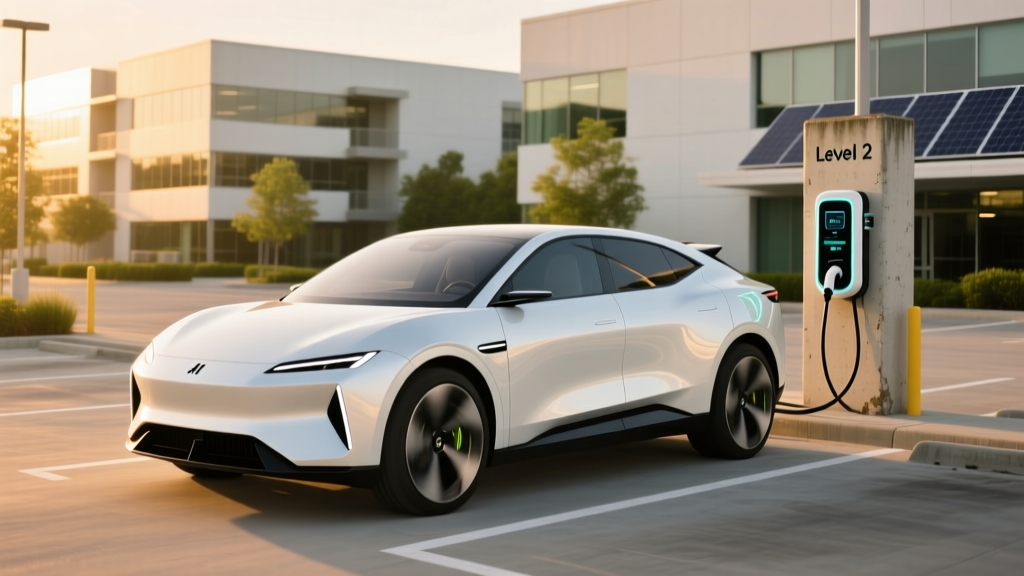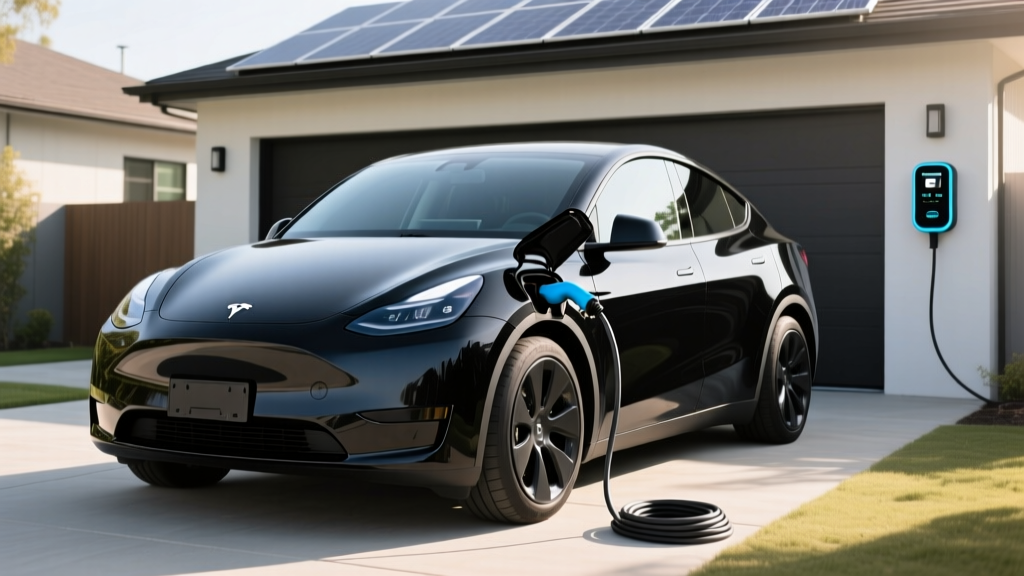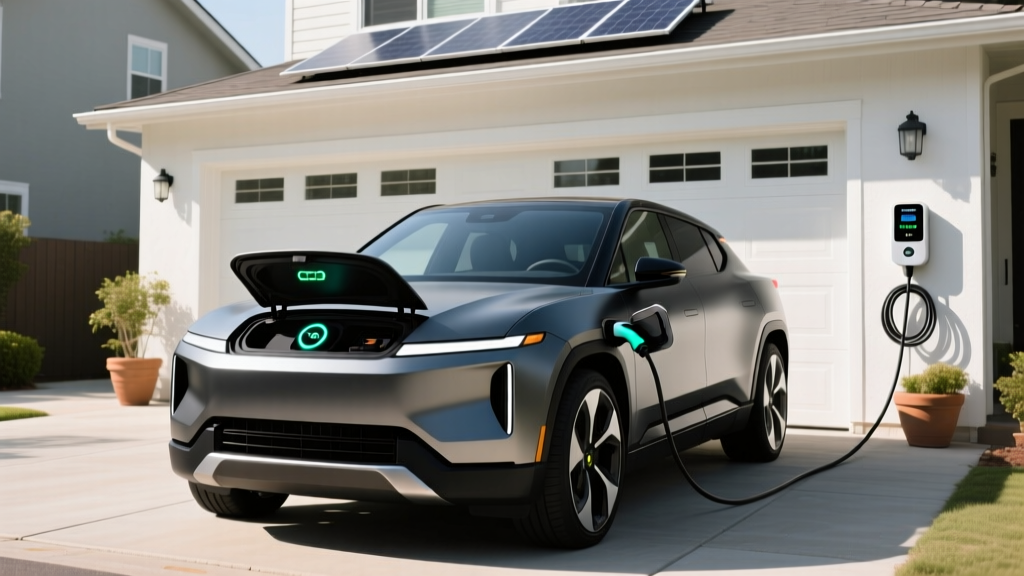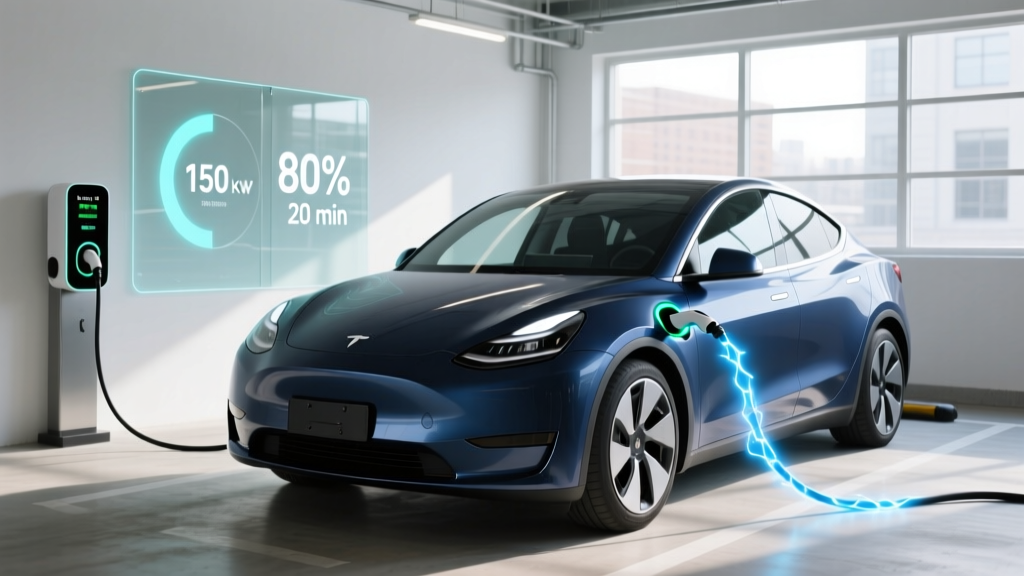
If you've searched for a "Level 3 electric car charger" hoping to install one in your garage, here's the honest answer up front: true Level 3 charging — DC fast charging at 50 kW to 400+ kW — is not something you plug into a residential outlet. The hardware alone costs $20,000 to $150,000+, requires 480V three-phase commercial power, and pulls more current than most neighborhood transformers can supply. What you can install at home is a Level 2 charger that delivers up to 19.2 kW on a 240V circuit, adding 40–70 miles of range per hour. For road trips, Level 3 DC fast chargers at public stations deliver 10–80% charges in 15–35 minutes.
This guide breaks down exactly what each charging level delivers, what your home electrical panel can support, what connectors your EV needs, and what charging actually costs per mile compared to gasoline. All figures reflect 2026 model-year EVs and current utility rates.
Charging Levels Explained: Level 1 vs Level 2 vs Level 3 DC Fast
The Society of Automotive Engineers (SAE) defines three charging levels based on voltage and power delivery. The critical distinction: kW (kilowatts) measures the rate of power delivery — how fast energy flows into your battery. kWh (kilowatt-hours) measures total energy stored — your battery's tank size. A 75 kWh battery charged at 11 kW takes roughly 7 hours from empty; at 150 kW, the same battery could theoretically fill in 30 minutes (real-world charge curves slow things down above 80% SoC).
| Level | Voltage | Power (kW) | Miles of Range Added/Hour | Typical Use Case |
|---|---|---|---|---|
| Level 1 | 120V AC | 1.0–1.4 kW | 3–5 mi/hr | Overnight top-up, PHEVs, emergencies |
| Level 2 | 240V AC | 3.3–19.2 kW | 12–70 mi/hr | Home daily charging, workplace, hotels |
| Level 3 (DC Fast) | 200–900V DC | 50–400+ kW | 150–1,200+ mi/hr | Road trips, highway corridors, fleet depots |
The miles-per-hour figures assume an average EV efficiency of 3–4 miles per kWh. A highly efficient vehicle like the Hyundai Ioniq 6 SE (4.2 mi/kWh) gains range faster than a heavy truck like the Rivian R1T (2.0–2.5 mi/kWh) at the same charger.
Can You Install a Level 3 Electric Car Charger at Home?
Practically, no. Here's why:
- Power requirements: A 50 kW DC fast charger draws roughly 65 amps at 480V three-phase. A 150 kW unit draws 180+ amps. Residential service in the US is typically 200 amps at 240V single-phase — your entire house maxes out at 48 kW, and your utility transformer likely serves multiple homes.
- Hardware cost: A residential-grade DC fast charger starts around $20,000 for a 25–50 kW unit (e.g., Tritium RTM50) and climbs past $100,000 for 150–350 kW cabinets from ABB, BTC Power, or ChargePoint.
- Utility upgrades: Most utilities require a dedicated transformer, new service drop, and commercial metering for anything above 20 kW continuous DC load. This can add $10,000–$50,000 in infrastructure charges.
- Battery health: Exclusively DC fast-charging degrades lithium-ion cells faster than Level 2 AC charging due to heat and lithium plating at high C-rates. Most automakers design battery thermal management around Level 2 daily use with DC fast charging reserved for road trips.
The smart home setup is a hardwired Level 2 station on a dedicated 240V circuit. You use public Level 3 chargers for road trips.
Home Level 2 Installation: Electrical Requirements and Cost Breakdown
A Level 2 home charger requires a 240V dedicated circuit, the same voltage as your electric dryer or oven. Here's what that involves electrically and financially.
Electrical Specifications
- Circuit: Dedicated 240V breaker, sized to 125% of continuous load per NEC Article 625. A 48A charger needs a 60A breaker; a 40A charger needs a 50A breaker; a 32A charger needs a 40A breaker.
- Wire gauge: 6 AWG copper for 50–60A circuits (THHN in conduit or NM-B/ROMEX where code allows); 4 AWG for runs over 100 feet to limit voltage drop.
- Disconnect: Many jurisdictions require a lockable disconnect switch within sight of the charger.
- GFCI protection: NEC 2020 and later require GFCI breakers or GFCI-integrated chargers for receptacle-connected (plug-in) EVSE; hardwired units are often exempt but check local amendments.
Panel Capacity Check
Before installing, your electrician will perform a load calculation per NEC 220.82 or 220.87. This determines whether your existing panel has headroom for a 40–60A EV circuit. A 200A panel with gas appliances and moderate loads typically has room. A 100A panel in an older home with added AC, electric heat, or a hot tub may need an upgrade.
| Item | Cost Range | Notes |
|---|---|---|
| Level 2 EVSE equipment | $300–$750 | 32A–48A smart charger, 24ft cable |
| Electrical permit | $50–$250 | Varies by municipality |
| Electrician labor (standard install) | $400–$1,200 | Panel to charger, ≤30ft run, drywall/conduit |
| Electrician labor (complex run) | $1,200–$3,000 | Long conduit runs, trenching, attic crawls |
| Panel upgrade (100A → 200A) | $1,500–$4,000 | Needed when load calc exceeds existing capacity |
| Panel upgrade (200A → 400A) | $3,000–$7,000 | For large homes adding solar, heat pumps, and EV |
| Total (standard, no panel upgrade) | $750–$2,200 | Most common scenario for 200A homes |
| Total (with panel upgrade) | $2,500–$6,500 | Older homes or high-load households |
Utility rebates: Many utilities offer $250–$1,000 rebates for Level 2 charger installation, and some cover panel-upgrade costs when you commit to time-of-use (TOU) EV rate plans. Check your local utility's EV programs page before scheduling work.
Federal tax credit: The IRS §30D Alternative Fuel Vehicle Refueling Property Credit covers 30% of home charger equipment and installation costs up to $1,000, subject to census-tract eligibility requirements. This is separate from the vehicle purchase credit. Verify current-year rules at irs.gov.
Connector Compatibility: NACS, CCS1, and CHAdeMO
As of 2026, the North American EV charging connector landscape has consolidated heavily around the Tesla North American Charging Standard (NACS), but CCS1 and legacy CHAdeMO vehicles are still on the road.
| Connector | Brands Using It | Max DC Fast Charge Rate | Adapter Availability |
|---|---|---|---|
| NACS (native) | Tesla, Ford, GM, Rivian, Volvo, Polestar, Mercedes, Nissan (2026+), Honda, Fisker, Lucid, BMW, Hyundai/Kia (2026+) | Up to 400 kW (800V architectures) | CCS→NACS adapters: $150–$300 (limited availability for non-Tesla) |
| CCS1 | Hyundai/Kia (pre-2026), VW ID.4, BMW i4/iX (pre-2026), older Ford/GM/Rivian | Up to 350 kW | NACS→CCS adapters available; Tesla Supercharger access via Magic Dock at select stations |
| CHAdeMO | Nissan Leaf (discontinued 2025), Mitsubishi Outlander PHEV (older) | Up to 100 kW | No practical adapter to NACS/CCS; network access shrinking |
For home Level 2 charging: All EVs sold in the US use a J1772 inlet for AC charging (NACS vehicles include a J1772-to-NACS adapter in the box, or you buy a third-party adapter for ~$50–$100). Any J1772 Level 2 home charger works with any EV — connector compatibility is only a concern for DC fast charging on the road.
For public DC fast charging: If you drive a 2026 model-year EV with a native NACS port, you have access to Tesla Superchargers (now the largest reliable DC fast network in North America) plus Electrify America, EVgo, and ChargePoint stations with NACS cables. If you drive a CCS1 vehicle, most major networks have added NACS cables alongside CCS, and adapters let you use either.
Charging Cost Per Mile: Home vs Public vs Gasoline
The economics of EV charging depend entirely on where and when you plug in. Here's a realistic comparison using a 2026 Hyundai Ioniq 5 (3.5 mi/kWh combined efficiency) and a comparable gas vehicle getting 28 MPG combined.
| Scenario | Rate | Cost/kWh | Cost/Mile (Ioniq 5) |
|---|---|---|---|
| Home, off-peak TOU rate | $0.08–$0.12/kWh | $0.10 avg | $0.029 |
| Home, standard flat rate | $0.14–$0.20/kWh | $0.17 avg | $0.049 |
| Public Level 2 (ChargePoint, EVgo L2) | $0.25–$0.49/kWh | $0.35 avg | $0.100 |
| DC Fast (Tesla Supercharger) | $0.25–$0.40/kWh | $0.32 avg | $0.091 |
| DC Fast (Electrify America) | $0.31–$0.55/kWh | $0.43 avg | $0.123 |
| DC Fast (EVgo, non-subscription) | $0.35–$0.55/kWh | $0.45 avg | $0.129 |
| Gasoline (28 MPG, $3.40/gal national avg) | $0.121 | ||
Key takeaway: Home charging at off-peak rates costs roughly 3 cents per mile — about one-quarter the cost of gasoline. Even standard-rate home charging undercuts gas by 60%. Public DC fast charging is roughly cost-parity with gasoline, which is why it should supplement (not replace) home charging.
Annual cost example: Driving 12,000 miles per year with 80% home off-peak charging and 20% DC fast charging on road trips: (9,600 mi × $0.029) + (2,400 mi × $0.091) = $278 + $218 = $496/year in electricity. The equivalent gas car: 12,000 ÷ 28 × $3.40 = $1,457/year in fuel. Annual savings: ~$961.
Level 3 DC Fast Charging Times: Real-World 10–80% Data
DC fast charging speed is not constant. Batteries accept peak power only at low state-of-charge (SoC), then taper as cells fill and temperatures rise. The "10–80% charge time" is the standard metric because charging above 80% slows dramatically to protect battery health — most EVs throttle to under 30 kW above 80% SoC.
| Vehicle | Battery (kWh usable) | Architecture | Peak DC kW | 10–80% Time |
|---|---|---|---|---|
| Hyundai Ioniq 5 (2026) | 77.4 | 800V | 240 kW | ~18 min |
| Kia EV6 GT-Line (2026) | 77.4 | 800V | 240 kW | ~18 min |
| Tesla Model 3 Long Range (2026) | 75.0 | 400V | 250 kW | ~25 min |
| Tesla Model Y Long Range (2026) | 75.0 | 400V | 250 kW | ~27 min |
| Ford Mustang Mach-E GT (2026) | 91.0 | 400V | 150 kW | ~38 min |
| Chevrolet Equinox EV RS (2026) | 85.0 | 400V | 190 kW | ~30 min |
| Rivian R1S Dual-Motor (2026) | 109.4 | 400V | 200 kW | ~40 min |
| BMW iX xDrive50 (2026) | 105.2 | 400V | 200 kW | ~34 min |
| Lucid Air Pure (2026) | 88.0 | 900V | 300+ kW | ~15 min |
Charge curve reality check: A Hyundai Ioniq 5 on a 350 kW Electrify America charger peaks near 240 kW from 10–30% SoC, tapers to ~180 kW by 50%, drops to ~100 kW at 70%, and falls below 50 kW above 85%. The "peak 240 kW" marketing number applies only to a narrow SoC window. The 18-minute 10–80% time reflects the integrated average.
Preconditioning matters: Most EVs with active battery thermal management (Tesla, Hyundai/Kia E-GMP, BMW, Lucid) will precondition the battery when you navigate to a DC fast charger. This warms or cools cells to the optimal 30–40°C range for fast charging. Without preconditioning — for example, if you drive to a charger without using the car's navigation — cold batteries may accept only 40–60 kW initially, adding 5–10 minutes to your stop.
Recommended Home Level 2 Chargers (2026 Picks)
These are proven, widely available Level 2 home chargers suitable for daily EV charging. All support J1772 connectors (universal for AC charging) and include NACS adapters or native NACS cables where noted.
Emporia Vue Smart EV Charger
- Power output: 48A (11.5 kW) max on a 60A circuit
- Connector: J1772 (NACS adapter included in 2026 package)
- Cable length: 24 feet
- Smart features: Wi-Fi, Emporia app scheduling, solar integration, TOU rate optimization, energy monitoring
- Price: ~$399
- Best for: Solar-panel owners who want to charge exclusively on excess production
ChargePoint Home Flex
- Power output: Configurable 16A–50A (3.8–12 kW); 50A requires 60A circuit
- Connector: J1772 (NACS adapter sold separately)
- Cable length: 23 feet
- Smart features: Wi-Fi, ChargePoint app, Alexa integration, scheduling, energy reports, flexible amperage for older panels
- Price: ~$549
- Best for: Homes with limited panel capacity — you can set it to 32A (40A breaker) if 50A isn't available
Wallbox Pulsar Plus
- Power output: 48A (11.5 kW) on a 60A circuit
- Connector: J1772 (NACS cable version available)
- Cable length: 25 feet
- Smart features: Wi-Fi + Bluetooth, Wallbox app, Power Sharing (daisy-chain two units on one circuit), Eco-Smart solar mode
- Price: ~$499
- Best for: Two-EV households that want to share a single 60A circuit between two chargers
Tesla Wall Connector
- Power output: 48A (11.5 kW) on a 60A circuit
- Connector: NACS native (J1772 adapter available for non-Tesla EVs)
- Cable length: 24 feet
- Smart features: Wi-Fi, Tesla app scheduling, over-the-air updates, Power Sharing with second unit, integrated cable management
- Price: ~$450
- Best for: Tesla owners or households with NACS-native EVs (2026 Ford, GM, Rivian, Hyundai/Kia)
Hardwired vs plug-in: Chargers rated above 40A (48A–80A) must be hardwired per NEC — no NEMA 14-50 receptacle. If you want the flexibility to unplug and take your charger when moving, choose a 32A or 40A unit with a NEMA 14-50 plug. Hardwired installations are cheaper (no receptacle cost, no GFCI breaker requirement) and safer (fewer connection points).
Safety, Electrical Code, and Installation Best Practices
EV charging is a continuous load — the NEC defines this as operating at maximum current for 3 hours or more. This triggers specific code requirements that differ from typical household circuits.
- Dedicated circuit: Your EVSE must be on its own breaker — no sharing with outlets, lights, or appliances. A 48A charger requires a 60A breaker with nothing else on it.
- Continuous load derating: NEC Article 210.20 requires breakers to be rated at 125% of continuous load. A 48A charger = 60A breaker. A 40A charger = 50A breaker. Never put a 48A charger on a 50A breaker.
- GFCI protection: Required for receptacle-connected (plug-in) EVSE on 240V circuits per NEC 2020+. Hardwired units are generally exempt, which is one reason electricians prefer hardwired installs.
- Outdoor rating: If your charger is mounted outside (driveway, carport), it must be rated NEMA 4 (weatherproof). All chargers listed above carry NEMA 4 ratings. Ensure the conduit and junction boxes feeding it are also outdoor-rated.
- Permit and inspection: Virtually all jurisdictions require an electrical permit for EVSE installation. The inspector will verify wire gauge, breaker sizing, grounding, GFCI compliance, and load calculation. Skip the permit and you risk voiding homeowner's insurance coverage for electrical fires.
- Cable management: A 24-foot charging cable lying on a garage floor is a trip hazard and will degrade from being run over. Use a wall-mounted cable organizer or a retractable reel.
Frequently Asked Questions
How much does it cost to install a home EV charger?
A standard Level 2 home charger installation costs $750–$2,200 including equipment, electrician labor, and permit — assuming your home has a 200A panel with sufficient capacity. If you need a panel upgrade from 100A to 200A, add $1,500–$4,000. Utility rebates and the federal §30D refueling property credit (30% up to $1,000) can offset costs. Always get a load calculation from a licensed electrician before committing.
How fast will each charging level add range?
Level 1 (120V): 3–5 miles per hour. Level 2 (240V, 48A): 35–45 miles per hour for most EVs, up to 70 mi/hr for highly efficient models. Level 3 DC fast charging: 150–1,200+ miles per hour equivalent, but practical charging sessions are measured in 10–80% times (15–40 minutes) because the charge rate tapers as the battery fills.
Which connector/charger is compatible with my EV?
For home Level 2 charging, every EV uses J1772 for AC charging — any J1772 home charger works with any EV. For public DC fast charging, 2026 model-year vehicles from Tesla, Ford, GM, Rivian, Hyundai, Kia, BMW, Mercedes, and most others use NACS. Pre-2026 vehicles from VW, older Hyundai/Kia, and legacy models may use CCS1. The Nissan Leaf (discontinued 2025) used CHAdeMO. Adapters are available for most cross-standard scenarios.
How much does charging cost per mile vs gas?
Home off-peak charging costs roughly $0.03/mile. Home standard-rate charging costs ~$0.05/mile. Public DC fast charging costs $0.09–$0.13/mile. A comparable gasoline vehicle at 28 MPG and $3.40/gal costs $0.12/mile. Home-charged EVs save 60–75% on fuel costs; exclusive public DC fast charging is roughly cost-neutral with gasoline.
What electrical upgrades might I need?
The most common upgrade is a panel replacement from 100A to 200A service ($1,500–$4,000) in older homes. Some homes need a new utility service drop or transformer upgrade, which the utility may charge $2,000–$10,000+ for. Homes with existing 200A service usually have enough capacity for a 48A Level 2 charger without upgrades, but your electrician must verify with a load calculation per NEC 220.82.
Is a Level 3 charger worth it for home use?
No. The hardware costs $20,000–$150,000, requires 480V three-phase commercial power, and exclusively DC fast charging accelerates battery degradation. A $400–$550 Level 2 home charger fully replenishes most EVs overnight (6–10 hours from empty) and is gentler on battery health. Reserve Level 3 DC fast charging for road trips where you need a 20-minute stop to add 200+ miles.