What a Level 3 Charger Actually Is (And Why You Can't Put One in Your Garage)
Search for "level 3 charger" and you'll find a mix of public DC fast-charging stations and misleading product listings promising home installation. Let's clear this up immediately: a Level 3 charger is a DC fast charger (DCFC) that delivers direct current to your EV's battery at power levels typically ranging from 50 kW to 350 kW. These are the units you find at Electrify America, EVgo, and Tesla Supercharger stations — massive, utility-connected installations that require three-phase commercial power, dedicated transformers, and in many cases their own medium-voltage utility feed.
You cannot install a true Level 3 charger at home. The electrical service required — often 480V three-phase at hundreds of amps — exceeds what any residential panel can deliver. For home charging, you need Level 2 equipment (240V AC), which we'll cover in detail below. But understanding Level 3 charging is essential for road trips, daily DCFC-dependent owners, and anyone evaluating whether an EV fits their lifestyle.
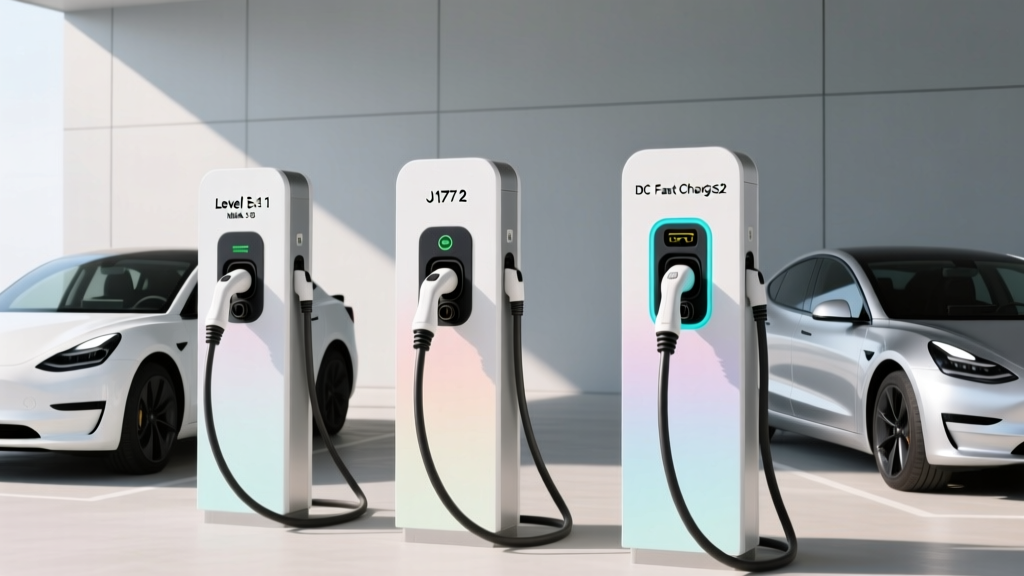
Charging Levels Explained: Speeds, Power, and Range Per Hour
Every EV owner needs to understand the three charging tiers. Here's how they stack up with real numbers:
| Level | Voltage | Power (kW) | Miles of Range Per Hour | Typical Use Case |
|---|---|---|---|---|
| Level 1 | 120V AC | 1.0–1.4 kW | 3–5 mi/hr | Overnight trickle; emergency backup |
| Level 2 | 240V AC | 3.3–19.2 kW | 12–75 mi/hr | Home daily charging; workplace; public AC |
| Level 3 (DCFC) | 400–900V DC | 50–350 kW | 150–1,000+ mi/hr (peak) | Highway road trips; quick top-ups; commercial fleets |
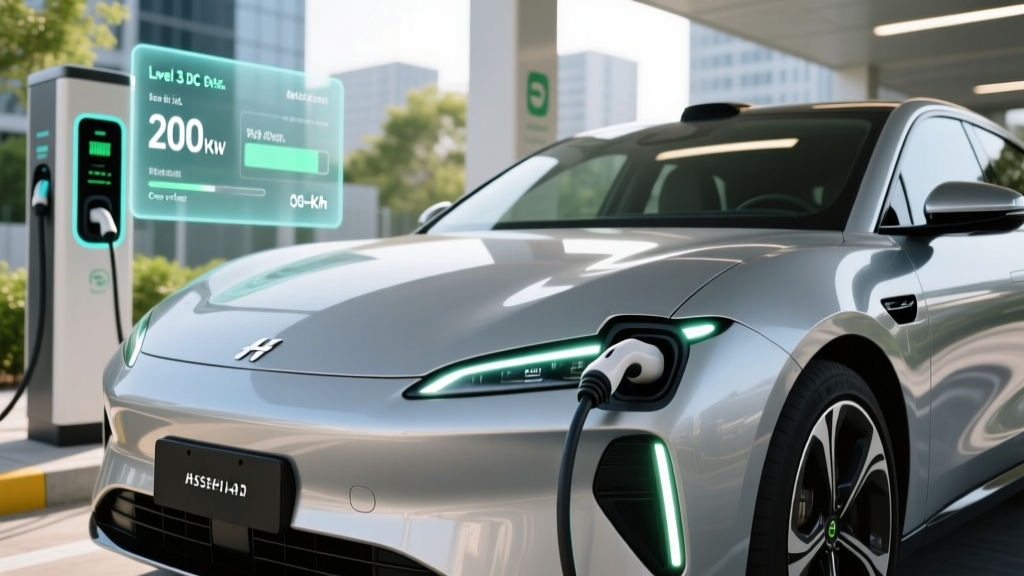
The miles-per-hour figures for Level 3 look dramatic, but they represent peak rates. A Hyundai Ioniq 5 with its 800V architecture can accept up to 240 kW at peak, adding roughly 200 miles of range in 18 minutes (10-80% SoC) on a 350 kW Electrify America stall. But that peak rate only holds between roughly 10% and 55% SoC — above 80%, the charge curve tapers aggressively to protect battery health. This is why every manufacturer quotes 10-80% times rather than 0-100%.
DC Fast Charging Times: What 10-80% Really Looks Like
Real-world Level 3 charging times depend on three variables: the station's maximum output, your vehicle's peak acceptance rate, and the battery's state of charge and temperature. Here's what to expect from common 2026 EVs on appropriate DCFC infrastructure:
| Vehicle (2026) | Battery (kWh usable) | Peak DC Rate (kW) | 10-80% Time | Station Needed |
|---|---|---|---|---|
| Tesla Model Y Long Range | 75 kWh (NMC) | 250 kW | ~25 min | V3/V4 Supercharger |
| Hyundai Ioniq 5 (Long Range) | 77.4 kWh (NMC) | 240 kW | ~18 min | 350 kW DCFC |
| Ford F-150 Lightning (Extended) | 131 kWh (NMC) | 150 kW | ~41 min | 150+ kW DCFC |
| Chevrolet Equinox EV | 85 kWh (NMC) | 150 kW | ~30 min | 150+ kW DCFC |
| BMW iX xDrive50 | 105.2 kWh (NMC) | 200 kW | ~31 min | 200+ kW DCFC |
Home Charging Installation: Level 2 Costs, Requirements, and Panel Upgrades
Since a Level 3 charger can't be installed at home, your residential charging strategy centers on Level 2. A properly installed Level 2 station at 240V and 48 amps (11.5 kW) will fully recharge most EVs overnight — typically adding 30-40 miles of range per hour of charging, which covers the daily needs of 95% of drivers.
Electrical Requirements
A Level 2 home charger requires a dedicated 240V circuit, similar to what powers an electric dryer or oven. Common configurations include:
- 240V / 40A circuit (32A continuous charge): Supports 7.7 kW — adequate for most EVs with overnight charging
- 240V / 50A circuit (40A continuous charge): Supports 9.6 kW — recommended for larger batteries (100+ kWh)
- 240V / 60A circuit (48A continuous charge): Supports 11.5 kW — fastest residential AC, future-proofs for upcoming vehicles
The National Electrical Code (NEC) requires that continuous loads (anything running 3+ hours, which includes EV charging) use only 80% of a circuit's rated capacity. So a 50A breaker supports a maximum 40A continuous draw. Your electrician will size the breaker, wire gauge, and conduit accordingly.
Installation Cost Breakdown
| Component | Simple Install (Near Panel) | Complex Install (Long Run / Upgrade) |
|---|---|---|
| Level 2 Charger (Equipment) | $350–$700 | $500–$800 |
| Electrician Labor | $300–$600 | $800–$2,000 |
| Permit & Inspection | $50–$150 | $100–$300 |
| Conduit, Wire, Misc. | $50–$150 | $200–$600 |
| Electrical Panel Upgrade (if needed) | $0 (not needed) | $1,500–$4,000 |
| Total Estimated Cost | $750–$1,600 | $3,100–$7,700 |
The single biggest cost variable is whether your home's electrical panel has spare capacity. Homes built before 2000 often have 100A or 150A service. Adding a 50A EV circuit to an already-loaded panel may require upgrading to 200A service — a $1,500-$4,000 job that involves the utility, a new meter base, and a new panel. Modern homes with 200A service and spare breaker slots typically need only a simple circuit addition.
Connector Compatibility: NACS, CCS, and CHAdeMO in 2026
The connector landscape has shifted dramatically. Tesla's North American Charging Standard (NACS) has been adopted by nearly every major automaker for new vehicles sold from 2025 onward, while CCS1 (Combined Charging System) remains on many vehicles sold in 2023-2024 and CHAdeMO persists only on legacy Nissan Leaf models.
| Connector | Vehicles Using It (2026) | Max DC Rate | Network Access |
|---|---|---|---|
| NACS (Tesla) | Tesla (all), Ford, GM, Rivian, Hyundai/Kia (2025+), BMW, Mercedes, Volvo, Polestar | Up to 350 kW | Tesla Supercharger + Electrify America, EVgo, ChargePoint (NACS stalls) |
| CCS1 | VW ID.4 (pre-2025), older Hyundai/Kia, Chevy Bolt, BMW i4 (pre-2025) | Up to 350 kW | Electrify America, EVgo, ChargePoint (CCS stalls) |
| CHAdeMO | Nissan Leaf (all years), Mitsubishi Outlander PHEV (legacy) | Up to 100 kW (typically 50 kW) | Declining; EVgo and some Electrify America locations |
If you own a CCS-equipped vehicle, adapter solutions exist. Tesla sells a CCS-to-NACS adapter (~$175) for use at Superchargers, and third-party adapters from brands like Lectron and A2Z allow CCS vehicles to access NACS-equipped public stations. For home Level 2 charging, NACS and CCS both use the J1772 protocol for AC charging, so a simple J1772-to-NACS adapter (included with most new NACS vehicles) handles home charging seamlessly. Always verify adapter compatibility with your specific vehicle and charger before purchasing.
Charging Cost Per Mile: Home vs. Public DC Fast vs. Gasoline
The economics of EV charging vary enormously depending on where and when you plug in. Here's a realistic cost breakdown based on 2026 national averages, using a vehicle with 3.0 miles per kWh efficiency (typical for a midsize crossover EV):
| Scenario | Rate ($/kWh) | Cost Per Mile | Annual Cost (12,000 mi) |
|---|---|---|---|
| Home (off-peak TOU rate) | $0.08–$0.12 | $0.03–$0.04 | $320–$480 |
| Home (standard rate, no TOU) | $0.14–$0.18 | $0.05–$0.06 | $560–$720 |
| Public Level 2 (ChargePoint, etc.) | $0.20–$0.35 | $0.07–$0.12 | $800–$1,400 |
| DC Fast Charging (Level 3 public) | $0.32–$0.56 | $0.11–$0.19 | $1,280–$2,240 |
| Gasoline Vehicle (28 MPG avg, $3.40/gal) | — | $0.12 | $1,457 |
The takeaway is clear: home charging on an off-peak time-of-use (TOU) plan delivers fuel costs roughly one-third that of gasoline. But exclusive reliance on DC fast charging at public rates can actually exceed gasoline costs per mile. This is why home Level 2 access is the single most important factor in EV ownership satisfaction and economics. According to the U.S. Department of Energy's fueleconomy.gov, electricity rates vary significantly by state — from under $0.10/kWh in Louisiana and Washington to over $0.30/kWh in California and Hawaii.
Recommended Level 2 Home Chargers for 2026
Since you can't install a Level 3 charger at home, here are the Level 2 stations we recommend based on real-world testing, reliability data, and feature sets. Each recommendation includes power output, connector type, and key specifications:
Best Overall: ChargePoint Home Flex
- Power Output: Up to 11.5 kW (48A) on a 60A circuit; configurable down to 16A
- Connector: J1772 (NACS adapter included with new vehicles)
- Cable Length: 23 feet
- Smart Features: Wi-Fi, app scheduling, energy tracking, Alexa integration
- Price: ~$550 (equipment only)
- UL Listed: Yes; indoor/outdoor rated (NEMA 4)
Best Smart Charger: Emporia Level 2 EV Charger
- Power Output: Up to 11.5 kW (48A) on a 60A circuit
- Connector: J1772
- Cable Length: 24 feet
- Smart Features: Real-time energy monitoring, solar integration, load management with Emporia VUE panel monitor
- Price: ~$400 (equipment only)
- UL Listed: Yes; outdoor rated
Best for Tesla/NACS: Tesla Wall Connector
- Power Output: Up to 11.5 kW (48A) on a 60A circuit
- Connector: NACS (native Tesla connector; J1772 adapter available)
- Cable Length: 24 feet
- Smart Features: Wi-Fi updates, power sharing between multiple units, load management
- Price: ~$475 (equipment only)
- UL Listed: Yes; indoor/outdoor rated
Best Budget: Lectron V-BOX Pro
- Power Output: Up to 9.6 kW (40A) on a 50A circuit
- Connector: J1772 or NACS (select at purchase)
- Cable Length: 20 feet
- Smart Features: Basic app control, scheduling
- Price: ~$280 (equipment only)
- UL Listed: Yes; outdoor rated
Safety, Electrical Code, and Installation Best Practices
EV charging is a continuous high-load electrical operation — your charger will draw maximum current for 6-10 hours at a time. Cutting corners on installation creates fire risk. Here are the non-negotiable safety requirements per the National Electrical Code (NEC Article 625):
- Dedicated circuit: Your EV charger must have its own dedicated breaker — no sharing with other outlets or appliances.
- GFCI protection: The NEC 2023 and later editions require GFCI (Ground Fault Circuit Interrupter) protection for all EV charging outlets. Hardwired chargers with built-in GFCI protection satisfy this requirement; plug-in units (NEMA 14-50 receptacles) require a GFCI breaker, which adds $40-$80 to the installation.
- Outdoor rating: If your charger is installed outdoors or in an unconditioned garage, it must carry at minimum a NEMA 3R (rain-resistant) or NEMA 4 (watertight) rating. All recommended chargers above meet NEMA 4.
- Wire gauge: For a 60A circuit, your electrician will typically use 6 AWG copper wire (THHN in conduit) or 4 AWG aluminum. For a 50A circuit, 8 AWG copper is standard. Never undersize wire — this is a leading cause of electrical fires.
- Permit and inspection: Virtually all jurisdictions require an electrical permit for EV charger installation. The inspection verifies correct wire sizing, breaker rating, grounding, and GFCI compliance. Do not skip this step — unpermitted work can void your homeowner's insurance in the event of an electrical fire.
For hardwired installations (no plug), the charger is permanently connected to the circuit with no receptacle. This eliminates the GFCI breaker requirement (the charger handles it internally) and is generally more reliable for outdoor installations. Plug-in installations using a NEMA 14-50 outlet offer portability — you can take the charger when you move — but require the GFCI breaker and have more potential failure points at the receptacle connection.
Level 3 Charger FAQ
Can I install a Level 3 charger at home?
No. Level 3 DC fast chargers require 480V three-phase commercial electrical service drawing 100-400+ amps, dedicated utility transformers, and liquid-cooled cables. The equipment alone costs $30,000-$150,000+, and the electrical infrastructure required is unavailable in residential settings. For home charging, a Level 2 charger at 240V provides full overnight recharge capability for every EV on the market.
How fast will a Level 3 charger add range to my EV?
At peak rate on a compatible station, a Level 3 charger adds between 150 and 1,000+ miles of range per hour of charging, depending on the vehicle's acceptance rate. In practical terms, most modern EVs recover 150-250 miles of range in a 20-30 minute session (10-80% SoC). Vehicles with 800V architectures (Hyundai Ioniq 5/6, Kia EV6/EV9, Porsche Taycan, Genesis GV60) charge fastest, while larger-battery trucks like the Ford F-150 Lightning take longer due to the sheer capacity being filled.
How much does it cost to install a home EV charger?
A Level 2 home charger installation typically costs $750-$1,600 if your electrical panel has spare capacity and the charger is located near the panel. If you need a long wire run, trenching, or a panel upgrade from 100A to 200A service, total costs range from $3,100 to $7,700. The equipment itself (the charger unit) costs $280-$700. Always get a load calculation from a licensed electrician before purchasing equipment to confirm your panel can support the added circuit.
How much does charging cost per mile compared to gas?
Home charging on an off-peak electricity rate ($0.08-$0.12/kWh) costs roughly $0.03-$0.04 per mile — about 70-75% less than a 28 MPG gasoline vehicle at $3.40/gallon ($0.12/mile). However, public DC fast charging at $0.32-$0.56/kWh costs $0.11-$0.19 per mile, which can equal or exceed gasoline costs. The financial case for EV ownership depends heavily on consistent access to affordable home or workplace charging. The IRS §30D federal tax credit can offset up to $7,500 of a new EV's purchase price (subject to MSRP caps, buyer income limits, and battery sourcing requirements), further improving the total cost of ownership.
Which connector or charger is compatible with my EV?
For 2026 model-year vehicles: Tesla, Ford, GM, Rivian, Hyundai, Kia, BMW, and most other brands now use the NACS connector for DC fast charging. Volkswagen ID.4 models built before 2025 and some earlier models retain CCS1. Only the Nissan Leaf still uses CHAdeMO. For home Level 2 charging, all EVs use the J1772 AC protocol — NACS vehicles include a J1772-to-NACS adapter in the box, or you can purchase a NACS-native Wall Connector. Check your vehicle's charge port or owner's manual to confirm before purchasing home equipment.
What electrical upgrades might I need for a home charger?
The most common upgrade is a panel capacity increase. If your home has 100A or 150A service and your existing loads (HVAC, electric range, dryer, water heater) already consume most of that capacity, adding a 40-60A EV circuit requires upgrading to 200A service. This involves replacing the panel, meter base, and service entrance conductors — a $1,500-$4,000 job depending on your utility and local requirements. An alternative is a smart load-management system that dynamically shares capacity between your EV charger and other heavy loads, avoiding the panel upgrade entirely. Your electrician's load calculation will determine which path is necessary.