Why Level 3 Autonomous Vehicles Demand a Different Charging Strategy
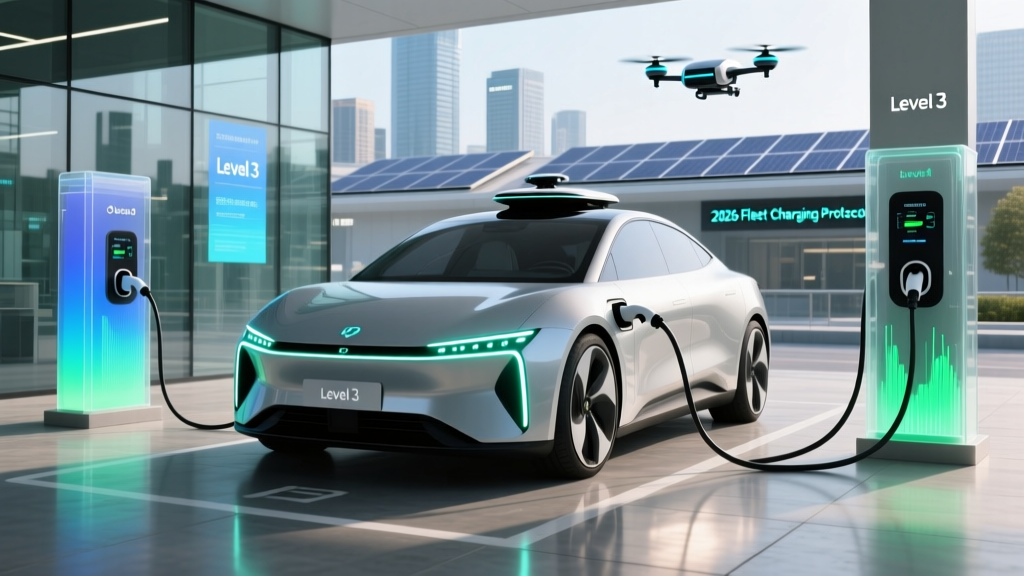
A level 3 autonomous vehicle—one that can handle all driving tasks under defined conditions without the human monitoring the road (SAE Level 3, per SAE International J3016)—isn't just a tech showcase. It's a utilization machine. Mercedes-Benz's DRIVE PILOT, the first certified Level 3 system sold in the U.S., is limited to 40 mph on divided highways in approved states, but the vehicles carrying it (the EQS Sedan and S-Class) still need the same electrons as any other EV. What changes for an L3-capable car, and especially for future Level 4 robotaxis like Waymo's I-PACE fleet, is duty cycle: these cars run 10–18 hours a day, so charging strategy—speed, connector, depot wiring, cost per mile—becomes an operating expense line, not a convenience.
This guide breaks down how electrified L3 (and L4) vehicles actually get powered in 2026: the three charging levels in hard numbers, what a home or depot install really costs, which connector your vehicle uses, and what you'll pay per mile versus a gas car. The physics is the same as any EV; the economics aren't.
The Three Charging Levels, in Real Numbers
Before we talk cost, the single most important distinction in EV literacy: kW (kilowatts) is power—how fast energy flows. kWh (kilowatt-hours) is energy—how much the battery holds. A 100 kWh battery charged at 10 kW takes 10 hours. The same battery at 150 kW takes roughly 40 minutes to 80%. Confusing the two is the #1 mistake new EV buyers make.
| Level | Voltage / Amps | Power (kW) | Miles of Range per Hour | Typical Use Case |
|---|---|---|---|---|
| Level 1 | 120V / 12A | 1.4 kW | 3–5 mi/hr | Overnight trickle, PHEVs, emergencies |
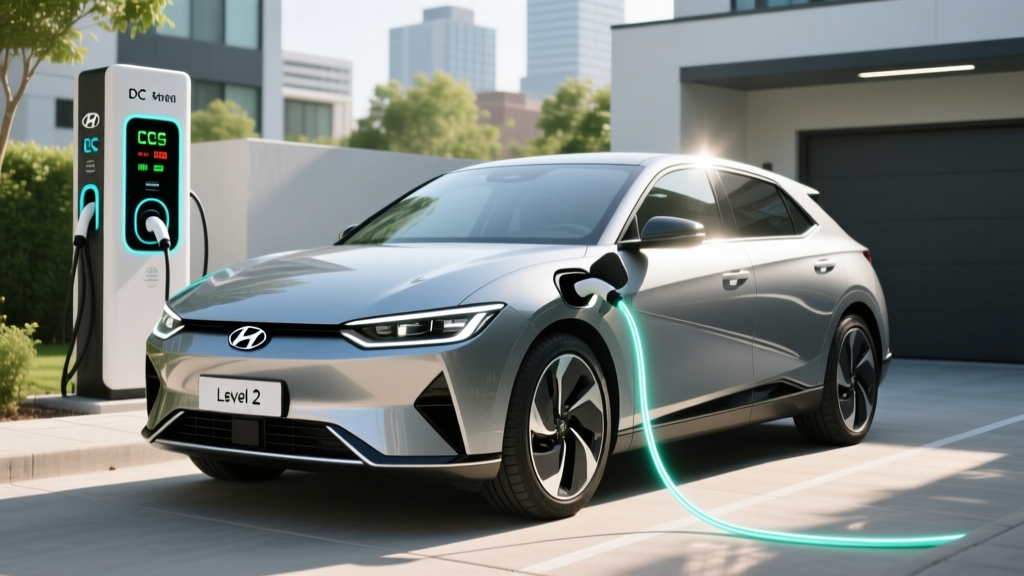
| Level 2 (home/depot) | 240V / 32–48A | 7.7–11.5 kW | 25–44 mi/hr | Daily home, workplace, fleet depot overnight |
| DC Fast (Level 3) | 400–800V DC | 50–350 kW | 150–1,200+ mi/hr (peak) | Road trips, robotaxi turnaround, highway corridors |
For an L3-capable sedan like the 2026 Mercedes EQS 450+ (107.8 kWh usable battery, EPA 390 mi), Level 2 at 11.5 kW refills roughly 10% to 80% overnight in about 8 hours. A 350 kW DC fast charger, per Mercedes' published curve, takes 10–80% in about 31 minutes—critical when a robotaxi needs to return to service rather than park.
What Home or Depot Installation Actually Costs
The sticker price of the charger is usually the smallest line item. The real cost is the electrician, the wire run, and—especially in pre-2000 homes—the panel upgrade. A Level 2 charger pulling 48A continuous requires a 60A dedicated circuit per NEC Article 625 (continuous loads are derated to 80% of breaker rating). If your main panel is 100A and already near capacity with HVAC, dryer, and range, you'll either need a 200A service upgrade or a smart load-management device like the Emporia Load Center.
| Line Item | Low | High | Notes |
|---|---|---|---|
| Level 2 EVSE hardware | $450 | $800 | ChargePoint Home Flex, Emporia Level 2, Grizzl-E Smart |
| Electrician labor (4–8 hrs) | $600 | $1,800 | Varies by region; longer wire runs cost more |
| Materials (wire, conduit, breaker) | $150 | $500 | 6 AWG copper for 60A; THHN in conduit |
| Permit and inspection | $75 | $300 | Required in nearly all jurisdictions for code compliance |
| Panel upgrade (if needed) | $1,800 | $4,500 | 100A → 200A service; not always required |
| Total (no panel upgrade) | $1,275 | $3,400 | |
| Total (with panel upgrade) | $3,075 | $7,900 |
For a fleet depot installing six or more Level 2 ports, expect a commercial electrician at $120–$200/hr and a possible utility service upgrade that can push total project cost into the $40,000–$80,000 range. Utilities increasingly offer make-ready rebates that cover the wiring to the panel; check your local PUC.
Connector Compatibility: NACS, CCS, CHAdeMO in 2026
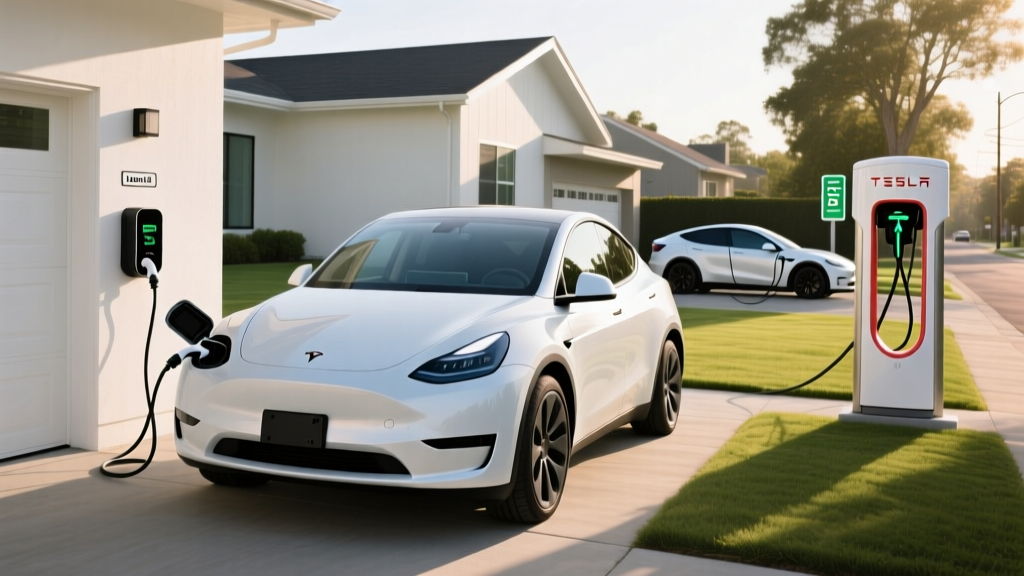
The connector wars are mostly over. By 2026, NACS (SAE J3400, the former Tesla plug) has become the de facto North American standard, adopted by Ford, GM, Rivian, Hyundai/Kia, Volvo, Polestar, BMW, and Mercedes for new models. CCS1 remains on legacy vehicles (VW ID.4 pre-2025, older Bolt EVs, early Mustang Mach-E). CHAdeMO is effectively dead on new passenger cars; only the aging Nissan Leaf and Mitsubishi Outlander PHEV still use it.
| Brand | Native Connector | Adapter Needed for Superchargers? |
|---|---|---|
| Tesla (all models) | NACS | No |
| Ford (F-150 Lightning, Mach-E 2025+) | NACS | No |
| GM (Blazer EV, Silverado EV, Equinox EV) | NACS | No |
| Hyundai Ioniq 5/6 (2025+), Kia EV6/EV9 | NACS | No |
| Mercedes EQS/EQE (2025+) | NACS | No |
| Rivian R1T/R1S (2025+) | NACS | No |
| VW ID.4 (2024 and earlier) | CCS1 | Yes, CCS→NACS adapter (~$200) |
| Nissan Leaf | CHAdeMO | Limited; network shrinking |
For L3-capable vehicles specifically, the 2026 Mercedes EQS Sedan now ships with NACS native, ending the awkward adapter era. BMW's upcoming Level 3-capable 7 Series (expected late 2026, preliminary) is also slated for NACS. If you're buying a used L3 vehicle from the 2023–2024 CCS era, budget $200 for a Lectron or A2Z CCS-to-NACS adapter to access Tesla Superchargers.
Cost Per Mile: Charging vs Gas, with Real Numbers
The EPA's fueleconomy.gov is the authoritative source for MPGe and kWh/100mi figures. For our comparison, we'll use the 2026 Mercedes EQS 450+ (97 MPGe combined, 33 kWh/100mi) versus its internal-combustion sibling, the S 500 (24 MPG combined), and a Waymo-style robotaxi comparator, the Jaguar I-PACE (76 MPGe, 44 kWh/100mi).
| Scenario | Price | EQS 450+ (33 kWh/100mi) | S 500 (24 MPG) | Savings per 1,000 mi |
|---|---|---|---|---|
| Home, off-peak (utility avg) | $0.14/kWh | $0.046/mi | $0.146/mi (@ $3.50/gal) | $100 |
| Home, TOU peak | $0.32/kWh | $0.106/mi | $0.146/mi | $40 |
| Public Level 2 (ChargePoint, avg) | $0.35/kWh | $0.116/mi | $0.146/mi | $30 |
| DC fast (EA / Tesla, avg) | $0.48/kWh | $0.158/mi | $0.146/mi | –$12 (gas wins) |
| Fleet depot (commercial rate) | $0.11/kWh | $0.036/mi | $0.146/mi | $110 |
Two takeaways. First, home and depot charging is where the economics work—four to five cents per mile versus fifteen for gas. Second, DC fast charging at public networks is now often more expensive per mile than gasoline; it's a convenience product, not a cost-savings product. Robotaxi fleets therefore depot-charge overnight at commercial rates and use DC fast only for mid-day top-ups to keep utilization high.
Charging Time Examples: 10–80% by Battery Size
Peak kW is not sustained kW. Every EV's charge curve tapers above ~60% SoC to protect the battery, and thermal preconditioning matters enormously. A cold battery at 32°F may accept only 40 kW until it warms up; preconditioning (the car heating the pack while navigating to the charger) unlocks the published peak rate. Always plan around the 10–80% time, not the peak number.
| Vehicle (2026 MY) | Battery (kWh usable) | Peak DC kW | 10–80% Time | Notes |
|---|---|---|---|---|
| Mercedes EQS 450+ | 107.8 (NMC) | 200 kW | ~31 min | 400V architecture |
| Hyundai Ioniq 5 N | 84.0 (NMC) | 240 kW | ~18 min | 800V architecture, flat curve |
| Tesla Model Y Long Range | 75.0 (NMC) | 250 kW | ~25 min | Precondition via nav |
| Ford F-150 Lightning Ext. | 131.0 (NMC) | 150 kW | ~41 min | Big pack, moderate rate |
| Waymo I-PACE (fleet) | 84.7 (NMC) | 100 kW | ~45 min | Limited by fleet depot hardware |
For a Level 3 or Level 4 vehicle in commercial service, a 30–40 minute DC fast session during a driver shift change or passenger swap is the operational norm. That's why Waymo depots are sited within 2–3 miles of high-demand zones—to minimize deadheading to the charger.
Equipment Recommendations: Home, Depot, and Portable
Below are three charger classes we recommend based on 2026 field use. Each lists power output, connector, cable length, and smart features—no recommendation without specs.
Best Home Level 2: ChargePoint Home Flex (2025 refresh)
- Power: Up to 11.5 kW (48A) on a 60A circuit; adjustable down to 16A for weaker panels
- Connector: NACS native; J1772 version available for legacy EVs
- Cable: 23 ft, rated to –22°F
- Smart features: Wi-Fi, scheduled charging, utility demand-response, Energy Star certified
- Price: $599 MSRP (frequently $549 on sale)
Best Budget / Cold-Climate: Grizzl-E Smart
- Power: 9.6 kW (40A) on 50A circuit
- Connector: NACS or J1772 options
- Cable: 24 ft, –40°F rated, aluminum enclosure
- Smart features: OCPP-compatible, load-sharing with second unit
- Price: $449
Best Depot / Multi-Port: Emporia Level 2 with Load Management
- Power: Up to 11.5 kW per port; dynamic sharing across 2–8 ports on one circuit
- Connector: NACS native
- Cable: 25 ft
- Smart features: Per-port RFID, fleet billing, solar-integration, automatic load shedding to avoid panel upgrades
- Price: ~$750 per port, plus gateway
Safety, Code, and the Panel-Upgrade Gotcha
NEC Article 625 (2023 edition, adopted in most 2026 jurisdictions) requires:
- A dedicated branch circuit for the EVSE—no sharing with outlets or appliances.
- GFCI protection for outdoor receptacles used for Level 1; most hardwired Level 2 units have internal GFCI.
- Outdoor-rated enclosures (NEMA 3R or 4) for any install exposed to weather.
- A permit and final inspection in virtually all jurisdictions; skipping this voids homeowner's insurance coverage for electrical fires.
The panel-upgrade gotcha deserves emphasis: if your home has a 100A main service and already runs central AC, electric dryer, range, and water heater, a 60A EV circuit will exceed the panel's rated capacity on paper, even if real-world simultaneous draw is lower. An electrician will calculate per NEC 220 load calc; if you fail, options include a 200A service upgrade ($1,800–$4,500), a smart load-management panel (Emporia, Span) that sheds EV charging when other loads spike ($600–$1,500 additional), or simply derating the EVSE to 32A / 7.7 kW on a 40A circuit, which still adds ~28 miles of range per hour—enough for most daily driving.
Level 3 Autonomous Vehicles and the Charging Question: FAQ
How much does it cost to install a home EV charger?
For a 48A / 11.5 kW Level 2 install on an existing 200A panel, expect $1,275–$3,400 all-in (hardware, electrician, permit, materials). Add $1,800–$4,500 if your home needs a panel upgrade from 100A to 200A service. Fleet depot installs with multiple ports scale to $40,000–$80,000+ including utility make-ready work.
How fast will each charging level add range?
Level 1 (120V, 1.4 kW) adds 3–5 miles of range per hour. Level 2 (240V, 7.7–11.5 kW) adds 25–44 miles per hour. DC fast charging (50–350 kW) adds 150–1,200+ miles per hour at peak—but tapers sharply above 80% SoC, so the relevant metric is 10–80% time, typically 18–45 minutes depending on pack size and architecture.
Which connector/charger is compatible with my EV?
In 2026, most new EVs—including L3-capable models from Mercedes and upcoming BMWs—ship with NACS (SAE J3400) native. Older CCS1 vehicles (2024 and earlier VW ID.4, early Mach-E) need a ~$200 CCS-to-NACS adapter to use Tesla Superchargers. CHAdeMO is effectively obsolete on new cars. Check your vehicle's charge-port door or owner's manual; the connector is stamped on the inlet.
How much does charging cost per mile vs gas?
At the U.S. average home electricity rate of ~$0.14/kWh and a typical EV efficiency of 33 kWh/100mi, charging costs about 4.6 cents per mile. A comparable gas car at 24 MPG and $3.50/gal costs ~14.6 cents per mile—a $100 savings per 1,000 miles driven. DC fast charging at public rates ($0.48/kWh) flips the math and is more expensive than gas, so home or depot charging is where savings live.
What electrical upgrades might I need?
Common upgrades include: a 60A double-pole breaker and 6 AWG copper wire run (standard); a 100A → 200A main service panel upgrade ($1,800–$4,500) if load calculations fail; or a smart load-management device ($600–$1,500) that avoids a panel upgrade by dynamically shedding EV charging when HVAC or dryer loads spike. An electrician will determine which applies during the initial site visit.
Do Level 3 autonomous vehicles charge differently than regular EVs?
The physics are identical—same connectors, same charge curves, same kW/kWh math. What differs is duty cycle. An L3-capable personal vehicle (Mercedes EQS with DRIVE PILOT) charges like any luxury EV. A Level 4 robotaxi (Waymo, Cruise successor, Zoox) runs 10–18 hours daily, so fleets prioritize depot Level 2 overnight (cheapest per kWh) with strategic DC fast top-ups between shifts. High utilization makes the per-mile savings of electricity versus gas a core business model, not a lifestyle perk.
For current federal tax-credit rules on EV purchases—including MSRP caps, buyer income limits, and critical-mineral sourcing requirements that affect L3-capable vehicle eligibility—see the IRS §30D clean vehicle credit page. For safety ratings on any vehicle you're considering, cross-check NHTSA's 5-star ratings and IIHS Top Safety Pick lists.