Most EV owners quickly discover that Level 1 charging — plugging into a standard 120V household outlet — is too slow for daily driving beyond short commutes. Level 2 EV chargers, which run on 240V circuits (the same voltage as your electric dryer), deliver 5 to 10 times the charging speed and form the backbone of practical home EV ownership. This guide breaks down exactly what's required to install one, what it costs, which chargers are worth buying in 2026, and how home charging stacks up against gas and public charging on a per-mile basis.
Charging Levels Explained: Level 1 vs. Level 2 vs. DC Fast
Before choosing equipment, you need to understand the three charging tiers available to EV drivers. The critical distinction is between kW (kilowatts — the rate of power delivery, like water pressure from a hose) and kWh (kilowatt-hours — the total energy stored in your battery, like gallons in a tank). Charging speed is measured in kW; battery capacity is measured in kWh.
| Level | Voltage | Power (kW) | Miles of Range Added per Hour | Typical Use Case |
|---|---|---|---|---|
| Level 1 | 120V AC | 1.0–1.4 kW | 3–5 miles | Overnight trickle; PHEVs; low-mileage drivers |
| Level 2 | 240V AC | 3.3–19.2 kW | 12–75 miles | Daily home & workplace charging |
| DC Fast Charge | 400–800V DC | 50–350+ kW | 150–1,000+ miles (equivalent rate) | Road trips; 10–80% in 15–35 min |
For a vehicle with a 75 kWh battery (e.g., a Tesla Model Y Long Range or Ford Mustang Mach-E Extended Range), a Level 2 charger at 11.5 kW will add roughly 35–40 miles of range per hour, fully replenishing the battery in about 7–8 hours. A Level 1 outlet would take 50+ hours for the same task. DC fast charging can take a 75 kWh battery from 10–80% in roughly 20–25 minutes at a 150 kW station, though charging speed tapers significantly above 80% to protect battery health.
Electrical Requirements: What Your Home Needs for a Level 2 Charger
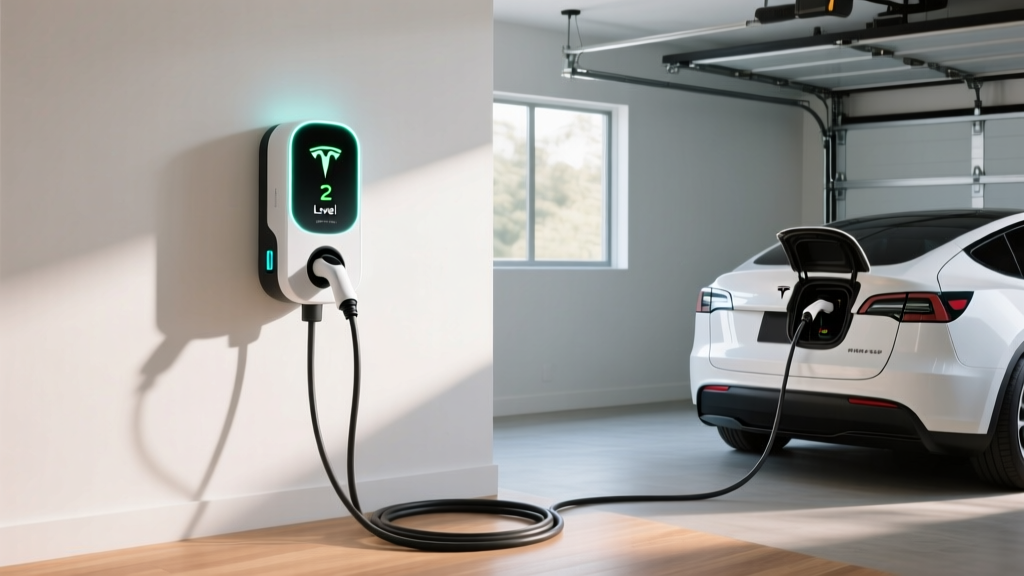
Level 2 EV chargers require a dedicated 240V circuit, typically rated for 40 to 60 amps. Here's what that means in practice:
- 40-amp circuit → supports up to 32A continuous draw (7.7 kW). National Electrical Code (NEC) requires circuits to be rated 125% above continuous load.
- 50-amp circuit → supports up to 40A continuous draw (9.6 kW). The most common residential setup.
- 60-amp circuit → supports up to 48A continuous draw (11.5 kW). Required for higher-power chargers like the Tesla Wall Connector or ChargePoint Home Flex at max output.
Your charger's maximum output is limited by both the charger hardware and the circuit it's connected to. A 48A charger on a 40-amp circuit will only deliver 32A (7.7 kW). Always match the circuit to the charger's rated amperage.
Do You Need a Panel Upgrade?
This is the question that can double or triple your installation cost. Most modern homes have a 200-amp electrical panel. Adding a 50-amp EV circuit is straightforward if you have sufficient spare capacity — typically defined as at least 20% unused headroom on your panel after accounting for existing loads (HVAC, water heater, oven, dryer).
Homes built before 1990 often have 100-amp or 150-amp panels. If your panel is already near capacity, an electrician may recommend:
- A panel upgrade to 200A ($1,500–$3,000)
- A sub-panel installation ($800–$1,500)
- A smart load-management system ($300–$600) that shares capacity between your EV charger and other heavy loads, avoiding a full panel upgrade
Some utilities and states offer rebates for panel upgrades when paired with EV charger installation — check with your local utility and the Alternative Fuels Data Center for current incentive programs.
Level 2 EV Charger Installation Costs: Full Breakdown
Installation costs vary widely based on the distance from your electrical panel to the charging location, whether a panel upgrade is needed, and local labor rates. Here's a realistic 2026 cost breakdown:
| Component | Simple Install (panel nearby, no upgrade) | Complex Install (long run or panel upgrade) |
|---|---|---|
| Level 2 charger (hardware) | $350–$700 | $350–$700 |
| Electrician labor (2–4 hrs standard) | $300–$800 | $800–$2,000 |
| Electrical permit | $50–$200 | $50–$200 |
| Conduit, wiring, materials | $100–$300 | $300–$800 |
| Panel upgrade (if needed) | $0 | $1,500–$3,000 |
| Total estimated cost | $800–$2,000 | $3,000–$6,700 |
Connector Compatibility: NACS, CCS, and What You Need in 2026
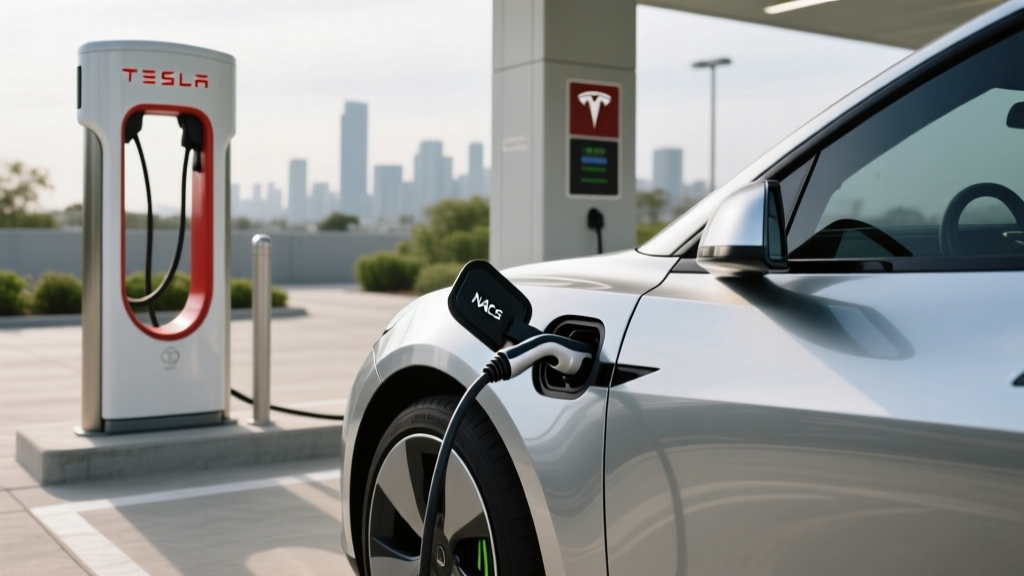
The North American EV charging connector landscape has shifted dramatically. As of 2026, the North American Charging Standard (NACS) — originally developed by Tesla — is the dominant connector for new EVs. Most automakers (Ford, GM, Rivian, Hyundai, Kia, BMW, and others) have transitioned to NACS for their 2025–2026 model-year vehicles.
| Connector | Brands Using It (2026 MY) | Home Charger Availability |
|---|---|---|
| NACS (Tesla-style) | Tesla, Ford, GM, Rivian, Hyundai, Kia, BMW, Volvo, Polestar, Mercedes-Benz | Tesla Wall Connector, Emporia Level 2 (NACS), ChargePoint Home Flex (NACS version) |
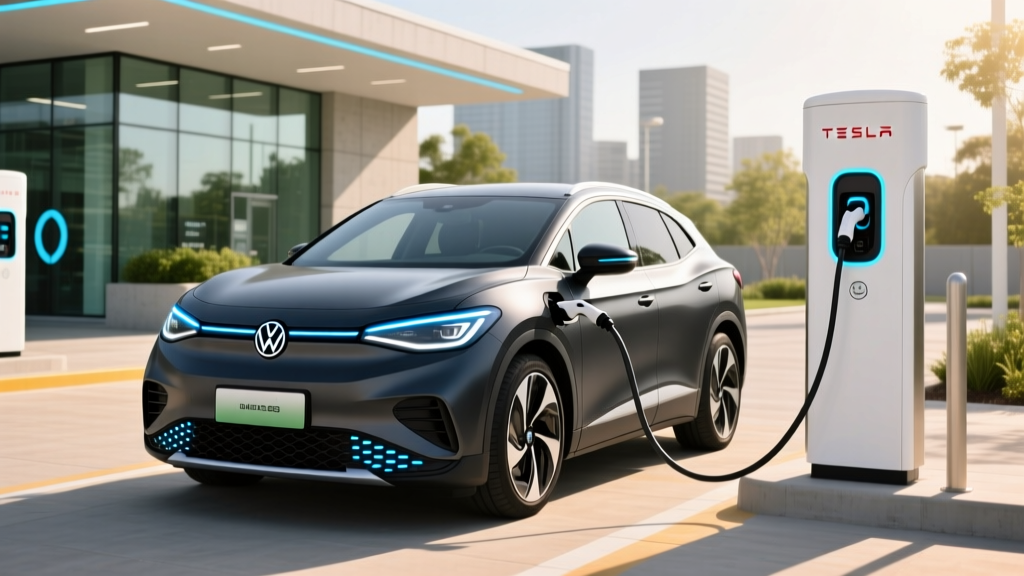
| CCS1 | Volkswagen ID.4 (carryover), some Stellantis models, older 2020–2024 EVs | ChargePoint Home Flex, Emporia Vue, JuiceBox (CCS) |
| CHAdeMO | Nissan Leaf (legacy — discontinued for 2026) | Limited; use adapter or legacy chargers |
If you own a CCS-equipped EV but want a NACS home charger (or vice versa), adapters are available. Tesla sells a CCS-to-NACS adapter, and third-party adapters from brands like Lectron and A2Z are widely available for $100–$200. For home charging, though, the simplest approach is buying a charger with the native connector your car uses.
Cost to Charge at Home vs. Gas: Per-Mile Economics
One of the strongest arguments for home Level 2 charging is the per-mile cost advantage. Here's how it compares using 2026 national averages:
| Scenario | Rate | Vehicle Efficiency | Cost Per Mile |
|---|---|---|---|
| Home Level 2 (national avg electricity) | $0.16/kWh | 3.0 mi/kWh (100 MPGe) | $0.053 |
| Home Level 2 (off-peak TOU rate) | $0.09/kWh | 3.0 mi/kWh | $0.030 |
| Public Level 2 (network charging) | $0.25–$0.40/kWh | 3.0 mi/kWh | $0.083–$0.133 |
| DC Fast Charging (public) | $0.35–$0.55/kWh | 3.0 mi/kWh | $0.117–$0.183 |
| Gasoline (25 MPG combined) | $3.40/gal | 25 MPG | $0.136 |
| Gasoline (35 MPG combined) | $3.40/gal | 35 MPG | $0.097 |
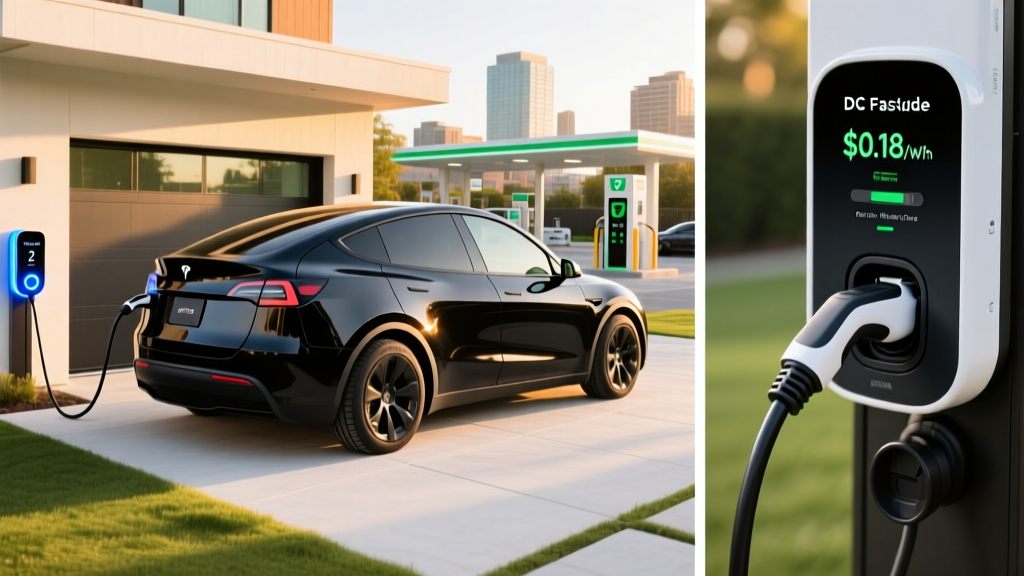
At off-peak residential rates, home Level 2 charging costs roughly 3 to 4.5 cents per mile — about one-quarter to one-third the cost of gasoline in a 25 MPG vehicle. Even public DC fast charging at premium rates often undercuts or matches gasoline per mile. The savings compound: a driver covering 12,000 miles annually saves roughly $800–$1,200 per year charging at home versus fueling a 25 MPG gas car.
To maximize savings, enroll in your utility's time-of-use (TOU) plan and schedule charging during off-peak hours (typically 10 PM–6 AM). Most smart Level 2 chargers have built-in scheduling features that automate this.
Best Level 2 EV Chargers for Home Use in 2026
After testing and tracking reliability data across major brands, these are the Level 2 chargers that deliver the best combination of power output, build quality, smart features, and value.
Tesla Wall Connector (NACS)
- Max output: 11.5 kW (48A) on a 60A circuit
- Connector: NACS (native Tesla); CCS adapter available separately
- Cable length: 24 feet
- Smart features: Wi-Fi, OTA firmware updates, power sharing between multiple units, access control
- Price: ~$450
- Best for: Tesla owners and NACS-equipped 2025–2026 EVs; highest power output in its price class
ChargePoint Home Flex (NACS or CCS1)
- Max output: 12 kW (50A) on a 60A circuit; adjustable down to 16A for smaller circuits
- Connector: Available in NACS or CCS1 configurations
- Cable length: 24 feet
- Smart features: Wi-Fi, ChargePoint app scheduling, Alexa/Google Home integration, energy tracking, flexible amperage dip-switch settings
- Price: ~$550–$650
- Best for: Multi-EV households; adjustable amperage avoids panel upgrades on limited circuits
Emporia Level 2 EV Charger
- Max output: 11.5 kW (48A) on a 60A circuit
- Connector: NACS or J1772 (with adapter for CCS)
- Cable length: 24 feet
- Smart features: Wi-Fi, Emporia app, real-time energy monitoring, solar integration (pairs with Emporia Vue home energy monitor), TOU scheduling
- Price: ~$350–$400
- Best for: Budget-conscious buyers who want smart features and energy monitoring without a premium price
Grizzl-E Smart (J1772 / NACS adapter)
- Max output: 10 kW (40A) on a 50A circuit
- Connector: J1772 (NACS adapter included or sold separately depending on package)
- Cable length: 24 feet
- Smart features: Wi-Fi, OCPP protocol support, adjustable amperage (16A/24A/32A/40A), extreme cold-weather rated (-40°F)
- Price: ~$450–$550
- Best for: Cold-climate installations and outdoor mounts; rugged Canadian-built unit with strong durability record
Safety, Permits, and Electrical Code Requirements
EV chargers draw significant continuous current — more than most household appliances. Proper installation isn't optional; it's a safety and insurance requirement.
- Dedicated circuit: Your Level 2 charger must be on its own dedicated breaker — never shared with other appliances.
- GFCI protection: NEC 2023 and 2026 editions require GFCI (Ground Fault Circuit Interrupter) protection for all EV charging outlets. Hardwired installations may satisfy this through the charger's built-in ground-fault protection; plug-in units require a GFCI breaker.
- Outdoor rating: If mounting outdoors, ensure the charger carries a NEMA 4 or IP65 weather-resistance rating. All chargers listed above meet outdoor installation standards.
- Permitting: Most jurisdictions require an electrical permit for EV charger installation. Your electrician typically handles this. Expect a post-installation inspection.
- UL listing: Only purchase chargers that are UL-listed (or ETL-listed to UL standards). Non-certified chargers from overseas marketplaces may lack critical safety protections and can void homeowner's insurance coverage in the event of a fire.
Charging Time Examples: How Long Does Level 2 Take?
Real-world charging time depends on your battery size, the charger's output, and the vehicle's onboard charger acceptance rate. Here are examples using common 2026 EV models:
| Vehicle | Battery (kWh usable) | Onboard Charger | Time at 11.5 kW (48A) | Time at 7.7 kW (32A) |
|---|---|---|---|---|
| Tesla Model Y Long Range | 75 kWh | 11.5 kW | ~7 hours | ~10 hours |
| Hyundai Ioniq 5 (Long Range) | 77.4 kWh | 10.9 kW | ~7.5 hours | ~10.5 hours |
| Ford Mustang Mach-E (Ext. Range) | 91 kWh | 10.5 kW | ~9 hours | ~12 hours |
| Chevrolet Equinox EV | 85 kWh | 11.5 kW | ~8 hours | ~11.5 hours |
| Toyota bZ4X | 64 kWh | 7.2 kW | ~9 hours (limited by car) | ~9 hours |
For most drivers who plug in each evening and charge overnight, even a 7.7 kW (32A) Level 2 charger provides more than enough replenishment. If your daily drive is 40 miles, you'll recover that in roughly 1.5 hours at 7.7 kW — leaving ample margin for longer days.
Frequently Asked Questions
How much does it cost to install a home Level 2 EV charger?
A straightforward installation with an adequate electrical panel typically costs $800–$2,000 total (charger + electrician + permit + materials). If your home needs a panel upgrade or a long conduit run, expect $3,000–$6,700. The federal §30C tax credit can reimburse 30% of costs up to $1,000, subject to census-tract eligibility per IRS guidelines.
How fast will each charging level add range?
Level 1 (120V) adds 3–5 miles per hour. Level 2 (240V) adds 12–75 miles per hour depending on amperage and the vehicle's onboard charger. DC fast charging can add 150–300+ miles in 20–30 minutes at a high-power station. For daily use, Level 2 is the practical standard.
Which connector is compatible with my EV?
Most 2025–2026 EVs now use the NACS connector (Tesla, Ford, GM, Hyundai, Kia, Rivian, BMW, and others). Some carryover models still use CCS1. Check your vehicle's charge port or owner's manual. If your car has CCS1 and you buy a NACS charger, a CCS-to-NACS adapter ($100–$200) resolves the mismatch.
How much does EV charging cost per mile vs. gas?
Home Level 2 charging at the national average electricity rate ($0.16/kWh) costs roughly $0.05 per mile in a vehicle rated at 3 mi/kWh. Off-peak TOU rates drop this to $0.03/mile. A comparable 25 MPG gas car at $3.40/gallon costs $0.14 per mile. Home charging saves $700–$1,200 annually for a 12,000-mile driver.
What electrical upgrades might I need for a Level 2 charger?
You may need a panel upgrade (100A to 200A, costing $1,500–$3,000) if your existing electrical panel lacks spare capacity. Homes with modern 200A panels usually have sufficient headroom. Alternatives include installing a sub-panel or using a smart load-management device that dynamically shares capacity between the charger and other heavy loads.
Should I get a hardwired or plug-in Level 2 charger?
Hardwired installations eliminate the need for a 240V receptacle, can be slightly cheaper (no outlet cost), and are preferred for outdoor mounts. Plug-in units (using a NEMA 14-50 outlet) offer portability — you can unplug and take the charger when you move. Both are code-compliant. If you choose plug-in, invest in a high-quality industrial-grade NEMA 14-50 receptacle (Hubbell or Bryant brand, ~$80–$120); cheap receptacles have been linked to overheating failures under continuous EV charging loads.