Understanding EV Charging Levels: Speed and Power Explained
Before selecting a level 2 ev charger, you need to understand the three charging tiers available to EV owners. Each level delivers power at different rates, measured in kilowatts (kW), which determines how quickly your battery gains range.
| Charging Level | Voltage | Power Output | Miles Added Per Hour | Typical Use Case |
|---|---|---|---|---|
| Level 1 | 120V AC | 1.4-1.9 kW | 3-5 miles | Overnight trickle charging, PHEVs |
| Level 2 | 240V AC | 3.3-19.2 kW | 12-75 miles | Home/workplace daily charging |
| DC Fast Charging | 400-800V DC | 50-350 kW | 180-1,200+ miles | Road trips, rapid top-ups |
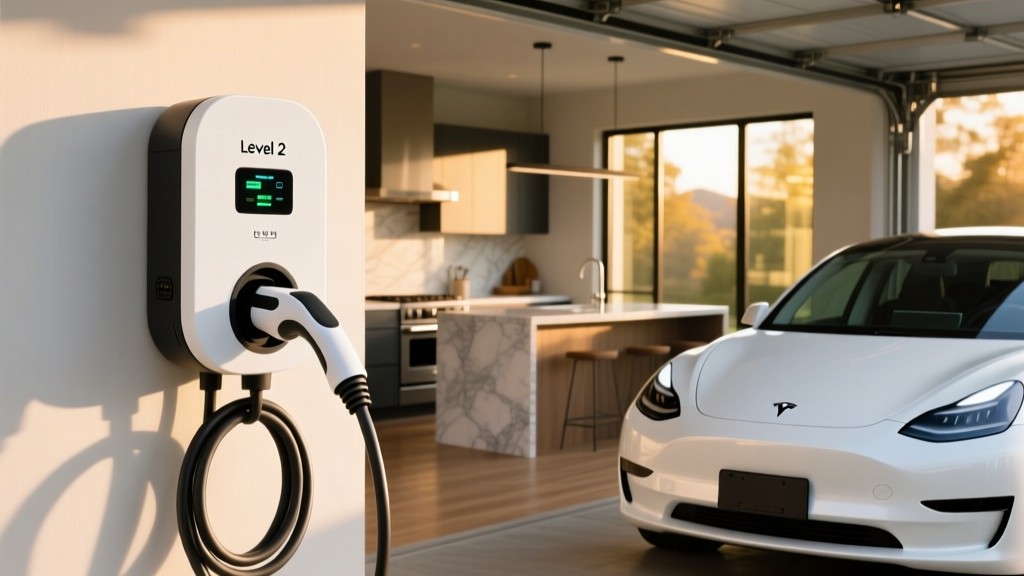
Most home installations use Level 2 chargers because they balance speed with electrical infrastructure requirements. A typical 48-amp Level 2 charger delivers 11.5 kW, adding roughly 44 miles of range per hour—enough to fully recharge a 75 kWh battery overnight.
Real-world charging example: A Tesla Model Y Long Range (75 kWh usable battery, EPA 330 miles) charging from 10-80% on an 11.5 kW Level 2 charger takes approximately 4.5 hours. That same session on a 3.3 kW Level 2 unit would require 15+ hours.
Electrical Requirements for Home Level 2 Installation
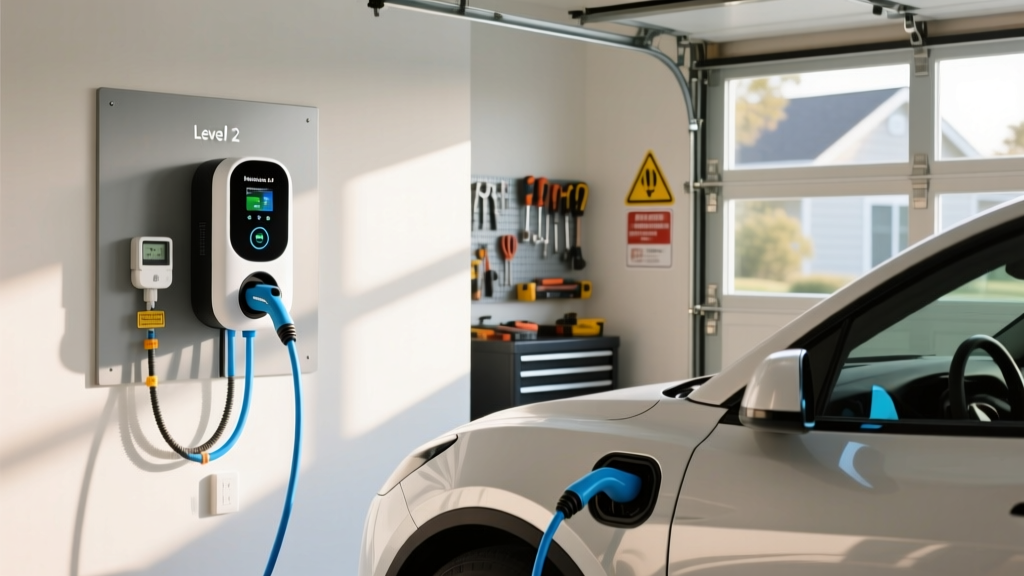
Installing a level 2 ev charger requires dedicated 240-volt circuitry, similar to what powers electric dryers or ovens. The specific amperage depends on your charger's power rating and your home's electrical panel capacity.
Circuit and Amperage Specifications
Level 2 chargers typically require circuits rated for 20-100 amps, with the breaker sized 25% higher than the charger's continuous draw:
- 16-amp charger (3.8 kW): Requires 20-amp breaker, 12-gauge wire
- 32-amp charger (7.7 kW): Requires 40-amp breaker, 8-gauge wire
- 48-amp charger (11.5 kW): Requires 60-amp breaker, 6-gauge wire
- 80-amp charger (19.2 kW): Requires 100-amp breaker, 3-gauge wire
Most homeowners opt for 48-amp units, which provide fast charging without overwhelming standard 200-amp electrical panels.
Panel Capacity Assessment
Before installation, an electrician will perform a load calculation to determine if your panel can handle the additional circuit. Homes with 100-amp service or extensive existing loads (electric heat, pool equipment, multiple large appliances) may need a panel upgrade.
Panel upgrade reality check: Upgrading from 100-amp to 200-amp service typically costs $1,500-$3,000, while moving to 400-amp service runs $2,500-$5,000. Older homes (pre-1980s) are more likely to require upgrades.
Installation Costs: Equipment, Labor, and Permits
The total cost to install a home level 2 ev charger varies widely based on equipment choice, electrical complexity, and local labor rates. Here's a realistic breakdown based on 2026 market data:
| Component | Cost Range | Notes |
|---|---|---|
| Level 2 Charger (32-48 amp) | $350-$800 | Smart chargers with WiFi cost more |
| Electrician Labor (2-4 hours) | $400-$1,200 | Varies by region and complexity |
| Electrical Materials | $100-$400 | Wire, conduit, breaker, junction box |
| Permit Fees | $50-$250 | Required in most jurisdictions |
| Panel Upgrade (if needed) | $1,500-$5,000 | Only for insufficient capacity |
| Total (no panel upgrade) | $900-$2,650 | Most common scenario |
| Total (with panel upgrade) | $2,400-$7,650 | Older homes or high-load situations |
Cost-saving tip: Some utilities offer rebates of $250-$500 for Level 2 charger installations, and the federal Alternative Fuel Vehicle Refueling Property Credit covers 30% of installation costs up to $1,000 through 2032 (subject to income and location requirements).
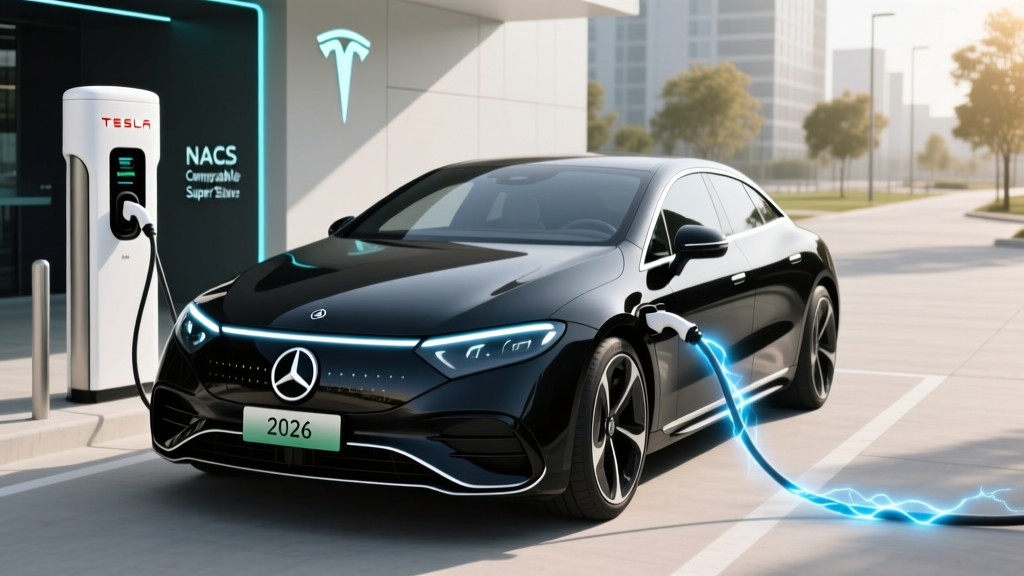
Connector Compatibility: NACS, CCS, and CHAdeMO
Your EV's charging port determines which level 2 ev charger connector you need. As of 2026, three main connector standards exist in North America:
| Connector Type | Compatible Brands | Adapter Availability |
|---|---|---|
| NACS (Tesla) | Tesla (all models), Ford (2025+), GM (2025+), Rivian (2025+), Volvo/Polestar (2025+) | CCS-to-NACS adapters available ($200-$300) |
| CCS1 | Most non-Tesla EVs (Hyundai, Kia, VW, BMW, Mercedes, legacy Ford/GM) | NACS-to-CCS adapters available ($150-$250) |
| CHAdeMO | Nissan Leaf (discontinued 2025), Mitsubishi Outlander PHEV | Limited adapter options, declining infrastructure |
2026 transition note: Most automakers have adopted NACS as their standard, but CCS vehicles remain common. Many Level 2 chargers now ship with interchangeable connector heads or include adapters in the box.
Adapter Considerations
If your EV's connector doesn't match your charger, adapters provide a workaround:
- CCS-to-NACS adapter: Allows CCS vehicles to use Tesla Wall Connectors and NACS chargers ($200-$300)
- NACS-to-CCS adapter: Enables Tesla vehicles to use CCS chargers ($150-$250)
- J1772 adapter: Most EVs include this for legacy Level 2 chargers (often included with vehicle)
Adapters add slight charging inefficiency (1-3% loss) and bulk, so matching your charger's native connector to your EV is preferable when possible.
Charging Cost Analysis: Level 2 vs. Gasoline
One major advantage of home level 2 ev charger ownership is reduced fuel costs. Here's how charging expenses compare to gasoline across different scenarios:
| Fuel Source | Cost per Unit | Efficiency | Cost Per Mile |
|---|---|---|---|
| Home Level 2 (off-peak rate) | $0.12/kWh | 3.5 miles/kWh | $0.034 |
| Home Level 2 (standard rate) | $0.18/kWh | 3.5 miles/kWh | $0.051 |
| Public Level 2 charging | $0.35/kWh | 3.5 miles/kWh | $0.100 |
| DC Fast Charging (public) | $0.48/kWh | 3.5 miles/kWh | $0.137 |
| Gasoline (25 MPG vehicle) | $3.40/gallon | 25 miles/gallon | $0.136 |
| Gasoline (35 MPG vehicle) | $3.40/gallon | 35 miles/gallon | $0.097 |
Annual savings example: Driving 12,000 miles per year with home off-peak charging costs approximately $408, compared to $1,632 for a 25 MPG gasoline vehicle—a savings of $1,224 annually. Over five years, that's $6,120 in fuel savings alone.
However, exclusive reliance on public DC fast charging erodes this advantage, making home Level 2 installation economically essential for maximum savings.
Top Level 2 EV Chargers for 2026
Based on performance testing, reliability data, and feature sets, these are the standout level 2 ev charger options for home installation:
ChargePoint Home Flex (Best Overall)
- Power Output: Up to 12 kW (50 amps adjustable)
- Connector: J1772 (CCS) or NACS versions available
- Cable Length: 23 feet
- Smart Features: WiFi connectivity, scheduling, Alexa integration, energy tracking
- Price: $599-$699
- Best For: Most homeowners seeking reliable, feature-rich charging
Tesla Wall Connector (Best for NACS Vehicles)
- Power Output: Up to 11.5 kW (48 amps)
- Connector: NACS native
- Cable Length: 24 feet
- Smart Features: Power sharing (multiple units), load management, Tesla app integration
- Price: $475
- Best For: Tesla owners and NACS-adopting vehicles
Grizzl-E Smart (Best Value)
- Power Output: Up to 10 kW (40 amps)
- Connector: J1772 (CCS compatible)
- Cable Length: 24 feet
- Smart Features: OCPP protocol, adjustable amperage, outdoor-rated
- Price: $449
- Best For: Budget-conscious buyers wanting solid performance
FLO Home X5 (Most Durable)
- Power Output: Up to 11.5 kW (48 amps)
- Connector: J1772 (CCS)
- Cable Length: 25 feet
- Smart Features: Load balancing, cold-weather optimization, 3-year warranty
- Price: $695
- Best For: Harsh climates and commercial-grade reliability
Safety and Code Compliance Requirements
Proper level 2 ev charger installation must comply with the National Electrical Code (NEC) and local building codes. Key safety requirements include:
Mandatory Safety Features
- Dedicated circuit: Level 2 chargers require their own breaker—no shared circuits with other appliances
- GFCI protection: Ground Fault Circuit Interrupter breakers or outlets required for outdoor installations and garages (NEC 2023 update)
- Proper grounding: Equipment grounding conductor sized per NEC Table 250.122
- Weatherproof enclosure: Outdoor installations require NEMA 4-rated (weatherproof) chargers and covers
Installation Best Practices
- Permit acquisition: Most jurisdictions require electrical permits for Level 2 installations—unpermitted work can void insurance and cause resale issues
- Professional installation: Licensed electricians ensure code compliance and proper load calculations
- Cable management: Wall-mounted cord organizers prevent tripping hazards and cable damage
- Ventilation: Indoor garage installations should maintain adequate airflow, though modern chargers generate minimal heat
Warning: DIY installation without proper knowledge risks fire, electrocution, and code violations. Always hire a licensed electrician for 240V work.
Frequently Asked Questions
How much does it cost to install a home EV charger?
Most Level 2 charger installations cost $900-$2,650 when no panel upgrade is needed. This includes the charger ($350-$800), electrician labor ($400-$1,200), materials ($100-$400), and permits ($50-$250). Homes requiring panel upgrades face total costs of $2,400-$7,650.
How fast will each charging level add range?
Level 1 (120V) adds 3-5 miles per hour. Level 2 (240V) adds 12-75 miles per hour depending on amperage—a 48-amp unit typically adds 44 miles per hour. DC fast charging adds 180-1,200+ miles per hour but isn't suitable for home installation.
Which connector/charger is compatible with my EV?
Check your vehicle's charging port: Tesla and 2025+ Ford/GM/Rivian/Volvo use NACS connectors. Most other EVs (Hyundai, Kia, VW, BMW) use CCS1. Older Nissan Leaf models use CHAdeMO. Many chargers offer interchangeable heads or adapters are available for $150-$300.
How much does charging cost per mile vs gas?
Home Level 2 charging with off-peak electricity costs about $0.034 per mile, compared to $0.136 per mile for a 25 MPG gasoline vehicle at $3.40/gallon. This represents a 75% fuel cost reduction. Public DC fast charging costs $0.137 per mile—similar to gasoline.
What electrical upgrades might I need?
Homes with 100-amp electrical service or high existing loads may need panel upgrades to 200-amp ($1,500-$3,000) or 400-amp service ($2,500-$5,000). An electrician's load calculation determines if your panel can handle a 40-60 amp dedicated circuit for Level 2 charging.