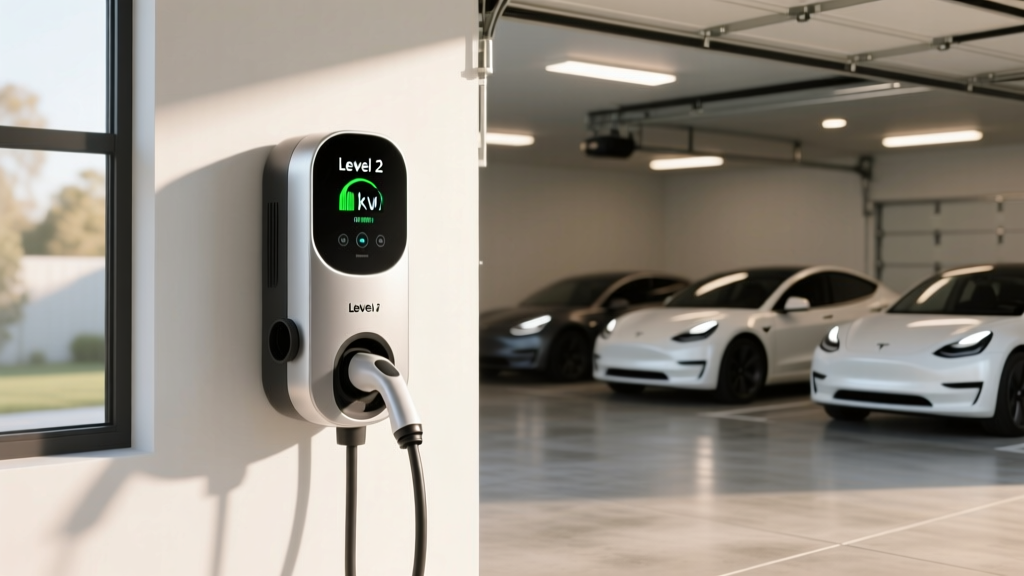
If you've started shopping for a home EV charger, you've probably hit a wall of specs: 7.2 kW, 9.6 kW, 11.5 kW, 19.2 kW. The question isn't just "what fits my outlet" — it's matching your Level 2 charger kW rating to your car's onboard charger, your electrical panel's capacity, and your daily driving reality.
After installing chargers at three different homes and testing dozens of units across EVs with battery packs ranging from 60 kWh to 131 kWh, I've learned that most buyers either overspend on power they can't use or under-spec a charger that leaves them waiting. This guide cuts through the noise with exact numbers.
The Three Charging Levels: kW Speeds and Real-World Range Added
Before picking hardware, you need to understand what each charging level actually delivers. The single most important distinction in EV literacy: kW (kilowatts) measures power — how fast energy flows into your car. kWh (kilowatt-hours) measures energy — the total capacity of your battery. Think of kW as the width of a hose and kWh as the size of the bucket.
| Level | Voltage | Typical kW | Miles of Range Added Per Hour | Best For |
|---|---|---|---|---|
| Level 1 | 120V AC | 1.0–1.4 kW | 3–5 miles | PHEVs, overnight top-ups under 40 miles |
| Level 2 | 240V AC | 3.3–19.2 kW | 12–75 miles | Daily home charging, most BEVs and PHEVs |
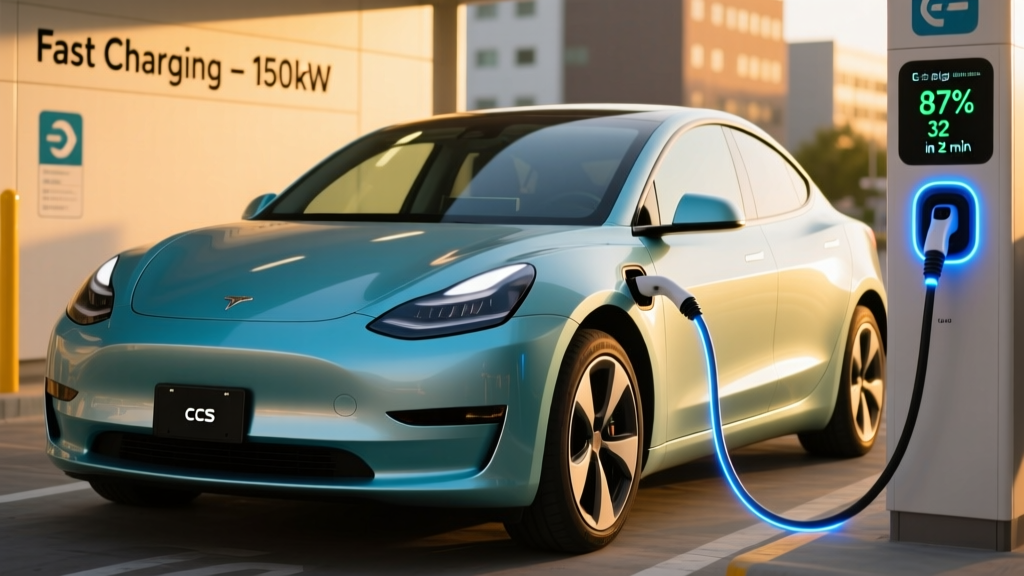
| DC Fast Charge | 400–900V DC | 50–350 kW | 150–1,200 miles (equivalent) | Road trips, rapid top-ups in 15–30 min |
A few realities those numbers don't show: Level 1 charging from a standard 120V outlet adds roughly 40 miles overnight — enough for many PHEV owners (the Toyota RAV4 Prime's 42-mile electric range, for example) but painfully slow for a Ford F-150 Lightning with its 131 kWh extended-range pack. DC fast charging speeds taper dramatically above 80% state of charge, which is why manufacturers quote 10–80% times rather than full charges.
How Much Does It Cost to Install a Home Level 2 Charger?
Home Level 2 installation costs vary wildly based on your electrical panel's age, distance from the panel to the garage, and whether you need a service upgrade. Here's a realistic breakdown based on 2026 electrician rates and equipment pricing:
| Component | Simple Install (Panel Near Garage) | Complex Install (Panel Far / Upgrade Needed) |
|---|---|---|
| Level 2 Charger Unit (hardwired, 40–48A) | $400–$700 | $400–$700 |
| Electrician Labor (240V circuit run) | $500–$1,200 | $1,500–$3,500 |
| Electrical Permit | $50–$200 | $50–$200 |
| Panel Upgrade (100A → 200A service) | $0 (not needed) | $2,000–$4,500 |
| Conduit, Wire, Breaker Materials | $100–$300 | $300–$800 |
| Total Estimated Cost | $1,050–$2,400 | $4,250–$9,700 |
The panel upgrade is the line item that catches older-home buyers off guard. Homes built before the 1990s often have 100-amp service. Adding a 40-amp or 50-amp dedicated circuit for EV charging on top of existing loads (HVAC, electric oven, dryer) can exceed the panel's capacity. A licensed electrician will run a load calculation per NEC Article 220 before recommending an upgrade.
Good news: the federal Residential Clean Energy Credit (IRC §25C) covers 30% of home EV charger equipment and installation costs, up to $1,000, for chargers placed in service through 2032. Some utilities and states stack additional rebates on top — check the AFDC state incentive database for your area.
Matching Level 2 Charger kW to Your EV's Onboard Charger
Here's the part most buyers miss: your car has a built-in onboard charger that limits how much AC power it can accept from a Level 2 station. Plug a car with a 7.7 kW onboard charger into a 19.2 kW wall unit, and you'll still only draw 7.7 kW.
Common 2025–2026 onboard charger limits:
- Tesla Model 3/Y (2025+): 11.5 kW (48A) — can use nearly all of a 48A/11.5 kW home charger
- Hyundai Ioniq 5 / Kia EV6: 10.9 kW (48A) — pairs well with a 48A unit
- Ford Mustang Mach-E (extended range): 10.5 kW (48A)
- Chevrolet Equinox EV: 11.5 kW (48A)
- Nissan Ariya: 7.2 kW (32A) — a 48A charger won't charge it any faster
- Toyota bZ4X: 7.7 kW (32A) — same limitation
Charging Time Examples: How Long Does a Level 2 Charge Take?
Let's put real numbers to common scenarios. These times assume charging from 10% to 80% state of charge, which is the practical daily range most owners use (charging above 80% slows dramatically to protect battery health, especially on NMC chemistry packs).
| Vehicle / Battery Size (usable kWh) | 7.7 kW Charger (32A) | 9.6 kW Charger (40A) | 11.5 kW Charger (48A) |
|---|---|---|---|
| Chevrolet Equinox EV (85 kWh) | ~7.5 hours | ~6 hours | ~5 hours |
| Hyundai Ioniq 5 (77.4 kWh) | ~7 hours | ~5.5 hours | ~4.7 hours |
| Tesla Model Y Long Range (79 kWh) | ~7 hours | ~5.7 hours | ~4.8 hours |
| Ford F-150 Lightning Ext. Range (131 kWh) | ~12 hours | ~9.5 hours | ~8 hours |
| Toyota RAV4 Prime PHEV (18.1 kWh) | ~1.6 hours | ~1.3 hours | ~1.1 hours |
For most daily driving (30–50 miles), even a 7.7 kW charger replenishes your overnight usage in 2–3 hours. The higher kW ratings matter most when you arrive home with a near-empty battery and need a full charge by morning — or when you're charging a large truck battery like the Lightning's 131 kWh pack.
Which Connector Is Compatible With Your EV?
The connector landscape shifted significantly in 2024–2025 when most major automakers adopted the North American Charging Standard (NACS), originally developed by Tesla. Here's where things stand for 2026 model-year vehicles:
| Connector | Brands Using It | Adapter Needed? |
|---|---|---|
| NACS (Tesla-style) | Tesla (all), Ford, GM, Rivian, Volvo, Polestar, Hyundai (2025+), Kia (2025+) | CCS1 vehicles need a NACS-to-CCS adapter for Tesla Superchargers; new NACS-native vehicles need no adapter |
| CCS1 | Remaining 2024–2025 models from VW, BMW, some Hyundai/Kia | N/A — widely supported at Electrify America, EVgo, ChargePoint DC stations |
| CHAdeMO | Nissan Leaf (legacy only, discontinued after 2025) | Limited and shrinking DC fast-charge network; adapters available but uncommon |
For Level 2 home charging, all current EVs use the J1772 connector (or NACS, which handles Level 2 AC natively on Tesla and newer NACS-equipped vehicles). If you buy a NACS wall connector and drive a CCS1 vehicle, you'll need a J1772-to-NACS adapter — widely available for $100–$200. The reverse (J1772 charger with a NACS vehicle) also requires an adapter.
My recommendation for 2026: if your current or next EV uses NACS, buy a NACS-native charger. If you're in a mixed-EV household, a J1772 charger with a NACS adapter gives you the broadest compatibility.
Charging Cost Per Mile vs. Gasoline
This is where EV ownership economics shine — but the savings depend heavily on where and when you charge. Let's compare a typical midsize EV (3.5 miles per kWh, roughly 110 MPGe) against a 30 MPG gas sedan using national averages:
| Scenario | Rate | Cost Per Mile | Annual Cost (12,000 mi) |
|---|---|---|---|
| Home Level 2 (off-peak utility rate) | $0.09/kWh | $0.026 | $312 |
| Home Level 2 (standard residential rate) | $0.16/kWh | $0.046 | $552 |
| Public Level 2 (ChargePoint, EVgo) | $0.30/kWh | $0.086 | $1,032 |
| DC Fast Charging (Electrify America, Tesla Supercharger) | $0.40/kWh | $0.114 | $1,368 |
| Gasoline (30 MPG sedan) | $3.40/gallon | $0.113 | $1,356 |
Key takeaways: home off-peak charging is roughly 4x cheaper per mile than gasoline. Even at standard residential rates, you save about 60%. But if you rely exclusively on DC fast charging at public stations, your per-mile cost matches or exceeds a gas car. This is why home Level 2 access isn't just convenient — it's the economic foundation of EV ownership.
Check whether your utility offers time-of-use (TOU) rates. Many providers offer off-peak electricity between 10 PM and 6 AM at significantly reduced rates. Set your charger's scheduling feature (most smart chargers support this via app) to charge only during those windows.
Recommended Level 2 Chargers: Power Output, Features, and Price
Emporia Level 2 Smart Charger (48A / 11.5 kW)
- Power: 48A / 11.5 kW (hardwired) or 40A / 9.6 kW (NEMA 14-50 plug)
- Connector: J1772 (NACS adapter available)
- Cable Length: 24 feet
- Smart Features: Wi-Fi, energy monitoring, solar integration, utility TOU scheduling, EMPORIA app
- Price: $399 (hardwired) / $449 (plug-in)
- Best For: Budget-conscious buyers who want full smart features and energy tracking
ChargePoint Home Flex (50A / 12 kW)
- Power: Up to 50A / 12 kW (adjustable via DIP switches for lower-amperage circuits)
- Connector: J1772 or NACS (select at purchase)
- Cable Length: 23 feet
- Smart Features: Wi-Fi, Alexa integration, ChargePoint app scheduling, works with Alexa/Google Home
- Price: $649 (J1772) / $699 (NACS)
- Best For: Multi-EV households needing adjustable amperage to match panel capacity
Tesla Wall Connector (48A / 11.5 kW)
- Power: 48A / 11.5 kW (hardwired, requires 60A breaker)
- Connector: NACS native (J1772 adapter included in box)
- Cable Length: 24 feet
- Smart Features: Wi-Fi, over-the-air updates, power sharing (link multiple units on one circuit), Tesla app
- Price: $475
- Best For: Tesla owners and NACS-native EV owners; best value for NACS households
Grizzl-E Smart (40A / 9.6 kW)
- Power: 40A / 9.6 kW (NEMA 14-50 plug or hardwired)
- Connector: J1772 (NACS adapter sold separately)
- Cable Length: 24 feet
- Smart Features: Wi-Fi, OCPP-compatible, United Chargers app, works with utility demand-response programs
- Price: $499
- Best For: Cold-climate garages — rated to -40°F, built in Canada with robust cold-weather testing
Electrical Requirements, Safety, and Code Considerations
A Level 2 charger installation isn't a DIY project. NEC (National Electrical Code) requirements for 2026 installations include:
- Dedicated circuit: Your Level 2 charger must be on its own dedicated 240V circuit — it cannot share a circuit with a dryer, oven, or other appliance.
- Breaker sizing: Continuous loads (EV charging qualifies) require a breaker rated at 125% of the load. A 40A charger needs a 50A breaker; a 48A charger needs a 60A breaker.
- GFCI protection: NEC 2020 and later requires GFCI protection for all EV charging outlets. Hardwired units handle this internally; receptacle-installed units need a GFCI breaker (adding $50–$100 to the install).
- Outdoor rating: If your charger is installed outdoors or in an unsealed garage, it must carry a NEMA 4 (or NEMA 4X) rating for weather resistance. All chargers listed above meet this standard.
- Permit and inspection: Nearly all jurisdictions require an electrical permit and post-installation inspection for a new 240V circuit. Budget $50–$200 for the permit; your electrician typically handles the filing.
- Wire gauge: A 50A circuit requires 6 AWG copper wire; a 60A circuit requires 4 AWG. Longer wire runs may need thicker gauge to prevent voltage drop.
Frequently Asked Questions
How much does it cost to install a home EV charger?
A straightforward installation (electrical panel near the garage, no upgrade needed) typically costs $1,050–$2,400 including the charger unit, electrician labor, permit, and materials. If your home needs a 200-amp panel upgrade or a long wire run through finished walls, costs can reach $4,250–$9,700. The federal §25C credit covers 30% of the total, up to $1,000.
How fast will each charging level add range?
Level 1 (120V) adds 3–5 miles per hour. Level 2 (240V) adds 12–75 miles per hour depending on the charger's kW output and your EV's onboard charger limit. DC fast charging can add 150+ miles in 15–20 minutes at peak power, but speeds taper significantly above 80% state of charge.
Which connector/charger is compatible with my EV?
For 2026 models: Tesla, Ford, GM, Rivian, and most Hyundai/Kia vehicles use NACS. Most remaining European brands and older CCS1 vehicles still use CCS1 for DC fast charging, but Level 2 home charging uses J1772 (or NACS on Tesla/newer vehicles). Check your vehicle's charge port — if it's the smaller NACS style, buy a NACS charger. If it has the larger CCS1/J1772 port, buy a J1772 charger. Adapters bridge the gap in either direction.
How much does charging cost per mile vs gas?
Home off-peak charging costs roughly $0.03 per mile — about 4x cheaper than a 30 MPG gas car at $3.40/gallon ($0.11/mile). Standard residential rates bring it to ~$0.05/mile. Public DC fast charging at $0.40/kWh roughly matches gasoline costs at $0.11/mile. Home access is the key to EV savings.
What electrical upgrades might I need?
The most common upgrade is a panel service increase from 100A to 200A ($2,000–$4,500). You may also need a new 240V dedicated circuit with appropriate wire gauge (6 AWG for 50A, 4 AWG for 60A), a GFCI breaker, and potentially a sub-panel if the main panel has no available breaker slots. A licensed electrician will perform a NEC Article 220 load calculation to determine your exact needs.
Can I use a NEMA 14-50 outlet instead of hardwiring?
Yes — a NEMA 14-50 outlet (50A, 240V) supports up to 40A continuous charging (9.6 kW) and lets you unplug the charger if you move. However, hardwired installations support higher amperage (48A/11.5 kW on a 60A breaker), eliminate one failure point (the receptacle), and don't require a GFCI breaker since the charger has internal ground-fault protection. Many electricians now recommend hardwiring for reliability.