The Core Difference: kW (Power) vs kWh (Energy)
Before comparing chargers, lock down the most misunderstood distinction in EV ownership. kW (kilowatts) measures power — how fast energy flows into your battery, like the diameter of a water hose. kWh (kilowatt-hours) measures energy — the total capacity of your battery, like the size of the water tank. A 60 kWh battery charged at 7.2 kW takes roughly 8.3 hours from empty to full. A 1.4 kW Level 1 outlet would need over 42 hours for the same job. Confusing these two units is the single most common mistake new EV buyers make when evaluating charging equipment.
Charging Levels Explained: Speeds in kW and Miles Per Hour
EV charging breaks into three tiers. Each serves a distinct use case, and understanding the miles-added-per-hour metric is far more practical than raw kW numbers alone.
| Level | Voltage | Power (kW) | Miles of Range Added/Hour | Typical Use Case |
|---|---|---|---|---|
| Level 1 | 120V AC | 1.2–1.9 kW | 3–5 miles | Overnight top-ups, PHEVs, low-mileage drivers |
| Level 2 | 240V AC | 3.3–19.2 kW | 12–75 miles | Daily home charging, workplace, public destinations |
| DC Fast Charge | 400–900V DC | 50–350+ kW | 150–1,200+ miles (equivalent) | Road trips, rapid top-ups at highway stations |
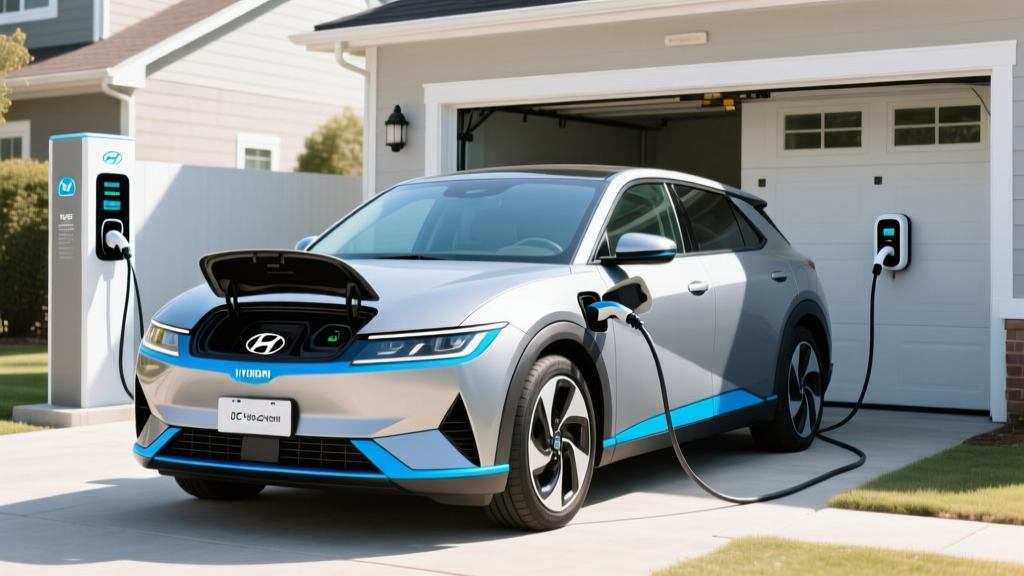
Level 1 plugs into any standard household 120V outlet. It's adequate for plug-in hybrids with 25–45 miles of electric range (a Toyota RAV4 Prime's 18.1 kWh battery recharges overnight) and for BEV owners who drive under 30 miles daily. But for a long-range BEV like the Hyundai Ioniq 5 (84 kWh usable battery), Level 1 adds only about 4 miles per hour — meaning a 10–80% charge takes over 3 days.
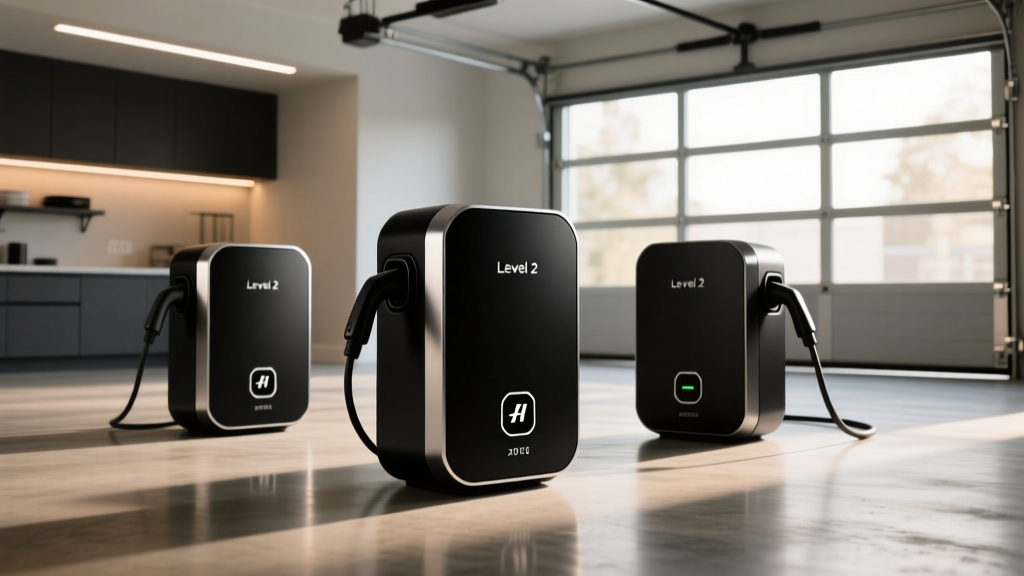
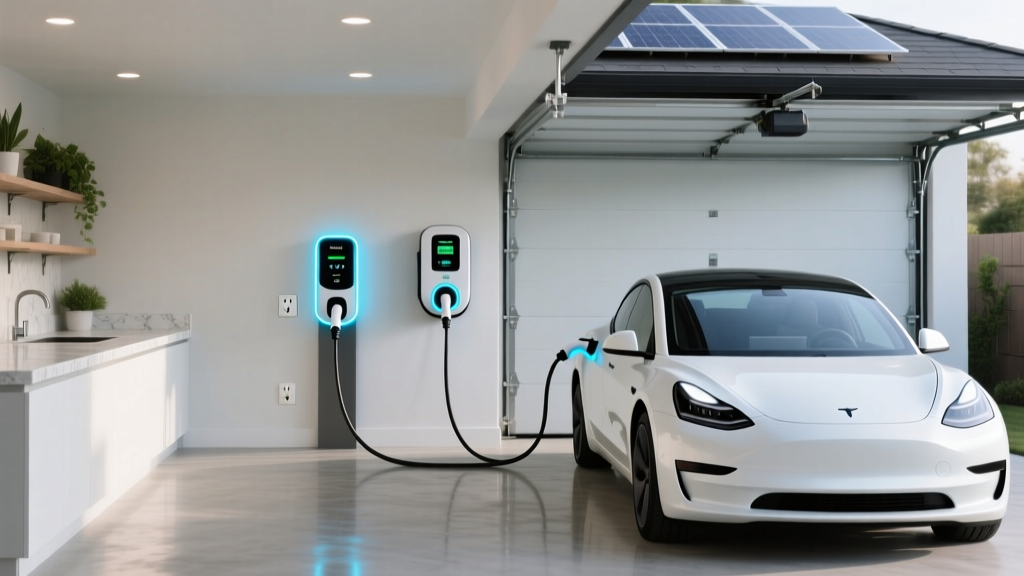
Level 2 is the practical standard for home BEV charging. At 48 amps (11.5 kW on a 60A dedicated circuit), most modern EVs recover 30–44 miles of range per hour. That same Ioniq 5 goes from 10% to 80% in roughly 6–7 hours — plug in at bedtime, wake up full.
DC fast charging bypasses the car's onboard AC-to-DC converter and feeds direct current straight to the battery. Peak rates of 150–350 kW can add 10–80% in 18–25 minutes, but charge curves taper significantly above 80% State of Charge to protect battery health. That "350 kW peak" is typically sustained for only the first 10–15% of the session.
Home Level 2 Installation: Electrical Requirements and Real Costs
A Level 2 charger requires a 240V circuit — the same voltage your electric dryer or oven uses. Here's what that actually involves and what it costs.
Electrical Specifications
- Circuit amperage: Most home chargers run on a 40A, 50A, or 60A dedicated circuit. The charger's maximum draw must not exceed 80% of the circuit rating (a 48A charger requires a 60A circuit per National Electrical Code continuous-load rules).
- Wire gauge: 6 AWG copper for 50A circuits; 4 AWG for 60A. Longer runs may require thicker wire to prevent voltage drop.
- Panel capacity: Your main electrical panel must have enough spare amperage to support the new circuit. A 200A panel with significant existing loads (electric heat, dryer, range, AC) may need a load calculation before adding a 60A EV circuit.
When a Panel Upgrade Becomes Necessary
Homes built before 1990 often have 100A or 150A panels. If your load calculation shows insufficient headroom, a panel upgrade to 200A (or adding a secondary sub-panel) becomes mandatory. This is the single largest cost variable in home charger installation and the one most online guides gloss over.
Level 2 Home Charger Installation Cost Breakdown
| Component | Low-End Estimate | High-End Estimate | Notes |
|---|---|---|---|
| Level 2 charging equipment (hardwired or NEMA 14-50 plug) | $300 | $750 | Smart Wi-Fi chargers with load management cost more |
| Electrician labor (circuit run, mounting, connection) | $400 | $1,500 | Varies by wire run length, wall material, and local rates |
| Electrical permit | $50 | $250 | Required in most jurisdictions; inspection included |
| Panel upgrade (if needed) | $1,500 | $4,000 | 100A→200A upgrade; not required for most modern panels |
| Total (no panel upgrade) | $750 | $2,500 | Most homeowners fall in $1,000–$1,800 range |
| Total (with panel upgrade) | $2,250 | $6,500 | Older homes with 100A service |
Some utilities and states offer rebates of $250–$1,000 for home charger installation. The federal Alternative Fuel Vehicle Refueling Property Credit (IRS Form 8911) covers 30% of equipment and installation costs up to $1,000, but eligibility depends on whether you live in a qualifying census tract and is subject to income limitations. Check current-year IRS guidance before counting on this credit.
Connector Compatibility: NACS, CCS1, and CHAdeMO
The physical plug connecting your charger to your EV matters — and the landscape has shifted dramatically. As of 2025–2026, the North American Charging Standard (NACS), originally developed by Tesla, has been adopted by nearly every major automaker for new models.
| Connector | Brands Using It (New Models) | Home Charger Availability |
|---|---|---|
| NACS (J3400) | Tesla, Ford, GM, Rivian, Volvo, Polestar, Mercedes-Benz, Hyundai/Kia (2026+), BMW, Nissan (new models) | Tesla Wall Connector, Emporia, ChargePoint, and others now offer NACS models |
| CCS1 | VW ID.4 (through 2025), older BMW i4/iX, legacy Hyundai/Kia, Chevrolet Bolt (discontinued) | Widely available — most third-party chargers default to CCS1/J1772 |
| CHAdeMO | Nissan Leaf (legacy), Mitsubishi Outlander PHEV (legacy) | Phasing out; limited new equipment |
If you own a CCS1-equipped EV but want a NACS home charger (or vice versa), adapters are available from Tesla and third-party manufacturers. A NACS-to-J1772 adapter typically costs $150–$300. For DC fast charging, CCS-to-NACS adapters are emerging but verify compatibility with your specific model year before purchasing. The safest approach: match your home charger's connector to your vehicle's native inlet.
Cost to Charge: Home vs Public vs Gas Per Mile
Electricity pricing varies enormously by region, time of day, and whether you're charging at home or on a public network. Here's how the math works out in practice.
| Scenario | Rate ($/kWh) | Cost to Add 200 Miles* | Cost Per Mile |
|---|---|---|---|
| Home, off-peak utility rate | $0.08–$0.14 | $4.80–$8.40 | $0.024–$0.042 |
| Home, standard residential rate | $0.13–$0.20 | $7.80–$12.00 | $0.039–$0.060 |
| Public Level 2 (workplace, destination) | $0.20–$0.49 | $12.00–$29.40 | $0.060–$0.147 |
| Public DC fast (Electrify America, EVgo, etc.) | $0.35–$0.69 | $21.00–$41.40 | $0.105–$0.207 |
| Gasoline vehicle (28 MPG avg, $3.40/gal) | — | $24.29 | $0.121 |
*Based on an EV averaging 3.0 miles/kWh (typical midsize crossover like the Tesla Model Y or Ford Mustang Mach-E). Actual efficiency varies by model, temperature, and driving style. Source: fueleconomy.gov.
The takeaway is clear: home charging on off-peak rates delivers fuel costs roughly one-third to one-quarter of gasoline. Public DC fast charging, however, can equal or exceed gas costs per mile — it's a convenience premium for road trips, not a daily strategy. If your utility offers time-of-use (TOU) rates, scheduling charges for overnight off-peak hours (typically 10 PM–6 AM) maximizes savings.
Charging Time Examples: 10–80% for Common Battery Sizes
Most EV owners charge between 10% and 80% State of Charge rather than 0–100%, because charging slows dramatically above 80% to protect battery longevity. Here's how long that takes at each level for representative battery sizes:
| Battery Size | Example Vehicles | Level 1 (1.4 kW) | Level 2 (11.5 kW / 48A) | DC Fast (peak, 10–80%) |
|---|---|---|---|---|
| 18 kWh (PHEV) | Toyota RAV4 Prime, Jeep Wrangler 4xe | ~9 hours | ~1.1 hours | N/A (most PHEVs lack DC fast) |
| 60 kWh (compact BEV) | Chevrolet Equinox EV, base Tesla Model 3 | ~30 hours | ~3.6 hours | ~20–25 min (at 150+ kW) |
| 84 kWh (midsize BEV) | Hyundai Ioniq 5, Kia EV6 | ~42 hours | ~5.1 hours | ~18 min (at 240+ kW, 800V) |
| 100+ kWh (large BEV) | Ford F-150 Lightning Ext., GMC Sierra EV | ~50+ hours | ~6.1+ hours | ~30–40 min (at 150–350 kW) |
For daily driving of 30–50 miles, even Level 1 can technically keep up with a BEV if you plug in for 10–12 hours nightly. But Level 2 provides the headroom for higher-mileage days, preconditions the battery more effectively in cold weather, and eliminates the stress of calculating whether overnight charging will suffice.
Recommended Home Level 2 Chargers (2026 Picks)
Emporia Vue 2 (Gen 2)
- Power output: Up to 48A (11.5 kW) on a 60A circuit
- Connector: Available in J1772/CCS1 and NACS
- Cable length: 24 feet
- Smart features: Wi-Fi, energy monitoring, solar integration, EV energy-tracking dashboard
- Installation type: Hardwired (recommended) or NEMA 14-50 plug
- Price: ~$399
- Best for: Budget-conscious buyers who want smart energy monitoring and solar pairing
Tesla Wall Connector (Gen 4)
- Power output: Up to 48A (11.5 kW) on a 60A circuit
- Connector: NACS native; J1772 adapter included
- Cable length: 24 feet
- Smart features: Wi-Fi, over-the-air updates, power sharing between multiple units, load management
- Installation type: Hardwired
- Price: ~$450
- Best for: Tesla owners and NACS-equipped EVs; multi-EV households using power sharing
ChargePoint Home Flex (2nd Gen)
- Power output: Up to 50A (12 kW) on a 60A circuit; configurable down to 16A for lower-capacity panels
- Connector: J1772/CCS1 native; NACS adapter available
- Cable length: 23 feet
- Smart features: Wi-Fi, Alexa integration, scheduled charging, charging history, utility demand-response programs
- Installation type: NEMA 14-50 plug or hardwired
- Price: ~$549
- Best for: Flexible amperage settings for older panels; app-driven scheduling
Safety, Code, and Outdoor Installation Considerations
EV chargers draw continuous high current for hours — making proper installation non-negotiable for safety and insurance.
- Dedicated circuit: Your Level 2 charger must be on its own dedicated breaker — not shared with other appliances. This prevents overloading and nuisance tripping.
- GFCI protection: The 2023 NEC requires GFCI protection for all outdoor receptacles used for EV charging. Hardwired installations with an integrated ground-fault mechanism in the charger unit typically satisfy this requirement, but confirm with your inspector.
- Outdoor rating: If mounting outside, ensure the charger carries a NEMA 4 (weatherproof) rating. Most major chargers are rated for outdoor use, but the electrical junction box and conduit must also be rated accordingly.
- Permit and inspection: Virtually all jurisdictions require an electrical permit for a new 240V circuit. The inspection ensures code compliance and protects your homeowner's insurance coverage in the event of an electrical fire. Skipping the permit risks claim denial.
- Cable management: A holster or cable reel prevents the charging cable from lying on the ground where it can be damaged by vehicles, snow plows, or UV degradation.
Frequently Asked Questions
How much does it cost to install a home EV charger?
Most homeowners pay between $750 and $2,500 for a Level 2 charger installation (equipment, electrician labor, and permit) when no panel upgrade is needed. If your home has an older 100A panel that requires upgrading to 200A, total costs can reach $2,250–$6,500. Get at least two quotes from licensed electricians who have EV charger installation experience.
How fast will each charging level add range?
Level 1 (120V) adds 3–5 miles per hour. Level 2 (240V, 48A) adds 30–44 miles per hour depending on your EV's efficiency. DC fast charging can add 150–300+ miles in a 20–30 minute session, though speeds taper above 80% State of Charge. For daily use, Level 2 is the practical home standard for battery-electric vehicles.
Which connector/charger is compatible with my EV?
Check your vehicle's charge port. New 2025–2026 models from Tesla, Ford, GM, Rivian, Volvo, and others use NACS. Most 2020–2024 non-Tesla EVs use CCS1 (J1772 for AC, CCS Combo for DC). Older Nissan Leafs use CHAdeMO. Match your home charger's connector to your vehicle's inlet, or use a verified adapter. Consult your owner's manual or the manufacturer's specification page for your exact model year.
How much does charging cost per mile vs gas?
Home charging on off-peak electricity costs $0.02–$0.06 per mile for a typical midsize EV. Gasoline at $3.40/gallon in a 28 MPG vehicle costs about $0.12 per mile. Even public DC fast charging at $0.48/kWh ($0.16/mile) can exceed gasoline costs — so home charging is where the economic advantage lives. Check your utility's time-of-use rates to optimize.
What electrical upgrades might I need?
The most common upgrade is a panel capacity increase from 100A to 200A, required when your existing load calculation leaves insufficient headroom for a 40–60A EV circuit. Homes with modern 200A panels and gas appliances (rather than electric heat, range, and dryer) rarely need upgrades. A licensed electrician will perform a load calculation per NEC Article 220 to determine your specific situation before recommending a circuit size.
Is Level 1 charging enough for a battery-electric vehicle?
It depends on your daily mileage. If you drive under 30 miles per day and can plug in for 10–12 hours overnight, Level 1 adds 30–50 miles — sufficient for many commuters. But it becomes impractical for road trips, cold-weather driving (where range drops 20–30%), or anyone who needs charging flexibility. For PHEVs with 25–45 miles of electric range, Level 1 is often perfectly adequate.