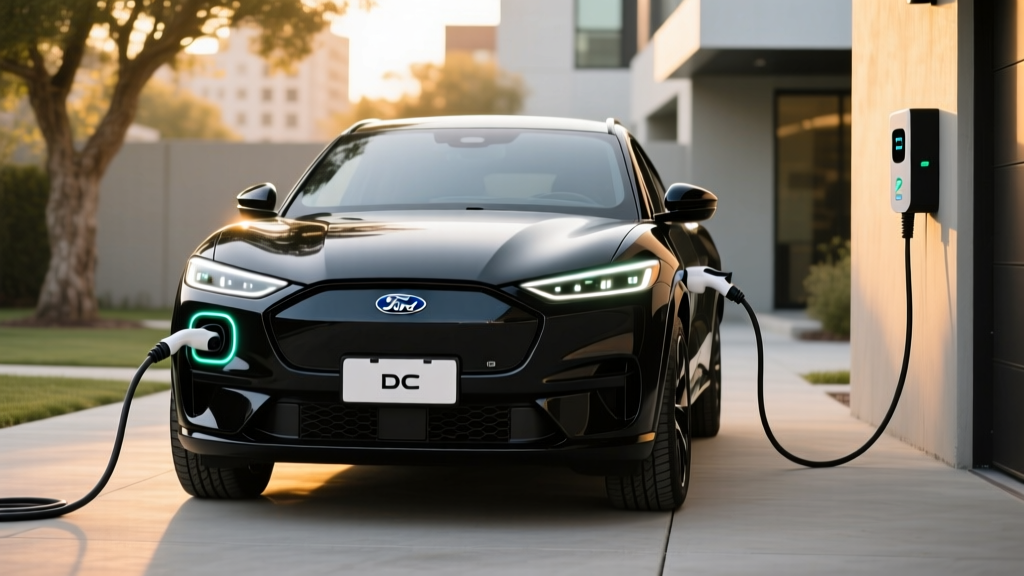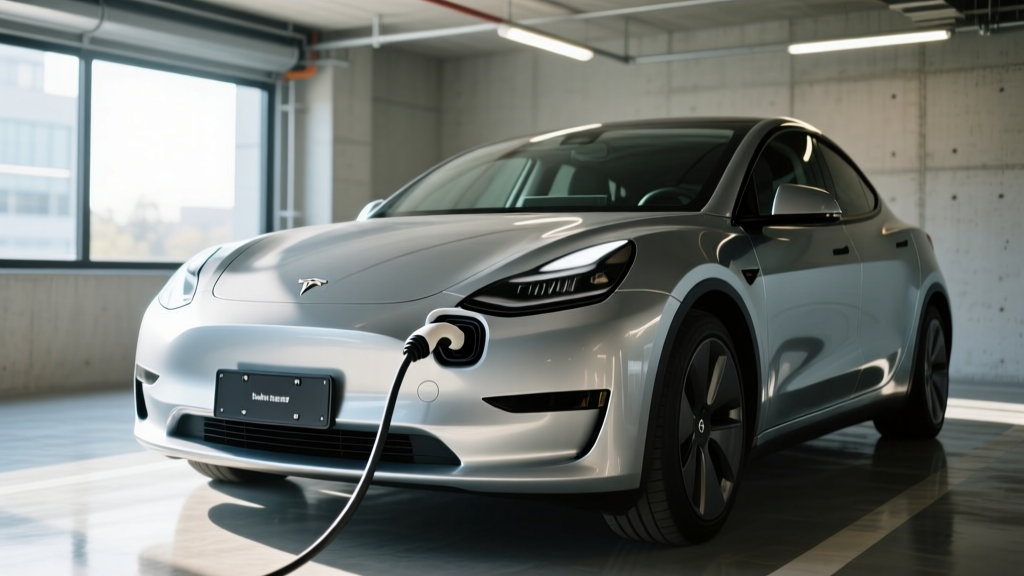
Every new Tesla ships with a Mobile Connector that plugs into a standard 120-volt household outlet. It's technically a Level 1 charger — and for a surprising number of owners, it's the only charger they ever use at home. But "Level 1 Tesla charger" searches have surged as buyers try to figure out whether that slow trickle is actually enough, or whether they need to invest in a 240V wall connector installation.
We've tested the Tesla Mobile Connector on 120V across multiple Tesla models, tracked real-world charge recovery, and crunched the cost-per-mile numbers. Here's the data-driven breakdown of what Level 1 actually delivers — and the exact thresholds where upgrading to Level 2 stops being optional.
Charging Levels Explained: Speed, Power, and What Each Delivers
Before assessing the Level 1 Tesla charger specifically, it's critical to understand the three tiers of EV charging. The distinction between kW (kilowatts — the rate of power delivery) and kWh (kilowatt-hours — the total energy stored in your battery) is the single most important piece of EV literacy. A 1.4 kW Level 1 charger delivering power for 10 hours adds 14 kWh of energy to your battery.
| Level | Voltage | Max Power (kW) | Miles of Range Added per Hour | Typical Use Case |
|---|---|---|---|---|
| Level 1 | 120V AC | 1.4 kW (12A) | 3–5 miles | Overnight home, low daily mileage |
| Level 2 | 240V AC | 7.7–19.2 kW (32–80A) | 25–56 miles | Daily home/work charging |
| DC Fast Charge | 400–800V DC | 150–350 kW | 200–1,000+ miles (equivalent) | Road trips, rapid top-ups |
The Tesla Mobile Connector on a standard NEMA 5-15 (120V) outlet delivers a maximum of 12 amps, translating to roughly 1.4 kW. On a NEMA 5-20 outlet (still 120V but rated for 20A), you can bump to roughly 1.9 kW with the correct adapter — a modest but meaningful 35% improvement.
Real-World Level 1 Tesla Charging: What You Actually Get Overnight
Tesla's own published estimate is 3–5 miles of range per hour on Level 1. Our testing across the 2025–2026 Model 3 and Model Y lineup confirms this range, with efficiency variations by model:
- Model 3 Rear-Wheel Drive (2026, EPA 272 mi, ~60 kWh usable battery): ~4.5 mi/hr on 120V/12A. A 10-hour overnight session recovers roughly 45 miles.
- Model Y Long Range AWD (2026, EPA 320 mi, ~75 kWh usable battery): ~3.8 mi/hr on 120V/12A. A 10-hour session recovers roughly 38 miles.
- Model 3 Long Range (2026, EPA 341 mi): ~4.2 mi/hr. A 10-hour session recovers roughly 42 miles.
For context, the average American drives approximately 37 miles per day according to FHWA data. If your commute is under 40 miles round-trip and you park for 10+ hours overnight, a Level 1 Tesla charger can genuinely keep pace with your consumption — barely.
How Fast Will Each Charging Level Add Range? Time-to-Full Scenarios
The starkest way to understand Level 1's limitations is a depleted-battery recovery scenario. If you arrive home at 10% State of Charge (SoC) and need to reach 80%:
| Charging Method | Power | Energy Needed (~52.5 kWh) | Approximate Time |
|---|---|---|---|
| Level 1 (120V/12A) | 1.4 kW | 52.5 kWh | ~37 hours |
| Level 2 (Tesla Wall Connector, 48A/240V) | 11.5 kW | 52.5 kWh | ~4.5 hours |
| DC Fast Charge (V3 Supercharger) | Up to 250 kW peak | 52.5 kWh | ~25 minutes (10–80%) |
Thirty-seven hours on Level 1 means you cannot fully recover a depleted battery in a single overnight session — or even two. This is the scenario where Level 1 fails and Level 2 becomes mandatory. If you regularly drive 150+ miles in a day or take road trips that drain the battery below 20%, a 240V home installation is not optional.
How Much Does It Cost to Install a Home EV Charger?
The Tesla Mobile Connector itself ships with the vehicle (or costs $200 to replace). Installation cost for Level 1 is essentially zero — you plug it into an existing outlet. Level 2 is where the real investment begins, and costs vary enormously depending on your home's electrical infrastructure.
| Component | Simple Install (Panel Nearby) | Complex Install (Long Run / Panel Upgrade) |
|---|---|---|
| Tesla Wall Connector (48A, 240V) | $400–$475 | $400–$475 |
| Electrician labor (run conduit, wire, mount) | $500–$1,200 | $2,000–$5,000 |
| Permit & inspection | $100–$300 | $150–$500 |
| Electrical panel upgrade (100A → 200A, if needed) | N/A | $1,500–$4,000 |
| Total | $1,000–$1,975 | $4,050–$9,975 |
The panel-upgrade gotcha: Homes built before 1990 often have 100-amp electrical panels. Adding a 48A continuous-load EV circuit (which the National Electrical Code requires be sized at 60A) may push total household demand beyond the panel's capacity. A licensed electrician will perform a load calculation before quoting. If an upgrade is needed, budget $1,500–$4,000 and 1–3 weeks of additional timeline.
For homes with existing 200A panels and a garage-adjacent panel location, a straightforward Tesla Wall Connector install typically lands between $1,000 and $2,000 total. Always get a detailed quote that separates equipment, labor, and permit fees — vague "all-in" quotes make it impossible to evaluate scope.
What Electrical Upgrades Might I Need for Level 1 vs. Level 2?
Level 1 requirements are minimal: A standard 120V/15A NEMA 5-15 outlet on a dedicated or lightly shared circuit. However, two safety points matter:
- Dedicated circuit preferred: If the outlet shares a circuit with high-draw appliances (space heater, microwave, refrigerator), you risk tripping the breaker during overnight charging. A dedicated 15A or 20A circuit is ideal.
- Outlet condition: Older or worn outlets can overheat under continuous 12A draw for 10+ hours. Inspect for discoloration, loose fit, or warmth to the touch. Replace with a commercial-grade outlet ($10–$15 part) if any wear is visible. The Tesla Mobile Connector includes a temperature sensor in the plug head that will reduce charging speed if it detects overheating — but prevention is better.
Level 2 requirements are substantial:
- 240V circuit, typically 60A breaker to support 48A continuous charging (NEC 80% rule: continuous loads cannot exceed 80% of breaker rating)
- Hardwired connection (Tesla Wall Connector) or NEMA 14-50 outlet (Mobile Connector with adapter)
- GFCI protection may be required depending on local code — the Wall Connector has built-in ground-fault protection, which simplifies compliance
- Outdoor-rated installation (NEMA 4) if the charger is not in a garage
- Local electrical permit and post-install inspection — required in most jurisdictions and necessary for any utility rebate claims
Connector Compatibility: NACS, CCS, and the Tesla Ecosystem
One of the Level 1 Tesla charger's advantages is simplicity: every Tesla vehicle built since 2012 uses the NACS (North American Charging Standard) connector, and the Mobile Connector ships with the NACS pigtail. No adapter is needed for home charging.
However, the broader charging landscape has shifted dramatically. As of 2025–2026, nearly every major automaker — Ford, GM, Rivian, Hyundai, Kia, BMW, and others — has adopted NACS for their North American vehicles. Tesla owners now also have access to non-Tesla public charging networks using adapters.
| Connector Type | Home Charging | Public Level 2 | DC Fast Charging | Adapter Needed? |
|---|---|---|---|---|
| NACS (Tesla native) | ✅ Mobile Connector / Wall Connector | ✅ Tesla Destination Chargers | ✅ Tesla Superchargers | None |
| J1772 (legacy public L2) | ❌ | ✅ with J1772→NACS adapter | N/A | Yes (~$50–$95) |
| CCS1 (non-Tesla DC) | ❌ | N/A | ✅ with CCS adapter | Yes (~$175–$250) |
| CHAdeMO (legacy DC) | ❌ | N/A | ⚠️ Limited, with adapter | Yes (~$300+) |
For home Level 1 use, none of this matters — you're plugging into a wall outlet, not a public station. But if you plan to charge at public Level 2 stations (ChargePoint, EVgo L2, Blink), carrying a J1772-to-NACS adapter in your frunk is practical insurance. Tesla sells one for $95; third-party options from Tesla's accessories page and reputable brands like Lectron run $50–$80.
Cost to Charge: Level 1 at Home vs. Public vs. Gas
One of the strongest arguments for Level 1 home charging is cost. Even at its slow speed, electricity from a residential outlet is typically the cheapest fuel source available to an EV owner.
| Charging/Fueling Method | Cost per kWh or Gallon | Cost per Mile (Model 3 RWD, ~4 mi/kWh) | Annual Cost (12,000 mi) |
|---|---|---|---|
| Home Level 1 (national avg. residential) | $0.16/kWh | $0.040 | $480 |
| Home Level 1 (off-peak TOU rate) | $0.09/kWh | $0.023 | $270 |
| Public Level 2 (ChargePoint, EVgo) | $0.30–$0.45/kWh | $0.075–$0.113 | $900–$1,350 |
| DC Fast Charge (Electrify America, Supercharger) | $0.32–$0.48/kWh | $0.080–$0.120 | $960–$1,440 |
| Gasoline (25 MPG avg. ICE vehicle) | $3.30/gallon | $0.132 | $1,584 |
Even the most expensive public charging option costs less per mile than gasoline. But home Level 1 charging at off-peak rates delivers fuel at roughly $0.023 per mile — roughly one-sixth the cost of gas. Over 12,000 miles, that's a $1,314 annual fuel savings versus a comparable gas vehicle.
The trade-off is time. Level 1 is cheap because it leverages existing infrastructure you already pay for. If your utility offers time-of-use (TOU) rates, scheduling charging between 10 PM and 6 AM maximizes savings. The Tesla app allows you to set scheduled charging windows to automate this.
Equipment Recommendations: Level 1 and Level 2 Chargers for Tesla Owners
If you're committed to Level 1 for now, the Tesla Mobile Connector is the default and best option — it ships with the car and includes built-in thermal monitoring. But if you're evaluating a Level 2 upgrade or a portable Level 2 alternative, here are specific picks:
Tesla Mobile Connector (Level 1 / Portable Level 2)
- Power Output: 1.4 kW (120V/12A) or up to 11.5 kW (240V with NEMA 14-50 adapter)
- Connector: NACS (native Tesla)
- Cable Length: 20 ft
- Smart Features: None standalone; vehicle-side scheduling via Tesla app
- Price: Included with new Tesla; $200 replacement. NEMA 14-50 adapter: $35.
- Best For: Level 1 daily top-ups; portable Level 2 when visiting homes with 240V dryer outlets
Tesla Wall Connector (Level 2, Home)
- Power Output: Up to 11.5 kW (48A, hardwired 240V/60A circuit)
- Connector: NACS (24 ft cable)
- Cable Length: 24 ft
- Smart Features: Wi-Fi connected, OTA updates, load sharing with second unit, Tesla app integration, Power Connector integration for solar homes
- Price: $400–$475 (equipment only)
- Best For: Primary home charging for any Tesla; fastest residential charge short of a 60A+ dedicated circuit
Emporia Level 2 EV Charger (NACS version, 2025–2026)
- Power Output: Up to 11.5 kW (48A, hardwired or NEMA 14-50)
- Connector: NACS available (also J1772)
- Cable Length: 24 ft
- Smart Features: Energy monitoring, solar integration, scheduling, app control, works with Emporia home energy monitors
- Price: ~$350–$400
- Best For: Multi-vehicle households or those wanting detailed energy monitoring without Tesla ecosystem lock-in
For pure Level 1 use, no additional equipment is needed beyond the included Mobile Connector. The decision to upgrade to Level 2 should be driven by your daily mileage, not charger marketing. If you drive under 40 miles daily and park overnight for 10+ hours, Level 1 works. If you regularly exceed that, or if you need fast recovery after road trips, budget for a Wall Connector installation.
Safety and Electrical Code: What to Verify Before Plugging In
Continuous EV charging — even at Level 1's modest 1.4 kW — places a sustained electrical load on your home wiring that most household circuits weren't designed for. A phone charger draws 20W for two hours; an EV charger draws 1,400W for 10+ hours straight. This matters for safety.
Level 1 safety checklist:
- Inspect the outlet for wear, looseness, or discoloration before first use
- Do not use an extension cord — the Tesla Mobile Connector's 20-foot cable is designed to reach from a wall outlet to a parked vehicle in most garage configurations. Extension cords introduce voltage drop and fire risk under continuous load
- Ensure the outlet is on a circuit that won't be simultaneously loaded by space heaters, air conditioners, or other high-draw appliances
- Monitor the plug head temperature during the first few charging sessions — the Mobile Connector will throttle if it detects overheating, but you should verify manually
- If charging outdoors, use a weatherproof outlet cover rated for in-use conditions (NEMA 3R or better)
Level 2 safety and code requirements:
- Hardwired installation requires a dedicated breaker sized per NEC Article 625 (typically 60A for a 48A continuous charger)
- Outdoor installations must use equipment rated NEMA 4 (weatherproof) and comply with local setback and mounting-height codes
- Some jurisdictions require GFCI breakers for EV circuits; the Tesla Wall Connector's integrated ground-fault protection often satisfies this, but confirm with your local inspector
- Permit and inspection are required in most municipalities — skip this step and you risk voiding homeowner's insurance coverage for any electrical fire, even unrelated ones
Always hire a licensed electrician for Level 2 work. Verify they have specific EV charger installation experience — the load calculation and NEC Article 625 requirements are not part of standard residential electrical training for all electricians. The Electrical Training Alliance maintains a directory of EV-certified electricians in many regions.
When Level 1 Is Enough — and When It Isn't
The decision framework is arithmetic, not emotion:
Stick with Level 1 if:
- Your daily driving is under 40 miles round-trip
- You park at home for 10+ hours overnight
- Your home's electrical panel cannot accommodate a 240V circuit without a costly upgrade ($3,000+)
- You're renting and cannot modify the electrical system
- You have access to workplace Level 2 charging or a nearby public charger for supplemental use
Upgrade to Level 2 if:
- Your daily driving exceeds 40–50 miles
- You frequently deplete the battery below 30% and need overnight recovery
- You live in a cold climate where battery conditioning consumes a meaningful share of Level 1 input
- You want to take advantage of off-peak TOU rates but need more energy delivered in a narrow overnight window
- You plan to precondition the battery for DC fast charging (which draws significant power from the charger before you leave)
A Level 1 Tesla charger is not a compromise for every owner — it's a rational, zero-installation solution for low-mileage drivers with reliable overnight parking. But the moment your daily consumption outpaces the 3–5 miles per hour that 120V delivers, the math flips quickly. A $1,500–$2,000 Level 2 installation pays for itself in convenience and flexibility within the first year of ownership for most drivers.
Frequently Asked Questions
Can I charge my Tesla on a regular 120V outlet every night without damaging the battery?
Yes. Tesla's battery management system handles Level 1 charging without any degradation concern. In fact, slow Level 1 charging generates less heat than Level 2 or DC fast charging, which is marginally gentler on battery chemistry over the long term. Set your charge limit to 80% for daily use (or 100% if you have an LFP battery — Tesla recommends periodic full charges for LFP calibration) and you'll maximize longevity.
How much does it cost to install a home EV charger for a Tesla?
Level 1 installation costs $0 — you plug the included Mobile Connector into an existing 120V outlet. Level 2 (Tesla Wall Connector) installation ranges from $1,000–$2,000 for a straightforward install near the electrical panel, to $4,000–$10,000 if you need a long conduit run, a panel upgrade from 100A to 200A, or complex permitting. Always get an itemized quote.
Is a NEMA 5-20 outlet better than a NEMA 5-15 for Level 1 Tesla charging?
Marginally. A NEMA 5-20 outlet (20A rated) with the appropriate Mobile Connector adapter allows 16A continuous draw (per the 80% NEC rule), yielding roughly 1.9 kW instead of 1.4 kW — about 35% faster. This adds roughly 1–2 extra miles per hour of charging. If you already have a 5-20 outlet in your garage (common for shop tools), it's worth using. If not, the $150–$300 cost to have an electrician install one is a modest upgrade that may delay or eliminate the need for a full Level 2 installation.
Which connector does my Tesla use, and do I need adapters for public chargers?
All Tesla vehicles use the NACS connector natively. For home Level 1 charging, no adapter is needed. For public Level 2 stations with J1772 connectors, you'll need a J1772-to-NACS adapter ($50–$95). For non-Tesla DC fast chargers with CCS1 plugs, Tesla sells a CCS adapter for approximately $175. The expanding NACS adoption across the industry means fewer adapters will be needed over time.
How much does charging a Tesla cost per mile compared to gas?
Home Level 1 charging at the national average residential rate ($0.16/kWh) costs approximately $0.04 per mile in a Model 3 RWD. Off-peak rates can drop this to $0.02–$0.03 per mile. A comparable gas vehicle at 25 MPG and $3.30/gallon costs $0.132 per mile. Even the most expensive public DC fast charging ($0.45/kWh) costs roughly $0.11 per mile — still below gasoline. According to fueleconomy.gov, EVs convert 77% of electrical energy to wheel power versus 12–30% for gas vehicles, which is the fundamental efficiency advantage.
Can I use an extension cord with the Tesla Mobile Connector on Level 1?
Tesla explicitly advises against it, and so do we. Extension cords — even heavy-duty 12-gauge versions — introduce voltage drop, heat buildup at connections, and fire risk under continuous 12A load for 10+ hours. The Mobile Connector's 20-foot cable is sufficient for most garage configurations. If you need more reach, have an electrician relocate or add an outlet ($100–$300) rather than introducing an extension cord.
Does Level 1 charging hurt my Tesla's battery health over time?
No. Slow charging is among the gentlest ways to charge a lithium-ion battery. The primary degradation factors for Tesla batteries are high state-of-charge storage (sitting at 100% for days), extreme heat exposure, and frequent DC fast charging. Level 1 overnight charging to 80% is well within optimal battery-care parameters. Tesla's 8-year/100,000–120,000 mile battery warranty (depending on model) covers capacity retention below 70% regardless of charging method.