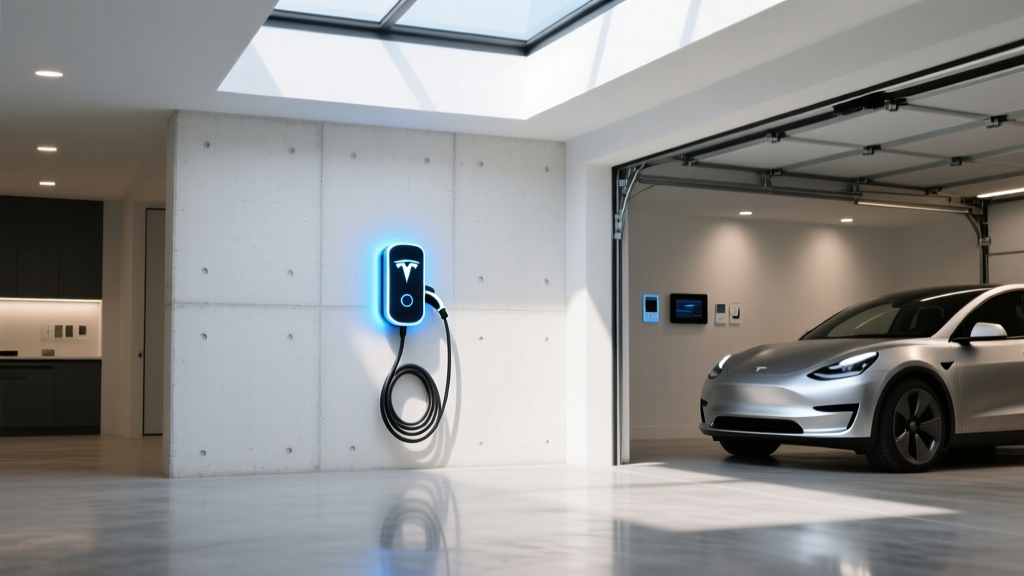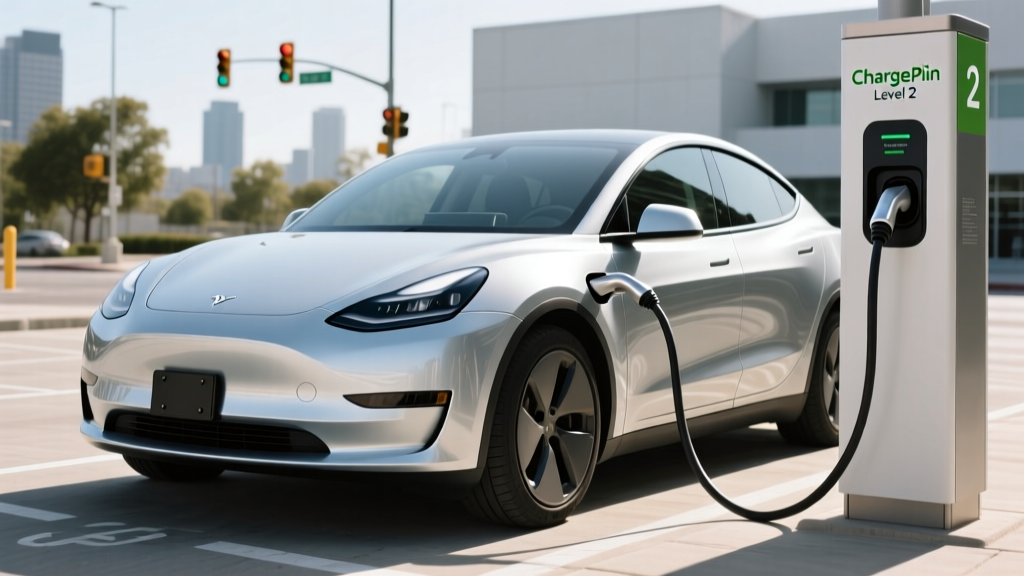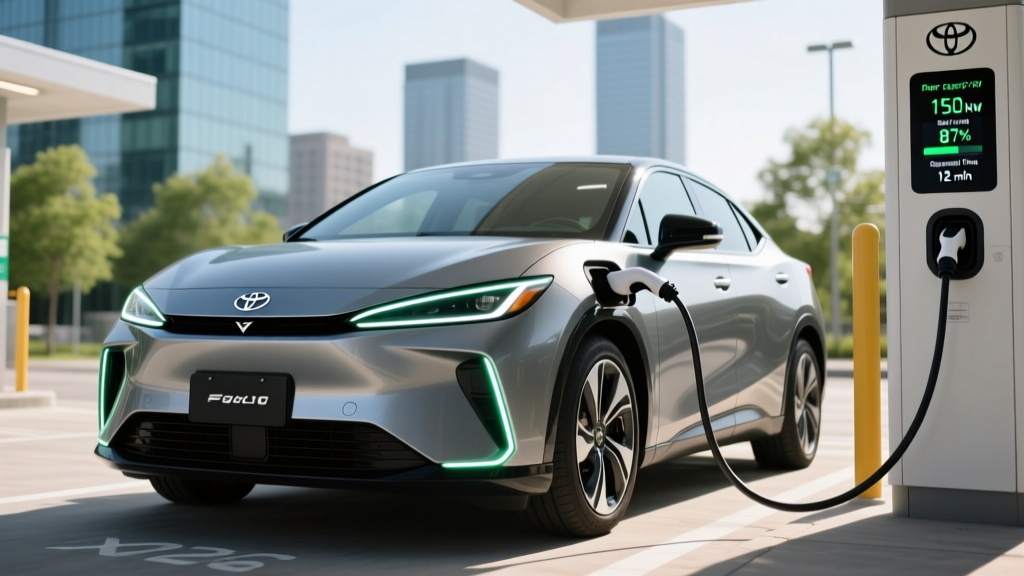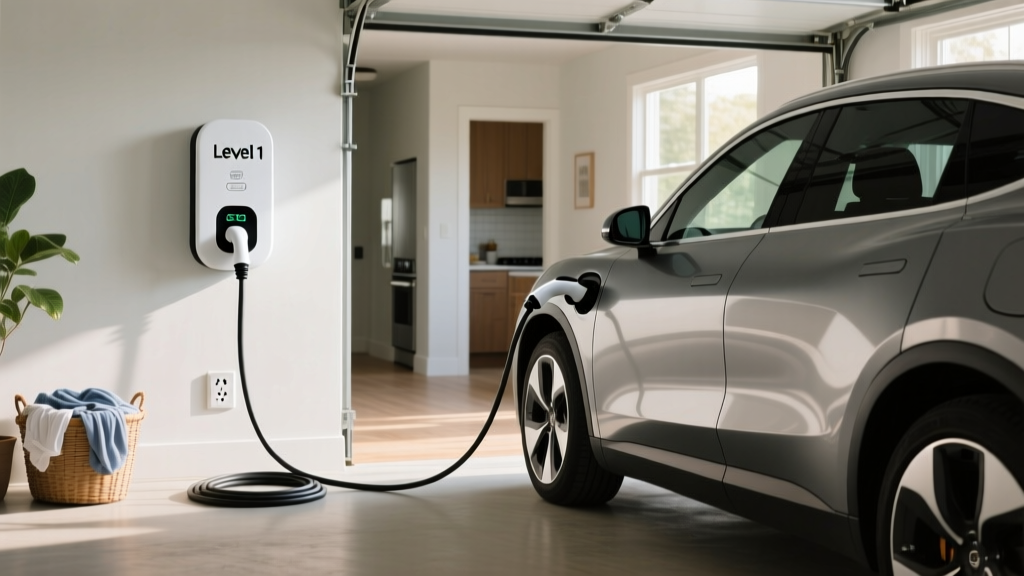
If you just bought or leased an electric vehicle, the cord that came in the trunk is almost certainly a Level 1 EV charger. Plugged into a standard 120-volt household outlet, a level 1 EV charging station is the simplest, cheapest way to keep an EV fueled — but it is also the slowest. For some owners it is perfectly adequate; for others, it becomes a daily frustration within a month.
This guide breaks down exactly what Level 1 charging delivers in 2026, how it compares to Level 2 and DC fast charging, what it costs per mile, when a panel upgrade is unavoidable, and which hardware is worth buying if the included cord isn't cutting it.
What Is a Level 1 EV Charging Station, Exactly?
A Level 1 charger is any EVSE (Electric Vehicle Supply Equipment) that operates on a standard North American 120V AC household circuit. It uses the J1772 connector (or the newer NACS/Tesla connector on Tesla vehicles and an expanding list of 2025–2026 models). Power delivery is low: typically 1.2 kW to 1.9 kW, depending on whether the unit draws 12 amps or 16 amps from a 15A or 20A circuit.
Do not confuse kW (kilowatts, a measure of power, or the rate at which energy flows) with kWh (kilowatt-hours, a measure of energy, or the total amount stored in your battery). A 1.4 kW Level 1 charger running for 10 hours delivers 14 kWh of energy — roughly enough to add 40–50 miles of range to an efficient EV like the Hyundai Ioniq 6.
Charging Levels Compared: Speeds, Power, and Real-World Range Added
Here is how the three charging levels stack up for a typical modern EV consuming around 3.0–3.5 miles per kWh:
| Level | Voltage / Amperage | Power (kW) | Miles of Range per Hour | Typical Use Case |
|---|---|---|---|---|
| Level 1 | 120V / 12–16A | 1.2–1.9 kW | 3–5 miles/hr | Overnight trickle, PHEVs, low-mileage commuters |
| Level 2 | 240V / 16–48A | 3.8–11.5 kW | 12–40 miles/hr | Daily home charging, workplace, public destinations |
| DC Fast | 200–800V DC | 50–350 kW | 150–1,000+ miles/hr | Road trips, rapid top-ups, fleet turnaround |
Real-world context: If you drive a Chevrolet Equinox EV (EPA 319 miles, 85 kWh usable battery) and arrive home with 40% charge, a Level 1 station at 1.4 kW would need roughly 36 hours to reach 80%. The same job on a 48A Level 2 unit (11.5 kW) takes about 4.5 hours. On a 150 kW DC fast charger, 10–80% takes approximately 25–30 minutes, though charging curves taper significantly above 80% to protect the battery.
When Does a Level 1 EV Charging Station Actually Make Sense?
Level 1 is not obsolete — it is the right tool for specific situations:
- Plug-in hybrids (PHEVs): A Toyota RAV4 Prime has an 18.1 kWh battery (EPA 42 miles electric range). Level 1 at 1.4 kW fully recharges it in about 12 hours — easily overnight.
- Low-mileage commuters: If you drive 20–30 miles round trip in an efficient EV like the Tesla Model 3 (25 kWh/100 mi), Level 1 replenishes that in 5–7 hours overnight.
- Apartment dwellers without Level 2 access: A standard outlet in a parking garage may be your only option. Even 3–4 miles per hour adds 30–40 miles over a 10-hour workday.
- Backup and travel: The portable cord that ships with most EVs is a Level 1 charger. It's your emergency lifeline on road trips when DC fast chargers are down or nonexistent.
Level 1 becomes a problem when your daily driving exceeds 40–50 miles, you own a large-battery EV (100+ kWh, like the Ford F-150 Lightning or Rivian R1S), or you need quick turnaround between trips. At 4 miles per hour of charging, a 131 kWh F-150 Lightning battery going from 20% to 80% would take over 60 hours on Level 1.
Charging Time Examples by Battery Size
Here is what Level 1 charging looks like across popular 2025–2026 EVs, assuming a 1.4 kW sustained draw (120V × 12A, accounting for ~85% charging efficiency):
| Vehicle | Usable Battery (kWh) | EPA Range | 20–80% at 1.4 kW | 20–80% at 11.5 kW (L2) |
|---|---|---|---|---|
| Toyota RAV4 Prime (PHEV) | 18.1 | 42 mi (EV) | ~7.5 hrs | ~1 hr |
| Tesla Model 3 Long Range | 75 | 363 mi | ~32 hrs | ~4 hrs |
| Hyundai Ioniq 5 SE | 84 | 303 mi | ~36 hrs | ~4.5 hrs |
| Chevrolet Equinox EV | 85 | 319 mi | ~36 hrs | ~4.5 hrs |
| Ford F-150 Lightning Ext. Range | 131 | 320 mi | ~56 hrs | ~7 hrs |
Electrical Requirements and Installation Costs
Level 1 charging requires no special electrical work — it plugs into a standard 120V NEMA 5-15 (15A) or NEMA 5-20 (20A) outlet. However, there are important safety and code considerations:
- Dedicated circuit recommended: If your EV charges on a shared circuit (e.g., the same breaker as garage lights, a freezer, or power tools), you risk tripping the breaker during sustained 12-hour charging sessions. A dedicated 20A circuit is ideal.
- GFCI protection: The 2023 NEC (National Electrical Code) requires GFCI (Ground Fault Circuit Interrupter) protection for all 125V, 15A and 20A receptacles in garages. Most modern homes already have this; older homes may need a GFCI breaker upgrade ($25–$50 for the breaker, plus electrician labor).
- Outdoor-rated outlets: If you charge outside, the outlet must be in a weatherproof enclosure with an in-use cover ("bubble cover"). A standard indoor outlet exposed to rain is a code violation and a shock hazard.
- Circuit condition: A 30-year-old outlet with loose internal contacts can overheat during multi-hour EV charging. If the plug feels warm to the touch after an hour of charging, replace the receptacle ($5–$10 part) or have an electrician inspect the wiring.
What Electrical Upgrades Might I Need?
For Level 1, upgrades are minimal and rare. The most common needs:
- Replacing a worn or non-GFCI outlet in the garage: $75–$150 (electrician visit)
- Running a new dedicated 20A circuit from the panel to the garage: $200–$500
- Upgrading an outdated 100A electrical panel to 200A (only needed if you later add Level 2 and the panel is maxed out): $1,500–$3,500
Panel upgrades are almost never necessary for Level 1 alone. A 1.4 kW draw is equivalent to running a space heater on low — well within the capacity of even a 100A panel.
How Much Does It Cost to Install a Home EV Charger?
If you are sticking with Level 1, your installation cost may be $0 (just plug into an existing outlet) to $500 (new dedicated circuit with GFCI). Here is the full breakdown if you decide to upgrade to Level 2, which is where most EV owners land:
| Item | Level 1 Cost | Level 2 Cost |
|---|---|---|
| Charging equipment (EVSE) | $0 (included with EV) – $300 (premium portable) | $300–$750 |
| Electrician labor | $0–$300 | $400–$1,500 |
| Electrical permit | $0–$50 | $50–$200 |
| Panel upgrade (if needed) | Rarely needed | $1,500–$3,500 |
| Total typical range | $0–$500 | $750–$2,500 (no panel upgrade) |
Federal incentive: The IRS Residential Clean Energy Credit (IRC §25D) covers 30% of the cost of home EV charging equipment and installation through 2032, with a maximum credit of $1,000. This applies to both Level 1 and Level 2 equipment. Check current eligibility rules with a tax professional, as income and equipment sourcing requirements may apply.
Connector Compatibility: Will It Plug Into My EV?
The connector landscape shifted significantly between 2023 and 2026. Here is where things stand:
| Connector | Standard For | Adapter Needed? |
|---|---|---|
| J1772 | Most non-Tesla EVs through 2024 model year | Tesla vehicles need J1772-to-NACS adapter (included with Tesla) |
| NACS (Tesla) | All Tesla vehicles; Ford, GM, Rivian, Hyundai, and others starting 2025 MY | J1772 EVs need NACS-to-J1772 adapter (~$200–$250) |
| CCS1 | Legacy DC fast charging standard (non-Tesla) | Being phased out for new vehicles; adapters available |
| CHAdeMO | Nissan Leaf (legacy) | No adapter to NACS/CCS; limited DCFC network support |
For Level 1 charging specifically, the connector is almost always J1772 or NACS. The portable cord included with your EV will match your vehicle's inlet. If you buy a third-party Level 1 charger, confirm the connector matches your car — or budget for a $50–$250 adapter.
Cost to Charge: Level 1 vs. Gas vs. Public Charging
Level 1 charging is almost always the cheapest way to fuel an EV, because it happens at home on your existing electricity rate. Here is how costs compare:
| Scenario | Rate | Cost per kWh | Cost per Mile (3 mi/kWh EV) |
|---|---|---|---|
| Home Level 1 (national avg. residential) | ~$0.17/kWh | $0.17 | $0.057/mi |
| Home Level 1 (off-peak TOU rate) | ~$0.08–$0.12/kWh | $0.10 | $0.033/mi |
| Public Level 2 (ChargePoint, EVgo) | ~$0.25–$0.49/kWh | $0.35 | $0.117/mi |
| DC Fast Charging (Electrify America) | ~$0.43–$0.56/kWh | $0.48 | $0.160/mi |
| Gasoline car (28 MPG, $3.30/gal) | — | — | $0.118/mi |
At national average electricity prices, home Level 1 charging costs roughly half what a comparable gas car costs per mile. Even public DC fast charging is competitive with gasoline on a per-mile basis, though it is significantly more expensive than home charging. According to fueleconomy.gov, EVs consistently achieve 100–140 MPGe combined, making electricity the cheaper fuel in nearly every U.S. market.
Equipment Recommendations: Best Level 1 Chargers in 2026
Most EVs ship with a basic Level 1 cord (often called a "mobile connector" or "trickle charger"). If yours didn't, or if you want a longer cable, smart features, or higher amperage, here are proven options:
Tesla Mobile Connector (NACS)
- Power: 1.4 kW (12A at 120V)
- Connector: NACS (Tesla)
- Cable length: 20 ft
- Smart features: None (dumb charger)
- Price: ~$200 (included with new Teslas as of 2025)
- Best for: Tesla owners needing a basic backup cord
Lectron V-BOX J1772 Level 1/2
- Power: 1.9 kW (16A at 120V) / 14.4 kW (60A at 240V)
- Connector: J1772
- Cable length: 21 ft
- Smart features: LED status display, NEMA 14-50 plug (dual-voltage)
- Price: ~$230
- Best for: Non-Tesla owners wanting a portable unit that works on both 120V and 240V
Emporia Level 1 Smart Charger
- Power: 1.4 kW (12A at 120V)
- Connector: J1772
- Cable length: 24 ft
- Smart features: Wi-Fi, app scheduling, energy monitoring, TOU rate optimization
- Price: ~$180
- Best for: Budget-conscious buyers who want smart scheduling for off-peak rates
ChargePoint Home Flex (NACS/J1772)
- Power: 1.9 kW (16A at 120V) / up to 12 kW (50A at 240V)
- Connector: NACS or J1772 (model dependent)
- Cable length: 23 ft
- Smart features: Wi-Fi, app, Alexa, schedule, energy dashboard
- Price: ~$550–$700
- Best for: Owners who want one unit for Level 1 now and Level 2 later
Safety, Code, and Best Practices for Level 1 Charging
Level 1 charging is low-risk, but it runs for many consecutive hours — often 10–16 hours at a time. Sustained electrical loads demand respect:
- Never use an extension cord. The voltage drop over even a 25-foot 16-gauge extension cord reduces charging speed and creates a fire hazard under sustained load. If you need more reach, buy a charger with a longer cable.
- Inspect the plug and outlet regularly. Discoloration, melting, or a warm plug after charging indicates a failing receptacle. Replace it immediately.
- Avoid multi-plug adapters. Your EV charger should be the only device on its circuit during charging sessions.
- Use a surge protector rated for EVSE. Power surges from lightning or grid switching can damage the charger's electronics. A $30–$50 whole-outlet surge protector provides insurance.
- Outdoor installations must use weatherproof enclosures. A NEMA 3R-rated "in-use" cover protects the outlet and plug from rain and snow while the cord is connected.
The National Fire Protection Association (NFPA) and NHTSA both note that EV charging fires are extremely rare, and almost all documented incidents involve damaged cords, improper extension cord use, or degraded outlets — not the charging equipment itself.
Frequently Asked Questions
How fast will a Level 1 EV charging station add range?
A Level 1 charger at 120V and 12 amps delivers approximately 1.4 kW of power. For an average EV getting 3–3.5 miles per kWh, that translates to 3 to 5 miles of range per hour of charging. Over a 12-hour overnight session, expect 36–60 miles of added range — enough for most daily commutes but insufficient for high-mileage drivers or large-battery trucks and SUVs.
Can I charge my EV on a regular household outlet every day?
Yes. Millions of EV owners charge exclusively on 120V outlets. The key requirements are a dedicated or lightly shared 15A/20A circuit, a GFCI-protected outlet (required by current NEC code in garages), and a receptacle in good condition. If your outlet is old or shows signs of warmth during charging, replace it.
Is Level 1 charging bad for my EV battery?
No. In fact, Level 1 charging is the gentlest form of charging on your battery. The low power draw generates minimal heat, which is the primary driver of battery degradation. Lithium-ion batteries (both NMC and LFP chemistries) prefer slow, cool charging. The trade-off is time, not battery health.
Should I leave my EV plugged in at Level 1 all the time?
For LFP (lithium iron phosphate) batteries — found in the Tesla Model 3 RWD, Model Y Standard Range, and some Ford models — manufacturers recommend charging to 100% regularly. For NMC/NCA batteries (most long-range EVs), it is best to set a charge limit of 80% for daily use and only charge to 100% before long trips. Leaving the car plugged in with a charge limit set is fine; the car's battery management system (BMS) stops drawing power once the limit is reached.
How much does charging cost per mile vs. gas?
At the U.S. national average residential electricity rate of ~$0.17/kWh and an EV efficiency of 3 miles per kWh, home Level 1 charging costs approximately $0.057 per mile. A gasoline car averaging 28 MPG at $3.30/gallon costs $0.118 per mile — more than double. Over 12,000 miles per year, that's a savings of roughly $730 annually with Level 1 home charging.
What's the difference between the portable cord that came with my car and a "Level 1 charging station"?
Functionally, very little. Both are Level 1 EVSEs that deliver 1.2–1.9 kW from a 120V outlet. The term "charging station" typically implies a wall-mounted or fixed unit with a longer cable, smart features (Wi-Fi, scheduling, energy tracking), or dual-voltage capability. The included mobile connector is perfectly adequate for most Level 1 needs.
When should I upgrade from Level 1 to Level 2?
Consider upgrading to a 240V Level 2 charger if: (1) your daily driving exceeds 40–50 miles, (2) you own a large-battery EV (85+ kWh) and need overnight turnaround, (3) you want to precondition the battery for DC fast charging or cold-weather driving, or (4) you simply want the convenience of fully recharging in 4–8 hours instead of 30–60 hours.