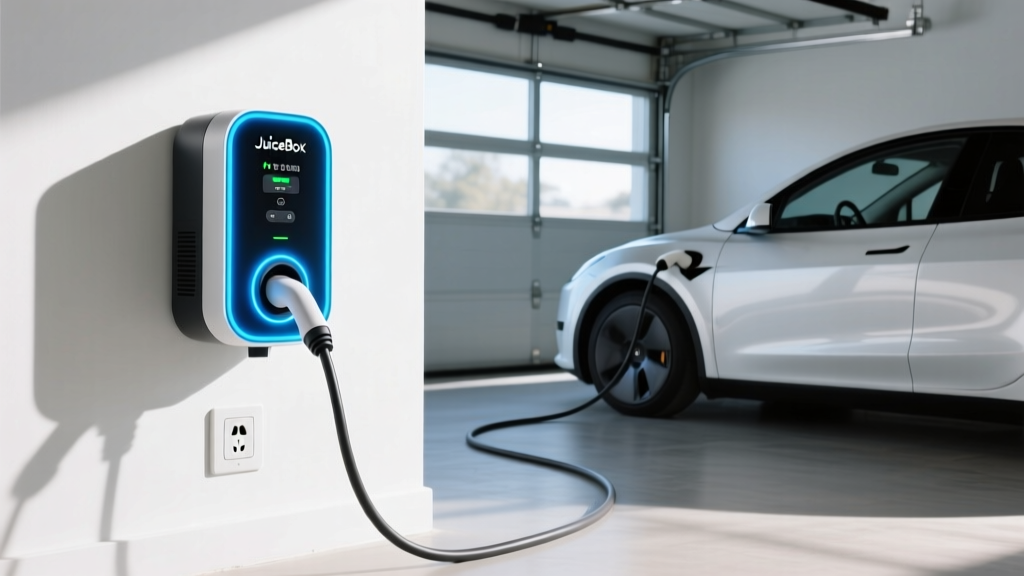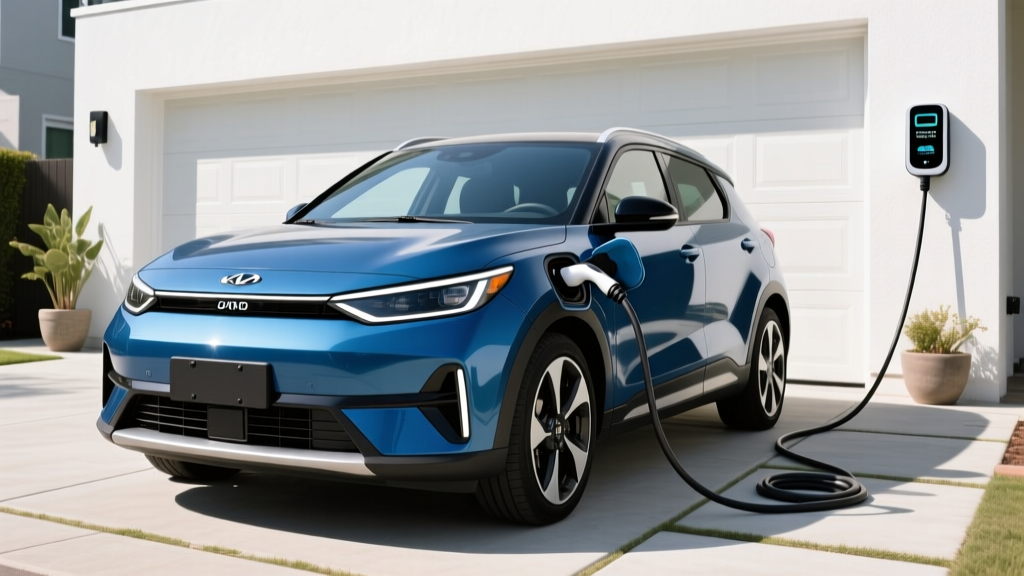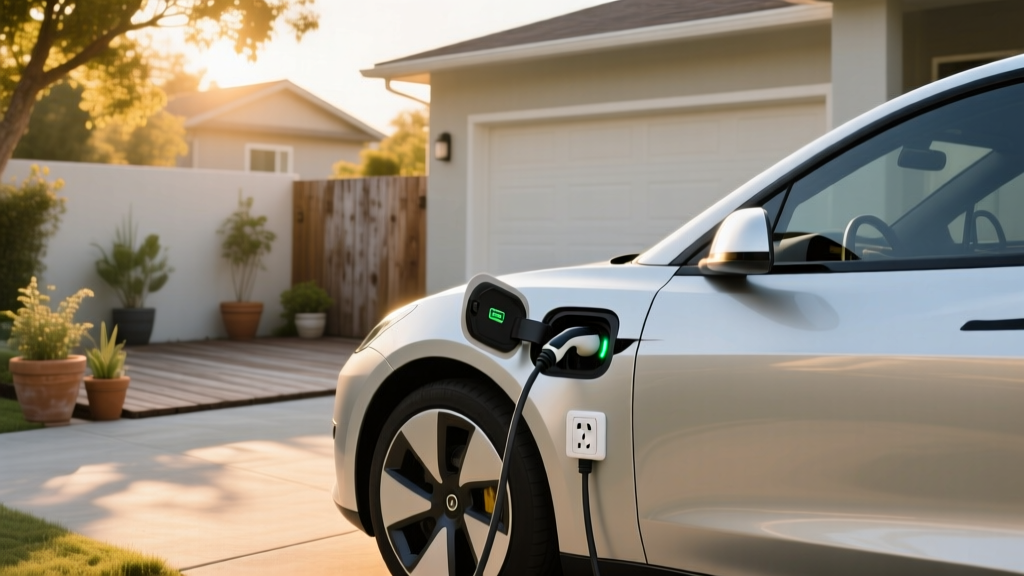
Most EV buyers assume they need a dedicated 240-volt wall box and a panel upgrade before taking delivery. In reality, every new battery-electric and plug-in hybrid vehicle ships with a cord that plugs into a standard 120-volt household outlet. That's Level 1 EV charging, and for a growing number of owners—especially those with shorter commutes, PHEVs, or access to workplace charging—it's the only home infrastructure they ever install.
This guide breaks down exactly what Level 1 charging delivers, where it falls short, what it costs per mile, and how to set it up safely without tripping breakers or overheating outlets. We'll also cover when Level 2 makes sense and what that upgrade actually costs.
Level 1, Level 2, and DC Fast Charging: What Each Level Delivers
Before comparing speeds, the single most important distinction in EV charging literacy: kW (kilowatts) measures power—the rate at which electricity flows into your car. kWh (kilowatt-hours) measures energy—the total amount stored in your battery. Think of kW as the width of a hose and kWh as the size of the bucket. A Level 1 charger is a narrow hose filling a large bucket; it works, but slowly.
| Charging Level | Voltage / Amperage | Power Output (kW) | Miles of Range Added Per Hour | Best For |
|---|---|---|---|---|
| Level 1 | 120V / 12A (continuous) | ~1.4 kW | 3–5 miles | Overnight top-ups, PHEVs, low-mileage commuters |
| Level 2 | 240V / 32–48A | 7.7–11.5 kW | 25–44 miles | Daily full recharge, large-battery BEVs, cold climates |
| DC Fast Charging | 400–800V DC | 50–350 kW | 150–1,000+ miles | Road trips, rapid top-ups (10–80% in 15–35 min) |
A typical Level 1 cord delivers about 1.4 kW of sustained power. Plug in for 10 hours overnight and you'll add roughly 35–50 miles of range—enough to cover an average American commute (about 37 miles round-trip, per FHWA data). For a PHEV like the Toyota RAV4 Prime with its 42-mile EPA electric range, Level 1 is usually sufficient to fully recharge in 4–5 hours.
But for a large-battery BEV like the Ford F-150 Lightning (extended-range, ~131 kWh usable), Level 1 charging from 10% to 80% would take over 70 hours. That's not practical for a full recharge—it's a maintenance trickle.
Real-World Charging Time: Level 1 for Common Battery Sizes
Charging speed isn't just about the outlet—it depends on your battery size and how depleted it is. Here's what to expect from a 1.4 kW Level 1 connection across several popular EVs and PHEVs:
| Vehicle | Usable Battery (kWh) | EPA Electric Range | Level 1: 0–100% Time | Level 1: Miles Added in 10 Hours |
|---|---|---|---|---|
| Toyota RAV4 Prime (PHEV) | 18.1 kWh | 42 mi | ~12 hours | ~35 mi (near-full recharge) |
| Chevrolet Bolt EV | 65 kWh | 259 mi | ~46 hours | ~38 mi |
| Tesla Model Y Long Range | 75 kWh | 310 mi | ~54 hours | ~40 mi |
| Hyundai Ioniq 5 (LR AWD) | 77.4 kWh | 290 mi | ~55 hours | ~38 mi |
| Ford F-150 Lightning (ER) | 131 kWh | 320 mi | ~94 hours | ~35 mi |
Level 1 Home Setup: Electrical Requirements, Safety, and Cost
Level 1 charging uses a standard NEMA 5-15 household outlet—the same three-prong outlet powering your lamps and phone chargers. Most EVs and PHEVs ship with a portable Level 1 cord (often called an EVSE, or Electric Vehicle Supply Equipment) included in the vehicle price, though some manufacturers have begun selling them separately.
Electrical Requirements
- Voltage: 120V AC, single-phase
- Amperage: Most EVSE cords draw 12A continuously (the National Electrical Code limits continuous loads to 80% of a circuit's rating, so a 15A circuit is the minimum; a 20A circuit is preferred)
- Circuit: A dedicated circuit is strongly recommended—sharing the outlet with a refrigerator, space heater, or power tools risks tripping the breaker or overheating the wiring
- Outlet condition: The receptacle should be in good condition with tight terminal screws; worn outlets create resistance, heat, and fire risk under sustained 12A draw for 8+ hours
- GFCI protection: NEC 2020 and later require GFCI (Ground Fault Circuit Interrupter) protection for EV charging outlets, including 120V. If your garage outlets predate GFCI requirements, an electrician should upgrade them
- Outdoor rating: If charging outside, the outlet must be in a weatherproof (in-use) cover box rated for wet locations
Level 1 Installation Cost
If you already have a suitable 120V outlet near your parking spot, Level 1 setup cost can be $0—just plug in. But many homeowners need an electrician to run a dedicated circuit, install a new outlet, or bring the wiring up to code:
| Item | Typical Cost Range | Notes |
|---|---|---|
| Replacement EVSE cord (if not included) | $150–$300 | OEM cords from Tesla, Ford, Hyundai; 20–25 ft cable |
| Dedicated 20A/120V circuit install | $200–$600 | New breaker, wiring run, outlet; varies by distance from panel |
| GFCI outlet upgrade | $50–$150 | Required by NEC for EV charging circuits |
| Weatherproof in-use cover (outdoor) | $25–$60 | Required for exterior outlets |
| Electrical permit | $50–$150 | Required in most jurisdictions; varies by municipality |
| Total (typical) | $200–$900 | $0 if existing outlet is adequate and dedicated |
For most homeowners with a garage outlet within 20 feet of the electrical panel, expect to spend $300–$500 total for a clean, code-compliant Level 1 setup. The cost stays low because no heavy-gauge wire or panel upgrade is needed for a single 120V/20A circuit.
Cost Per Mile: Level 1 Charging vs. Gasoline
One of the strongest arguments for Level 1 charging is operating cost. Electricity prices vary by region, but the math almost always favors electrons over gasoline.
| Scenario | Rate / Price | Cost Per Mile (Efficiency: 3.0 mi/kWh) | Annual Cost (12,000 miles) |
|---|---|---|---|
| Home Level 1 (national avg electricity) | $0.17/kWh | $0.057 | $680 |
| Home Level 1 (off-peak / time-of-use rate) | $0.09/kWh | $0.030 | $360 |
| Home Level 1 (high-cost state, e.g. CA avg) | $0.30/kWh | $0.100 | $1,200 |
| Public Level 2 (typical network rate) | $0.35–$0.50/kWh | $0.12–$0.17 | $1,400–$2,000 |
| DC Fast Charging (Electrify America, EVgo) | $0.40–$0.60/kWh | $0.13–$0.20 | $1,600–$2,400 |
| Gasoline vehicle (25 MPG combined, $3.40/gal) | $3.40/gallon | $0.136 | $1,632 |
At the national average residential electricity rate of roughly $0.17/kWh (per EIA), Level 1 home charging costs about 5–6 cents per mile. Even in California, where rates run higher, home charging undercuts gasoline. The real savings emerge with time-of-use plans that drop to $0.08–$0.12/kWh overnight—pushing fuel cost below 4 cents per mile.
Connector Compatibility: Which Plug Fits Your EV?
Level 1 charging uses the same connector standard as Level 2 for the vehicle side—SAE J1772 for most non-Tesla EVs, or the Tesla (NACS) connector. The wall side is always a standard NEMA 5-15 plug.
| Connector Type | Brands Using It (2025–2026 models) | Adapter Needed for Level 1? |
|---|---|---|
| J1772 | Chevrolet, Hyundai, Kia, Ford, BMW, VW, Rivian (2025+), Volvo, Subaru, Toyota (bZ4X) | No — included EVSE cord has J1772 vehicle connector and NEMA 5-15 wall plug |
| NACS (Tesla) | Tesla (all models), Ford (2025+), GM (2025+), Rivian (2025+), many others transitioning | No for Tesla EVs; J1772-to-NACS adapter ($50–$150) if using a J1772 EVSE on a NACS vehicle |
| CHAdeMO | Nissan LEAF (discontinued), Mitsubishi Outlander PHEV (older models) | CHAdeMO is a DC-only standard; Level 1/2 uses J1772 on these vehicles |
The industry is rapidly converging on NACS as the North American standard. As of 2025, Ford, GM, Rivian, Volvo, and others have begun shipping vehicles with native NACS ports. If you own a J1772-equipped EV and plan to upgrade to a NACS vehicle later, consider a dual-connector EVSE or budget for a J1772-to-NACS adapter.
One critical note: CHAdeMO is a DC fast-charging connector only. Vehicles like the Nissan LEAF use J1772 for Level 1 and Level 2 AC charging and CHAdeMO for DC fast charging. There's no CHAdeMO involvement in home Level 1 setup.
When Level 1 Is Enough—and When You Need Level 2
Level 1 charging works well when your daily driving stays under 40 miles and you can plug in for 10–14 hours overnight. It's especially practical for:
- PHEV owners: Most plug-in hybrids have 15–45 kWh batteries that fully recharge in 4–12 hours on Level 1
- Low-mileage commuters: If your round-trip commute is under 40 miles, a 10-hour overnight charge restores what you used
- Apartment/rental dwellers: Where installing a 240V circuit isn't feasible, a 120V outlet may be the only option
- Second vehicles: A weekend car driven 20–30 miles per trip can easily maintain charge on Level 1
You'll want to upgrade to Level 2 (240V) when:
- Your daily driving exceeds 50–60 miles
- You own a large-battery BEV (75+ kWh) and want a full overnight recharge
- You live in a cold climate where battery preconditioning and cabin heating consume significant energy
- You need to charge quickly between trips (e.g., midday turnaround for work vehicles)
- You want to take advantage of time-of-use rates that require concentrated charging in a narrow off-peak window
Level 2 Home Installation Cost
If you determine Level 1 won't meet your needs, here's what a Level 2 installation typically costs:
| Item | Typical Cost Range | Notes |
|---|---|---|
| Level 2 EVSE equipment (240V, 32–48A) | $350–$750 | ChargePoint Home Flex, Emporia Vue, Tesla Wall Connector |
| Electrical panel upgrade (100A → 200A) | $1,500–$3,500 | Required if existing panel lacks capacity; older homes often need this |
| 240V circuit installation (50A breaker, 6 AWG wire) | $500–$2,000 | Depends on wire run distance from panel to garage/parking spot |
| Electrical permit and inspection | $50–$250 | Varies by municipality; required for new circuits |
| Total (no panel upgrade) | $900–$3,000 | Most homes with 200A service and short wire runs |
| Total (with panel upgrade) | $2,500–$6,000+ | Older homes with 100A or 150A panels |
The panel upgrade is the wildcard. Many homes built before 2000 have 100-amp or 150-amp service, and adding a 40–48A continuous EV load may exceed safe capacity. A licensed electrician can perform a load calculation to determine if an upgrade is needed. Don't skip this step—overloading a panel is a fire hazard.
Recommended Level 1 and Dual-Level EVSE Equipment
While most EVs include a basic Level 1 cord, aftermarket options offer longer cables, better durability, and in some cases the ability to switch between Level 1 and Level 2 with a plug adapter.
Emporia Level 2 EV Charger (with L1 adapter)
- Power: Up to 11.5 kW (48A) on 240V; 1.4 kW on 120V with included NEMA 5-15 adapter
- Connector: J1772 (NACS adapter available separately)
- Cable length: 24 ft
- Smart features: Wi-Fi, app scheduling, energy monitoring via Emporia Vue panel integration
- Price: ~$399
- Why it's notable: Functions as Level 1 or Level 2 depending on outlet—ideal for renters who may later own a home
Tesla Mobile Connector (Gen 2)
- Power: Up to 7.7 kW (32A) on 240V with NEMA 14-50 adapter; 1.4 kW on 120V with included NEMA 5-15 adapter
- Connector: NACS (native Tesla)
- Cable length: 20 ft
- Smart features: Basic; no Wi-Fi or app scheduling (relies on vehicle-side scheduling)
- Price: ~$200
- Why it's notable: Included with new Teslas; compact, reliable, and sufficient for Level 1 daily use
Lectron V-BOX J1772 (Level 1/2 portable)
- Power: Up to 7.7 kW (32A) on 240V; 1.4 kW on 120V
- Connector: J1772
- Cable length: 21 ft
- Smart features: LED status indicators, no Wi-Fi
- Price: ~$180–$250
- Why it's notable: Budget-friendly dual-voltage option for non-Tesla EVs; good backup cord
If you're strictly using Level 1 and don't anticipate upgrading, the OEM cord that shipped with your vehicle is perfectly adequate. The aftermarket options above matter most if you want a longer cable, a backup unit, or the flexibility to upgrade to 240V later without buying new hardware.
Safety and Electrical Code: What to Watch For
Level 1 charging draws a continuous 12 amps for many hours—often overnight while you sleep. That sustained load is different from plugging in a vacuum cleaner for 10 minutes. Here are the key safety considerations:
- Never use an extension cord. Even heavy-duty 12-gauge extension cords introduce resistance, voltage drop, and heat at the connections. EV manufacturers and the NEC explicitly warn against extension cords for EV charging.
- Inspect the outlet. If the receptacle feels warm after an hour of charging, shows discoloration, or has loose-fitting plugs, replace it immediately with a commercial-grade (spec-grade) outlet rated for continuous use.
- Avoid GFCI nuisance tripping. Some older GFCI outlets trip under the sustained load of EV charging. If this happens repeatedly, have an electrician install a new GFCI receptacle or a GFCI breaker rated for continuous duty.
- Don't share the circuit. A 15A or 20A circuit powering both your EV and a freezer, sump pump, or garage heater will likely trip under combined load. A dedicated circuit eliminates this risk.
- Outdoor installations must be weatherproof. Use an "in-use" weatherproof cover that seals around the plugged-in cord. Standard flip-lid covers don't protect the connection while charging.
- Check your homeowner's insurance. Some insurers ask about EV charging equipment during policy renewal. Disclosing your setup and ensuring it's code-compliant prevents coverage disputes.
Frequently Asked Questions
How much does it cost to install a home EV charger on Level 1?
If you have a suitable 120V outlet near your parking spot, the cost is $0—you simply plug in. If you need a new dedicated 20A circuit with GFCI protection, expect $200–$600 for the electrician's work, plus $50–$150 for a permit. Total: $200–$900 for a proper, code-compliant Level 1 setup.
How fast will Level 1 charging add range to my EV?
A standard 120V outlet delivers about 1.4 kW, adding roughly 3–5 miles of range per hour of charging. Over a 10-hour overnight session, expect 30–50 miles of range—sufficient for most commutes and fully adequate for PHEVs with smaller batteries.
Which connector is compatible with my EV for Level 1 charging?
All EVs and PHEVs sold in North America use either the J1772 connector or the Tesla NACS connector for AC charging (Level 1 and Level 2). Your vehicle's included EVSE cord will have the correct vehicle-side connector and a standard NEMA 5-15 wall plug. If you buy an aftermarket cord, verify it matches your vehicle's port.
How much does Level 1 charging cost per mile compared to gas?
At the national average electricity rate of $0.17/kWh, Level 1 home charging costs roughly 5–6 cents per mile for a midsize EV. A comparable gasoline vehicle at 25 MPG and $3.40/gallon costs about 13.6 cents per mile. Home EV charging is typically 50–65% cheaper per mile than gasoline.
What electrical upgrades might I need for Level 1?
Most homes don't need panel upgrades for Level 1 charging, since a 120V/15A or 20A circuit is a small load. You may need: a dedicated circuit if the outlet is shared, a GFCI outlet upgrade for code compliance, or a weatherproof in-use cover for outdoor outlets. Panel upgrades are almost never required for Level 1 alone.
Can I charge my EV on a regular household outlet every night?
Yes, provided the outlet is in good condition, on a dedicated circuit, and rated for continuous use. Thousands of EV owners charge exclusively on Level 1. The key is ensuring the outlet, wiring, and breaker are in good shape and not shared with high-draw appliances.
Does Level 1 charging damage my EV battery?
No. In fact, slower charging generates less heat, which is gentler on battery cells over the long term. Battery degradation is more influenced by extreme state-of-charge levels (consistently charging to 100% or draining to 0%) and exposure to high temperatures than by charging speed. Level 1 is the gentlest way to charge an EV battery.