If you just brought home a new electric vehicle, the charging cord bundled in the trunk is almost certainly a level 1 electric car charger — a portable unit that plugs into a standard 120-volt household outlet. For some EV owners, it's all they'll ever need. For others, it's a frustrating bottleneck that sends them shopping for a 240V Level 2 wallbox within the first month.
The question isn't whether Level 1 charging is "good" or "bad." It's whether it matches your daily driving, your commute, and your electrical infrastructure. In this guide, we'll walk through exact numbers — miles added per hour, real-world charge times for common battery sizes, equipment picks, and the true cost of upgrading — so you can decide whether that 120V outlet is enough or whether it's time to call an electrician.
Charging Levels Explained: Level 1 vs. Level 2 vs. DC Fast
Before evaluating a level 1 electric car charger specifically, you need to understand where it sits in the EV charging hierarchy. The three levels differ in voltage, power delivery (measured in kilowatts, or kW), and the amount of range they add per hour of charging.
| Level | Voltage | Max Power (kW) | Miles of Range Added per Hour | Typical Use Case |
|---|---|---|---|---|
| Level 1 | 120V AC | 1.2 – 1.4 kW | 3 – 5 miles | Overnight home charging, PHEVs, low-mileage drivers |
| Level 2 | 240V AC | 7.2 – 19.2 kW | 20 – 60+ miles | Primary home charging, workplace, public destinations |
| DC Fast Charging | 400 – 800V DC | 50 – 350+ kW | 150 – 1,000+ miles (per hour equivalent) | Road trips, quick top-ups, commercial fleets |
Key distinction: kW (kilowatts) measures power — the rate at which energy flows into your battery. kWh (kilowatt-hours) measures energy capacity — the total amount of electricity your battery stores. A level 1 electric car charger delivers roughly 1.2 kW of power. If you charge for 10 hours, you've added about 12 kWh of energy to your battery. That distinction matters every time you read a spec sheet or compare chargers.
How Fast Does a Level 1 Electric Car Charger Actually Add Range?
The EPA-rated efficiency of most modern EVs falls between 2.5 and 4.0 miles per kWh. At 1.2 kW of sustained power delivery (the realistic maximum for a 120V/12A continuous circuit), a level 1 electric car charger adds roughly:
- Highly efficient EVs (e.g., Tesla Model 3 RWD, ~4.0 mi/kWh): ~4.5 miles per hour of charging
- Average EVs (e.g., Hyundai Ioniq 5, ~3.3 mi/kWh): ~3.8 miles per hour
- Large EVs / trucks (e.g., Ford F-150 Lightning, ~2.3 mi/kWh): ~2.8 miles per hour
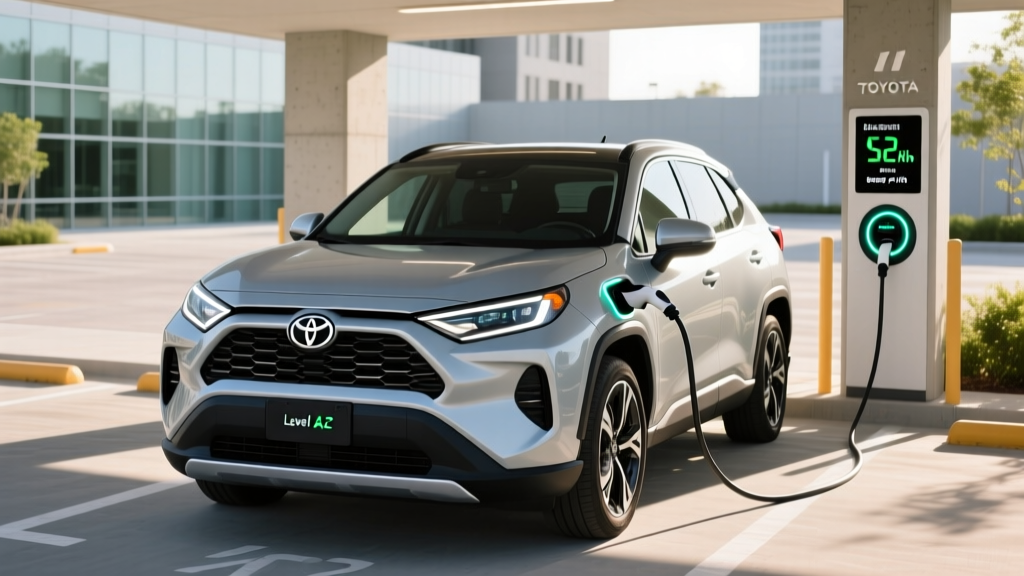
- PHEVs (e.g., Toyota RAV4 Prime, smaller ~18 kWh battery): Full charge in ~5–6 hours
Real-World Caveat: Those miles-per-hour figures assume ideal conditions — a dedicated 15A or 20A circuit with no other loads, moderate ambient temperature, and no cabin preconditioning drawing power simultaneously. In practice, expect Level 1 charging to deliver closer to 3–4 miles per hour for most EVs. In cold weather, battery thermal management systems may consume some of that power, reducing effective range gain by 15–25%.
Charge Time Examples: 10% to 80% on Level 1
Most EV owners charge between roughly 10% and 80% state of charge (SoC) to preserve battery longevity. Here's what that looks like on a level 1 electric car charger for common battery sizes:
| Vehicle Example | Usable Battery (kWh) | 10–80% Energy Needed | Level 1 Time (1.2 kW) | Level 2 Time (11.5 kW) |
|---|---|---|---|---|
| Chevrolet Equinox EV | 85 kWh | ~59.5 kWh | ~50 hours | ~5.2 hours |
| Tesla Model 3 Long Range | 75 kWh | ~52.5 kWh | ~44 hours | ~4.6 hours |
| Hyundai Ioniq 5 (Std Range) | 58 kWh | ~40.6 kWh | ~34 hours | ~3.5 hours |
| Toyota RAV4 Prime (PHEV) | 18.1 kWh | ~12.7 kWh | ~10.5 hours | ~1.1 hours |
The math is straightforward but sobering for large-battery EVs. If you drive 40 miles per day in a Chevrolet Equinox EV, you'd need roughly 10–12 hours of continuous Level 1 charging to replenish that energy — achievable overnight, but with zero margin for error or longer days.
Who Can Actually Live With Level 1 Charging?
A level 1 electric car charger isn't obsolete — it's the right tool for specific ownership scenarios. Based on real-world usage patterns, Level 1 works if you meet most of these criteria:
Level 1 is sufficient if:
- Your daily driving is under 30 miles round-trip
- You own a PHEV with a smaller battery (10–20 kWh)
- Your vehicle is parked 10+ hours per day near a standard outlet
- You have access to DC fast charging for occasional road trips
- You're renting and can't install a 240V circuit
You should upgrade to Level 2 if:
- Your daily commute exceeds 40–50 miles
- You own a large-battery EV (75+ kWh) and want full replenishment overnight
- You frequently need a full charge on short notice (early morning departures, schedule changes)
- You live in a cold climate where thermal management reduces charging efficiency
- You want to precondition your cabin while charging without draining the battery
For plug-in hybrid owners, a level 1 electric car charger is often the ideal solution. The Toyota RAV4 Prime's 18.1 kWh battery replenishes fully in about 10 hours on a 120V outlet — perfectly aligned with an overnight parking window. The same cannot be said for a 100+ kWh battery in an electric pickup.
Electrical Requirements and Safety for Level 1 Charging
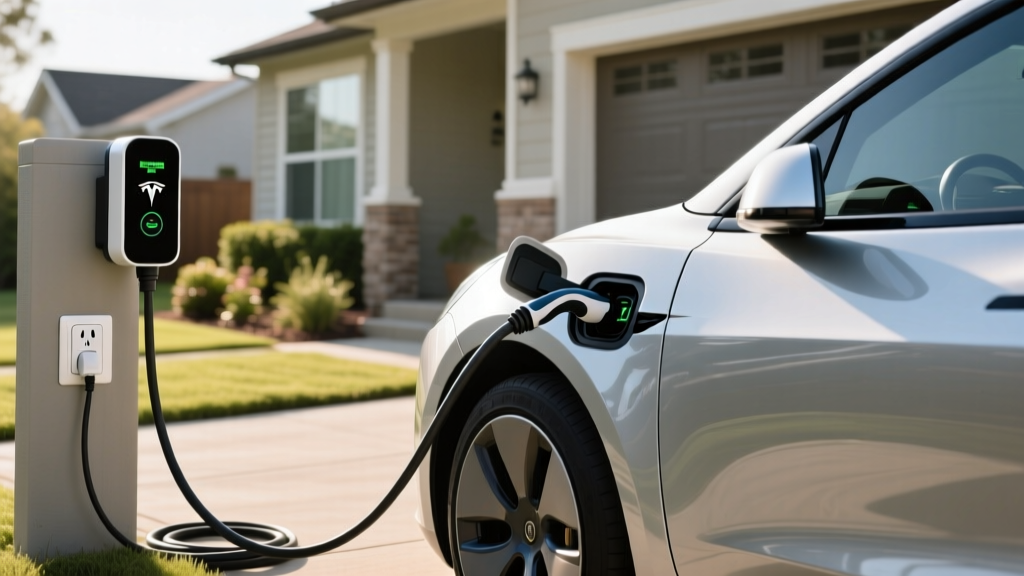
One of the biggest advantages of a level 1 electric car charger is that it requires no electrical upgrades — just a standard NEMA 5-15 (15A) or NEMA 5-20 (20A) household outlet. But "standard" doesn't mean "without risk." Here's what you need to verify:
Circuit Capacity and Dedicated Outlets
EV charging is a continuous load, defined by the National Electrical Code (NEC) as running for three hours or more. NEC Article 210.20 requires continuous loads to be limited to 80% of a circuit's rated capacity:
- 15A circuit: Maximum continuous draw of 12A → ~1.4 kW
- 20A circuit: Maximum continuous draw of 16A → ~1.9 kW (if the charger supports it)
Most included OEM charging cords default to 12A for safety on 15A circuits. If you're plugging into an outlet shared with other devices (refrigerators, sump pumps, power tools), you risk tripping the breaker. A dedicated circuit — one that serves only the charging outlet — is strongly recommended.
GFCI Protection and Outdoor Use
If your charging outlet is in a garage, outdoors, or in any location classified as a damp/wet area, NEC Article 210.8 requires GFCI (Ground Fault Circuit Interrupter) protection. Many modern EV charging cords have built-in GFCI modules in the plug head. Verify this feature if you're charging outdoors or in an unfinished garage.
For outdoor Level 1 charging, use only chargers rated for outdoor use (look for NEMA 4 or IP65 enclosure ratings) and ensure the outlet itself has a weatherproof cover rated for use while a plug is inserted.
Level 1 Charger Equipment: What's Available in 2026
Most EVs ship with a basic Level 1 charging cord. However, aftermarket options offer longer cables, better durability, smart features, and sometimes dual-voltage capability (120V/240V in one unit). Here are top picks for 2026:
| Charger | Power Output | Connector | Cable Length | Smart Features | Approx. Price |
|---|---|---|---|---|---|
| Lectron V-BOX Pro (Dual Voltage) | 1.4 kW (120V) / 14.4 kW (240V) | NACS or J1772 | 21 ft | App scheduling, energy tracking | $350–$400 |
| Emporia Level 1/2 EV Charger | 1.4 kW (120V) / 11.5 kW (240V) | J1772 (NACS adapter included) | 24 ft | Wi-Fi, app control, solar integration | $300–$350 |
| OEM Included Cord (varies by brand) | 1.2 kW (120V) | Vehicle-specific (NACS or J1772) | 12–18 ft | Minimal (LED status indicators) | Included with vehicle |
| ChargePoint Home Flex (NACS) | N/A Level 1 only; 1.4 kW (120V adapter) / up to 12 kW (240V) | NACS native | 23 ft | Alexa, app scheduling, load management | $550–$650 (240V unit + adapter) |
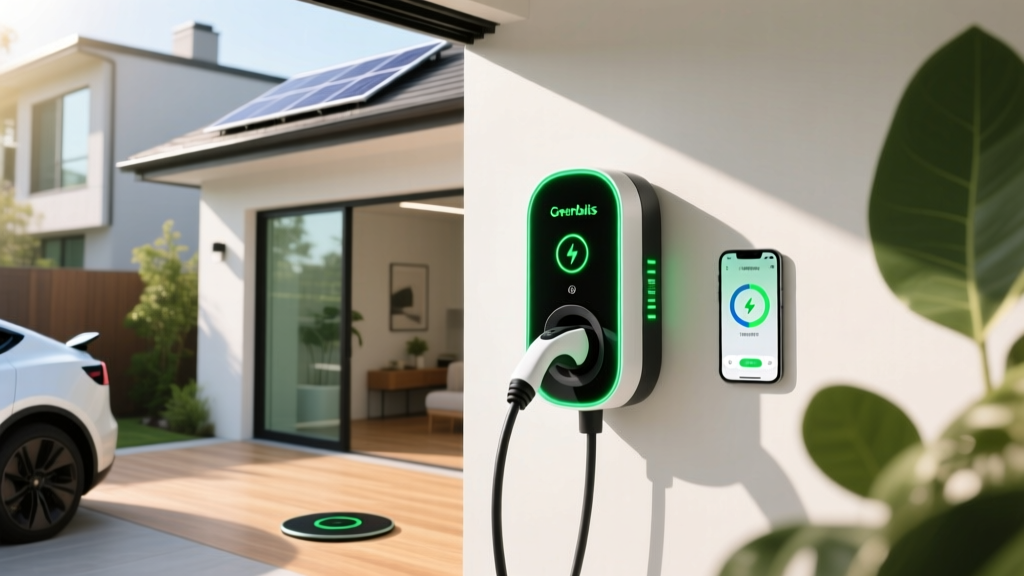
The standout category for Level 1 users is the dual-voltage charger. Units like the Lectron V-BOX Pro and Emporia charger ship with both a NEMA 5-15 plug (120V) and a NEMA 14-50 or 6-50 plug (240V). Start with Level 1 today; if you upgrade your electrical panel later, the same charger handles Level 2 without replacement.
Connector Compatibility: Will It Plug Into Your EV?
The North American EV market has largely consolidated around the NACS (North American Charging Standard) connector pioneered by Tesla. However, millions of EVs on the road still use the J1772/CCS1 connector, and adapter availability is critical for Level 1 charging.
| Connector Type | Brands Using It (2026) | Level 1 Charging Note |
|---|---|---|
| NACS (Tesla standard) | Tesla, Ford, GM, Rivian, Volvo, Polestar, Mercedes-Benz (new models) | Native NACS Level 1 cords available; J1772-to-NACS adapters widely available (~$50–$100) |
| J1772 (Level 1/2) / CCS1 (DC) | Hyundai, Kia, BMW, VW, Subaru, older Nissan Leaf (CHAdeMO) | J1772 is the legacy Level 1/2 standard; most aftermarket Level 1 cords ship with J1772 |
| CHAdeMO | Nissan Leaf (legacy), Mitsubishi Outlander PHEV (older) | CHAdeMO is DC-only; Level 1/2 charging still uses J1772 inlet on these vehicles |
Bottom line: For Level 1 AC charging, every EV sold in the US has either a J1772 inlet or a NACS inlet. If your aftermarket charger has the "wrong" connector, a simple adapter resolves it. The CCS1-to-NACS and J1772-to-NACS adapter market is mature and reliable as of 2026.
Cost to Charge: Level 1 vs. Gas vs. Public Charging
One of the strongest arguments for a level 1 electric car charger is cost. Home electricity rates are far cheaper than gasoline per mile, even at Level 1's slow speed. The charging speed doesn't affect the cost per kWh — only how long you wait.
| Scenario | Rate / Cost | Vehicle Efficiency | Cost Per Mile |
|---|---|---|---|
| Home Level 1 (national avg. residential) | $0.16/kWh | 3.3 mi/kWh (Ioniq 5) | $0.048 |
| Home Level 1 (off-peak TOU rate) | $0.09/kWh | 3.3 mi/kWh | $0.027 |
| Home Level 2 (same residential rate) | $0.16/kWh | 3.3 mi/kWh | $0.048 |
| Public Level 2 (network fee) | $0.25–$0.40/kWh | 3.3 mi/kWh | $0.076–$0.121 |
| DC Fast Charging (public) | $0.35–$0.55/kWh | 3.3 mi/kWh | $0.106–$0.167 |
| Gasoline (avg. 28 MPG car) | $3.30/gallon | 28 MPG | $0.118 |
| Gasoline (truck, 18 MPG) | $3.30/gallon | 18 MPG | $0.183 |
At the national average residential electricity rate of roughly $0.16/kWh per the U.S. Energy Information Administration, Level 1 home charging costs about $0.05 per mile in an average EV. That's less than half the per-mile cost of a 28 MPG gas car. If your utility offers time-of-use (TOU) rates with off-peak pricing around $0.09/kWh, you're down to under $0.03 per mile.
Speed doesn't change the math. Whether you charge at 1.2 kW (Level 1) or 11.5 kW (Level 2), you're paying the same $0.16 per kWh drawn from your panel. The only cost advantage Level 2 has is access to TOU windows — if your off-peak window is only 6 hours, Level 1 may not add enough energy in that window to matter.
When Level 1 Isn't Enough: Upgrading to Level 2 at Home
If you've determined that a level 1 electric car charger can't keep up with your driving, upgrading to a 240V Level 2 home charger involves electrical work, permitting, and costs that vary significantly by home age and panel capacity.
Electrical Requirements for Level 2
A typical Level 2 home charger requires:
- 240V dedicated circuit at 40A–60A (depending on charger amperage)
- NEMA 14-50 outlet (50A) or hardwired connection (60A+)
- Electrical panel capacity: A 200A main panel is standard in modern homes; older homes may have 100A panels that cannot accommodate a 40–50A EV circuit without an upgrade
- Permit: Most jurisdictions require an electrical permit and inspection for new 240V circuits
Installation Cost Breakdown
| Component | Simple Install (panel near garage) | Complex Install (long run, panel upgrade) |
|---|---|---|
| Level 2 Charger Equipment | $350 – $700 | $350 – $700 |
| Electrical Permit | $50 – $200 | $100 – $350 |
| Electrician Labor (240V circuit) | $300 – $800 | $1,200 – $3,000+ |
| Panel Upgrade (100A → 200A) | Not needed | $1,500 – $4,000 |
| Total Estimated Cost | $700 – $1,700 | $3,150 – $8,050 |
The panel upgrade is the wildcard. If your home was built before the 1990s and still has a 100A service panel, adding a 40–50A continuous EV load may exceed the panel's capacity. An electrician will perform a load calculation per NEC Article 220 to determine whether an upgrade is mandatory. According to the National Fire Protection Association's NEC guidelines, this calculation is non-negotiable and protects your home from overloaded wiring.
Federal incentive note: The IRS §30D tax credit applies to new EV purchases, not home charging equipment. However, the Alternative Fuel Vehicle Refueling Property Credit (Form 8911) may cover up to 30% of home charger installation costs (up to $1,000), subject to income limits and census-tract eligibility. Consult a tax professional for your specific situation.
Frequently Asked Questions
How much does it cost to install a Level 1 charger at home?
Nothing, in most cases. A level 1 electric car charger plugs into an existing 120V household outlet — no electrician, no permit, no equipment cost beyond the charging cord itself (usually included with the vehicle). If you need a new dedicated 120V outlet installed near your parking spot, expect $150–$400 for a licensed electrician to run a new circuit.
How fast will each charging level add range?
Level 1 (120V) adds 3–5 miles of range per hour. Level 2 (240V) adds 20–60+ miles per hour depending on the charger's kW output and the vehicle's onboard charger capacity. DC fast charging can add 150+ miles in 15–20 minutes at peak power, though charge speeds taper significantly above 80% SoC.
Which connector is compatible with my EV?
For Level 1/2 AC charging, your EV has either a NACS inlet (Tesla, Ford, GM, Rivian, and most 2025+ models) or a J1772 inlet (Hyundai, Kia, BMW, VW, and most pre-2025 non-Tesla models). CHAdeMO is a DC-only connector found on older Nissan Leafs; these vehicles still use J1772 for Level 1/2 charging. Adapters between NACS and J1772 are widely available for $50–$100.
How much does charging cost per mile vs. gas?
At the national average residential electricity rate of ~$0.16/kWh, home EV charging costs roughly $0.05 per mile for an average-efficiency EV. A comparable 28 MPG gas car at $3.30/gallon costs ~$0.12 per mile. Off-peak TOU rates can push EV charging below $0.03/mile — less than a quarter of the gas cost.
What electrical upgrades might I need for Level 1 charging?
For Level 1 specifically, you likely need none — just a standard 120V outlet in good condition. The exception: if your outlet is old, shows discoloration, feels warm during charging, or shares a circuit with high-draw appliances, have an electrician inspect it and consider installing a dedicated 15A or 20A circuit ($150–$400). If you're planning a future Level 2 upgrade, a panel assessment now can save you a second service call later.
Can I charge my EV with an extension cord on Level 1?
Manufacturers universally advise against it. Extension cords introduce voltage drop, heat buildup, and fire risk — especially at continuous loads sustained for 8–12 hours. If your parking spot is too far from the outlet, invest in a Level 1 charger with a longer cable (20–25 ft options are available) or have an electrician install a new outlet closer to your vehicle.
Is Level 1 charging bad for my EV battery?
No. Slow Level 1 charging is actually gentle on battery cells — it generates minimal heat compared to DC fast charging. The only "downside" is that very slow charging may not complete a full cycle if you need more energy than Level 1 can deliver overnight. Battery health is far more affected by extreme temperatures, sustained 100% SoC storage, and frequent DC fast charging than by Level 1 speed.
The Verdict: Is a Level 1 Electric Car Charger Enough for You?
A level 1 electric car charger is the most accessible, cheapest-to-deploy EV charging solution available — and for PHEV owners or low-mileage BEV drivers, it genuinely is sufficient. Plug it into a dedicated 120V outlet, set your vehicle's charge schedule to off-peak hours, and wake up to 30–50 miles of replenished range every morning.
But if you're driving a long-range EV with a 75+ kWh battery, commuting more than 40 miles daily, or living in a cold climate where range and charging efficiency both drop, Level 1 will leave you short. The upgrade to Level 2 is a significant investment — $700 to $8,000+ depending on your electrical panel — but it transforms the daily EV ownership experience from "managing a constraint" to "plugging in and forgetting it."
Start with the Level 1 cord your car came with. Track your daily energy consumption for two weeks. If the math works, you've just saved yourself a four-figure electrical bill. If it doesn't, you'll know exactly what you need before you call the electrician.