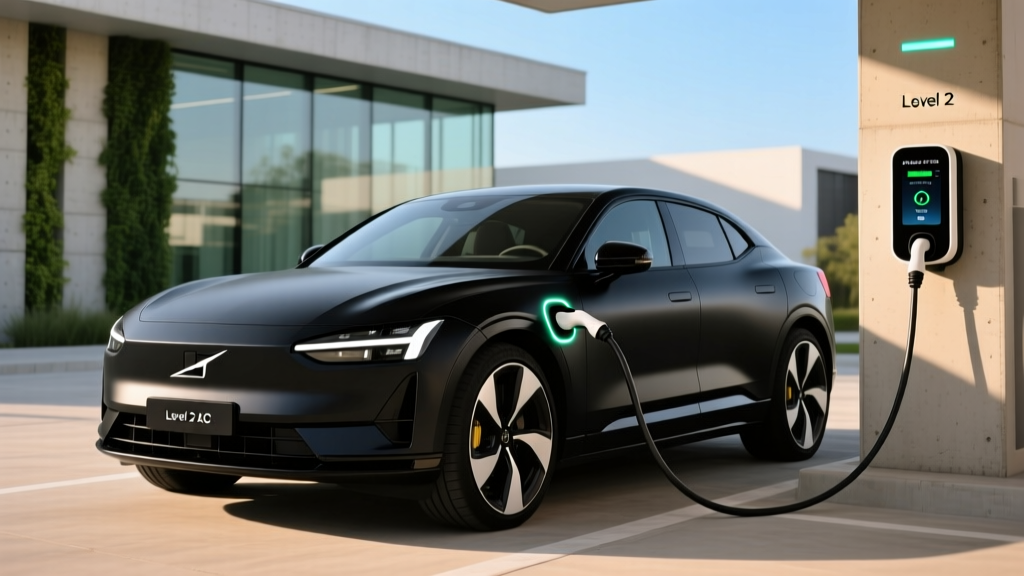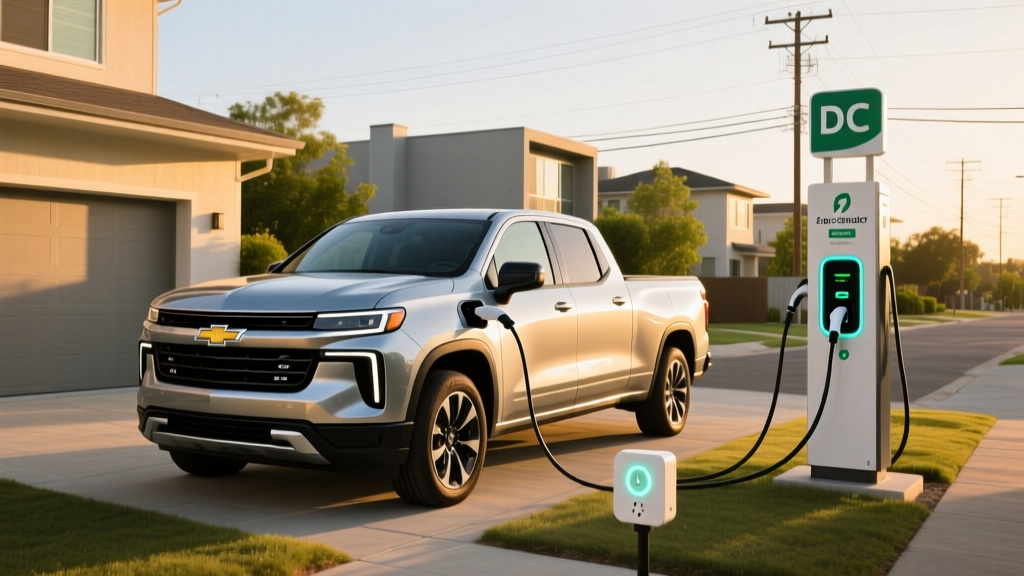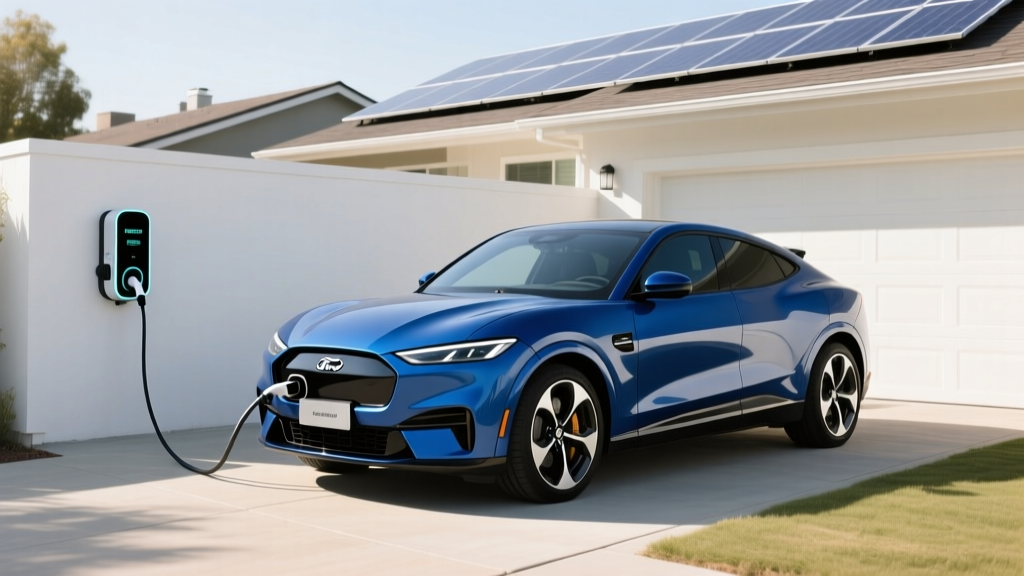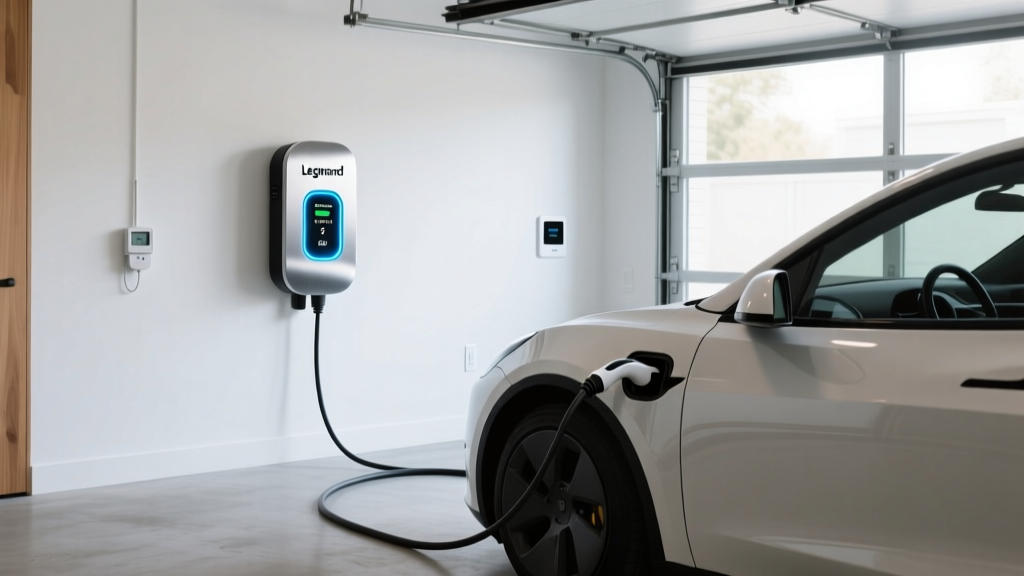
If you've just taken delivery of a new EV or plug-in hybrid, the single most impactful upgrade you can make isn't a spoiler or a wrap — it's a proper Level 2 home charger. The Legrand plug-in home Level 2 EV charger (sold under the Legrand / Pass & Seymour EVCC lineup) has quietly earned a reputation among EV owners as a no-nonsense, electrician-grade unit that skips the flashy app ecosystem in favor of robust build quality and straightforward operation. In this guide, we'll break down exactly what this charger delivers, what it takes to install, how it compares to rivals like the ChargePoint Home Flex and Emporia Vue, and whether it's the right fit for your garage in 2026.
Understanding Charging Levels: What the Legrand Actually Delivers
Before evaluating any charger, you need to understand the three charging tiers available to EV owners. The Legrand unit is a Level 2 charger, which means it operates on 240V AC power — the same voltage as your electric dryer or oven. Here's how all three levels compare:
| Level | Voltage | Power (kW) | Miles of Range Added per Hour | Typical Use Case |
|---|---|---|---|---|
| Level 1 | 120V AC | 1.0–1.4 kW | 3–5 mi/hr | Overnight trickle; PHEV top-ups |
| Level 2 | 240V AC | 3.3–19.2 kW | 14–75 mi/hr | Daily home & workplace charging |
| DC Fast | 400–800V DC | 50–350 kW | 150–1,200+ mi/hr | Road trips; highway corridors |
The Legrand plug-in Level 2 charger delivers up to 9.6 kW (40 amps at 240V). For a vehicle like the 2026 Hyundai Ioniq 5 (84 kWh usable battery), that translates to roughly 32 miles of range per hour of charging — enough to fully replenish a depleted battery in about 9–10 hours. A kW (kilowatt) is a unit of power — how fast energy flows. A kWh (kilowatt-hour) is a unit of energy — the total amount stored. Think of kW as the width of a hose and kWh as the size of the bucket.
Legrand Plug-In Level 2 Charger: Hardware Specs and Features
The Legrand EVCC-series plug-in Level 2 charger is built around the company's deep electrical infrastructure expertise (Legrand is one of the world's largest electrical component manufacturers). Here's what the 2026-available configuration offers:
| Spec | Detail |
|---|---|
| Max Power Output | 9.6 kW (40A continuous) |
| Voltage | 240V AC, single-phase |
| Connector (Vehicle Side) | J1772 (CCS1 compatible); NACS adapter included or available |
| Cable Length | 25 feet (standard) |
| Plug Type (Wall Side) | NEMA 14-50 plug |
| Indoor/Outdoor Rating | NEMA 4 — suitable for outdoor installation |
| Smart Features | LED status indicators; no built-in Wi-Fi/app |
| Energy Star Certified | Yes |
| Warranty | 3 years limited |
| Approximate Equipment Price | $350–$450 |
What the Legrand Does Well
- Build quality: Industrial-grade housing that feels like it belongs in a commercial garage. The NEMA 4 rating means rain, dust, and hose spray won't compromise it outdoors.
- Reliability: No Wi-Fi module means no firmware bugs, no app crashes, and no cloud-dependency. You plug in, the car handles the handshake, and charging begins.
- 25-foot cable: Generous enough to reach from a garage wall outlet to a driveway-parked vehicle in most residential setups.
- NEMA 14-50 plug: The most common high-amperage residential receptacle, making it portable if you move homes.
Where It Falls Short
- No app or scheduling: If you want to schedule charging to off-peak utility hours via the charger itself (rather than your vehicle's built-in scheduler), you'll need to look at the ChargePoint Home Flex or Emporia Vue.
- Fixed 40A output: Unlike adjustable-amperage units, you can't dial it down for older electrical panels. It needs a dedicated 50A circuit.
- No load sharing: Can't be paired with a second unit on the same circuit for two-EV households.
Electrical Requirements and Installation Costs
This is where most first-time EV charger buyers get surprised. The Legrand plug-in unit itself is straightforward, but your home's electrical system needs to support it. Here's what's required:
Circuit and Panel Requirements
- Dedicated 50-amp, 240V circuit: The National Electrical Code (NEC) requires that continuous loads (like EV charging) use no more than 80% of a circuit's rated capacity. A 40A charger requires a 50A breaker.
- NEMA 14-50 receptacle: Your electrician will install this outlet on a dedicated circuit run from your main panel or sub-panel.
- Panel capacity: Your home's main service panel must have enough spare amperage to handle the additional 50A load. Most modern 200A panels can accommodate this; older 100A or 150A panels may require an upgrade.
| Component | Cost Range | Notes |
|---|---|---|
| Legrand Level 2 Charger Unit | $350–$450 | Equipment only |
| Electrician Labor (standard install) | $400–$1,200 | Varies by run length and wall type |
| NEMA 14-50 Receptacle + Wiring | $150–$400 | 6 AWG copper for 50A circuit |
| Permit (local jurisdiction) | $50–$200 | Required in most municipalities |
| Panel Upgrade (if needed) | $1,500–$3,500 | 100A → 200A service upgrade |
| Total (no panel upgrade) | $950–$2,250 | Most common scenario |
| Total (with panel upgrade) | $2,450–$5,750 | Older homes |
According to data compiled by the U.S. Department of Energy, the national average for a standard Level 2 home installation (without panel upgrade) falls between $1,000 and $2,500 including equipment. Your mileage will vary based on the distance from your panel to the charging location, whether walls need to be opened, and local labor rates.
Safety and Code Considerations
- GFCI protection: The 2023 NEC update requires GFCI protection for EV charging outlets. Some EVSE units (including certain Legrand configurations) have built-in ground-fault detection, which may satisfy this requirement — confirm with your electrician and local inspector.
- Dedicated circuit: Never share the 50A circuit with other appliances. This is a code requirement and a fire-safety essential.
- Outdoor installation: The Legrand's NEMA 4 rating handles weather exposure, but the NEMA 14-50 receptacle must be installed in an outdoor-rated, weatherproof box with an in-use cover.
- Permitting: Skipping the permit saves $50–$200 upfront but can void home insurance coverage for electrical fires and complicate a future home sale. Always pull the permit.
Connector Compatibility: Will the Legrand Work With Your EV?
The EV connector landscape has shifted dramatically. As of 2026, the North American Charging Standard (NACS) — originally developed by Tesla — has been adopted by Ford, GM, Rivian, Volvo, BMW, Hyundai, Kia, and most other major automakers. CCS1 remains on many vehicles sold between 2019 and 2024, and CHAdeMO is limited to legacy Nissan Leaf models.
| Connector | Brands Using It (2026) | Legrand Compatibility |
|---|---|---|
| J1772 (AC Level 1/2) | All pre-2025 non-Tesla EVs; PHEVs | Native — plug directly in |
| NACS (Tesla-style) | Tesla (all years); Ford, GM, Rivian, Hyundai, Kia (2025+) | Requires NACS adapter or NACS-equipped Legrand variant |
| CCS1 | Most 2019–2024 non-Tesla EVs (VW ID.4, early Ioniq 5, etc.) | Native via J1772+CCS combo inlet on vehicle |
| CHAdeMO | Nissan Leaf (all years); Mitsubishi Outlander PHEV (older) | Native — J1772 handles AC; CHAdeMO is DC-only |
Key takeaway: For Level 2 AC home charging, every EV sold in North America uses either a J1772 inlet or a NACS inlet. The Legrand ships with a J1772 connector. If your 2026 EV has a NACS port (e.g., a new Ford F-150 Lightning, Chevy Equinox EV, or any Tesla), you'll need a J1772-to-NACS adapter ($40–$80) or purchase a NACS-equipped version of the Legrand charger if available. For DC fast charging on road trips, the connector type is different — but that doesn't affect your home Level 2 setup.
Charging Times: What to Expect With the Legrand at 9.6 kW
Charging speed depends on your vehicle's onboard charger capacity and battery size. The Legrand delivers up to 9.6 kW, but your car must be able to accept that rate. Most 2026 EVs accept 11.5 kW or more on Level 2, so the Legrand's 9.6 kW will be the bottleneck in very few cases. Here are real-world charging time estimates for popular models:
| Vehicle (2026) | Usable Battery (kWh) | 10–80% Energy Needed (kWh) | Approx. Time at 9.6 kW |
|---|---|---|---|
| Tesla Model Y (Long Range) | 75 kWh | ~52.5 kWh | ~5 hours 30 min |
| Hyundai Ioniq 5 (Long Range) | 84 kWh | ~58.8 kWh | ~6 hours 10 min |
| Ford F-150 Lightning (Extended) | 131 kWh | ~91.7 kWh | ~9 hours 35 min |
| Chevy Equinox EV (3RS) | 85 kWh | ~59.5 kWh | ~6 hours 15 min |
| Toyota RAV4 Prime (PHEV) | 18.1 kWh | ~12.7 kWh | ~1 hour 20 min |
Cost to Charge: Home Level 2 vs. Public vs. Gas
One of the strongest financial arguments for home Level 2 charging is the per-mile cost advantage. Here's a comparison using 2026 national averages:
| Scenario | Cost per kWh | Vehicle Efficiency | Cost per Mile |
|---|---|---|---|
| Home Level 2 (national avg. residential) | $0.16/kWh | 3.5 mi/kWh (avg. EV) | $0.046/mi |
| Home Level 2 (off-peak TOU rate) | $0.09/kWh | 3.5 mi/kWh | $0.026/mi |
| Public Level 2 (network pricing) | $0.30/kWh | 3.5 mi/kWh | $0.086/mi |
| DC Fast Charging (EA, EVgo, etc.) | $0.48/kWh | 3.5 mi/kWh | $0.137/mi |
| Gasoline (avg. sedan, 28 MPG combined) | $3.40/gal | 28 mi/gal | $0.121/mi |
At the national residential average of $0.16/kWh, home Level 2 charging costs roughly 60–70% less per mile than gasoline. With an off-peak time-of-use (TOU) utility plan — where electricity drops to $0.08–$0.10/kWh overnight — you can cut that to 75–80% less. Even DC fast charging, the most expensive EV option, is competitive with gasoline on a per-mile basis for many vehicles.
The Legrand's lack of built-in scheduling means you'll rely on your vehicle's onboard charge scheduler (available in virtually every 2026 EV) or your utility's smart thermostat/TOU program to capture off-peak rates. This is a minor inconvenience, not a dealbreaker.
How the Legrand Compares to Competing Level 2 Chargers
The home Level 2 charger market is competitive. Here's how the Legrand stacks up against three popular alternatives:
Legrand EVCC (Plug-In)
- Power: 9.6 kW / 40A
- Cable: 25 ft
- Smart: No (LED only)
- Price: ~$350–$450
- Best for: Set-and-forget reliability
ChargePoint Home Flex
- Power: Up to 12 kW / 50A (adjustable)
- Cable: 23 ft
- Smart: Wi-Fi, app scheduling, Alexa
- Price: ~$550–$650
- Best for: Smart features + adjustable amps
Emporia Vue Smart Charger
- Power: Up to 11.5 kW / 48A
- Cable: 24 ft
- Smart: Wi-Fi, energy monitoring, app
- Price: ~$400–$500
- Best for: Budget smart charger with monitoring
Tesla Wall Connector
- Power: Up to 11.5 kW / 48A
- Cable: 24 ft
- Smart: Wi-Fi, power sharing, OTA updates
- Price: ~$450–$500
- Best for: Tesla/NACS-native households
The Legrand's advantage is pure hardware quality at a competitive price. Its disadvantage is the absence of app-based scheduling and adjustable amperage. If your electrical panel is tight on capacity and you need to dial down to 32A or 24A, the ChargePoint Home Flex is a better choice. If you want energy usage data without a smart panel, the Emporia Vue fills that gap.
Frequently Asked Questions
How much does it cost to install a home EV charger?
For the Legrand plug-in Level 2 charger, expect $950–$2,250 total (equipment, electrician, permit) if your panel has adequate capacity. If a panel upgrade from 100A to 200A is needed, add $1,500–$3,500. Get at least three quotes from licensed electricians and ensure the quote includes permitting.
How fast will each charging level add range?
Level 1 (120V) adds 3–5 miles per hour. Level 2 at 9.6 kW (the Legrand's output) adds approximately 28–35 miles per hour depending on vehicle efficiency. DC fast charging adds 150–1,200+ miles per hour at peak rates, but sustained rates are lower due to charge-curve taper above 80% SoC.
Which connector or charger is compatible with my EV?
For Level 2 AC home charging, all non-Tesla EVs made before 2025 use J1772 (which the Legrand provides natively). Most 2025+ EVs from Ford, GM, Hyundai, Kia, and others use NACS and will need a J1772-to-NACS adapter. Teslas have always used NACS. A $40–$80 adapter solves any mismatch.
How much does charging cost per mile vs. gas?
Home Level 2 charging at the national average residential rate ($0.16/kWh) costs roughly $0.046/mile — about 60% less than a 28-MPG gasoline car at $3.40/gallon ($0.121/mile). With off-peak TOU rates ($0.09/kWh), the cost drops to $0.026/mile. Per the U.S. EPA's fueleconomy.gov, EVs typically achieve 3–4 miles per kWh, making home charging the cheapest way to fuel any vehicle.
What electrical upgrades might I need?
The most common upgrade is adding a dedicated 50A, 240V circuit with a NEMA 14-50 receptacle — standard work for any licensed electrician. The more expensive scenario is a main panel upgrade (100A → 200A), needed in roughly 15–25% of older homes. A load calculation by your electrician will determine if this is necessary before any work begins.
Does the Legrand charger qualify for any tax credits?
The federal Alternative Fuel Vehicle Refueling Property Credit (IRC §30C) covers up to 30% of home charger equipment and installation costs, capped at $1,000, through 2032. However, eligibility requires that your home be located in a qualifying census tract (generally non-urban or low-income communities). Check the IRS §30C page and consult a tax professional to confirm your eligibility before filing.
Is a hardwired or plug-in installation better?
The Legrand model reviewed here is a plug-in (NEMA 14-50) unit, which offers portability — you can take it when you move. Hardwired installations eliminate the receptacle (saving ~$50–$100 in materials) and can support higher amperages (48A+), but require an electrician for removal. For a 40A/9.6 kW charger, the plug-in approach is the most practical and common choice.