If you drive a non-Tesla EV with a CCS1 charge port, the expanding Tesla Supercharger network is the most valuable infrastructure you can't natively use. The Lectron Vortex Plus NACS to CCS adapter bridges that gap, letting CCS-equipped vehicles pull electrons from NACS (North American Charging Standard) stalls — including Tesla Superchargers that have opened to other brands. But an adapter is only one piece of the charging puzzle. This guide covers the Vortex Plus in real-world context, then walks through every charging scenario you'll face as an EV owner: home Level 2 installation, public DC fast charging, costs, and the electrical upgrades your house might demand.
What the Lectron Vortex Plus NACS to CCS Adapter Actually Does
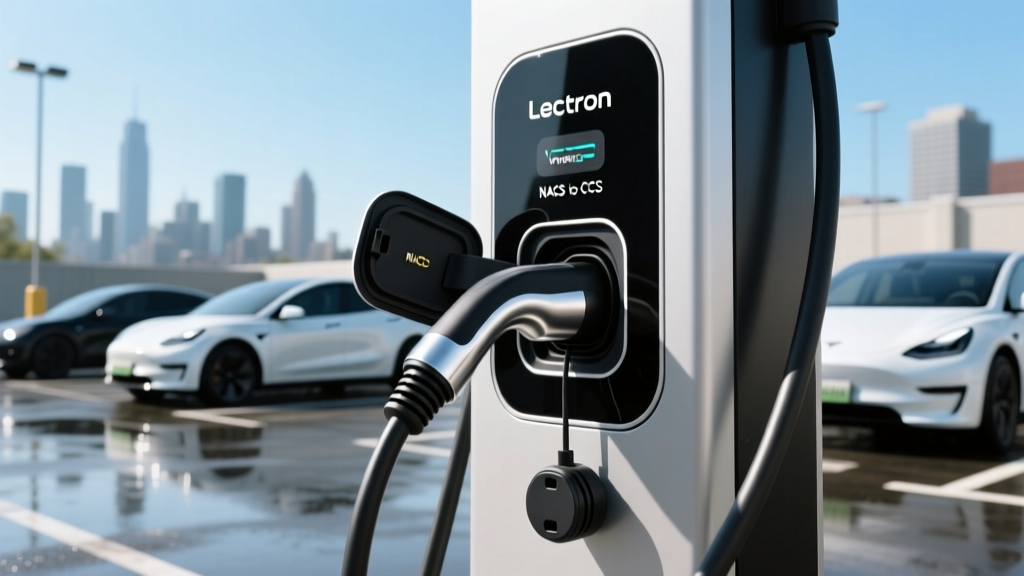
The Lectron Vortex Plus is a passive plug adapter. One end accepts a NACS (Tesla-style) connector from a Supercharger cable; the other end plugs into your vehicle's CCS1 inlet. It does not contain electronics, voltage conversion, or communication chips — it simply remaps the physical pins so the CCS handshake protocol can travel over Tesla's plug geometry.
- Max DC rating: 250 kW (adapter ceiling; actual speed limited by vehicle and stall)
- Max voltage: 500V DC
- Max current: 500A
- Weight: ~1.2 lbs
- Typical street price: $159–$189
- Warranty: 1 year
Real-world performance depends on three variables: the Supercharger stall generation (V2 peaks at 150 kW; V3/V4 reach 250–350 kW), your vehicle's onboard charge-curve limits, and whether Tesla has enabled NACS Magic Dock access for your specific model at that station. As of early 2026, most Ford, Rivian, GM, and Volvo EVs have native NACS ports on new builds, but hundreds of thousands of 2021–2025 CCS vehicles still rely on adapters like the Vortex Plus for Supercharger access.
Practical tip: Precondition your battery before arriving at any DC fast charger. Most EVs will warm or cool the pack to the optimal temperature window (typically 30–40°C) when you navigate to a charger in the car's route planner. Skipping preconditioning can cut your peak charge rate by 30–50% in cold weather.
Charging Levels Explained: kW, Miles Per Hour, and 10–80% Times
Before we discuss installation, let's establish the three charging tiers and what they mean for your daily routine. Remember: kW (kilowatts) measures power — how fast energy flows. kWh (kilowatt-hours) measures energy — how much your battery holds. Think of kW as the width of a hose and kWh as the size of the bucket.
| Level | Voltage / Amperage | Max Power (kW) | Miles of Range Per Hour | 10–80% Time (75 kWh Battery) |
|---|---|---|---|---|
| Level 1 (120V household) | 120V / 12A | 1.4 kW | 3–5 mi/hr | ~38 hours |
| Level 2 (240V home/public) | 240V / 32–48A | 7.7–11.5 kW | 25–44 mi/hr | 5–8 hours |
| DC Fast Charging | 400–800V DC | 50–350 kW | 150–1,000+ mi/hr (peak) | 18–45 minutes |
Charge curve reality check: DC fast chargers do not sustain peak kW for the entire session. A vehicle rated for 250 kW peak might only hold that rate from 10–30% State of Charge (SoC), then taper to 150 kW by 50%, and drop below 50 kW past 80%. That's why manufacturers quote 10–80% times rather than 0–100%. Charging from 80–100% on a DC fast charger can take as long as the 10–80% portion — it's almost never worth the wait on a road trip.
Home Level 2 Installation: Electrical Requirements and Real Costs
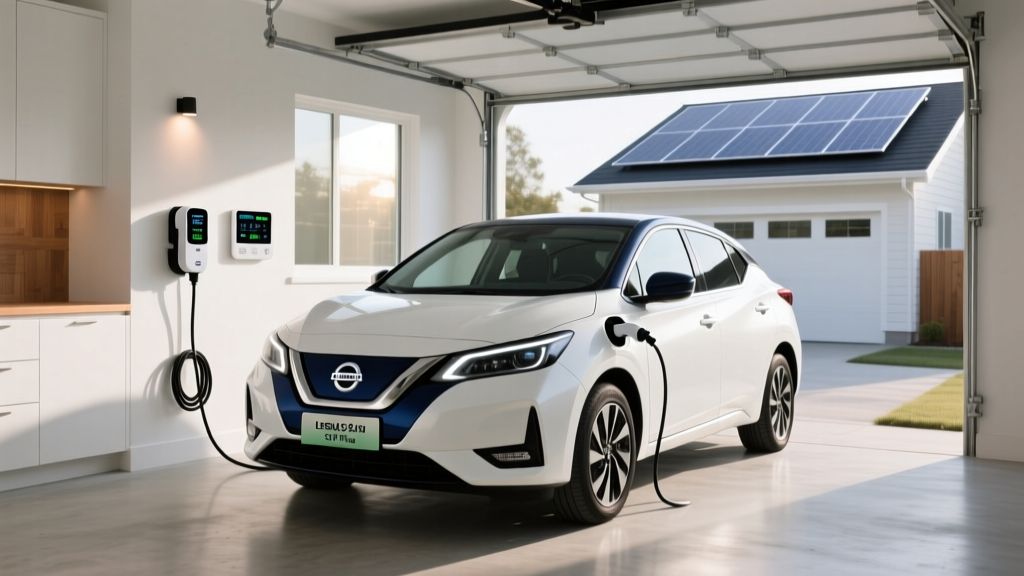
Level 2 home charging is where most EV owners do 85–95% of their charging. A dedicated 240V circuit delivers enough power to fully replenish most EV batteries overnight, and the installation economics have stabilized as electrician familiarity with EV circuits has grown.
What Your Electrical Panel Needs
A typical Level 2 charger draws 32A to 48A continuous load. Under the National Electrical Code (NEC), continuous loads must be derated to 80% of the circuit breaker rating, so:
- 32A charger requires a 40A breaker and 6 AWG copper wire
- 40A charger requires a 50A breaker and 6 AWG copper wire
- 48A charger requires a 60A breaker and 4 AWG copper wire
Your home's main service panel must have enough spare capacity to handle this new load. A 200A panel in a modern home with gas appliances often has sufficient headroom. A 100A panel in an older home running electric heat, an electric dryer, and an electric oven may not — and a panel upgrade to 200A can add $1,500–$3,500 to your project.
An electrician will perform a load calculation (NEC Article 220) to determine if your panel can support the new circuit. Do not skip this step. Some jurisdictions now also require an Energy Management System (EMS) or smart load-management device if panel capacity is tight — devices like the Emporia Vue or Span smart panel can dynamically throttle charger amperage to prevent breaker trips.
Installation Cost Breakdown
| Component | Basic Install (Near Panel) | Complex Install (Long Run / Conduit) |
|---|---|---|
| Level 2 Charger (hardware) | $350–$700 | $350–$700 |
| Electrician labor (2–6 hours) | $300–$600 | $800–$2,000 |
| Materials (wire, conduit, breaker) | $50–$150 | $200–$600 |
| Permit and inspection | $50–$200 | $50–$200 |
| Panel upgrade (if needed) | N/A | $1,500–$3,500 |
| Total Range | $750–$1,650 | $2,900–$7,000 |
Federal incentive: The IRS Residential Clean Energy Credit (§25D) was restructured under recent legislation. Check current-year rules with a tax professional — some prior charger-installation credits have expired or been modified. Certain states and utilities still offer rebates of $250–$750 for home charger installation; the Alternative Fuels Data Center maintains a searchable incentive database.
Which Connector Does Your EV Use? Adapter Compatibility Guide
The connector landscape has shifted dramatically since Tesla opened its Supercharger network and the industry adopted NACS as the standard. Here's where things stand in 2026:
| Connector | Native Vehicle Brands | Adapter Needed For |
|---|---|---|
| NACS (Tesla) | Tesla (all years), Ford (2025+), GM (2025+), Rivian (2025+), Volvo/Polestar (2025+), Hyundai/Kia (2026+) | CCS1 → NACS adapter to use older CCS public chargers |
| CCS1 | Most 2020–2024 non-Tesla EVs (VW ID.4, Hyundai Ioniq 5, BMW i4, etc.) | NACS → CCS1 adapter (Lectron Vortex Plus) to use Tesla Superchargers |
| CHAdeMO | Nissan Leaf (legacy), Mitsubishi Outlander PHEV (older) | CHAdeMO → CCS1 adapter (limited availability, ~$300+); network shrinking |
Where the Lectron Vortex Plus fits: If you own a 2021–2024 CCS-equipped EV — say a Hyundai Ioniq 5, VW ID.4, Ford Mustang Mach-E (pre-2025), or BMW iX — this adapter unlocks Tesla Supercharger V3 and V4 stalls that support non-Tesla vehicles via Tesla's "Open Supercharger" program or Magic Dock. Confirm station compatibility in the Tesla app before relying on it for a road trip; not every Supercharger location has been enabled for non-Tesla access.
Level 2 Charger Equipment Picks for 2026
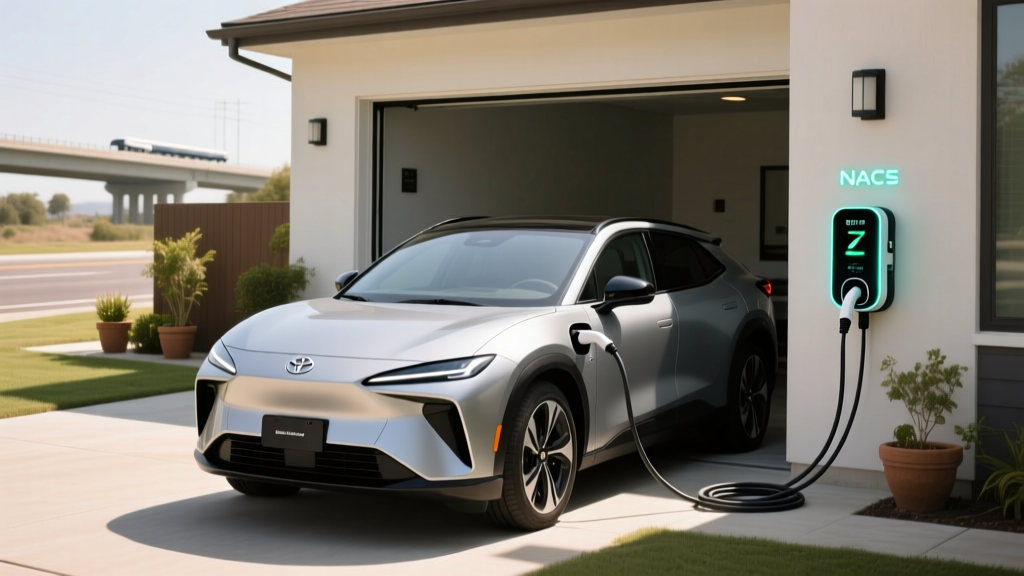
Not all home chargers are equal. The critical specs are power output (kW), cable length, connector type, and smart features like Wi-Fi scheduling for off-peak electricity rates. Here are three proven units across budgets:
Emporia Level 2 Smart Charger
- Power: 11.5 kW (48A, 240V)
- Connector: NACS or J1772 (CCS via J1772 + adapter)
- Cable: 24 ft
- Smart features: Wi-Fi, solar integration, time-of-use scheduling, energy tracking
- Price: ~$399
- Best for: Solar homeowners, budget-conscious buyers wanting smart features
ChargePoint Home Flex
- Power: Up to 12 kW (50A, 240V)
- Connector: NACS or J1772
- Cable: 23 ft
- Smart features: Wi-Fi, Alexa, adjustable amperage (16–50A), detailed app analytics
- Price: ~$599
- Best for: Flexibility across panel capacities; adjustable amp dial avoids panel upgrades
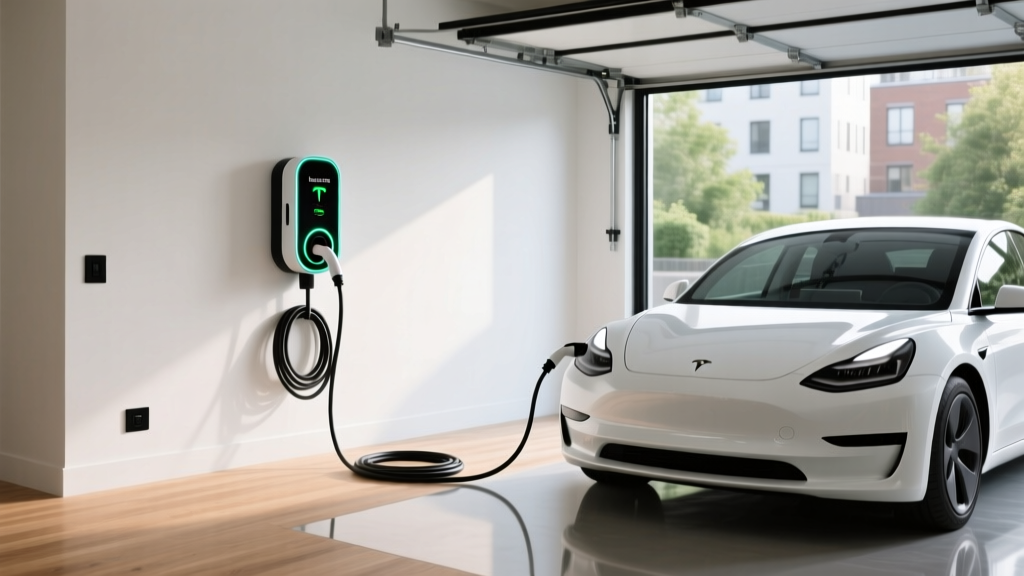
Tesla Wall Connector
- Power: 11.5 kW (48A, 240V)
- Connector: NACS native; J1772/CCS vehicles need adapter
- Cable: 24 ft
- Smart features: Wi-Fi, OTA updates, power sharing (daisy-chain up to 6 units), load management
- Price: ~$450
- Best for: NACS-native EV owners; multi-EV households
All three units require a hardwired connection for maximum amperage (48–50A). NEMA 14-50 plug installations are also available but cap at 40A continuous (50A breaker) and require a GFCI breaker under current NEC code — which can add $50–$100 to materials cost and occasionally cause nuisance trips. Hardwired installations avoid the GFCI breaker requirement.
Charging Cost Per Mile: EV vs. Gas in Real Dollars
The economics of EV charging depend heavily on where and when you plug in. Here's a comparison using a midsize EV averaging 3.0 miles/kWh (about 112 MPGe) versus a comparable gas car at 28 MPG combined.
| Scenario | Rate / Price | Cost Per Mile (EV) | Cost Per Mile (Gas, 28 MPG) |
|---|---|---|---|
| Home — off-peak utility rate | $0.09/kWh | $0.030 | $0.114 ($3.20/gal) |
| Home — standard rate | $0.16/kWh | $0.053 | $0.114 |
| Public Level 2 (ChargePoint, etc.) | $0.25/kWh | $0.083 | $0.114 |
| DC Fast Charging (Electrify America) | $0.48/kWh | $0.160 | $0.114 |
| Tesla Supercharger (avg) | $0.32/kWh | $0.107 | $0.114 |
The takeaway: Home charging at off-peak rates costs roughly one-quarter what gasoline does per mile. Even public DC fast charging is only slightly more expensive than gas on a per-mile basis — and most EV owners do the vast majority of charging at home. If you drive 12,000 miles/year and charge primarily at home at $0.12/kWh, your annual fuel cost is roughly $480 versus $1,370 for a 28 MPG gas car at $3.20/gallon — a savings of nearly $900 per year.
Safety, Code Compliance, and Outdoor Installation
EV charging circuits move serious power for hours at a time. The NEC treats them as continuous loads, and cutting corners creates fire risk. Non-negotiable safety requirements include:
- Dedicated circuit: Your Level 2 charger must have its own breaker — no sharing with other appliances.
- Proper wire gauge: Undersized wire causes voltage drop and overheating. Follow NEC Table 310.15(B)(16) for copper conductor sizing.
- GFCI protection: Required for all NEMA receptacle installations (14-50 plug-in chargers). Hardwired units may not require GFCI under all local codes — check with your inspector.
- Outdoor-rated equipment: If your charger is mounted outside or in an unconditioned garage, it must carry a NEMA 4 (weatherproof) rating. All three chargers recommended above are NEMA 4 rated.
- Permit and inspection: Most jurisdictions require an electrical permit for new 240V circuits. The inspection ensures wire gauge, breaker sizing, grounding, and bonding meet code. Skipping the permit risks insurance claim denials if a fire originates from the circuit.
For homes with older Federal Pacific (Stab-Lok) or Zinsco panels, an electrician will almost certainly recommend a full panel replacement regardless of EV charger needs — these panels have documented failure histories and may not be insurable.
Frequently Asked Questions
How much does it cost to install a home EV charger?
A straightforward Level 2 installation near the electrical panel typically costs $750–$1,650 including equipment, labor, and permits. Complex runs requiring long wire paths, conduit, or a panel upgrade can push the total to $2,900–$7,000. Get three quotes from licensed electricians and confirm they perform a NEC Article 220 load calculation.
How fast will each charging level add range?
Level 1 (120V) adds 3–5 miles per hour — adequate for PHEVs with small batteries but impractical for full EVs. Level 2 (240V, 48A) adds 25–44 miles per hour depending on vehicle efficiency, fully recharging most EVs overnight. DC fast charging adds 150–1,000+ miles per hour at peak rates, but taper means a typical 10–80% session takes 18–45 minutes.
Which connector does my EV use?
2025+ model-year EVs from Ford, GM, Rivian, Volvo, and Polestar ship with native NACS ports. Most 2020–2024 non-Tesla EVs use CCS1. Tesla vehicles have always used the Tesla/NACS connector. Older Nissan Leafs use CHAdeMO. Check your vehicle's charge port or owner's manual if unsure — the physical plug shapes are visually distinct.
How much does charging cost per mile vs. gas?
Home charging at national average rates costs $0.03–$0.05 per mile, versus $0.11–$0.14 per mile for a 28 MPG gas vehicle at $3.20/gallon. Public DC fast charging at $0.35–$0.48/kWh can approach or slightly exceed gas costs per mile, which is why home charging access is the single biggest factor in EV ownership economics.
What electrical upgrades might I need?
Homes with 100A service panels, older wiring, or panels at capacity may need a panel upgrade to 200A ($1,500–$3,500). Homes with sufficient capacity but long distances between the panel and garage may face higher wire and conduit costs. Smart load-management devices can sometimes avoid a panel upgrade by dynamically sharing capacity between the charger and other circuits.
Will the Lectron Vortex Plus work at every Tesla Supercharger?
No. Tesla has enabled non-Tesla access at select Supercharger locations, not all. Use the Tesla app (available to non-Tesla owners) or your vehicle's built-in charging navigation to confirm a station supports non-Tesla vehicles before planning a route around it. Availability has expanded significantly through 2025–2026 but remains incomplete.